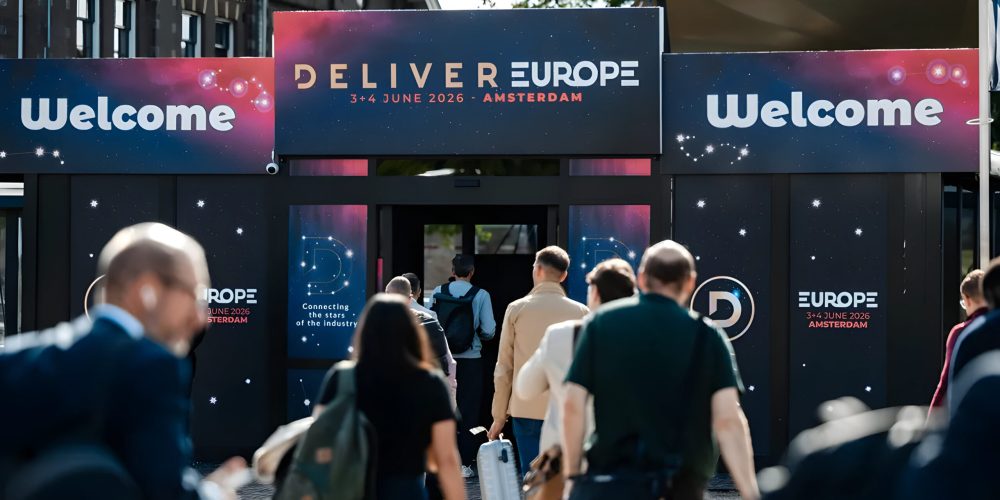
If there was one message to take away from DELIVER Europe in Amsterdam this year, it was that supply chain sustainability appears to have come of age, writes Peter MacLeod.
Not so long ago, conversations about decarbonisation often felt detached from the day-to-day realities of logistics. Ambitious net zero targets dominated presentations, while delegates were left wondering how those aspirations could possibly be reconciled with customer demands for ever-faster deliveries and the relentless pressure to reduce costs. This year felt different. Walking around the exhibition and listening to discussions throughout the conference programme, I was struck by how sustainability has become less of a standalone topic and more of a thread running through almost every conversation. It was evident in the event itself, from the emphasis on reducing its environmental footprint to the vegetarian catering, but more importantly it was reflected in the language of the industry. Instead of hearing about why companies should become more sustainable, it was more about how they can actually do so while running better businesses.
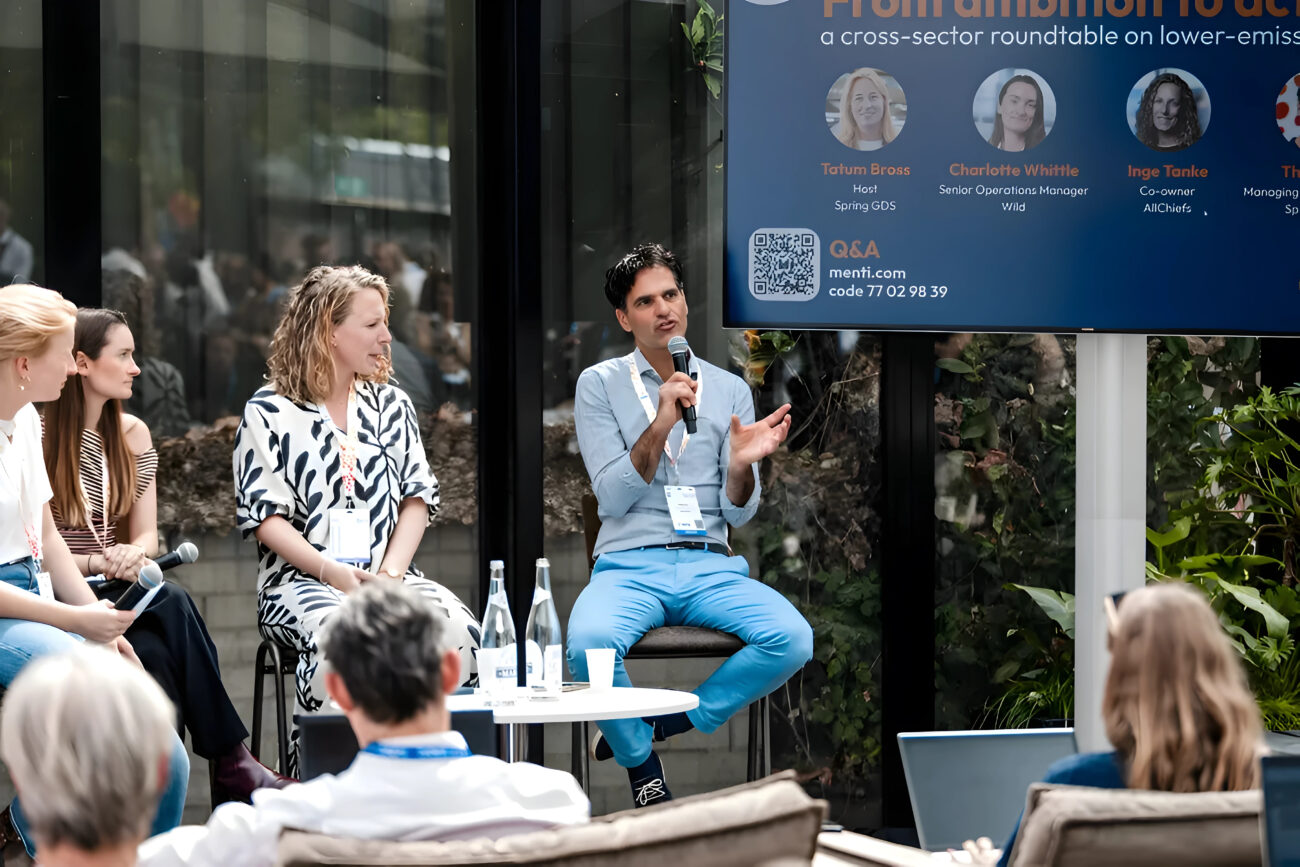
That theme came through particularly strongly during a lively panel discussion hosted by Spring GDS, where moderator Tatum Bross was joined by Inge Tanke of logistics sustainability consultancy AllChiefs, Charlotte Whittle of personal care brand Wild, and Thijs Boel, Director of Spring GDS Europe. Although each panellist brought a different perspective, there was remarkable agreement on the central theme that sustainability has gone beyond the simple desire to reduce carbon emissions. It is becoming a strategic way to improve efficiency, strengthen supply chains, and create commercial value.
For years, many organisations have published ambitious environmental commitments, often setting net zero targets stretching decades into the future. The harder question has always been how to deliver them in practice.
Reality Check
Tanke acknowledged that gap between ambition and reality still exists. While many companies now understand the emissions generated throughout their supply chains, particularly Scope 3 emissions, logistics remains one of the more difficult sectors to decarbonise. Alternative fuels, electrification and sustainable aviation fuel all offer significant opportunities, but availability, infrastructure and cost continue to present challenges. Yet, rather than dwelling on those obstacles, the discussion turned towards practical solutions that companies are already implementing today.
The word ‘efficiency’ surfaced repeatedly throughout the conversation, whether applied to better route planning, modal shifts from air to sea or rail, improved vehicle utilisation, or smarter packaging. Waste less, and emissions fall naturally. It sounds almost obvious, but it represents an important evolution in how the industry talks about sustainability. Boel argued that organisations often make the mistake of treating sustainability as a compliance exercise driven by regulation or ESG reporting. In reality, he suggested, progress accelerates when environmental improvements also deliver measurable business benefits. That struck me as one of the strongest messages of the session.
Logistics has always operated on tight margins. If investments in sustainability also reduce transport costs, improve operational efficiency, strengthen employee engagement, or enhance brand reputation, they cease to be purely environmental projects and become instead sound commercial decisions. Several practical examples illustrated this point. Spring GDS described how introducing reusable pallet boxes not only reduced waste but also improved trailer utilisation, eliminated disposable packaging and reduced transport costs through better load efficiency. Meanwhile, Wild demonstrated how sustainability has been embedded into its product design from the outset. Refillable personal care products, compostable refill packs, recycled packaging and the elimination of unnecessary plastic all contribute to reducing waste throughout the supply chain rather than simply offsetting emissions after the event.
Perhaps more importantly, Whittle explained that customers increasingly expect this approach. Rather than viewing sustainability as a premium feature, many consumers now actively seek brands whose environmental values align with their own.
Shared Responsibility
Equally revealing was the discussion around responsibility. Whenever sustainability is debated, the temptation is to ask who should lead – governments, logistics providers or brands. The panel largely rejected the premise of the question. Instead, every participant described sustainability as a collaborative exercise that depends on every part of the supply chain pulling in the same direction. Brands need to ask tougher questions when selecting logistics partners. Carriers need to present meaningful sustainability options rather than waiting for customers to demand them. Consultants can help organisations translate ambitions into workable strategies. Regulators have a role to play, but legislation alone is unlikely to deliver the pace of change the industry is seeking. The consensus was clear: nobody can decarbonise logistics in isolation.
That collaborative mindset was something I encountered repeatedly throughout DELIVER, as I darted around the venue grateful the roof wasn’t leaking amid the most apocalyptic rain showers! Whether discussing artificial intelligence, transport optimisation or reverse logistics, speakers consistently emphasised the importance of sharing data and working more closely across supply chains rather than treating sustainability as a competitive differentiator. In fact, I’ll take the credit for one of the more refreshing moments during the panel discussion, as I observed that I had somehow managed to reach lunchtime on the first day of DELIVER without hearing endless discussion about AI. The response perfectly captured where the technology now sits within logistics.
Rather than dominating every conversation, AI is increasingly being viewed as another practical tool (see my report from Motive Vision 26 elsewhere in this edition of Logistics Business). Its value lies in helping companies optimise routes, improve forecasting, reduce unnecessary transport, identify inefficiencies and ultimately lower emissions through better decision making. In other words, AI is no longer the story, it is becoming one of the tools that helps write it.
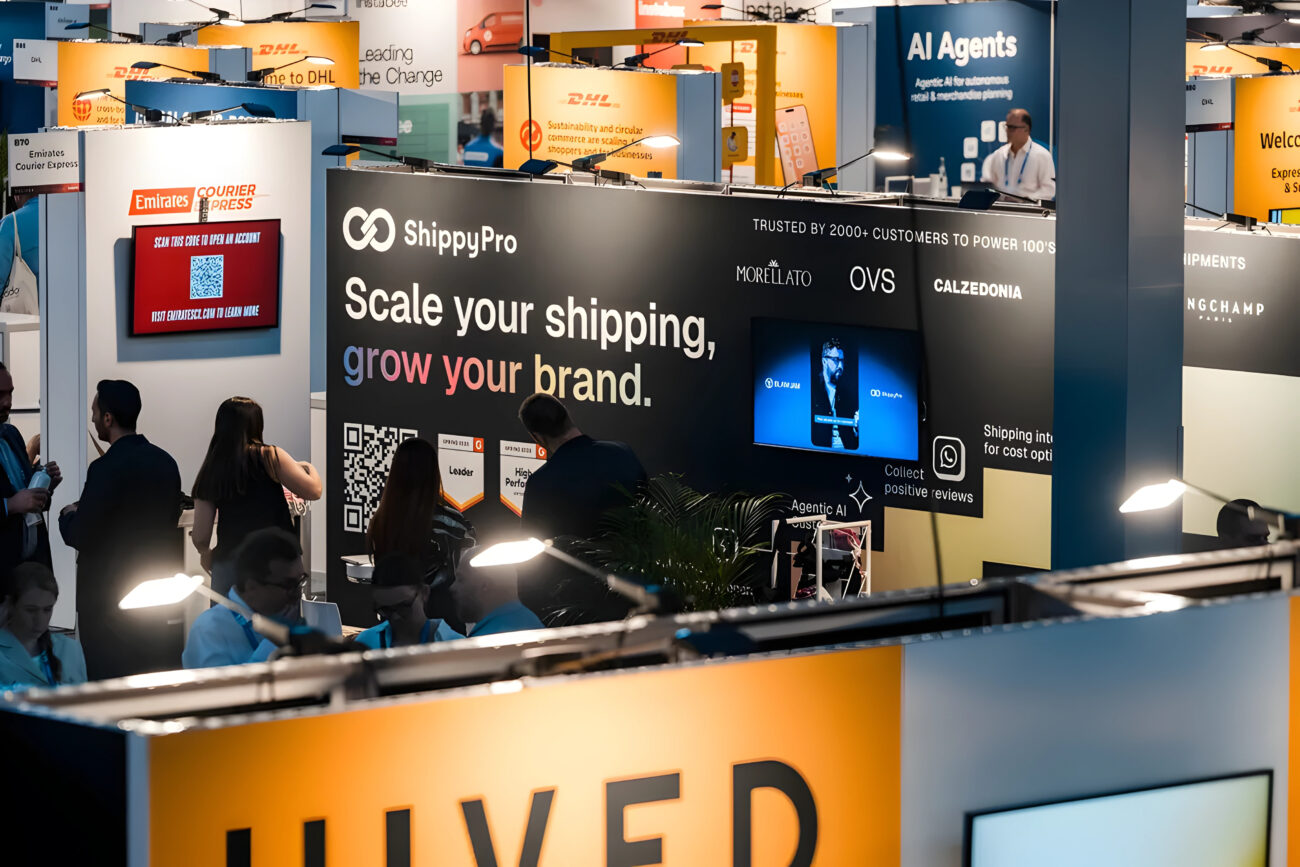
That maturity was evident across the exhibition floor as well. Unlike some technology events, there was little appetite for futuristic promises or speculative innovation. Conversations focused instead on technologies and operational improvements that are delivering measurable results today. That pragmatism may ultimately prove to be sustainability’s greatest ally.
Competitive Edge
One challenge, however, continues to loom large over the industry. Consumers remain accustomed to next-day, and increasingly same-day, delivery expectations. Supply chains remain inherently carbon intensive, while retailers continue to compete on convenience and speed. Reconciling those expectations with meaningful emissions reductions remains one of logistics’ biggest balancing acts. Yet even here, there was reason for optimism. Rather than presenting sustainability and commercial performance as opposing objectives, speakers repeatedly argued that the two are becoming increasingly aligned. Better planning, improved asset utilisation, smarter transport choices and stronger collaboration all reduce both costs and emissions.
That may explain why the mood at DELIVER felt noticeably more confident than in previous years. Rather than lofty declarations and abstract environmental targets, the conversations I had were grounded in operational reality as companies begin to fully recognise that sustainability is not just another corporate obligation. Done properly, it can improve resilience, increase efficiency, strengthen customer relationships and – hurrah! – even create competitive advantage. Leaving Amsterdam, pleased that I’d remembered to pack an umbrella but furious that I’d left it in the hotel room, I found myself thinking that perhaps this represents the real turning point. Not the umbrella, obviously – sustainability.
For years, the logistics industry has debated whether sustainability was affordable. At DELIVER Europe this year, the more interesting question in my opinion was no longer whether businesses should embrace sustainability, but whether they also embrace it as a potential competitive advantage.