Sustainability Finally Grows Up

If there was one message to take away from DELIVER Europe in Amsterdam this year, it was that supply chain sustainability appears to have come of age, writes Peter MacLeod.

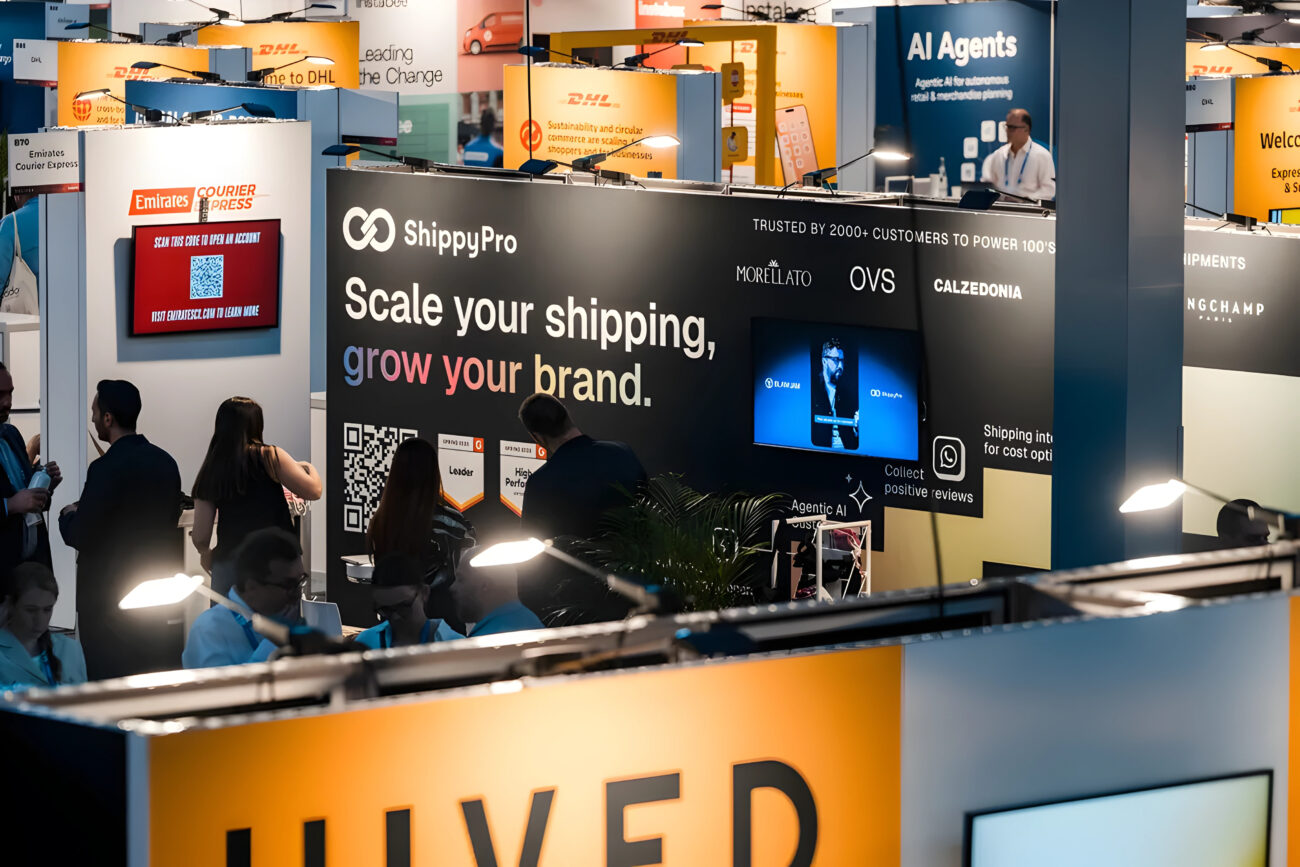
Not so long ago, conversations about decarbonisation often felt detached from the day-to-day realities of logistics. Ambitious net zero targets dominated presentations, while delegates were left wondering how those aspirations could possibly be reconciled with customer demands for ever-faster deliveries and the relentless pressure to reduce costs. This year felt different. Walking around the exhibition and listening to discussions throughout the conference programme, I was struck by how sustainability has become less of a standalone topic and more of a thread running through almost every conversation. It was evident in the event itself, from the emphasis on reducing its environmental footprint to the vegetarian catering, but more importantly it was reflected in the language of the industry. Instead of hearing about why companies should become more sustainable, it was more about how they can actually do so while running better businesses.

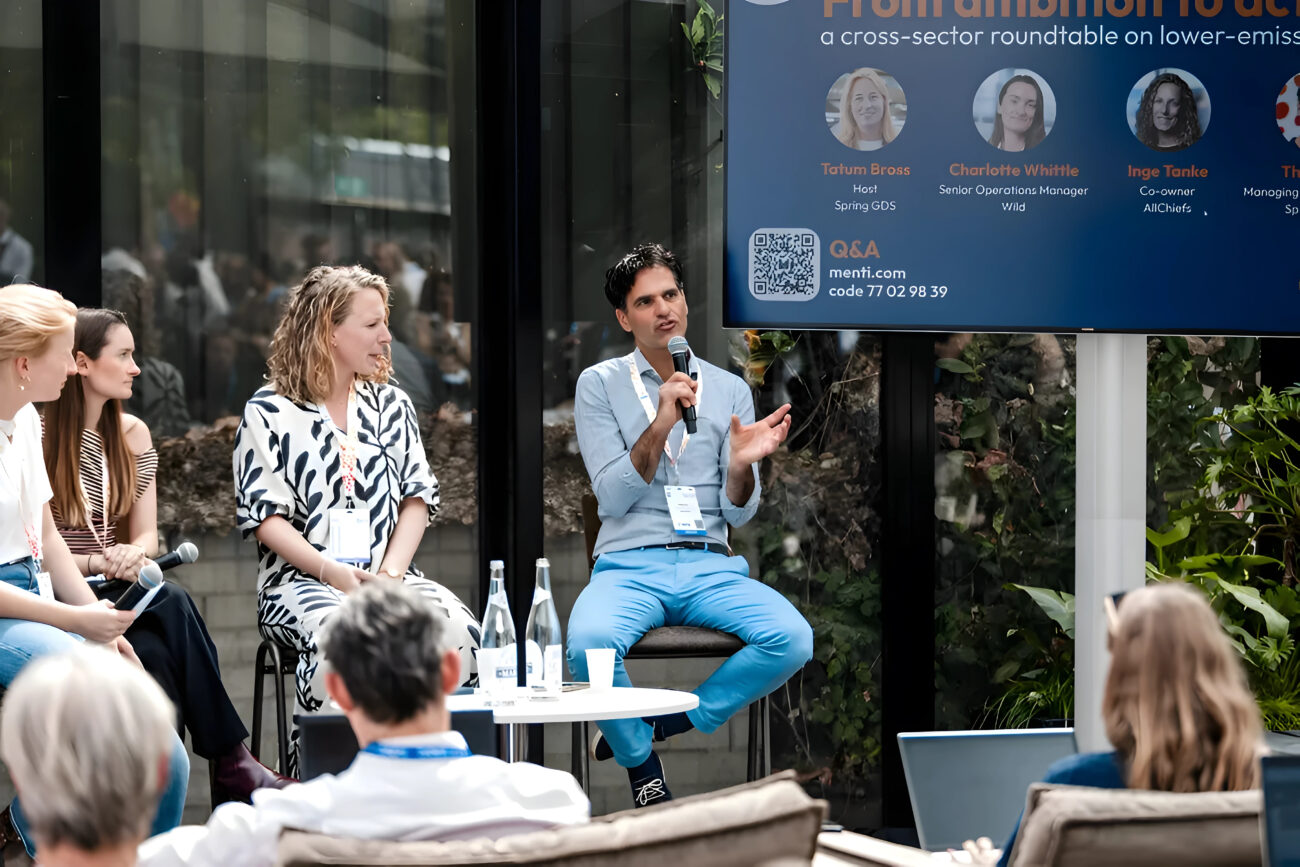
That theme came through particularly strongly during a lively panel discussion hosted by Spring GDS, where moderator Tatum Bross was joined by Inge Tanke of logistics sustainability consultancy AllChiefs, Charlotte Whittle of personal care brand Wild, and Thijs Boel, Director of Spring GDS Europe. Although each panellist brought a different perspective, there was remarkable agreement on the central theme that sustainability has gone beyond the simple desire to reduce carbon emissions. It is becoming a strategic way to improve efficiency, strengthen supply chains, and create commercial value.

For years, many organisations have published ambitious environmental commitments, often setting net zero targets stretching decades into the future. The harder question has always been how to deliver them in practice.

Reality Check

Tanke acknowledged that gap between ambition and reality still exists. While many companies now understand the emissions generated throughout their supply chains, particularly Scope 3 emissions, logistics remains one of the more difficult sectors to decarbonise. Alternative fuels, electrification and sustainable aviation fuel all offer significant opportunities, but availability, infrastructure and cost continue to present challenges. Yet, rather than dwelling on those obstacles, the discussion turned towards practical solutions that companies are already implementing today.

The word ‘efficiency’ surfaced repeatedly throughout the conversation, whether applied to better route planning, modal shifts from air to sea or rail, improved vehicle utilisation, or smarter packaging. Waste less, and emissions fall naturally. It sounds almost obvious, but it represents an important evolution in how the industry talks about sustainability. Boel argued that organisations often make the mistake of treating sustainability as a compliance exercise driven by regulation or ESG reporting. In reality, he suggested, progress accelerates when environmental improvements also deliver measurable business benefits. That struck me as one of the strongest messages of the session.
Logistics has always operated on tight margins. If investments in sustainability also reduce transport costs, improve operational efficiency, strengthen employee engagement, or enhance brand reputation, they cease to be purely environmental projects and become instead sound commercial decisions. Several practical examples illustrated this point. Spring GDS described how introducing reusable pallet boxes not only reduced waste but also improved trailer utilisation, eliminated disposable packaging and reduced transport costs through better load efficiency. Meanwhile, Wild demonstrated how sustainability has been embedded into its product design from the outset. Refillable personal care products, compostable refill packs, recycled packaging and the elimination of unnecessary plastic all contribute to reducing waste throughout the supply chain rather than simply offsetting emissions after the event.

Perhaps more importantly, Whittle explained that customers increasingly expect this approach. Rather than viewing sustainability as a premium feature, many consumers now actively seek brands whose environmental values align with their own.

Shared Responsibility

Equally revealing was the discussion around responsibility. Whenever sustainability is debated, the temptation is to ask who should lead – governments, logistics providers or brands. The panel largely rejected the premise of the question. Instead, every participant described sustainability as a collaborative exercise that depends on every part of the supply chain pulling in the same direction. Brands need to ask tougher questions when selecting logistics partners. Carriers need to present meaningful sustainability options rather than waiting for customers to demand them. Consultants can help organisations translate ambitions into workable strategies. Regulators have a role to play, but legislation alone is unlikely to deliver the pace of change the industry is seeking. The consensus was clear: nobody can decarbonise logistics in isolation.

That collaborative mindset was something I encountered repeatedly throughout DELIVER, as I darted around the venue grateful the roof wasn’t leaking amid the most apocalyptic rain showers! Whether discussing artificial intelligence, transport optimisation or reverse logistics, speakers consistently emphasised the importance of sharing data and working more closely across supply chains rather than treating sustainability as a competitive differentiator. In fact, I’ll take the credit for one of the more refreshing moments during the panel discussion, as I observed that I had somehow managed to reach lunchtime on the first day of DELIVER without hearing endless discussion about AI. The response perfectly captured where the technology now sits within logistics.
Rather than dominating every conversation, AI is increasingly being viewed as another practical tool (see my report from Motive Vision 26 elsewhere in this edition of Logistics Business). Its value lies in helping companies optimise routes, improve forecasting, reduce unnecessary transport, identify inefficiencies and ultimately lower emissions through better decision making. In other words, AI is no longer the story, it is becoming one of the tools that helps write it.

That maturity was evident across the exhibition floor as well. Unlike some technology events, there was little appetite for futuristic promises or speculative innovation. Conversations focused instead on technologies and operational improvements that are delivering measurable results today. That pragmatism may ultimately prove to be sustainability’s greatest ally.

Competitive Edge

One challenge, however, continues to loom large over the industry. Consumers remain accustomed to next-day, and increasingly same-day, delivery expectations. Supply chains remain inherently carbon intensive, while retailers continue to compete on convenience and speed. Reconciling those expectations with meaningful emissions reductions remains one of logistics’ biggest balancing acts. Yet even here, there was reason for optimism. Rather than presenting sustainability and commercial performance as opposing objectives, speakers repeatedly argued that the two are becoming increasingly aligned. Better planning, improved asset utilisation, smarter transport choices and stronger collaboration all reduce both costs and emissions.

That may explain why the mood at DELIVER felt noticeably more confident than in previous years. Rather than lofty declarations and abstract environmental targets, the conversations I had were grounded in operational reality as companies begin to fully recognise that sustainability is not just another corporate obligation. Done properly, it can improve resilience, increase efficiency, strengthen customer relationships and – hurrah! – even create competitive advantage. Leaving Amsterdam, pleased that I’d remembered to pack an umbrella but furious that I’d left it in the hotel room, I found myself thinking that perhaps this represents the real turning point. Not the umbrella, obviously – sustainability.

For years, the logistics industry has debated whether sustainability was affordable. At DELIVER Europe this year, the more interesting question in my opinion was no longer whether businesses should embrace sustainability, but whether they also embrace it as a potential competitive advantage.

Brady Completes Acquisition of Honeywell PSS

Brady Corporation has announced that, effective August 3rd, the company has completed its previously announced transaction to acquire Honeywell Technologies’ Productivity Solutions and Services (PSS) business. The all-cash, $1.4 billion transaction was funded with cash on hand, a senior unsecured credit facility and private placement debt, preserving substantial liquidity to support ongoing operations and future growth initiatives.

The business combination aims to establish Brady as a leading identification, safety and productivity solutions partner for businesses globally, leveraging the existing strength in printers and consumables and PSS’s leadership in mobile computing, scanning, RFID and workflow software. The PSS business generated sales of approximately $1.1 billion in 2025. As a scaled industrial technology company with enhanced capabilities, comprehensive solutions, and broader end-market exposure, Brady believes it is uniquely positioned to partner with customers to address their evolving needs.

In conjunction with the acquisition, Brady will be operated with two reportable segments. The existing Brady business will be reported as ‘Identification Solutions’ and the PSS business will be reported as ‘Intelligent Productivity Solutions’.

Management Commentary

Today marks the beginning of the next chapter for Brady as a leading industrial technology company, with enhanced capabilities and greater market access. The combination of Brady and PSS’s portfolios creates an industrial technology leader with capabilities across identification, safety, connectivity, and intelligent workflow solutions. Brady now serves customers in nearly every end market, with an expanded portfolio designed to help customers improve productivity, safety and operational performance

said Brady’s President and Chief Executive Officer, Vineet Nargolwala.

Nargolwala added, “While this transaction significantly expands Brady’s scale and capabilities, our approach and objectives remain the same: producing trusted products and services, consistent operational execution, disciplined capital allocation, and creating significant value for our teams, customers and shareholders. We welcome the over 3,000 members of the PSS team to Brady and together, we will build the next chapter of Brady.”

The combined company provides a comprehensive industrial technology platform. The product portfolio adds scale and extends Brady into adjacent workflows, including mobile computing, barcode scanning, RFID and workflow software.

The addressable market is estimated at $9 billion globally, for productivity solutions in logistics and industrial applications. PSS’s high-margin software and service offerings provide Brady with an opportunity to increase recurring revenue, improve long-term margin profile, and strengthen customer relationships.

iON Lithium Batteries for Heavy-Duty Forklifts

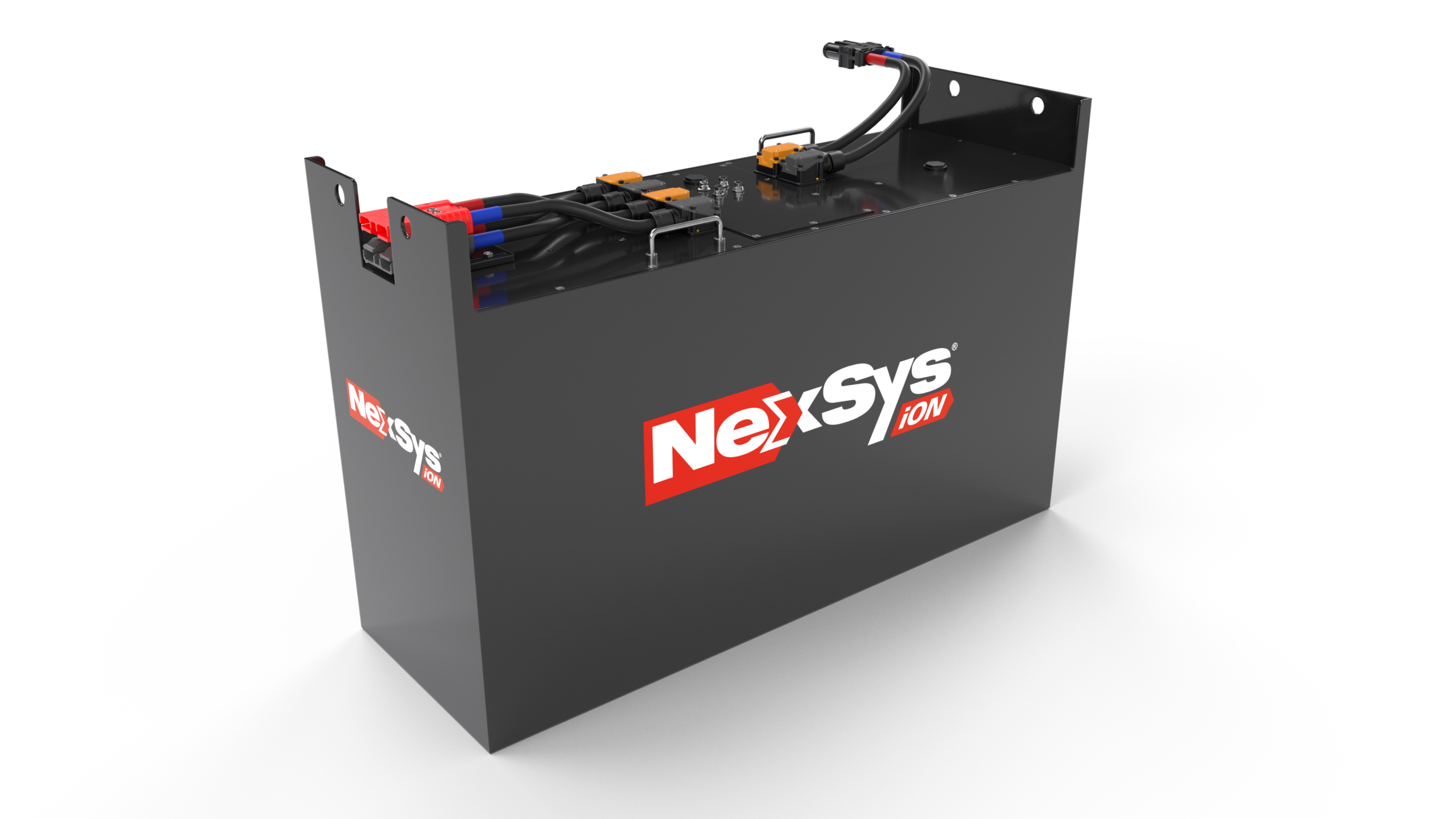
EnerSys has announced the launch of its ‘next generation’ NexSys® iON lithium-ion batteries, aimed to deliver superior performance, maximum fleet compatibility, and faster return on investment for demanding material handling operations.

Designed for 24/7, multi-shift environments, the next-generation NexSys® iON platform enables maximum equipment uptime through extra-fast charging capabilities and opportunity charging of up to 300% nominal energy throughput per day. This makes it ideally suited for up to three shifts per day in heavy-duty warehouse and distribution centre applications.

NexSys® iON lithium-ion batteries represent the next evolution of lithium power for material handling… With unmatched performance, flexible integration, and faster ROI, the next generation NexSys iON allows more customers to confidently transition to lithium, without compromise.

said Martin Walsh, Senior Director Global Battery Product Management MP at EnerSys.

Designed for maximum fleet compatibility, the Next Generation NexSys iON battery features a modular design that delivers high energy content while fitting existing battery trays and supporting a wide range of forklift models. Tailored energy configurations enable fast, flexible fleet integration, while the modular architecture enhances recyclability by allowing easy dismantling at end of life.

Built on a proven safety platform, it incorporates EnerSys’ in-house battery management system and time-tested safety features. Designed and engineered by EnerSys experts, each battery is rigorously tested and certified to meet the most stringent global standards for reliable, long-term performance.

3D Inspection with Machine Vision Platform

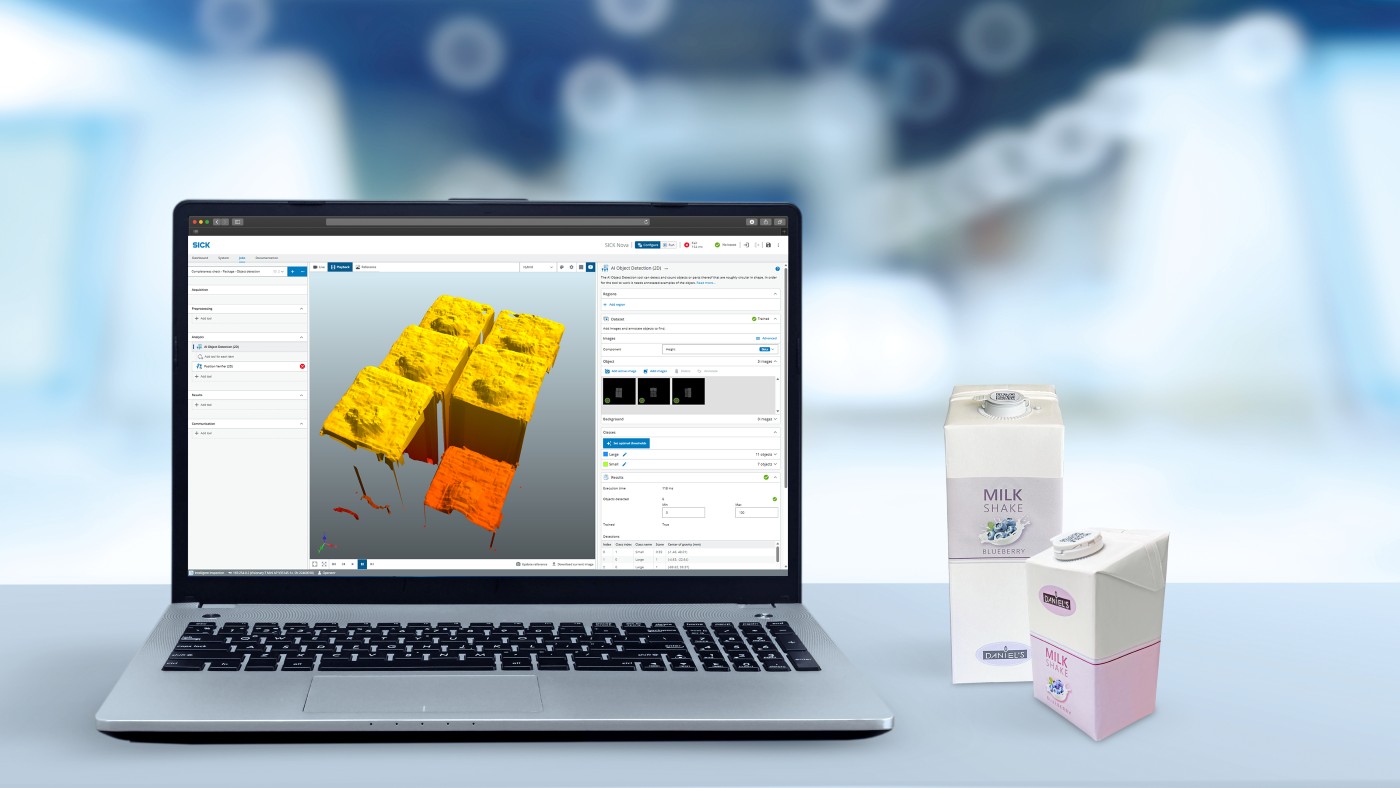
New, configurable AI-powered 3D machine vision from Sick combines deep learning with precise height data analysis via its Nova foundation software. The industrial automation and sensor intelligence supplier has equipped its Nova machine vision platform with AI deep learning algorithms to enable ease-of-use and quick customisation, opening up a range of new capabilities.

Combining AI with spatial understanding, AI-powered 3D image processing goes beyond conventional 3D imaging to include more advanced inspection functions. It’s the first time Sick has provided intelligent AI capabilities for its high precision, reliable 3D machine vision technology and its Nova Intelligent Inspection toolset.

Delivering configurable 3D machine vision across industries such as logistics, electronics, battery manufacturing, automotive, and consumer goods, AI for 3D with Sick Nova improves quality control with intelligent inspection. The example-based approach, together with on-device training and a user-friendly interface, simplifies solution development and provides a cost-efficient way of incorporating deep learning into quality control operations, with no extra equipment required.

New applications across an array of industry sectors

Sick AI-powered machine vision with 3D height analysis unlocks advanced quality-control applications that were previously difficult or impossible to achieve with traditional rule-based inspection. Key applications for the new solution include: package deforming inspection in sectors such as food & beverage and consumer goods; empty box/missing object detection in totes or matrix packaging for fulfilment and logistics operations; assembly verification and surface inspection for electronics & battery production; classification and tyre inspection, including 3D OCR, for automotive applications; and completeness checks in manufacturing.

For example, AI-powered deformation inspection validates the appearance, integrity and function of carton packaging after filling, reliably measuring height deviations of the shape and surface of packages to easily detect defects at high speed, even if there is no colour contrast. AI-powered 3D machine vision sees far beyond the human eye to ensure faulty products are removed from the production and packaging process at an early stage.

AI for 3D

Teach-by-example with sample images provides easy setup, and AI for 3D solutions are customised and trained on each organisation’s own data. Users collect data, train models and execute inspection tasks directly on-device, with reliable, quick set-up of inspection tasks that enables fast, effortless batch changes.

Every pixel carries a height value and is captured by accurate, high precision Sick technology, enabling reconstruction of 3D data and defect detection by a trained neural network embedded in the Nova AI software. The new solution provides colour and contrast independent inspection and improved quality control across industries, with detected defects displayed on an anomaly heatmap. Activated with license on pre-defined devices or through an upgrade license, the toolset also includes traditional rule-based machine vision software tools.

Sick experts work closely with customers to develop tailored solutions that address their key inspection challenges and detect specific anomalies, from minute electrical components to large packaged goods.

Diego Quintana Tukasaki, Market Product Manager from Sick

For us, innovation is not a buzzword, it’s our driving force. Together with our customers and partners, we transform challenges into solutions. Our latest innovation combines quality, expertise and consistency with deep learning to meet demand in two of the highest growth product categories in machine vision: AI software and 3D imaging

“Introducing neural network AI capabilities into our high performance Nova platform expands 3D inspection beyond its traditional limits. Seeing far beyond the human eye, it provides greater control over data and analytics to deliver highly accurate, configurable, easy-to-train, customised intelligent inspection solutions. Inspected items fulfil required quality and sorting demands, helping to improve yield, reduce waste and increase customer satisfaction, while problems with batches or production lines are swiftly identified with the anomaly heatmap. Please get in touch if you would like to find out more about what is possible with Sick 3D inspection and AI.”

Subscribe

Get notified about New Episodes of our Podcast, New Magazine Issues and stay updated with our Weekly Newsletter.