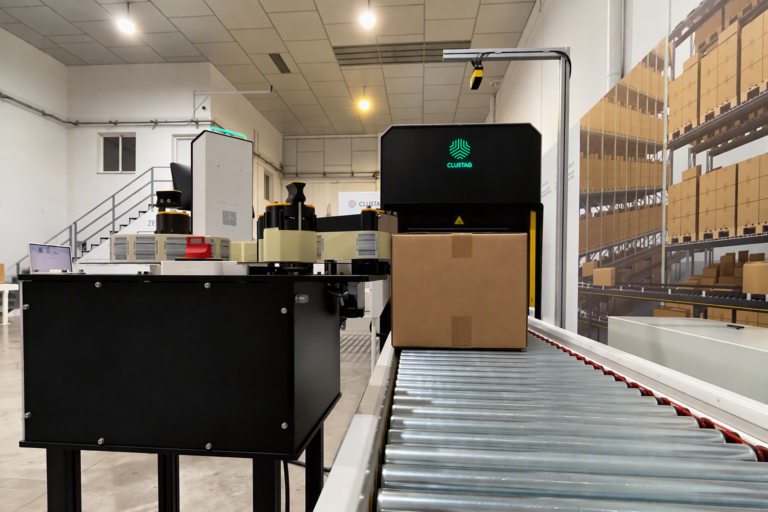

Picture a Friday afternoon in a regional distribution centre. A storm is closing a motorway. The planning system has already rerouted twelve loads, moved two late shipments to another carrier and changed the next day’s pick waves, all before the shift manager has finished reading the weather alert. That is the promise of agentic AI in logistics, and it is also where the hard questions begin, writes Rafael Patron (pictured, below), President of the Scientific-Technical Committee, AIPIA (Associazione ltaliana Professionisti Intelligenza Artificiale).
Nobody doubts that the software can act faster than a person. The real question is who answers for what it did, who could have stopped it, and whether the people on the floor still understand the operation well enough to step in when the model gets it wrong.
From Dashboards to Decisions: Agentic AI in Logistics
For most of the past decade, AI in the supply chain has been an advisory tool. It produced forecasts, flagged exceptions and suggested routes, and a planner decided what to do with them. The DHL Logistics Trend Radar 8.0, summarised by us here, describes the shift now under way: AI is moving from assisting people to acting, with agentic systems able to plan, decide and act towards defined goals. The examples are familiar to anyone who runs a network: anticipating inventory shortages, rerouting shipments around disruptions, adjusting transport capacity in real time.
Stuart Whiting of Schneider Electric made a similar point in these pages, arguing that visibility alone is no longer enough and that the value lies in orchestration, acting on information rather than reporting it. Both articles arrive at the same place. The more the system does on its own, the more deliberately the human part of the operation has to be designed.
Mapping Autonomy, One Decision at a Time
Oversight rarely fails because a company forgot about it. It fails because ‘the AI’ is treated as a single thing, when in practice an agent takes dozens of different decisions with very different consequences. Reslotting fast-moving SKUs overnight is not the same as cancelling a carrier booking, and neither is the same as changing which operative picks which aisle.
A useful exercise is to list the decisions the agent can take in one process, say inbound planning or outbound transport, and give each one an autonomy level. Some can run without anyone looking: small replenishment orders within an agreed band, re-sequencing of pick lists. Some should run and be reported, so that a planner reviews them within the shift. And some should only ever be proposed, with a named person approving them: anything that commits significant spend, changes a customer promise, touches safety or alters how people are assigned and measured.

The thresholds matter more than the categories. ‘Large reroutes need approval’ means nothing at 3am. ‘Any reroute that adds more than a set cost per load, or moves a shipment to a carrier outside the approved panel, waits for the duty planner’ is a rule people can apply.
Checkpoints That Work, and Rubber Stamps That Don’t
There is a well-known trap here. If a planner is asked to approve two hundred AI recommendations a day, the approval becomes a click. The checkpoint exists on paper and nowhere else.
The EU AI Act, Regulation (EU) 2024/1689, describes the problem precisely in its rules on human oversight for high-risk systems. Article 14(4) asks that the people assigned to oversight can understand the system’s capacities and limitations and stay aware of the tendency to rely automatically, or too much, on its output. They must also be able to interpret that output correctly, decide not to use it, and intervene or interrupt the system through a “stop” button or a similar procedure. Even where a logistics agent falls outside the high-risk categories, that list is a sound design brief.
In practice it means fewer, better checkpoints. A reviewer should see why the agent proposed a change, what it expected to gain and what the alternative was, not just a green button. Exceptions should be routed to someone with the authority to act on them, within a stated time. And there has to be a documented way back to manual planning, tested before the day it is needed. Who can switch the agent off for a site, and how quickly can the team run the morning without it?
Where People Are Managed by the Machine
One category deserves particular care, because it is where logistics most often meets the strictest end of European regulation. Annex III, point 4(b) of the AI Act lists as high-risk the AI systems intended to allocate tasks based on individual behaviour or personal traits or characteristics, or to monitor and evaluate the performance and behaviour of people in work-related relationships. Recital 57 explains why: such tools can shape careers and livelihoods, and monitoring can affect workers’ privacy.
An agent that only reshuffles pallets is one thing. One that allocates pickers’ tasks by past productivity, or scores their performance, is another: that is profiling, which Article 6(3) always keeps high-risk. Other workforce tools are not caught automatically: an Annex III system limited to a narrow procedural or preparatory task, not materially influencing decisions, can fall outside, once its provider documents this. The Digital Omnibus on AI, Regulation (EU) 2026/1744, in force since 27 July 2026, has moved back the application dates for the high-risk obligations. The postponement is not a suspension, though: the prohibitions are already in force, and data protection and employment law apply today regardless of the AI Act timetable.
For UK operators, serving EU customers alone is not enough. Article 2 covers providers placing systems on the EU market, EU-established deployers and systems whose output is used in the EU.
Skills on the Floor, Not Just in the Boardroom
The Trend Radar’s insistence that people remain at the centre is easy to agree with and harder to put into practice. If an agent handles the routine work, the planners and supervisors who remain need to understand the system well enough to judge it, which is a different skill from doing the routine work themselves.
The AI Act addresses this directly. In its current wording, as amended by the Digital Omnibus, Article 4 requires providers and deployers to take measures to develop the AI literacy of their staff, taking into account their knowledge, experience and the context in which the systems are used. For a warehouse or transport team that does not mean a generic e-learning module. It means a shift manager who knows what data the agent reads, where it tends to be wrong and what the override procedure is, and a driver or operative who knows whom to call when an instruction looks odd.
This is where the Italian Association of Artificial Intelligence Professionals (Associazione Italiana Professionisti dell’Intelligenza Artificiale, AIPIA) sees the most practical gap. Logistics teams are expert in their operations and AI specialists are expert in their models, but oversight only works when the two share a common map of obligations and responsibilities. For companies operating in Europe, AIPIA’s EU AI Act guide sets out the timeline after the Digital Omnibus, what applies already and what has been postponed, so that operations and IT can plan from the same dates. The webinars and podcasts that Logistics Business runs on AI and automation are one of the places where those two worlds already talk; a shared reference on what Europe now expects of deployers gives those conversations a common starting point.
A Short Test for Any Agent You Run Today
The quickest way to find out whether oversight is real is to pick one agent already in production and ask five questions. Who is the named owner of its decisions? Which decisions can it take without approval, and where is that written down? What volume of approvals does a reviewer actually handle per shift? Who can stop it, and has anyone practised running the process without it? Does it assign or assess people, and if so, has anyone checked what that means under European rules?
If the answers come quickly, the system is probably supervised. If they start a debate in the room, that debate is the most useful thing the business will do with AI this quarter, and it is far cheaper to have it before the storm closes the motorway than after.