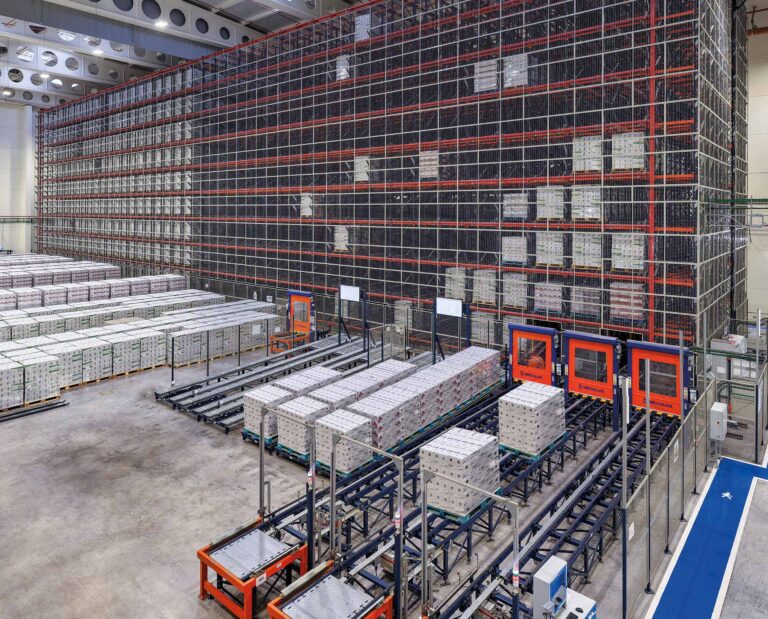

One of Hungary’s largest autonomous warehouse investments has been completed in Páty, within the new 32,000 m² logistics centre of Gebrüder Weiss Ltd. In response to growing logistics demands and labour market challenges, the company has established a fully automated very narrow aisle warehouse complex using Jungheinrich’s technology and expertise.
At the facility, Gebrüder Weiss provides complex warehousing, transhipment, transport, and distribution services for a dedicated customer – covering processes from raw material receipt and storage to production supply and global distribution.
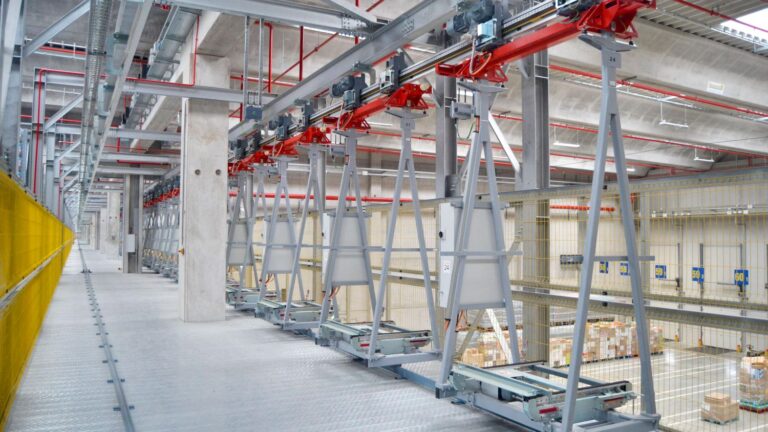
Automated high-bay warehouse with 28,000 pallet spaces
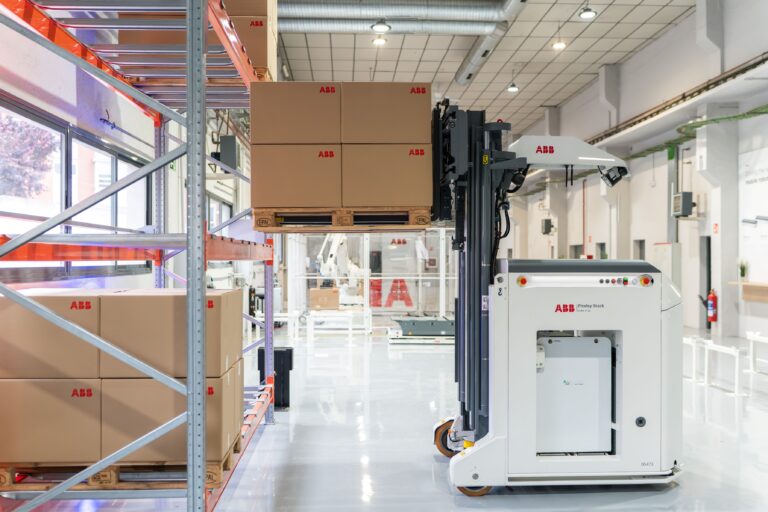
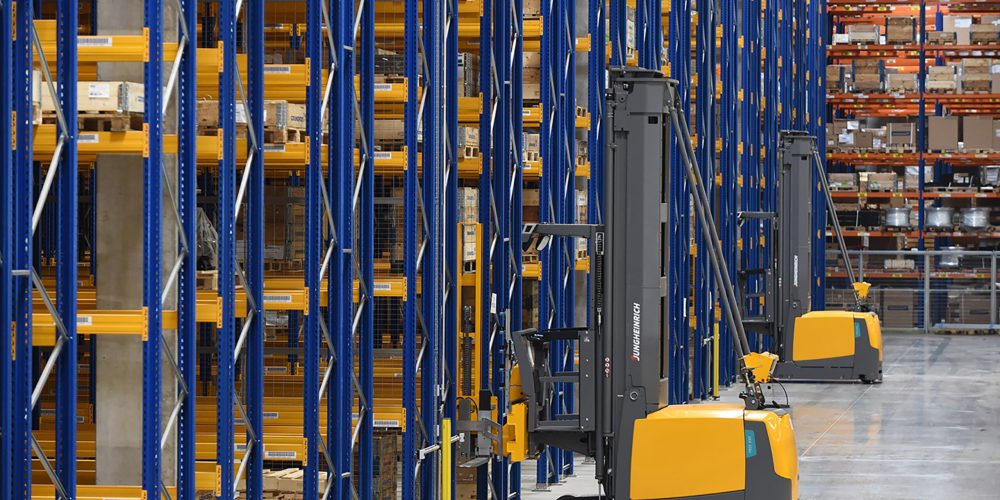
“In the automated warehouse hall, autonomous guided vehicles perform repetitive, high-volume load handling tasks with outstanding safety and efficiency. Within the closed system, which has a capacity of 28,000 pallets, six very narrow aisle trucks handle pallet storage and retrieval without human intervention, fully aligned with the system’s performance requirements,” said Balázs Bencsics, Logistics Solutions Product Manager at Gebrüder Weiss. The vehicles deployed are Jungheinrich Mobile Robots of type EKX 516a, specifically engineered for automated very narrow aisle applications and high-bay storage environments.
The very narrow aisle high-bay warehouse not only addresses logistics labour shortages but also provides a solution to limited storage capacity, enabling optimal utilisation of available space. Pallets are stored at heights of up to 10 metres. “The system can handle five pallet height variants and move up to 120 pallets per hour. The trucks are charged during an entire shift, allowing the warehouse to operate continuously in two shifts without the need for recharging,” explained András Zupán, Project Manager at Jungheinrich, outlining the system’s technical capabilities.
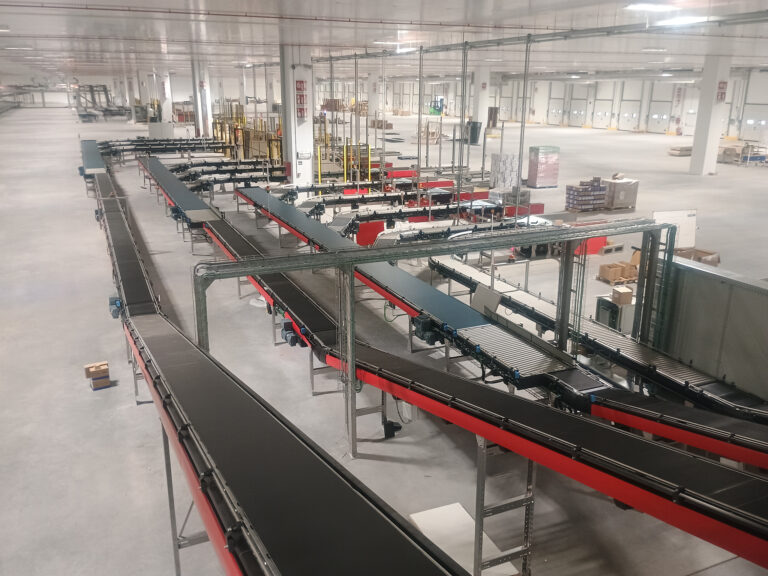
The manual and automated zones work closely together: forklift operators place pallets on cantilever transfer stations in the pre-zone, where contour control sensors check dimensions before the goods enter the automated system. The same transfer points are used for retrieval. The system is connected via interfaces to both the Jungheinrich and Gebrüder Weiss WMS systems, ensuring seamless information flow,
added Zupán.
Step-by-Step implementation during ongoing operations
Bencsics added that the implementation took place in several phases, during ongoing and continuously expanding operations.
Construction began in March 2024, with the automated system built zone by zone, and it has been operating at full capacity since July 2025. Initial employee concerns were addressed through active communication and training. We placed great emphasis on making it clear that automation is not about redundancies, but about creating new opportunities within the organisation,
“We are extremely proud that automation has led to significant resource savings. The integration of new and existing systems has not only enhanced operational efficiency but also elevated the level of human expertise. This improvement is evident across all roles — from site managers to warehouse operators, IT, and Lean specialists. Deepening system knowledge has taken collaboration to a new level,” said Bálint Varga, Managing Director of Gebrüder Weiss Ltd.
Sustainability and further expansion plans
In 2023, Gebrüder Weiss built two warehouse facilities in Budapest where storage, material handling, and order picking are largely automated. The operations are supported by photovoltaic systems that supply carbon-free energy to the trucks and the 36 electric vans used for daily deliveries in Hungary.
As part of further automation efforts supporting the robotic system at the Páty warehouse, the company has launched a new investment within its development programme running until 2026. Future goals include further automation of manual processes – particularly in raw material picking and optimisation of internal pallet transport.