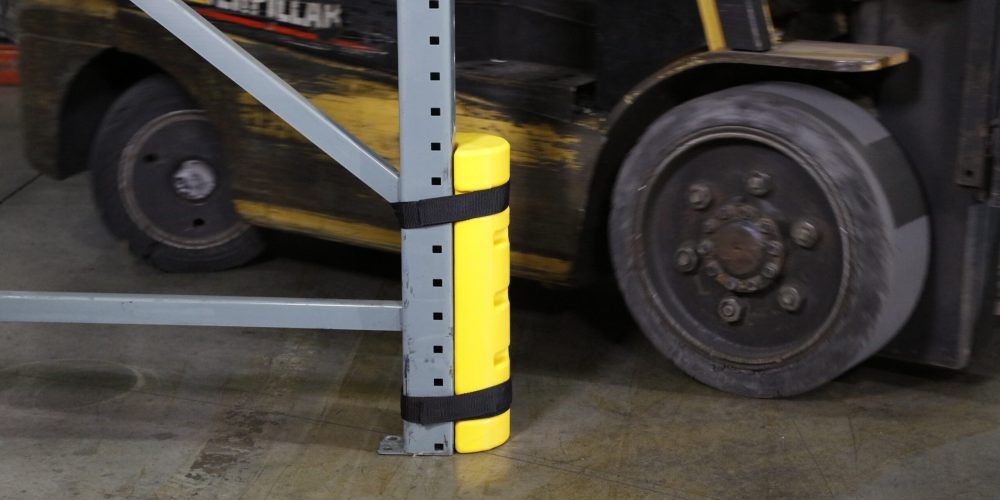
As warehouses become more automated, preventing collisions will be increasingly important. But with people, vehicles and infrastructure sharing the same space, physical protection remains essential.
Warehouses are becoming smarter and more automated, yet keeping people and infrastructure safe when vehicles, goods and pedestrians share the same space is a perennial challenge. For Jim Ryan, founder of Sentry Protection Products, the answer combines collision avoidance, sound traffic management and physical protection should an accident occur.
“More automation is coming to any type of distribution centre or warehouse,” he told Peter MacLeod in a recent episode of Logistics Business Conversations (listen here). But he expects the transition to be gradual: “I see us doing this one function at a time.”
Ryan believes a complete transition away from human involvement is some way off. “There is nothing more incredible than the human brain at figuring things out,” he smiled, arguing that replicating human intelligence across the full range of warehouse activities will take time. In the meantime, sites must accommodate forklift trucks, automated vehicles and pedestrians. Risk is particularly acute where traffic routes intersect or visibility is restricted.
In the UK, the Health and Safety Executive (HSE) recommends separating pedestrians and vehicles wherever reasonably practicable, using dedicated routes and physical barriers where appropriate. Technology can supplement these measures, but cannot be considered a viable replacement for sound traffic management. Nor does automation remove the need to plan for the unexpected, such as vehicles encountering obstructions, people entering their paths, or MHE striking a building column or rack upright.
Making Blind Corners Safer
Blind corners are a familiar hazard in warehouses, where tall loads, racking and building layouts can restrict an operator’s view. Traditional responses include mirrors, warning signs and instructions to stop, sound the horn and proceed cautiously. But Ryan still strives to make warnings more direct: “When we were going out to a lot of warehouses and seeing what their actual hazards were, we witnessed an opportunity to improve safety at blind corners,” he said.
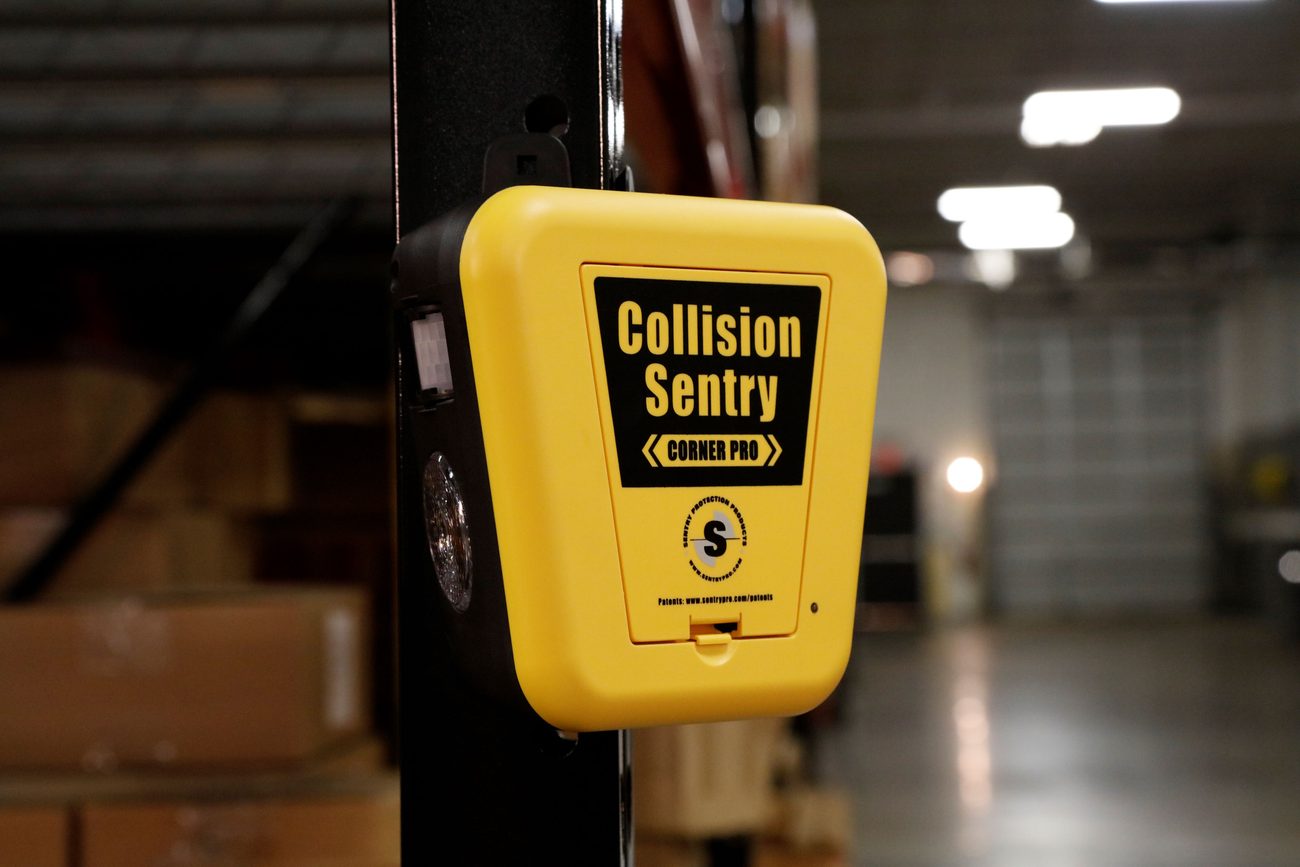
Sentry’s Collision Sentry system uses sensors at the end of an aisle to monitor movement in both directions. If activity is detected on both sides of a blind corner, it alerts approaching traffic with lights and an audible warning. Ryan describes the concept as “like an electronic mirror”, but one that actively warns drivers when a potential conflict is developing.
The system is designed to limit unnecessary alarms, warning operators when movement from both directions creates a potential conflict. That matters because repeated warnings can become background noise: “The last thing you want to be doing is every time you drive around the corner, a buzzer’s buzzing and the lights are flashing, then it’s like a car alarm. Nobody pays attention to it anymore.”
Safety & Productivity Working Together
Requiring every forklift to stop at every blind corner may be prudent, but it also introduces repeated delays into a busy operation. Ryan says some Sentry customers have actually improved productivity after installing collision warning technology. Often, he explained, the only way to check that a corner is clear is to stop, sound the horn, wait and then proceed. A system that indicates movement from the other direction gives drivers useful information before they reach the intersection. The aim is not to encourage faster driving or replace safe practices, but to help people respond to genuine hazards without unnecessary interruptions.
Prevention is not Enough
Even with good planning, training and collision avoidance, impacts will still happen. That remains a risk in today’s high-volume, rapid-dispatch distribution centres. Warehouses therefore need to consider not only how to prevent accidents, but how to limit their consequences should they occur.
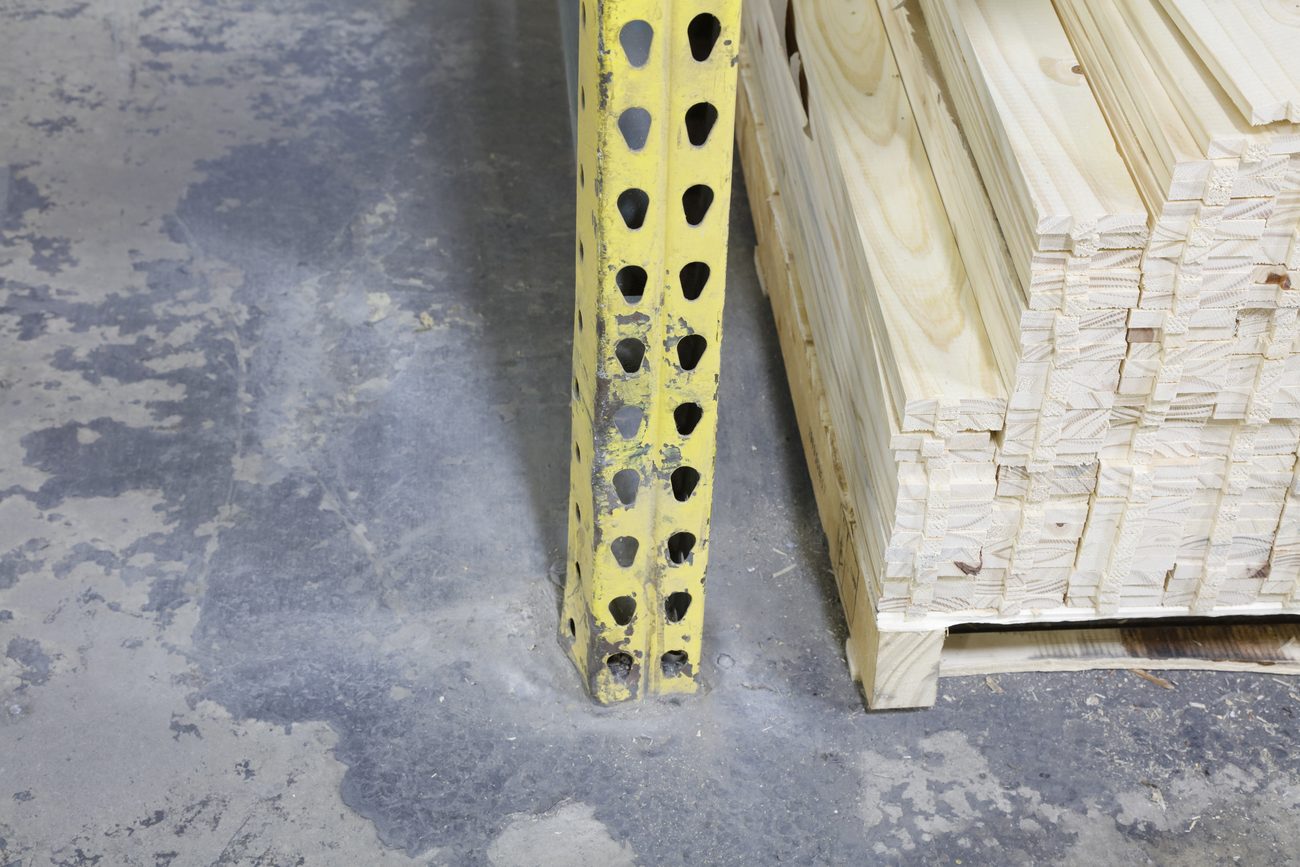
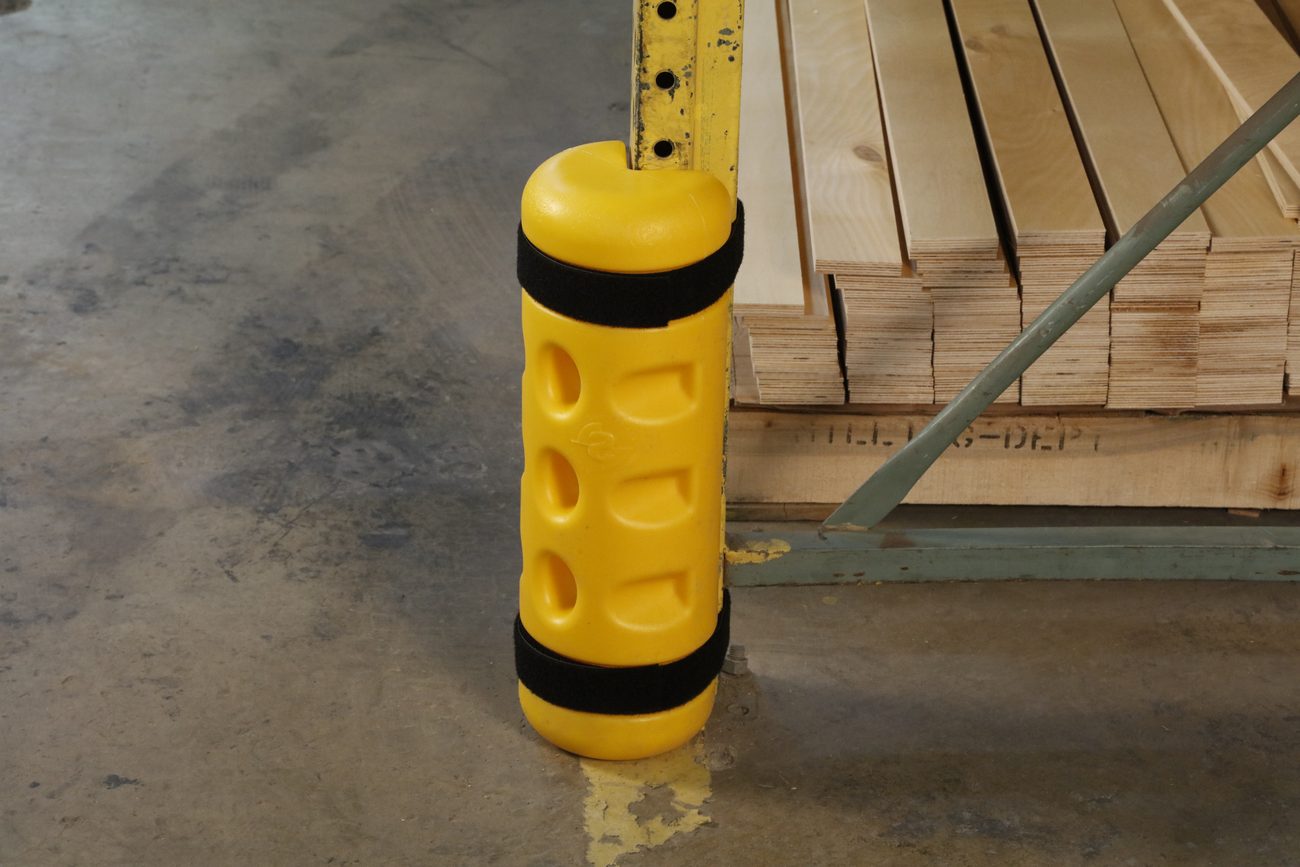
Ryan’s interest in impact protection began after he experienced the cost of repairing forklift damage to a leased building. Sentry’s original idea was straightforward: place a protective layer between a forklift and a building column. The same principle applies to pallet racking, where an impact can damage an upright and potentially compromise the storage system.
Ryan explains the physics through the analogy of an airbag. Rather than allowing a forklift’s impact to be transferred directly to a column or rack upright, a flexible protector deforms under load, absorbing energy and increasing the distance over which the vehicle decelerates. “You’re trying to expand that and in doing so you’re slowing it down like an airbag,” he said.
The challenge is to absorb energy within the space available. Ryan describes the design balance as the “rock and the pillow effect”: a protector that is too rigid cannot absorb enough energy, while one that is too soft may fail to provide effective protection. For rack protection, that means looking beyond appearance or price. A protector needs to absorb impact before the force reaches the vulnerable structure, and should recover its shape to withstand repeated impacts. If replacing it after every collision becomes inconvenient or expensive, operators may delay replacement and leave the rack exposed.
Protecting the Infrastructure
Damage to pallet racking can be overlooked when the priority is keeping orders moving. An upright may still be standing after an impact, but that does not mean it is undamaged. Protection does not remove the need to inspect racking and assess suspected damage promptly.
The US Occupational Safety and Health Administration (OSHA) advises employers to inspect and maintain storage racks and use upright guards to help prevent incidental forklift contact. The costs of damage extend beyond repairs: an affected area may need to be taken out of use while assessed, stock can become inaccessible and operations may be disrupted. In severe cases, damaged racking can threaten worker safety and the stability of the storage system.
Ryan is unambiguous about where the priority lies: “When you have a human being who is working at your facility, you want to send them home at the end of the day in the same condition, in a safe condition, not with injuries from any accidental collisions.”
Training is essential, but Ryan argues it cannot eliminate every risk. “There’s just so much happening in a building at all times.” Rack protection must therefore sit alongside traffic management, pedestrian segregation, inspections and collision prevention.
Incremental Progress
Ryan expects warehouse safety to develop alongside automation, with improvements introduced as individual tasks and processes change. The most successful solutions, he believes, will not necessarily be the most complicated.
“You have to make those automations in a way that people can understand what they’re going to do, so that they can implement those solutions,” he said. A system that forces operators to overhaul established processes or manage complex integrations may struggle to gain acceptance.
“I see the future is going to happen incrementally, year after year. The best solutions will deliver productivity as well as safety, while remaining understandable and simple to implement.”
That philosophy applies to collision avoidance and physical protection alike. Warning systems can help prevent vehicle encounters at blind corners; rack protectors can absorb energy when contact occurs; and thoughtful warehouse design can reduce unnecessary interactions between people and vehicles.
The warehouse of the future will be defined not simply by how much it can automate, or how quickly it can move goods, but by its ability to combine productivity with resilience. As operations become more complex and technologies evolve, protecting people and infrastructure must remain fundamental to the design of the working environment. Ultimately, the most successful warehouse will be not just the one that moves goods optimally, but one that does so whilst ensuring the safety of its people.