


How does a mature and successful transport tech firm continue to innovate and grow? David Priestman spoke with Mike Blackburn, Chief Revenue Officer at Microlise.
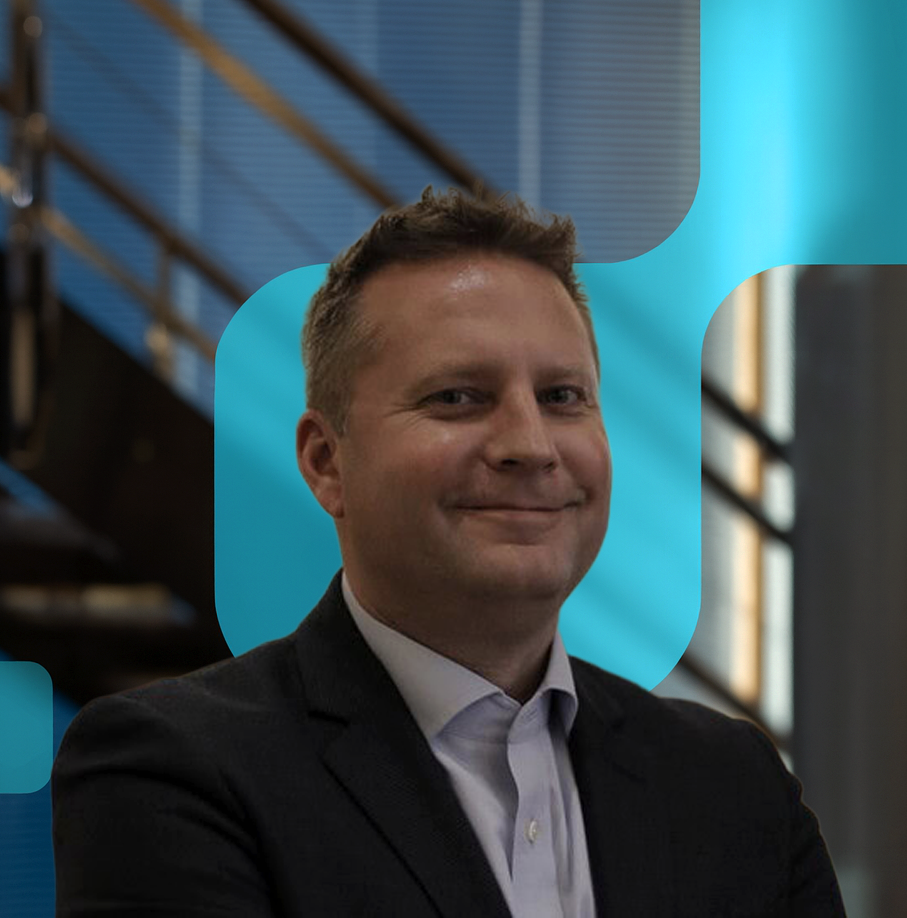
A fresh pair of eyes can help when it comes to the quest for expansion. Blackburn (pictured, below) joined the firm he describes as ‘a massively stable business’ in late 2024. His background is in tech and software, rather than logistics. I asked him to summarise his mission.
“Every build project is the same. Grow the numbers by growing the team and helping them become the best version of themselves through training and partners,“ he says. “If we make the mission about customer value and understanding it then it becomes much more than a software pitch.”
Nottingham-headquartered Microlise listed on the AIM market of the London Stock Exchange in 2021 and is a plc with 730 staff and a turnover of £84 million, focused on transport management software (TMS) as a service. It has commercial vehicles fleet customers predominantly in the UK, Ireland Australia, New Zealand and France. “APAC is a huge growth region for us. France is a mature market. Australia is at a different place in terms of compliance, with trucks often a long way from home, so we have a different customer journey in different continents.” Development work is also done in India.
British Success Story
As well as TMS for routing, costing and consolidation the company also offers fleet telematics for tracking and temperature-monitoring and delivery management with analytics and (e)proof-of-delivery. The emphasis at its recent annual MTC conference in Manchester was on compliance, risk and safety, encouraging the adoption of dash cams (Streamax technology) to spot fatigue, distractions and phone usage, then notifying the driver and head office.

Driver excellence is the goal and up to twenty-four parameters can be monitored for data analysis. Is there a limit to how much data is analysed? When do we reach the point where the customer says, ‘there’s too much data!’? “The trick is to know what you want to impact,” Blackburn urges. “We can have two different types of conversations with customers. One, where they know what they want to change and fix, so we can help show them where they’re at and take them to where they want to be. Or we can just talk about what we’ve done for other customers and pick some targets, then embed it. It’s important to invest in your teams, as well as in the trucks and tech. Changing driver behaviour is easier with the tech. Putting it in is a safety net to keep us honest.”
Incremental Gains
Big customer wins include Culina, Maritime, Bibby, GXO and Europa Worldwide – large HGV fleets, using enterprise-grade functionality platforms. Customer success teams are deployed to maximise retention. “Where do customers want to go, what’s the value discovery?” Blackburn asks. “It’s either fleet compliance or fleet performance. We want to unlock value. There’s the cost of inertia and small, incremental gains to be made.” Roll-out deployment of the TMS and tech is typically between two and six months, but it can be a year if the whole range of products is being deployed.
I asked Blackburn whether he would still describe Microlise as a software business or a tech company. “Everything anybody wants to do in business, the biggest change you can have is through your people,” he advises. “If we can enable our customers’ people to enact change, we’ll have an impact on their performance. Yes, we’re a tech business, but we’re about making people better. We don’t have to build everything ourselves. If there’s a partner out there that we can work with and deliver that value quicker, then that will be how we do it.” Trimble being one example of this approach, as it is not a competitor.
Is a takeover on the cards? “Yes, there’s an opportunity to explore that, we’re adopting a buy, build or partner mentality. There are 3 options available. Acquisitions and regional growth excite me.” TruTac software of Coventry (compliance specialists) were bought and kept in situ, bringing new customer wins to the group.
As well as further internationalisation, Blackburn’s specific goals, via trebling the sales teams in some places, are to grow in the mid-market, mid-sized fleet sector and with ecommerce operators. “A la carte is possible; we do build for individual needs, to simplify and make it easy to consume. Give customers access to their data and show them how they can use it.”
EV users are also good prospects because they need more data to manage the complexity of charging. “It’s inevitable. How long it will take depends on the culture of the business. Most of our customers are running mixed-fleets. OEM trucks are going to have tech, end points that we can work with. If you set your data up that way with 5 or 6 manufacturers in your fleet how are you going to manage that complexity? We can help unlock that. The key thing is to work with customers and ask them where they want to take us in 18 months’ time.”