
For years, warehouse automation has been judged on three chief metrics: productivity, labour savings, and ROI. But I have a feeling we’re about to add trust as a fourth.
The recent US move to restrict certain foreign-produced advanced robotic devices on national security grounds isn’t yet aimed at warehouse automation. But it still raises an intriguing question: what will happen should the same concerns reach our industry?
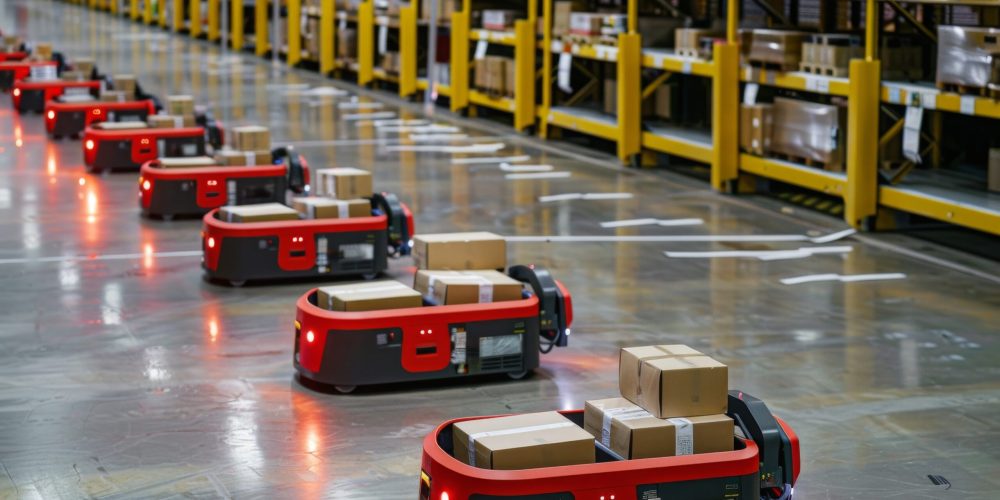
Autonomous mobile robots in modern warehouses don’t just move goods, they also generate data and are connected to cloud platforms. Suddenly, the country where a robot is built, who owns its software, and where all that sensitive data is stored become just as important as how many picks per hour it can achieve.
If you think you’ve heard this story before, remember what happened to Huawei a decade or so ago? What began as a debate about telecoms equipment quickly became a question of national security, trusted suppliers and strategic infrastructure. If warehouse robots are heading down the same path, the implications could be enormous.
Today’s robots are the product of a global supply chain. Motors from China, sensors from Japan, chips from Taiwan, software from the US, integration in Europe. The model works remarkably well. But governments around the world are becoming increasingly wary of relying on technology they don’t fully control.
This is likely to create a clear set of winners and losers. European and North American robotics companies may suddenly find that ‘Made Here’ is as powerful a selling point as technical performance. Cybersecurity consultants will be rubbing their hands – it’s always the lawyers and the consultants that seem to do well out of such crises, am I right? And systems integrators will have plenty of work helping customers navigate what may well become an increasingly fragmented market.
Others may be less fortunate. Chinese manufacturers have become genuine leaders in warehouse robotics, often offering exceptional technology at highly competitive prices. If geopolitics begins to trump engineering, if you’ll pardon the pun, market access could become a bigger challenge than product development.
And then there’s the consumer, good old you and me, right at the end of the food chain. Less competition usually means higher prices. More regulation often means slower innovation. And because warehouse automation has played a major role in making fulfilment faster and more affordable, a slowing of investment or rising of costs will mean we may eventually feel the impact too.
For years we’ve simply been asking whether a robot can do the job. Now we’re asking whether we can trust it. For now, based on the information I have in front of me, I’m not convinced warehouse robots are about to become the next Huawei. Conversely, I’m equally unconvinced they won’t.