
Warehouse Solar Rooftop Revolution is here

Why are so many warehouse spaces going to waste by not using solar? Amy Wilson, Chief Marketing Officer at Wattstor, explains.

With geopolitical events causing two major price shocks in five years, it is no wonder that energy has become a major operational and financial concern for logistics providers. As the sector looks at ways to reduce its reliance on volatile wholesale energy prices, the idea of generating renewable energy on-site has moved from a ‘nice-to-have’, or purely environmental initiative, to an increasingly attractive strategy for securing a stable and predictable energy supply.

Despite the government pushing a ‘solar revolution’ for both businesses and households, thousands of warehouse rooftop spaces remain untapped potential for solar generation. A report from Cushman & Wakefield estimates that UK logistics and industrial buildings of 50,000 square feet or more account for 1.5 billion square feet of roof space, with the potential to generate over 36GWh of electricity each year. With the government targeting 45 to 47GW of solar capacity by 2030, warehouse rooftops could make a substantial contribution to national targets.

At a time when logistics operators need greater control over energy costs and to be demonstrating credible carbon reductions, they should look to roofs as a valuable asset.

Why has such an obvious opportunity stalled?

Several barriers can prevent a promising project from being reduced or even abandoned. Most of the time, technology isn’t the blocker. Developers sometimes design warehouse solar schemes around present demand, so an ambient warehouse with an enormous roof may receive only enough panels to serve its modest daytime load. Much of the available space then remains untouched, even when automation or vehicle charging will increase electricity use later down the line.

In addition, complex property arrangements can make the calculation harder. For example, the occupier pays the electricity bill while the landlord controls the roof, meaning that the lease may not align with the expected payback period. Furthermore, supporting equipment may require planning permission.

Solar panels are only half of the solution

Grid constraints often present the biggest obstacle to a large rooftop solar project. Solar panels on a warehouse roof may be able to generate more electricity than the business can use, but the local electricity grid may not have room to take the excess. This can lead to either installing fewer panels or paying for an expensive grid upgrade.

While the UK needs a costly, decades-long grid investment as logistics sites electrify, it must also use the existing network more effectively. Battery storage and smart energy management systems may provide a more immediate solution.

A battery can store solar electricity that the warehouse cannot use straight away, preventing too much power from being sent to the grid at once. If a project can show that it will stay within the grid’s existing limit, the need to pay for an upgrade to handle electricity that the site will never send is avoided. Grid constraint then becomes a design or engineering challenge, rather than the end of the project.

Making it work in practice

Pharmaceutical distributor Mawdsleys faced this challenge at its warehouse in Doncaster. The site needed a 1,700-kilowatt rooftop solar system to match its expected annual electricity use, but the grid operator would only allow a much smaller limit. Wattstor linked the panels to a battery so surplus solar electricity could be stored on site rather than sent straight to the grid. Controls limited how much power reached the grid, allowing Mawdsleys to install the larger solar system while staying within the permitted connection limit.

Similarly, our work with Big Yellow Self Storage shows how one project can establish a repeatable approach. Its Slough store combined rooftop solar panels with a battery that can power the site for up to ten hours. The installation has helped set the requirements for future stores, allowing it to include solar and storage in new developments from the outset.

Turning roofs into working assets

This is a model that can be repeated. Warehouse operators should begin with the site, not a predetermined quantity of panels. Half-hourly demand data and the condition of the roof show what is possible, while expected growth and grid limits reveal what the system must handle.

New warehouses should now plan rooftop solar and battery storage together, with energy management built in from the outset. Retrofitting the existing estate remains a vast opportunity, but completing a logistics building without considering the power it could generate, and how it will use that power, creates wasted space from its first day.

The rooftop revolution no longer needs a technological breakthrough, but it does require more than panels. The logistics sector must stop treating roofs as leftover space and use solar plus battery storage and smart energy management to turn them into working energy assets. Operators that act now can reduce costs while preparing for rising electricity demand. The rooftops are ready. The sector should be too.
Celebrating 25 Years of Intralogistics in Stuttgart

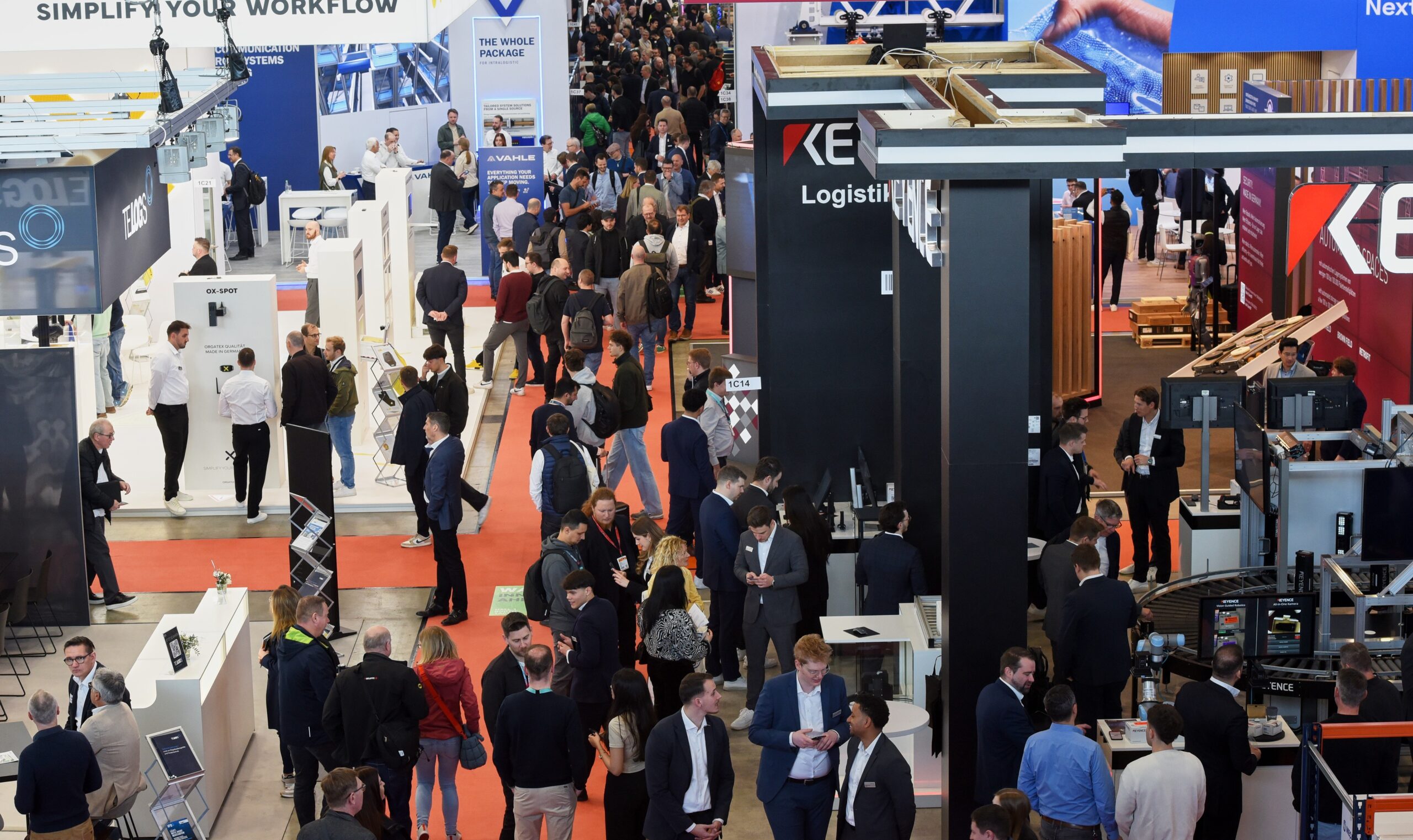
LogiMAT will culminate a 25-year success story in Stuttgart when it opens its doors next March 16th. Two and a half decades of technological development marked by sweeping changes and a profound increase in the importance of intralogistics. Throughout this era, LogiMAT has often played a visionary role in advancing the adoption of new technologies and forward-looking solutions.

A key ingredient in the success of LogiMAT has been its innovative approach: its consistent focus on presenting sustainable solutions, its business-oriented vibe, and its unique conference-level program of free events. LogiMAT’s evolution has been closely linked to its home in Stuttgart. “We have witnessed how the event grew at Killesberg, moved to our new venue in 2008, and continued its dynamic growth there. Today, LogiMAT occupies all ten halls every year, filling the entire exhibition grounds. It brings the international intralogistics industry to Stuttgart,” says Stefan Lohnert, President of Messe Stuttgart”.

Since its debut in 2003 at the old Stuttgart Killesberg exhibition grounds, LogiMAT has been a beacon for key industry trends – a platform for tried-and-true solutions offering a one-stop snapshot of the industry. A glance at the first catalog reveals that from the very beginning, LogiMAT’s content and concept were aligned with a clear organization of exhibitors by segment and a sophisticated accompanying program – a recipe for success that has continued to the present day. This strategy has accompanied its evolution over the past two and a half decades from a largely regional event to the most important annual international trade show for intralogistics and process management and a magnet for exhibitors and professionals alike. LogiMAT’s trajectory offers something of a chronicle of the time, reflecting the explosive growth of intralogistics technology. “As an early adopter of cutting-edge trends and solutions for efficient intralogistics, LogiMAT serves as a catalyst for optimizing logistics and production processes, particularly for small and medium-sized enterprises,” notes Exhibition Director Michael Ruchty from Munich-based event organizer EUROEXPO.

Five formative years at Killesberg

Visitors to LogiMAT knew back in 2006 how e-commerce would affect logistics and what kind of solutions were needed to overcome these challenges. Logistics Business has been exibiting since 2006. The year 2007 saw the introduction of cloud-based solutions, known at the time as software as a service (SaaS). The show in March 2009 saw a shift from process-oriented software to a service-oriented architecture that brought the intralogistics industry such benefits as automated guided vehicles (AGVs), swarm technology, and end-to-end system integration. By 2010, LogiMAT was even presenting solutions for energy-efficient intralogistics, sustainable warehouse construction, and environmentally friendly industrial trucks – concepts now known collectively as “green logistics.” The widespread adoption of shuttle systems and fully scalable warehousing systems, coupled with breakthroughs in software solutions, machine vision, communications technology, state-of-the-art energy storage, and ultimately robotics: LogiMAT provided a platform for these developments early on, consistently promoted them, and helped nurture their growth. Today, they are standard features of flexible intralogistics solutions.

The first LogiMAT at Stuttgart Messe in Killesberg featured 160 exhibitors presenting their solutions and innovations. Dr. Michael ten Hompel was already talking about robots and AGVs in material flow technology, constructive packaging options were on the agenda, while the AIDC sector grappled with the pros and cons of 2D codes and RFID. The exhibitors at LogiMAT 2003 were already pointing the way toward a high-tech future with new fulfillment technologies such as pick-by-light and pick-by-voice while touting the potential of cloud-based software systems to streamline processes. In its debut year, LogiMAT drew some 3,700 visitors, eager for the opportunity to learn about all the latest industry trends under one roof. In 2026, by comparison, the event attracted an astounding 69,856 professionals and 1,671 exhibitors from around the world. LogiMAT today is truly international, with a full 37% of exhibitors coming to Stuttgart from 46 countries.

The years 2004 and 2005 saw the rollout of picking processes and pick-by-voice systems. The accompanying program also featured complex automated logistics and intralogistics networks while foreshadowing autonomous self-organizing systems, the internet of things, and industrial automation. The first mobile robots hinted at the automation of intralogistics that would follow. And in just two years, LogiMAT had nearly doubled in size to welcome 7,230 visitors and 289 exhibitors. “By its third year, LogiMAT had already become a trailblazer for state-of-the-art intralogistics,” boasts Ruchty.

An industry event aligned with evolving technologies

Just one year later, LogiMAT had already established itself a must-attend event showcasing industry trends, hosting innovative product launches, helping business leaders make sound investment decisions, and offering top-notch networking opportunities. The accompanying program of 2006 highlighted e-commerce, digital logistics, and material flow automation – themes that now dominate the industry – and introduced the “internet of things” as a concept. The fifth and final LogiMAT at the Killesberg site in 2007 broke all previous records with 463 exhibitors and 11,000 visitors.

When LogiMAT moved to the new Messe Stuttgart convention center at Stuttgart International Airport in 2008, it initially occupied three exhibit halls with over 571 exhibitors and 15,000 visitors before its meteoric rise to become the leading international platform for a rapidly evolving industry. Visitors and exhibitors in 2009 were all abuzz with talk of “vehicle swarms,” smart integration, energy efficiency, and AGV fleets. In the three years that followed, LogiMAT grew to occupy four exhibit halls with a focus on automation systems, the internet of things, AGVs, sustainable packaging strategies, green logistics, resource- and energy-efficient technologies, adaptable systems, and shuttle systems. Demographic changes and ergonomic workstations also became increasingly prominent. Strong demand from 2012 forward led to the addition of another exhibit hall nearly every year. In 2014, intralogistics finally became the defining benchmark for efficient e-commerce, which in turn became a driver for enterprise workflows and the cutting-edge intralogistics solutions on display in Stuttgart. With 32,800 visitors in 2014, LogiMAT established itself as a key bellwether for intralogistics trends.

Fills all the exhibit halls

In the years 2015–2019, the key trends identified in previous years were already on full display in the featured systems and solutions. AGVs, shuttle systems, and robots were everywhere, and the forums were dominated by industrial automation, the internet of things, and e-commerce. In 2016, LogiMAT occupied all exhibit halls available at the time, and just three years later, it filled all ten halls in the newly expanded Messe Stuttgart convention center. The year 2020 saw the start of a global health crisis, with the pandemic making an on-site event impossible. Event organizer EUROEXPO seized the opportunity to offer an online program on its own dedicated platform.

LogiMAT was reawakened in 2022, once again filling all ten exhibit halls at Messe Stuttgart. The integration of modern technologies such as robotics, smart sensors, and artificial intelligence grew exponentially in the years that followed. Exhibitors are presenting more and more innovations in the form of powerful autonomous robots, drones, cutting-edge forklifts, and AGVs with energy-efficient drive and storage modules. Automated warehouse systems have become scalable, and smart cloud-based solutions offer warehouse management, data analytics, and systems management capabilities. Other themes include IT network security and supply chain resilience.

LogiMAT closed its doors in 2024 and 2025 with an uptick in visitors, exhibitors, floor space, and new product premieres – plus a growing international contingent of about 35% among exhibitors and 30% among visitors. LogiMAT 2026 set a new high-water mark across the entire spectrum of performance indicators. “LogiMAT’s 25-year celebrations in Stuttgart represent 25 chapters for an industry that is always evolving,” concludes Exhibition Director Michael Ruchty. “That’s why this anniversary is about more than looking back. Together with our exhibitors, partners, and attendees, we intend to continue focusing on themes that are key to efficient, sustainable intralogistics. Stuttgart remains our home and a trusted partner.”

Ammonia-Powered Bulk Carrier Begins Maiden Voyage to Australia

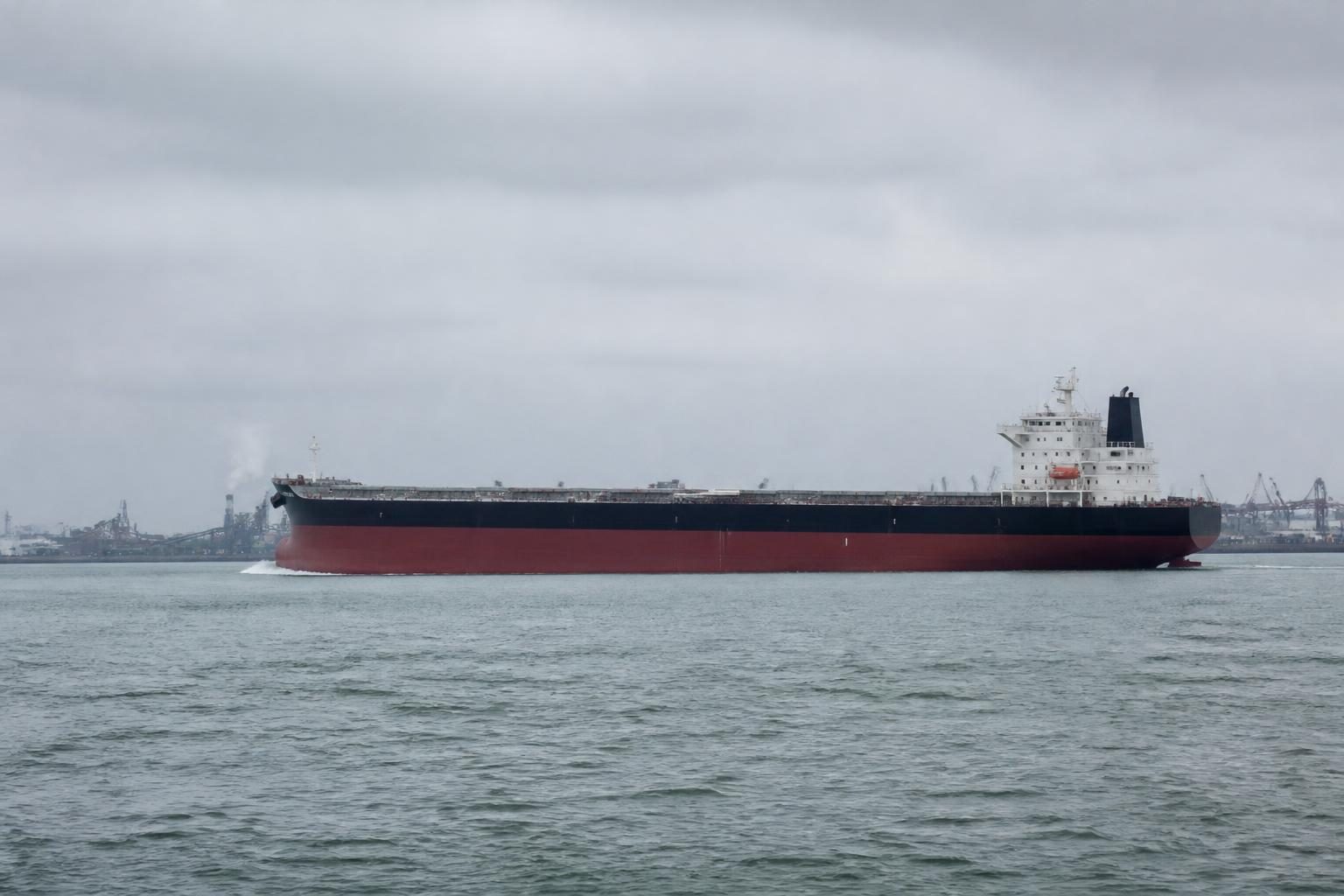
A 210,000-deadweight-tonne ammonia-powered bulk carrier has begun its maiden voyage to Australia, marking a significant development in the use of alternative fuels for deep-sea shipping.

The vessel, Mineral Europa, is described as the world’s first ammonia-powered dry bulk carrier. Built in 2026, it is the first of 21 ammonia-powered vessels planned for delivery to CMB.TECH‘s fleet by 2029, including 18 dry bulk carriers, one container ship and two chemical tankers.

Why it matters for logistics

The voyage provides an early operational test for ammonia as a marine fuel on a large oceangoing vessel. Dry bulk ships transport major industrial commodities and raw materials, making their fuel choices relevant to global supply chains, port operations and cargo owners seeking to reduce transport emissions.

Ammonia does not produce carbon dioxide during combustion, but its overall environmental performance depends on how the fuel is manufactured, transported and used. The fuel also brings new requirements for vessel design, crew training, safety management, storage and bunkering.

Those requirements are particularly relevant to European maritime logistics. The vessel’s owner is headquartered in Antwerp and is investing in ammonia storage infrastructure and bunkering barges alongside its fleet expansion. Such facilities could help determine how quickly ammonia-fuelled shipping can move from individual demonstration vessels to wider commercial deployment.

For freight forwarders, cargo owners and port operators, the development highlights the need to monitor alternative-fuel availability and handling standards across key trade routes. It also adds ammonia to the growing range of options being assessed alongside methanol, biofuels, batteries and other pathways for reducing maritime emissions.

Subscribe

Get notified about New Episodes of our Podcast, New Magazine Issues and stay updated with our Weekly Newsletter.