From Parcels to Full-Service Supply Chain

For many businesses, DX has long been recognised for its express parcel and document delivery services. But today’s logistics market demands far more than simply moving packages from A to B.

Customer expectations are changing, supply chains are becoming increasingly complex, and businesses are looking for logistics partners capable of providing integrated services rather than isolated transport solutions.

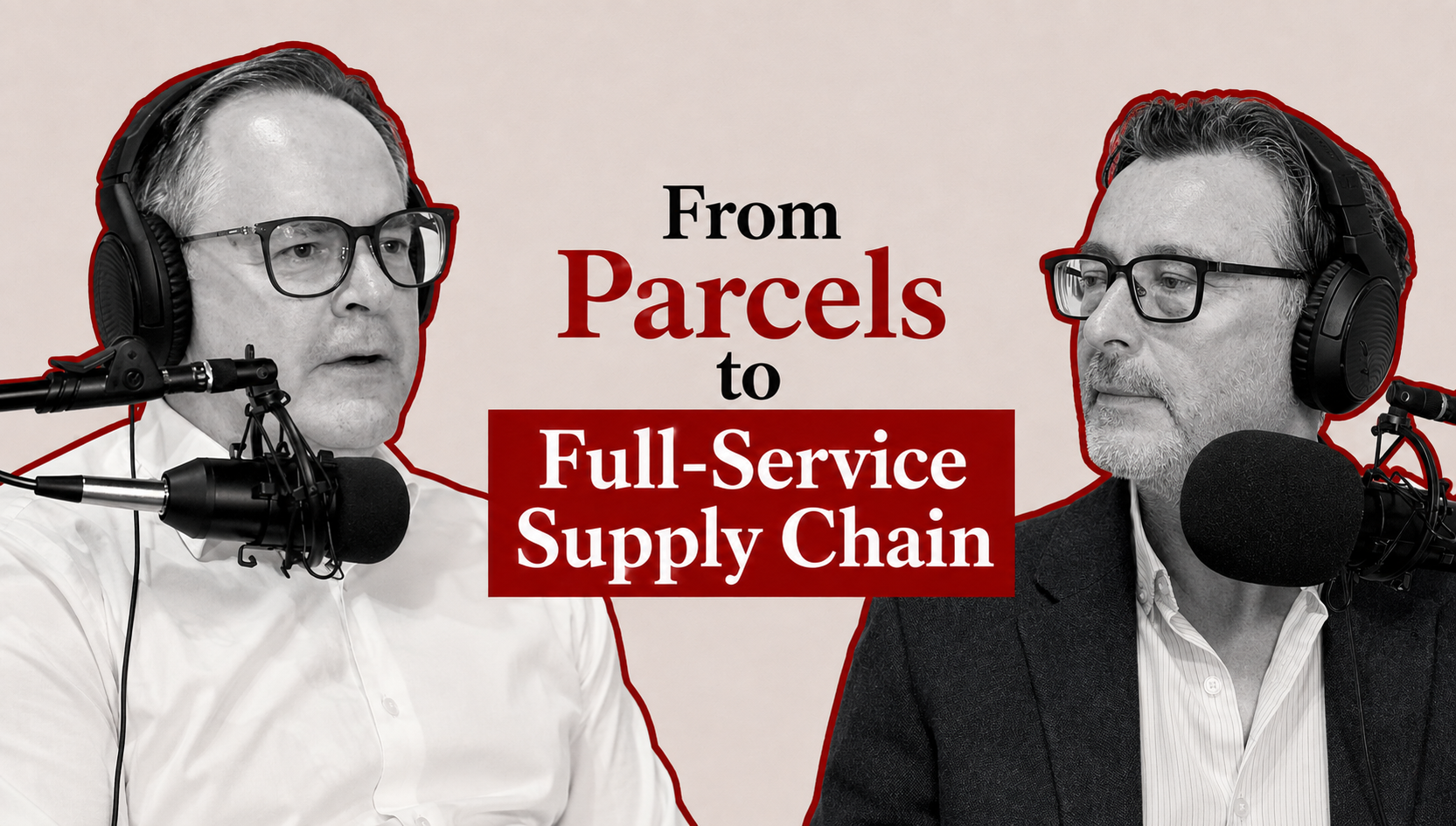
In the latest episode of Logistics Business Conversations, Peter MacLeod is joined by Ian Truesdale, CEO of DX Logistics, to discuss how the company is evolving into a broader logistics provider and the strategy behind its next phase of growth.

During the conversation, Ian reflects on his first year as CEO, explaining how the business is strengthening its operational foundations while expanding into warehousing, fulfilment, dedicated transport and same-day delivery. He also discusses the growing importance of combining multiple logistics services into a single offering, helping customers simplify increasingly complex supply chains.

The episode also explores DX’s investment in digital transformation, AI-enabled systems, infrastructure and strategic acquisitions, alongside wider industry topics including sustainability, collaboration, urban logistics and the future skills the sector will require.

Whether you’re interested in logistics strategy, supply chain innovation or how established businesses are adapting to changing customer expectations, this episode provides valuable insight into where the industry is heading.

Listen to the full conversation using the player below.

Automated Sustainable Packaging for Furniture

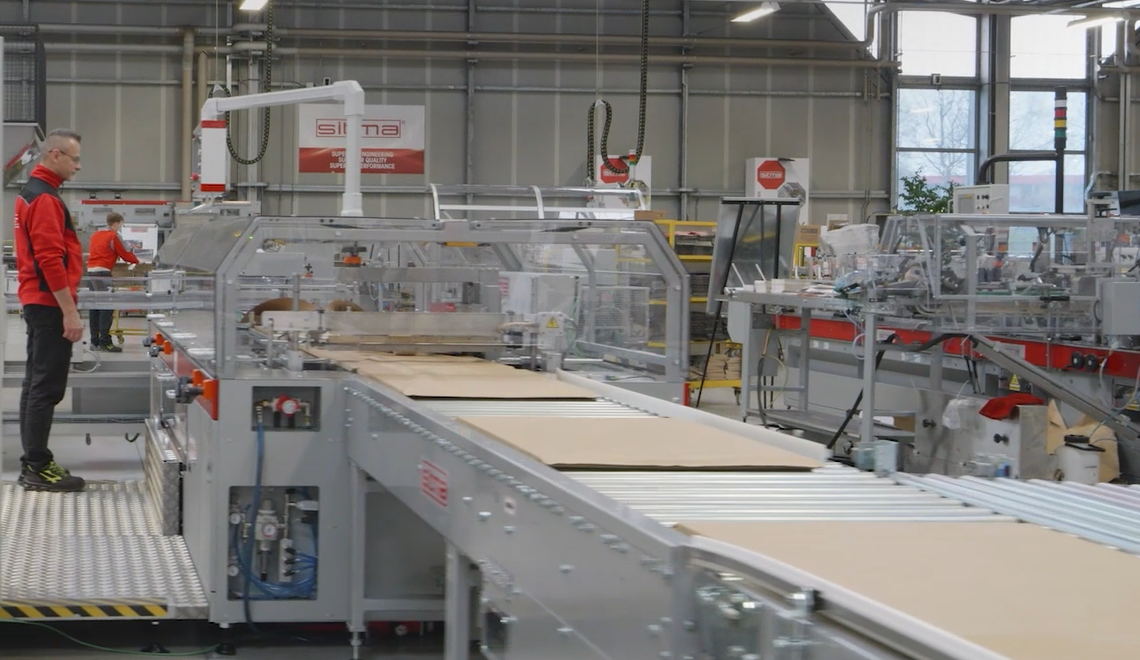
Sitma has launched FlatPack, an automated paper-based wrapping solution for furniture panels, designed as a primary packaging system to replace plastic packaging in industrial production environments.

Developed in collaboration with a leading global furniture manufacturer, FlatPack combines sustainability with industrial performance, enabling furniture manufacturers to reduce plastic use without compromising packaging protection, operational continuity, or logistics efficiency. Built on Sitma’s established expertise in paper-based packaging, the system has been engineered to meet the specific requirements of furniture manufacturing and distribution.

FlatPack enables manufacturers to move beyond plastic while maintaining industrial productivity. Through fit-to-size continuous motion primary packaging, the system delivers compact and secure packs that reduce material usage and support efficient logistics. At the same time, the inward-folded wrapping geometry allows for optimized palletization, improving space utilization and handling stability across the supply chain.

In addition to wrapping, FlatPack integrates complementary packaging operations within the same workflow. The system manages the insertion of instruction manuals and leaflets as well as the integration of hardware toolboxes or assembly kits, ensuring all product components are securely contained within the final package.

Unlike many paper-based alternatives, FlatPack is designed to perform consistently across real production and logistics environments. It ensures reliable product protection during storage, transport, and in-store handling, while maintaining a clean and uniform retail appearance. This makes it not only a sustainable solution, but also a practical and scalable approach for large-scale furniture manufacturing operations.

With the shift from plastic film to printable paper, FlatPack also transforms packaging into a functional communication surface. Manufacturers can integrate product information, instructions, branding, and sustainability messaging directly onto the pack, reducing additional materials while enhancing customer interaction at the point of sale.

“FlatPack represents a major step forward in combining sustainability with industrial performance,” said Stefano De Marco, CEO of Tecnau and Sitma. “With this solution, we enable manufacturers to eliminate plastic from primary packaging while maintaining the efficiency, protection, and scalability required in modern production and logistics environments. It reflects our commitment to delivering tangible, production-ready innovations that support our customers’ transition towards more sustainable operations.”

Built for modern production environments, FlatPack supports automated workflows and integration with existing packaging lines. Its flexibility allows manufacturers to adapt to different panel sizes and production requirements while maintaining consistent performance.

FlatPack represents a new standard in furniture packaging, where sustainability and industrial performance are no longer in conflict. By combining paper-based packaging, automation, and logistics optimization within a single solution, Sitma supports manufacturers in transitioning toward more sustainable operations, without compromise, from packaging to profit.

Warehouse Robots: The Next Huawei?

For years, warehouse automation has been judged on three chief metrics: productivity, labour savings, and ROI. But I have a feeling we’re about to add trust as a fourth.

The recent US move to restrict certain foreign-produced advanced robotic devices on national security grounds isn’t yet aimed at warehouse automation. But it still raises an intriguing question: what will happen should the same concerns reach our industry?

Autonomous mobile robots in modern warehouses don’t just move goods, they also generate data and are connected to cloud platforms. Suddenly, the country where a robot is built, who owns its software, and where all that sensitive data is stored become just as important as how many picks per hour it can achieve.

If you think you’ve heard this story before, remember what happened to Huawei a decade or so ago? What began as a debate about telecoms equipment quickly became a question of national security, trusted suppliers and strategic infrastructure. If warehouse robots are heading down the same path, the implications could be enormous.

Today’s robots are the product of a global supply chain. Motors from China, sensors from Japan, chips from Taiwan, software from the US, integration in Europe. The model works remarkably well. But governments around the world are becoming increasingly wary of relying on technology they don’t fully control.

This is likely to create a clear set of winners and losers. European and North American robotics companies may suddenly find that ‘Made Here’ is as powerful a selling point as technical performance. Cybersecurity consultants will be rubbing their hands – it’s always the lawyers and the consultants that seem to do well out of such crises, am I right? And systems integrators will have plenty of work helping customers navigate what may well become an increasingly fragmented market.

Others may be less fortunate. Chinese manufacturers have become genuine leaders in warehouse robotics, often offering exceptional technology at highly competitive prices. If geopolitics begins to trump engineering, if you’ll pardon the pun, market access could become a bigger challenge than product development.

And then there’s the consumer, good old you and me, right at the end of the food chain. Less competition usually means higher prices. More regulation often means slower innovation. And because warehouse automation has played a major role in making fulfilment faster and more affordable, a slowing of investment or rising of costs will mean we may eventually feel the impact too.

For years we’ve simply been asking whether a robot can do the job. Now we’re asking whether we can trust it. For now, based on the information I have in front of me, I’m not convinced warehouse robots are about to become the next Huawei. Conversely, I’m equally unconvinced they won’t.

Design & Build Contract for Coventry Logistics Park

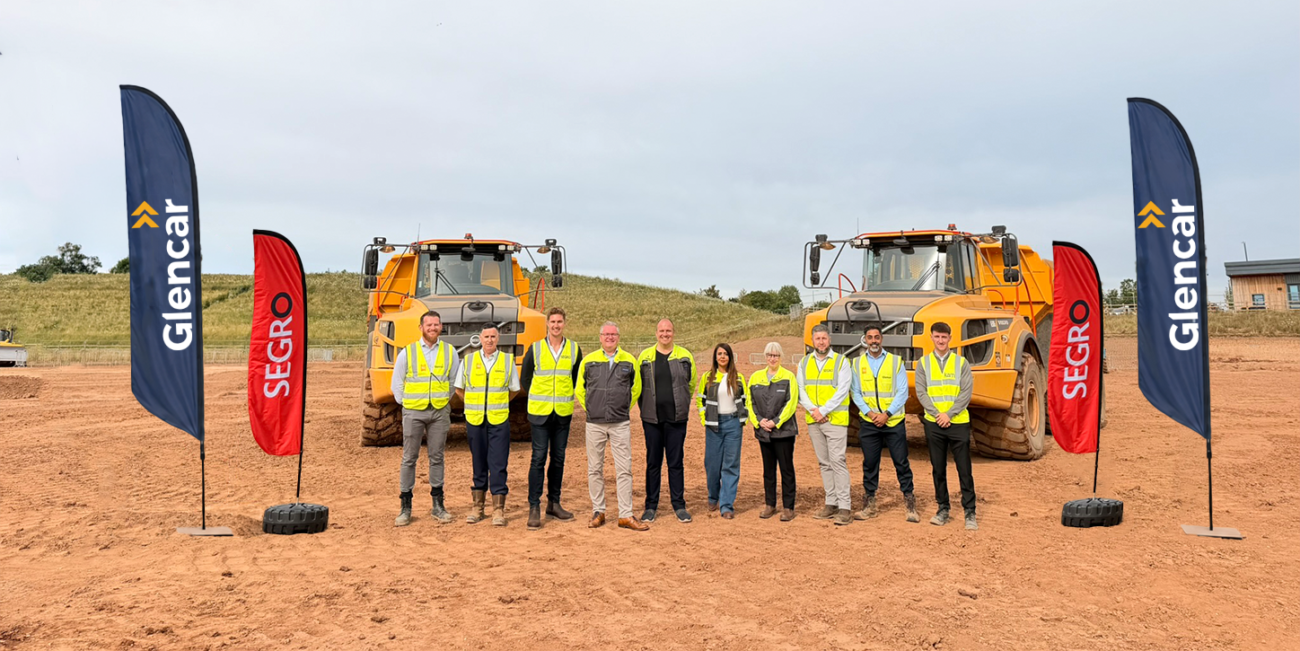
Glencar has commenced construction of Unit 3C, a new 91,245 sq. ft Grade A industrial and logistics facility at SEGRO Park Coventry, following its appointment to deliver the purpose-built development. The appointment marks the third project Glencar has delivered for SEGRO, continuing the companies’ ongoing collaboration in the industrial and logistics sector.

Located within the 215-acre SEGRO Park Coventry development, south of Coventry Airport, the wider scheme has outline planning permission for up to 3.7 million sq. ft of industrial and logistics accommodation, supporting manufacturing, distribution and warehouse occupiers.

The new facility has been pre-let to Volvo Group, which recently announced a £24 million investment in the site to create a new Regional Distribution Centre serving the UK and Ireland. Once operational, the purpose-built facility will feature an automated storage and picking system, supporting faster and more efficient parts distribution across Volvo Group’s UK and Ireland operations. Construction commenced this month and is scheduled for completion in January 2027.

Delivered under a ‘Design & Build’ contract, Glencar’s scope includes the design and construction of the new facility, comprising a 12-metre clear haunch height warehouse, integrated two-storey office accommodation and all associated external works. These include cement-stabilised earthworks, mass fill foundations, below-ground drainage and underground services, a petrol interceptor, rainwater harvesting system, service yards, EV-enabled car parking, landscaping and wider site infrastructure.

Designed to achieve BREEAM Excellent and EPC A, the development will incorporate photovoltaic panels, rainwater harvesting, electric vehicle charging infrastructure and energy-efficient building systems, supporting SEGRO’s commitment to low carbon growth.

The wider development also incorporates approximately 100 hectares of community parkland, woodland walks, wetlands and landscaped public open space, placing sustainability, biodiversity and occupier wellbeing at the heart of the scheme. Chris Looney, Construction Director at Glencar, said:

“We’re pleased to be working with SEGRO once again on another important industrial development. Delivering a third project together reflects the strength of our ongoing relationship and our shared commitment to creating high-quality industrial, manufacturing and logistics facilities that meet the evolving needs of customers and occupiers. Unit 3C will provide Volvo Group with a purpose-built, sustainable facility in a strategically important location, and we look forward to working collaboratively with SEGRO and the wider project team to successfully deliver the project for completion in January 2027.”

Sabrina Loyer, General Manager, Service Operations & Technology, Volvo Group UK, said:

“The move to Coventry represents a significant investment in the future of our parts distribution network and a key milestone in supporting Volvo Group UK’s continued growth. As customer expectations and operational demands evolve, it is essential that we invest in facilities that provide both the capacity and flexibility needed to support our long-term ambitions.”

Once operational, the new Regional Distribution Centre is expected to fulfil more than 1.3 million order lines each year, supporting Volvo Group’s UK and Ireland operations and demonstrating the continued demand for purpose-built industrial facilities at SEGRO Park Coventry.

Subscribe

Get notified about New Episodes of our Podcast, New Magazine Issues and stay updated with our Weekly Newsletter.