In the dynamic world of Tier 2 and Tier 3 distribution, no company is immune to sudden supply chain changes or disruptions. Unexpected challenges arise every day: Inventory positions change quickly, customer commitments are fragile, and carrier disruptions surface late in the execution cycle.
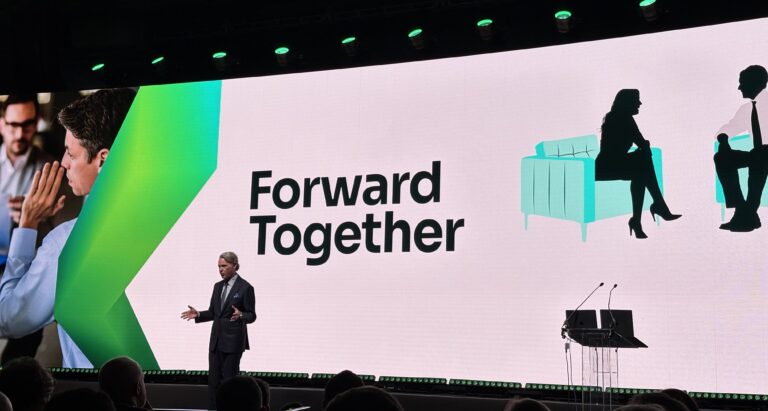
Steve Shebuski (pictured, below), Vice President of Pre-Sales, MCA Connect, gives this response as to why logistics software may be hindering automation.
To avoid costly delays or broken commitments, businesses must be prepared to solve challenges quickly and effectively. The key is connected distribution. The systems that manage orders, warehouse execution, and transportation must be tightly integrated, ensuring that no change is made in isolation. That integration is where execution improves, making a tangible difference in a company’s day-to-day operations.
The goal of this model is not simply optimization… it’s coordinated iteration. When demand shifts, inventory moves, or transportation capacity changes, each system must adjust its decisions in response to the others. Without this orchestration, the consequences can be significant. Often, distributors will have to absorb the cost of expedites, rework, and broken commitments.
Three Systems, One Connected Distribution Network
Three systems propel a modern distribution network and keep its operations on track: the order management system (OMS), the warehouse management system (WMS), and the transportation management system (TMS). Although they might seem like adjacent but independently operating systems, OMS, WMS, and TMS should be treated as interdependent decision engines. Any decision made in one system will have cascading effects on the others throughout the supply chain.
• An order management system (OMS) manages the commercial and operational lifecycle of an order from capture through fulfillment and customer commitment. The OMS is where customer promises are made and re‑made. If an OMS is not informed by warehouse feasibility and transportation constraints, it commits the business to outcomes the operation cannot support.
• A warehouse management system (WMS) controls inventory and execution inside the four walls of the distribution centre. The WMS translates demand into physical action. It must sequence work based on transportation cutoffs and order priority, not static waves or inventory assumptions.
• A transportation management system (TMS) plans and executes inbound and outbound freight movement. The TMS is where execution reality surfaces. When capacity tightens, routes fail, or pickups slip, those changes must immediately inform warehouse priorities and customer commitments.

The goal is continuous decision feedback across the three systems. Here’s what decision-making could look like when a business implements a coordinated iteration model:
• A delayed inbound shipment updates WMS inventory availability, which forces OMS to re‑promise orders and TMS to resequence outbound loads.
• A carrier disruption triggers TMS rerouting, which changes dock timing and requires WMS to reprioritize staging and OMS to adjust delivery commitments.
• A priority customer order released by OMS causes WMS to resequence picks and TMS to alter consolidation or mode selection.
Each system makes local decisions, but integration ensures those decisions converge instead of conflict.
The Rise of Shared Data Models
The biggest opportunity in supply chain today is operational data. To successfully integrate OMS, WMS, and TMS systems, accurate, real-time data is essential. When decisions are made on the same shared set of data, systems can iterate together with ease.
To maintain a shared set of operational data, many businesses rely on new tools and technologies that offer visibility across the supply chain. Two Microsoft platforms are making that possible: Fabric, a cloud-based data analytics platform, and Dynamics 365 Supply Chain Management, a suite of intelligent business applications. Together, they give distribution teams a shared operational data layer that supports real-time decision-making across order management, warehouse execution, and transportation.
These tools are making operational data more accessible and actionable. Employees coordinating operations by communicating through an online portal is no longer the gold standard. Instead, the goal should be real-time decision support that relies on shared data and, increasingly, trusted automated decisions.
The technology is already moving quickly. The long-term opportunity is a closed-loop system connecting demand signals, warehouse execution, transportation constraints, and order management into a single orchestration layer.
To Succeed, Focus on Orchestration Before Automation
In Tier 2 and 3 distribution, connected distribution can be a game-changer — but it cannot succeed if it’s not built on a solid foundation. Companies must focus on the fundamentals of developing and orchestrating a business strategy before implementing new technology.
Two common issues can cause implementations to fail:
• Companies apply technology to broken processes. Process optimization has to come first.
• Companies treat enterprise resource planning (ERP), WMS, and TMS as standalone projects instead of an end-to-end flow. That creates dock bottlenecks, mis-picks, and unnecessary freight spend. Transportation decisions are shaped upstream by order management and warehouse execution, not just the TMS.
Companies just starting out should focus on orchestration before automation. That means getting business rules right. Defining routing rules, order profiles, and channel strategies. Handling exceptions deliberately instead of over-automating. Establishing clear ownership of decisions. Integrating systems early. Ensuring planners, warehouse teams, and transportation teams are working from the same data. Without a single source of truth, technology adoption does not stick.
It’s the same principle when a company is considering leveraging artificial intelligence to automate operations. AI is overhyped when adopted without foundational data discipline. AI only works when data is unified, trusted, and meaningful. Underrated opportunities to use AI are workflow automation, master data management, and process mining. These reveal where time and effort leak from the system, delivering immediate value.
The goal of automation is not replacing judgment. It’s removing noise and repetitive tasks. Experienced people make better decisions when they have accurate, timely information. Technology should free them to focus on exceptions, strategy, and customer impact.
Equipping Businesses to Face Disruptions with Ease
In Tier 2 and 3 distribution, where margin and service tolerance are thin, integration is not about efficiency gains. It’s about ensuring that when reality changes, the entire execution stack adjusts together, before the customer feels it.
Businesses that view their distribution systems as a single “collaborative execution layer,” with OMS, WMS, and TMS fully integrated and iterating together, will be better equipped to face any disruptions that arise.