Robotic Mobile Manipulation Firm Acquired

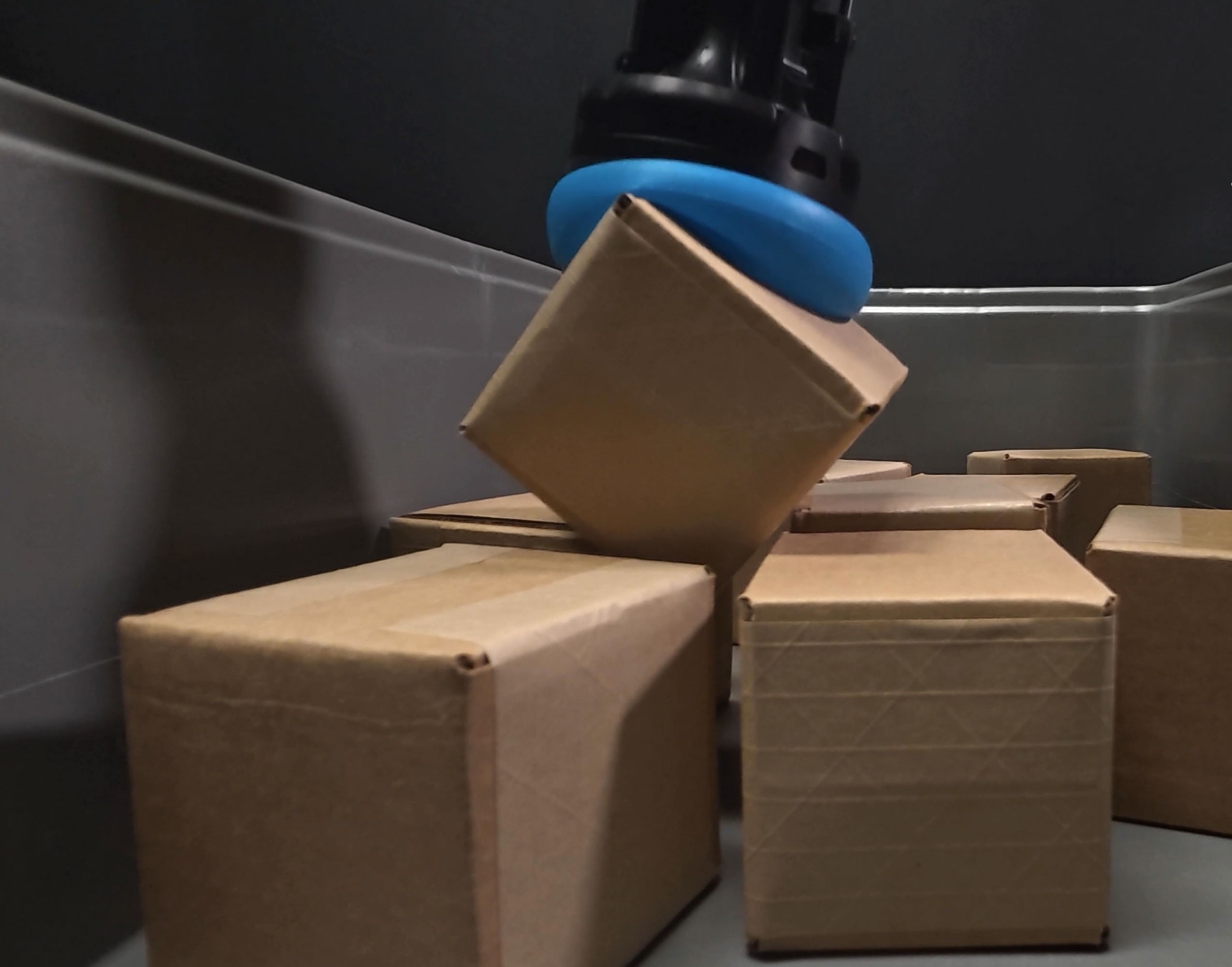
Locus Robotics has announced the acquisition of Nexera Robotics, a Vancouver-based robotics company specializing in advanced robotic grasping. The integration of Nexera’s proprietary NeuraGrasp™ end-effector technology into the Locus Robotics physical AI platform significantly expands the company’s autonomous mobile manipulation capabilities and broadens what Locus Array can handle across end-to-end fulfillment workflows.

Advanced mobile manipulation offers the most flexible and scalable path to fully autonomous fulfillment, eliminating the constraints of fixed infrastructure. Realizing that potential requires the ability to handle the full complexity of real inventory, in real warehouse conditions, across millions of SKU types. With Locus Array already setting a new standard for autonomous Robots-to-Goods mobile picking, the addition of NeuraGrasp accelerates that roadmap and extends the platform’s reach into SKU categories and manipulation tasks that existing solutions have struggled to address.

“The frontier of warehouse robotics today is AI-driven mobile manipulation at enterprise scale,” said Rick Faulk, CEO, Locus Robotics. “Being able to efficiently grasp millions of SKU types with both speed and precision is where the next decade of value gets created. Nexera has built something technically significant in that space, and combining it with Locus Array puts us at the forefront of leveling up mobile manipulation across the industry.”

A Single Gripper for a Broader Range of Real-World Inventory

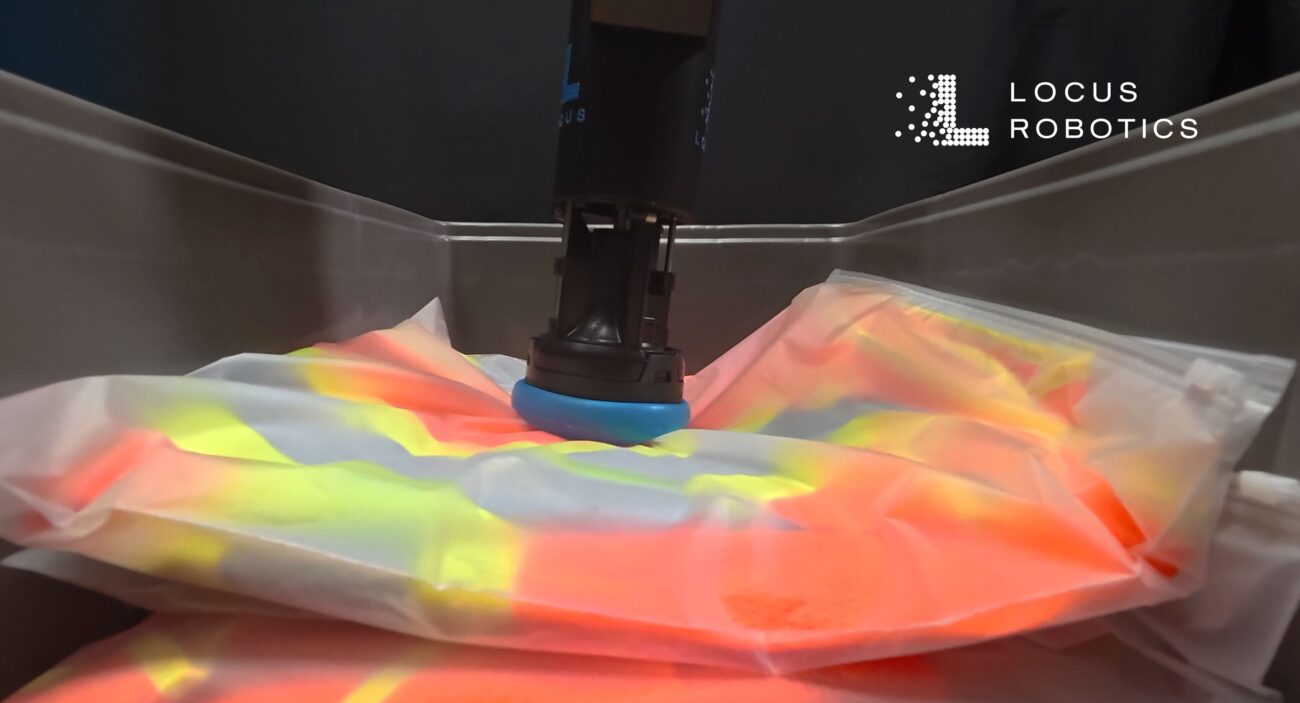
NeuraGrasp™ combines AI-driven grasping intelligence, onboard sensory inputs, computer vision, and a patented soft membrane structure to adapt dynamically to the physical characteristics of each item. This enables a single gripper to conform to variations in shape, surface texture, material, porosity, and weight, creating reliable grasps across the high-variability inventory found in real warehouse operations.
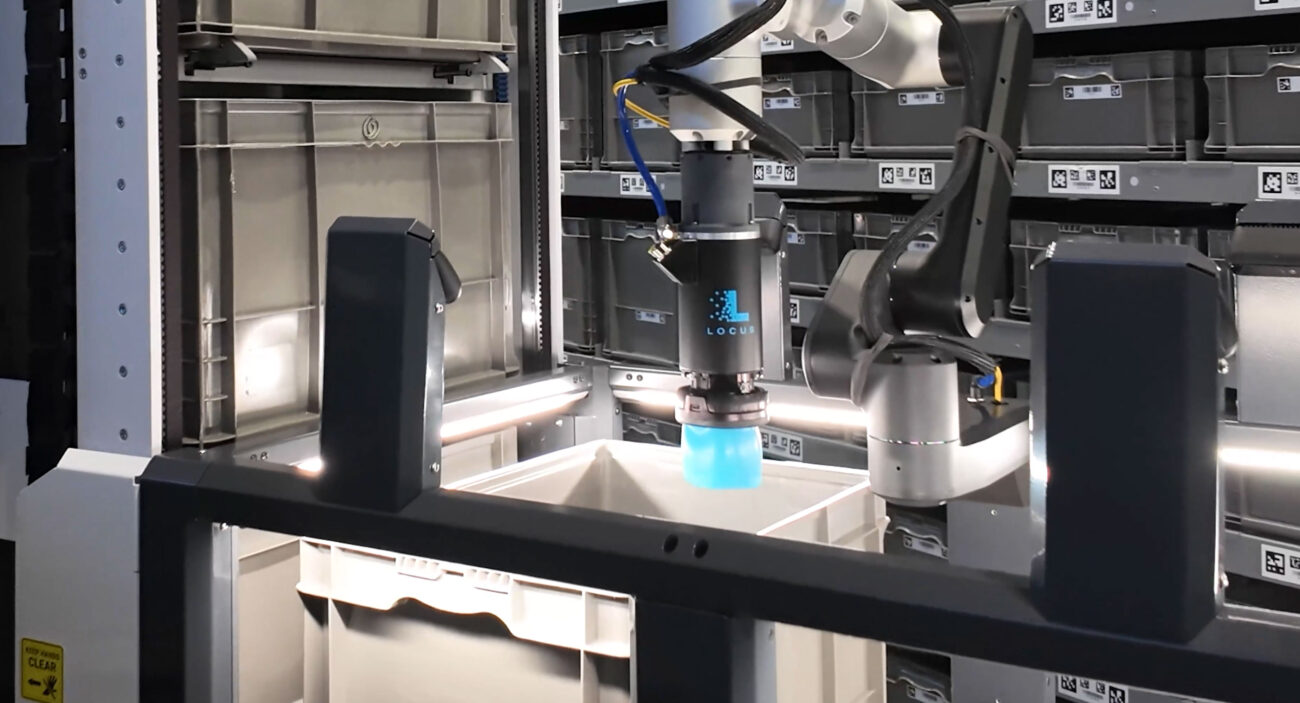
Developed over five years and refined through six generations of continual improvement, NeuraGrasp has been validated with thousands of hours and tens of millions of picks, including the broadest SKU testing with commercial partners.

“We built NeuraGrasp to solve the manipulation challenges that have held robotic picking back for years,” said Roy Belak, CEO, Nexera Robotics. “Joining Locus Robotics gives us the platform, scale, and customer base to bring this breakthrough technology into the high-velocity fulfillment environments it was designed for, where speed, reliability, and real-world adaptability matter most.”

The acquisition of Nexera builds on momentum by expanding what Locus Array can autonomously handle and significantly broadening the addressable market for Locus Robotics and its customers.

Acquisition Details

Nexera Robotics will be wholly owned and operated as part of Locus Robotics. The full Nexera team and leadership will join Locus Robotics to accelerate integration of NeuraGrasp™ into the Locus Array platform and roadmap. The acquisition strengthens Locus Robotics’ intellectual property position in mobile manipulation and adds deep AI-driven manipulation and end-effector expertise to the company’s engineering organization.
Why is Locus Robotics acquiring Nexera Robotics?

Locus Robotics is acquiring Nexera Robotics to bring patented grasping technology and specialized robotic picking expertise into the Locus Array roadmap. Nexera’s NeuraGrasp™ technology significantly expands the range of SKU types Locus Array can pick autonomously, advancing mobile manipulation capabilities and broadening what the platform can handle across end-to-end fulfillment workflows.
What does NeuraGrasp™ do?

NeuraGrasp™ combines AI-driven grasping intelligence, onboard sensory inputs, computer vision, and soft, compliant grasping hardware to help robots adapt dynamically to a wide range of item characteristics. This enables Locus Array to pick a much broader range of items reliably, including products with varying shapes, surfaces, materials, porosity, and weight.

What types of items can Nexera’s technology help Locus Array robots pick?
Nexera’s technology is designed to expand autonomous picking across a broader range of SKU types, including porous textiles, loosely bagged items, perforated polybags, irregular packages, delicate goods, contoured products, small items, and products with inconsistent surfaces or thin packaging features.

When will Locus Array begin using Nexera’s technology?
Locus Robotics will begin integrating Nexera’s NeuraGrasp™ end-effector technology into the Locus Array platform following the acquisition. The technology is expected to become available in the coming months.
Tech Stack now has AI Agents

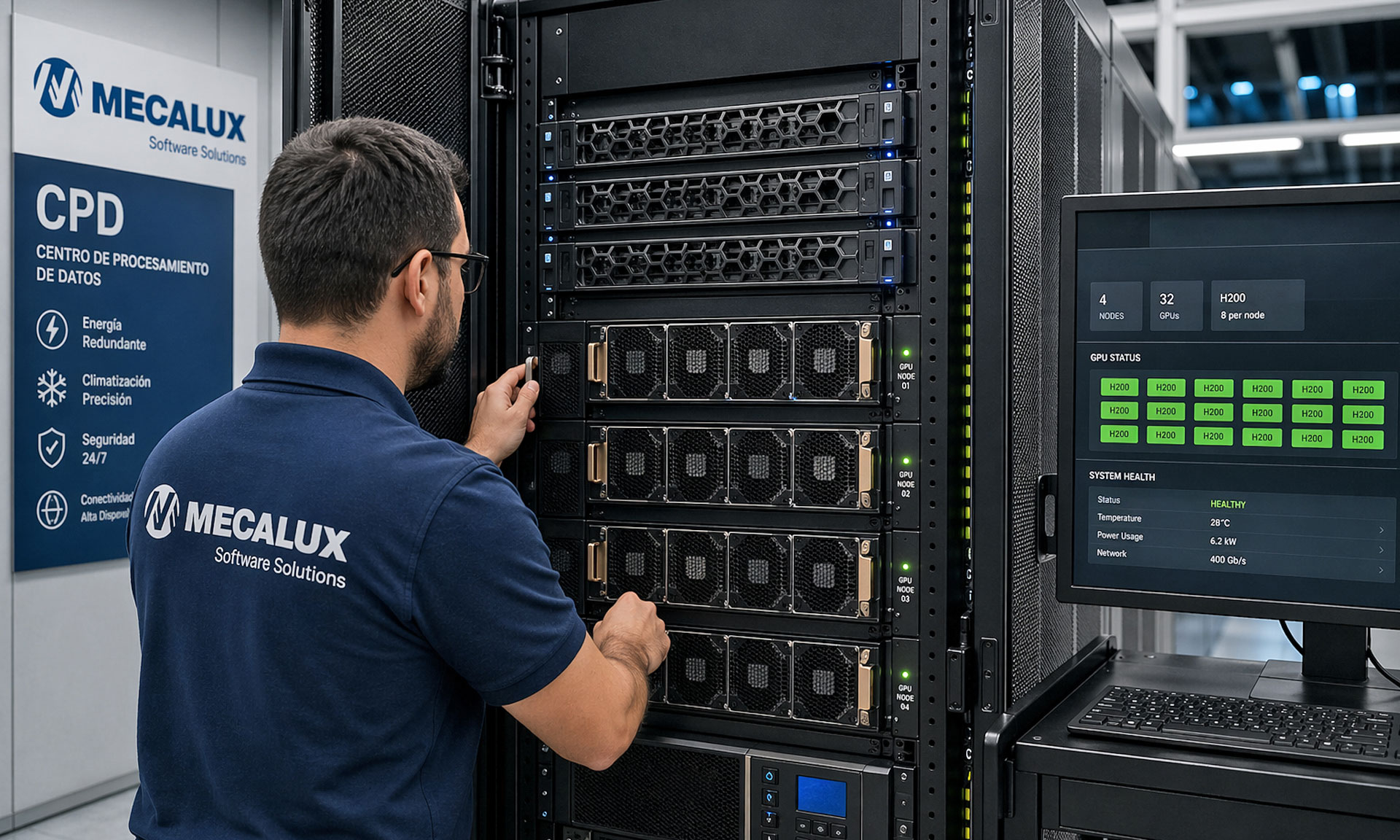
Spanish materials handling giant Mecalux has strengthened its technology infrastructure with a new high-performance computing platform designed to accelerate the use of AI agents in its logistics software solutions. This strategic investment will enable the creation and deployment of different types of intelligent entities that businesses can configure to support warehouse decision-making.

AI agents represent a new and rapidly growing generation of software capable of performing actions autonomously to complete tasks or achieve specific goals. Mecalux’s agents will work alongside users in their day-to-day activities, helping them continuously monitor logistics operations and improve efficiency. Organisations will have access to a catalogue of intelligent entities they can activate and configure according to their needs. Examples include assistants specialised in advanced analytics and operations optimisation.

Activate and configure intelligent agents

“This expansion of our AI infrastructure is a key step in advancing agent-based capabilities within our software solutions,” a Mecalux spokesperson said.

“Our goal is to enable companies to automate complex digital processes in their warehouses using this intelligent technology.”

The new infrastructure is designed to train deep learning models and evaluate the performance of AI agents to increase their accuracy. This investment is part of Mecalux’s broader strategy to strengthen its AI capabilities and further advance its software solutions with user-centric features.

Your WMS & TMS are Working Against Automation

In the dynamic world of Tier 2 and Tier 3 distribution, no company is immune to sudden supply chain changes or disruptions. Unexpected challenges arise every day: Inventory positions change quickly, customer commitments are fragile, and carrier disruptions surface late in the execution cycle.

Steve Shebuski (pictured, below), Vice President of Pre-Sales, MCA Connect, gives this response as to why logistics software may be hindering automation.

To avoid costly delays or broken commitments, businesses must be prepared to solve challenges quickly and effectively. The key is connected distribution. The systems that manage orders, warehouse execution, and transportation must be tightly integrated, ensuring that no change is made in isolation. That integration is where execution improves, making a tangible difference in a company’s day-to-day operations.

The goal of this model is not simply optimization… it’s coordinated iteration. When demand shifts, inventory moves, or transportation capacity changes, each system must adjust its decisions in response to the others. Without this orchestration, the consequences can be significant. Often, distributors will have to absorb the cost of expedites, rework, and broken commitments.

Three Systems, One Connected Distribution Network

Three systems propel a modern distribution network and keep its operations on track: the order management system (OMS), the warehouse management system (WMS), and the transportation management system (TMS). Although they might seem like adjacent but independently operating systems, OMS, WMS, and TMS should be treated as interdependent decision engines. Any decision made in one system will have cascading effects on the others throughout the supply chain.

• An order management system (OMS) manages the commercial and operational lifecycle of an order from capture through fulfillment and customer commitment. The OMS is where customer promises are made and re‑made. If an OMS is not informed by warehouse feasibility and transportation constraints, it commits the business to outcomes the operation cannot support.
• A warehouse management system (WMS) controls inventory and execution inside the four walls of the distribution centre. The WMS translates demand into physical action. It must sequence work based on transportation cutoffs and order priority, not static waves or inventory assumptions.
• A transportation management system (TMS) plans and executes inbound and outbound freight movement. The TMS is where execution reality surfaces. When capacity tightens, routes fail, or pickups slip, those changes must immediately inform warehouse priorities and customer commitments.

The goal is continuous decision feedback across the three systems. Here’s what decision-making could look like when a business implements a coordinated iteration model:

• A delayed inbound shipment updates WMS inventory availability, which forces OMS to re‑promise orders and TMS to resequence outbound loads.
• A carrier disruption triggers TMS rerouting, which changes dock timing and requires WMS to reprioritize staging and OMS to adjust delivery commitments.
• A priority customer order released by OMS causes WMS to resequence picks and TMS to alter consolidation or mode selection.

Each system makes local decisions, but integration ensures those decisions converge instead of conflict.

The Rise of Shared Data Models

The biggest opportunity in supply chain today is operational data. To successfully integrate OMS, WMS, and TMS systems, accurate, real-time data is essential. When decisions are made on the same shared set of data, systems can iterate together with ease.

To maintain a shared set of operational data, many businesses rely on new tools and technologies that offer visibility across the supply chain. Two Microsoft platforms are making that possible: Fabric, a cloud-based data analytics platform, and Dynamics 365 Supply Chain Management, a suite of intelligent business applications. Together, they give distribution teams a shared operational data layer that supports real-time decision-making across order management, warehouse execution, and transportation.

These tools are making operational data more accessible and actionable. Employees coordinating operations by communicating through an online portal is no longer the gold standard. Instead, the goal should be real-time decision support that relies on shared data and, increasingly, trusted automated decisions.

The technology is already moving quickly. The long-term opportunity is a closed-loop system connecting demand signals, warehouse execution, transportation constraints, and order management into a single orchestration layer.

To Succeed, Focus on Orchestration Before Automation

In Tier 2 and 3 distribution, connected distribution can be a game-changer — but it cannot succeed if it’s not built on a solid foundation. Companies must focus on the fundamentals of developing and orchestrating a business strategy before implementing new technology.

Two common issues can cause implementations to fail:

• Companies apply technology to broken processes. Process optimization has to come first.
• Companies treat enterprise resource planning (ERP), WMS, and TMS as standalone projects instead of an end-to-end flow. That creates dock bottlenecks, mis-picks, and unnecessary freight spend. Transportation decisions are shaped upstream by order management and warehouse execution, not just the TMS.

Companies just starting out should focus on orchestration before automation. That means getting business rules right. Defining routing rules, order profiles, and channel strategies. Handling exceptions deliberately instead of over-automating. Establishing clear ownership of decisions. Integrating systems early. Ensuring planners, warehouse teams, and transportation teams are working from the same data. Without a single source of truth, technology adoption does not stick.

It’s the same principle when a company is considering leveraging artificial intelligence to automate operations. AI is overhyped when adopted without foundational data discipline. AI only works when data is unified, trusted, and meaningful. Underrated opportunities to use AI are workflow automation, master data management, and process mining. These reveal where time and effort leak from the system, delivering immediate value.

The goal of automation is not replacing judgment. It’s removing noise and repetitive tasks. Experienced people make better decisions when they have accurate, timely information. Technology should free them to focus on exceptions, strategy, and customer impact.

Equipping Businesses to Face Disruptions with Ease

In Tier 2 and 3 distribution, where margin and service tolerance are thin, integration is not about efficiency gains. It’s about ensuring that when reality changes, the entire execution stack adjusts together, before the customer feels it.

Businesses that view their distribution systems as a single “collaborative execution layer,” with OMS, WMS, and TMS fully integrated and iterating together, will be better equipped to face any disruptions that arise.

TVH Appoints New CEO

The Board of Directors of TVH is excited to announce that Giuliano Parodi has been appointed as the company’s new Chief Executive Officer, effective September 1st. With nearly 25 years of experience in the industrial equipment and automotive sectors, Parodi will lead TVH into its next chapter of global growth.

Giuliano Parodi joins TVH from Yanmar, a manufacturer of industrial equipment, where he most recently served as Group Chief Strategy Officer and member of the Board of Directors. In this role, he played a key part in shaping the Group’s strategic direction and overseeing its regional operations outside Japan. Yanmar is a global organization with approximately $8 billion in revenues.

Previously, he served as CEO and Chairman of Yanmar Compact Equipment, leading a global business of approximately $1.5 billion in revenue with operations across Japan, Europe and North America. Earlier in his career, he held senior leadership roles at Bobcat Company (Doosan Group) and Fiat Group.

Throughout his career, he has successfully led international growth, business transformation, and operational scaling, with a strong focus on aftermarket, customer solutions, and value creation.
A chartered engineer with a Master of Science in Mechanical Engineering and an Executive MBA, Parodi combines deep industry expertise with a pragmatic and team-oriented leadership style. Having lived and worked across multiple countries, including nearly two decades in Belgium, he brings both global perspective and strong local connection.

“I am very proud to join TVH at such an exciting moment in its journey. TVH has built a unique position globally, combining strong customer relationships, deep product expertise and an entrepreneurial culture. I look forward to working with the team to define the next phase of growth, with a clear focus on customers, execution and long-term value creation,” said Parodi.

Patrick Lecluyse, Executive Chairman of TVH, added: “We are very happy to welcome Giuliano to TVH. He is a leader who builds trust and understands our business deeply. We are confident that his experience and vision will help us grow even stronger in the years to come.” Following a transition period alongside the new CEO, Patrick Lecluyse, who currently serves as Executive Chairman of the Board, will return to his role as Chairman.

Subscribe

Get notified about New Episodes of our Podcast, New Magazine Issues and stay updated with our Weekly Newsletter.