
Edeka Turns to Voice Tech

When Germany’s largest grocery retailer re-evaluates its entire order-picking technology, it’s about more than just optimisation — it’s about long-term strategic viability. EDEKA recognized early on that its existing pick-by-voice system could no longer meet the growing demands for efficiency, ergonomics, and cost-effectiveness. The requirements for a new system were clear: it needed to be more powerful, more flexible, and more economically attractive — all while integrating seamlessly into existing operations.

Following a brief but intensive testing phase, the decision was made. Ehrhardt Partner Group (EPG) won out with ‘LYDIA Voice’. The solution not only met all technical and economic criteria, but also enabled a smooth, phased transition by allowing parallel operation with the legacy system. This approach allowed approximately 10,000 users across 33 locations to become familiar with the new technology without any loss in productivity. The rollout was carried out gradually across regional distribution centres.
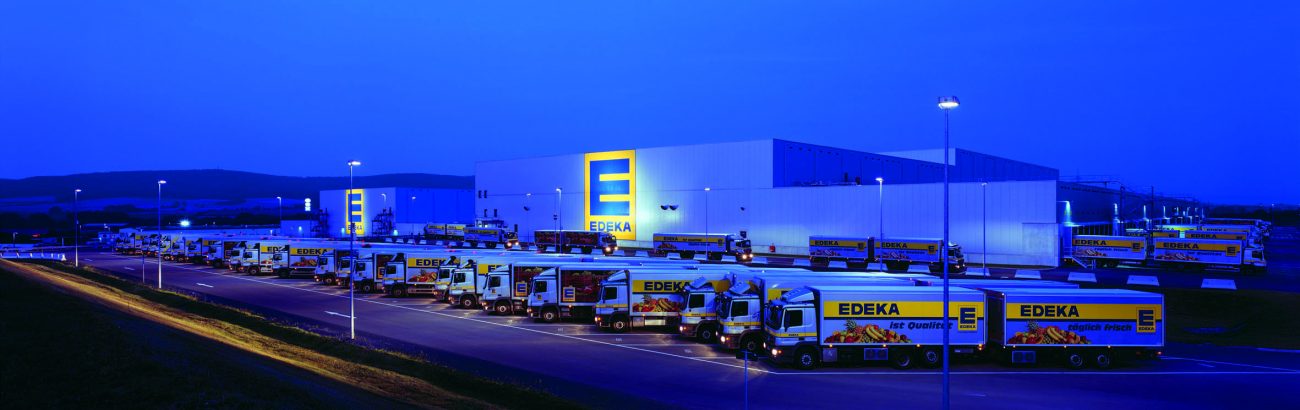
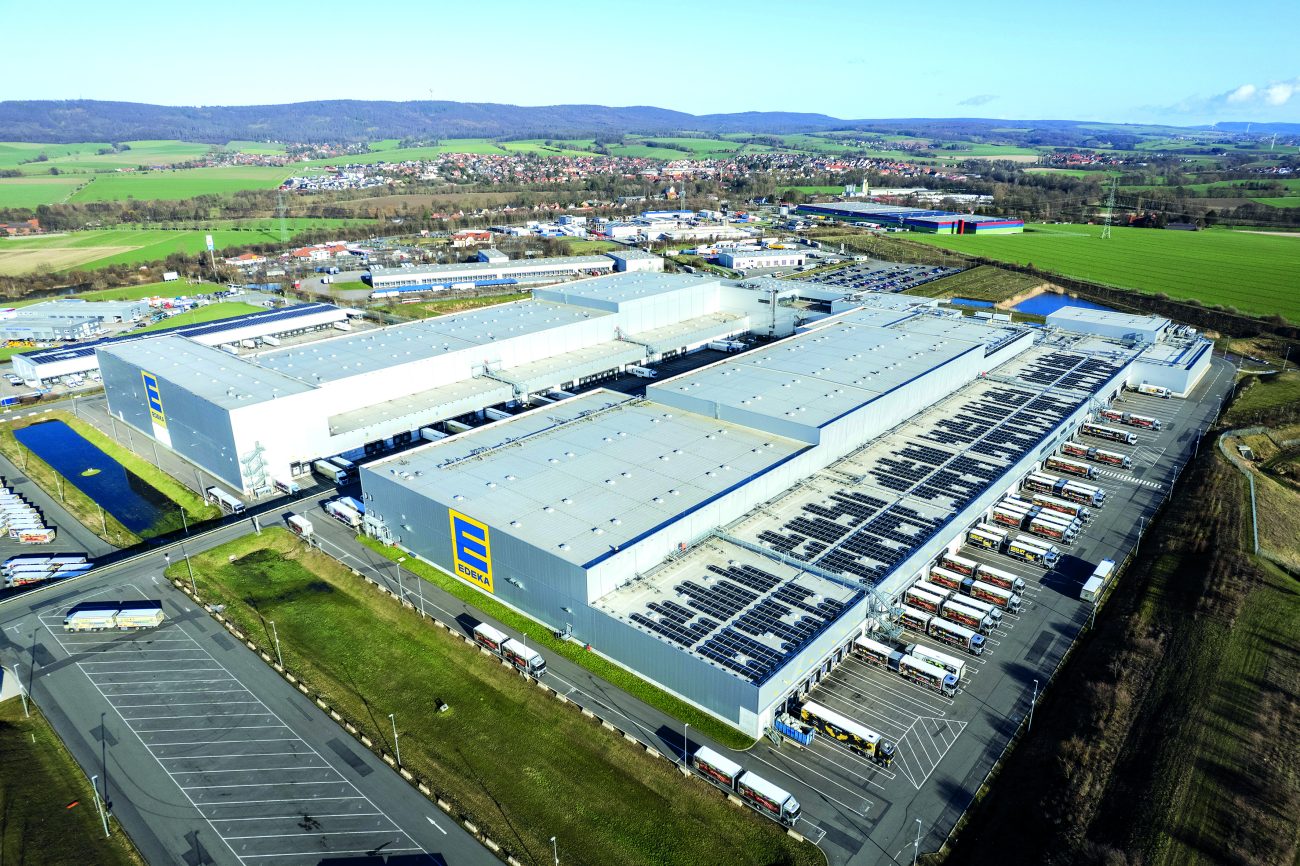
From fresh fruits and vegetables to beverages and cosmetics, EDEKA offers an exclusive assortment of around 25,000 food and non-food items. This wide-ranging product selection meets the needs of a diverse and varied customer base. With 11,100 stores, the EDEKA Group is one of the most powerful players in the German grocery retail sector and a reliable partner for independent retailers, suppliers, wholesale customers, and convenience store operators. A strong commitment to quality shapes every aspect of the company’s operations throughout the entire value chain. This is especially evident in logistics. EDEKA’s wholesale operations are managed by seven regional companies that ensure all products arrive fresh and on time at more than 7,000 EDEKA stores. Deliveries are made from a total of 38 logistics centres spread across Germany, ensuring a seamless and reliable supply chain.

A New Sound


Order picking is a critical component of EDEKA’s logistics operations, playing a key role in maintaining a smooth and efficient flow of goods. However, the limitations of the existing pick-by-voice system had become increasingly apparent: lack of flexibility, ergonomic issues, and growing complexity in collaboration with the provider made a system change inevitable. EDEKA set out in search of a solution that not only delivered technologically but was also future-ready. That search led to LYDIA VoiceWear — the innovative picking vest developed by the voice recognition and logistics software experts at EPG.

Already familiar to the team, LYDIA VoiceWear was put to the test under real-world conditions — and the results were convincing across the board. Malte Kruse, Head of IT Logistics Systems EDEKA Minden Hannover, summed up the decision clearly:

“LYDIA VoiceWear offers functionality that’s truly one of a kind — there’s nothing else like it on the market. What’s more, our employees can be productive right away, without any prior voice training. That’s a significant advantage. With our previous system, that wasn’t possible — and when it comes to seasonal workers, quick onboarding is absolutely critical to our operations.”

Switching to Voice During Live Operations


EDEKA’s decentralized structure results in a highly diverse IT landscape — a factor that posed a significant challenge during the transition to the new pick-by-voice system.
“This was essentially open-heart surgery, as the switchover took place during ongoing operations,” explains Tim Just, CEO of Voice Solutions at EPG. “Despite the wide range of different systems and the autonomy of the regional companies, the rollout was smooth and uninterrupted. A key factor in this success was the strong commitment of EDEKA’s decision-makers and the openness of its employees.” It quickly became clear that LYDIA Voice was capable of managing the existing complexity and translating it into an efficient, unified system — even under real-time, live conditions.

Ergonomics That Work


The decision to adopt the LYDIA VoiceWear picking vest originated from an initiative by EDEKA Minden-Hannover. The system allows for maximum freedom of movement during pick-by-voice operations while meeting key requirements for ergonomics, speed, and flexibility in order fulfillment. Instead of using a separate headset, the microphone and speaker are integrated directly into the wearable system — providing not only greater comfort but also clear voice transmission. The built-in audio system also supports users who wear hearing aids — a significant advancement in inclusion and accessibility, since traditional headsets have often posed a barrier in this area. From a technological standpoint, digital audio transmission is robust and offers high bandwidth.

Another standout feature is the integrated beamforming technology, which significantly reduces background noise — even in high-noise warehouse environments. The microphone array, consisting of four high-performance microphones, creates a directional ‘funnel’ effect for speech input. This ensures accurate voice recognition, even when multiple pickers are working close to each other. “All of our hardware and software components are developed with a strong focus on user-friendliness,” explains Just. “That leads to significantly higher acceptance and noticeably greater user satisfaction — an effect that became immediately clear at EDEKA.”

Following the rollout in EDEKA Minden-Hannover, EDEKA Nordbayern also began implementation of LYDIA Voice and LYDIA VoiceWear. Today, more than 4,400 devices are in use across 33 logistics centres.

Technology ‘Business Case’ isn’t a Strategy

Logistics companies can avoid expensive mistakes by understanding that a technology business case is not the same, or as good as, a strategy, writes Brad Forester (pictured, below), the Founder and Managing Partner of JBF Consulting.


For shippers and logistics leaders, the story is becoming uncomfortably familiar. A compelling demo. A polished ROI model. Confident assurances that a new transportation, warehouse, or visibility platform will ‘pay for itself’”’ within 12 to 18 months. The business case is approved; contracts are signed – and three years later, the organization is left with under-utilised technology, frustrated users, and the realisation that the expected value never materialised.


In many cases, the cost of that mistake can quietly creep past eight figures. The problem isn’t that companies are investing in technology. It’s that they are confusing a technology business case with a technology strategy. And the two are not the same.


The Illusion of Vendor-Supplied ROI


Vendor ROI models are designed to sell software, not to diagnose organizational readiness or strategic fit. They rely on optimistic assumptions: rapid adoption, clean data, standardized processes, and a level of internal alignment that most organizations simply don’t have at the time of purchase.


These models are not inherently dishonest, but they are incomplete. They focus on what the software can do in ideal conditions, not what the business is actually prepared to execute, sustain, and scale.


That gap between promise and performance is well documented. In a late-2025 survey, only about one-third reported being satisfied or very satisfied with their current routing and scheduling technology. Nearly two-thirds described their experience as neutral or dissatisfied despite having justified the investment through formal ROI analysis.

For executive teams, this creates a dangerous illusion of certainty. The spreadsheet says the investment works. The payback period looks reasonable. The risk appears to be contained. What’s missing is a clear understanding of whether the technology aligns with the company’s operating model, maturity level, and long-term objectives.


The Pre-Buying Gap


While many technology failures are realized during implementation, the root causes of those failures are often baked in long before the RFP is issued. This ‘pre-buying gap’ is where organizations skip the hard work of defining what success actually looks like beyond cost savings. They move directly from pain points, saying ‘we need better visibility’ or ‘we need to automate’, when selecting vendors without first answering foundational questions:

• What strategic problem are we solving?
• Which decisions do we expect this technology to improve?
• What capabilities must exist outside the system for it to deliver value?
• How will this investment change behaviors, processes, and accountability?

The hesitation many organizations express reflects an implicit recognition of this gap. In the same survey, 60% of respondents said they have no plans to implement new routing and scheduling technology within the next two years. This is not a lack of awareness or innovation appetite; it is a sign that leaders increasingly understand the risks of buying technology before the strategy is clear. Without addressing the pre-buying gap, technology becomes a very expensive experiment instead of a strategic enabler.


Functional Requirements: The Uncomfortable Truth


Functional requirements are often treated as a box-checking exercise. In reality, they should be a forcing mechanism for strategic clarity. Too often, requirements are copied from legacy systems or shaped by vendor marketing language. This leads to bloated lists that obscure what truly matters.


The survey referenced earlier reinforces how rarely technology limitations are the real constraint. When asked what inhibits implementation, more than half of respondents cited cost as the primary barrier, while over a quarter pointed to lack of internal resources. Factors such as IT constraints and executive alignment also surfaced, while pure functionality gaps ranked far lower.


In practice, most technology initiatives don’t fail because software can’t deliver. They fail because the organization is not structured, staffed, or aligned to support the change the software demands. Effective requirements start with outcomes, not features. They distinguish between what is essential to execute the strategy and what is merely nice to have.


Benchmarking Provides Context


Another critical due diligence step often overlooked is objective industry benchmarking. Without understanding how peers with similar network complexity and operating models perform, it’s nearly impossible to set realistic expectations. A 5% freight savings claim may sound impressive until you realize the organization is already operating in the top quartile or dangerously misleading if foundational inefficiencies remain unresolved.


Benchmarking helps leadership distinguish what technology can influence versus what requires structural change. It also helps prioritize investments instead of chasing incremental gains that won’t move the needle.


Strategy Before Software


Perhaps the most expensive mistake companies make is allowing technology selection to drive strategy instead of validating strategy first. When vendors are asked to define the future state, organizations risk outsourcing critical thinking. The roadmap becomes shaped by product capabilities rather than business priorities.


Executive alignment and business case clarity consistently appear as inhibitors to successful implementation; an indication that many initiatives move forward before leadership agreement and success metrics are fully defined. By performing strategy work before issuing an RFP, buyers also gain a far more comprehensive understanding of the true work effort involved. This includes the internal resources required, the organizational changes needed, and a realistic timetable for implementation.


That clarity materially improves cost estimation. Instead of relying on high-level vendor assumptions, organizations can more accurately quantify implementation effort, internal labour, change management, and ongoing operating costs. When paired with a clearer articulation of business benefits, this creates a far more precise and defensible estimate of ROI and payback period.


More precise costs plus more realistic benefits produce better buyers; buyers with grounded expectations, stronger governance, and a higher probability of realising value after go-live. Strategy validation means pressure-testing assumptions before they are embedded in contracts. It asks whether the organization has executive alignment on trade-offs, the operating model to support new capabilities, and the governance required to measure value realisation over time. If the answer to any of these is unclear, the organisation is not at a disadvantage; it’s simply not ready to buy.


A Strategy-First Mindset


Technology can be a powerful accelerant, but only when it is anchored to a clear, validated strategy. The most successful organizations invert the traditional buying process. They invest first in understanding themselves before investing in tools.


This approach doesn’t slow decision-making; it improves it. It leads to fewer surprises, stronger vendor partnerships, and measurable value that holds up under scrutiny. As a result, the most expensive technology mistake isn’t buying the wrong system — it’s buying a system without a strategy.

Smart Subsystems at LogiMAT

From March 24 to 26th the international materials handling industry will meet in Stuttgart. For Dambach Lagersysteme, LogiMAT 2026 provides an opportunity to showcase innovative products addressing key challenges in intralogistics. As an independent specialist in stacker cranes, shuttle systems, conveyor technology, and material flow control, the company will present at Hall 1, Booth F41, a portfolio of solutions designed to maximize space utilization and increase warehouse efficiency.

With intralogistics solutions such as the flexible ‘Rail Guided Vehicle System’ and proven warehouse equipment, DAMBACH Lagersysteme demonstrates its extensive product range for system integrators and general contractors. As one of the few independent providers with a broad range of intralogistics components, customers receive objective advice and support in selecting the optimal system.

In addition to presenting new and established products to an interested and knowledgeable audience at LogiMAT 2026, DAMBACH Lagersysteme will take the opportunity to exchange ideas with partners: “LogiMAT is a key meeting point for us to discuss the future of warehouse logistics with decision-makers,” emphasizes Dr. Benjamin Thumm, Managing Director. “Here we nurture long-term partnerships with system integrators and general contractors.”

Moreover, LogiMAT offers DAMBACH Lagersysteme a platform for knowledge transfer. With a presentation on ‘Efficiency in Pallet Handling: System Differentiation and Technology Comparison’, Thumm will provide a comparison of different systems. The short presentation takes place on Thursday, March 26, 2026, from 11:00 to 11:30 AM at Forum North, Hall 7, Booth 7C65.

“The industry is changing rapidly. Investing today secures competitive advantages for tomorrow,” explains Jörg Marx, Head of Sales at DAMBACH. “With us, you gain a partner who not only delivers technology but solutions that make your processes more efficient.” Beyond the presentation, staff will be available to exchange ideas and answer questions from visitors.

Under the motto ‘Passion for Details – Discover the Difference,’ LogiMAT will aim to set new European standards for the 24th time. The largest trade fair for intralogistics solutions and process management addresses the central questions and challenges the industry faces today and will continue to face in the future, focusing on increasing demands for efficiency, flexibility, and sustainability in the digital era.

Subscribe

Get notified about New Episodes of our Podcast, New Magazine Issues and stay updated with our Weekly Newsletter.