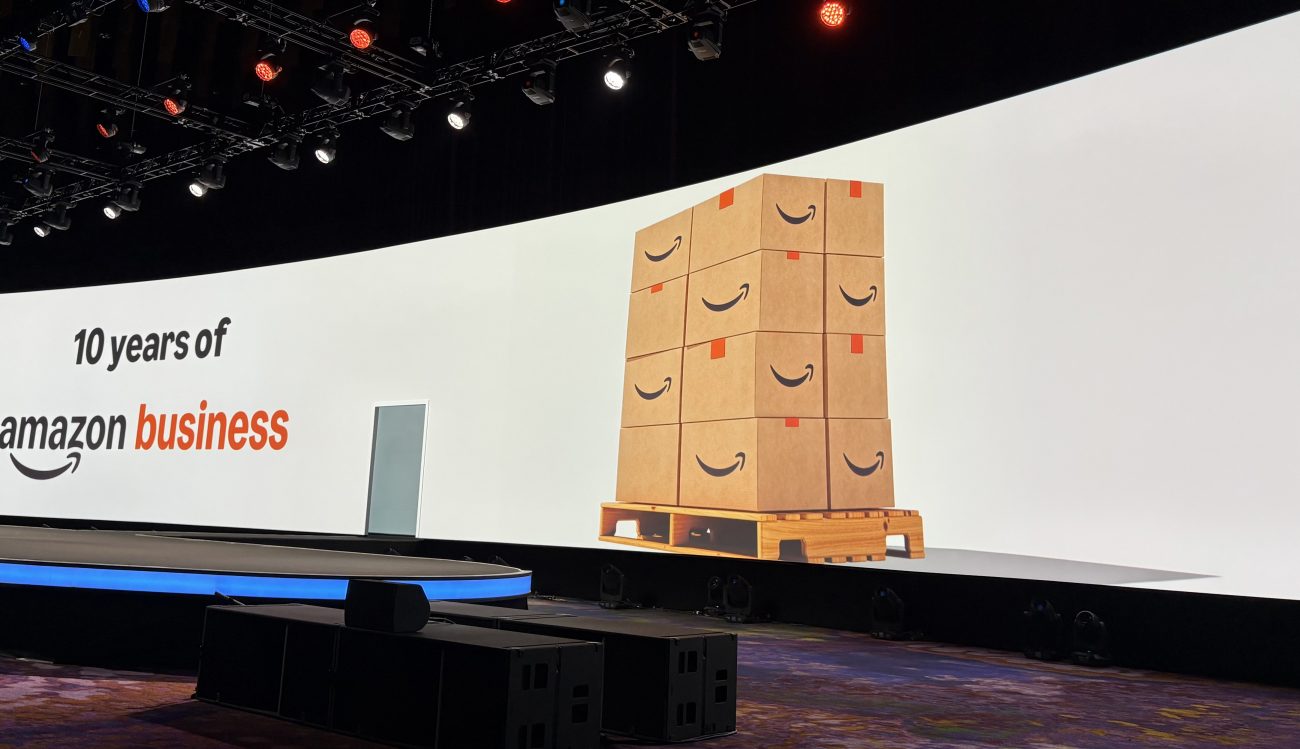
Pro-risk; fail fast; do more with less – all mottos of behemoth Amazon. But what does that mean for one of the world’s largest supply chain organisations? David Priestman attended the Amazon Business Reshape conference in Seattle.
Global upheavals in recent times, which are too numerous and obvious as to not need reminding you of, have caused logisticians to urgently re-wire and re-think strategies. The IMF’s ‘world uncertainty index’ is at its peak. How do supply chains gain more resilience and thus reduce inherent risk? Answers have included nearshoring, increasing stock levels and utilising technology platforms to boost flexibility.
These are four supply chain priorities:
- Strengthening Resilience – requires using real-time analytics to have true visibility
- Technological Transformation – being brought about by automation and more integration
- Retain Talent – improve the worker experience and raising their productivity
- Net Zero – goals are essential for both sustainability and affordability. Sourcing local and diverse suppliers is therefore green and responsible
Everything, Everywhere all at once
We know what IQ and EQ are. Shelley Salomon, VP of Amazon Business, speaks of the ‘Adaptability Quotient’ – AQ. “We’re in the age of adaptation,” she told me. “Generative AI is automating processes, including guided buying.” Amazon Business offers corporate accounts for procurement of anything and everything.
Amazon has access to millions of sellers, with multiple supplier options and JIT delivery goals. The organization aims to build-in ‘supplier redundancy’ to reduce the risk from having a single source for items. The product lines available on its platforms run to the hundreds of millions. Amazon is able to consolidate personal and business purchases for delivery to major customers, such as a University.
Customers are beautifully, wonderfully dissatisfied…they want something better…we invent on their behalf.
Jeff Bezos, Amazon Founder and Executive Chairman.
Amazon’s business sprawls from the ultimate B2C platform, Amazon Business (B2B), MGM and Prime (entertainment), Twitch, AWS (web services), Alexa, Ring (doorbells), Audible, Amazon Fresh, Whole Foods and Zappos. The robotics division keeps the company at the forefront of warehouse automation technology.
Agile, Nimble, Automated
But how should enormous supply chains such as Amazon’s meet its stated priorities? Four ambitions were outlined at Reshape:
- Predict supply chain challenges before commencing manufacture by using AI analytics
- Implement same day delivery capability
- Dedicated Amazon Business truck fleet
- Multi-product pallet delivery to customers
Be agile. What is the speed of your supply chain’s response to maintaining inventory levels? Start by understanding the current conditions. How durable are they? How competitive are your suppliers, in terms of quality and quantity?
Be nimble. AI can help sift through data more quickly and to dive deeper. It can also end the drudgery of human admin tasks.
Get automated, efficiency is key. AI is a real-time asset in risk management, fraud detection and for spotting anomalies. Take paper-based data and use AI to analyse it. Supplier vetting can be done by AI.
Phrase the Prompts
Luddites look away now, for the message is to embrace new technology. Interrogate the AI agent and use your curiosity. Find the truth and then do something about it when faced with supply chain challenges.
A supply chain can be a strategic advantage for a business if you have a strong team of logisticians, negotiate well and build alliances and partnerships. Agile sourcing makes for supply chain security. Sermon over.