HSBC and Walmart Join Forces on Sustainable Supply Chain Finance Programme

HSBC and Walmart today announced the roll-out of a sustainable supply chain finance programme that pegs a supplier’s financing rate to its sustainability performance.

This global programme allows Walmart’s suppliers who demonstrate progress in Walmart’s Project Gigaton or Sustainability Index Program to apply for improved financing from HSBC based on their sustainability ratings.

Project Gigaton is a Walmart initiative to avoid one billion metric tons (a gigaton) of greenhouse gases from the global value chain by 2030 through supplier commitments. Walmart’s Sustainability Index Program gathers and analyses information across a product’s life cycle, and was developed by The Sustainability Consortium (TSC), a global organisation dedicated to improving the sustainability of consumer products, to help Walmart benchmark suppliers and encourage continuous improvement.

HSBC believes that supply chains are one of the most important levers for banks and businesses to create a positive effect on the world. According to McKinsey, a typical consumer company’s supply chain creates far more social and environmental costs than its own operations, accounting for more than 80% of greenhouse-gas emissions and more than 90% of the impact on air, land, water, biodiversity, and geological resources.

Being sustainable is seen as very important by businesses around the world. According to the recent HSBC Navigator survey, 81% of global companies say ethical and environmental sustainability is important to them and 83% aspire to be a genuinely ethical or environmentally sustainable company. Also, improving sustainability outcomes is among the top three objectives for making supply chain changes.


UK Mobile Plant Users “Face Compliance Risk”

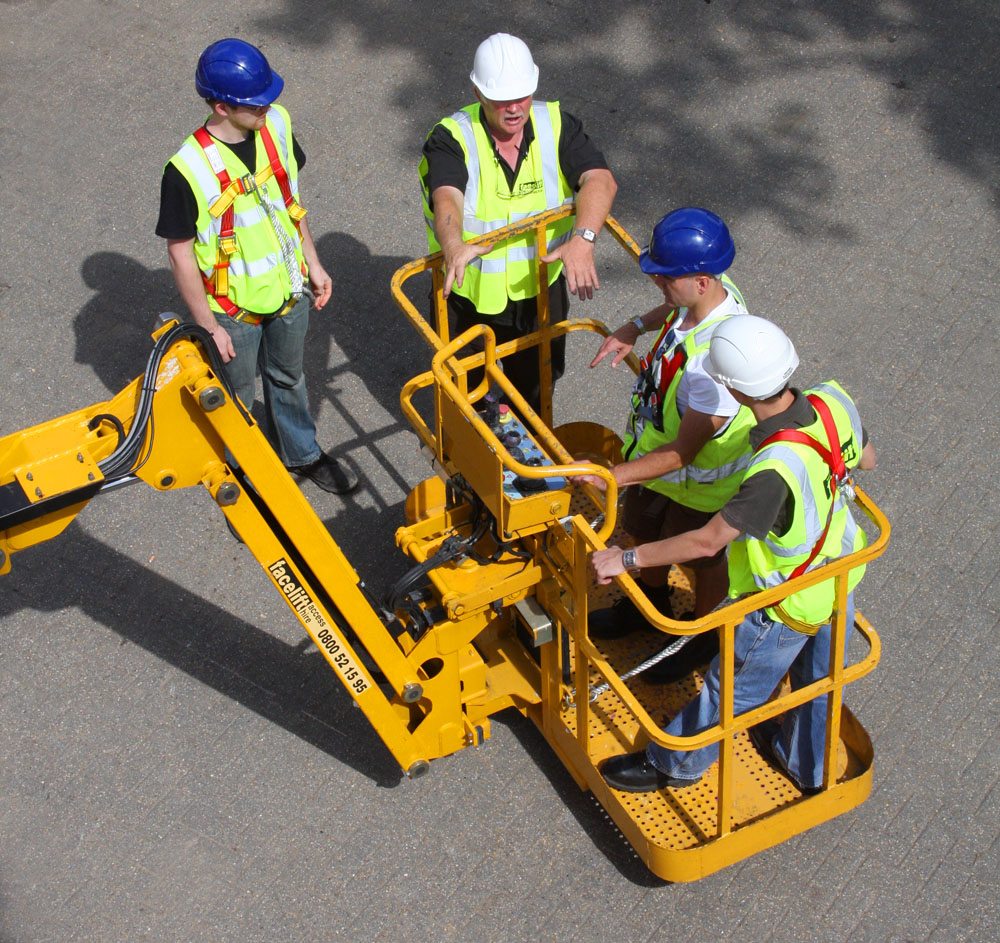
Following significant growth in the use of Mobile Plant equipment in the UK, a nationwide inspection and testing specialist is warning firms to be vigilant when it comes to achieving compliance.

It comes as the UK Mobile Elevated Working Platform (MEWP) rental market increased by 4% year-on-year, with demand outstripping the rest of Europe by two to one .

Under the Provision and Use of Work Equipment Regulations (PUWER) 1998*, users of work equipment have a responsibility to ensure that the plant or asset is safe to use. Regulations state that regular inspections must be carried out by a competent person and documented. In some cases there are additional regulations to consider, such as the Lifting Operations and Lifting Equipment Regulations (LOLER) 1998*, which covers all work equipment for lifting and lowering loads. According to Bureau Veritas, the rise of MEWP use and potential confusion around responsibility for the equipment could pose a compliance risk.

Shaezar Karim, Director for the Statutory Inspection division for Bureau Veritas UK, explains: “The growth in MEWPs has led to inevitable compliance challenges, stemming from contractors hiring assets and being able to transport them around the UK.

“Meeting statutory obligations for mobile plant and equipment can be a logistical nightmare – and that’s if users are even aware of their obligations. Many mistakenly believe it is the sole duty of the hire company to undertake PUWER and LOLER inspections but it is the user who must ensure that thorough examinations and inspections are carried out in line with the regulations.

“Organisations that face difficulties in overcoming the logistical challenges of mobile equipment inspections and therefore meeting their obligations, are at risk of costly fines, so it’s critical they ensure that the location of an asset does not affect their compliance.”

Bureau Veritas has a dedicated Mobile Plant Unit to deliver on-hire inspections; helping clients meet the logistical challenges of meeting statutory obligations for Mobile Elevated Working Platform (MEWP), lifting and crane equipment when hired out to contractors.

Software Specialist Iptor Launches Mobile CRM Light

Supply chain software specialist Iptor has launched Mobile CRM Light.

The add-on module comes fully integrated into the core Iptor ERP solution DC1, meaning it is quick to deploy and eliminates integration costs. By delivering only the functionality customers need, rather than unnecessary and expensive features, it comes at a fraction of the price of a full CRM solution, thereby providing a quick and high return on investment, according to the company.

Mobile CRM Light has been designed using HTML5 client to have a responsive design allowing the screen to automatically resize itself and reconfigure menus to ensure users have the best view of their data on any device, via any browser. The Mobile Client can also be run embedded within the analysis UI for full functionality.

Creating data is easy, but the real intelligence comes from being able to turn that data into actionable information. Therefore, an extended Mobile CRM analytics client enables users to take an overall view of what they need to do, but also to drill down into individual tasks to ensure no customer interaction is missed.

Christopher Catterfeld, Iptor Chief Marketing and Product Officer comments, “Mobile CRM Light leverages and extends existing ERP functionality to simply deploy a solution that avoids unnecessary data duplication and synchronization. This provides a great opportunity for our customers to take their sales and customer insight to another level without investing in a system which remains unused and out of sync with their core ERP. The ability to work anytime, anywhere with the mobile platform will open up opportunities that customers had no visibility of before and will add an entirely new dimension to their business.”

Software Specialist Offers Holistic Range at transport logistic

Logistics software specialist inconso will be at transport logistic 2019 from June 4-7, 2019 in Munich (hall A3, stand 507) featuring end-to-end products and services. The focus will be on IT and software solutions for the holistic planning and control of logistics processes along the entire supply chain. The latest software releases, cloud services and solutions for smart collaboration will be presented.

At the world’s leading trade fair for logistics, mobility, IT and supply chain management in Munich, visitors can learn about current best practices and test live demos. These include solutions for transport, yard and warehouse management that are included in the inconso Logistics Suite and based on the SAP SCE Suite. The focus is on solution scenarios for the end-to-end mapping of operational processes, which range from transport planning with inconsoTMS and SAP TM to carrier determination and freight billing through to shipment tracking over the last mile; these solutions can also be used to optimize business processes.

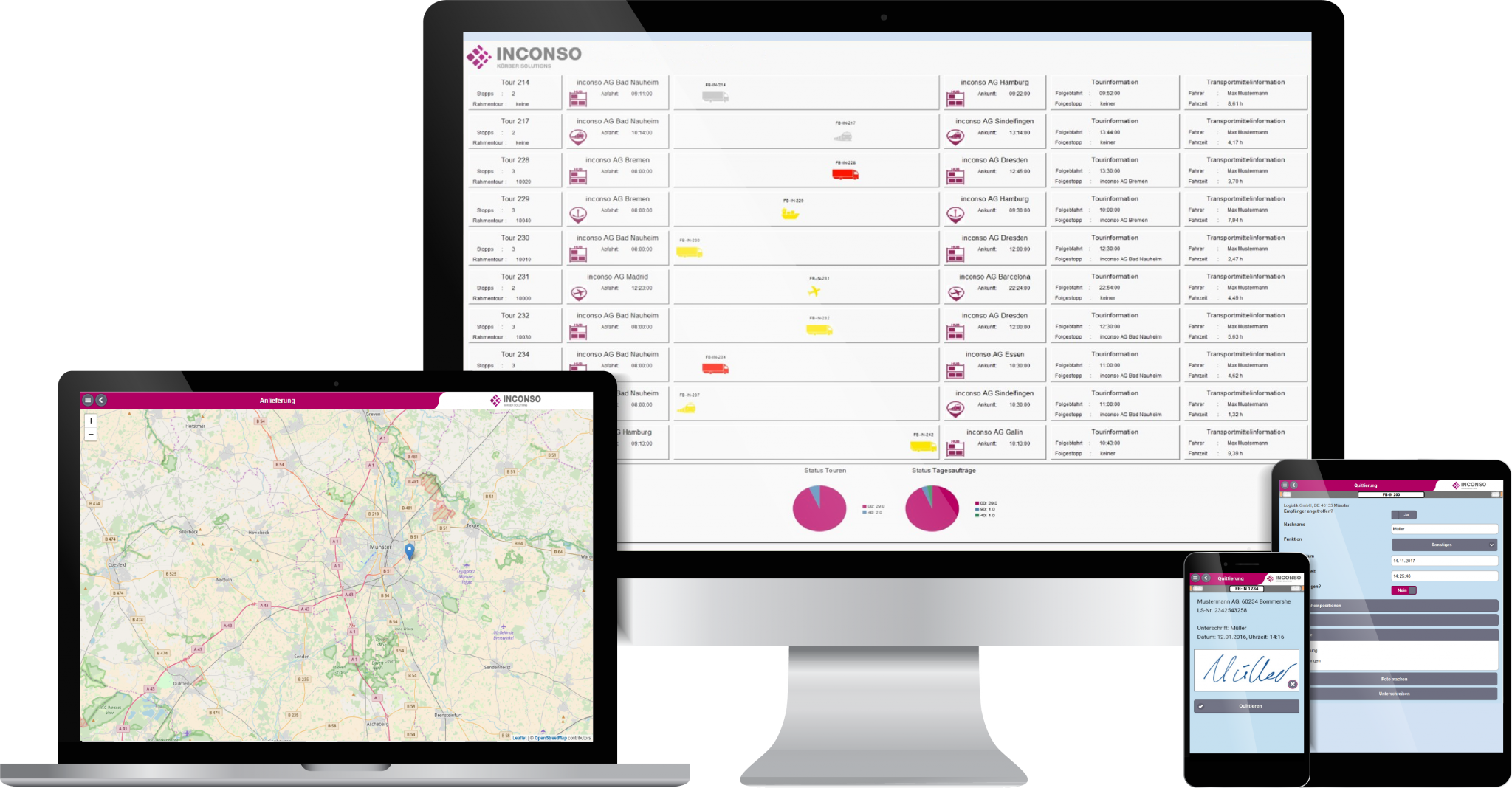
For companies of all sizes, transparency in the transport process is becoming increasingly important in light of the growing number of partners involved. inconso addresses this with the cloud solution inconsoPOD (Proof of Delivery) and its improved communication interfaces and options for seamless partner integration. The solution enables the carrier/driver of the delivery vehicle to easily capture and transmit transport activities, documents and signatures in order to provide customers with all vital delivery information in real time. The latest release of the slotting management system inconsoDSM (Dock & Slot Management) will also be presented, which has updated dashboard functions for the efficient planning of loading processes.

Holistic SCE solution concepts for everything from warehouse to transport and yard management through to cross-network order control will also be on display.

Hypermotion Expo to Showcase Mobility and Logistics

Travelling to the office in an autonomously driven car, taking an air taxi to the nearest airport and having a package delivered by drone? When Hypermotion takes place for the third time from 26 to 28 November 2019 in Frankfurt am Main, it will be showcasing the pioneering concepts and smart solutions that already exist for tomorrow’s mobility and logistics, with a particular focus on interdisciplinary approaches. This year marks the first time that the German Mobility Congress (DMK) is being held as part of Hypermotion. The congress is organised by the German Association of Transport Sciences (DVWG), the Rhein-Main Verkehrsverbund (Rhine/Main Regional Transport Association – RMV) and the House of Logistics & Mobility (HOLM).

The rapid pace of digitalisation in so many areas of life is a real challenge for all of us. Hyperconsumption, growing mobility requirements, ongoing climate change and increasing urbanisation all demand new mobility concepts. If we are to achieve a forward-looking and sustainable mobility transition, we must change the way we think and overcome existing systems boundaries. Ultimately, the solution lies in new, intelligently networked and multimodal systems.

When developing these systems, players and participants from the mobility, supply chain and infrastructure industries find themselves confronted with a wide range of unanswered questions, a dynamic and complex market environment, opposition and regulations that do more to restrict innovation than promote it.

It is here that Hypermotion aims to lead the way forward, by promoting interdisciplinary dialogue between established mobility and logistics companies and first movers across all modes of transport, opening up new perspectives, fostering discussion of pioneering concepts and networking everyone involved.

“With Hypermotion we have created the first platform for digital transformation that unites every mode of transport. It is our goal to drive networking within the industry, in order to pave the way for new and integrated solutions for tomorrow’s mobility,” explains Danilo Kirschner, Director of Hypermotion.

Participants include established corporations and SMEs from the fields of mobility and logistics, mobility pioneers and innovative start-ups, policy-makers and representatives from the fields of science, academia and associations.


Conferences – inspiration and talks with experts
Hypermotion participants can look forward to a stimulating and extensive conference programme on all three days of the event. This year also marks the first time that the German Mobility Congress (DMK) will be taking place as part of Hypermotion. The theme of this congress is ‘Mobility in conurbations – opportunities and challenges’. Other conferences on the programme include ‘EXCHAiNGE’, a prestigious international event focusing on supply chain management, and the ‘Logistics Digital Conference’ (LDC), an event that covers topics such as the future of freight transport. At the ‘smart mobility conference’ (smc), on the other hand, it is sustainable urban mobility concepts and digital networking that are in the spotlight.

Ideas to the forefront – Hypermotion Lab
Make way for the future: In the Hypermotion Lab, start-ups and established companies alike present their innovative business ideas and projects. In an array of interactive formats that includes elevator pitches and speed networking, newcomers show off their expertise, while finalists from established companies fight to win the coveted Supply Chain Management Award. Everyone is welcome to take part. In addition, all participants are encouraged to actively contribute to workshops and think tanks in order to discuss pressing problems and collaborate on the development of possible solutions.

Micro-mobility
Electric scooters and hoverboards will soon be legal on German roads as well. That is because these mini electric vehicles offer an environmentally-friendly and cost-effective alternative to cars for short journeys. Hypermotion has responded to this development by introducing the Micro Mobility Course at this November’s event – here, providers of lightweight vehicles for transporting people and goods will be able present their vehicles, giving people the opportunity to try out not only monowheels and Segways, but also e-bikes, cargo bikes and e-scooters.

Hypermotion will take place from 26 to 28 November 2019.
More information is available at www.hypermotion-frankfurt.com

Hubtex to Launch PhoeniX Sideloaders at Ligna 2019

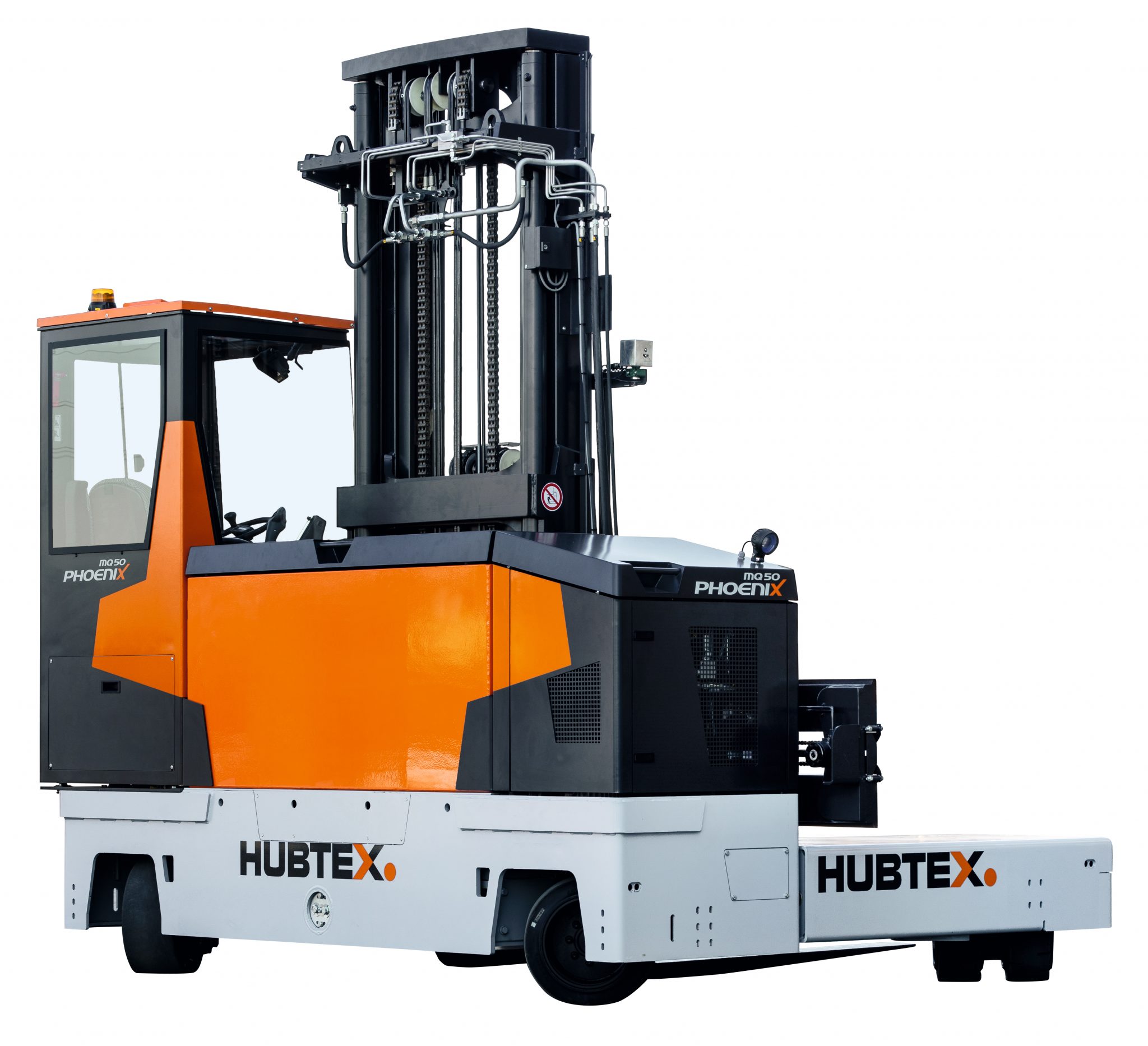
Hubtex has updated its modular development platform for electric multidirectional sideloaders – the largest in the industry – with its new PhoeniX range. The PhoeniX series will gradually replace all vehicles based on the ESTL platform. The first two models, with a load carrying capacity between three and five tonnes, will be demonstrated at Ligna Hannover (27-31 May 2019). Trade fair visitors can head to booth N65, west of Pavilion 33, to see the benefits of the new PhoeniX for themselves. The vehicles feature a highly ergonomic cabin and also offer optimal manoeuvrability and improved all-round visibility. The multi-way trucks are also Industry 4.0 compatible thanks to the new control system, giving the PhoeniX all the tools it needs to meet future requirements.

As with MaxX vehicles, drivers benefit from an optimally designed cabin in terms of ergonomics. Generous space and a lot of legroom mean maximum comfort for drivers. The new cabin also offers improved all-round visibility, especially past the right fork. The HIT3 operating terminal is equipped with a colour display that gives drivers a clear picture of all important settings and operating data. Additional functions were added to the HIT3 terminal for the new vehicle series. During development of the new PhoeniX series, the transverse cabin and all other cabin variants will be implemented over the course of 2019.

New platform with additional equipment
The PhoeniX development platform is the first to feature purely electric power steering for an entire platform. This means that steering noises are kept to a minimum, while also significantly reducing energy consumption. Users can achieve major efficiency gains by combining this steering system with inductive wire guidance. Equipped with the patented HX steering system as an optional extra, the forklift offers perfect manoeuvrability in all directions. Furthermore, Hubtex has further enhanced the smooth operation of the lifting mast, minimising vibrations and ensuring precise load handling. In this field of application and if required, the new electric multidirectional sideloader also features a weight and overload display independent of the lift height.

All set to meet future requirements
Even the standard version of the PhoeniX is already designed for gradual automation. A new generation of vehicle control system, pre-planned paths for cabling, positions for sensors and additional features underline the development platforms future-oriented design. If required, numerous assistance systems can also be integrated, such as laser-guided navigation, which will be available in the PhoeniX series for the first time. This new system ensures extremely precise vehicle positioning. “At Hubtex, decades of experience go into redesigning and further developing our tried-and-tested electric multidirectional sideloaders,” explains Hubtex Managing Director Hans-Joachim Finger. “We’re doing the right thing at the right time to ensure we are in the best possible position to meet the growing requirements in the Industry 4.0 era.” By developing the new PhoeniX platform, Hubtex is strengthening its portfolio of electric multidirectional sideloaders. Together with the MaxX and BasiX platforms, the company can now offer the right solution for any application in the handling of long goods.

All information on Hubtex’ appearance at the 2019 Ligna trade fair can be found at https://messen.hubtex.com/en/homepage/

Greif Investment Expands Capacity for Food Grade IBCs

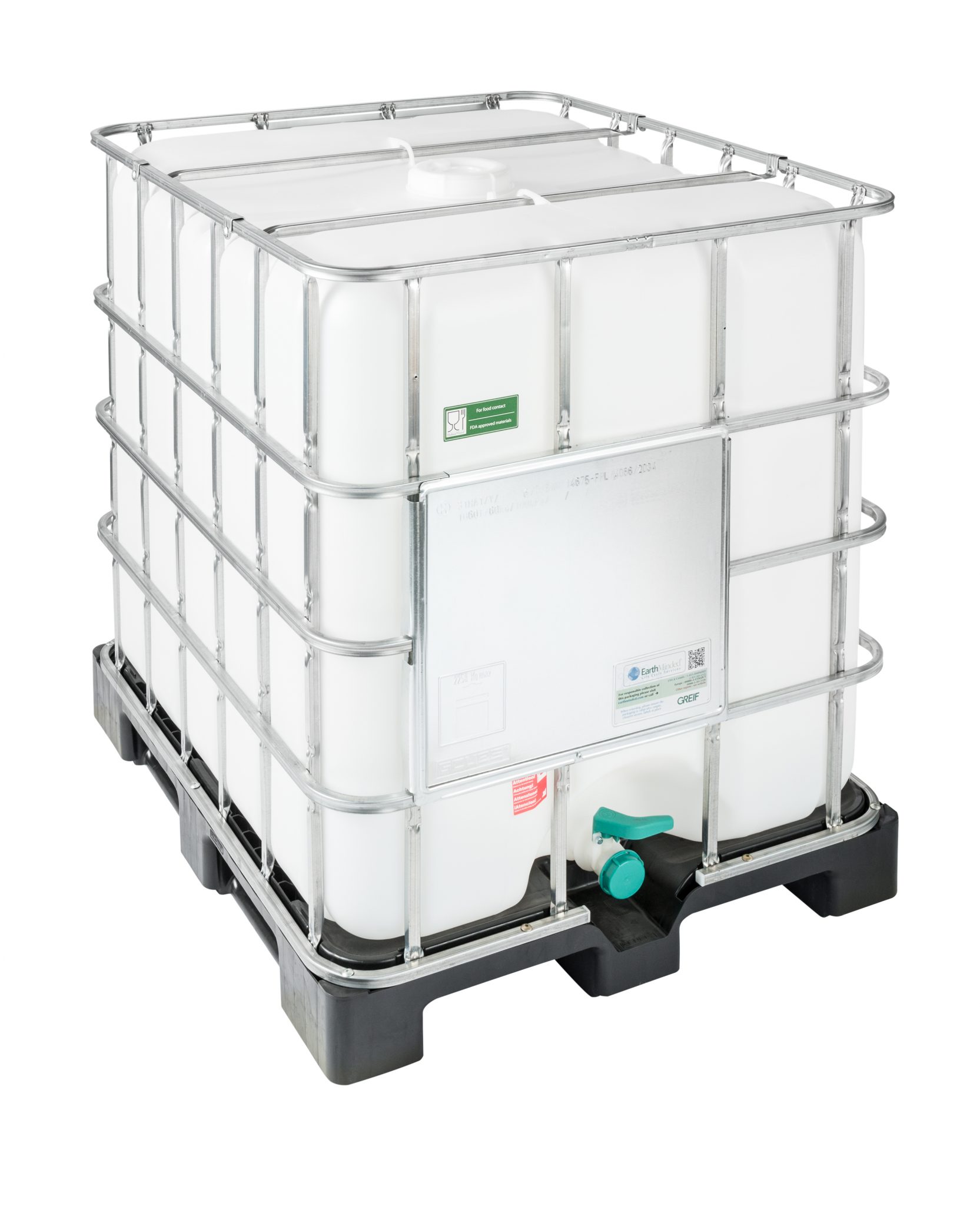
Greif, a global leader in industrial packaging products and services, has recently invested in another state-of-the-art blow molding machine to double its in house production capacity for IBCs at its facility in Ede, Netherlands.

Also located in a cleanroom environment, the new blow molder machine operates with food safe hydraulic oil, active carbon filtered air and bacteria free cooling water, and will allow Greif to meet its growing demand for food grade IBCs.

The investment adds to the existing machine installed last year, boosting the output capacity of Greif’s Ede facility to over 1,500 per day.

“Demand for IBCs continues to grow in the food sector where product integrity and shelf life storage are becoming increasingly important,” said Luca Bettoni, Greif EMEA IBC and plastic product manager. “This additional investment boosts our in-house capacity and offers customers the reassurance of product protection against contamination.”

“Furthermore, the Ede facility recently achieved the FSSC 22000 certification for food safety, clearly demonstrating our commitment to providing the best level of service and quality of product to our customers.”

Greif’s multi-million euro facility in Ede has been designed to offer customers the very latest IBC technologies available to the market, with a specific focus on the food industry offering the highest standards in the IBC market.

Industry View: Robotics Make Financial and Operational Sense

It’s an age-old question in materials handling: how do operations increase productivity while driving down costs? For many logistics applications, the introduction of robotics offers a worthy return on investment. Yale’s Ron Farr explains.

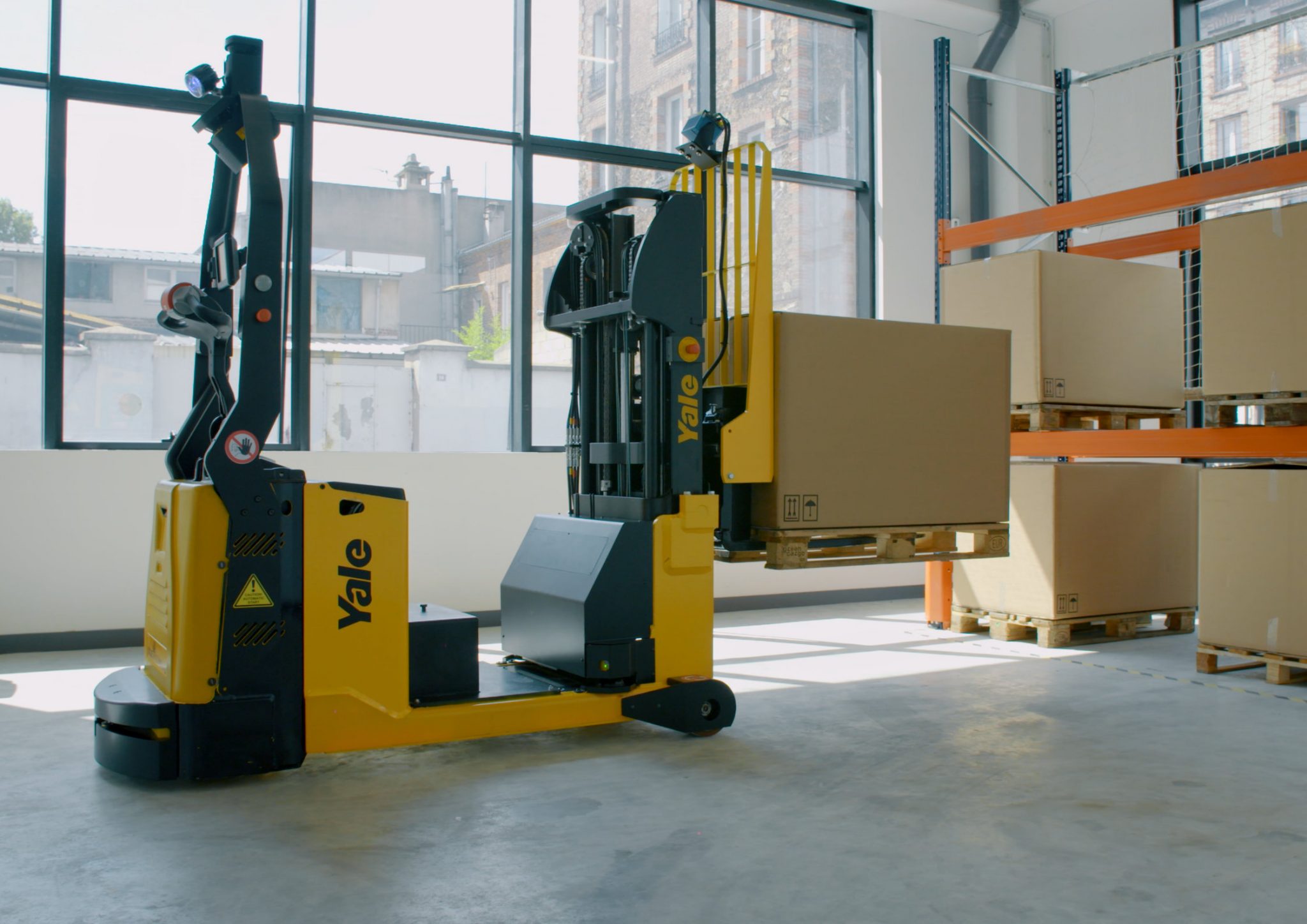
“Industry 4.0 is evolving quickly, and so too is the technology to support it. Yale robotic materials handling equipment can operate without any added infrastructure and is unrestricted by fixed routes, offering great strides forward in terms of flexibility, ease of use and productivity”, says Ron Farr, Warehouse Solutions Manager for Yale.

As the competitive landscape continues to intensify, businesses cannot afford an investment that does not pay off, so translating these benefits from theoretical to tangible reality is key.

Increased uptime and productivity
Supply chain operations are under increasing pressure to get more done in less time with fewer resources. SKU proliferation and the desire for faster delivery times have defined a new “normal”, with services that were once considered perks, such as free two-day shipping, now an expectation for every order.

This demand has triggered a radical shift in logistics applications, with shorter delivery times becoming a driving factor for warehouse overhaul. In this environment, businesses have zero tolerance for downtime, and even minor interruptions can have a severe financial impact.

“Automation is a reliable solution to minimise the risk of downtime and unexpected delays. A robotic truck works relentlessly 24/7, only stopping for battery charging. Robotic trucks can be fitted with Lithium Titanate Oxide batteries, which can be opportunity charged very quickly and one charger can serve up to five trucks.

“Yale robotic solutions follow speed limits and respond to unexpected obstructions quickly and easily, reducing the potential for downtime resulting from impacts or interruptions and ultimately improving equipment longevity,” adds Ron.

Efficient route planning and adjustment
Automated materials handling equipment in warehouses has historically been bespoke, complex and inevitably expensive to both purchase and install, resulting in an inflexible solution that is unable to adapt to expansion or reconfiguration. Industry-leading Balyo geoguidance navigation technology is at the heart of the Yale solution, setting Yale robotic trucks apart from traditional automated guided vehicles on offer. With no dedicated infrastructure required, the trucks can operate autonomously without the need for any wires, magnets or reflectors. The Yale solution is fully connected to the customer environment and can be integrated into current processes quickly and easily.

“After consulting with our clients, we recognised that a major hurdle to introducing robotics in warehouses and production lines is the installation of dedicated infrastructure. Deploying Yale robotic solutions starts with walking the truck through the warehouse to build a map and learn the main routes, locate storage aisles and other characteristics. Yale robotic trucks, driven by Balyo geoguidance technology, use these existing structural features, such as walls or racks, to build a map of the facility, enabling them to self-locate and navigate in real-time without the need for any physical infrastructure.

“This innovative technology allows the equipment to find the most efficient routes, and adapt to changing inventories and workflows while virtually eliminating the ongoing structural maintenance associated with wires, reflectors and magnets. Even if the facility layout changes slightly and some of the reference points are moved or removed, the robotic equipment can continue to navigate using the remaining features, which gives operations a lot more flexibility,” explains Ron.

Reduced turnover and training time
High turnover rates for warehouse workers and the cost of filling newly vacant positions places operations under pressure. And while training periods for new employees vary, one thing remains constant – training inexperienced or unskilled employees is costly.

Implementing robotic equipment does not take high-value jobs away from operators. Instead, using automated solutions can help managers address the labour shortage and help curb turnover by freeing up employees to advance to more engaging, meaningful positions.

“Robotic trucks allow logistics operations to perform repetitive tasks, such as moving pallets and loading and unloading, in a more cost-effective way – saving valuable time and money. For example, the Yale robotic low level order picker identifies and delivers the correct pallet to the appropriate location using its barcode reader, allowing employees to focus on picking and packing orders as quickly as possible.

“This interconnectivity expands to the wider warehouse infrastructure too – sensors on conveyor belts can detect pallets at the end of the line and call for the robotic solution to collect the pallet and transport it to its next location,” adds Ron.

Real-time truck management
Whether used to plan labour, optimise fleet usage and maintenance or create ideal inventory flow, data can lead the way to cost savings and tremendous competitive advantages. Combined with telematics systems, such as Yale Vision, robotic materials handling equipment offers unparalleled visibility into overall processes and individual units, enabling adjustment and ongoing optimisation based on usage, congestion, maintenance and other data.

Yale robotic trucks fully integrate with existing Warehouse Management Systems (WMS) or Enterprise Resource Planning (ERP) systems, connecting data points and allowing real-time adjustments to be made. It’s possible to control traffic, assign orders to individual trucks and interface with equipment, such as automatic doors and conveyors. All Yale robotic trucks also have dual mode capability, meaning they can be switched to manual mode at the touch of a button, allowing operators to complete non-automated tasks without the need for separate equipment.

Yale robotics range opens doors for customers
Based on existing manual equipment Yale offers two other robotic models in addition to the MO25 low level order picker. The Yale robotic MO50-70T tow tractor and MC10-15 counterbalance stacker are suitable for a wide range of applications, while offering the familiarity, reliability and durability of the Yale brand.

“Our industry experts have carefully studied how to make robotics as cost-effective and productive as possible for materials handling operations. The Yale robotics solution is completely scalable from a single truck to a large fleet and as the Industry 4.0 trend continues, Yale robotics can open the door to automation to many who were unable to consider it in other iterations,” concludes Ron.

 

Driver-Tracking Service Added to Proof-of-Delivery System

Paragon has enhanced its fleXipod proof of delivery system with a map-based ‘track my driver’ service. This functionality enables logistics operations to provide customers with access to live status updates on the progress of their delivery. Logistics operations will benefit from improved first-time delivery success, increased customer confidence and reduced inbound calls volumes.

Logistics operators using Paragon’s proof of delivery software now have the option to upgrade the system to include a link to the new driver tracking functionality in both emails and SMS notifications. The interface can be branded and customised to provide a range of relevant information such as how many deliveries are left before an order arrives, providing customers with accurate information about arrival times or windows so they can plan their day accordingly.

Accurate communications ensure a higher proportion of customers are available at the time of delivery to accept an order, freeing up office-based resources by reducing the number of inbound WISMO-related calls. In addition, customer service staff can be provided with access to the same tool, making it easier to resolve any complaints or queries.

William Salter, Managing Director of Paragon Software Systems commented: “Real-time tracking and highly accurate communications have become increasingly common consumer expectations. As a result delivery operations across most industries are now under pressure to provide this detailed delivery information. The introduction of Paragon’s track my driver functionality using HERE’s Open Location Platform means that any B2C or B2B delivery operation can achieve this level of service. This latest development enhances our fleXipod proof of delivery system which already offers transport operations an easy-to-use, flexible tool that streamlines the delivery process and improves customer service.”

Rulmeca Motorized Pulleys Suitable for Light and Heavy Duty Conveyors

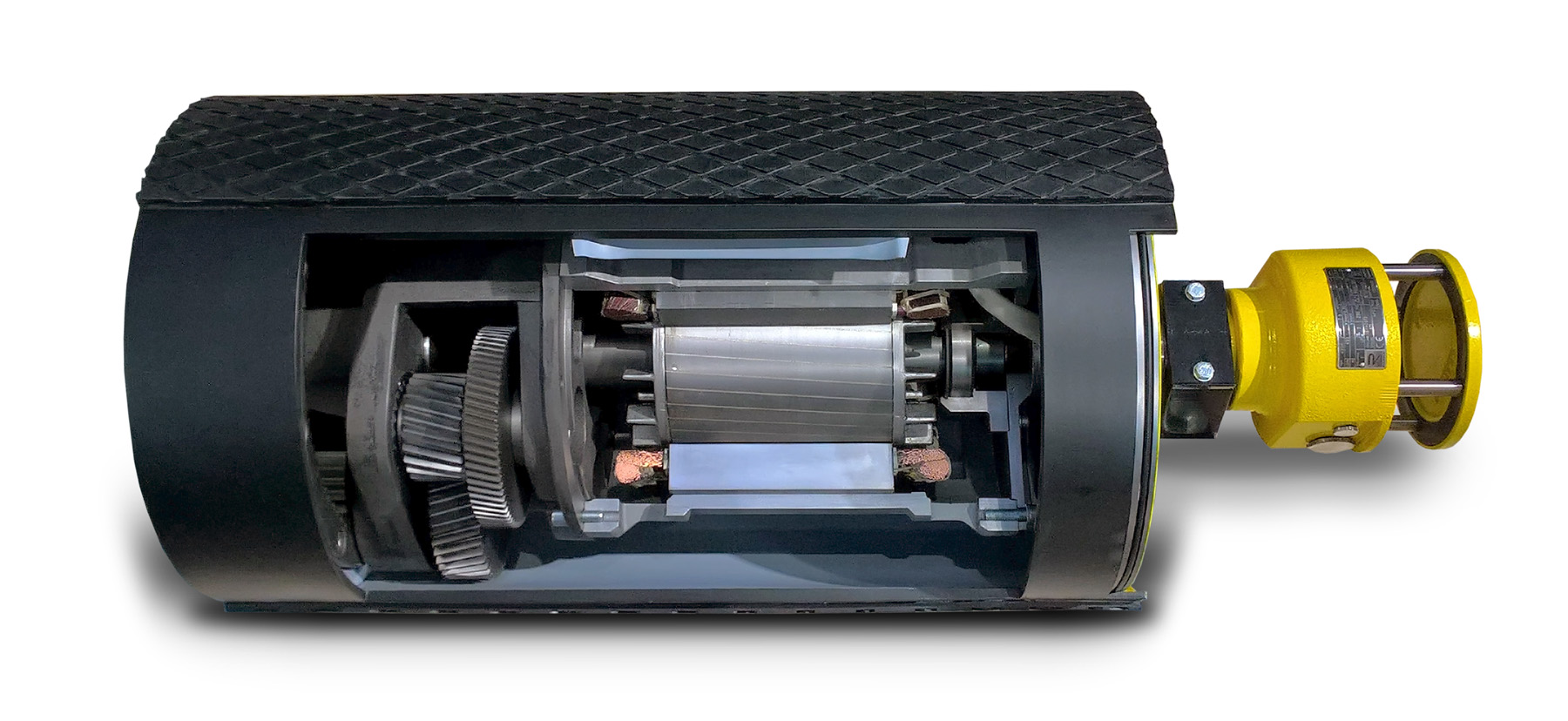
Rulmeca has launched its renewed TM400 motorized pulley generation. Thanks to optimized components, the new 400 mm motorized pulleys are significantly more energy-efficient and service-friendly while offering even greater robustness and therefore plant uptime, according to the company. Designed for the transport of bulk materials, the new motorized pulleys suit applications across many sectors – from light-duty belt conveyor systems in recycling, such as conveyors passing under magnetic separators; to medium-duty conveyor belts for mobile and stationary crushers, screeners and conveyors in the asphalt, cement and concrete industries as well as salt, sand and gravel works; to bulk material conveyors for the transport of grain and fertilizers.

The energy efficiency of the new TM400 motorized pulley generation, rated at 2.2 to 15.0 kW, has been increased by an average of 4.5% under peak loads thanks to more efficient electric motors with higher performance. Depending on the operating conditions, the resulting energy savings range from an impressive 12% to as little as 1%. When using the 15.0 kW class and working in two shifts with 90% utilization of nominal power, the average operating cost savings add up to EUR 467 per year, based on a comparatively cheap kilowatt-hour (kWh) rate of EUR 0.20. The eco footprint also improves substantially as CO2 output is reduced by 1.2 tons when using a conventional power mix.

In order to make the already highly reliable continuous operation of the bulk material handling systems even more fail-safe, the housing for the transmission components was optimized again, which increased the already high mean time between failure (MTBF) of the new Rulmeca TM400 motorized pulleys even further.

Thanks to greater component standardization, the new Rulmeca TM400 motorized pulleys have also become more service-friendly. Local service providers can now replace defective motor windings themselves, which minimizes downtime while making the global service network even more powerful and responsive. Rulmeca provides the required technical documentation and repair manuals upon request.


Subscribe

Get notified about New Episodes of our Podcast, New Magazine Issues and stay updated with our Weekly Newsletter.