Emerging Applications of Rugged Devices

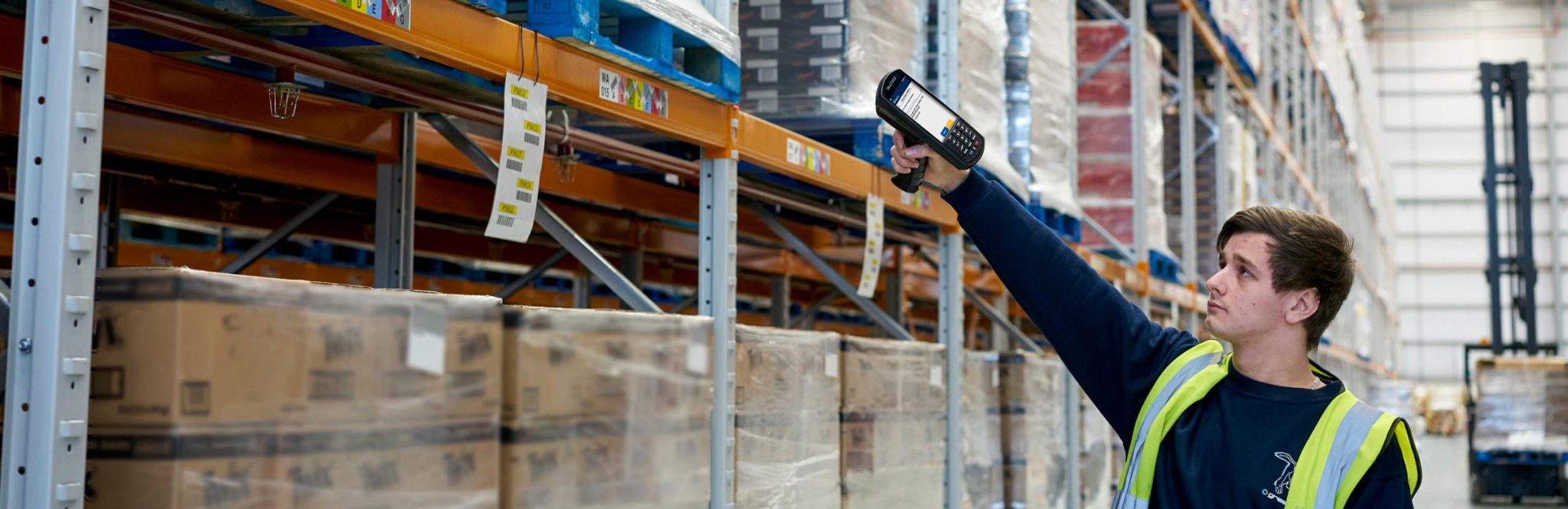
More and more commercial organisations are discovering the many benefits of rugged handheld devices. A recent report from Technavio predicts a compound annual growth rate (CAGR) within the global rugged device market of nearly eight per cent before 2023, reports Peter Marsh of Touchstar Technologies.

Rugged mobile devices enable the access and capture of operational data on the move, even in harsh working environments, but this isn’t the only factor behind their increasing popularity. Rugged technology isn’t going anywhere, so let’s take a closer look at some of the emerging applications of rugged handheld devices that are fuelling its uptake.

Market saturation is forcing businesses from all sectors to diversify; to enter new verticals in order to continue to grow. Offering a wider range of products and/or services often means adding new points to a supply chain in the form of multiple factories or warehouses – expanding the geographic spread of a business’s operations.

While in most cases there will still be a central point of organisational control, businesses with several secondary sites need a way to connect them and ensure optimum efficiency without overburdening HQ. This is where decentralisation comes in – a move away from a single source of operational management to an infrastructure in which each site has its own level of autonomy. Within the manufacturing industry, for example, this would involve each factory or warehouse having access to relevant data and information systems without having to go through HQ.

Rugged handhelds make this possible, enabling factory or warehouse teams to record working progress, solve problems and map workflows as they go about their duties, all with the assurance that their mobile device is built to survive drops, knocks, moisture and extremes of temperature. Decentralised control is a logical and effective management approach for many types of business, and rugged handhelds are helping them achieve it.

Many industries make use of mobile technology, but even those that have traditionally relied on non-rugged consumer devices are starting to realise the benefits of their rugged counterparts. Thanks to reduced failure rates and extended use, rugged mobile devices offer better return on investment over time than standard devices, and a lower total cost of ownership (TCO).

As a result, the range of sectors adopting rugged handhelds is growing to include industries such as retail, hospitality and public transportation. Businesses within these areas are capitalising on the longer life and improved reliability of rugged technology on an operational level, as well as the better value for money that it represents.

Shuttle System in the US

In the state of Kansas, USA, TGW recently completed an automated distribution center for spare parts specialist, TVH Parts Co. This included a five-aisle shuttle system with 51,000 storage locations, combined with highly efficient goods-to-person picking workstations ensures maximum flexibility. Thanks to the new TGW automation, it was possible to increase throughput, while reducing manual workflow. TVH customer`s now benefit from better service, as well as extended order placement deadlines.

TVH specializes in the distribution of spare parts for industrial trucks and agricultural vehicles. Its portfolio includes parts for forklifts, working platforms, wheel loaders, excavators, and tractors. Founded in 1969 in Belgium, the company is now active all over the world. In 2016, TVH generated sales of EUR 1.4 billion with a workforce of 5,400 employees. TVH´s North American headquarters and logistics hub is located in Olathe, Kansas, where TVH employs over 1,000 people in the Americas. More than 5,500 orders leave the company’s national distribution center every day.

The five-aisle shuttle system and the ergonomic 1:8 goods-to-person workstations were integrated into the existing building, seamlessly fitting into existing workflows. The solution was designed in close coordination with the system at TVH’s headquarters in Belgium, for which TGW was also contracted. As a result, synergies can be optimally utilized, both in plant design as well as for the WCS (Warehouse Control System) interface. The shuttle is ready for future growth, and can easily be doubled to ten aisles.

“We decided to invest in a new system due to our fantastic growth in the number of SKUs we have to manage. The main design criteria for us was flexibility. We wanted a solution that can handle the current growth but also our future growth – so we needed it to be modular,” says Rod Strickland, Director of Logistics at TVH.

Time Saving Benefits

At its first appearance at IMHX, RARUK Automation will showcase a new intelligent, small parts pick and storage system with huge time saving benefits. The new EffiMat® system with patented Box Mover Technology, can pick five items at the same time from different positions within its vertical shelving systems and deliver them all to the picking station on the same tray. This is in sharp contrast to established competitor systems that require a single item to be picked before the code can be entered for the next. This makes the EffiMat the fastest and most accurate VLM available to the UK market.

RARUK Automation claim to stand out from the crowd because its products always offer a unique edge and its own technical competence and applications know-how that enables these products to be freely combined to create optimal, off-the-shelf automation solutions. Many of these will feature at IMHX. Among its most popular products are the MiR autonomous mobile robots. These have taken industry by storm thanks to their extraordinary flexibility and smart technology. A key benefit of the MiR system is that it requires no network of expensive and inflexible wires or sensors to guide its path. So, it’s simple to integrate and provides a fast return on investment.

Several models cater for various payloads and they are all designed to be collaborative. Multiple built-in safety features, including dynamic safe zone monitoring, ensure the robots manoeuvre efficiently around people and objects in highly dynamic warehouse environments.

The latest addition to the range is the MiR 1000 which extends the capacity of the fleet to 1000 kg making it the perfect choice for heavier pallets. It provides even greater scope for companies to optimise their internal transportation of heavy loads and pallets, allowing employees to focus on higher-value activities.

Large Racking Project for New Storage Facility

BS Handling Systems has completed a substantial racking project for ASOS at its new storage facility in Doncaster. The design and installation of the racking solution was the major element of this new facility and has created storage for up to 250,000 individual cartons, as well as end of run palletised storage.

Mike Kosciukiewicz, Head of Returns Operations, ASOS Supply Chain explains: “The ASOS website and product range is continuing to grow at pace. In order to meet this demand, we needed to increase our carton storage capacity. The most efficient way for us to do this was to create the Doncaster storage facility. We had a brand new, empty space and we wanted to maximise its carton storage capacity by fitting it out with the best possible racking solution.”

In order to maximise the storage capacity at the Doncaster facility, BS Handling Systems designed and installed a 10.5 metre high racking system. Constructed to reduce wasted space, the height of the racking follows the sloping roof line ensuring there are no large gaps left at the top. At its maximum height, there are 19 levels of shelving, the equivalent of 35km of mesh shelving laid end to end.

To comply with health and safety regulations and allow easy access to cartons, BS Handling Systems designed a unique carton bracket system.
The bracket holds the cartons in place throughout the extensive racking system. Kosciukiewicz continues: “From start to finish, the project took around 12 weeks to complete. We wanted to get the installation completed as soon as possible to avoid any delays to launching the Doncaster facility. This was a real credit to the BS Handling Systems team as they finished on schedule and in budget.”

Precisely Timed Supply Processes

Networking, information transparency, technical assistance and decentralised decisions are key cornerstones of a ‘smart factory’. Companies that systematically interlink and largely automate production and logistics are already creating a solid foundation on which smart factories can grow and thrive. And people continue to play an important role. State-of-the-art technologies relieve them from monotonous work and create an atmosphere that contributes to increasing employee satisfaction and motivation.

In the development of new manufacturing facilities, the focus remains on production in many cases. Material flow, on the other hand, is assigned a more secondary role. However, in the age of Industry 4.0, which is already feasible and based on the core idea of a smart factory, such differentiation or decoupled planning is increasingly being called into question. Instead, holistic concepts are needed so that all processes in production and logistics can be networked and flexibly synchronised. Another advantage is that space requirements are reduced thanks to minimised stocks.

In addition to automated distribution centres, the Swiss Stöcklin Group has also recently implemented a number of projects on a turnkey basis, especially in this segment of production logistics, taking into account the strategic and business objectives of the customers. The individual optimisation of space, time and resources is supported by a broad range of hardware and software products from our own production. As a global intralogistics provider and general contractor based in Dornach, Switzerland, we supply and implement our solutions ourselves – all from a single source.

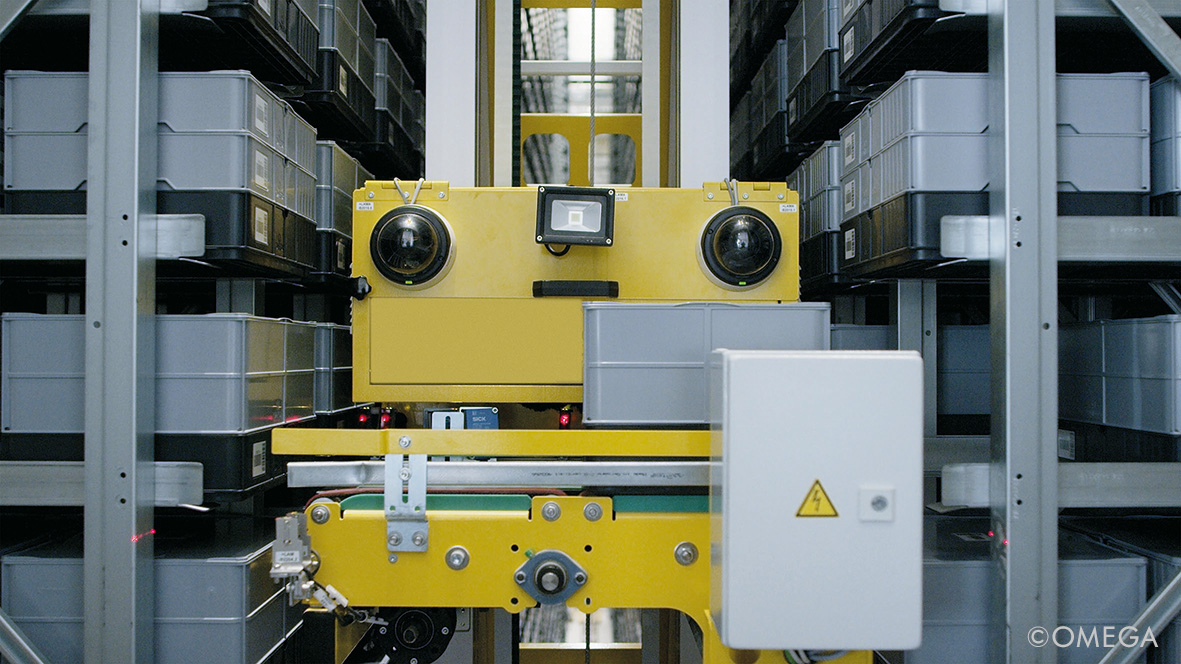
Omega, a brand of the Swatch Group, also made use of this offer to build a new luxury watch factory in Biel, in the canton of Bern. This new production facility, which was built according to the most modern ecological criteria and blends in harmoniously with the urban environment, combines both assembly and quality control under one roof, as well as a fully automatic small parts warehouse with connected conveyor technology. It also houses zones for packaging and the provision of the finished goods for shipment. “The implementation of a new logistics concept was intended to optimise material flow and storage facilities and adapt order picking and storage capacities to future requirements,” reports Domenico Palombo, who oversees French-speaking markets in the Stöcklin Logistik AG Systems division. The focus was also on the highest level of performance and availability over the entire life cycle of the system, as well as maximum flexibility. In parallel, the costs associated with the processes had to be reduced.

Since its launch at the end of 2017, the fully automated small parts warehouse has been the core of the new, five-story production building, which has for all intents and purposes been constructed around the intralogistics system. It manages a variety of components and watch heads, which are sorted and stored according to work steps and picked on different floors. Specialists in their field go to work there, precisely assembling movements with dials, hands, cases and bands under clean-room conditions. Some controls and logistics tasks are assisted by robots. After completion, the finished watches are packaged and sent to shipping via specially designed conveyor technology.

The automatic small parts warehouse offers space for more than 30,000 containers with double-deep storage. In order to best protect the valuable goods in the warehouse, the entire system was rendered inert. In the case of Omega, the preventive fire safety concept provided for a reduction in oxygen content to just 15.2 per cent. In this way, it is preventatively ensures that no fires can be started in the first place. The warehouse is stocked with four BOXer storage and retrieval machines from Stöcklin Logistik, each equipped with a load handling device. In Mr Palombo’s words: “Energy efficiency was a big topic right from the beginning. We meet this demand with the lightweight design of the BOXer, which, thanks to this design principle, is one of the most energy-efficient small parts units on the market with comparable performance.”

Due to its modular construction, the BOXer is also designed for maximum flexibility and scalability. And the implemented warehouse management system (WMS) with integrated material flow control is used to continuously initiate storage and retrieval strategies under consideration of up-to-date daily requirements. As a result, the small parts units do not always drive at the highest possible speed, but adjust their pace as needed. This reduces both component wear and energy consumption, saving resources and avoiding unnecessarily high operating costs. At the same time, there are sufficient reserves to provide the required maximum performance at system-level peaks.

The system (27x10x14 meters – LxWxH) extends over three floors –the basement, the ground floor and the first floor. The remaining floors are connected to the system via lifts, which move the goods vertically. For storage and transport, Omega uses special containers measuring 305x405x230 mm, which can be identified by means of two individual EAN barcodes affixed to each container. In total, the automatic small parts warehouse can handle around 1,000 container movements per hour. The integrated warehouse management system acts as a central control entity, ensuring consistent inventory transparency and efficient use of all resources.

Successful Year for BLG

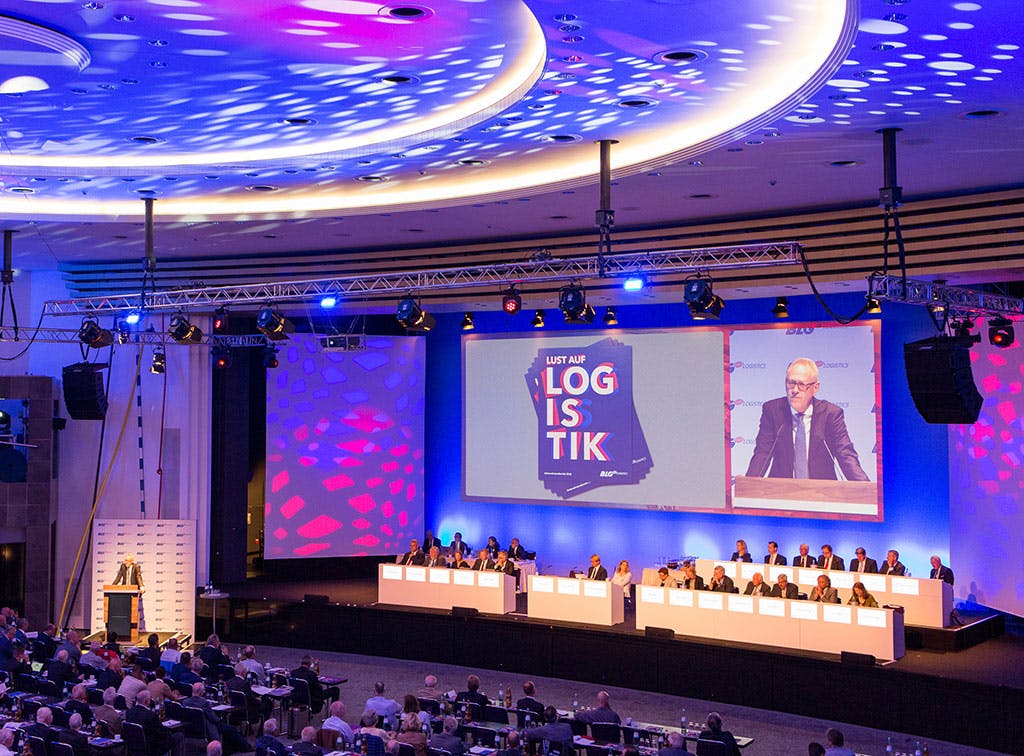
“We managed not only to achieve our targets for 2018, but also to exceed them.“ This was the conclusion drawn today about business year 2018 by BLG CEO Frank Dreeke at the 139th General Shareholders Meeting of BREMER LAGERHAUS-GESELLSCHAFT -Aktiengesellschaft von 1877. The meeting took place in the Congress Center Bremen. On behalf of the Board of Management, he thanked the 250 shareholders represented – who accounted for some 86 percent of the share capital – for coming. Then he presented his report on the listed company BREMER LAGERHAUS-GESELLSCHAFT -Aktiengesellschaft von 1877.

Based on the consistently positive development of the operating result, the Board of Management and Supervisory Board proposed an increase in the dividend. Frank Dreeke said: “Our express goal is to ensure our shareholders receive an appropriate participation in the company’s success. Due to our sustained profit growth, we can keep the promise we made last year and raise the dividend per share to 45 cents.”

Despite good business development, the BLG share price was affected by the general market trend. On the final trading day, the share price closed at EUR 11.87.

Safety Systems Installed

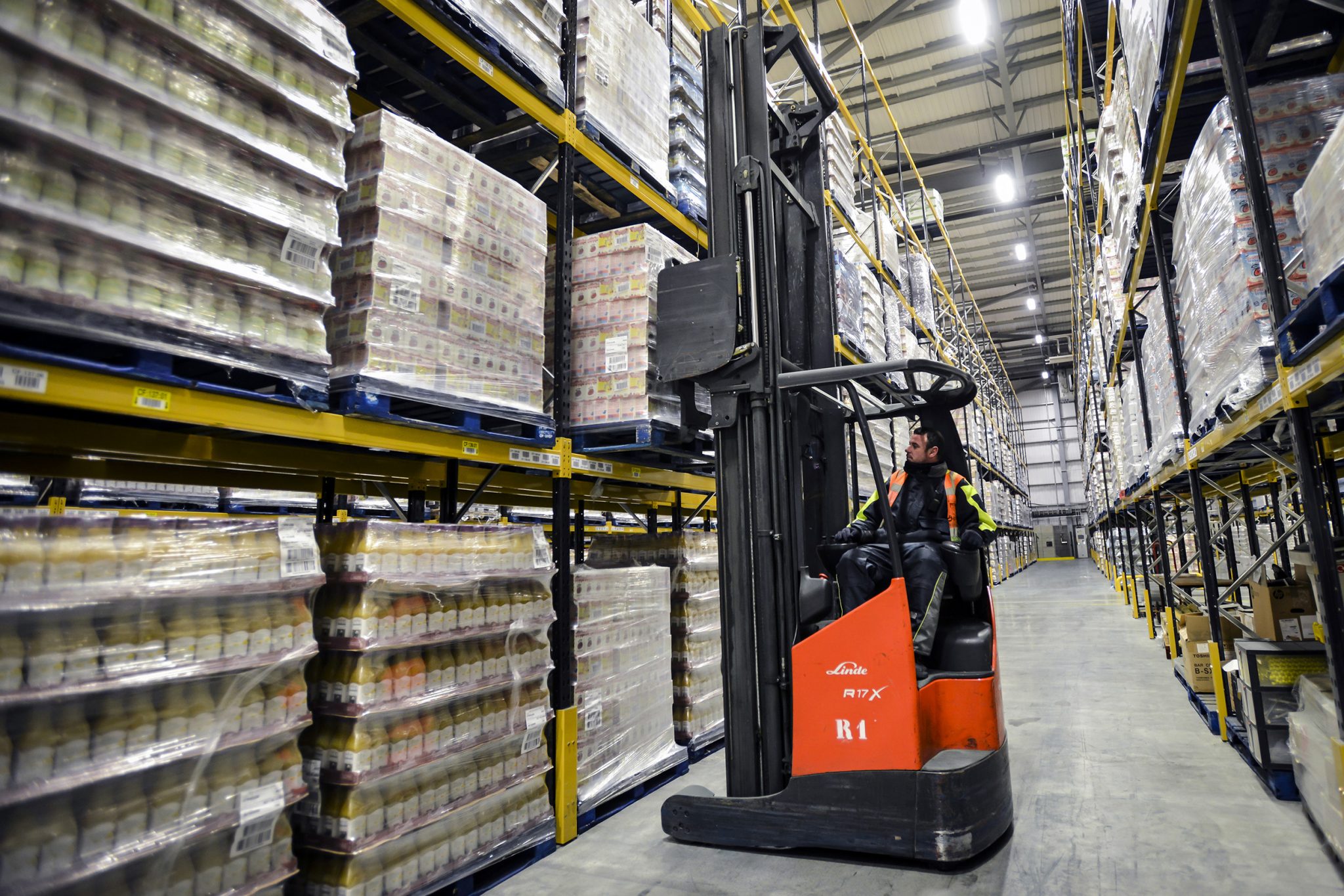
Elokon, the supplier of safety and assistance systems for industrial vehicles – MHE, AGVs and cobots – has received a substantial contract from Linde Material Handling (UK) Ltd for its ELOprotect mobile personnel protection product. 19 of these designated safety systems will be retrofitted onto the existing fleet of Linde K man-up turret trucks which are in operation at the Skelmersdale site of Culina Group’s subsidiary Great Bear.

Martin Jones, Head of VNA Sales, Linde Material Handling (UK) Ltd. commented: “For over 10 years Linde has worked with Culina at the Skelmersdale site with two generations of VNA trucks. The latest trucks are fitted with Linde’s Aisle Safety Assistant for building and infrastructure protection. With the addition of the ELOprotect solution we can detect potential collisions with pedestrians, objects or another truck. The system is already working on several other sites in the UK and Culina are looking to roll out the system across further sites within their network.”

“We were looking for a robust solution for enhanced safety within our VNA aisles irrespective of MHE provider. ELOKON fits the bill perfectly” said Andy Miszkiel, Culina Group MHE Manager.

ELOprotect is a self-actuating safety device for protecting personnel when industrial trucks are being used in narrow aisles. Its basic configuration consists of evaluation electronics, two laser scanners and a display and operating module. It is also available with various add-ons and options, some of which were chosen to be installed at Skelmersdale. One of these is the ANTIC anti-collision module, which allows the simultaneous operation of several trucks in the same narrow aisle without the risk of collisions, and its extended protection range also enables safe operation with no loss of speed to ensure continued high turnover of goods.

Revenue & Profits up for Interroll

In the first half of 2019, conveyor system specialist Interroll once again recorded strong growth in sales revenue of 8.4 percent (+10.4 percent in local currencies) and a disproportionately strong increase in operating result (EBIT) of 23.3 percent.

Boosted by a particularly strong first quarter in 2019, net sales revenue increased by +8.4% compared to the previous year to a new high of CHF 260.8 million in the first six months of 2019 (+10.4% in local currencies).

Interroll managed to once again disproportionately increase the EBIT by 23.3% compared to the half-year value for 2018. In addition to the net sales revenue growth, high discipline regarding costs and investment also contributed to this.

At CHF 299.0 million, the orders intake was 7.9% below the previous year’s record levels in 2018 (-6.0% in local currencies). Large orders received in the previous year were virtually fully replaced in the first half of 2019.

“In the first half of 2019, Interroll was able to drastically increase its net sales revenues once again,” states Paul Zumbühl, CEO of Interroll Holding AG. “EBIT and net profit also grew disproportionately.”

Three Guarantors for Joint Success

Last month the 50th Adenauer ADAC Circuit Trophy took place at the Nürburgring. For the second time, the Lamborghini Huracan GT3 Evo from Konrad Motorsport, drove under the sponsoring cooperation of GEBHARDT Intralogistics Group and Reyher out of the pit lane. Axcil Jefferies, from Zimbabwe and Michele Di Martino, from Eitorf achieved the class victory in the SP9 Pro-Am classification and with that the 5th place in the overall standings at the 4th race of the VLN endurance championship.

However, Reyher and GEBHARDT not only successfully work together in the field of motor sports. In the Hamburg central warehouse of the leading wholesaler for fasteners and fixing technology, a 2-aisle shuttle warehouse including StoreBiter 300 MLS was delivered by GEBHARDT Fördertechnik in 2013 for container consolidation in front of the goods issue and various conveyor technology connections. In 2019 a further two-aisle GEBHARDT MLS shuttle warehouse and material flow components were added.

At that time, a total of 30,000 tonnes of goods were stored in approx. 35,000 storage locations in an automatic high-bay pallet warehouse. Further storage locations were located in pallet picking (25,000) and in the automatic container warehouse (120,000). From the beginning, Reyher placed great emphasis in the automation of their intralogistics – from storage, to order picking, to goods issue. MD, Dr. Peter Bielert, described, “GEBHARDT Fördertechnik […] as a competent partner who has contributed his own solution ideas and who was deterred by the complexity of our logistics centre”.

Double-digit Growth for Cargo on Inland Waterways

Hamburg is Germany’s biggest universal port and, with 9.9 million tons throughput in 2018, its second biggest inland port. For the first quarter of 2019, the recently published inland vessel data from the northern statistics office reports 34,640 TEU – 20ft standard containers – for the Port of Hamburg. This represents an increase of 20 percent in comparison with the same period last year. Additionally, in the first three months of 2019, at 2.57 million tons, the total quantity of cargo carried by inland waterway craft between the Port of Hamburg and its hinterland achieved double-digit growth of 12.1 percent.

One limiting influence on the further development of quantities by inland vessel this year has been the barely navigable River Elbe caused by low water since May. From Stefan Kunze’s point of view; he is head of the Port of Hamburg Representative Office in Dresden, against this backdrop it is difficult to forecast the ongoing development of cargo quantities carried by inland vessels on the Elbe this year. Already last year, for the Middle and Upper Elbe from the Geesthacht lock to the next one at Usti nad Labem in Czechia, that is to say the undammed section, navigation was difficult. At times, from June onwards on this section of the river, inland shipping came to a standstill because of inadequate draft.

Fundamentally, the expected increase in seaport-hinterland traffic in the coming years will open up very good prospects for Hamburg for more shipments by inland craft in the Elbe river basin. However, in Kunze’s view, this calls for better alignment of the infrastructure to the operating requirements of inland shipping. He stresses that: “Digitalization and intermeshing the various carriers, construction work on the waterways and optimized coordination of inland vessel calls in the Port of Hamburg, will in future lead to more cargo and simplified handling of transport chains along the Elbe and Elbe Lateral Canal.”

Subscribe

Get notified about New Episodes of our Podcast, New Magazine Issues and stay updated with our Weekly Newsletter.