UK Property Logistics Sector Remains Resilient in Q3

The UK logistics market remained resilient in the third quarter of 2019, with take-up of industrial space up 15% compared with the same period last year, according to research from Cushman & Wakefield.

The firm’s Industrial Outlook report for Q3 revealed that take-up for the first nine months of the year was on a par with the five-year average of 24 million sq ft.

Across the quarter, 8.6 million sq ft of space was transacted, however the number of deals completed fell by 17% and 33% on an annual and quarterly basis respectively, indicating a degree of Brexit-related nervousness among many occupiers.

Third-party logistics providers (3PLs) remained active accounting for 29% of deals completed since the start of the year with take-up in this sector driven, not only by occupiers stockpiling in preparation for Brexit, but retailers utilising specialist logistics providers to navigate increasingly complex supply chain fulfilment.

Take-up volumes in the manufacturing sector, which accounted for 53% in Q3, were boosted by JLR’s decision to consolidate 10 existing depots into a new 2.9 million sq ft global parts distribution centre to be built in Appleby Magna in the East Midlands, which was the largest deal of the year to date.

The report, which tracks enquiries for units over 50,000 sq ft, also revealed that take-up in London, South East, East Midlands and Yorkshire was above the five-year average, with notable deals including Ocado taking 304,000 sq ft at at SEGRO Park Purfleet in East London.

The availability of industrial stock rose by 6% year-on-year to 64.2 million sq ft in Q3, equating to two years’ supply at current take-up rates with less than half of this (44%) classed as Grade A quality.

Data also showed that 2019 to date has been a record year for speculative completions with 14 million sq ft due to be delivered to the market this year, however the volume of speculative construction looks set to slow down through 2020.

Preliminary figures to date suggest that logistics investment is circa 40% down compared to the corresponding period last year largely due to the current economic and political landscape. Despite this, logistics continued to outperform other commercial property sectors with long-income and strong covenants remaining highly sought after and commanding keen yields.

Bruno Berretta, UK Logistics & Industrial Research & Insight, Cushman & Wakefield, said: “The market is generally more favourable to the occupier than 12 months ago. However, the level of occupier choice continues to vary substantially from one submarket to another and across size bands. Availability remains relatively tight for some product types even in regions that have seen greater levels of speculative development which is supporting rental growth.”

Richard Evans, Head of UK Logistics & Industrial, Cushman & Wakefield, commented: “Despite the business uncertainty caused by the ongoing Brexit situation, the logistics and industrial market has continued to outperform other sectors. The structural changes in the retail sector and the increasing focus on supply chain efficiencies are just two of the key drivers which give us confidence that market demand will remain robust.”

“Corners Cut on Supplier Vetting and Onboarding” Say UK Firms

Policies designed to vet suppliers and vendors against indicators of bribery and corruption risk are poorly understood and inconsistently applied, according to research from Dow Jones Risk & Compliance into the third-party risk management practices of UK companies.

The research, conducted in August 2019, surveyed 250 UK-based procurement professionals from five sectors: Engineering and Construction, Oil and Gas, IT and Technology, Media and Telecoms, and Manufacturing.

• 31 percent of the third parties that businesses work with are considered ‘high risk’
• 50 percent say that the time required to vet suppliers results in corners being cut to do business faster
• A third of all new supplier onboarding undertaken in the last 12 months was likely to have been executed incorrectly
• Over half of procurement professionals are not confident that existing suppliers have been vetted properly
• 41 percent say senior-level relationships influence the level of supplier vetting
• Less than half (45 percent) have regular and training certification programmes to ensure the code of conduct for third-party risk management is fully understood and applied

With the promise of increased scrutiny from regulators, and stronger enforcement from prosecutors such as the Serious Fraud Office, change is needed – and quickly – if UK companies are to avoid disruption, financial penalties and reputational damage.

A third of all new supplier onboarding undertaken in the last 12 months was likely to have been executed incorrectly, while more than 50 percent of the procurement professionals surveyed said they were not confident that existing suppliers had been vetted properly.

This is particularly worrying as the research uncovers that procurement professionals expect a doubling of third-party relationships in the next three years, despite the challenges already faced in managing 2019 volumes.

Two-fifths admit that their approach needs an overhaul, but the majority do not expect to see an increase in budgets to prepare for future requirements. Half expect budgets for third-party vendor management to stay the same, while a quarter forecast their budget will be cut.

Guy Harrison, General Manager of Dow Jones Risk & Compliance, said: “With global supply chains becoming ever more complex, managing regulatory and reputational risk necessitates a rigorous approach to the vetting and onboarding of third-party vendors and suppliers. This research reveals significant gaps in the implementation of third-party risk management processes, as well as a lack of business-wide understanding about the risks such processes are designed to address.”

“With enforcement action on the rise, compliance simply isn’t the place to cut corners. UK businesses need to address blind spots around third-party risk management as a matter of urgency.”

Jim Lord, former FCPA prosecutor, said “This survey suggests that compliance officers need to have visibility over the entire third party onboarding process and not just leave it to procurement to get it right. A consistent risk-based approach implemented throughout the organization with oversight from compliance is a critical component of having “adequate procedures” in place.”

Charles Monteith, former Head of Assurance, Serious Fraud Office, “UK business is much less likely to be caught up in bribery overseas than they were ten years ago. This thanks to both the threat of prosecution and the stipulations of the UK Bribery Act. The demand side is also changing. Driven by the need to have anti-corruption laws of equal standing and to protect domestic industry other countries have instated tougher laws, although this hasn’t completely caught up. Overall, there is a sense amongst business that bribery is neither sustainable or worth the risk.”

Read the report here.

Finnish Container Handling Innovator on Show at Intermodal

Finnish container handling innovator Confoot will be showcasing its products at Intermodal Hamburg next month.

Confoot’s ‘leg’ product is  a quartet of metal struts which can be used to remove, stand and replace a shipping container on to/off of a truck chassis, saving time at the loading bay and in storage waiting times.

Intermodal is staged at Hamburg’s Fair site between November 5-7. Meet Confoot at Stand D98

New COO Named by Dachser Air & Sea Logistics

The long-standing Managing Director of the Asia Pacific region now heads Dachser’s global air and sea freight business. Edoardo Podestá (above) replaces Jochen Müller as Chief Operating Officer (COO).

Müller, who will now leave the company, was responsible for developing the air and sea freight business into a network company with operations worldwide, thereby putting in place the foundations for globally integrated supply chain solutions. “It is thanks to his commitment that the structures to support the future expansion of the air and sea freight business could be further cemented. Dachser is grateful to Jochen Müller for all his hard work over the years and for the mutual trust upon which it was based, and wishes him every success in his personal and professional life in the future,” it said in a statement.

Podestá, a 57-year-old Italian, joined Dachser back in 2003 as part of the management team for the Züst Ambrosetti Far East Ltd. joint venture after Dachser had taken full control. In recognition of his successful expansion of the air and sea freight business in Asia, he was appointed Managing Director of the Asia Pacific business unit in 2014.

Spain’s ASTI Buys German Mobile Robot Innovator

ASTI Mobile Robotics Group has signed an agreement for the acquisition of InSystems Automation, a German company which develops automation solutions including a mobile robot range based on natural features navigation. With this full acquisition, the Spanish company is building on its position as a European leader in Automated Guided Vehicles (AGV) manufacturing, facilitating its access to the German market and boosting its presence in Central Europe, creating a complementary product portfolio of additional state-of-the-art solutions covering the entire value chain.

Founded in 1999 in Berlin by the two CEOs Henry Stubert and Torsten Gast, InSystems Automation currently employs 66 professionals, sales in several countries in Central Europe and in the United States, where it has a sales office and after-sales service.

InSystems Automation develops customer-specific transport robots under the proANT brand since 2012 and implements them as an experienced automation company in the existing production control and manufacturing environment to create comprehensive material flow solutions. The mobile robots navigate automatically by means of laser scanners without ground loops or wall reflectors and react independently to changes in their working environment.

The Group formed by highly qualified talent now has the broadest range of automated vehicles in the market with various navigation systems, an important manufacturing capacity of several thousand vehicles per year, runs a joint R&D strategy that will be reinforcing its market value proposition and consolidates its services in Europe and US always driven by a customer centric common culture.

Verónica Pascual, CEO of ASTI Mobile Robotics said: “This movement forward will reinforce our companies maximizing the access to market of our complementary product portfolio and R&D capabilities.”

Henry Stubert adds: “Our companies fit together perfectly not only in their portfolio but also in their corporate culture”. And Torsten Gast comments: “The demand for our AGVs is enormous and we are delighted that we can now rely on such large manufacturing capacities”.

After this acquisition, ASTI Mobile Robotics Group will have a workforce of over 300 employees in 2019 and presence in Burgos, Madrid (Spain), Berlin (Germany), Mulhouse (France) and North Carolina (United States).
From the start, ASTI has made clear its commitment to the talent of the German company as well as the importance to grow the activity in the DACH region.

Seen pictured are Verónica Pascual, ASTI Mobile Robotics CEO,with Henry Stubert and Torsten Gast, InSystems Automatio founders.


New WMS Sucks Up Ecommerce Customers for Vax

Global floorcare market leader Vax is enjoying huge growth in its ‘direct to consumer’ ecommerce channel, because of very low overheads and bigger margins.

Central to this neat and clean expansion is the company’s best-of-breed SnapFulfil warehouse management system (WMS)- which was originally brought in to handle the inventory side of Vax’s B2B business, whereby large pallets had to be shipped into the distribution centres of retailers, such as Argos and Currys, for them to send onto their fulfilment centres.

However, latterly the more fluid D2C division has marked a step-change from packing pallets to picking items. This has led to Vax increasing its item picking areas and introducing pick face packing, whereby operatives pick from ground level at a fast rate, ensuring high success rates for forecasted replenishment.

At the heart of this fulfilment success is SnapFulfil’s cloud-based WMS solution, as explained by Suki Lotay, European business systems lead at
Vax: “The SnapFulfil system makes sure the pick is in place and the first time pick is successful, as for us it’s all about a quick pick, pack and dispatch.

“Because a good customer experience from start to finish is vital, we’ve evolved too and started to offer things like free next day delivery, timed delivery and have opened the gates for nominated delivery. If a customer does come to the site for vacuum cleaners and accessories, we ensure they get the full story from start to end – when it’s been picked, dispatched and signed for.”

The introduction of pick waves, managed by the SnapFulfil system, has also helped the company to reduce warehouse labour. Plus, by using the WMS’ cross docking functionality, Vax can identify when a product is to go directly to the pick face for an order, rather than being put away.

Lotay added: “Cross docking, replenishment and pick facing are some of the tools we use to ensure we are always meeting the customer’s service level agreement, for example, if it’s next day delivery. Customers
expect the delivery to be clean, efficient and trouble-free. That’s where the power of the SnapFulfil WMS comes into play and illustrates why we need best-in-class systems to consistently deliver that for us.”

SnapFulfil MD Tony Dobson said: “Taking a warehouse or distribution centre from B2B to D2C requires operations-supporting software applications to innovate and improve – and offer value, flexibility and responsive support options. More nimble, configuration-based applications, such as SnapFulfil, facilitate change management by allowing the flow of data and order of operations within the application to be changed – empowering management to easily store, organise, deliver, and track the accomplishment of work throughout a facility on a consistent basis.”

Linde Safety Guard Wins Excellence Award at Trade Show

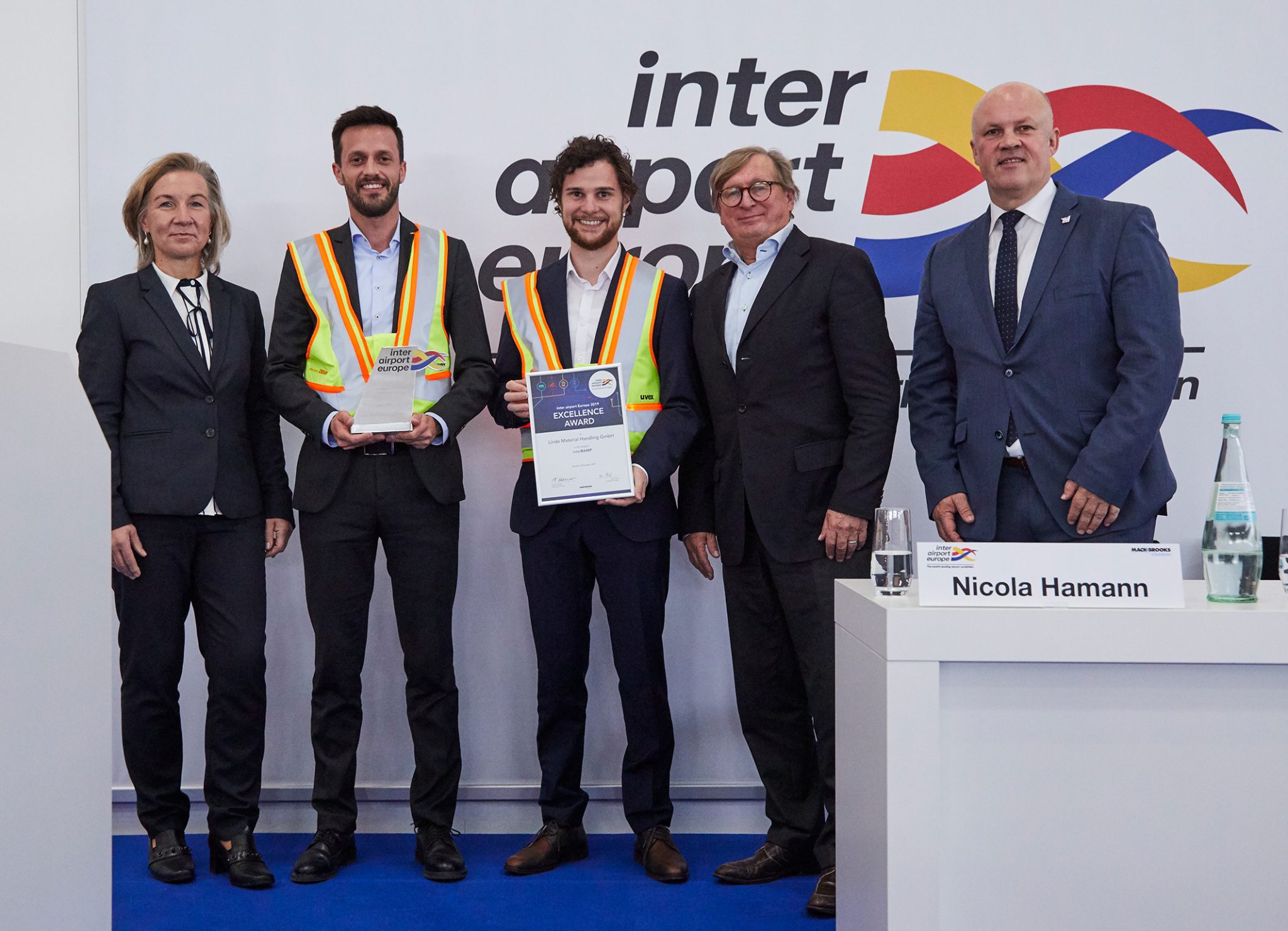
Linde Material Handling has won the Excellence Award at inter airport Europe 2019 for its innovative “Linde Safety Guard” assistance system which helps to protect both pedestrians and forklift drivers.

The Linde Safety Guard assistance system works using ultra-wideband (UWB) technology. The mobile, forklift-mounted units transmit radio signals with centimeter precision, even through walls and doors, and warn drivers and pedestrians of potential collisions via acoustic, visual and tactile signals. In this way, they prevent accidents and increase operational safety. This concept convinced the airport industry experts who voted in an online poll on a total of 55 submissions for new equipment, products and services. “We are delighted to receive the award and are confident that the system will enhance the working environment of logistics employees, helping to keep them safe and healthy, while also increasing productivity in ground handling,” said Product Manager Fabian Zimmermann, who accepted the award on behalf of Linde Material Handling.


World Premiere for VanRiet’s HC Smalls Sorter

Dutch system integrator VanRiet premiered its new small parcel sorter, the HC Smalls Sorter, at the Parcel+Post Expo last week. Tailored to the special needs of the courier, express and parcel industry, it is designed to enable the damage-free transport of small and light parcels in rough environments, such as parcel delivery.

‘With the rising volumes of smaller items, changing packages and ongoing need for short delivery times, we see that having an automatic solution for the sortation of smalls is no longer a wish, but a must-have for our customers,’ says Frank Engelen, Product Manager at VanRiet.

The HC Smalls Sorter’s special feature is its narrow-profile infeed belt, which transfers small packages smoothly to the sorting deck. The advanced design of the sliding shoes combined with rounded slats prevents thin packages from getting caught under the conveying elements, and the overflow conveyor belt can process the entire range of packages.

The technology used in the new system is based on VanRiet’s flagship HC Sorter. As a result, it is robust and also features the patented fully closed deck. This prevents dirt and cardboard pieces from getting stuck in the system. It also contributes to low noise levels and safe working conditions for distribution staff. The HC Smalls Sorter achieves its high throughput thanks to its maximum speed of 2.0 m/s. Due to the new switching system, it is possible to place outfeeds every 650 or 900 mm along the main conveyor line. With these short outfeed pitches less floor space is needed. Its modular design allows for easy customer-specific configuration of the standard components. Moreover, the sorting system can be extended and synchronized with other shoe sorters.

Geodis Dry Runs Post-Brexit French Customs Process

Global 3PL Geodis has joined forces with French chemical industry giant Arkema to test potential post-Brexit customs arrangements on the French border. Geodis says it is now ready to support its customers for customs and transport operations involving the United Kingdom, whatever the Brexit scenario.

In the context of the restoration of a border between the United Kingdom and the European Union, French customs authorities have developed a computerised system known as the ‘smart border’ which automates the border crossing for freight vehicles. Since September, French Customs have been organizing a series of full-scale simulations with all the players concerned – including transporters, loaders, customs representatives and customs clearance software providers – to test the new system under the most realistic conditions possible.

Geodis and Arkema jointly participated in operational trials on 24 September, running a shipment of goods from the Arkema plant in La Chambre, south eastern France, to the United Kingdom under the conditions of a post-Brexit export operation. They had to evaluate the advance transmission of customs documents, the coordination of logistics, the matching of customs data with that of the vehicle, and the actual crossing of the border. All of these tests were successfully achieved, they say, enabling the shipment to cross the border safely and smoothly.


Wearables Innovator Launches Lanyard and Belt Model

Industry wearables innovator ProGlove has launched the Reel, designed to be quickly accessible via a lanyard or belt-clip, making it ideal for those organisations with low-frequency scanning environments such as product returns or quality control. Its customisable attachment positions ensure there is no contact with the scanned items and therefore targets organisations that handle highly sensitive elements. Reel works with all scanners of the MARK product family, and sells for €89 Euros each.

Featuring a pull-to-scan function, Reel triggers the scan engine when the highly durable 70 cm Aramid thread is pulled. Additionally, the new wearable comes with an extra release button. Reel enables workers to quickly and easily scan items within their reach, without having to carry a heavy, bulky, conventional pistol scanner.


Subscribe

Get notified about New Episodes of our Podcast, New Magazine Issues and stay updated with our Weekly Newsletter.