GS Yuasa launches battery range in Europe

GS Yuasa has launched a new range of traction batteries for the European material handling market. The launch sees the manufacturer – which describes itself as a world leader for vehicle and industrial batteries – expand upon its class-leading Japanese traction battery range with an all-new line up of European DIN and BS sizes.

The new range of individual 2V cells, full-tank solutions and accessories utilises the very latest technology and premium Japanese engineering for maximum quality and long life. Available in 24, 48 and 80V solutions, the extensive range provides coverage for all makes and models providing reliable power and hassle-free performance.

The new European-sized range is available as a fully plug-and-play solution, meaning it can be easily integrated into a wide range of applications. All batteries offer low maintenance, minimised water consumption and quick charging. They are supplied in a high durability, dip coated tray and are fully recyclable.

As an original equipment supplier, GS Yuasa says it is trusted by engineers worldwide. Its traction batteries are the preferred choice to the Asian materials handling market, and GS brand traction batteries are still widely referenced for their unrivalled quality many years after discontinuation in Europe.

James Hylton, Managing Director of GS Yuasa Battery Sales UK, said: “We’re delighted to have launched our traction range in Europe and offer our world-renowned quality and long service life to the materials handling industry.

“Our experienced engineers have developed this range using their extensive knowledge of traction technology to ensure the highest performance and reliability. We are already receiving a huge level of interest from materials handling suppliers and manufacturers who are delighted GS Yuasa have returned to the European market.”

GS Yuasa  says an optional Air-Mix system enhances electrolyte mixing, prolonging service life and reducing the risk of stratification and premature battery failure. The system brings a number of additional benefits including a 20% reduction in energy consumption during charging and reducing overall charge times by 30%. A fully integrated filling solution makes maintenance quick and easy while an optional LED indicator means electrolyte levels can be checked with just a glance.

Sensor manufacturer benefits from uniform IT infrastructure

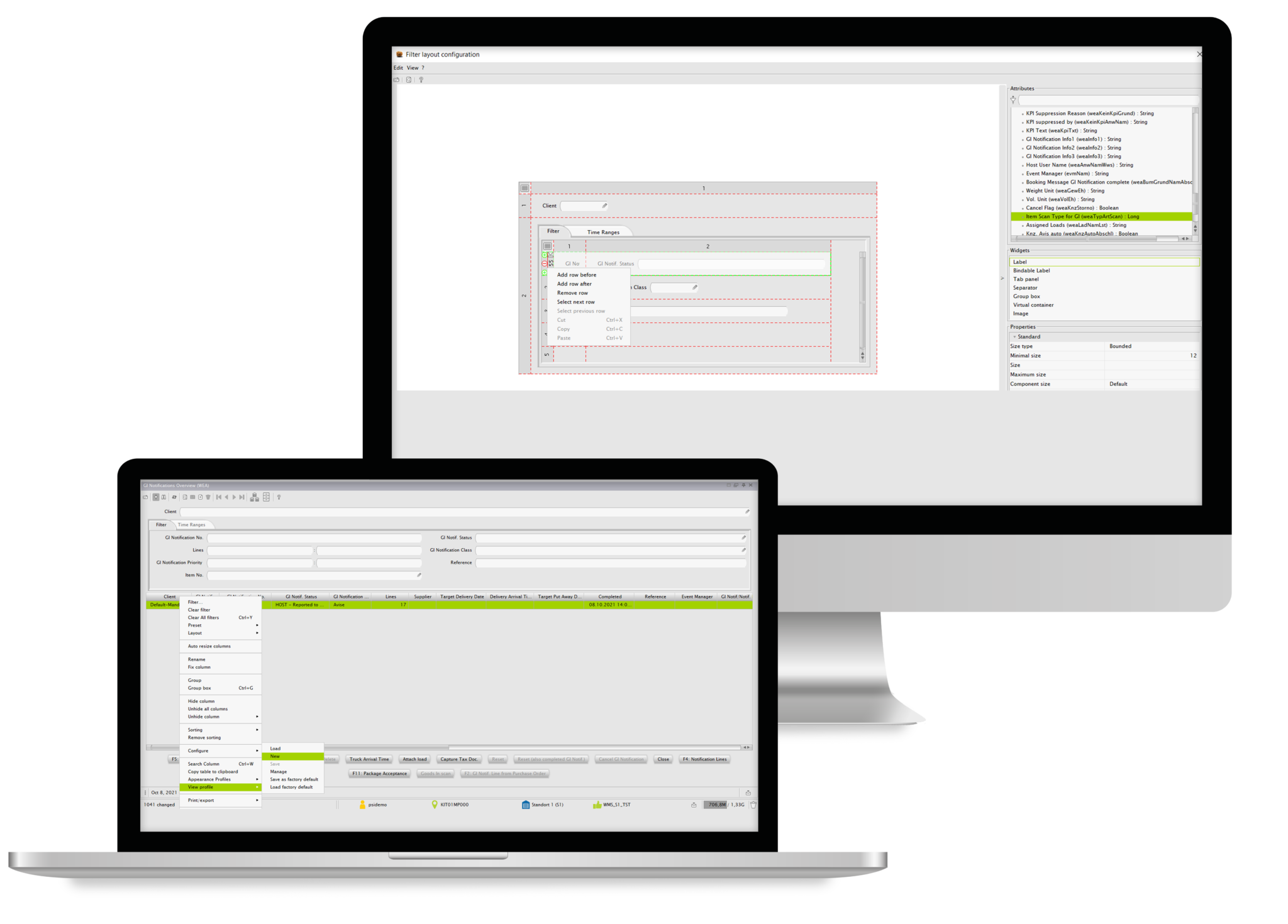
Sensor technology manufacturer elobau GmbH & Co. KG fully commissioned the PSIwms warehouse management system from PSI Logistics GmbH in August 2021. This will increase efficiency and transparency in warehousing for production supply and shipping. The close functional networking with the PSIpenta ERP system also reduces interfaces. The resulting integrated IT infrastructure opens up additional optimisation potential. PSIwms replaces the previous systems.

Founded in 1972, elobau is one of the leading international suppliers of non-contact sensor technology and operating elements in mechanical engineering. Around 1,400 pallet storage locations are managed at the logistics centre in Leutkirch to ensure on-time production supply and processing of shipping orders.

As a central automation system, elobau also uses a state-of-the-art AutoStore cube with 30,000 container storage locations. The direct connection of the programmable logic controller to PSIwms and new processes optimised for AutoStore ensure a significant increase in system performance and efficiency of up to 20% compared to the old system. An external warehouse is also integrated into the warehouse management and process control via the multisite capability.

PSIwms controls the management of incoming goods and storage locations, the piece-precise order picking and, via transport kanban from the AutoStore system and high-bay warehouse, the demand-oriented provision of components in production.

“The result is a sustainably improved and significantly efficient workflow with a high level of process transparency,” sums up elobau Logistics Manager Matthias Gromer. “In addition, PSI Click Design allows user interfaces to be optimally adapted to individual requirements. Despite the complex processes, we benefit from a clear IT infrastructure.”

EPG automates Al Maya’s central DC

Al Maya Group is a Dubai-based conglomerate with multiple business verticals: food and non-food products and over 90 retail stores in the Middle East including supermarkets, international bookstores, franchises, and many other lifestyle retail stores. In the food sector, the company serves the major supermarket chains in the region.

Handling sensitive and temperature-controlled goods is a challenge, especially since Al Maya has to offer a wide range of products to all the major retailers in the region through its distribution operations. All of this requires a well-functioning logistics operation.

In order to manage its existing processes and also ensure that it is well-equipped for the future, the company took the decision to automate the processes at its central distribution centre for all sectors with the EPG ONE Warehouse Management System (LFS). Al Maya also requested EPG’s consulting services to help design the different storage solutions and the overall structure of the warehouse. The company achieved its goal of having a state-of-the-art distribution centre with a WMS within a very short time – and without any disruption to ongoing operations.

“We are very satisfied with the development of the project as well as with the support of the EPG team on site and with the overall planning”, says Bharat Korwani, IT Manager at Al Maya Group. “The efficiency and level of detail with which the entire project was carried out really impressed us.”

As one of the largest FMCG distributors in the UAE, Al Maya supplies all the major retail stores in the region. The product range in the company’s distribution division is focused on fresh products purchased directly from the countries of origin. Premium customers of its distribution division include Carrefour, Lulu Hypermarket and other retail stores as well as its own supermarket chain Al Maya Supermarkets.

All the business areas in which Al Maya operates follow very different and unique logistical rules. In addition, the variety of products being stored is vast and requires the utmost sensitivity in handling, especially in the food segment. Up to 2,500 different items have to be managed. The main objective is to handle the goods based on best-before dates and in compliance with the FIFO (first in, first out) principle.

Al Maya predicted the development of this requirement way in advance and was correct to assume so. Due to the increasing order volume, operations can no longer be managed on the basis of old platforms.

EPG’s logistics experts developed a warehouse matrix to meet Al Maya’s requirements based on the key indicators that needed to be met in terms of warehouse structure and business requirements. As a result, EPG designed various storage areas and temperature-controlled zones, while also considering the specific requirements of the individual business units.

The introduction of customer classes A, B and C divides the distribution centre into reasonable units. Before this classification, the handling of the goods and the stock overview were mainly dependent on the experience of individual employees. FIFO handling and the secure administration of best-before dates were not possible without errors. Due to the different storage zones – rack storage, pallet floor, filling stations and floor storage – product groups can now be clearly assigned.

LFS ensures automatic control of the storage areas and offers maximum transparency with respect to the current stock. If required, replenishment is requested automatically. EPG’s warehouse management system LFS also controls the sorting of goods according to BBD (best-before date), product group and customer. The orders are assigned a storage location upon receipt.

Order processing is highly reliable with LFS, as the warehouse management system controls picking in sequences and – depending on the products ordered – according to priority and shelf life. The goods are assembled on pallets and then loaded onto trucks according to the sequencing, ensuring that the goods of the customer being supplied first are loaded last. More than 700 orders are processed in Al Maya’s distribution centre every day.

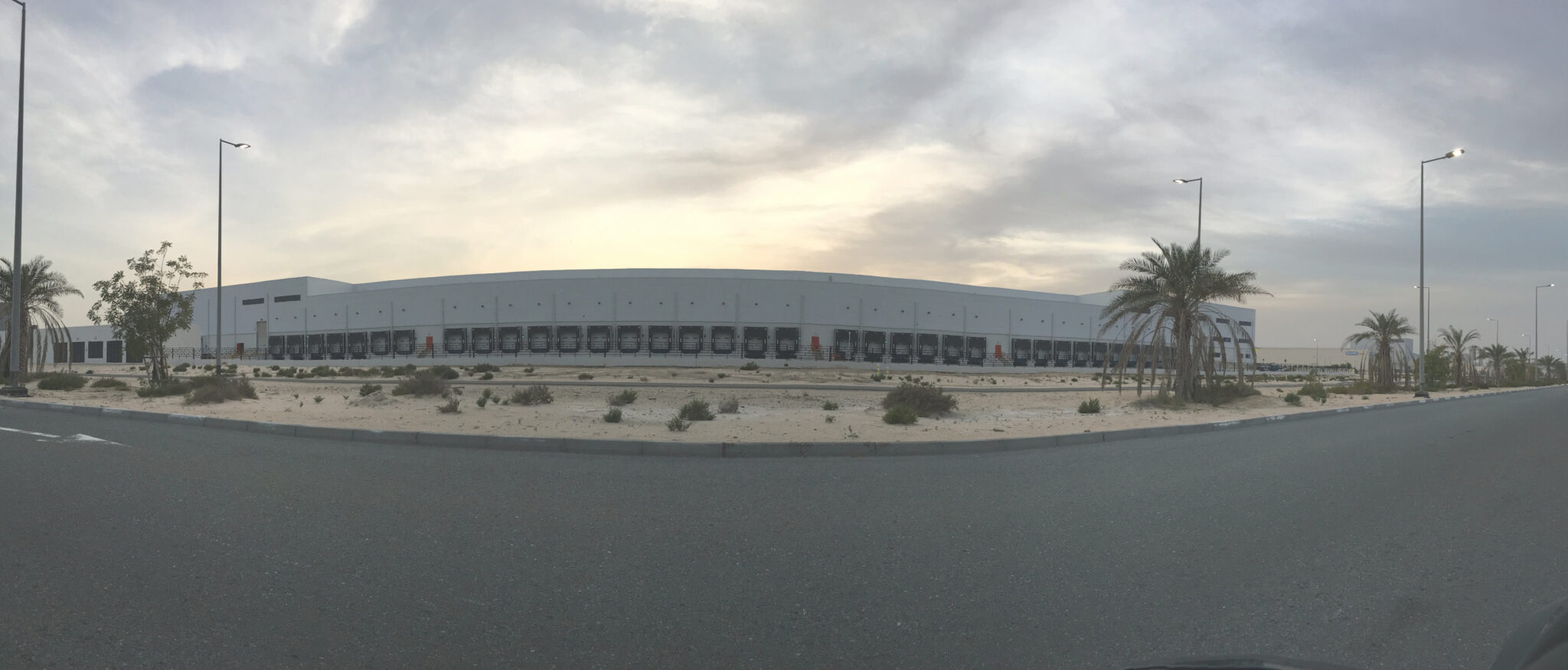
EPG organised the processes in the new 22,000 sq m distribution centre and planned the transfer of goods to this new warehouse facility without any disruption to day-to-day operations.

“LFS has helped us to manage our inventory and overall logistics operations for our FMCG distribution division in the most effective way,” says Korwani. “This has given us strict control over the operation. It has also provided us with complete visibility of our stock and helped us with BBD maintenance.”

“As a result of the implementation of LFS, we now have an effective supply chain operation and Al Maya is consistently able to deliver goods to our customers on time,” Korwani adds: “We were always able to count on EPG during the entire changeover process and the move. We are therefore confident that we will rely on the logistics experts at EPG for future projects.” Within a short space of time, Al Maya decided to introduce EPG’s LFS in two additional divisions.

Interroll automates Imnasa’s DC

Interroll and Toyota Material Handling have installed a powerful and efficient conveyor system for Imnasa in Campllong near Girona, Spain. Core components of the new material-handling solution are the Modular Conveyor Platform (MCP), the RollerDrive EC 5000 and the MultiControl from Interroll.

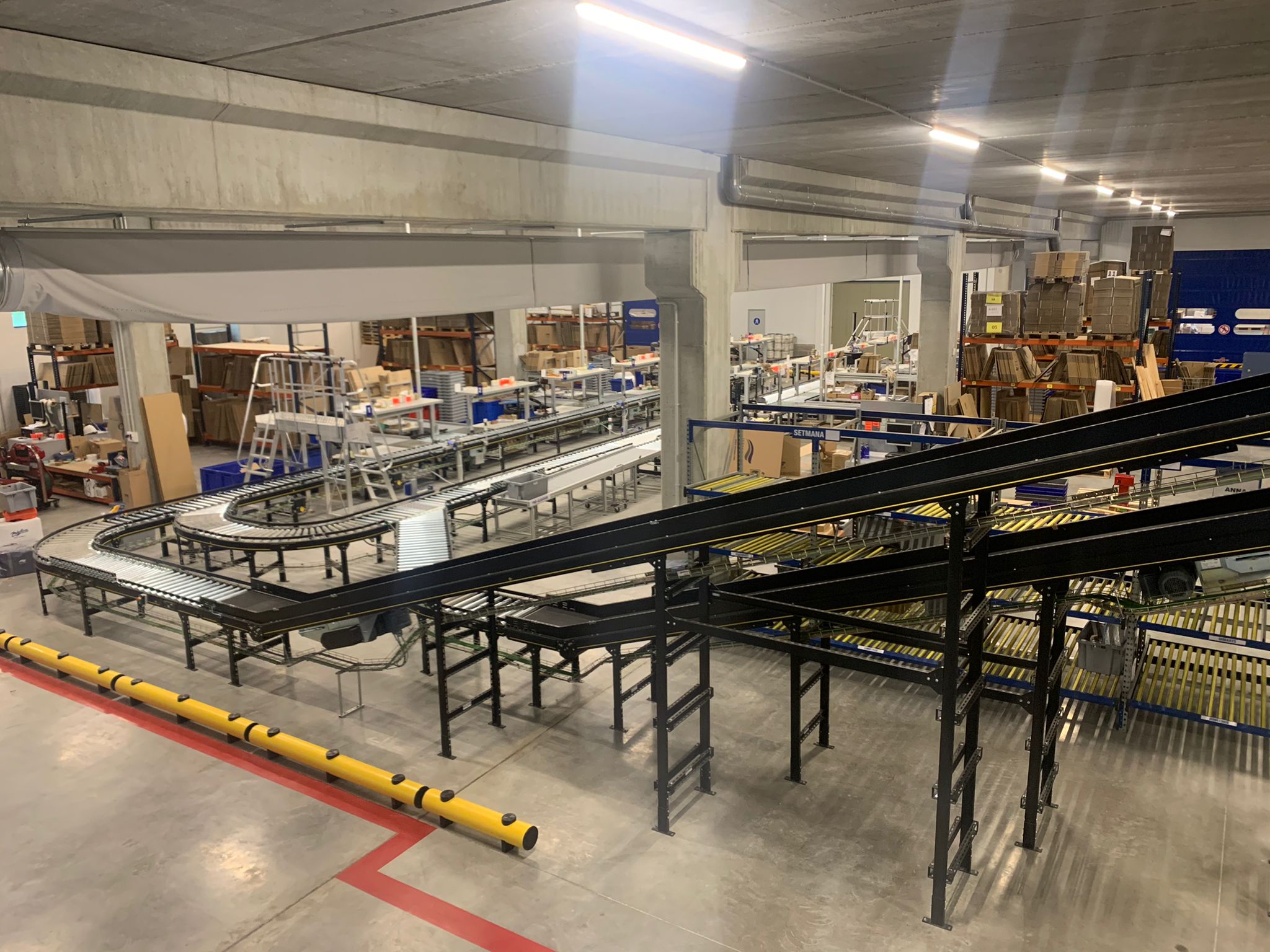
The state-of-the-art system, which spans around 360m, automates the flow of goods between two buildings, increases productivity, and improves customer service as well as the working environment of the personnel deployed.

The automated conveyor system for Imnasa was fully designed and installed by Toyota Material Handling. Imnasa manufactures and distributes nautical equipment from numerous brand manufacturers to businesses and private customers. With a range of over 30,000 different products, it is one of the leading players in its sector in Europe.

The starting point for the new solution was the construction of a new building complex of 9,000 sq m expanding the capacity of Imnasa’s distribution centre. To seamlessly integrate the different work processes within the already existing and new buildings, the two sites were connected by a 360m-long conveyor system in a tunnel. Using a zero-pressure-accumulation material-handling solution, the diverse goods are thereby automatically routed between the picking area in the existing building via the respective packing stations to the shipment area in the new building.

“The new solution has not only enabled us to significantly increase the capacity and productivity of our distribution centre. We have also succeeded in further increasing customer satisfaction through faster and more reliable deliveries. In addition, the new solution now offers our employees significantly improved work ergonomics,” explains Pol Revuelta, Project Manager at Imnasa.

A total of around 250 EC 5000 RollerDrive and 120 MultiControl from Interroll are used for the energy-saving transport of boxes and totes via driven roller and belt conveyors.

Scan Global Logistics takes first step into UK

The Nordic-based logistics forwarder Scan Global Logistics (SGL) has purchased Horizon International Cargo Limited, a traditional air and ocean forwarder headquartered in the UK. SGL says becoming present in the second-largest market in Europe is a strategic move pivotal to its long-term strategy and the continued development and expansion of the European part of the organisation.

The ink is barely dry on the latest acquisition agreement with the New Zealand freight forwarder, Orbis Global Logistics Limited before SGL sets foot in the UK. The acquisition will allow SGL to pursue new business opportunities and offer notable commercial synergies to its customers worldwide through an improved position in key trade lanes. Besides, three common denominators will strengthen the logistics offers of the expanded organisation: Strength in air freight, customer-centricity, and matching cultural identity.

Nigel Davies, Horizon International Cargo’s Chairman, comments: “From the outset, the cultural fit between our two companies was very evident. This, combined with the synergies of our respective operational footprints, makes a perfect platform to take advantage of the exciting opportunities ahead. We very much look forward to our future with SGL, remaining every bit as focused on providing customers with the dedicated service, care, and flexibility they have come to expect from Horizon over the years.”

Up to this point, Scan Global Logistics has not had a presence in the UK. The infrastructure and the 150 Horizon staff located in five countries will remain unaltered and play an essential role in expanding the company’s presence in key verticals retail, pharma healthcare, aid & relief.

Expanding global footprint

Horizon also fills a significant gap in expanding SGL’s global footprint, as Ragnar Dalen, EVP Corporate Development, expands: “The new locations are important pillars in our strategic growth plans, not only in the UK but also in the rest of the world. Horizon’s offices in Japan, the Netherlands, Spain, and the USA will further strengthen our existing setups and help us reach our goals in these countries.”

He continues: “Furthermore, we are excited to help our customers uncomplicate the increased complexities in the aftermath of Brexit through the vast experience of Horizon’s import and export customs departments.”

A strong cultural fit is an essential step in SGL’s acquisition strategy. Allan Melgaard, Group CEO, explains how the evident fit will strengthen the expanding family in several locations: “To ensure there is a cultural fit between our organisations, we perform an extensive cultural DNA study before concluding the process. In the case of Horizon, the cultural match is unquestionable. Also, our shared belief of the customer in focus provides the best possible basis for a successful amalgamation of the two companies.”


Making warehouses more productive and fairer

Distribution and fulfilment operations are under increasing pressure to perform – but labour availability is tighter than ever. How can businesses boost capacity and still deliver a fairer outcome for staff? Dave Morris, Director at UK labour management software company, Vitesse, explains.

“For a nation that for decades has worried about unacceptable rates of unemployment, the idea that large areas of industry and commerce are experiencing serious labour shortages is something of a surprise. But it is all too true, and nowhere more so than across the logistics and distribution sector. There are shortages across the nation and across the board, from drivers to Customs clerks, and especially in warehouse operations.

“Data from the Office for National Statistics showed that in July vacancies in the logistics sector were 338% higher than the pre-Covid norm.

“The pandemic hasn’t helped. Upwards of 14,000 EU goods drivers have returned home [from the UK], but this is tiny in comparison with the number of EU nationals leaving warehouse operations (for which accurate numbers are difficult to determine). Many staff have suffered from Covid or its long-term effects, are self-isolating, or have been caught in the dreaded ‘pingdemic’.

“However, the staffing challenge in the logistics sector has much deeper roots than Covid, and has been building for a long time. Pre-pandemic the nation was already estimated to be short of experienced operations staff, while many EU nationals were finding their home economies more attractive. In Poland, for example, the unemployment rate was as close to zero as you can get in an advanced economy, with earnings approaching those of Western Europe.

“Demographically, the number of young people coming in to the workforce has been falling for some time. The rise of home delivery, and the gig economy, have had an effect – why would you spend your nights picking items, or packing boxes on a distribution centre’s graveyard shift, when the overall skills shortage in the UK means there are much more appealing options? “

The demands of ecommerce

“Against this, the demand for warehouse staff has been increasing exponentially. The whole e-commerce boom, which has been accelerated by Covid but was already well in train, has turbocharged both the amount of warehousing space needed and more critically the amount of activity within warehouses – as moving goods in and out by the pallet-load has been replaced by picking, packing and returning individual items.

“Adding to the challenges of finding available warehouse staff, demand for goods in many sectors has become increasingly ‘spiky’. Peaks are no longer simply associated with the predictable Christmas or Easter periods, but are now far more frequent and exaggerated, triggered by unexpected events, such as a random remark on Twitter. Social media and e-commerce make it much harder for brands to manage demand, creating a headache for those planning warehouse and fulfilment operations.

“Automation may be part of the answer, but it brings its own problems – how to recognise the elements of automation that will really be transformative, and how safely to integrate automation with a sometimes-inexperienced manual workforce? Also, some automated solutions can be difficult to scale rapidly, often leading to either over-specification to cope with volumes that may never materialize, or developing complex hybrid solutions on-the-hoof, which can be difficult to manage.

“There are real impediments to employment: warehouses and distribution centres are often situated out near the motorway, served poorly, if at all, by public transport and especially not at night – which is when many warehouses are at their most active. Although labour shortages are pushing hourly rates well above the minimum wage, it’s often not enough for a young person to run and insure a set of wheels, and there may be other social and domestic reasons why potential employees cannot take up these opportunities.

“A further challenge is the widely held perception that warehouse jobs are dull, repetitive, physically demanding, poorly paid, and with limited prospects – none of these need be true, but they are commonly held concerns. In a recent survey by a supplier of order-picking robots, only 8% of current warehouse staff envisaged seeing the job through to retirement; the reasons most cited being the physical nature of the job, always being short-staffed, and the relentless pressure to work faster.

“Many businesses do not operate to profit margins that will sustain paying an extra £1-2 per hour to make their warehouse roles more appealing. Also, if they are located in a cluster with other businesses, that can afford the premium, then this makes an already difficult situation even harder, as the best staff will migrate to the businesses paying the best rates. To compete in this environment, increased remuneration needs to be targeted at the best performing staff, and to be funded from savings made through improved productivity. Unfortunately, very few businesses have the information required to implement a performance-related-pay scheme that is fair, based on work content rather than output, achievable, auditable, self-funding and maths-based. “

Intelligent labour management

“A more encouraging finding, though, is that 32% of those not in the industry said they would consider it if these issues were resolved. To address these issues, and the wider problem of recruitment and retention, warehouse operators should consider investing in sophisticated labour management systems (LMS), such as Vitesse.

“By properly managing and allocating labour resources against well-understood tasks and workflows, the business can reduce non-productive physical activities, ensure that staffing levels are appropriate to the tasks and throughputs required, and replace the constant demand to work faster by agreed and achievable targets and fair performance-related pay – all of which will improve staff retention and, when word gets out, recruitment. In addition, enhanced productivity will improve warehouse throughput capability, reducing the need to find extra labour, especially at peak times.

“Vitesse is a cloud-based LMS specifically created for demanding logistics operations by people who actually know their sheds, trucks and boxes. Critically, the premise of the system’s design is a recognition that the simplistic time and motion approach that may have worked in traditional warehousing is hopelessly inadequate for today’s busy fulfilment centres. These operations are more like factories than stores, requiring an intelligent understanding of the steps and costs associated with complex manual tasks.

“Simply put, managers can no longer just divide throughput by hours and hope that all tasks have roughly the same labour content. A ‘pick’ in a distribution centre may have 30 or more time-study elements. Some of these may be unnecessary, or perhaps could be reordered or relocated to be more efficient. Vitesse can be used to refine these tasks and take waste out of the process.

“Vitesse captures travel flows and operating procedures and uses industrial engineering techniques and enhanced statistical applications to create a mathematical model of the warehouse. The data that Vitesse acquires can be fed into Value Stream Mapping and this can be used to identify which elements of a task or process are adding value or, alternatively, unnecessary cost. In turn this can drive process and workflow efficiencies.

“As the demands on the modern warehouse are changing almost hour by hour, it’s increasingly important to understand how best to deploy human resources to maximise productivity and minimise cost. Vitesse is a vital tool that generates actionable insights, and cost savings, in real time.

“On average Vitesse customers have reduced labour costs by 10%.

“Perhaps of even greater significance, this system provides the basis for performance evaluation and remuneration that is fair. What’s more, it can be seen and accepted to be fair, and can be applied to whole teams without generating controversy. This approach makes for happier employees who can see that extra effort is being properly rewarded, who are more committed to the job and less likely to go elsewhere. Reliable labour data can also reveal areas where further training or support may be desirable, and can be used to engage the labour force in process improvement – especially, as they can see and understand how this will translate into earnings.

“More informed labour management means that jobs can be scheduled with the certainty that adequate time and labour is being allowed, greatly reducing the damage and errors that arise from rushed work, and helping to reduce the risk of missing despatch deadlines. “

Better investment decisions

“More strategically, the analysis that Vitesse provides can reveal the most appropriate and cost-effective areas in which to introduce automation, and contribute to better investment decisions. A move to ‘goods to person’ automation, for example, can be a significant investment and so it is important to have a robust understanding of where this will save time and labour – and where it won’t.

“Vitesse is designed to integrate easily with most commonly used Time & Attendance, WMS and ERP systems, with set-up, test and ‘soft launch’ typically achieved in a matter of 6-8 weeks. Staff can gain usable knowledge of the system in a day, and be fully competent in a week or less. That means that a business committing to Vitesse mid-Q3 could be reaping the benefits well before the Christmas peak.

“Labour shortages in this sector are not a temporary phenomenon. Making the most of increasingly scarce and valuable human resources has already become a critical issue for most businesses in the logistics sector. Those that manage their labour force fairly and intelligently will be better positioned to attract and retain staff – helping the business win or maintain competitive advantage. “

Subscribe

Get notified about New Episodes of our Podcast, New Magazine Issues and stay updated with our Weekly Newsletter.