Real-time visibility enhances sustainability

The IPCC’s most recent assessment on the extent to which human activity affects the climate is bleak, writes Vernon O’Donnell, Chief Product Officer at project44. It calls for quick action and reminds us that “every tonne of CO2 emissions contributes to global warming.” The supply chain sector is being scrutinised because it currently accounts for approximately one-fifth of global carbon dioxide (CO2) emissions. While other industries have already begun to reduce emissions, albeit slowly, supply chain transportation is lagging behind.

This is frustrating because supply chains are well positioned to assist in meeting sustainability goals. While many in the business are waiting for electric vehicles to be a silver bullet, others are acting immediately. There are immediate and cost-effective solutions that can be implemented when time is of the essence. Greater visibility and interrogation of supply chains, as well as lowering inefficiencies and emissions through smart data utilisation, must be the first port of call.

From Ikea to Unilever, Apple to Coca-Cola, many of the world’s most recognisable names have publicly stated their net zero target timeline. While this is admirable, it doesn’t tell us how targets will be measured – not least within the supply chain. As research suggests, while 36% of supply chains have just started to measure their sustainability or climate impact, over a quarter are not measuring impact at all.

There is a glaring lack of visibility across supply chains, which by their nature are often complex and multifaceted. Measuring the total environmental impact of a supply chain is a complicated task, but one that must be undertaken in order to deliver sustainability targets. If we don’t know our current baseline, how can we know when we are moving in the right direction?

Achieving supply chain visibility requires a multifaceted approach. As the World Economic Forum estimates, digitisation has the potential to reduce emissions from logistics by 10% to 12% by 2025, however, 50% of organisations still have to embark on supply chain digitisation and visibility enablement. It is only with high-quality visibility data that supply chains can improve practices that lead to waste. For example, new software platforms are emerging to help with sustainable sourcing, supply chain emissions visibility, supplier management and monitoring as well as ensuring products re-enter the value chain through a circular economy.

Corporates are increasingly feeling pressure from consumers and governments to have more comprehensive, real-time visibility at every step of the value chain as well as utilise more sustainable materials and production practices. For example, smarter use of such visibility technology can enable companies to analyse shipments to identify areas for improvement, choosing the routes and modes that will create the least amount of waste. These technologies are ambitious. Most Transportation Management Systems currently in use only contemplate two factors when selecting a carrier – cost and performance. A third dimension illustrating the carbon footprint should be added so a balanced decision can be made that aligns with emissions targets. While this is a challenge that is still a way off for many companies, it is a model that all should aspire to and is a solution that is closer than ever.

While this level of insight may still be aspirational for some, there is still much that can be done with data visibility. For example, long-duration truck idling results in 11 million tons of CO2 and 180,000 tons of NOx each year. Magna International, a global automotive manufacturer that has produced more than 3.5 million vehicles including models for brands like BMW and Jaguar, analysed their visibility data to identify possible process improvements. They found that shipments were late 2% of the time and early 50% of the time, and both scenarios were causing missed dock appointments. Having access to this information allowed them to improve processes to ensure an additional 40% of their shipments arrived in the 30-minute appointment window, significantly reducing dwell time.

Better together

If the shipping sector is going to decarbonise, it will take a combined effort. The Digital LTL Council in the US, of which project44 is a founding member, is a great example of how industry leaders can come together to tackle issues faced by the industry. The council focuses on creating standardisation across the sector, which will be key in the fight against climate change.

Such collaborative efforts demonstrate the determination of the industry to play its part in this challenge. However, to harness the power of data to drive sustainable supply chains, this collaboration must go further. Visibility can only be attained when each player shows their hand and is playing the same game. In other words, greater openness and standardisation of green data is required within the supply chain to realise the benefits of data-led sustainability strategies. With the willingness of all parties involved, this will be a first step towards a more sustainable industry. This buys the transportation sector time while technologies such as electric and hydrogen vehicles remain in development.

And, when those green technologies are ready for mass adoption, we will be ready as an industry to measure their impact. Only once we have established a baseline for now can we ensure that they are playing as transformative a role as possible in the future.

A cleaner, brighter future is dependent on sustainable data visibility in supply chain transportation.

At the moment, we aren’t seeing emissions data used at scale, but the tide is turning. More organisations collaborating to bring change, share ideas, and make data public, which is critical for analysing impact and developing strategy. Our future is one in which businesses can continue to prosper and satisfy customer expectations, fuelled by efficient procedures that are ready to welcome the hydrogen ships, electric lorries, and drones that will propel us forward. For the time being, though, we must rely on what we have – data, analytics, and each other – to turn the tables.

Signode showcases ASRS technology at MODEX

Signode, a leading manufacturer of a broad range of end-of-line packaging equipment, tools, consumables as well as end-to-end automation and warehouse automation solutions, will be showcasing its StorFast technology at MODEX.  The event, which will take place in Atlanta at the Georgia World Congress Center on 28th-31st March 2022, will also feature additional Signode solutions that support the warehousing, distribution and logistics operations of its customers.

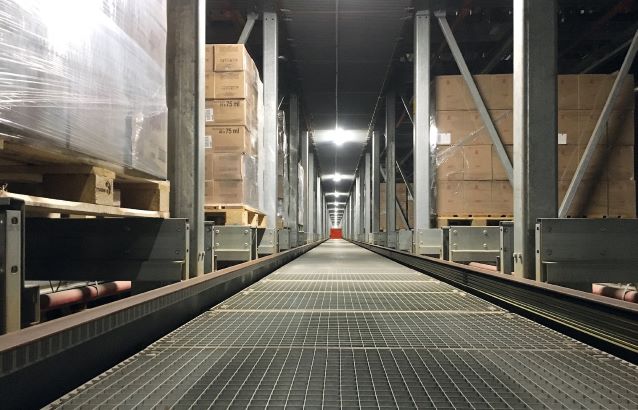
Signode’s StorFast Automated Storage and Retrieval System (ASRS) is an innovative cart-based solution consisting of powered carts and lifts that automatically move pallets in and out of storage positions in the warehouse. The newly enhanced cart-based StorFast system operates at twice the speed with improved control for acceleration and deceleration of the robotic carts. In addition, StorFast components can now handle pallets weighing up to 4,400 lbs (1,995kg).

The StorFast ASRS delivers an intelligent logistics management solution integrating with order management, warehouse management, and order fulfilment systems. The system offers a fully customisable logistics solution to enhance throughput to meet customers’ demands and optimise operational resources and improve inventory management.

“Signode’s StorFast ASRS delivers a fully integrated warehouse automation system solution to maximise operational savings for the supply chain,” said Byron J. Paul, Group President, Signode. “Our customers are increasingly looking to invest in smart automation solutions. Signode is responding, as our organisation has for the past 100 years. We’re collaborating with our customers to help them achieve greater profitability by delivering new technologies and equipment that provide faster throughput, uptime and operational efficiency.”

In addition to the ASRS, the Signode automation product portfolio includes a full range of robot-based depalletising, palletising and material handling solutions, all providing cost and performance advantages over other traditional warehouse systems.

Visitors to MODEX 2022 will be able to see the technology in action at booth B2013.


The digital ecosystem in European ports

Technological changes are affecting the port and logistics industries. New IT systems have been introduced at the Rotterdam and Antwerp seaports, where containers are released based on digital identity verification.

Containers have traditionally been released by shipowners to recipients using paperwork and signatures. Now the process can be done electronically. The Secure Container Release (SCR) system is now used in the Rotterdam seaport in the Netherlands. Using digital blockchain tokens, the release of containers takes place without the use of a PIN code while maintaining security and identity control through an ID wallet.

From 1st July 2021, a digital, integrated solution for releasing containers was also implemented in Antwerp, Belgium. The Certified Pick-up (CPu) platform has abandoned PIN codes in favour of verifying identity with Alfapass and finger scans. The process ensures transparent importation operations for containers as they are unloaded from seagoing vessels and sent on by road, rail, or inland waterway to the final recipient.

“In June, AsstrA’s European Container Division team underwent training with the port of Antwerp. If a logistics company doesn’t have its own operating system dedicated to maritime transport, then it can use the port’s Internet platform. In the future, we plan to launch our own sea transport software system that can be integrated with the port’s,” explains Marta Mikuszewska-Wasiak (pictured), Head of Sea Freight for Western Europe at AsstrA’s Warsaw office.

Europe’s top two seaports are in Rotterdam and Antwerp. In the first quarter of 2021, Rotterdam transshipments amounted to 114.8 million tons of cargo, a 3% increase over the previous year. At the same time, Antwerp recorded a 2.3% increase in TEU container handling and 0.6% more cargo tonnage.

The new technological solutions are intended to increase efficiency and safety for the parties involved in the container importation process. For shipping companies registered in either port’s platform, shipment release is performed electronically for the container carrier. Subcontractors receive information about fee payments, port exemptions, customs issues, and updates about loads’ readiness to be collected.

“More efficient container releases at the port mean deliveries are faster and easier. Thanks to this, we are able to inform customers faster about customs issues, e.g. whether a container has been selected for inspection or scanning. The platform uses a green/red light to show how the overall logistics chain is proceeding,” summarises Marta Mikuszewska-Wasiak.

IMI adds Lydia Voice to WMS portfolio

Fast-growing supply chain software specialist Industri-Matematik International (IMI) has enhanced its offering by adding the LYDIA Voice pick-by-voice solution to its powerful portfolio.

The partnership deal with topsystem signed in June 2021 means that IMI can now include state-of-the-art LYDIA Voice technology as part of IMI Warehouse Management System (IMI WMS). The good news for IMI customers is that they can optimise their warehouse processes at high-speed and with minimal disruption, as standardised integrations are available for fast on-site implementation.

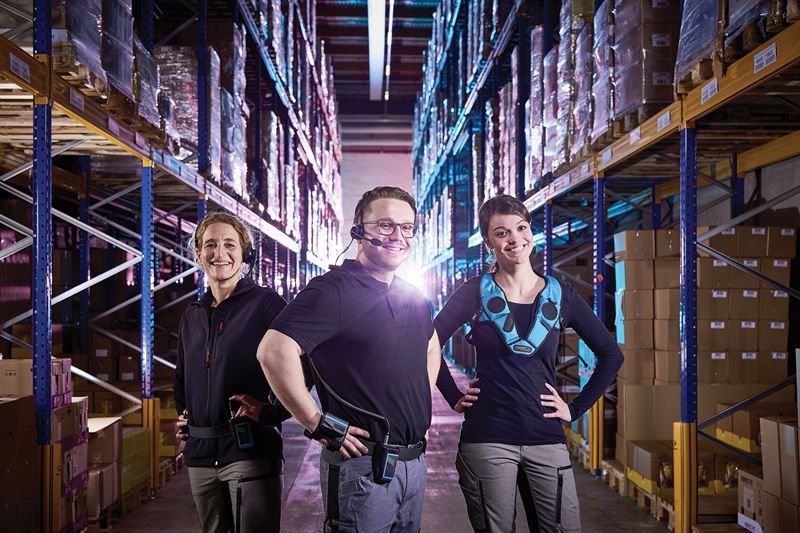
LYDIA Voice is winning fans all over the logistics world because it provides hands-free, eyes-free and – compared to other voice solutions – even headset-free benefits to pickers and operatives via a unique LYDIA VoiceWear picking vest. There are no breaks in the workflow; the employee can focus entirely on picking without distraction. The wins are much-improved speed and accuracy. Easy to pick up and use in an instant, LYDIA requires no voice template training and reacts to voice commands in multiple languages according to customer preference.

Shared Technology Ethos

Already known for its cutting-edge supply chain software expertise, IMI recognised a growing customer need for voice technology and wanted to broaden its offering with a complete end-to-end product that fitted with its own WMS. “We chose LYDIA Voice because we saw a similar technology leader in topsystem that approached the market in a similar way to ourselves, focusing on customer need and ease above all,” explained Niklas Rönnbäck, CEO, IMI.

Part of German-founded global software innovator Ehrhardt Partner Group (EPG), topsystem represents an impressive statement of intent from IMI and typifies the exciting growth journey that the company is undertaking. Founded in Sweden over 50 years ago, IMI now boasts clients in 18 countries and is best known for its flexible software expertise supporting the FMCG, retail, distribution and 3PL sectors in the Nordics, Europe and North America. It now expedites more than one billion order lines per year at thousands of warehouses and stores – with an astonishing 99.9% uptime.

IMI CEO Niklas Rönnbäck is excited about the opportunities ahead: “Together with the right team, product offerings and global leading partners such as topsystem, we are strengthening our market position still more and we are building a stable foundation for continued expansion with existing as well as new customers. IMI is and will be a leading niche provider of supply chain solutions to look out for now and in the future.”

Tim Just, CEO Voice Solutions at EPG, added: “The Nordic market plays an important role in our growth strategy. With IMI we have found a great partner who fits with our ethos. Plus LYDIA Voice integrates seamlessly with their WMS. Many customers prefer complete solutions from a single source. As a certified Lydia Solution Partner, IMI can successfully manage LYDIA Voice projects – from the first contact until go-live and beyond. We look forward to exciting times with IMI as we share their growth journey.”


Transmetrics opens Dubai HQ

Transmetrics, a frontrunner in predictive optimisation for the logistics industry, has opened an office in Dubai, aiming to serve its global customers by expanding across the Middle East North Africa (MENA) region.

Transmetrics uses artificial intelligence (AI) technologies within a SaaS platform, pursuing a mission to dramatically improve efficiency in the logistics industry. Through a proprietary approach for analysing, modelling, and predicting various transport flows with very high accuracy, Transmetrics’ state-of-the-art AI platform developed exclusively for logistics in shipping, optimises transport planning through the power of machine learning and predictive analytics.

Combining the strengths of both humans and AI, Transmetrics says it ensures the highest operational benefits and reduces the environmental impact of logistics. The company also strives to help its customers improve their overall performance and achieve financial savings by optimising daily operations.

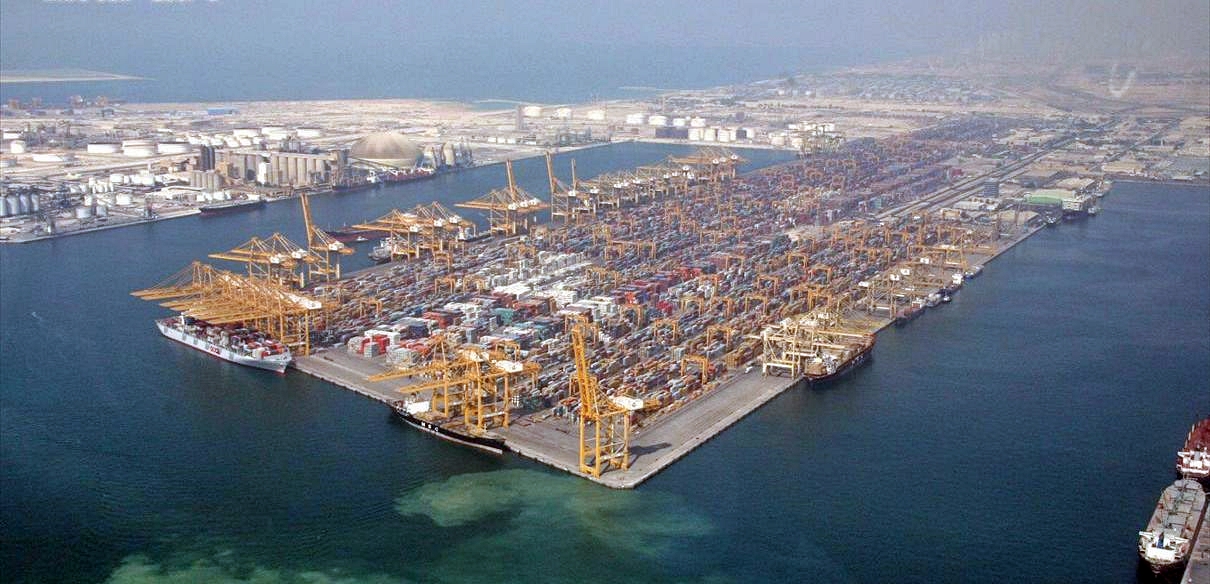
The UAE – and Dubai specifically – serves as the hub that connects the Eastern and Western worlds. Many shipments go through the Dubai port as a stopover before continuing to their Mediterranean or European destinations. As the largest port in the Middle East, it is ranked the ninth-largest container port worldwide and has incredible potential for growth. Establishing a presence here gives Transmetrics more credibility in the region and a connection to the Asian market.

The acceptance rate of innovation is also higher in this region when compared to the more rigid West, so the company will see significant opportunities for innovative growth.

“As Transmetrics revolutionises the logistics industry with our artificial intelligence solution, we are always looking for the next frontier,“ said Marc Meyer, Chief Commercial Officer at Transmetrics. “The UAE is one of the most forward-thinking regions when it comes to the digitalisation of logistics processes. The launch of this new office is part of our commitment to expand our local support and platform capabilities in the UAE and the Middle East.”

Putting the last mile first in 2022

Whilst hard to believe that it’s almost two years since we first heard about Covid-19 with uncertainty remaining about its longer-term effects on society, one thing appears absolutely clear: the pandemic has influenced consumer habits to such a degree that the upward trend in online shopping is most likely irreversible, writes Graham Sharp, Managing Director of Stanley Handling.

Since the first lockdown in March 2020, the UK’s e-commerce sector has experienced the highest online sales growth in 13 years with total online sales growth for 2020 rising by almost 40% year-on-year. This change in customer behaviour, in part forced upon society due to Covid-19 restrictions, has put significant pressure on retailers to stock items and be able to deliver quickly, in many cases the next day, in order to remain competitive.

The impact of both the pandemic and Brexit on the supply chains across all sectors of industry continues to hamper the economic recovery and consumer sentiment, which has been widely documented. When it comes to last-mile delivery, retailers are faced with a range of issues, including but not limited to: driver shortages; single-person delivery; gender pay equality; ageing of workforce; and mitigation from Covid-19.

With the now ubiquitous Black Friday season and also Christmas imminent, the last-mile process is under enormous pressure and this year is likely to be one of the most challenging ever faced by retailers.

Whilst there has been massive investment and technological development in warehouse management systems over the past decade, such as in AI-based automation, robotics and data analytics, the supply chain industry has been under pressure to change more rapidly, as a result of higher volumes of orders and more demanding customer expectations.

Protecting staff from risk of injury through manual handling, whilst optimising operative efficiency and managing costs, is an area where innovation and smart thinking therefore needs to play a vital role.

In the USA, solutions implemented by businesses to protect staff have been shown to lower insurance premiums, as part of efforts to avoid the damaging effects of corporate litigation. In the UK, this approach is being taken by insurers to reduce the cost of motor insurance, by encouraging motorists and businesses to utilise vehicle dashcams and fleet-wide GPS trackers to reduce premiums. I would reasonably expect meaningful efforts to reduce personnel injury to positively impact on business insurance premiums over the coming years.

Even before the pandemic, the latest available statistics from the Health and Safety Executive (HSE) showed that improper manual handling costs the UK economy hundreds of millions of pounds each year with more than 480,000 injuries recorded. Musculoskeletal injuries account for over 40% of all work-related sickness and HSE data shows that more than 8.9 million working days are lost to this type of injury each year.

With job vacancies at an all-time high, businesses simply cannot afford to have staff off work as a consequence of not investing in equipment or processes designed to improve efficiency and minimise risk.

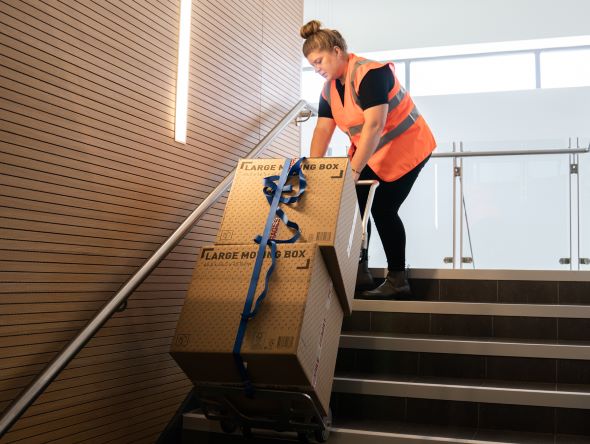
As a strategic business partner to retailers across the UK, Stanley has proven to add value through the provision of specially designed solutions. Following a successful trial of our equipment, we became a supply and maintenance partner to ASDA in 2021, which was the first supermarket to roll-out powered stair climbers to its urban delivery fleet.

Similarly, the use of innovative wearable devices which utilise artificial intelligence (AI) to measure forces on the body and identify hazardous actions are now being trialled. A major benefit of AI is that data can encourage employees to self-manage their wellbeing, whilst management can use it to implement wider business improvements.

In our experience of supporting customers with such technology, operatives can embed correct handling techniques into their working lives, reduce the risk of injury and help create a culture of safety and productivity.

Now more than ever, I would urge the logistics sector to consider innovative ways of helping tackle the challenges of the last mile.

Achieving speed and efficiency in logistics

Logistics and supply chain management is more critical than ever in a world that is increasingly becoming borderless. Achieving speed and efficiency requires timely collaboration, visibility and total control of the logistics operation.

FarEye is an Intelligent Delivery Management SaaS Platform headquartered in Chicago, US, with offices in key regions worldwide, including its European regional office in London. FarEye was founded in 2013 and received its first funding in 2014. Since, FarEye has received roughly $150m in funding across five rounds, with the last round raising $100m. The company has more than 750 employees, 150 customers (33 in EMEA), and conducts over 10 million transactions each day in over 30 countries. FarEye offers a robust network of pre-integrated last-mile carriers, including over 135 CEP in the EMEA region alone.

FarEye provides one of the strongest networks of FTL carriers in Asia, and is fast-growing in EMEA and North America. The Intelligent Management Platform is currently integrated with over 2 million networks of vehicles through telematics integrations with OEM fitted devices. The Intelligent Delivery Visibility product has been recently recognised as a challenger in the 2021 Gartner Magic Quadrant for Real-Time Transportation Visibility Platforms.

In the European market, FarEye is aiming at the growing sectors of retail, big & bulky, e-commerce, CPG, logistics & 3PL, quick-serve restaurant and grocery delivery by bringing the most effective technology solutions to all its customers. FarEye says its unique and innovative solutions, built with a robust technology framework, helps companies streamline their operations and deliver a superior customer experience in a European market that is dealing with driver shortages and a fragmented logistics market.

FarEye says it solves these challenges through its intelligent delivery platform that is flexible, configurable, and

agile. The platform is designed to provide predictive visibility and orchestration for the first, middle and final mile of the supply chain. FarEye plans and executes operations across the entire supply chain, through a single pane of glass, while providing data-driven insights to its customers that enable them to optimise their operations. All of this is conducted on a low-code interface that integrates seamlessly with its customers.

FarEye’s low-code approach provides an environment to develop applications with a quick turnaround and minimal code to shorten the “concept-to-ship” cycle. FarEye uses a microservices/API model to develop a scalable SaaS platform with a global footprint. Intelligence is brought into the platform through Artificial Intelligence and Machine Learning technologies. This algorithmic approach to areas like dynamic routing and loop optimisation delivers tangible benefits to customers and their end consumers.

FarEye has supported some of the most recognisable brands across Europe over the last 12 months, fueling triple-digit growth in the last 12 months.  The company looks to duplicate this over the next 12 months as FarEye continues to expand its presence and focus into Europe.

Industrial park in Hanover breaks ground

With a symbolic turf-cutting act, construction work has begun for an industrial park that Garbe Industrial Real Estate GmbH is developing in Hanover-Langenhagen. A state-of-the-art property with a total hall area of 15,500 sq m is being built in the immediate vicinity of the international airport. Completion is planned for May 2022. The investment volume amounts to €18m.

Small- and medium-sized enterprises in particular are to be addressed with the project development. “They impress with their innovative strength and form the backbone of the German economy,” says Adrian Zellner, Member of the Executive Board and Head of Business Development at Garbe Industrial Real Estate. The Hamburg-based company has designed a new type of building for this target group: the Garbe IndustrialQuarter. The format is being implemented for the first time in Langenhagen.

The IndustrialQuarter is primarily characterised by a resource-saving construction method and an area key that can be flexibly tailored to the needs of the tenants. The property planned in Langenhagen consists of four hall sections of up to 4,200 sq m, which can be divided into units starting at around 1,800 sq m. Each unit includes office and social areas that total almost 1,000 sq m.

In addition, each unit has ramps and floor-level sectional doors for loading and unloading trucks. “These small sizes make the Garbe IndustrialQuarter especially interesting for start-ups and expanding companies in the areas of last-mile logistics, wholesale, e-commerce and light industrial,” emphasises Zellner.

LIST Bau Nordhorn was commissioned with the construction as general contractor. “We look forward to working with Garbe again and building a modern logistics centre within the next seven months. A lot of work has gone into the design of the facade, which visually stands out from the familiar look of a logistics hall with wooden elements and a strip of light,” reports Jens Schulte, Hamburg site manager at LIST Bau Nordhorn.

The property in Langenhagen is being built without any fixed rental commitments. “We are currently in talks with a number of potential tenants. Demand is big. This is not only due to the new type of building, but also to the excellent location,” explains Adrian Zellner. The IndustrialQuarter is being built on a 32,000 sq m plot of land in the “Am Pferdemarkt” industrial park.

It is only 1km from the A 352 motorway. It connects the location with the airport, the A2 Dortmund-Berlin and the A7 Kassel-Hamburg motorways. The industrial park is connected to public transport. The closest bus stop is 100m away and the Langenhagen-Pferdemarkt S-Bahn station is 800m away.

The new building will be erected on a brownfield. “In order to create new settlement potential, we had the existing building demolished and have comprehensively revitalised the area,” says Zellner.

The IndustrialQuarter is developed in such a way that it meets recognised ESG criteria. A photovoltaic system is installed on the roof to generate renewable energy. Skylight domes and a ribbon of windows extending around the entire building ensure more daylight inside the hall and reduce electricity consumption. The facade is partly designed with wooden elements.

Garbe Industrial Real Estate is aiming for certification according to the gold standard of the German Sustainable Building Council for the property.

Chemical company digitises with fleet telematics

Italian liquid chemicals bulk transport company Chemical Express has accelerated its digitisation process by using IMT‘s telematics solution.

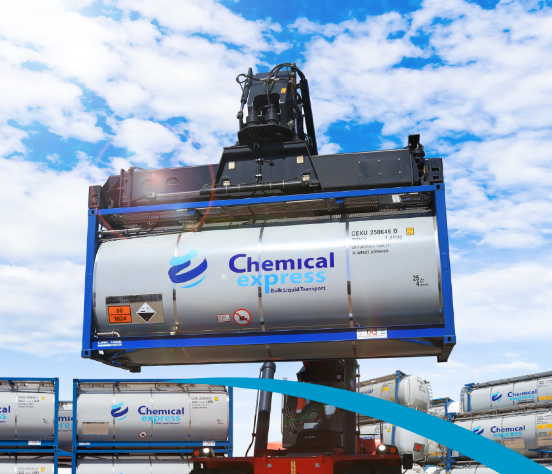
Since 1979 Chemical Express has been transporting a wide range of liquid chemical sand industrial waste, including flammable, corrosive and other products classified as hazardous, as well as products that require transport at controlled temperature all over Europe. Chemical Express is accelerating the digitisation process to provide a service that is up to date and compliant with customer demands.

These steps forward are taken in response to the continuously developing requirements in the transport of liquid chemicals in bulk, Industrial waste, pharmaceutical products and food, for all of which Chemical Express can deliver logistic solutions. The use of telematics from IMT plays a key role in this process. Chemical Express is the first Italian company, in liquid chemicals bulk transport industry, that will use IMT’s telematics solutions.

Visibility and transparency throughout the whole supply chain has become essential in measuring tank container operators’ performance, as well as providing data on punctuality and accuracy of service, as well as providing flexibility.

Giuseppe Avallone, CEO Chemical Express, said: “In order to have a tool that would allow us to have all the parts of our internal process under control, we started looking for an experienced telematics partner that could provide the right telematics solution. IMT came to our attention through the IMT magazine Telematics taking over in which it described the company and the services offered.”

Chemical Express is the first Italian company, in liquid chemicals bulk transport industry, that will use IMT’s telematics solutions.

“The main goal of deploying telematics was to have better control of our transports,” continued Avallone. “When Chemical Express decided to have the integrated telematics system, a team of specialists – composed of the IT manager, quality manager, technical manager and sales – verified the products available on the market, compared the services, the support offered and, last but not least the cost. We chose IMT as a telematic partner for their professional approach and for their experience and good reputation in the market.

“Moreover, the possibility of having a photovoltaic panel battery, which would allow a solution with a lower environmental impact, was certainly a very important element in the decision making too. Last but not least the flexibility shown by IMT during video calls, led us to sign an important partnership that will surely last for many years.”

“From the range of IMT’s telematics solutions, we mainly use the Temperature Sensor (WT19-Ex) and the Heating Sensor (HS19-Ex), as well as the tracking solution, the solar-powered CLT20-Ex. Thanks to these telematics solutions, we now have the opportunity to optimise certain processes and to save time and money, for example by being able to check product temperature remotely. We always try to have all the telematics information integrated into our IT system, so it is immediately available for all the operators.

“We expect that this information will help us to monitor and to keep under control our transports, especially when our tank containers are handled by our subcontractors or when we want to monitor the heating process at (third-party) depots for example.

“Our expectations regarding the improvement of fleet management, times and costs are very high. We are now using both the IMT web application as well as the IMT Fleets App. We have been using the new technology for a few weeks now, and for the moment we prefer to operate by using the web application as there are more options. When the use of this Fleets app will be extended to all the operators, we expect a greater use of it, especially outside business hours. We expect that in the near future telematics services will be increasingly requested by the customers, allowing them to have total control of their merchandise.”

Subscribe

Get notified about New Episodes of our Podcast, New Magazine Issues and stay updated with our Weekly Newsletter.