Wiliot Appoints VP of Climate & Circularity

Wiliot, the Internet of Things pioneer whose ambient IoT platform is enabling trillions of “things” to gain intelligence, has appointed Antony Yousefian to the position of VP of Climate & Circularity. In his role, Yousefian will oversee the company’s climate strategy, where he will accelerate the development and implementation of climate products that, for the first time, enable businesses to track in real-time their supply chain’s impact on nature and carbon footprint.

Prior to Wiliot, Yousefian held various executive positions at climate technology startups and impact investment funds, where he developed products and invested in companies that work to restore the planet for future generations, through carbon removal in supply chains and biodiversity restoration.

“The ambient IoT is a breakthrough technology paradigm that brings intelligence to every single thing in our supply chains – which unlocks new efficiencies, profits, and revenue streams for the global businesses,” stated Wiliot CEO Tal Tamir. “However, equally important as these financial benefits are the ambient IoT’s impact on the climate. The ambient IoT aligns profits and planet in ways rarely seen – and Antony’s appointment will accelerate a transformational shift in real-time carbon footprint tracking that will make a material impact on both corporate profitability and environmental sustainability.”

The Wiliot IoT Platform connects the digital and physical worlds using its cloud platform and IoT Pixels, which are stamp-sized compute devices that cost pennies and feature a fundamental breakthrough in ambient computing technology – or computing that’s self-powered, harvesting radio waves that are all around us.

The platform not only offers real-time data on a product’s status and journey through the supply chain but also leverages AI capabilities in the cloud to transform sensor data into actionable insights. This enables companies to take actions that reduce their carbon emissions and costs.

“Wiliot’s technology will play a significant role in addressing the unsustainable human demand on Earth’s natural resources, which currently stands at around 1.7 times the planet’s capacity to regenerate,” stated Yousefian. “As a leader in the ambient IoT, Wiliot has developed innovative battery-free sensing solutions that capture essential data – driving real-time and accurate understanding of a product’s impact and climate risk. Wiliot represents a paradigm shift in carbon accountability and climate intelligence, and I feel privileged to join a team that’s poised to make a material impact on the climate crisis.”

With Wiliot’s ambient IoT technology, sustainability shifts from being a side project or separate team to an integral part of procurement, production, and distribution – in line with companies’ commitments to net zero and regulatory compliance.

This is particularly relevant for industries like food, where up to 90% of emissions can come from scope 3 sources. By leveraging Wiliot’s ambient IoT technology, companies can better assess their ecological footprint and take proactive steps toward a more sustainable future.

“I’ve been involved in IoT for several years and have seen first-hand the positive impact it can have for businesses – from reducing waste to increasing crop yields,” concluded Yousefian. “However, while status quo IoT battery-powered sensors proved effective in small-scale implementations, it failed to scale across entire supply chains – which is where the real, material impact can be achieved. Wiliot, with its low-cost battery-free technology, has solved this blocker to enable real-time visibility and traceability of every finished good or even resource in our supply chains. It is well-positioned to unlock the circular economy potential for businesses and the planet.”

Wiliot is currently working with many of the world’s largest companies across CPG and grocery; apparel and soft goods; pharma; and healthcare on a variety of ambient IoT projects.

IFOY Test Report: Aisle Master OP

In the run-up to the IFOY Award ceremony in Dortmund on June 22nd, Logistics Business features all the 2023 finalists and shares the verdict from the IFOY test conducted during the evaluation by an expert jury in March. Today’s entry is the Aisle Master OP from Combilift.

Category: Warehouse truck “highlifter”

IFOY test verdict:

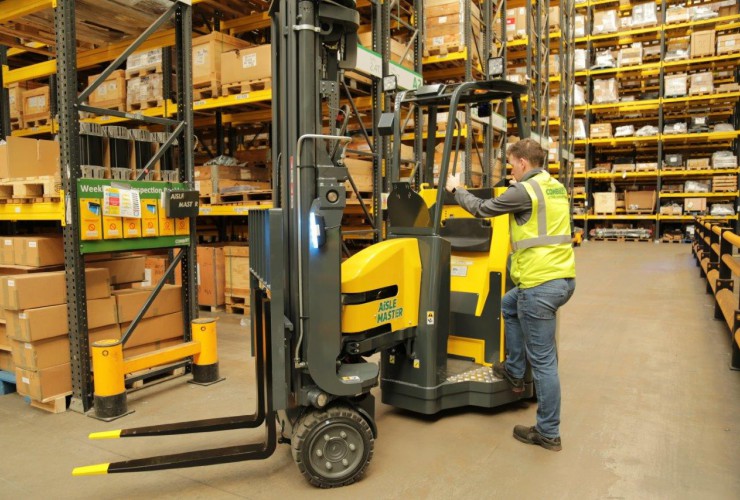
Combilift is in the final of the IFOY AWARD with the Aisle Master OP, in short AME-OP. The order picking truck with articulated mast has been developed for use in narrow aisles and is available with load capacities of 1.5 to 2 tons and lift heights of up to 12.1 meters.

The concept of the Aisle Master is not new. The articulated mast truck was once introduced as an alternative to reach trucks. Thanks to its unique steering and drive system, its striking appearance is definitely advantageous in narrow aisles. Compared to the average reach truck, the aisle width can be as much as 80cm narrower. In some cases, the Aisle Master even performs his work in aisles no wider than 1.75 meters. The concept is particularly popular in the UK, but articulated mast trucks are also used elsewhere.

With the Aisle Master OP, Combilift offers a new application for this type of truck. OP stands for Order Picker, and this is exactly what the IFOY truck is designed for. Since the operator must get on and off the truck regularly to pick orders, the cab is equipped with a stand-up seat. A comfortable cushion supports the operator while driving and the high position allows a good view of the load and direction of travel.

During the test drive, it is evident that the operation of the Aisle Master takes some getting used to. Loading and unloading pallets requires both steering and driving movements. Joystick operation for driving is a combination of moving the joystick and pressing “unlock” for driving. Steering is relatively predictable thanks to the new steering system, which uses a hydraulic cylinder and chains for overall control.

The low, obstacle-free entry and exit of only 280mm allows easy and safe entry with one step on either side of the truck. Picking works faster this way than if the operator has to hop on and off from a seated position. However, to enter and exit on the right side, the joystick controls must first be raised

This multifunctional, programmable joystick control ̶ for all hydraulic functions and traction ̶ replaces the mechanical levers of the “normal” Aisle Master. The joystick is adjustable and allows a comfortable and ergonomic working position for operators of all sizes.

The display is also different. The touch display of the Aisle Master OP shows all important forklift information briefly.

IFOY test verdict: The Aisle Master OP is the first stand-up order picker with an articulated mast. The stacker can also be used as a high lift truck or reach truck in narrow aisles. However, smooth operation requires an experienced operator. In this case, effective pallet handling in very narrow aisles can be achieved with the Aisle Master.

IFOY Innovation Check

Market Relevance: The new Aisle Master OP by Combilift represents a considerable improvement compared to similar products and previous models, whereby a high market relevance is seen for the markets in which articulated forklifts are established. The change to a continuous stand-on platform in particular creates the possibility of order picking from both sides. Thus, the range of applications expands significantly, and this creates a high level of attractiveness for replacement or new purchases of such trucks.

Customer Benefit: Customers benefit from the Aisle Master OP due to its versatility of application possibilities in the narrowest of indoor and outdoor spaces. Storage and retrieval in the narrowest aisle widths from 1,750mm with the possibility of picking at the same time. Thus, the benefit also undoubtedly lies in maximising the utilisation of storage space and increasing the efficiency of storage processes.

Novelties / Innovations: The basic principle of the articulated forklift remains the same with the Aisle Master OP and is extended by the variant with a continuous standing platform as well as the new type of steering via crossed chain. The possibility of fast access from both sides and the basic possibility of order picking is a novelty for this type of industrial truck. However, truly effective order picking from different rack locations on pallets is only possible with order-picking forklifts designed directly for this purpose.

Functionality / Type of Implementation: The Aisle Master OP has a very robust and exemplary design and surprises with its high stability despite the articulated arm principle. The overall impression suggests a long service life. Storing and retrieving is very precise due to the driven front wheels in a very confined space, although some practice is required with regard to the somewhat complex operation.

Verdict: A candidate that will inspire the target group in its market.

Market relevance +
Customer benefit ++
Novelty / Innovation Ø
Functionality / Type of implementation +
[KEY: ++ very good / + good / Ø balanced / – less / — not available]

Touchpath Technology Live-Counts Inventory

International supply chain solutions provider TouchPath has released ‘TouchCount’, a new breed of inventory cycle counting technology that live-counts production, warehouse and logistics inventory with no costly and time-consuming production stoppages or disruption to warehouse product flows. This represents a major advance on traditional ERP inventory cycle counting say TouchPath, and enables the system to pay for itself in six to nine months through time savings and continuity of supply according to system trial results from TouchPath users.

Historically, the need to call a halt to operations to count inventory has been caused by the limitations of ERP systems that do not allow operations to continue while stock is being counted. In contrast TouchCount collects live inventory information from data capture devices including scanners and mobile computers while enabling operations to continue uninterrupted.

The software typically runs on an existing browser so is quick to install, either standalone or integrated with an ERP system, and can be customised in line with user company rules and practices. Importantly TouchCount’s live-count, real-time view of inventory ensures that warehouse, production and logistics managers always have an accurate view of the stock for which they are responsible: product damage and loss is minimised and stock can be maintained at the exact level required for optimum fulfilment, says TouchPath.

“TouchCount software sets a new industry standard for inventory cycle counting,” says TouchPath CEO David Myers. “It saves time and money so has a very measurable ROI.”

TouchPath technology uses smart, flexible modules that can be bolted together in almost any combination to deliver a customised solution at an off-the-shelf price, deploying systems technology that captures more information for better business performance and faster ROI according to the company.

TouchPath solutions are COTS (Custom-off-the-Shelf) applications. The user determines which functions are required and the business rules under which they are to operate and receives a bespoke solution configured from pre-existing modules. This gives user organisations the flexibility and control they need to optimise their warehouse and production processes in line with their individual needs and with no need to alter their processes or business rules.

TouchPath has operations in the USA (High Point, NC 27265) and the UK (Kent ME13 8NZ).


Stuart Publishes Inaugural Sustainability Report

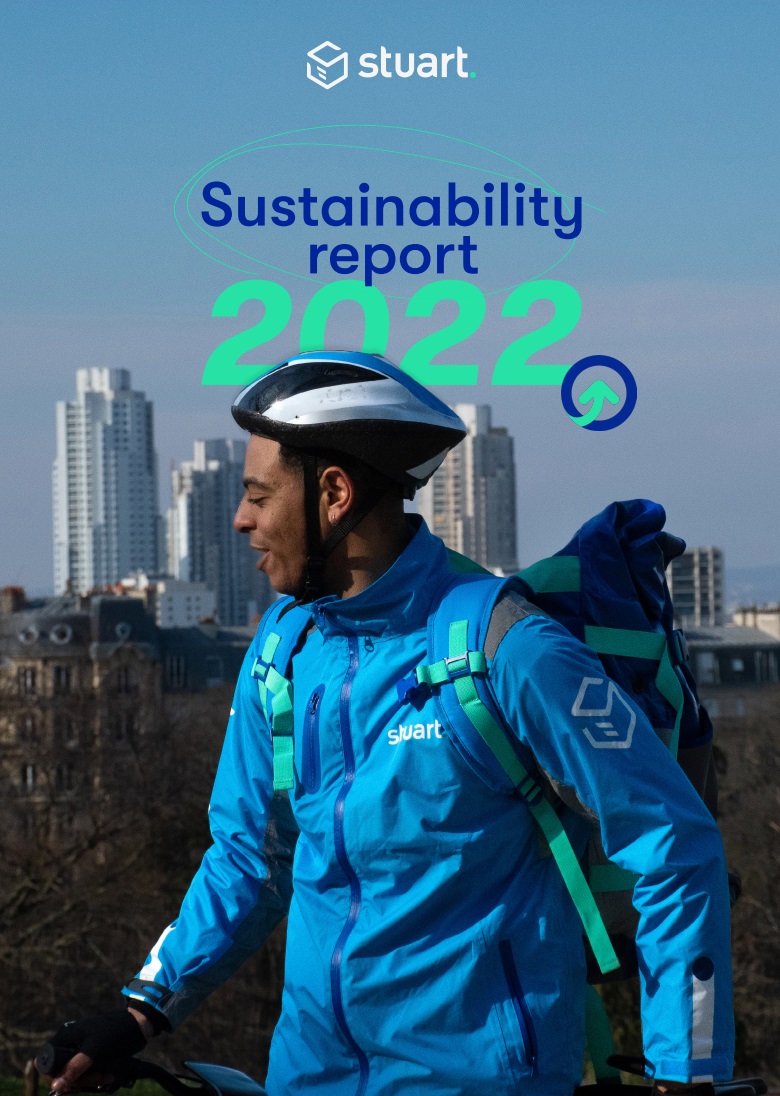
Last mile delivery specialist Stuart has published its annual Sustainability Report, sharing its progress towards building a sustainable logistics organisation.

The report features renewed commitments to reducing emissions, congestion, and air pollution. These commitments include reaching net-zero across its operations by 2035, reducing absolute emissions (the total quantity of greenhouse gas emissions being emitted) by 42% by 2030, and switching to 100% renewable energy in offices and delivery hubs by 2025.

In addition to its operational targets, Stuart is working to support its courier partners in decreasing delivery emissions and addressing the impact of its base activities, including its offices, employees and equipment, to fuel its transition to net-zero. This involves both engaging with its suppliers to encourage them to set net-zero targets by 2027, as well as starting a pilot programme to support its courier partners to transition to electric vehicles.

Stuart’s approach is focused on collaboration – seeking to bring together businesses, couriers, urban communities, and its employees, to deliver on its core mission of providing a socially and environmentally responsible model of urban logistics for its customers and local communities.

Cornelia Raportaru, CEO at Stuart, said: “By 2025, cities will account for over half of global consumption. We understand the devastating impact this will have if we do not play our part. With a science-based yet innovative approach and our remarkable team’s passion for sustainability, we are committed to making a difference today, for tomorrow’s world.

“However, we can only achieve a net zero shift by fostering partnerships right across the value chain.  We want – and need – to create a space for dialogue with our communities, employees, customers and partners on how we can build a sustainable future together.”

CLICK HERE to read the full Sustainability Report.


Blue Giant Celebrates 60th Anniversary

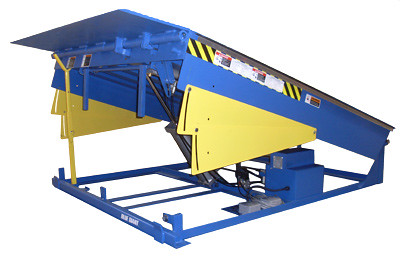
Blue Giant Equipment Corporation is celebrating its 60th anniversary of serving the needs of customers around the world. The company describes itself as the premier provider of safe, effective, and innovative loading docks and material handling equipment solutions.

Blue Giant was founded in 1963 by Kurt Larsen and quickly became a leading manufacturer of dock levellers and hand pallet trucks. The company’s consumer base expanded rapidly, leading to new product offerings in loading dock and material handling solutions. The company has grown to become a major global presence, exporting to more than 40 countries and boasting manufacturing facilities in four countries.

With an eye to the future, Blue Giant continues its vision as a solutions provider. Its mission is to be the global leader in loading dock safety systems and ergonomic solutions.

“With this milestone, we are honouring our past and inspiring our future. I am thankful to the many dedicated Blue Giant Employees who have contributed to our global success throughout our history and those that are a part of our bright future,” said Steve Barbosa, Blue Giant President.

“We are formalising our commitment to quality through QMS certification, expanding operations in Mexico, advancing our Blue Genius controls to an HMI platform and are destined to be a software company with our Connected Equipment Solutions development. To our customers, distributor partners, suppliers and employees we thank you for 60 years, our best years are ahead!”


MFCs Benefit from Robotic Sorting Systems

Installing outdated intralogistiics technologies will prevent micro-fulfilment centres from achieving the efficiency gains ecommerce retailers are looking for, writes Xia Huiling, founder and chief executive of LiBiao Robotics.

With online shoppers demanding more convenient and ever faster order fulfilment speeds, many online retailers are choosing to invest in micro-fulfilment centres (MFCs). MFCs are usually small footprint facilities capable of enabling fast local pick-up or delivery and are located within major population centres – close to a retailer’s customers.

So, given that the key driver for opening an urban MFC Is the ability to fulfil orders in the shortest possible time frame, why would an internet retailer specify handling methodologies or intralogistics technology for their MFC that could slow the process down? After all, your MFC unit may be in the ideal geographical location to give rapid access to your client base but that counts for nothing if the materials handling system within the building is delaying the time it takes for orders to leave the facility.

Thanks, in part, to the fact that they achieve the same parcel throughput statistics as traditional conveyor systems and yet require a significantly smaller area within which to operate, autonomous mobile robot (AMR) parcel sortation systems are increasingly seen as an ideal solution for MFC applications where, due to a site’s urban location, the square footage available is usually restricted.

And the ability to make the most of an MFC’s cramped conditions isn’t the only advantage that modern AMR systems can claim over traditional conveyor technology. Unlike conveyor-based sorting systems that often have to be completely shut down if a fault develops at any point ‘on the line’, a malfunctioning robot causes no discernible drop in a site’s throughput capacity: the problem unit is simply and quickly removed and replaced meaning the parcel sortation process never stops and the MFC is able to continue to provide the kind of swift customer response for which it is designed.

Light and easy to construct and dismantle with no fixed infrastructure requirements, modular AMR sortation systems, such as LiBiao’s ‘Mini Yellow’ series, can be easily scaled up to cope with any spikes in throughput. Capacity is increased by simply introducing additional robots as required and once the busy period has passed, units can be removed again just as effortlessly. And the technology is also fully portable – meaning systems can be switched between sites if required.

Sortation robots are easy to maintain. For instance, software errors are fixed remotely, which removes the need for an engineer to make a site visit and contributes to an AMR system’s low lifetime running costs.

Micro-fulfilment operations can increase speed, agility, and competitiveness in response to some of the challenges caused by the rapid and sustained growth of eCommerce. But implementing out-dated intralogistics technologies that are neither agile nor speedy, will mean your MFC will fail to generate the expected results, so it is essential that executives identify the solutions that will allow customer demands to be met and generate long-term value for their business.


Lödige Expands Romania Production Site

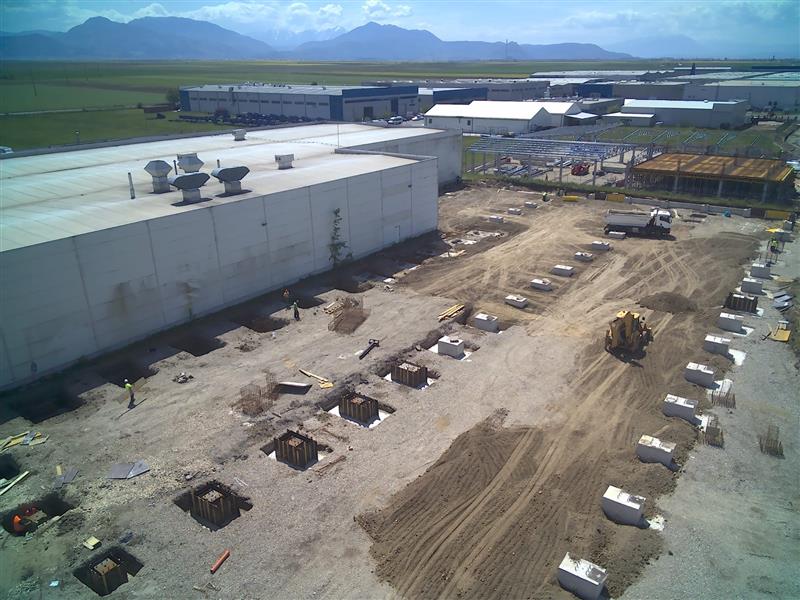
Lödige Industries, a leading provider of logistics systems, is significantly expanding its capacities in Brasov, Romania. Plans call for a near doubling of the production area to more than 4,000 sq m. Construction began at the end of the first quarter of 2023. Production operations in the new building are expected to start as early as the end of this year.

Since 2006, the factory has primarily produced lifting and handling machines such as lifting tables, elevating workstations, truck docks and conveyors, which are installed in air freight terminals, car parking systems and as material handling equipment in projects for the global market.

Romania Production

Lödige Industries currently has more than 100 people in Brasov in production, engineering and sales. As part of the expansion, the company also plans to hire additional personnel to ramp up production in the new building by the end of this year.

“Brasov has developed into an important pillar alongside our plant in Scherfede. Due to increasing orders, the expansion of our capacities is the logical next step and a long-term commitment,” emphasises Luana Costescu-Guran, Managing Director at Lödige Industries in Romania.

Since 2018, Lödige continues to constantly innovate our product portfolio in order to help our customers move heavy goods, whether air cargo, cars, goods, trucks or even entire airplanes. With the acquisition of Mecfab Enterprises, a service provider for airport logistics solutions in Australia, and the acquisition of B&B Aufzugsbau, a service provider for lift solutions in Germany, we are following the track to expand and enhance our service portfolio.


Sustainable Automation

Automation can help get more out of less, making it intrinsically sustainable. Automation and strategically planned intralogistics can enable businesses in diverse industries to become more eco-friendly. Global intralogistics specialist, Cimcorp has customers in two core sectors – grocery retail and the tire industry – and sustainability is becoming increasingly important in both.

Energy Efficiency

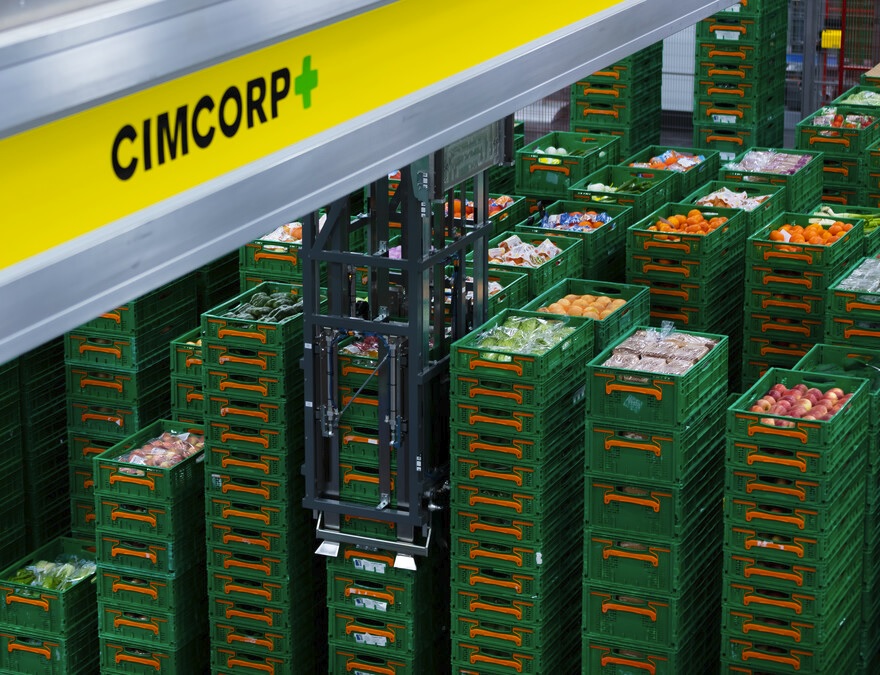
The increasing focus on sustainability, combined with high energy prices, means that energy efficiency is more important than ever. The benefit of Cimcorp’s robotic technology in terms of energy use is tangible, as the company’s gantry robots feature low energy consumption. With the structure of each gantry robot formed from aluminium, they are lightweight yet robust. As the robots are not heavy, they accelerate and move fast, optimising all the potential handling capacity for products moved in the distribution centre.

In addition, gantry robots can carry multiple crates or cases simultaneously, instead of just grabbing one. Cimcorp’s robotic crate solutions enable a maximum load of 250 kilograms at a time, with stacks being up to 2.5 meters tall. This means that high volumes can be moved and handled quickly and efficiently.

Cimcorp’s robots also reuse energy. Braking energy is recovered to the power grid, making the robots even more energy efficient. The robots can gather and feed back approximately 30% of the energy.

Fuller Trucks Mean Fewer Trucks

A Warehouse Control System helps to organise intralogistics and streamline the overall supply chain in a more sustainable way. Through optimising the loading of delivery vehicles, intelligent software enables space to be utilised more efficiently, leading to fuller trucks and therefore fewer trucks. This means fewer kilometres being driven and less pollution from exhaust fumes.

Automation can have a huge impact on sustainability in the grocery retail industry, where a faster supply chain enables longer shelf life, leading to less food waste. Optimising intralogistics can reduce the time taken for produce to travel from field to store by up to half. Cimcorp has successfully accelerated the intralogistics of food and beverage customers around the world. Examples include helping Mercadona, Spain’s biggest grocery retailer, to move produce to stores in under 24 hours and helping Olvi, the Finnish brewery, to move warehouse stock as orders to stores in under 24 hours when needed.

Reusable Crates

Many modern grocers utilise reusable plastic crates (RPCs) to replace cardboard boxes as the method of transport for fresh produce from the farm to the store shelf. Capable of thousands of journeys, RPCs have a long and sustainable lifecycle. Cimcorp’s automation solutions work perfectly with RPCs.

Automation also enhances sustainability in the tyre industry. Automated tyre intralogistics significantly reduces scrap in all process areas. With Cimcorp’s Warehouse Control System, tyre manufacturers can minimise intermediate storage and avoid unnecessary scrapping of materials. If there is any disruption to the manufacturing process, all individual tyre components can be tracked and traced to avoid scrapping of the whole inventory.

Cargo Drone Takes First Flight

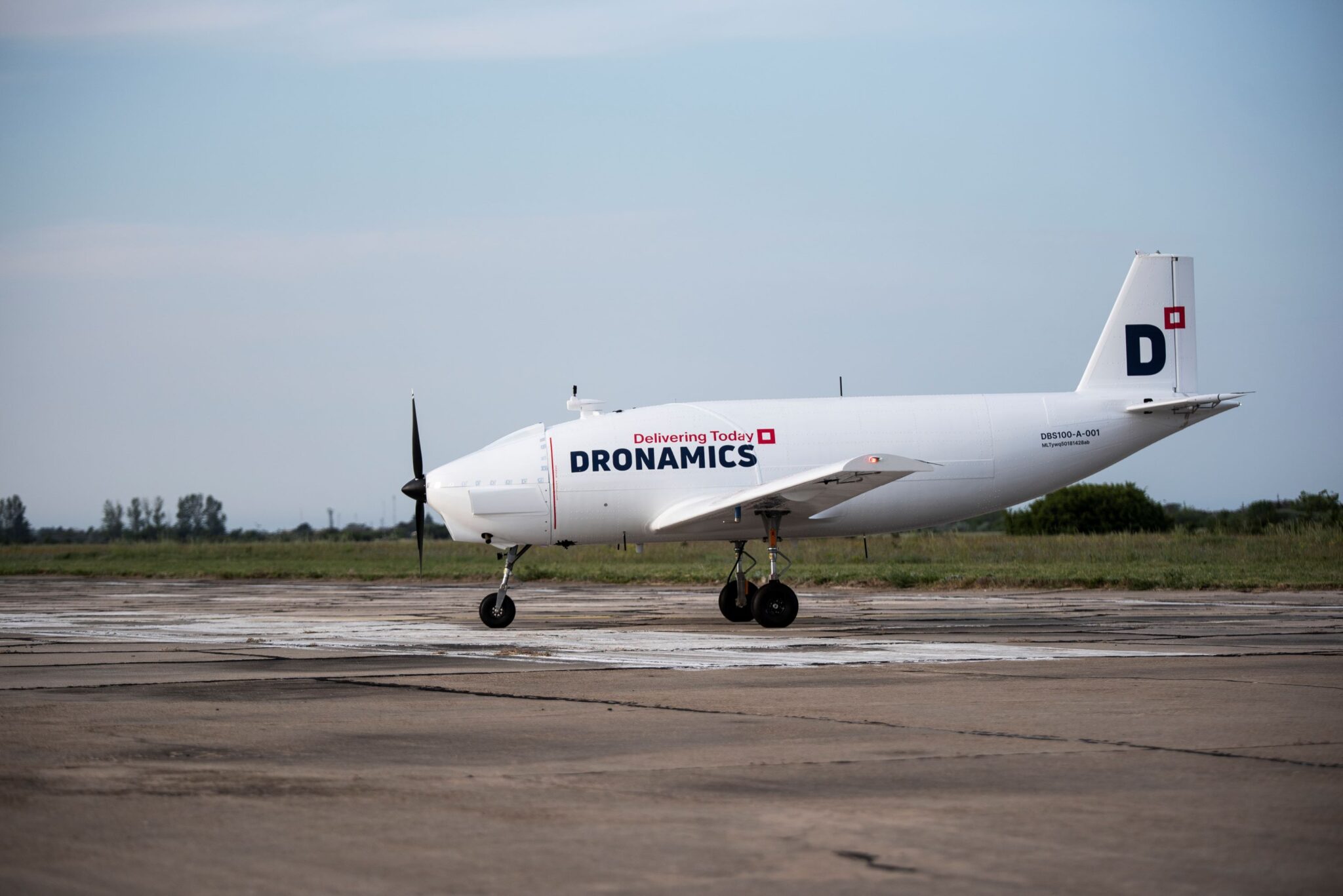
Dronamics, the world’s first cargo drone airline, has announced the successful completion of the first flight of its flagship aircraft, the Black Swan, at Balchik airport in Bulgaria, demonstrating the potential for the logistics industry to enhance efficiency in the transportation of products.

Born out of two brothers’ desire to find a quicker, greener and more affordable way to deliver goods, Dronamics says it is on a mission to enable same day delivery for everyone, everywhere. This significant milestone is the culmination of months of ground testing and subscale flights. The Black Swan aircraft was remotely piloted by two commercial airline pilots from the Dronamics ground control station.

The successful flight test validates the company’s licensed cargo drone technology for commercial flights in Europe, set to begin later this year, serving industries such as e-commerce, pharma, spare parts, and perishables with a fast and cost-effective solution to meet evolving consumer needs.

“Since the day we first imagined what the Black Swan aircraft could look like, we’ve worked towards this flight. Today we’ve made history and are proud to have demonstrated the validity of our drone technology,” said Konstantin Rangelov, Co-Founder and CTO of Dronamics. ”It’s taken an enormous amount of hard work, belief and drive to prove that what we envisioned works. We can now focus on the next step, the roll-out of our commercial operations, and we couldn’t be more excited,” said Svilen Rangelov, Co-Founder and CEO of Dronamics.

Subscribe

Get notified about New Episodes of our Podcast, New Magazine Issues and stay updated with our Weekly Newsletter.