Docket Grab Warehouse Hanging Sign

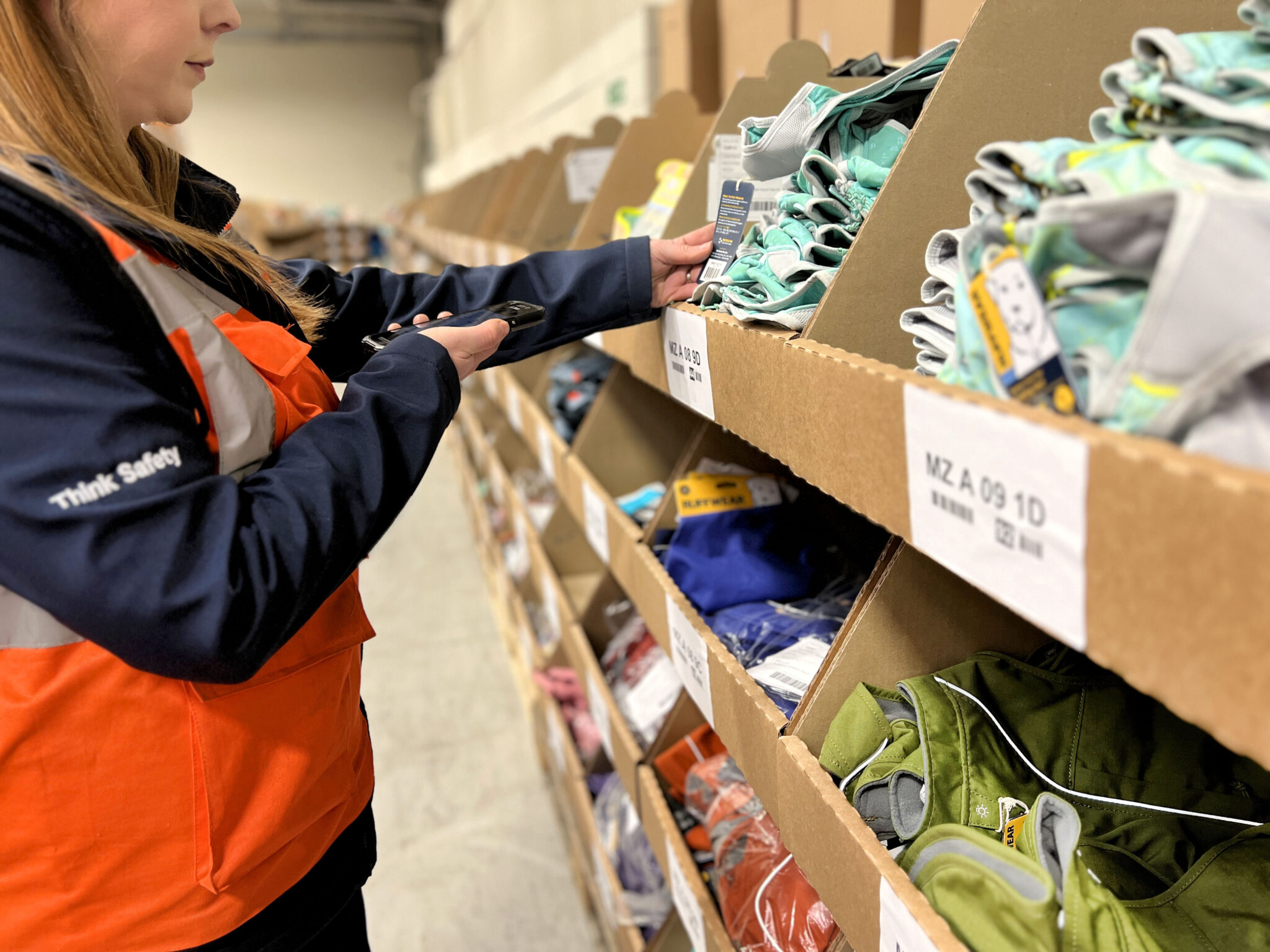
When the Samworth Brothers company was looking for a new hanging sign for its chilled distribution site in Leicester they chose to partner with inotec which specialises in supplying bespoke warehouse labelling and line marking solutions. The result is an innovative ‘docket grab’ hanging sign that uses ball bearings to grip dockets. These signs, which can be either single or double-sided, are now being used in the pick by line area of Samworth’s Oak Meadow facility.

The Samworth Brothers site in Oak Meadow Leicester has a storage capacity of over 10,000 pallets across chill, deep chill and frozen. Around 580 people work on the site with orders being picked by 160 warehouse operatives.

Glyn Maude is General Manager, Samworth Brothers Supply Chain, he explains why the new sign was needed, “As our business has grown rapidly over the last few years we needed to change how we picked orders in this warehouse. Originally the whole area was racked, but it was decided to take part of the racking down to create a pedestrian only picking area surrounded by barriers.

“This meant we could present the products to the pickers in that area instead of getting them to pick out of the racking. The lanes of pallets run towards the racking area and the stock comes into the picking area from underneath the racking, deposited by fork lift truck.

“I knew that I would need hanging signs for the new area but couldn’t see anything suitable on the market. I’d seen other companies using drainpipes cut into segments with a slit to hold a label and I’d thought that there has to be a better way of doing this so I approached Steve Towler at inotec. I already knew Steve as he’d helped me with line marking and signs for our marshalling lanes here in Leicester and done a great job. Once I’d given him the size of sign and what it needed to do, he went away and came up with the docket grab concept. A couple of mock-ups later, we had our ‘docket grab’ hanging sign.

“One of the qualities I like about inotec is that they help me plan out and design what I need. They also give me an honest and accurate quotation regarding the cost; I get a lot of good advice from them. The idea of using ball bearings to grip the pallet labels was all inotec’s.

“In the pedestrian only zone the picker collects the pallet of stock using a hand pallet truck and walks down the picking line of pallets. He then scans the pallet label that is held in the hanging sign above a pallet, this details a retailer’s order. The label tells them how many cases to put on that particular pallet for that order. This allows us to control what stock is going where.

“We know when a pallet is fully picked as we’ve set the height of the hanging sign and the length of the label to indicate the full height of an order. When the pallet is full the picker can clearly see there is no room for more stock on that pallet. This means we have uniformity for all the pallets we’re picking. Prior to this we were sending pallets out that were all different heights – not many were too high but some were too low, now they all come out at a standard height.

“Our new way of working has helped us reduce the amount of pallets we’re sending out to retailers. It also ensures we fill the trucks up as much as we can so that we don’t put additional vehicles on the road. This reduces our distribution costs benefitting both us and our customers.

“A further advantage of the hanging signs is that the pallet labels are now up in the air and out of the way – before they were stuck on the pallet and could fall off, get stuck to something else or just generally go missing! The new sign system prevents this happening.

“Our pick accuracy is already really high at 99.98 per cent but we still have a margin for error that we want to eliminate. Although we’ve only been operating this pick by line system for a short time I am expecting to see an improvement in picking accuracy.

“The signage work that inotec has done here for us is great. We work really well together as our two companies have a lot in common in terms of work ethic and the way we view things. It’s a fantastic business, I’d give them ten out of ten every time.”

New Digital Capabilities for Korrvu® Packaging

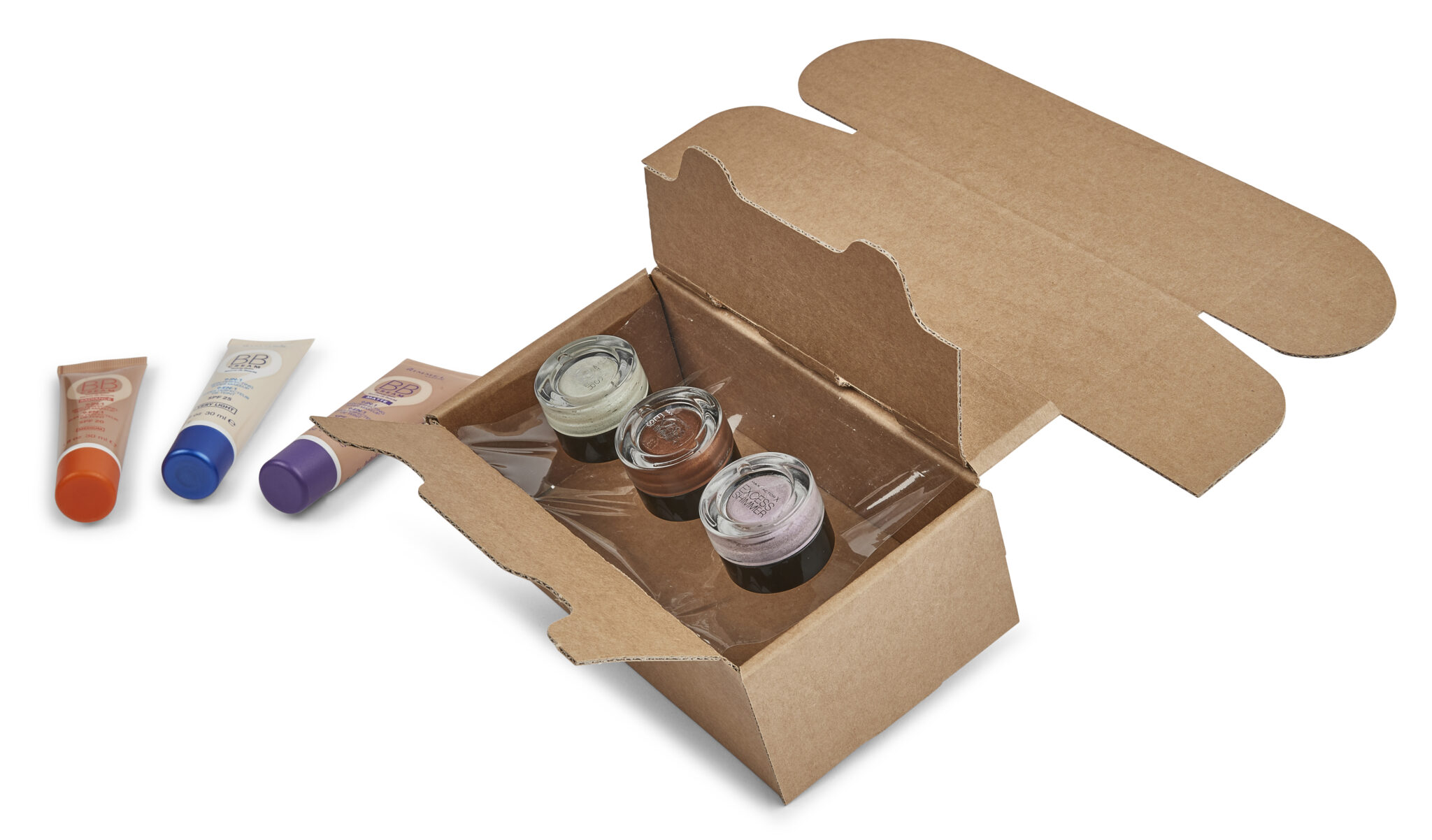
To improve turnaround time from design to production, SEE® introduces new digital die cutting capabilities for its SEALED AIR® brand Korrvu® retention and suspension packaging.

This new offering replaces traditional die tooling with digital die cutting, which speeds up production lead times from months to weeks.

Digital-first production also allows customers to place smaller minimum order quantities, so they don’t have to store excess packaging at their business.

Korrvu® retention and suspension packaging uses a strong, low-slip film to surround products, protecting them from shock and vibration with very good visibility. The packaging is kerbside recyclable with the plastic film attached to simplify recycling by consumers and improve sustainability.

“Korrvu® packaging solutions were traditionally cut with physical dies that were made to order for each customer. That process could take months to perfect,” said Ingo Lublow, EMEA Director Protective & Equipment Marketing at SEE. “Our new digital Korrvu® capabilities eliminate the need for custom tooling, so our customers can get their designs prototyped, sampled, and into production much more quickly.”

With the new digital offering, customers can:

• Get more design flexibility: Editing designs can be quicker because new physical tooling isn’t required, so customers can more easily customize designs by product, season, location, and customer. Unique cutouts and laser engraving on the corrugate help differentiate products and packaging from others in the market.

• Switch to on-demand production and ordering: Digital technology allows high-volume and short-run Korrvu® orders to be produced on demand, helping customers keep just the right amount of packaging on hand while freeing up storage space in warehouses.

• Improve sustainability: Digital finishing simplifies the supply chain to reduce the carbon footprint. Plus, Korrvu® retention and suspension packaging is made with at least 50% recycled content, is reusable, and is kerbside recyclable.

Mounting Inventory Visibility Challenges add Pressure

Today, at its 2023 European Exchange customer conference, Manhattan Associates Inc. (NASDAQ: MANH) announced the findings of its latest international omnichannel research, highlighting how retailers are increasingly digitizing their offering in efforts to improve customer experiences and maintain market share, with inventory visibility being key.

THE CHANGING FACE OF THE STORE

Trending in the right direction, 54% of retailers reported that their customers could buy in-store and return online (50% in 2022), and if the product was out of stock in-store, 48% provided buy online and return in store options (46% in 2022). However, retailers also commented that on average they only had an accurate indication of inventory across their entire operations 70% of the time (down from 74% in 2022).

Shoppers expect all retail touchpoints to be connected, frictionless and increasingly personalised. “If you don’t know where a third of your inventory is, or what it is that you have, that’s a lot of stock that is either not being sold, marked down or at worst thrown away,” commented Henri Seroux, SVP EMEA at Manhattan Associates.

“It’s vital that retailers have solutions with the flexibility and agility to allow them to recognise and act on shifting consumer behaviour in near ‘real-time’. With access to accurate data, retailers can deliver actionable insight into the hands of their associates, enabling them to add value to every customer’s unique path to purchase,” Seroux continued.

FRICTIONLESS COMMERCE MEETS FRICTIONLESS ENGAGEMENT

It is clear consumers are keen to engage actively cross channels when looking to purchase products and 84% will start their buying journey online (82% in 2022). However, 16% (17% in 2022) of retailers still reported that their organisation’s in-store and online operations continue to run as separate functions, suggesting that while year-on-year, more retailers are offering seamless shopping experiences, there is still room for improvement.

In terms of how consumers prefer to engage with retailers before and after buying a product, overall, email (47%) remains the preferred engagement channel, followed by direct in-person contact with the store team (43%). Interestingly, social media is now the preferred channel of engagement for four in ten (40%) consumers, with this preference more likely amongst younger consumers, peaking with the age group 25-34 at 55%.

Natalie Berg, retail analyst, author, and founder of NBK Retail commented: “The research shows retailers are making progress when it comes to seamless omnichannel experiences. As the role of the physical store evolves past simply the transactional, the roles of associates must also develop beyond purely assisting the sale too. Armed with the right technologies and accurate inventory and customer data, store associates have the power to educate, inspire and ultimately create long-lasting brand loyalty, even during times of economic flux.”

PROTECTING POCKETS & THE PLANET

The perception, and at times reality, that green products come at a price premium means that shoppers are deprioritising these purchases in favour of low-cost alternatives with only 45% of consumers considering sustainability an important factor when choosing where to shop, down from 50% last year.

Younger generations are more likely to consider a retailer’s environmental/sustainability efforts compared to older consumers, with 55% of 18–24-year-olds reporting it as a top or important consideration for them. 17% of the 24-35 age bracket went further still and said they would actively avoid retailers if they were not environmentally conscious, compared to only 10% of over 55s saying they would boycott these same brands.

“The future of our planet is not something that we can or should be forced to compromise on as consumers or retailers, yet clearly, in the current economic climate, affordability is taking priority over sustainability. This year’s research highlights how important unification across omnichannel commerce and supply chain is, as an avenue to lessen the economic burden on consumers, but also, as a way to address the longer-term environmental impact unchecked consumerism is having on our planet,” finished Seroux.

‘Pop-up’ Fulfilment Service Launch Delivers

UK logistics specialist Kammac is taking the pain out of e-fulfilment with a new pop-up service, helping start-up businesses to outsource their operation within days. Backed by dedicated centres and experienced personnel, the solution gives companies the flexibility to scale up rapidly without committing to long-term overheads or compromising on customer experience.

The success of any new online venture depends on fulfilling customer orders in a way that is quick, responsive and reliable – but as business grows, so does the infrastructure challenges. For rapidly growing start-up ventures, the quality of service provided can be at risk when it comes to outsourcing logistics and fulfilment.

“We know that a brand’s reputation depends on its customer service, and this can be damaged if the right processes aren’t in place. By dedicating pop-up spaces to start-ups, online retailers and entrepreneurs can benefit from Kammac’s in-house experience and trained staff, to reduce risk, maintain quality and get a professional ecommerce operation up and running fast,” explained Alec Hunt, Kammac’s Head of Ecommerce and Value Added Operations.

Kammac has already established two e-fulfilment centres at its sites in Knowsley, near Liverpool, and Burton-upon-Trent. Each space is pre-set to suit the range of e-fulfilment requirements, meaning that the service can be up and running within days.

The company is aiming to expand to a further six sites, allowing Kammac to fulfil up to 100,000 orders per day for customers. These sites will be based around the UK, giving customers more flexibility in their fulfilment options and enabling strategic locations close to their centre of operations.

Crucially, Kammac has designed the centres using a modular approach offering scalability and rapid layout changes as required. With the capability in each centre to process more than 10,000 units per day, this means Kammac can scale operations in line with its customers’ growth.

With no minimum order quantity (MOQ) or contract term, start-ups have the flexibility they need, with the pop-up centres operating on a ‘pay as you go’ model, an attractive option for young businesses.

In addition to the scalability and flexibility of the space, Kammac’s experienced team will provide total support for the online brand owner – even helping with forecasts and stock planning – allowing them to focus on building their business.

“The agility and support of the pop-up ecommerce solution is key to our offering. A customer might need only a fraction of the space to start with and grow from there. Equally, there might come a time when order volumes decline and they need to scale down,” explained Hunt.

“Similarly, most smaller businesses do not have detailed logistics knowledge or dedicated personnel. We provide this for them, and our experienced team will help guide them through the process, to ensure everything is both commercially efficient and effective in terms of giving their customers the best ecommerce experience. Whatever the circumstances, we will be there to solve and fulfil their ecommerce needs, ensuring their brand is safe in our hands. As well as continuing to expand this service, we’re also recruiting more experts to join our growing ecommerce team,” Hunt concludes.

Subscribe

Get notified about New Episodes of our Podcast, New Magazine Issues and stay updated with our Weekly Newsletter.