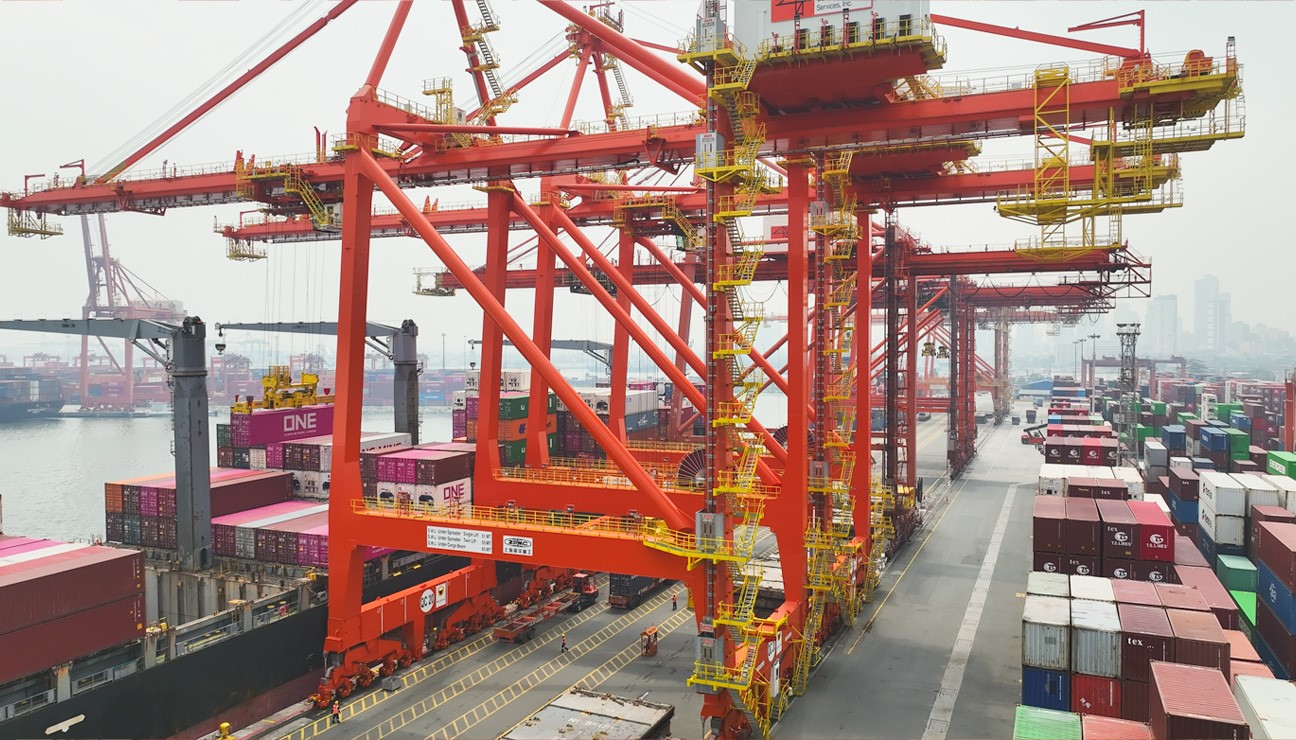
Manila International Container Terminal (MICT), the Philippines’ premiere gateway for foreign trade, has completed the commissioning of its three new quay cranes. This latest development underscores MICT’s commitment to providing the highest levels of port services and boosts the terminal’s capacity to handle the increasing demands of modern container shipping.
“The acquisition of these new quay cranes represents a significant step forward to MICT’s expansion and modernization. Their addition enables us to handle cargo loads more efficiently, leading to faster vessel turnaround times and better operations overall,” said Christian Lozano, MICT chief operating officer.
MICT (part of ICTSI)has the largest quay crane fleet in the Philippines with 18 units. The operational efficiencies contributed by the new cranes enables the terminal to better manage peak periods and high cargo volumes, ensuring smoother and more predictable operations for all stakeholders. These improvements enhance the overall customer experience, providing shippers and consignees with more reliable and timely services.
Aside from acquiring new equipment, MICT has commenced Phase 2 of its Berth 8 expansion. The project includes the construction of a 300-meter wharf and a 10-hectare container yard (full build). Upon completion, the expansion will increase MICT’s capacity by 200,000 TEUs to 3.5 million TEUs. Berth 8 will be equipped with three quay cranes for the efficient handling of foreign ultra-large container vessels with capacities of up to 18,000 TEUs. The new cranes are scheduled to arrive in 2027.
Ecommerce fulfilment is prone to frequent and often dramatic spikes in demand, and this causes retailers significant challenges in the packing area. How can businesses smooth the curve and cope with these peaks when labour resources are so scarce? Jo Bradley (pictured below), Business Development Manager, Sparck Technologies, comments.
Peak periods stress-test the whole fulfilment and delivery process and nowhere is this more acutely felt than in the packing area. Constructing boxes, packing, weighing, sealing and labelling manually is a slow process, and few shippers have either the space or the available labour to create additional packing stations for what may be only a few days’ work. And as everyone knows finding flexible labour, available at short notice, is a major headache. So, how can online retailers respond to these spikes in demand?
The case for greater use of automation in the packing area is compelling. However, simple size-constrained machines using only one-size of box does not cater for the wide variety of products and order sizes experienced by most online retailers. The results are often very wasteful.
Waste not…
It is understood that 60% of ecommerce deliveries are by volume at least a quarter composed of void-fill or just fresh air. The consequences are poor, with higher material wastage, greater chances of product damage and a negative impact on brand image – resulting in higher levels of returns.
Jo Bradley
What can be done?
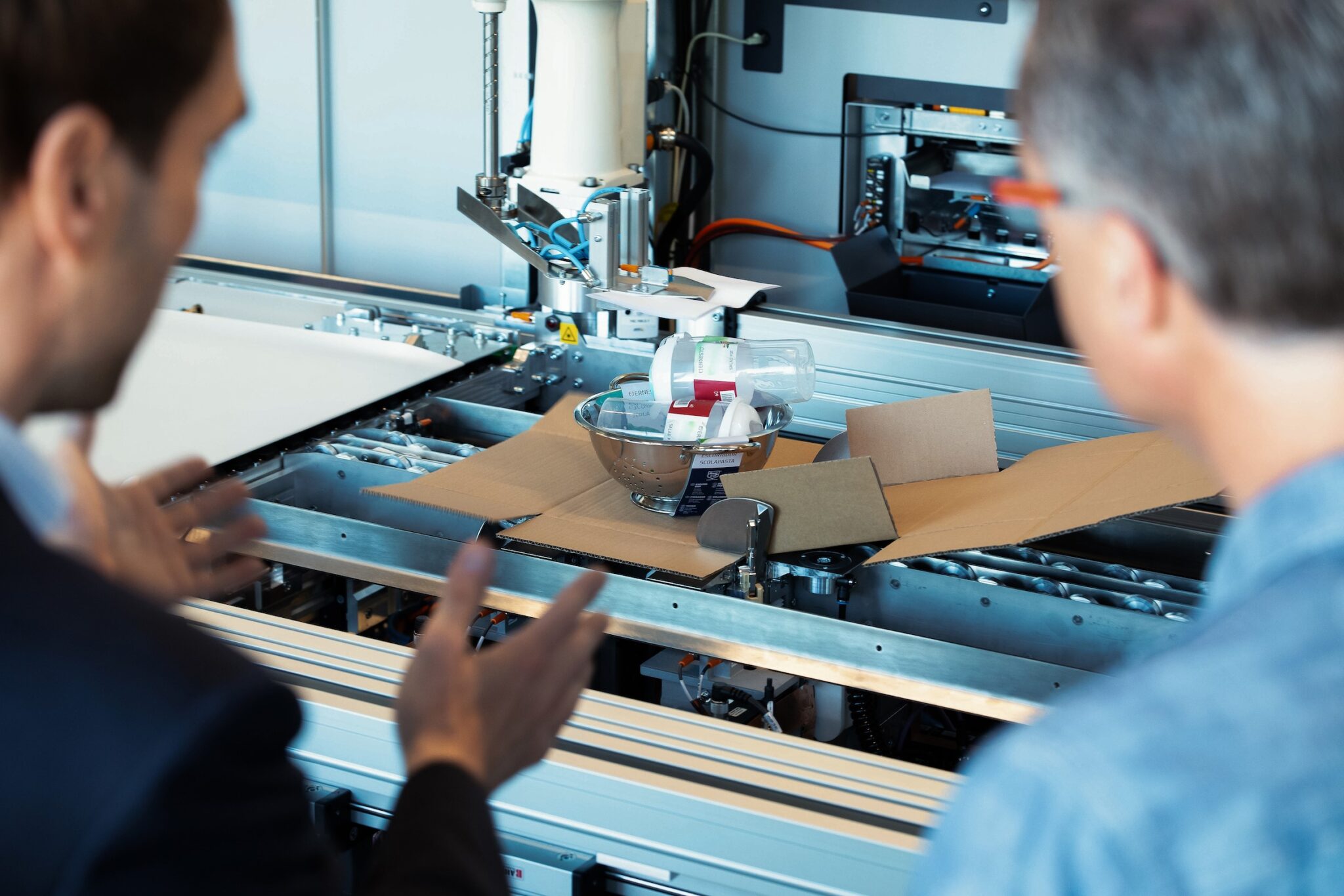
High-speed fit-to-size ‘auto-boxing’ systems, developed by Sparck Technologies and used by major brands globally, are capable of tailor-making over 1,100 ecommerce packages per hour.
The system scans and measures the item or group of items to be packed and calculates the ‘best fit’ box shape and size. Material for the box and lid is cut and creased to size, erected around the item(s) and the lid glue-sealed – which is faster and more recyclable than using tape. Parcels are weighed, labelled and away.
This approach addresses the waste problem – cardboard usage typically cut by 30%, and a tight fit eliminates the need for void fill. Total package volumes can be reduced by 50%, maximising the use of the truck or trailer cube and reducing shipping costs and environmental impacts.
More cogently for the hard-pressed fulfilment centre manager, at packing rates in excess of 1,100 per hour the latest CVP Everest machine can potentially replace up to 20 manual packing stations. And for businesses with mid-market volumes a similar machine, the CVP Impack, produces up to 500 boxes per hour and offers just about all the benefits of the CVP Everest.
The business case is impressive. Even operating ‘off-peak’ at well below capacity there is a rapid ROI in the form of material savings, lower shipping costs and labour economies – labour that could be redeployed to other tasks, such as picking. But it is at peak times that the CVP Everest and CVP Impack systems really come into their own, ramping up throughput without any corresponding increase in labour, and minimising the burden on despatch and delivery operations.
By choosing an automated solution to ‘right-size’ ecommerce deliveries, retailers can meet their fulfilment promises, even in the busiest peaks, while respecting the environment, reducing transit damage, and saving money.
Körber Supply Chain Software, a joint venture between Körber AG and KKR, and leader in end-to-end supply chain software solutions, signed a binding agreement to acquire MercuryGate International Inc., a leading provider of transportation management systems (TMS). MercuryGate is known for its strong capabilities in multimodal optimization and execution, as well as its expertise and capabilities in driving rapid implementation and time to value. The acquisition is a strategic move that extends Körber Supply Chain Software’s capabilities in delivering a comprehensive, innovative, adaptable and scalable supply chain execution portfolio.
The complexities of global supply chains continue to grow, and the need for flexibility and resiliency has never been greater. Operators demand ever-increasing adaptability and scalability in supply chain execution solutions to innovate and expand. By extending its portfolio of solutions across all supply chain execution operations, Körber Supply Chain Software aims to become a leader in managing the movement of goods from procurement to receipt and fulfillment to the end consumer, reducing planning silos, accelerating resolution of issues, and improving customer and business outcomes. Bringing Körber Supply Chain Software and MercuryGate together will enable customers to benefit from:
• Solutions that connect across inbound and outbound supply chain activities, improving cost efficiencies and customer experiences by optimizing placement, usage, and routing of goods.
• A resilient and reliable supply chain platform with visibility across inventory pools, enabling customers to identify growth opportunities as well as predict and rapidly respond to potential disruptions.
• Simulation capabilities to evaluate future supply chain strategies and understand ROI across their local and global business.
“Our customers navigate dynamic, volatile supply chain environments under increasingly high expectations for order fulfillment,” said Ed Auriemma, CEO of Körber Supply Chain Software. “With the acquisition of MercuryGate, Körber Supply Chain Software is poised to offer an unparalleled combination of advanced technology and deep industry expertise to create innovative processes to help businesses manage these challenges.”
The acquisition of MercuryGate will establish a critical pillar of Körber’s ambition to create a unified supply chain execution suite that can offer real-time optimization and collaboration across the supply chain. Customers will benefit from integrated processes across functions, faster and more accurate decision-making and the ability to mitigate risks and disruptions more effectively.
Stephan Seifert, Chief Executive Officer of Körber, said: “This acquisition illustrates our power to execute our ambitious growth strategy, substantially extends our existing supply chain software portfolio, and is a significant milestone to becoming our customers’ first choice regardless of their challenge. Furthermore, it is proof that our trustful strategic cooperation with KKR results in additional value for our customers.”
“The addition of MercuryGate’s multimodal, SaaS-based TMS to Körber’s supply chain software business will create a comprehensive, value-driving, supply chain offering for global industry leaders,” commented Joe Juliano, CEO of MercuryGate. “The combined company is positioned to deliver the broadest and deepest set of supply chain execution software solutions available worldwide.”
Peter Rottier, a Managing Director at Summit Partners, which first partnered with MercuryGate in 2018, added, “We believed that global supply chains and growing customer demand for shorter order-to-delivery times would support increased adoption of solutions like MercuryGate’s that are designed to help shippers and logistics providers mitigate the costs and complexity associated with transportation. It’s been exciting to work alongside the MercuryGate team as they executed against this vision.”
The transaction is subject to customary closing conditions and regulatory approvals.
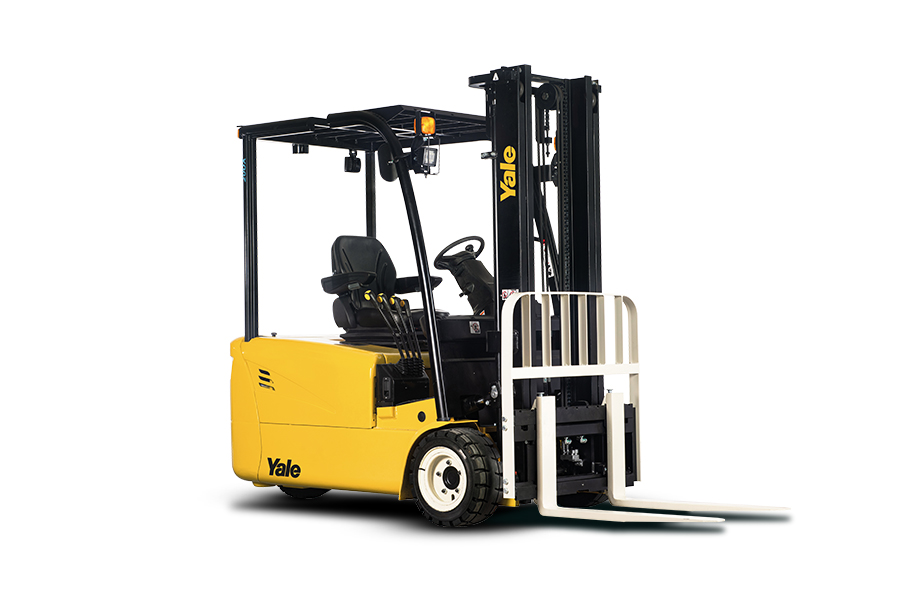
Yale Lift Truck Technologies has announced the expansion of its UX series of lift trucks with the addition of new lithium-ion power options. The new counterbalance forklifts, available in the four-wheel ERP15-35UXL series and the three-wheel ERP16-20UXTL series, strike the ideal balance between efficiency and cost-effectiveness, helping outsmart everyday challenges.
“The lithium-ion powered Yale® UXL series helps varied warehouse and intralogistics operations to tackle the challenges of rising costs while benefitting from clean, zero-emission technology. All without compromising on efficiency,” says Robert O’Donoghue, Vice President of Marketing at Yale Lift Truck Technologies.“
The new Yale lithium-ion UXL options address some of the real-world challenges posed by lead-acid batteries. By eliminating the need for scheduled watering, the UXL series has the potential to enhance workflow, ultimately increasing operational time and helping to enhance day to day operations.
“With efficiency key to any intralogistics operation,” continues O’Donoghue, “the ability to take advantage of opportunity charging means the UXL series can be ready to go at any time. When not in use, users can expect a fast, full charge in about two and a half hours on most models.”
Catering to diverse industries, including manufacturing, logistics, retail, food and beverage, and pharmaceuticals, the versatile Yale UXL models combine technology and practicality. Their compact design and excellent manoeuvrability enable efficient navigation of narrow aisles, alongside responsive performance, consistent lifting power, and travel speeds up to 16km/h. Lift capacities up to 3.5 tonnes and a reach up to 6m give the UXL the ability to efficiently move materials within a facility and support a wide range of different handling tasks.
Lithium-ion Battery Forklift Trucks
With zero exhaust emissions, these lift trucks also contribute to a cleaner, quieter working environment while supporting sustainability goals by helping reduce operational CO2 emissions. Furthermore, the 5-year or 7,500-hour warranty on the lithium-ion batteries minimises replacement costs, providing a long-lasting fleet solution. The flexible battery box design also allows for potential future conversion to lead-acid power if business needs evolve.
“Yale UXL truck users will also benefit from peace of mind thanks to our well-established independent dealer network which offers exceptional aftermarket support, readily available parts, and a comprehensive warranty programme,” says O’Donoghue. “The Yale lithium-ion powered UXL series is further proof of our commitment to providing efficient, cost-effective solutions to the materials handling industry all while continuing to work towards a zero-emission future.”
The Yale ERP15-35UXL and ERP16-20UXTL models are available now from Yale dealers across Europe, Middle East, and Africa.