Breaking the Bottleneck of Technical Debt

The bottleneck of technical debt in warehouse technology can be broken, writes Adrian Negoita, CTO and Co-founder, Dexory.

Warehouses are modernising at speed. Automation, robotics and AI are being deployed to handle rising demand and increasingly complex supply chains, and the platforms enabling this shift are more sophisticated than ever before. Yet as these systems scale, that very sophistication makes them more vulnerable to a quieter challenge: technical debt.

Technical debt is the accumulation of compromises made during rapid development: quick fixes, legacy code or architectural shortcuts that deliver speed in the short term but create fragility over time. In a sector where software underpins fleets of robots, orchestrates vast data flows and integrates with multiple enterprise systems, this debt has a habit of multiplying. Left unmanaged, it becomes a bottleneck that slows performance, stifles innovation and compounds with scale until it can no longer be ignored.

The presence of debt itself is not the problem; it is part of the cost of building fast. The danger lies in treating it as invisible. Over time, codebases weighed down by outdated decisions become harder to maintain, platforms that once drove innovation begin to stall, and teams spend more time patching problems than developing new capabilities. In environments where reliability and speed are essential, the cost of this drift is significant.

Why leadership needs to own the problem

Technical debt is too often regarded as an engineering concern alone, when in fact it belongs at the leadership level. Managing it requires visibility and prioritisation, and it should be treated as a strategic risk factor rather than a technical afterthought.

This shift matters because technical debt directly affects business outcomes. A product roadmap might look ambitious on paper, but if the underlying platform cannot deliver reliably, those promises turn into missed deadlines and frustrated customers. When debt is only visible at the engineering level, senior decision-makers are caught off guard when performance stalls or projects slip. By surfacing it early, leaders can weigh trade-offs in the same way they would any financial liability, asking whether to invest in clearing it now, carry it for a defined period, or redirect resources toward more urgent priorities.

In practical terms, this means treating technical debt as part of financial and operational planning. Just as organisations budget for maintenance or allocate reserves for risk, they should also create capacity for addressing debt. The payoff is predictability. Teams know which compromises are being carried and why, and leadership avoids the shock of sudden breakdowns that could have been anticipated.

Performance is the real feature

The race to release new functionality is constant, but performance remains the feature that matters most. A system that is slow, unreliable or unable to scale will undermine even the most advanced tools layered on top.

In warehousing environments, this reality plays out daily. A system lag can stall a fleet of robots mid-operation, and a poorly tested update can cascade across a platform and interrupt throughput. These are not minor inconveniences but operational choke points that directly affect productivity, safety and customer commitments. Resilience, speed and scalability form the foundation for everything else. Without them, innovation is built on unstable ground. With them, new features become sustainable rather than fragile.

Innovation without chaos

The challenge is to keep innovation moving without letting debt spiral out of control, and that requires discipline. Codebases should be treated as living systems that require ongoing care. Teams must prune what no longer serves, apply backwards-compatible upgrades and allocate time to reducing debt as part of release cycles.

The pressure to move faster is constant, whether it comes from customers, commercial teams or competitors. Without clear processes, short-term delivery wins out and every release carries hidden costs that eventually slow progress, so it is important to make balance part of the process. Dedicating a fixed proportion of engineering capacity to tackling debt, using automated testing to surface issues early and tracking the “interest” debt creates in lost performance can all help keep platforms healthy. Companies that adopt this discipline are able to deliver both speed and quality, while others find themselves dragged down by instability.

Planning for scale

As warehouses expand in size and complexity, the platforms supporting them must be designed with scale in mind. Technical debt will always exist, but the question is whether it is surfaced, tracked and controlled, or whether it accumulates unseen until it erupts as downtime, instability or security failures.
By recognising debt as a leadership issue, prioritising performance over superficial features and embedding processes that maintain platform health, organisations can prevent it from becoming a silent bottleneck. Managed well, technical debt remains a cost of progress. Unmanaged, it becomes an obstacle to growth.

The warehouse sector’s future will be defined by automation, robotics and AI. Whether that future is built on stable, scalable platforms or collapses under the weight of brittle foundations depends on how seriously businesses confront the code they already carry.

Six Billion Robot Picks

Locus Robotics has announced its strongest growth over the past two quarters, reflecting accelerating industry adoption of Physical AI, seamlessly fusing intelligent robotics and real-world execution. Driven by surging implementations and faster time-to-value for customers, the company recently surpassed 6 billion picks worldwide, with the last billion in just 24 weeks — the fastest pace in its history.

“Our growth is driven by our customers’ success,” said Rick Faulk, CEO of Locus Robotics. “Retailers, 3PLs, and healthcare providers are seeing measurable impact faster than ever — scaling productivity in weeks, not months. Staples Canada, for example, hit one million picks just 70 days after going live, proving the immediate ROI our platform delivers.”

So far this year, Locus Robotics has seen 30–40% year-over-year volume growth, with throughput reaching 200–300 units picked per second — roughly 45 million picks per week. Locus Robotics is on track to hit 60 million per week during Q4 peak season. In addition, deployments of incremental, peak-season bots have surged nearly 50% year-over-year, underscoring both the scale of adoption and customers’ increasing reliance on the highly flexible technology to handle demand spikes.

The 6 billionth pick was made at The Quality Group in Elsdorf, Germany. This site is Locus’s largest site in the EMEA region, where more than 350 LocusBots operate daily to fulfill customer orders.

“Being part of Locus’s six-billion-pick milestone reflects how innovation and collaboration can drive real results,” said Felix Köhler, Project Lead, Elsdorf Site, The Quality Group. “It’s a proud moment for our team and a testament to the performance we’ve achieved together.”

Technology and AI Differentiation

At the core of this acceleration is LocusONE™, the company’s advanced, AI-powered orchestration platform. By analyzing billions of data points across robots and tasks, LocusONE continuously optimizes throughput, fleet productivity, and network efficiency, while lowering costs and delivering a better employee experience. This intelligence enables customers to scale fluidly during high-demand periods (like Peak Season), seamlessly adapting to ongoing labor shortages, and bolstering overall resilience in the face of growing global supply chain pressures.

Global Market Leadership

With tens of thousands of robots deployed across North America, EMEA, and APAC, Locus Robotics runs one of the world’s largest and most productive autonomous robot fleets. Recent industry recognition, including being named in five Gartner Hype Cycles, making the RBR50 list, and winning the 2025 Fortress Cybersecurity Award for the second consecutive year — underscores its leadership and innovation.

Parcel+Post Interview Highlights Growing OEM Collaboration

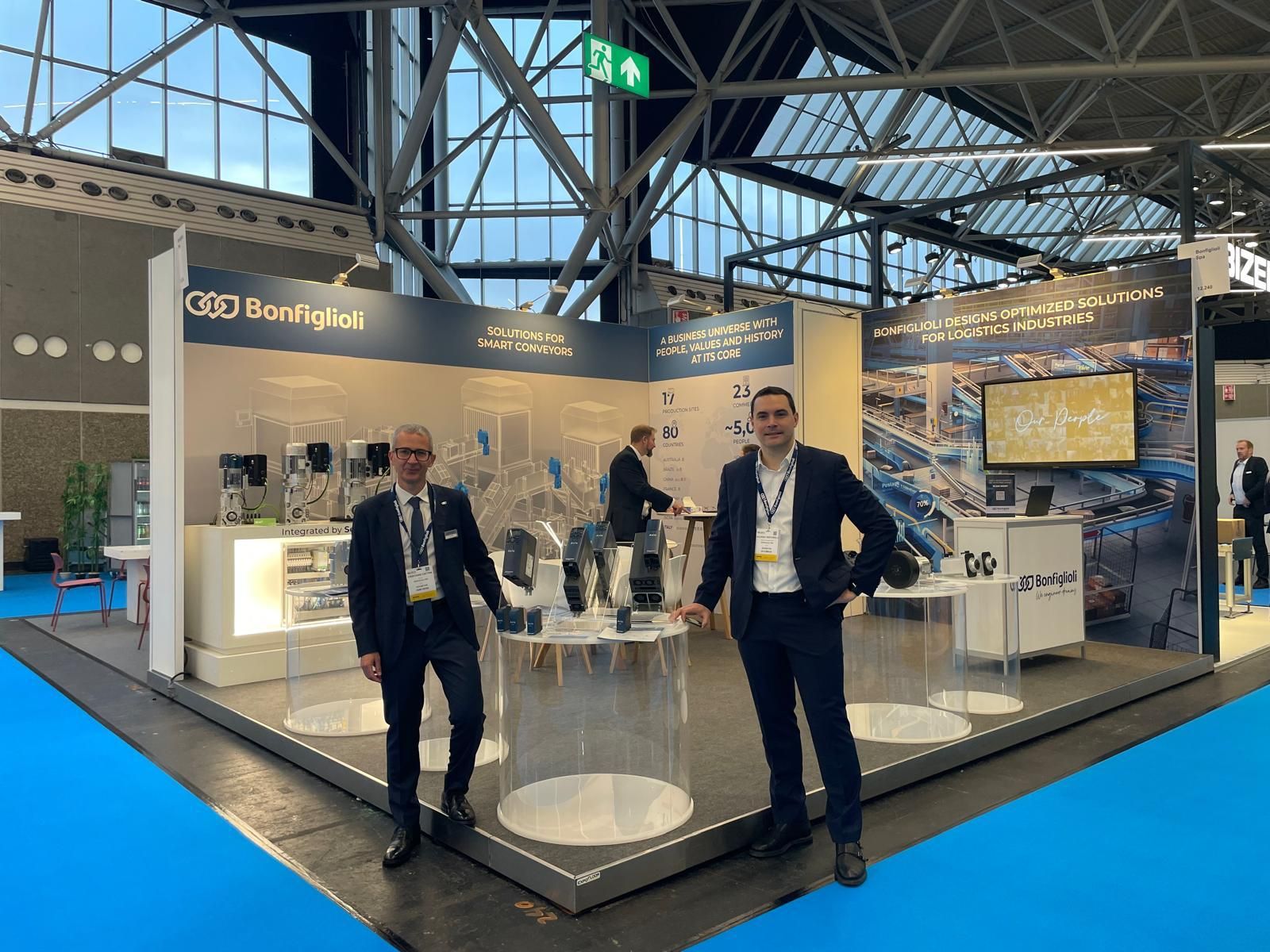
Bonfiglioli made its debut at Parcel+Post Expo in Amsterdam (21–23 October), presenting its portfolio of drive systems and motion control solutions for parcel automation, intralogistics and autonomous mobile robotics. The company used the event to underline its growing position as a global supplier to OEMs developing sorting systems, conveyors and mobile robotic platforms.

Speaking with Logistics Business at the show, Ian Wright interviewed Cristiano Cattan from Bonfiglioli, who emphasised the company’s full in-house development approach:

“AGVs and AMRs rely on Bonfiglioli’s components for long-term reliability. All mechanical parts, gearboxes, servo drives and motors are developed in-house in Italy. Because we control the full process, we can guarantee performance and quality without relying on external suppliers.”

Cattan noted that the parcel automation sector continues to evolve, leaving space for technical collaboration rather than standardised solutions:

“The market is not mature. R&D teams are still open to co-developing solutions. This gives us room to compare ideas and design something closely aligned to the customer’s operational requirements… every application is different, and solutions require fine tuning based on use case, location and performance needs.”

The company positions itself as a global partner for OEMs, offering support across service, spare parts, and post-sales. Its extensive production sites and distribution network span all continents, ensuring reliable delivery and customer support. A key advantage is the ability to provide highly customised solutions, from interchangeable mechanical couplings and firmware adjustments to software customisation and IoT-enabled inverters, tailored to meet the specific requirements of each client.

At the show, products highlighted included A Series helical bevel gearmotors for conveyors, BMD low-voltage brushless motors for AGVs and AMRs, BlueRoll and BMS wheel group solutions for mobile platforms, and the AxiaVert inverter series with integrated functional safety and multiprotocol fieldbus support.

The event reinforced a clear message: close technical collaboration and customised engineering remain key to supporting parcel and postal automation as the market continues to grow.

New National Distribution Centre Completed for Greggs

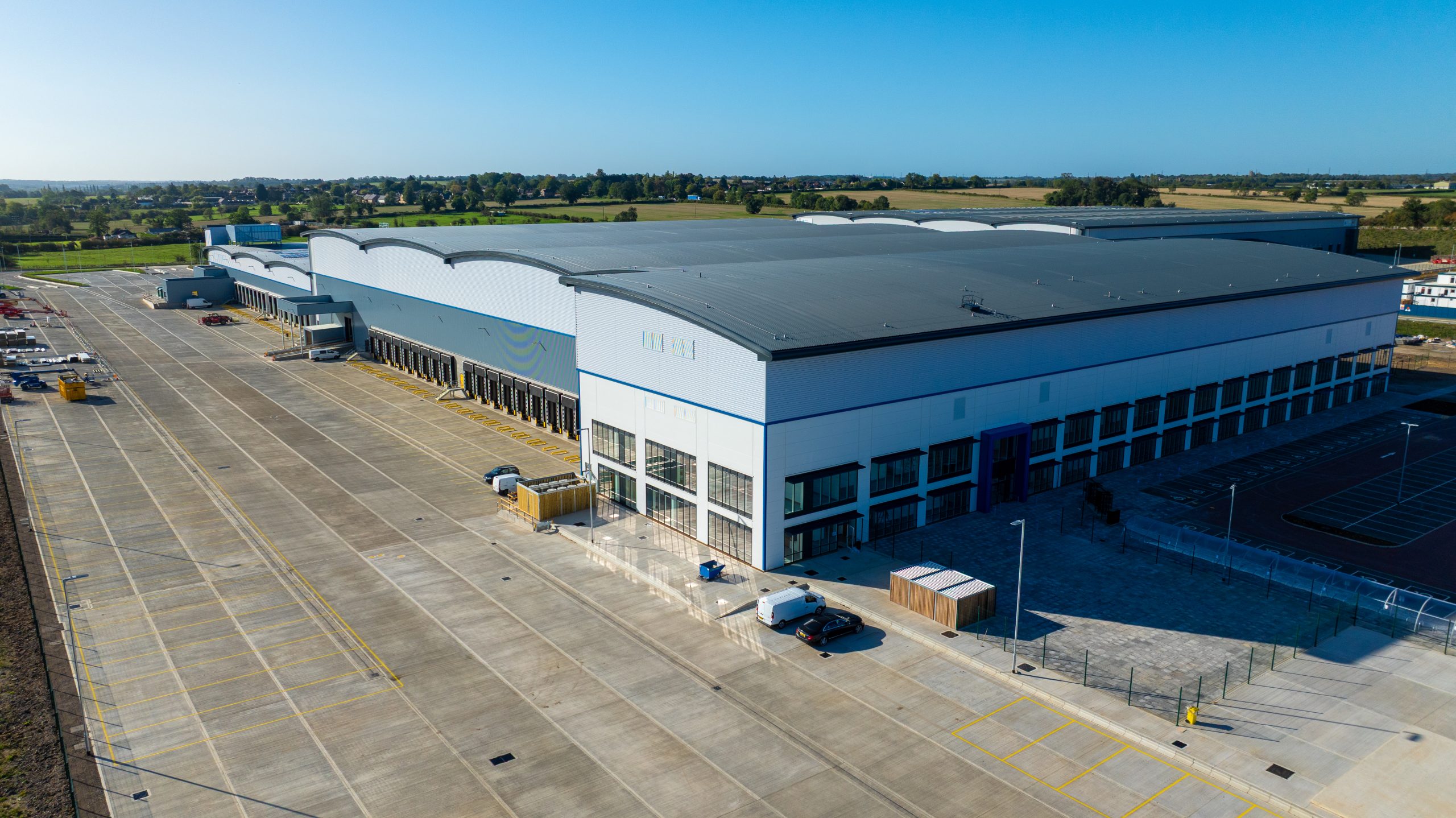
Practical completion has been achieved on Greggs’ new national distribution centre at Symmetry Park Kettering, a project delivered in partnership with Tritax Big Box Developments.

Built by main contractor, TSL, the new 311,551 sq. ft. facility has been designed to achieve a minimum of BREEAM ‘Excellent’ standard, an EPC A rating and meet net zero carbon in construction requirements. The building has been handed over to Greggs for the company to undertake its fit-out.

Symmetry Park Kettering comprises 136-acres and is home to Iron Mountain, a US-based data centre storage provider, which has occupied a 313,000 sq. ft. unit on a 15-year lease since 2023. A pre-let agreement has been secured on a 956,000 sq. ft. facility which is under construction and due for completion in the Autumn of next year.

Speaking about reaching practical completion, Jonathan Wallis, Managing Director at Tritax Big Box Developments, commented:

“We are delighted to have delivered this outstanding build to Greggs on schedule, allowing them to keep on target to become operational by 2027. The completion of this building is the result of a great working relationship with Greggs, TSL, North Northamptonshire Council and many other stakeholders.”

Tritax Big Box Developments also secured planning permission for an additional 100,000 sq. ft. of floor space to support Greggs’ future expansion.

Kuldip Bains, Supply Chain Director at Greggs plc commented:

“Completing this stage of our new distribution centre at Symmetry Park marks a major milestone in our supply chain transformation. This purpose-built facility will play a vital role in supporting our growth strategy, enabling us to serve more customers, more efficiently, as we target 3,500 shops across the UK.”

[Podcast] Forklift Future: Safety, Innovation & Logistics

In this episode of Logistics Business Conversations, host Peter MacLeod interviews Louise Inglese, founder and CEO of Genie Grips, about improving forklift safety and reducing workplace accidents in warehouses. Inglese describes forklifts as powerful but potentially dangerous machines, with common incidents including tip-overs, pedestrian collisions, and loads slipping from forks.

She explains that Genie Grips’ products were developed to address practical safety issues in everyday operations. Their first product, the Genie Grips Mat, was designed to reduce load slippage, particularly when handling steel and other heavy materials. The mats simply attach to forklift tines, providing extra grip and stability. According to Inglese, the goal is to make safety straightforward and reliable without complex installations or technology.

The discussion highlights the significant financial and human costs of forklift accidents. A serious incident can cost a business over $100,000, not including longer-term effects on employees, such as trauma or reduced morale. Reputational damage can also make it harder for companies to attract and retain workers, especially in a tight labour market.

Inglese notes that while forklifts now include more built-in safety systems, human error remains a factor. Practical tools and awareness therefore remain important. Genie Grips has also expanded into other safety aids such as loading mirrors, developed in response to customer feedback.

From its beginnings in Australia, the company has expanded to serve markets in the US, Europe, and the UK, with growing interest from South America and the Middle East. Inglese believes that despite automation, forklifts will continue to play a role in handling and transport tasks.

The conversation concludes with an emphasis on the importance of operator training and recognition. Events like the Australian Forklift Championships highlight the skill involved in safe operation and reinforce the continuing need for strong safety cultures within logistics environments.

Subscribe

Get notified about New Episodes of our Podcast, New Magazine Issues and stay updated with our Weekly Newsletter.