Solving the Dark Trailer Problem

Small data strategy matters in global asset tracking, helping to locate ‘dark trailers’, writes Alastair MacLeod (pictured, below), Chief Executive Officer (CEO) of Ground Control, a company that provides satellite-centric M2M (machine-to-machine) and IoT (Internet of Things) technology services.

For anyone running logistics operations, the number of ‘dark’ assets right now is a persistent frustration. This might be the 2,000 ‘dumb’ trailers you cannot locate, the 10,000 shipping containers that have vanished into a port, or the high-value refrigerated unit that is off-grid and failing. This ‘million-container problem’ is a costly blind spot in the global supply chain, and for decades, the business case for solving it has remained just out of reach.

The simple dream is a cheap, ‘peel-and-stick’ tracker that can be bolted to a container and forgotten about for years, reliably pinging its location once a day from anywhere in the world. With a new generation of satellite connectivity arriving, often delivered via cellular standards like NB-IoT but transmitted over non-terrestrial networks (NTN), the promise is that a single, inexpensive, global chipset will finally connect everything. However, the reality is more nuanced; small implementation details can fundamentally make or break battery life and project economics.

The most critical constraint in scaling asset tracking efficiently is not the satellite or the tracker hardware itself, but the protocol; the digital language used to send the message. Consider a tracker’s daily location ping as a tiny postcard of data, which, in a common technical example, might be just 22 bytes. The crucial difference is how that postcard is sent.

The standard internet protocol, UDP/IP, acts like a heavy packing crate. As it was not designed for such tiny messages, it wraps your 22-byte postcard in around 28 bytes of unnecessary headers and overhead. Suddenly, your small message becomes a bulky 50-byte package. The alternative is a hyper-efficient method called Non-IP Data Delivery (NIDD). NIDD is designed specifically for this task and sends only the 22-byte postcard, with far less protocol waste. For small, infrequent messages, avoiding UDP/IP headers significantly reduces airtime and energy per successful transmission.

Using the inefficient packing-crate method has two damaging effects on the long-term strategic viability of asset tracking projects. The first is cost inefficiency: you end up paying for data you do not use. Some NTN NB-IoT offers bill packets with a 50-byte minimum, meaning very small payloads are rounded up. Over half your airtime bill could be paying for the useless wrapping. The second is reduced field life. The biggest power drain on any tracker is its radio and forcing it to transmit a 50-byte package keeps that radioactive for longer than sending a 22-byte one. This higher power consumption is a real concern for long deployments. Repeating this daily across thousands of trailers means devices may need maintenance years earlier than planned.

That essential efficiency, sending only the data that matters, is precisely why NIDD and other small-message approaches are invaluable tools for extending battery life in satellite IoT.

So, why are we not all using the postcard, or NIDD, method yet? Rollouts are phased, and initial NTN NB-IoT services typically carry application data over UDP/IP. This often stems from cellular-first thinking, which underestimates satellite realities such as tight link budgets and how a few extra bytes can lengthen radio-on time and drain batteries faster.

While switching to NIDD is an integration project requiring rework on message formats and backend ingestion, NIDD support is on the way, with industry roadmaps pointing to NIDD-capable NB-IoT services from 2026.

For the massive IoT ambition of tracking 50,000 unpowered trailers, power budgeting is everything. If you are aiming for decade-scale lifetimes, logistics leaders should plan for efficiency by ensuring next-generation trackers are designed to leverage features like NIDD as they become broadly available. At the same time, those needing to act immediately should consider proven postcard-style, non-IP services such as Iridium SBD and Viasat IoT Nano, which avoid IP overhead and materially improve battery life and data economics today.

The promise of a single, low-cost global standard is powerful, but logistics leaders must look beyond the hype. The right question is not which technology wins, but which mix of network, protocol, power source and reporting profile fits each specific asset and business case. Get the bytes and the watts right, and you will build a solution that lasts both in the field and on the balance sheet.

Europe’s Driver Shortage Demands Long-Term Strategy

Europe’s transport system is facing an unprecedented challenge: a shortage of professional drivers that is already disrupting supply chains across the continent. As of 2024, over 426,000 truck driver positions remain unfilled in the EU, and the number is expected to almost double by 2028. Behind these figures lies a complex mix of factors, from tightening visa rules and an ageing workforce to the declining appeal of the profession among younger generations. Unless industry and policymakers act together, Europe’s economic engine risks slowing down not from lack of goods, but from lack of people to move them.

Beyond Motivation: Why Regulation Has Become the Real Bottleneck

Mindaugas Paulauskas, CEO of Girteka Transport, says the real bottleneck today is legal rather than motivational. Visa rules and work permit requirements have become significantly stricter compared to just a few years ago.

“For a company operating across Europe at our scale, these constraints affect how quickly we can onboard qualified drivers, even when the talent is there.”

In Europe, the profession is becoming less attractive to younger generations, as many experienced and talented drivers are retiring, leaving for better-paid or less stressful jobs in the sector, or due to health reasons. For the younger population, the appeal of the possibility to travel and flexibility is not attractive or enough to consider a job as a Truck Driver.

Mindaugas emphasizes – unless there is meaningful policy action across the European Union, the situation will most likely worsen. Current political trends are moving toward tighter labour mobility and migration controls, which limit access to professional drivers from outside the EU. Without regulatory changes reflecting the realities of the transport sector and a long-term approach to making this career path more appealing, the shortage will not ease on its own.

Investing in drivers must be a long-term strategy

Investing in drivers is not a question of short-term market conditions – it must be a long-term strategy. According to Mindaugas Paulauskas, the only way to retain drivers, maintain stability, and service quality is to focus on people at the core of all operations: their well-being, safety, working conditions, satisfaction, and professional growth.

“Many of our drivers join from different countries, where training standards or truck operating requirements may vary, so it is our responsibility to provide them with the skills needed to operate at a consistently high European level. We are always investing in our drivers and will continue to do so. For example, in 2026 we plan to invest around €300,000 into our training centers in Poznan and Šiauliai to strengthen competencies in areas such as load handling, temperature control, and safety systems,”

– tells M. Paulauskas.

“Rest, health, and safe working conditions are not “extras.” They directly influence performance, safety, and even how clients and other drivers perceive us. In the long run, ignoring wellbeing or the physical constraints the industry is facing right now only creates bigger problems for everyone: the drivers, the companies, and the transport sector as a whole.”

Modern Trucks, Smarter Tools: Technology That Supports the Driver

One of the key directions of Girteka’s strategy and building its competitive advantage is investment in the fleet. Drivers operate modern trucks – with an average age of just two years. The key criteria for vehicle selection are both operational efficiency and the company’s commitment to ensuring driver comfort and safety.

“For professional drivers, the truck isn’t just a vehicle – it’s their workplace. We take that seriously, which is why we focus on making sure it is safe, comfortable, and equipped with the latest technologies on the market,”

emphasizes Mindaugas Paulauskas.

Thus the modernization of the fleet is one of the key pillars of the long-term company’s strategy. At the beginning of the year, the company signed an agreement with Volvo Trucks for the purchase of 2,000 Volvo FH and FH Aero units, equipped with advanced solutions enhancing driving and rest comfort for drivers. Thanks to financing from OP Corporate Bank, Girteka plans further fleet upgrades between 2025–2026, adding 8,000 trucks and trailers, which will contribute to improving driver safety, efficiency, and workplace comfort.

Mindaugas states that driver wellbeing is not a cost – it’s an investment, in fact one of the best you could make: “Drivers spend long hours on the road, and if we expect them to deliver at the highest standards, we need to give them the conditions to do so, at least as much as we can.”

Modern trucks improve physical comfort, safety, and day-to-day working conditions for drivers. Features like automation and integrated digital tools reduce fatigue and make tasks easier. From an operational perspective, a modern fleet also improves efficiency, reliability, and fuel performance – it benefits both for the driver and for the business.

More Than Money: Keeping Drivers Through Respect and Care

In retaining drivers, social factors matter a great deal. It’s crucial not only to polish a position of great employer, but also to motivate drivers to stay in the company long term. “Drivers are our colleagues, and just like all of us want to feel appreciated at work, have proper rest, and live a life outside of the job,” says M. Paulauskas. Girteka puts a strong focus on respectful communication, work-life balance, and creating a supportive environment, especially since with more than 10,000 drivers, the company is truly multicultural.

Pay is still important, Mindaugas says, but without respect and the right conditions, no salary will keep people in the long run. “For us, drivers’ well-being is a priority because it reflects on everything from road safety to their performance to service quality.”

Yet, M. Paulauskas says Girteka doesn’t face a shortage of interest – drivers actively apply to join Girteka, and many come through referrals from existing employees. “We see the tendency among drivers who previously were employed at Girteka willing to join our team back as they notice significant improvements in our working conditions compared to just a few years back.”

A Collective Responsibility Across Policy and Industry

M. Paulauskas addresses the shared responsibility of the drivers’ shortage crisis. “Without regulatory changes reflecting the realities of the transport sector and a long-term approach to making this career path more appealing, the shortage will not ease on its own,” – he says.

In M. Paukauskas point of view, there are several areas where policymakers could make a practical difference. One of the options could be easing legal requirements for non-EU drivers. It would help address the shortage in a realistic, long-term way. In the short term, better alignment on load weight rules and stronger support for intermodal transport could improve efficiency and help companies operate with the workforce they already have while long-term solutions are being built: “Naturally, any such measures need to be aligned with infrastructure capacity, safety standards, and company strategies, but if implemented thoughtfully, I believe they can ease the pressure,” says M. Paulauskas. Just as important, these discussions should not only take place in Brussels but also involve logistics companies and industry leaders directly, so that policy reflects real-world challenges, current perspectives, and feasible solutions, not just theory, but also in practice.

“Just like road infrastructure is not in our hands, customer facilities also have a major impact on how drivers experience their workday. Basic things like rest areas, showers, waiting rooms, or secure parking depend on how sites are managed, and this is exactly where partnership is needed.”

M. Paulauskas points out that it should be a shared effort – transport companies and customers discussing and acting together.

“Otherwise, as customer expectations keep rising, driver shortage keeps deepening, and fewer people choose the profession of a truck driver, we will face even bigger challenges as an industry. At the moment, drivers’ conditions are acknowledged, but real cooperation is still catching up,”

M. Paukauskas sums up.

Girteka Drivers academy – a proactive approach

Girteka’s in-house Drivers Academy is multi-benefitial, such as smooth drivers onboarding, vide variety of trainings and above all, it ensure consistent standards and professional growth.

Drivers Academy is focused on skill development to ensure every well-equipped for the road. Trainings are wide variety, covering everything from load securing and handling to mastering documentation procedures, it also specialized training in eco-driving techniques and safe driving practices, including instruction on how to effectively use Telematics systems.

“For newcomers, it makes a big difference – they can integrate faster, feel supported, and build the competencies needed for high-quality operations. For experienced drivers, it’s a place to refresh and upgrade skills as technology and customer expectations evolve. Having this internally is a real advantage, because it shows we are serious about giving people the knowledge and skills to grow,”

tells M. Paulauskas.

As M. Paulauskas puts it, drivers are the future of transport. Without investing in drivers’ skills, working conditions, well-being, and development prospects, the industry will not sustain itself. The companies that recognize this today will be the ones still operating successfully a decade from now.

Logistics Just Got Smarter

Chinese firms are becoming increasingly influential in the world of warehouse tech. Among them, Libiao Robotics is making waves with its AirRob system, writes Peter MacLeod.

Libiao Robotics, manufacturer of the AirRob robot-based tote handling solution, recently held a global partner conference at its Hangzhou manufacturing facility near Shanghai, to which I was invited. As well as a chance to meet with its engineers to deeper understand the design process behind its automated warehouse systems, I also spent time at CeMAT Asia, where such systems dominated the 10-hall fair.

With over 10,000 robots deployed globally since the previous conference 12 months earlier, it’s taken as read that the performance and reliability of Libiao’s hardware is tried and tested. Where Libiao’s ingenuity comes, though, is in adapting this technology to meet the specific – and changing – needs of the customer, and developing in tandem the software that drives it. In Libiao’s case, this means creating new ways to enable greater storage density without compromising fulfilment speed or efficiency.

Solution Partner


In her opening remarks, company founder and CEO Mrs Xia Huiling highlighted her philosophy of not just providing the best-possible equipment, but insisting that its integration is performed by a local partner who best understands the specific regulations and customer needs. This eliminates the accusation levelled at many fellow Chinese firms, namely that they are equipment suppliers rather than solution partners. With overseas entities in Frankfurt, Singapore and now New Jersey in the USA, Libiao’s ability to serve these markets has taken a big forward leap.

A highlight of the event was to get a first look at a new system being launched to the global market in Q1/2026, namely the AirRob Pro. Whereas the original AirRob raised the bar by combining a climbing robot with a fleet of floorbots to create a highly efficient and dense storage grid, AirRob Pro takes the concept even further. It has been designed for operations where ‘raw’ cartons are inbound. These can be put away directly into racking without the need for decanting into totes, as AirRob Pro comes equipped with a clever double-sucker arm. Why clever? Well, cartons of multiple dimensions don’t always sit neatly in straight rows, so AirRob Pro eliminates this obstacle by ensuring a clean, firm grip and straight positioning and withdrawal of items.

Digital Twin


Where the tech really excels is its swiveling arm, which enables picking from both sides of a single aisle. This effectively removes the need for a second workstation per aisle, freeing up further warehouse space for more value-added activities. AirRob Pro was demonstrated to the Libiao’s partners from all corners of the globe, and the feedback I heard was unanimously positive.


Speaking with Zou ‘Chiz’ Chu, the company’s Overseas Support Manager, I learned that the system has been evaluated using Libiao’s new digital twin technology – also launched at the conference – and the results have been impressive. It increases the double-cycle rate and thanks to the precision of the suction picking system, these gains are further boosted by the ability for cartons and totes to be stored tighter together than previously.

“The solution will be particularly attractive to the grocery sector,” Chiz tells me, describing how the demands of fulfilling high-throughput retail stores in urban areas – where warehouse space is at a premium – can be met by AirRob Pro.

A full day of technical presentations and customer case studies enlightened me about the broad scale and depth of applications possible using Libiao’s automated systems. With a strong pedigree stemming from the post & parcel sector, it is now turning heads in the logistics sector by putting specific customer demands firmly at the heart of product development.

Following the partner conference, I was invited to the ceremonial opening of an extraordinary 5-level multi-user warehouse in Kunshan. Operated by Japanese 3PL GLP and housing an AirRob installation, the scale of the facility blew me away, and illustrates a highly effective solution to overcome a lack of warehouse space around urban hubs. The trip was topped off by a visit to CeMAT Asia in Shanghai, an incredible showcase of technology that exemplified powerfully how companies from the region such as Libiao have now become the leading tech innovators in the logistics sector.

New Partnership Set to bring Proactive Fleet Compliance

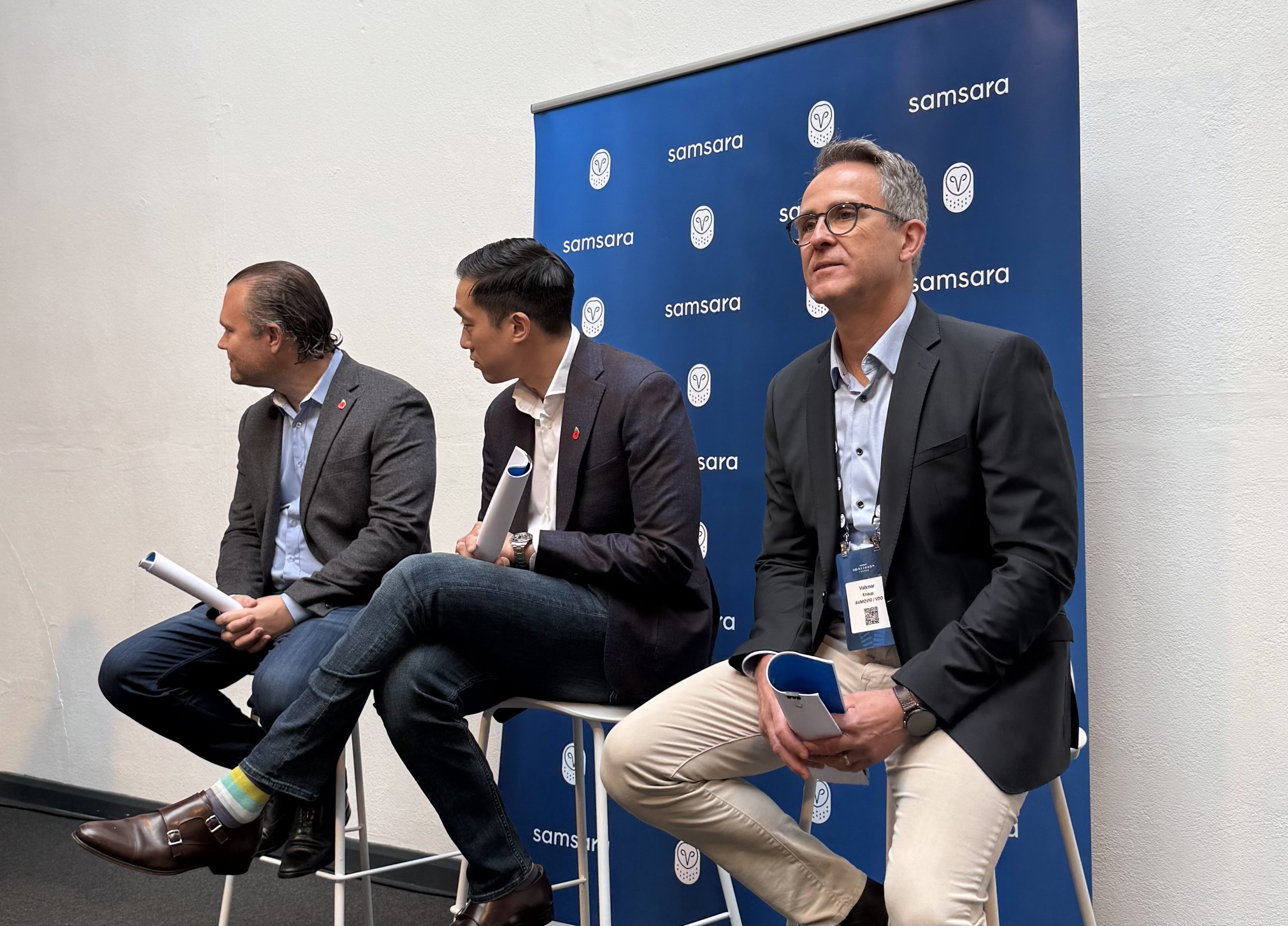
Fresh from unveiling its AI-powered logistics ecosystem at Go Beyond 2025 in London, Samsara has announced a new strategic partnership with VDO, a company they consider to be one of Europe’s most respected names in compliance technology. The collaboration promises to turn one of fleet management’s biggest headaches, compliance, from a reactive task into a proactive advantage.

The move extends Samsara’s philosophy of building an all-in-one connected operations ecosystem, rather than relying on add-ons or bolt-on tools. By combining Samsara’s AI, telematics and safety data with VDO’s proven compliance expertise, the partnership aims to deliver a seamless experience that anticipates issues before they become problems.

From enforcement to foresight

Fleet compliance has long been a reactive process, dominated by manual checks, complex regulations, and data silos. With this partnership, Samsara and VDO are working to automate compliance workflows and integrate them directly into daily operations.

Using Samsara’s intelligent platform, operators can now manage tachograph data, driver hours, and infringements in real time. The system analyses patterns and flags risks before violations occur, helping businesses stay compliant while reducing administrative burden.

As part of its new Smart Compliance suite, the collaboration enables fleets to unify data from vehicles, drivers, and equipment, turning regulatory reporting into a continuous, data-led process.

Data privacy and trust

Samsara was clear at the event: as its ecosystem grows more intelligent, trust and data privacy remain at the core. The company processes over 17 billion minutes of video data per year, much of it used to train and improve safety AI models.

However, customers retain full control of their data. They can configure cameras to operate only at certain times, places, or events, or even switch them off entirely. According to Samsara, many organisations that begin with hesitation soon change their perspective once they see the results.

One compelling example came from VP Brandon Hire, a Samsara customer VP, who recounted how a driver facing up to five years in prison after a motorway collision was exonerated thanks to footage from Samsara’s in-vehicle cameras. The AI-verified video evidence proved the driver was not at fault.

Check out our webinar with Samsara, The RHA and VP Brandon hire from earlier this year: Harnessing data and AI for smarter, safer commercial vehicle operations is almost here

Local intelligence, global insight

Samsara’s approach to AI goes beyond the cloud. Its camera systems process data locally, providing real-time alerts and insights to drivers, even in areas with no network coverage. Once reconnected, this data is synchronised with Samsara’s servers, where it contributes to broader models analysing trends such as weather, hazards, and traffic conditions.

The company operates its own European data centres, ensuring compliance with GDPR while allowing customers to maintain full data ownership. Shared, anonymised data from across the network enhances predictive insights and benchmarking for all users, effectively allowing fleets to learn from one another’s experiences without compromising privacy.

Tackling rising crash rates with AI

Safety remains at the heart of Samsara’s mission. Johan Land, Senior Vice President of Product and Engineering for Safety and AI at Samsara, noted that road incidents are rising rapidly across industries, but that AI is already showing its potential to reverse that trend.

Crashes are increasingly, rapidly increasing… But you can really reverse that trend with AI.

By combining predictive analytics, local AI processing, and proven compliance expertise from VDO, Samsara is positioning itself as a trusted partner in what it calls the “age of intelligence” – where data isn’t just recorded but actively used to keep drivers safer and operations smarter.

For the logistics sector, the message is clear: the future of compliance is no longer about catching mistakes. It’s about preventing them.

Subscribe

Get notified about New Episodes of our Podcast, New Magazine Issues and stay updated with our Weekly Newsletter.