Flabelus Chooses UK Fulfilment Operations Hub

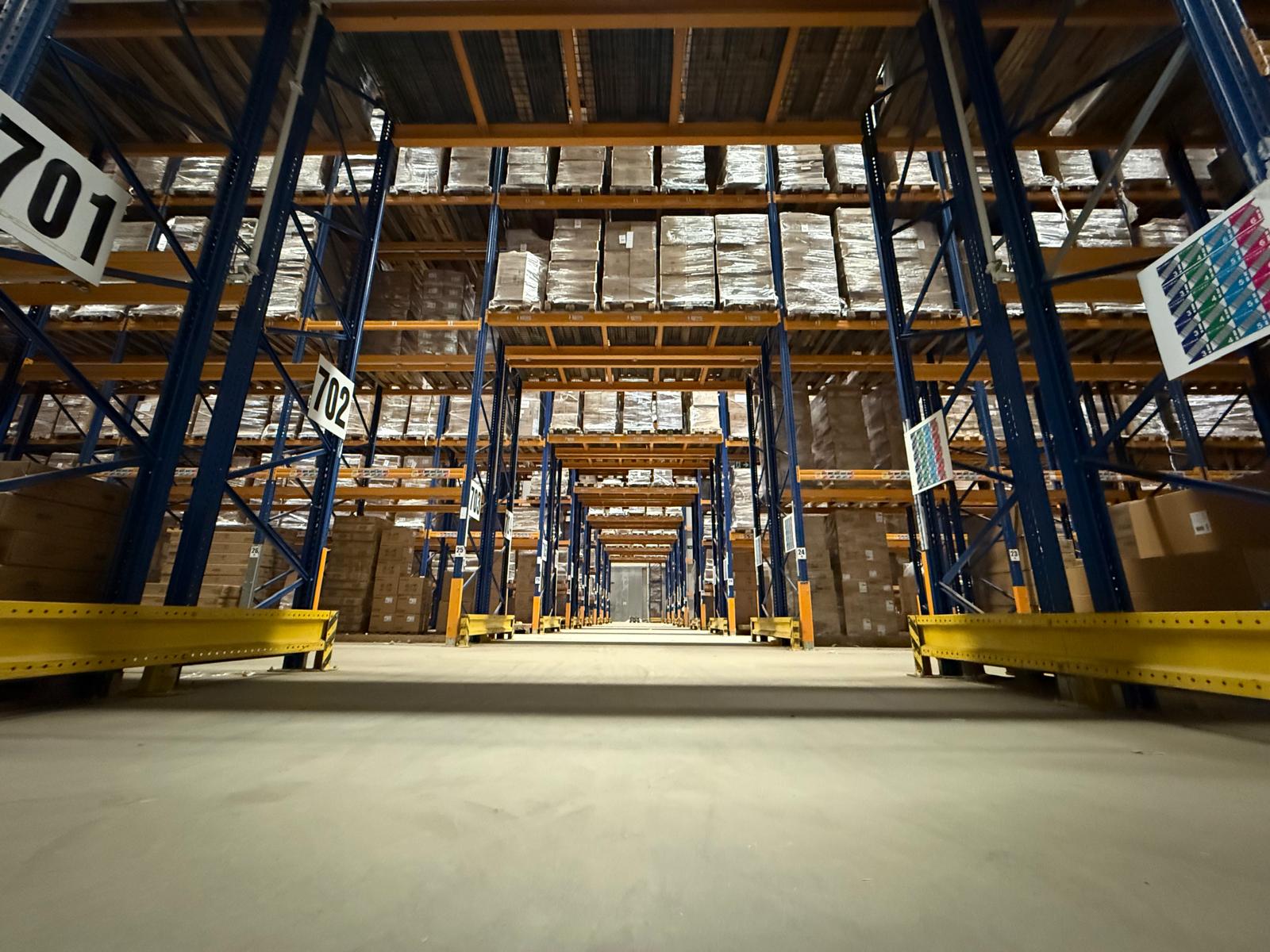
Spanish fashion brand Flabelus has gone live with Bleckmann, a specialist in supply chain management for fashion and lifestyle brands, as its exclusive fulfilment partner in the UK. The brand, which manufactures the majority of its products at its factory in Elche, Spain, selected Bleckmann to help reduce lead times to its expanding UK customer base, spanning monobrand stores, retail partners and ecommerce. Bleckmann’s perceived expertise in omnichannel fulfilment excellence, combined with its advanced IT platform, made it a natural choice for this brand.

Authentic style, seamlessly delivered

Founded in 2020, Flabelus has built a loyal following – including a number of high-profile admirers – on the strength of its reputation for quality, craftsmanship and authentic design. That reputation has driven rapid growth over the past five years, with the brand now operating 31 owned stores across Spain, New York, Los Angeles, Paris, Milan, London, Lisbon and Mexico City. In total, Flabelus’ signature espadrille designs are now available at 700 stores worldwide. As María Fernándes-Álva de Zunzunegui, Global Operations Director at Flabelus, explains:

“Prioritising the customer at every stage has been central to our growth, and we hold our partners to the same exacting standard. Bleckmann has demonstrated the ideal balance of logistical expertise and commitment to service excellence.”

Delivery speed is central to this commitment. All of Flabelus’ UK omnichannel fulfilment operations will be run from one of Bleckmann’s in-country distribution centres, in Burton-on-Trent, which is situated within the UK’s ‘logistics golden triangle’. This strategic location enables faster fulfilment times to both ecommerce and retail customers. With an extensive and well-established transportation network in the country, including a dedicated pool of ‘Local Hero’ last-mile partners ensures reliable nationwide reach. This is further supported by full integration with Flabelus’ ecommerce operations and inventory management systems, giving both teams real-time visibility across the entire fulfilment chain. This end-to-end omnichannel set-up gives Flabelus full oversight of the entire delivery cycle, from outbound to returns and exchanges – ensuring that all customer touchpoints can be optimised to reflect the brand’s premium positioning.

Navigating cross-border complexity

As Flabelus’ global footprint has grown, so too has the complexity of its cross-border logistics. Shipping from Spain to the UK brings a significant post-Brexit administrative workload: under current trade agreements, products originating in the EU benefit from zero-tariff treatment, but importers must provide valid proof of origin. Bleckmann’s dedicated customs teams – operating on both sides of the Channel and supported by an integrated customs framework – ensure efficient and compliant declaration filings, streamlining a complex and time-consuming process for the Flabelus team. In addition, Bleckmann’s growing presence in Spain, with established transportation networks and dedicated fulfilment hubs, ensures end-to-end supply chain oversight for all B2B and B2C orders.

Unburdening ambitious brands to focus on growth

The Flabelus launch is a strong example of Bleckmann’s approach to designing fulfilment solutions around the needs of the client – backed by decades of industry-specific experience. Every aspect of the partnership has been shaped to meet Flabelus’ operational requirements, unburdening them fully so they can accelerate their commercial ambitions. For example, warehousing space has flexibility built in, providing room to scale as Flabelus continues to grow its UK presence. As Fernando Sainz Martinez-Vara de Rey, Business Development Director at Bleckmann, said:

“Fast-growing brands need a partner who can manage the full picture – from freight forwarding and customs to warehousing, last-mile delivery and returns – so they can keep their focus firmly on growth. That’s our role.”

Turn Invisible Assets into Measurable Savings

One of Europe’s largest manufacturers of boilers and heat pump systems, Vaillant, produces 166,000 units per year across a 48,000 m² production facility. Supporting that output is an internal logistics operation built around a fleet of 1,500 to 1,600 trolleys and logistics trains, mobilised continuously through sheet metal fabrication, painting, assembly, and line delivery. Until recently, none of those assets carried any form of electronic tracking.

Fleet management depended on manual inventory counts, typically recorded in Excel spreadsheets. During planned site closures, multiple sequential counts were sometimes required before a reliable baseline could be established. As production volumes grew, locating specific equipment quickly, identifying assets that were in active use, and anticipating shortfalls before they disrupted operations had become increasingly difficult. The business was averaging approximately three unplanned logistics disruptions per month as a direct consequence.

“The industrial process may seem straightforward, but it remains complex to manage day to day. Data allowed us to objectify our flows and move from a very manual approach to decisions based on factual evidence,” comments Adrien Guihery, Digital Transformation Project Manager, Vaillant.

Tender, pilot and deployment

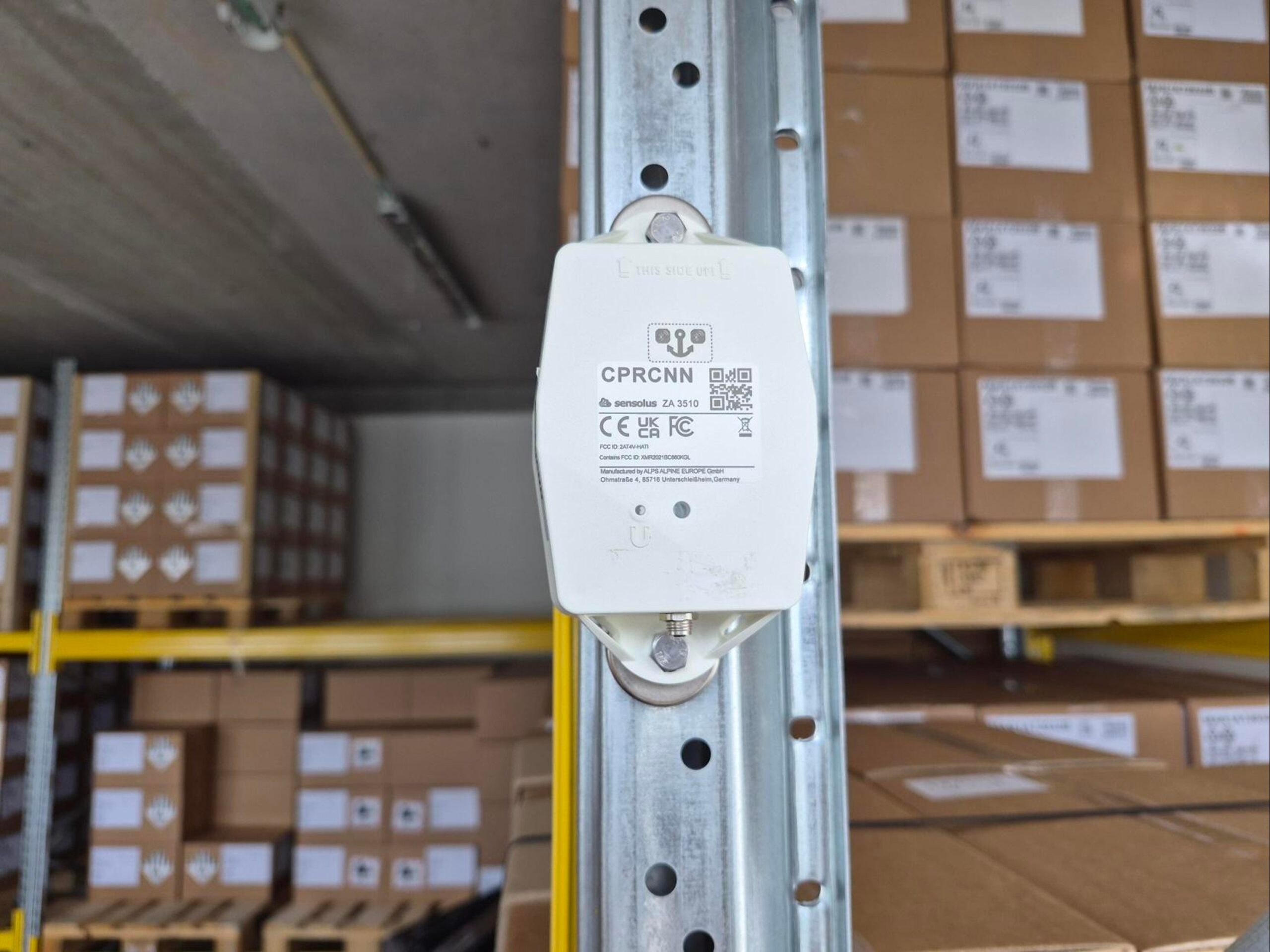
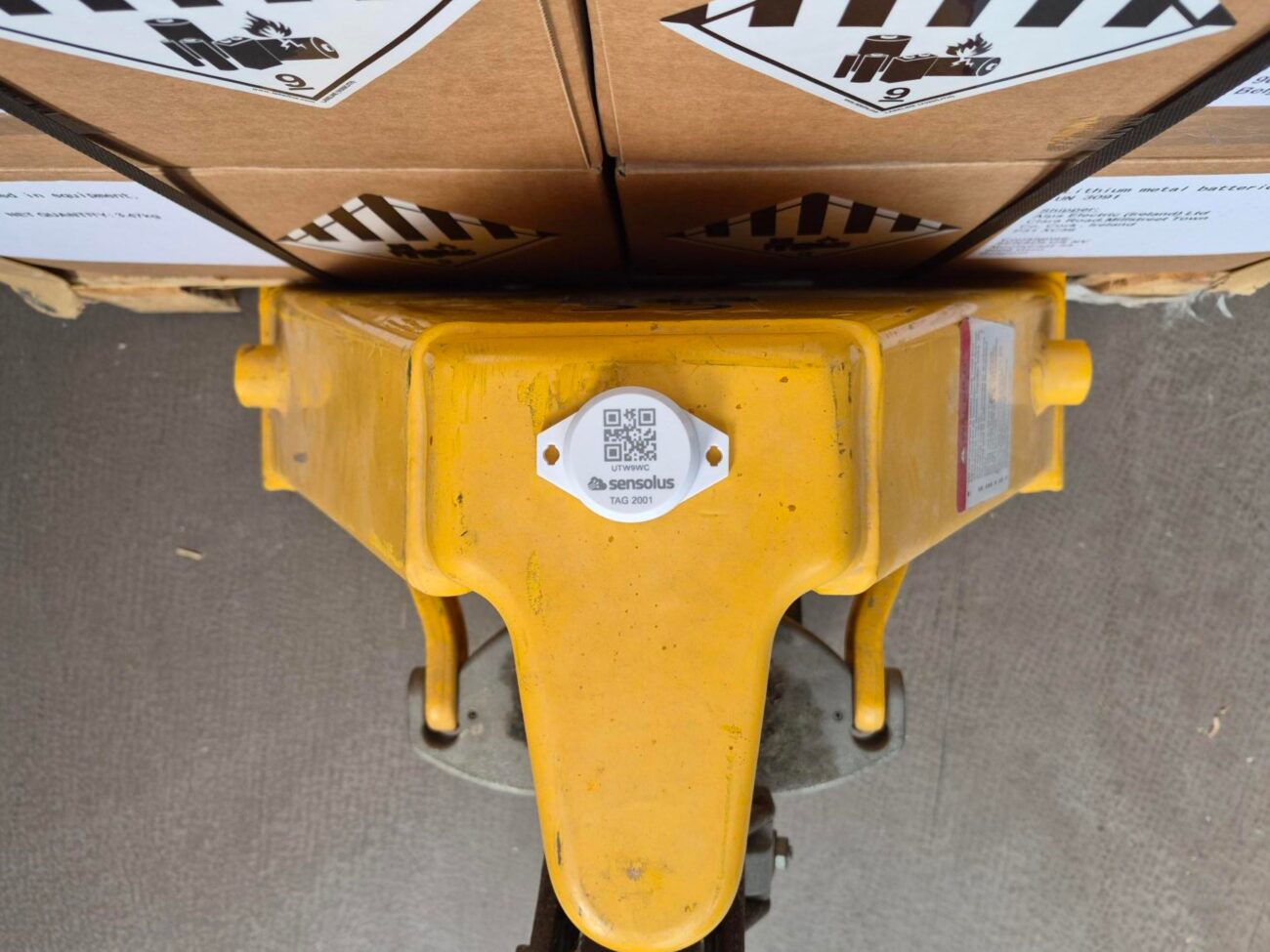
In 2024, Vaillant ran a competitive tender across three suppliers with a clearly defined brief: deliver actionable data quickly, at a justifiable cost, and without requiring additional infrastructure on the shop floor. Sensolus was selected and an initial pilot was scoped deliberately to limit commitment: approximately 40 Bluetooth IoT trackers deployed on a working subset of trolleys and logistics trains, sufficient to validate the technology against real flow conditions.

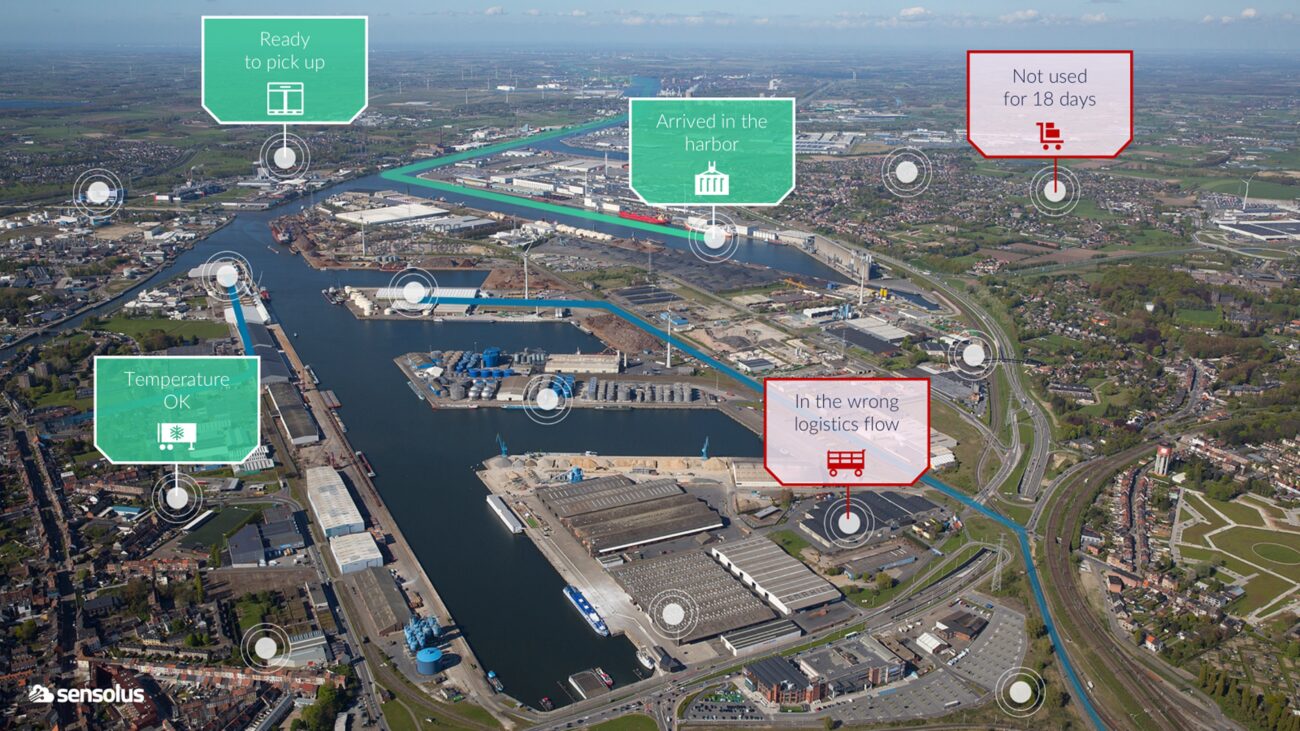
The Sensolus solution operates without fixed reader infrastructure, using Bluetooth Low Energy technology to provide reliable zone-level location data across the facility. The platform is accessible directly to site teams via an intuitive dashboard, requiring no integration with existing ERP or WMS systems. Within less than a month of the pilot going live, the data was already providing factual insight into asset movement and actual equipment utilisation, sufficient for Vaillant to commit to full deployment.
By 2025, the entire fleet had been equipped, with the rollout completed over a short, controlled period. The tracking data was integrated directly into daily operations and used to structure Value Stream Mapping (VSM) analysis, enabling the logistics team to base operational decisions on measured data rather than estimation.

“We were looking for a solution that was immediately operational, simple to deploy, and economically sustainable. The quality of our exchanges with the Sensolus team also counted, particularly when it came to supporting targeted optimisations where needed,” adds Guihery.

Bluetooth IoT trackers

The most immediate financial benefit arose from asset rationalisation. Tracking data quickly identified a significant number of trolleys that were rarely or never in use. A portion of those dormant assets was redirected to an external storage provider, allowing Vaillant to draw on the reallocated stock when a subsequent project created demand for additional equipment, rather than procuring new assets. The saving on that single project was approximately £26,000 in avoided capital expenditure.

Operationally, the platform’s shortage alerting capability addressed the recurring disruption problem directly. Zones approaching a shortfall are now identified in advance, enabling proactive reallocation of assets rather than reactive response to a line stoppage. This has delivered both productivity gains and, as Vaillant notes explicitly, a significant reduction in the day-to-day burden on the logistics team. Within the first few months of full deployment, trolley utilisation had improved by approximately 5%. Return on investment across the programme was reached in approximately 1.2 years.

“The solution is simple to deploy and, after just a few months, we have already seen around a 5% increase in the utilisation of our logistics trolleys,” Guihery explains.

Ongoing development

With one year of historical data now accumulated, Vaillant is extending the platform’s application beyond location and shortage management. The Sensolus system is now being used to structure both corrective and preventive maintenance: identifying assets requiring repair, directing them to dedicated maintenance zones, and scheduling interventions from data rather than reactive response. Tasks previously managed manually have been automated and made more reliable as a result.

The collaboration has also involved a degree of co-development. Working with the Sensolus team, Vaillant has refined Bluetooth signal quality and improved zone discrimination across the production facility – a technical challenge specific to dense manufacturing environments where zones sit in close proximity. Hardware reliability across the deployment has been strong, with a single defective tracker identified and replaced promptly.

“We haven’t yet tapped 100% of the potential, but we know the data is there. It will give us the keys to sustainably optimise our logistics system,” says Guihery.

Cyril Jouanlanne, Key Account Manager, Sensolus, also adds: “Industrial companies are looking for solutions that are simple to deploy and produce reliable, actionable data. IoT tracking allows asset usage to be objectified, time losses reduced, and continuous improvement grounded in measurement rather than estimation.”

The deployment described in this case study was carried out at Vaillant’s production facility in Nantes, France, which manufactures boilers and heat pumps for European markets.

Camera System Detects Pedestrians Near Forklifts

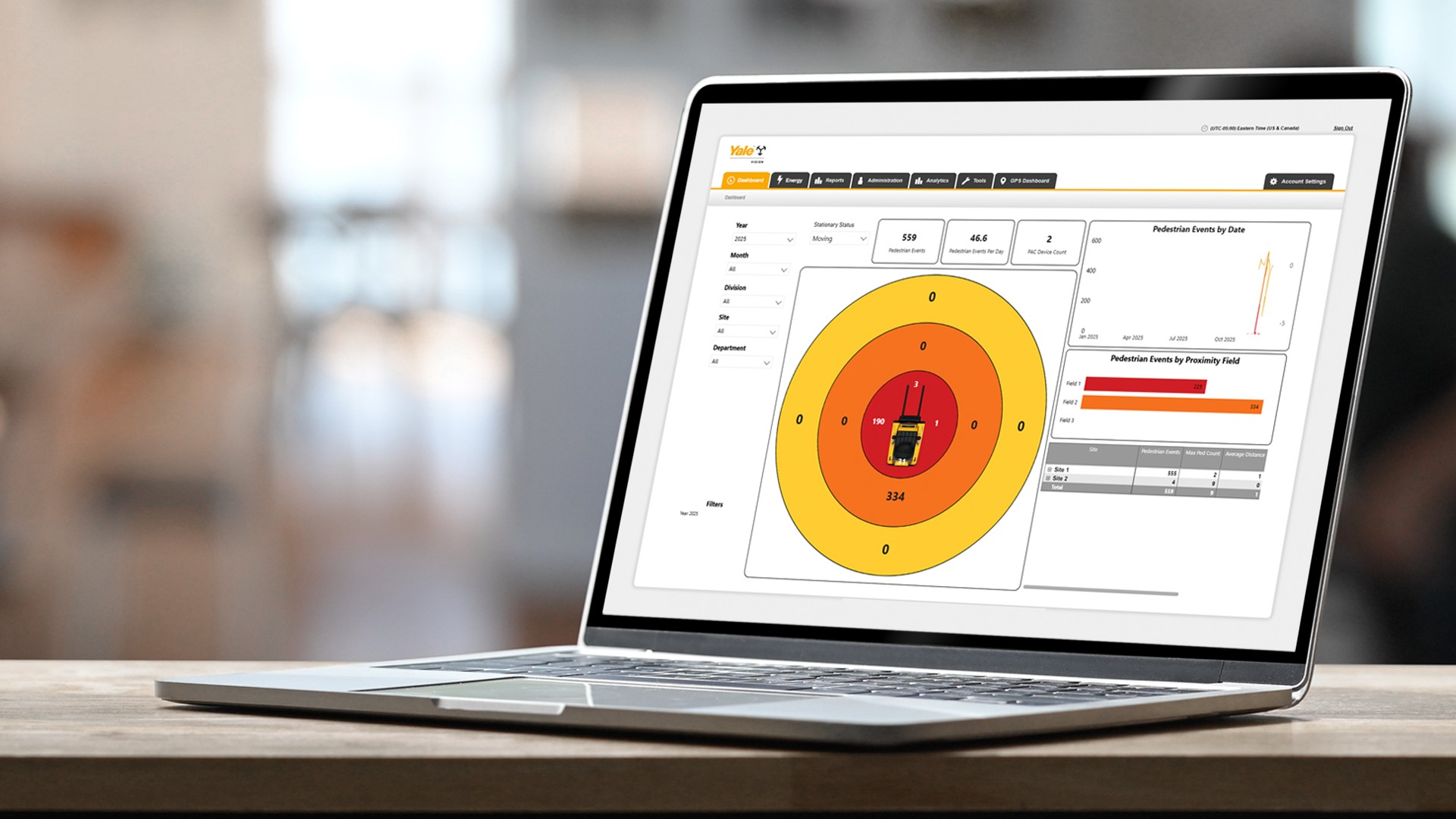
A pedestrian detection event dashboard that identifies pedestrians at ranges up to 5 metres of a lift truck has been launched by Yale Lift Truck Technologies. This information allows warehouses to better understand operator and pedestrian behaviour as it relates to forklift safety. They can also take action to help reduce the risk of accidents, such as updating pedestrian boundaries and having coaching discussions.

The dashboard is available at no additional cost to customers who already use the ‘Yale Reliant’ pedestrian awareness camera and the advanced tier of the ‘Yale Vision’ Wireless Verification telemetry solution. The camera system was developed using extensive amounts of real-world photographic data and adapts to various lighting and environmental conditions to track for physical human features, which enables increased data accuracy compared to just using heat to detect pedestrian presence.

Key information operations can learn from the system include the total number of pedestrian events across the fleet of equipped lift trucks, time and date of events, proximity, location of events around the lift truck, and number of events per machine. Additional details on each event, such as whether the lift truck was stationary or in motion are also provided.

“In an industry with tight margins and unforgiving productivity expectations, operations cannot afford the financial and productivity impact of forklift-related accidents and injuries,” says Josh Eby, Global Product Manager, Yale Lift Truck Technologies. “The new dashboard captures pedestrian detection events to equip operations with critical information. Then they can take action that can help reduce the likelihood of such accidents.”

The Yale Reliant pedestrian awareness camera, launched in 2025, can accurately identify pedestrians at ranges up to 5 metres through a 110-degree field of view and provides automatic alerts to the lift truck operator when a pedestrian is detected. Operations can get the camera system with audible and visual alerts only. This includes a voiceover communicating pedestrian proximity and a light indicating which zone the pedestrian is in on the lift truck-mounted operator remote. Alternatively, they can choose a solution with optional traction alerts that automatically and gradually slow down the lift truck. This encourages lift truck operators to take action to avoid the detected pedestrian by slowing down, steering away, or both.

ECommerce Fulfilment Boosts Throughput by 20%

Real-time warehouse and shipping synchronization improves efficiency, cuts error rates and ensures peak season resilience for premiumXL part of H.T. Trade Service GmbH. The project has transformed fulfilment across its distribution centres in Emsdetten and Osnabrück using Infios’ Warehouse Management alongside Infios’ Shipping & Dispatch System (SDS).

The deployment delivered a 20% uplift in throughput, a 17% reduction in labour dependency and significantly reduced error rates. It also helped premiumXL manage 1m+ annual orders across its own webshops and 20+ marketplaces, each with distinct SLA requirements. Operations remained stable during peak demand on Black Friday 2025.

premiumXL ships more than one million orders annually through its own web shops and more than 20 online marketplaces across Europe. Its portfolio spans furniture, garden and household products, encompassing more than 5,000 SKUs across six proprietary brands. Each marketplace operates under distinct service level agreements (SLAs), adding operational complexity to high-volume fulfillment.

As premiumXL has expanded volumes have increased, demand patterns have fluctuated and customer expectations have risen, with existing processes struggling to keep pace. At the same time, labour shortages and cost pressure intensified the need for greater efficiency and operational stability.
To create a scalable execution foundation, the company implemented Infios WM alongside a Shipping & Dispatch System (SDS), with SDS enabling intelligent carrier selection aligned to destination and marketplace SLA requirements. Together, the solutions orchestrate inventory, picking, packing and shipping in real time – delivering greater transparency, control and consistency across daily operations.

Infios WM streamlines inventory handling and accelerates onboarding through intuitive, standardized workflows, enabling premiumXL to deploy staff more efficiently while maintaining high service levels. Its standardized core platform, combined with modular, configurable capabilities, adapts to diverse warehouse environments – from growing SMB facilities to highly automated enterprise centers – while delivering continuous innovation without disruptive upgrades.

These improvements were not only evident in daily operations – they were proven under peak demand conditions. During Black Friday 2025, the platform handled extreme volumes while maintaining stable warehouse operations and consistently high service levels.

“With Infios, we have achieved measurable and sustainable improvements across our entire logistics operation,” says Hermann Reklin, Director of Processes and People, H.T. Trade. “We are processing orders more efficiently, accelerating inventory turns and improving working capital performance, while reducing labor dependency and minimizing errors. At the same time, onboarding new employees has become significantly faster and more straightforward.”

“In today’s fast-moving e-commerce environment, companies need execution systems that are flexible, scalable and resilient,” says Dirk Teschner, Senior Vice President and Managing Director at Infios. “Our WM and SDS solutions help retailers like premiumXL synchronize warehouse and shipping decisions in real time – enabling them to scale efficiently while protecting service and profitability.”

As part of Infios’s intelligent supply chain execution framework, the combined WM and SDS deployment provides premiumXL and H.T. Trade with a modular foundation that can evolve alongside business growth, new sales channels, and changing customer expectations – turning operational excellence into sustained competitive advantage.

Day 1 of Logistics Regulations Enforcement

A wake-up call is coming for retailers, manufacturers and logistics teams who believe that new logistics regulations enforcement is someone else’s problem, writes Koert Bloemers, Founder & CEO, Van Express and a cross-border logistics specialist with 25 years of operational experience across Europe.

For years, vans operated in the grey zone of European logistics, moving high-value and urgent goods across borders with a flexibility trucks could not offer.  Without obligatory breaks and resting times, driver hours were barely controlled, allowing workers to drive night and day, performing deliveries in record times. The result of these practices evolved into the principle that what is not traceable, it’s doable.

I have spent 25 years building and running cross-border logistics operations. I understand why those models existed. In many cases, I watched them emerge from genuine commercial necessity: from clients demanding the impossible, and operators finding ways to deliver it.

However, we all know this is coming to an end as of 1 July 2026 with the new EU social rule enforcement extending to light commercial vehicles over 2.5 tonnes and operating internationally. The question that remains now is: are carriers ready for these changes? And how many vans will actually be left out once the summer rules hit?  

The First Days Will Look Like a Collapse

The most common assumption I encounter when speaking with logistics directors and supply chain teams is that July 2026 will arrive with a surge of roadside checks, a wave of fines, and a period of adjustment before things stabilise. However, the most noticeable consequence will be the lack of vans arriving at their destination. 

Smart Tachograph 2 technology gives enforcement authorities something they have never had before in the van segment: real-time, data-driven visibility. 
● Border crossings are logged automatically every three hours. 
● Driving and rest periods are recorded with precision. 
● Remote DSRC scanning allows vehicles to be pre-screened and flagged before they reach an inspection point.
A van crossing multiple borders overnight with a single driver, no documented breaks, and no structured rest planning is non-compliant, and carriers need to understand that this is now visible and their vans WILL be stopped. 

In the first weeks after enforcement begins, checks will concentrate on exactly the routes where LCVs have historically replaced or supplemented HGV operations: cross-border routes between logistics hubs, time-critical industrial corridors, and overnight lanes serving distribution centers. 

When a vehicle is stopped, inspectors will look at cumulative driving time, missing breaks, rest-period violations, and historical infringement patterns from the previous 28 days. A van may be cleared and released. Or it may be immobilised on the roadside until compliance is restored.

The New Route Length

To understand the operational impact, you need to understand what the new rules actually mean for a real journey. Take a common express route: a single LCV departing a German logistics hub at 14:00, bound for a production plant in Spain 1700 kilometers away, with a hard delivery window at 07:00 the following morning. Under the current model, this is a 17-hour overnight route that has worked reliably for years.

Under the rules that apply from July 2026, that same journey requires a mandatory 45-minute break after 4.5 hours of driving. The driver then reaches the legal daily driving limit of 9 hours, somewhere still 600 kilometers short of the destination. At that point, they must stop for a mandatory 11-hour rest period.
Instead of arriving at 07:00, the van will now arrive in the late afternoon of the following day, leaving the production line delayed for 8 hours.

The response from prepared operators depends on redesigning the current routes and operations to fit the new regulations: these are the early adopters that will capture the market when the others will see their vans stopped. Relay systems, where a second driver takes over at a pre-planned handover point, can restore delivery timing and maintain full compliance. But relay systems require infrastructure, coordination, and cost structures that most current contracts do not reflect.

The Cascading Consequences of Non-Compliance


In my experience, the single most dangerous belief circulating among manufacturers and retailers today is that ‘This is a carrier’s problem’. When a logistics operator is stopped at the border, delayed at a rest area, or forced into an unplanned 11-hour rest mid-route, the downstream consequences immediately travel into the supply chain: 
● Production schedules get affected, causing heavy losses; 
● Store replenishment windows close, affecting retail and last-mile deliveries;
● Promotional launches miss their dates, leading to loss of trust, credibility revenue;
● Customer service teams field complaints.

This being said, most supply chain leaders will heavily experience the consequences of the regulations without ever even seeing the cause. And because modern supply chains are engineered for efficiency rather than resilience (running on minimal buffers, tight delivery windows, and JIT inventory models),  there is very little capacity to absorb even a short delay. 

The most exposed organisations are therefore the ones who have built their supply chain models around the assumptions that LCV-based express logistics will continue to operate exactly as it did until now (not under the HGV regulations). 

The Real Extent of the Enforcement


There is a second layer to the 2026 enforcement framework that receives far less attention than tachograph requirements, and that I believe will ultimately prove more disruptive for unprepared organisations. When EU social rules apply to a vehicle, they will actually apply to the entire planning and operational structure, including the driver, but very much beyond them.

Working-time documentation becomes mandatory and auditable, posting-of-workers declarations must be filed before cross-border assignments, and cabotage cooling-off periods apply to van operations that previously bypassed them entirely. And critically, liability for systematic planning violations does not stop at the operator level.

At this point, authorities examining patterns of infringement will look at the organisational misplanning as a whole, with routes designed and planned beyond legal limits (which can no longer be attributed to the driver alone), schedules designed to extract compliance-impossible performance, and dispatch systems that flag violations and override them anyway.

The consequences will intrinsically fall under the whole organisation and can lead to loss of operating licenses, cross-border enforcement escalation through the IMI system and of course, reputational consequences that extend far beyond a single fine.

The companies I have spoken to who are genuinely prepared for 2026 already installed tachographs, are redesigning their planning logic, rewriting their contracts and are having honest conversations with clients about what professional cross-border logistics will cost after the regulations are enforced.

Assuring Companies Are Ready 

In my work across automotive, pharmaceutical, and e-commerce logistics networks, I have seen both ends of the preparedness spectrum, and I believe the hardest part to adjust will be the cultural one. 
At this point, operators should have already mapped their highest-revenue lanes against legal driving limits, know exactly where relay points are needed, and have the infrastructure in place. Most of them are also already retraining their dispatchers on new scheduling rules and recalculating their prices to reflect the new costs. 

Even if the changes are not coming for another couple of months, these adjustments will take time and leaving them as a ‘May problem’, may result in a whole fleet flagged and stopped. Explaining to clients exactly what is happening and how it will affect them is also an important part of the process. Not all clients will understand at first, and these are the ones who will be facing more serious issues with delayed deliveries and out-of-stock problems. 

The clients who understand what is changing are the ones who will make better procurement decisions. They will choose operators who can prove compliance and accept pricing that reflects real cost. In exchange, these are the companies that will not see their deliveries and production lines affected once the regulations are in place. 

For retailers and manufacturers, the questions that should already be in circulation are straightforward. 
● How are mandatory rest periods built into our critical delivery lanes? 
● What is our contingency when a vehicle is stopped mid-route? 
● Which parts of our supply chain depend on single-driver overnight operations that are no longer legally viable? 
● And does our current transport pricing reflect what compliance actually costs?
These are the strategic questions that will dictate how businesses will be positioned in the market in July 2026.

The Competitive Landscape Shift


There is something that I feel often gets lost in compliance conversations: what we are facing here is a market reset and this is valid to both operators who decide to be compliant vs the ones who don’t; but is also valid for clients that take seriously the new regulations vs the ones who will decide to just risk it and ‘see what happens’. 

Non-compliant operators will become unreliable and risk disappearing. Enforcement will find them because now the data will be available at all times and for every operator in business.  The operators who have invested in compliant infrastructure, relay networks, and transparent pricing will be positioned to absorb that business and capture their clients. They will have the track record, the data, and the client relationships to demonstrate that reliable, professional cross-border logistics is possible under the new rules.

Conclusion

I have been in this industry long enough to know that logistics professionals are resilient, quick to adapt and to find solutions. They deliver under conditions that would stop most other sectors. But adaptation requires time and for many operators and supply chain leaders, the clock has already run further than they realise.

The first days of 2026 enforcement can be catastrophic but only for operators who choose to overlook the consequences. For prepared operators and their clients, July will arrive like any other month with running routes, completed deliveries, and compliance data flowing cleanly through the new system.

About the Author: 
Koert Bloemers is the Founder and CEO of Van Express and author of The 2026 EU Logistics Transformation Playbook. He has spent 25 years leading cross-border express logistics operations across Europe and the Middle East, specialising in time-critical and high-value freight. He speaks regularly at European logistics and supply chain events on compliance transformation, operational resilience, and the professionalisation of light commercial vehicle transport.

The Robotics Upgrade Transforming Ecommerce Fulfilment

THG Fulfil has reported a major step-change in its automation strategy following the successful implementation of Libiao Robotics’ T-Sorter technology, significantly boosting sortation capacity, throughput and accuracy across its operations. The transformation strengthens THG Fulfil’s ability to meet surging global ecommerce demand, particularly during high-pressure peak trading periods, marking a significant milestone in the company’s logistics innovation programme.

Driven by the sustained growth of ecommerce and increasing order volumes across key sectors like beauty, nutrition, fashion, electronics and houseware, THG Fulfil proactively addressed specific operational pressures within its sortation and batching capabilities, which included capacity constraints, high peak labour dependency, and fixed infrastructure limitations. The successful partnership with Libiao Robotics, a global leader in intelligent sorting solutions, has enabled the implementation of a cutting-edge robotics system that resolves these challenges with tangible results.

The solution involved the strategic deployment of 14 induction stations with 80 Libiao 3D sorters, enabling dynamic sortation across 3,840 destinations. A total of 430 robots were integrated, successfully unlocking substantial additional capacity to efficiently support batch picking operations. The adoption of a Robotics-as-a-Service model proved crucial, negating heavy upfront capital expenditure and allowing for flexible scaling precisely aligned with fluctuating market demands. This sophisticated system achieved full integration with THG Fulfil’s existing Warehouse Management System (WMS) within a rapid 35-day timeline, with full target volume ramp-up accomplished within just one week.

The Libiao T-Sorter deployment has yielded immediate and measurable operational impacts. A single facility at THG Fulfil has seen its sortation capacity surge from 250,000 to an impressive 625,000 units per day. The system now consistently achieves an incremental 11,151 units per hour throughput, marking a significant 34% increase against initial targets. Crucially, the solution demonstrates exceptional reliability with 99.9% sort accuracy and 99.9% system uptime, ensuring consistent, quick dispatch and next-day cut-off times as late as 1am. This enhanced efficiency has also resulted in a reduction of 45 full-time equivalent employees at a 200,000 daily volume, substantially lowering labour dependency and cost-to-serve while significantly mitigating operational risk during peak periods.

THG Fulfil’s world-class fulfilment infrastructure is further supported by continued investment in warehouse facilities and AI-driven fulfilment technology. With integrated access to over 250+ courier partners across 195 countries, THG Fulfil provides a truly global ecommerce fulfilment solution, powered by machine learning and seamlessly controlled by proprietary software. Additionally, THG Fulfil is an official distributor of Libiao Robotics, providing clients with direct access to these cutting-edge automation solutions

Subscribe

Get notified about New Episodes of our Podcast, New Magazine Issues and stay updated with our Weekly Newsletter.