
Shrinkflation’s Hidden Logistics Cost

Shrinkflation is usually framed as a consumer affordability issue. But behind every lighter cereal box, smaller snack bag, or reduced beverage multipack sits a much larger operational challenge: packaging downsizing is quietly reshaping logistics networks.

Fresh U.S. data from InvestorsObserver, which tracked leading grocery brands including Frosted Flakes, Doritos, M&M’s, Coca-Cola and Campbell’s from 2020 to 2026, shows how significant the shift has become. The study found that the average family of four now pays an extra $741 each year for the exact same groceries, driven by a combination of price increases and reduced pack sizes.

The consumer numbers are stark. Coca-Cola mini cans now cost 127% more per ounce than the 2L bottle, M&M’s has seen a 102% increase in price per ounce, and Frosted Flakes now costs 51% more per serving while delivering fewer servings per box. Perhaps most revealing is the deliberate two-step strategy identified across multiple brands: raise the price first, then quietly reduce the package size later, once shoppers stop paying attention.

For supply chain leaders, the implications go far beyond the shelf edge.

More Units, More Touches

When pack sizes shrink, households often buy more units to maintain the same level of consumption. That means the same real demand can generate higher unit volumes through the network, increasing pick rates, replenishment frequency and shelf restocking activity.

For warehouses and distribution centres, this translates into more touches, greater labour intensity and increased cost-to-serve, even when the total tonnage moved remains broadly unchanged.

Packaging Changes Create Operational Friction

Shrinkflation also introduces packaging volatility. Even small dimensional changes can force updates to case counts, pallet patterns and warehouse slotting logic.

In highly automated environments, those seemingly minor changes can create disproportionate disruption. Robotics, sensors and sortation systems rely on dimensional consistency, so repeated pack-size revisions can lead to more manual intervention, slower throughput and higher exception handling.

Transport Efficiency Takes a Hit

There is also a transport paradox at play. Products may become lighter without shrinking proportionally in cube, especially when shelf-ready packaging requirements remain the same.

This reduces trailer and container utilisation, meaning operators often move less sellable product value per trip, raising both freight costs and emissions intensity.

The Planning Distortion

One of the most overlooked effects is on demand forecasting. Rising unit sales can give the appearance of growth, when in reality consumers are simply purchasing more smaller packs to achieve the same usage.

Unless planners normalise for servings or price-per-ounce, shrinkflation can distort transport planning, labour models and inventory forecasts.

The fact that many brands first increase price and only later reduce pack size makes the signal even harder to detect operationally.

A Supply Chain Issue, Not Just a Pricing Tactic

Shrinkflation is no longer just a commercial decision. It is increasingly a network design issue that affects warehousing, transport productivity, automation performance and forecasting accuracy.

Consumers may feel the impact at checkout, but logistics businesses feel it across the entire supply chain.

The pack may be smaller, but the logistics challenge is getting bigger.
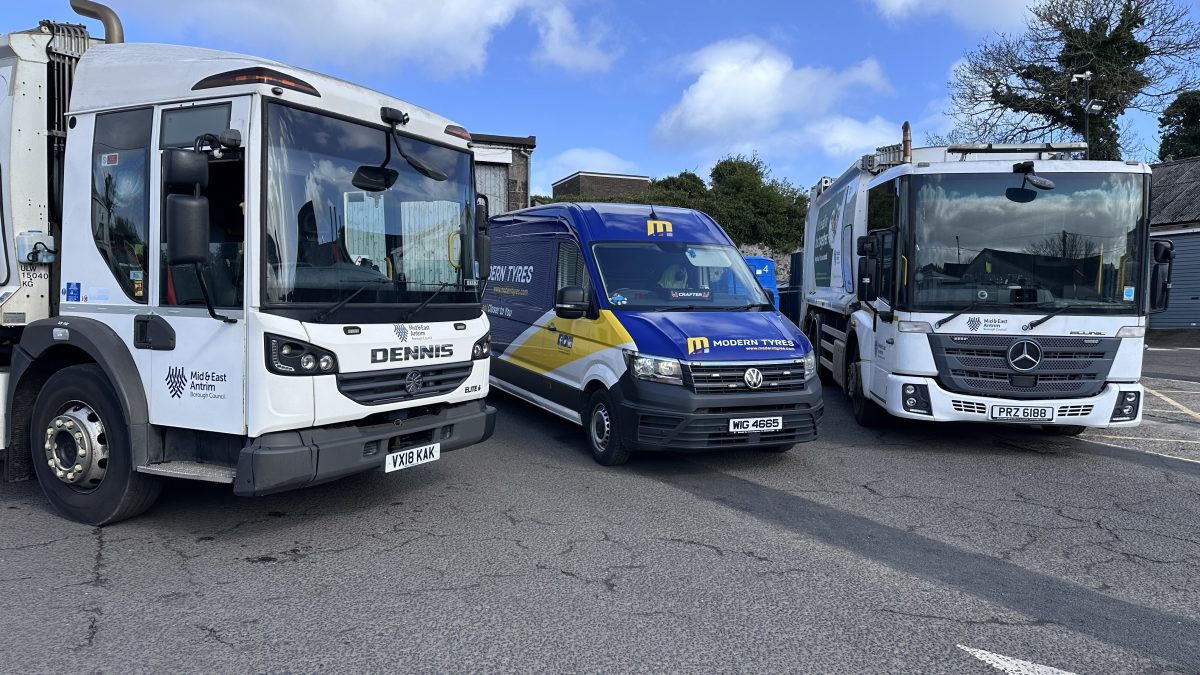
Council Boosts Fleet Efficiency with New Tyres

Northern Ireland’s Mid and East Antrim Borough Council has significantly improved the efficiency of its 160-strong vehicle fleet, cutting CO² emissions by 27.7 tonnes over three years, thanks to its switch to Michelin tyres.

Since 2021, the council has equipped its vans and trucks exclusively with Michelin tyres, after previously using a mix of brands, and continues to work with the company through the UK Government’s CCS framework.

A council spokesperson said: “I think it’s the best thing we’ve ever done. Opting for Michelin tyres through the CCS guaranteed that we were engaging with a quality provider from the start. We’re now more than four years into our relationship, and by adopting a multi-life Michelin tyre policy for our HGVs, and the general improvement seen in the longevity of the tyres across our fleet, we’ve demonstrated strong lifecycle value, boosted efficiency and delivered sustainability savings.”

The council’s fleet includes 100 vans providing services from dog wardens to medical and welfare checks, as well as parks maintenance, and 60 HGVs, including 32-tonne hook loaders and 26-tonne refuse collection vehicles. The fleet operates 24/7 in all weather, with performance, safety, and compliance key priorities.

By adopting a multi-life policy for its truck tyres, the council regrooves them once tread depth reaches 3–4mm and retreads them at the Michelin factory in Stoke-on-Trent, extending the life of each casing. Between 2023 and 2025, this approach diverted 10.2 tonnes of waste from landfill, reduced raw material use by 13.2 tonnes, and cut CO² emissions by 27.7 tonnes.

The spokesperson added: “While premium tyres cost more upfront, there was a powerful value for money argument with retreads and significant qualitative benefits too. Our use of Michelin tyres has resulted in a reduction of the number of punctures we experience across the fleet each year. Fewer punctures mean less downtime and helps us deliver a timelier service. It also means our drivers are happier because their vehicles aren’t off the road.”

The council also uses Michelin Connected Fleet services to monitor fuel use, track harsh braking for driver coaching, enhance safety, and achieve further CO² reductions, while day-to-day tyre servicing is handled locally by Modern Tyres in Ballyclare.

The CCS framework provides local authorities with a transparent, trusted route to quality suppliers like Michelin, helping councils deliver better services, reduce costs, and meet sustainability goals.

Industry Pushes Toward Zero-Emission Logistics

Saint-Gobain is accelerating the decarbonisation of its UK transport operations with the introduction of six new Volvo FM Electric heavy goods vehicles, deployed in partnership with XPO Logistics as part of the UK Government’s Zero Emission HGV & Infrastructure Demonstrator (ZEHID) programme.

The move marks a significant milestone in large-scale zero-emission construction logistics, with the fleet expected to remove almost 800,000kg of CO₂e annually, according to XPO Logistics’ proprietary emissions intelligence platform. Over the five-year ZEHID trial period, the deployment is projected to eliminate more than 3,530 tonnes of CO₂e, equivalent to the emissions produced by 2,353 UK households.

The six-vehicle electric fleet-comprising five tractor units and one rigid truck will enter service between April and June 2026, supporting customer deliveries across the Midlands from Saint-Gobain’s logistics hub at Gotham, Nottinghamshire.

Dedicated supercharging hub at Gotham

To support the rollout, Saint-Gobain and XPO Logistics have partnered with GRIDSERVE to install a back-to-base supercharging solution at the Gotham logistics hub.

The dedicated infrastructure includes six high-capacity charging points, capable of recharging each vehicle to 80% in 90 minutes, with a full charge achievable in under two hours. The charging facility will underpin daily delivery flows serving both British Gypsum East Leake and the Saint-Gobain Midlands distribution centre.

Operationally, the programme is targeting two delivery cycles per vehicle per day, enabling the fleet to complete more than 12,000 customer deliveries over the five-year trial.

Real-world zero-emission logistics at scale

The electric HGV initiative has been in development for more than 18 months, with Saint-Gobain and XPO Logistics collaborating closely to create a real-world testbed for scalable zero-tailpipe-emission freight operations.

The project forms part of the Government-backed ZEHID scheme, launched in 2023 with £200 million in funding to accelerate zero-emission HGV adoption and supporting infrastructure across the UK.

With HGVs accounting for around 20% of UK domestic transport emissions, the trial is seen as an important blueprint for the wider heavy freight sector.

Dean O’Sullivan, CEO of Saint-Gobain UK & Ireland, said the deployment represents another practical step in the company’s wider net-zero roadmap.

Trialling six zero-exhaust emission HGVs across the Midlands is another step forward for us. The extended operational trials of the all-electric vehicles are part of our wider journey to reduce the impact of our business and ultimately meet our goal to be a net-zero carbon business.

He added that the business will use the trial to gather direct operational feedback from both customers and drivers to assess how electric HGVs can be integrated into the company’s long-term logistics model at scale.

Volvo deepens zero-emission fleet partnership

The six vehicles will be supplied by Volvo Trucks, extending the OEM’s long-term strategic partnership with XPO Logistics.

Abdi Ali, National Key Account Manager at Volvo Trucks UK & Ireland, said the order demonstrates growing market confidence in battery-electric heavy truck technology for demanding logistics operations.

The addition of the six new Volvo FM Electric trucks marks another step forward and demonstrates XPO Logistics’ confidence in the technology.

Dan Myers, Senior Vice President, Supply Chain – Europe, XPO Logistics, described the rollout as a major step in the shared sustainability ambitions of both businesses.

This is the latest effort in our joint goal of doing business in a responsible way, working towards our shared target of reducing our emissions to zero with Saint-Gobain.

Wider European decarbonisation strategy

The UK deployment sits within a broader European decarbonisation partnership between Saint-Gobain and XPO Logistics, spanning France, Spain, Portugal, Morocco and other markets across Central and Southern Europe and Africa.

The two companies collaborate on end-to-end logistics for a broad portfolio of construction materials, including glass, insulation, construction chemicals, fibres, ceramics and refractory products.

In France, the partnership is already delivering measurable carbon savings, with XPO’s decarbonisation solutions helping Saint-Gobain avoid 1,900 tonnes of CO₂ by 2025, based on ADEME-standard calculations comparing diesel with HVO fuel use.

The next phase of that programme will see the first electric truck join Saint-Gobain Building Glass operations at its Gennevilliers site.

Report Reveals UK Fleet Compliance Gap

Growing compliance demands, rising reporting costs and tighter sustainability regulations are placing increasing pressure on UK fleet operators, according to new industry benchmark research released this week by Jaama, the fleet management software specialist.

Based on an industry-wide survey, the report examines compliance maturity, operational resilience and cost efficiency, revealing a sector under growing strain as fleets respond to tighter sustainability rules, increased safety obligations and rising reporting costs.

The findings suggest that compliance is rapidly evolving from a regulatory requirement into a core commercial strategy, with operators increasingly turning to automation and system integration to protect margins and improve resilience.

Among the report’s key findings, 48% of fleets plan further investment in driver risk management and behavioural training over the next 12 months, focusing on coaching programmes, incident reviews and licence checking. A further 48% aim to strengthen system integration strategies, with compliance software and reporting platforms identified as priority areas.

Sustainability also remains high on the agenda, with 38% of respondents expecting major improvements in emissions and sustainability compliance during the next year.

However, the report also uncovers a significant operational weakness: only 34% of fleets currently use automated alerts for incorrect or missing data, leaving nearly two-thirds still dependent on manual checks and oversight.

This is despite 72% of fleets already integrating fuel card data with HR and driver records, suggesting that many businesses have yet to unlock the full value of their connected systems.

According to Jaama, this gap is creating a hidden financial burden across the sector. Fleets relying on manual intervention are not only increasing their exposure to compliance failures, but are also absorbing unnecessary administrative costs.

The research points to a widening divide between operators that see compliance as a strategic performance lever and those that continue to treat it purely as a regulatory obligation. Businesses that have invested in automation and integrated compliance systems are reporting stronger cost control and greater operational resilience.

To help fleet operators benchmark their own performance, Jaama has also launched a digital Fleet Compliance Scorecard – a 10-question self-assessment tool designed to measure compliance maturity and generate tailored improvement recommendations.

Commenting on the findings, Richard Evans, Sales Director at Jaama, said:

Compliance is no longer a nice-to-have, it’s a commercial strategy. Our research clearly shows that fleets investing in automation, integration and proactive risk management are gaining a measurable advantage in cost control and resilience… As regulatory pressure intensifies and margins tighten, operators that continue to rely on manual processes risk falling behind. The opportunity for 2026 and beyond is to treat compliance as a performance driver, not just an obligation.

The Fleet Compliance and Cost Benchmark Report 2026 is now available for download, enabling UK fleet operators to benchmark their compliance performance against the wider market.

Subscribe

Get notified about New Episodes of our Podcast, New Magazine Issues and stay updated with our Weekly Newsletter.