Sustainable Packager Pallite Raises £620k in Crowdfunding

Pallite, an award-winning UK designer and manufacturer of lightweight, strong and environmentally friendly paper pallets and shipping crates has secured over £620,000 funding in the first week of fundraising on Crowdcube. This represents 62% of the overall target of £1m.

Pallite has attracted investment from 22 backers to further drive the business’s rapid growth. The crowdfund remains open until the 25th July and in the likely event that the initial target of £1m is reached the company will accept overfunding to drive further growth. It will also plant 500 trees for every £250,000 they raise up to their initial target.

In 2018, it says revenues rose by 58% to £1.1m and by 77% in the first five months of 2019 giving a run rate of over £2m. Pallite’s customers include household names such as Morrisons.

Iain Hulmes, CEO (above), said: “This investment will enable us to continue the rapid growth we’ve had over the past 18 months and allow our clients to substantially reduce their environmental impact.”

The products are claimed to reduce raw material use and carbon emissions to help businesses reduce their impact on the environment. The pallets and pallet boxes are up to 83% lighter than traditional wooden and plastic alternatives – which can weigh over 60kg – and this reduces emissions in transit. If 30,000 pallets were air freighted from the UK to New York using Pallite rather than wooden pallets you’d reduce CO2 emissions by 4,612 tonnes, according to the company.

Over 80% of Pallite product is made from recycled paper and all products are 100% recyclable at the end of their life, unlike traditional wooden and plastic pallets. And, because they use far less material, replacing every new pallet made in the UK in 2016 could have saved up to 600,000 trees. This is in the context of the UK Government’s recent commitment to plant just 130,000 trees for £10m.

Pallite products are designed and manufactured in the UK at their facility in Wellingborough.


Industry View: Prepare for Brexit’s Uncertain Supply Chain Impact

The uncertainty of Brexit is leaving many organisations unsure how to plan for the future. With the decision delayed until October 31, 2019, companies want to do what they can to get ahead of any changes that will impact their supply chain; however, an unclear outcome makes it difficult to prepare. Visibility specialist Project44 explains.

One of the worst-case scenarios is a closed border. This could mean new regulations and tariffs for moving goods in and out of the UK. It would also likely come with custom delays and longer lines at the border. Furthermore, labour laws could be impacted, leading to capacity concerns and a potential driver shortage.

While some organisations are waiting to make any moves until a decision is made, many are taking measures to prepare for potential undesirable scenarios. For example, many are stockpiling inventory in an attempt to avoid negative consequences. While this approach may provide a temporary fix, it strains capacity of warehouses and will not be an effective long-term solution.

There are steps businesses can take to better position themselves for any of Brexit’s possible outcomes. Because any action at the UK border could have a downstream impact, businesses need more transparency than ever before. By gaining more visibility into the supply chain and transportation process, they are better able to proactively identify possible disruptions.

Depending on where materials are sourced and what borders they cross, they could have an impact further down the line. To prepare for the potential domino effect a supplier (or their supplier) may have, companies should gain a deeper understanding by mapping out their complete supply chain.

In addition to having this insight, it’s critical to have a supply chain strategy that incorporates advanced visibility. Visibility technology, such as project44, allows companies to gain a complete, real-time picture into their shipments and make informed decisions based on predictive analytics. With the possibility of Brexit-related border delays, organisations can use visibility technology to leverage data from their carriers and identify potential inefficiencies that might have otherwise been unpredictable. With this knowledge in real time, they can ensure their shipment is punctual and provide customers with a seamless experience.

Whether or not the UK leaves the European Union, firms should incorporate visibility in their supply chain strategy because of the crucial role it plays in ensuring efficient and cost-effective process. With the ability to plan more effectively and handle issues in real-time, visibility technology gives businesses the opportunity to turn their supply chain into a competitive advantage.

Even if Brexit’s outcome is in favour of those importing and exporting across the UK border, the supply chain process is evolving, and businesses should be considering how to future-proof their strategies.

Aurrigo Trials Autonomous Baggage Dolly at Heathrow

UK-based autonomous vehicle specialist Aurrigo has developed a new way of transporting luggage around airports.

The company was approached by International Airlines Group (IAG) to use its driverless expertise to develop the world’s first autonomous baggage carrying dolly.

The trial started in March and has seen an existing dolly converted using LIDAR and GPS technology into a self-driving, electric vehicle that promises to increase the speed of loading and unloading luggage at airports throughout the world.

Working with British Airways (BA), the adapted dolly has been moving around Terminal 5 at Heathrow Airport and is now also operating in the baggage handling area.

Designed, developed and manufactured at Aurrigo’s advanced engineering centre in Coventry, the firm will now embark on a global marketing programme to talk to the world’s airports and airlines about retrofitting existing dollies to make them fully autonomous and to explore production of a new range of super lightweight versions for extended operational performance.

“Until you have seen it first-hand, it’s difficult to explain how big an operation it is moving bags around an airport. In Terminal 5 alone, BA operates around 900 dollies,” explained Richard Fairchild, Operations Director of Aurrigo.

“The current method is to have one manually driven tug towing three dollies behind. It can’t move until they are all full, which means there are a lot of empty dollies waiting around.”

David Keene, Chief Executive Officer of Aurrigo, concluded: “Our driverless pods are now in operation all around the world and the work with IAG and BA shows how similar technology can be used in a completely different industry to deliver significant results.

“We are now exploring different ways where we can create the production line and supply chain to rapidly build thousands of these autonomous dollies. The world really is our oyster on this one.”

UK Haulier Credits Telematics Software as “Industry Game Changer”

Ten years since adopting Fargo Systems’ TOPS (Transport Operations & Processing Systems) software, leading UK haulier ATL Haulage says  the technology has been a game changer for its business.

Ash Karia, director of ATL Haulage, says: “In the decade we’ve been using the technology, the marketplace has changed exponentially, and real-time information is a pre-requisite of all our clients. Enabling us to give ETA and ATA data, we believe TOPS has revolutionised the logistics industry.

“But the benefits are not all client facing. From ATL’s perspective, user-friendly TOPS brings a host of efficiencies and cost-saving to our traffic operators, who are based at London Gateway and our Southampton depot, and the business overall. With the ability to capture all costs relating to our 200 plus fleet, literally, nothing gets overlooked from asset depreciation to mobile phone charges. And crucially our profit and loss is available at the touch of a button.”

Steve Collins, director of Fargo Systems, says of the system that has become ubiquitous across the industry: “The sophistication and complexities of the global marketplace we live in demands real-time information. But, it’s not just the logistics company’s client that is requesting precise data, but the end user too – whether that’s a shipping line, manufacturer or blue-chip retailer. The more detailed real-time data you’re able to provide a client, the greater your competitive advantage and this is where TOPS has the edge.”


Free IMHX Seminars to Tackle Supply Chain Challenges

An inspiring line up of speakers will address the critical developments driving change across the supply chain sector during a series of free-to-attend seminars taking place across four days at IMHX 2019.

“The spotlight will fall on the technologies transforming logistics – including AI, robotics and automation and cover many of the themes affecting supply chain professionals today,” says conference producer, David Tran. “With over 100 expert speakers and facilitators giving fresh insights into the ways supply chain strategies are shifting and changing focus, the IMHX 2019 seminar programme will deliver relevant content that ensures logistics professionals make the most of their time at IMHX 2019. Speakers include a number of top level logisticians such as: Alex Harvey, General Manager OSP Warehouse Automation, Ocado Technology; Barry Morgan, Solution Specialist – Logistics, The Co-op: and David Hix, Supply Chain Director, Nestle UK&I.”

As well as a Keynote Arena and The Big Bang @ IMHX Skills Zone, visitors can attend informative sessions within the Technology Solutions Forum where they can learn how new cost-saving logistics technology is being implemented within operations from real life case studies.
Leading industry bodies and associations such as Women in Logistics (WiL) and the United Kingdom Warehousing Association (UKWA) will also be holding conferences between 25 – 26 September at IMHX 2019.

The full conference programmes will be available within the coming weeks and can be viewed online at www.imhx.net. IMHX is the UK’s longest running materials handling exhibition and IMHX 2019 takes place at the NEC, Birmingham on 24 – 27 September 2019. This year, more than 400 companies will be presenting the latest developments in intralogistics and supply chain technology, making IMHX 2019 the largest international logistics solutions exhibition the UK has ever seen.

WMS Innovator SnapFulfil Hires Retail Software Expert

Warehouse management system (WMS) innovator SnapFulfil (part of Synergy Logistics) has strengthened its sales team with the appointment of a retail software expert.

Bright Masih (aged 47, from Birmingham) joins as Business Development Manager and has 25 years broad and varied experience with brand leaders such as Tesco, Virgin Media, Primark, Halfords, Wolseley, Bravissimo and Fujitsu Services.

He specialises in helping organisations navigate technology changes via detailed sector expertise and rigorous execution – and most recently tier one retailers looking to improve the delivery experience journey for online customers.

SAAS technology and software development and agile software development are core areas of his expertise, along with OMS, CMS and ERP solutions, plus the latest in delivery tracking and carrier management technologies, which fully integrate with WMS.

James Wilmer, Head of Sales & Marketing for SnapFulfil, explains: “With his consultative approach to business, Bright is particularly adept at helping wider IT, digital and customer experience directors understand how marginal gains can lead to much bigger wins and efficiencies. He gets Big Data analytics too and as we increasingly look to capitalise on the fast moving retail environment, his particular skill set will add extra impetus and scope to our warehouse management solutions.”


Spanish AGV Maker Kivnon Picks Up Award

Barcelona-based AGV specialist Kivnon has been recognised among more than 500,000 companies as the most competitive SME of 2018. The accolade came at the 32nd edition of the SME Awards, an event scheduled by PIMEC every year. The organisation recognizes the best business initiatives with capacity to overcome challenges contributing to socio-economic progress and employment creation.

Quim Torra Plan, President of the Government of Catalonia, made the presentation.

Kivnon has grown exponentially in recent years, doubling turnover and tripling staff since 2016. In addition to German offices, the company has opened offices in Vitoria, two in Slovakia, and sales offices in Mexico and Brazil, respectively.

Kivnon has always been known for its commitment to innovation, as shown by the new products released each year. As it happens, AGV K41 Slim, Kivnon’s last development, was recognized as the best innovation of the year at the fairground IFEMA in Madrid a couple of months ago.

Founders Luis Gómez and Juan Prieto thanked “everyone who has supported and helped us during the last years; customers, partners and suppliers, but above all, our great team that make us more competitive day by day.”

Growing Reporting Burden For Transport Offices, Says Survey

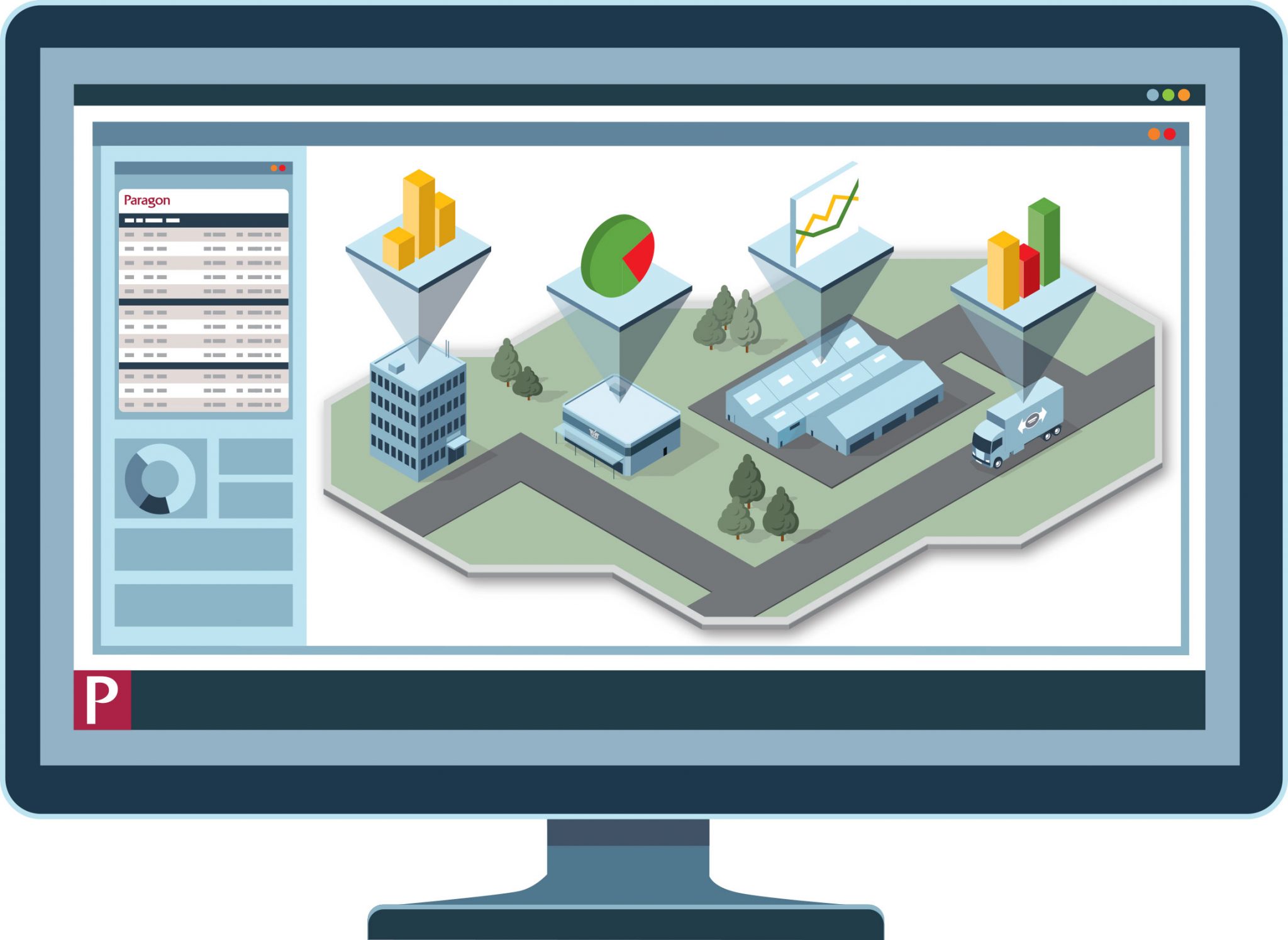
Transport planning teams are under pressure to share more information than ever before as businesses look to increase visibility of their distribution operations, improve customer communications and remove internal silos. According to Paragon Software Systems’ recent UK customer survey – completed by more than 100 industry professionals using its route optimisation software – 58% of respondents claimed that operational reporting requirements had increased in the past 12 months. While most now have processes in place to share transport data, for many there is still a reliance on manual reporting systems.

When asked who they were sharing transport data with, the most common responses were their operational (81%) and logistics (66%) teams, closely followed by the finance (65%) department. A significant proportion of businesses are also using transport data to improve the customer experience, which reflects an increasing demand from clients for real-time and historical delivery information. In particular, 58% are now sharing information with their customer service function, while 50% are providing performance data direct to customers.

More than four fifths of organisations (83%) have some sort of process in place to handle their data sharing requirements. However, almost half of these (49%) are still providing historical reporting manually, compared with 31% that are using an automated historical reporting system or 20% that are providing automated real-time reporting via a portal or dashboard. Of the 17% that did not have processes in place, incompatible IT systems (47%), lack of time or resources (29%) and lack of data (24%) were to blame.

As operational reporting becomes increasingly demanding and complicated, companies are looking to technology integration as a means of sharing data between different areas of the business. With this in mind, over half the respondents (53%) stated that their Paragon routing and scheduling software had been connected with other internal IT systems. WMS (28%) and OMS (17%) were the most common system integrations, followed by CRM (9%), finance/payroll (4%) and SCM (2%).

William Salter, Managing Director of Paragon Software Systems commented: “The results of Paragon’s annual customer survey provide us with real insight into the growing demands placed on the transport office. The need to share real-time data both with colleagues and customers is another compelling reason for empowering the planning team and transport office with systems that track the live performance of the distribution operation. Tools such as our suite of live planning software modules give access to easy-to-use analytics and dashboards that significantly reduce the time spent on reporting, increase the visibility of KPIs and provide the basis for continuous operational improvement.”

Industry View: FLTA Answers Forklift FAQs

As the leading UK authority on forklift matters, the Fork Lift Truck Association is often the go-to place for members of the public with pressing lift truck queries. While a library of informative fact sheets is available on fork-truck.org.uk with detailed answers to many of the most common questions, Tim Waples (above), FLTA CEO has responded to some of the recent questions received by the Association.

Forklifts on public roads
If someone is crossing a side street on a forklift to travel from one department to another: Do they need to register the forklift? Does it require taxing? How far can they travel before having to register?
“The issue of forklifts on public streets is one the Association is regularly asked about. All mechanically propelled vehicles need to be registered and taxed under the Vehicle Excise and Registration Act 1994.
“As to how they are taxed: forklifts are taxed based on their means of propulsion as well as their weight.
“Any electric trucks are taxed in the Electric Vehicle class.
“A forklift with a revenue weight up to 3500kg comes under the Private/Light Goods taxation class.
“A forklift with a revenue weight exceeding 3500kg (provided it is designed for use on private premises) can be classed as a work truck. It can be used on the road to carry goods between the premises and a nearby vehicle.
“Distances exceeding 1000 yards on a public road will require the vehicle to be taxed in the HGV taxation class. Distances under 1000 yards do not require registration for road use but be aware of the requirements for insurance in case the truck is involved in an accident.”

Is there a way of finding out if a forklift has finance still owing on it?
“Unfortunately, only trucks registered with the DVLA can be HPI checked. However, Investec Materials Handling Finance — one of our members — can carry out a check on your behalf using their systems and at their absolute discretion. If you wish them to do this for you, please contact them on 0330 123 2017 and ask for any of the following members of the team: Jon Hussey, Stacey West or Leanne Kirkwood. They will require as much detail as possible on the machine such as make, model, year of manufacture, serial number etc.”

If you fit a second-hand overhead guard, would this need to be tested?
“Provided that the guard is undamaged, unmodified (including holes drilled for fixtures added post manufacture), is an original guard, fitted to the original mounts, with genuine fixtures and is from a machine of the same brand, model and capacity, it should not be necessary to subject it to testing. It will be up to you, or your engineer, as a competent person, to ultimately determine the integrity of the repaired machine.”

What training is required to operate a Powered Pallet Truck?
Does a powered pallet truck require an annual LOLER inspection or is it only servicing that is required/advised?
“Regarding training for power pallet trucks: Regulation 9 of the Provision and Use of Work Equipment Regulations 1998 (PUWER) states that an employer must provide adequate training for all persons using work equipment — and this includes powered pallet trucks. It also specifies that the training must cover how the machine is used, the risks involved, and detail the precautions to be taken.
“It is also essential for you to maintain up-to-date risk assessments and training records, and to ensure that adequate refresher training is provided, especially if there is a change of machinery or the application has been subject to changes. Please do not assume that there is no legal requirement to provide formal training — there most certainly is.
“The HSE has recently updated its Approved Code of Practice to clarify that LOLER applies to high-lift pallet trucks (both manual and powered) that have the ability to raise the forks above 300mm. The ACoP can be downloaded free of charge from the HSE’s website.”
Summing up, Tim said “It’s always good to see how many non-Members know to come to us for guidance on forklift matters. The Association’s wealth of knowledge and reputation as the experts is well established. We’re always looking to expand our archive of information and keep it up-to-date, so the more we’re asked the better our resources become.

New Northern France Logistics Campus for Global 3PL

France-based global 3PL Geodis has opened its new logistics campus in Douvrin, Hauts de France. A team of 300 employees will be mobilised to primarily serve retail and textile customers, in this new 48,000 sqm site.

At this new multi-user installation, partners will be provided with services based on customer needs, such as the quality control of supplier components or customisation and gift packaging for e-commerce customers are also offered.

The site is located near the relevant regional distribution hubs and is equipped with new state-of-the art technology such as corrugators, pick-to-light equipment, automated conveyors, and others. More than €3 M has been invested in equipping this campus which is classified as lower-tier according to the EU’s Seveso Directive, allowing Geodis to manage seasonality and specificities of regulated products. More than three million e-commerce orders will be handled yearly.

Subscribe

Get notified about New Episodes of our Podcast, New Magazine Issues and stay updated with our Weekly Newsletter.