New Schoeller Allibert Pallet “Hard to Break, Easy to Repair”

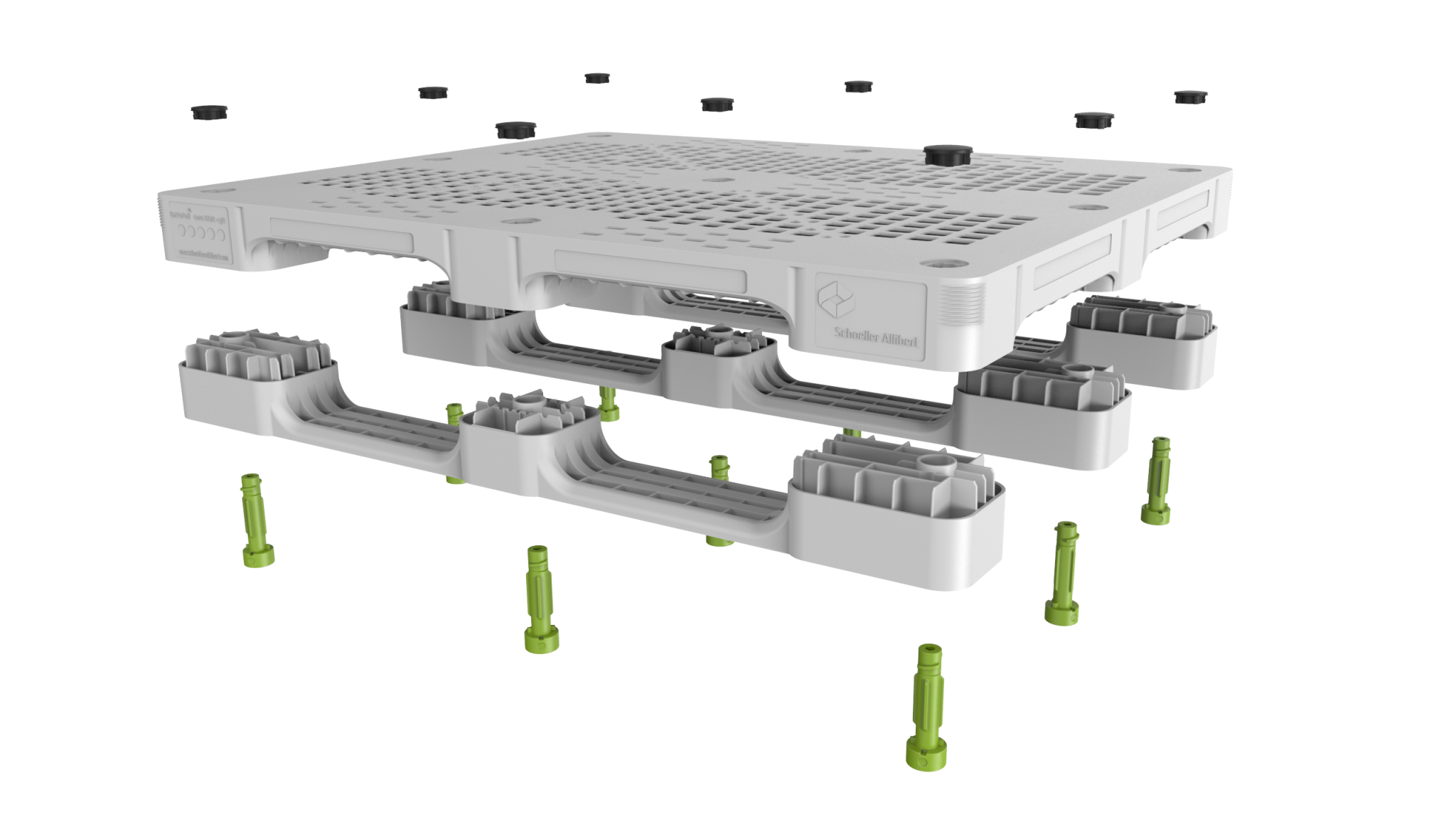
Schoeller Allibert says its new pallet, BaYoPal, is hard to break and – on the rare occasions that it does – easy to repair. It is the Belgium-based company’s latest innovation for all industries, including Food & Beverage, Retail, Pooling, Agriculture, Automotive and more. Designed for use in harsh industrial and logistics environments, and working seamlessly on most automated handling systems, BaYoPal offers maximised rigidity and safety, according to the company. Part of a new generation of pallets, BaYoPal® is returnable, recyclable and repairable – a fundamental asset for companies committed to sustainable development.

Commenting on the product launch, Ludo Gielen, Schoeller Allibert’s CEO stated: “BaYoPal® represents a straight continuation of Schoeller Allibert’s values: we have been designing, manufacturing and selling reusable plastic packaging for industrial applications since 1959. We are part of the circular economy and we are striving to improve our environmental impact while helping our customers to reduce their own footprint.”

Unique, unrivalled repairability and life span
Repairs are fast, easy and low cost: the unique patented bayonet connection between the top deck and the runners ensures that shocks and potential misuse with pallet jacks will not damage either the runners or the deck, only the bayonet weak ring will break.BaYoPal® is sustainable: the pallet lasts longer, the maintenance and repair costs are lower and at the end of its service life it is 100 % recyclable.

Ideal for internal and external logistics
The BaYoPal® pallet works seamlessly on most robotized handling systems. Silent on conveyors thanks to the design of its base runners, it is also available with 7 mm or 22 mm top rim to adapt it to all intralogistics and loading/unloading devices.BaYoPal® can also be specified with an optional anti slip feature on the top deck and the fork entries, making the transportation handling of loads even safer. A 1500 kg unit load also ensures optimised truck loads, for efficient outbound logistics.

Industrial manufacturing, e-commerce and pooling pallet
Designed for use in harsh environments: BaYoPal® features a reinforced corner structure and a perforated top deck with a rib-web structure to provide maximum rigidity without the need of metal reinforcement.BaYoPal® is available in multiple variants to match the logistics requirements of all industrial sectors:The smooth top deck easily accepts cardboard boxes,
– with a 5 mm high top rim to hold any kind of plastic containers,
– with a 22 mm high top rim version to hold empty upside-down euro containers,
– and much more!

Customization and tracking
BaYoPal® features locations for RFID tags and IOT beacons to ensure efficient tracking on demand.Large marking or engraving zones are located on all pallets, allowing you to easily manage your fleet, guarantee your property and enhance the awareness of your brand.

Outstanding performance
The sturdy BaYoPal® pallet is equipped with three, five or six runners and is able to take up to 6000 kg static load, 1500 kg dynamic load and 1200 kg on pallet racks.
Pharma Firm Selects Partner to Standardise Label Process

Global pharmaceutical company, Boehringer Ingelheim, has selected NiceLabel, a leading global developer of label design software and label management systems, to help it create a global standardised labelling process.
Boehringer Ingelheim had previously decided to introduce a global SAP system across all its sites to streamline its operations. In line with this, it made sense to implement a global labelling system to achieve more seamless ERP integration, make label changes easier and drive further operational efficiencies. The NiceLabel Label Management System (LMS) fitted the bill.

Boehringer Ingelheim is making use of the full spectrum of functionality within NiceLabel’s LMS, including the built-in label designer for designing label templates. The tool’s document management system enables the company to replace its manual quality control procedures with a completely digitised quality assurance process.
This gives it the access to security, approval workflows, complete label change and print history that it needs. The LMS is also integrated with Boehringer Ingelheim’s ERP system, SAP ECC, which gives the pharmaceuticals giant a centralised way of updating label information.

Thanks to the implementation of LMS, Boehringer Ingelheim can now process label change requests much more quickly than before. Now that the quality assurance workflow is an integrated part of the label management system, Boehringer Ingelheim can save valuable time and resources previously dedicated to manual quality assurance tasks. Boehringer Ingelheim has also benefited from the NiceLabel ABAP package (SAP connector) that simplifies and speeds up integration.


Linkline to Expand with New HQ in 2020

UK logistics firm Linkline Transport is to expand into its new 140,000sq ft headquarters in 2020.

The Northamptonshire-based company, a member of Fortec Distribution Network for more than seven years, is moving into a state-of-the-art facility in Prologis Park Wellingborough West next year – a new build which will feature a multi-bay racking system, 50,000 sq ft mezzanine floor and an ultra-modern, leading warehouse Management System (WMS) that will fully integrate with customers in-house systems .

With a capacity for 31,000 pallets, the new site will also include a fully covered loading and unloading canopy, enabling the company to continue operating throughout the UK and across Europe.

Tom Ball, General Manager at Linkline Transport, said: “Our new location and expansion will strengthen our business and our position in the sector yet further. We’re consolidating the transport and warehouse operations to function under one roof which results in closer controls and increased productivity.”


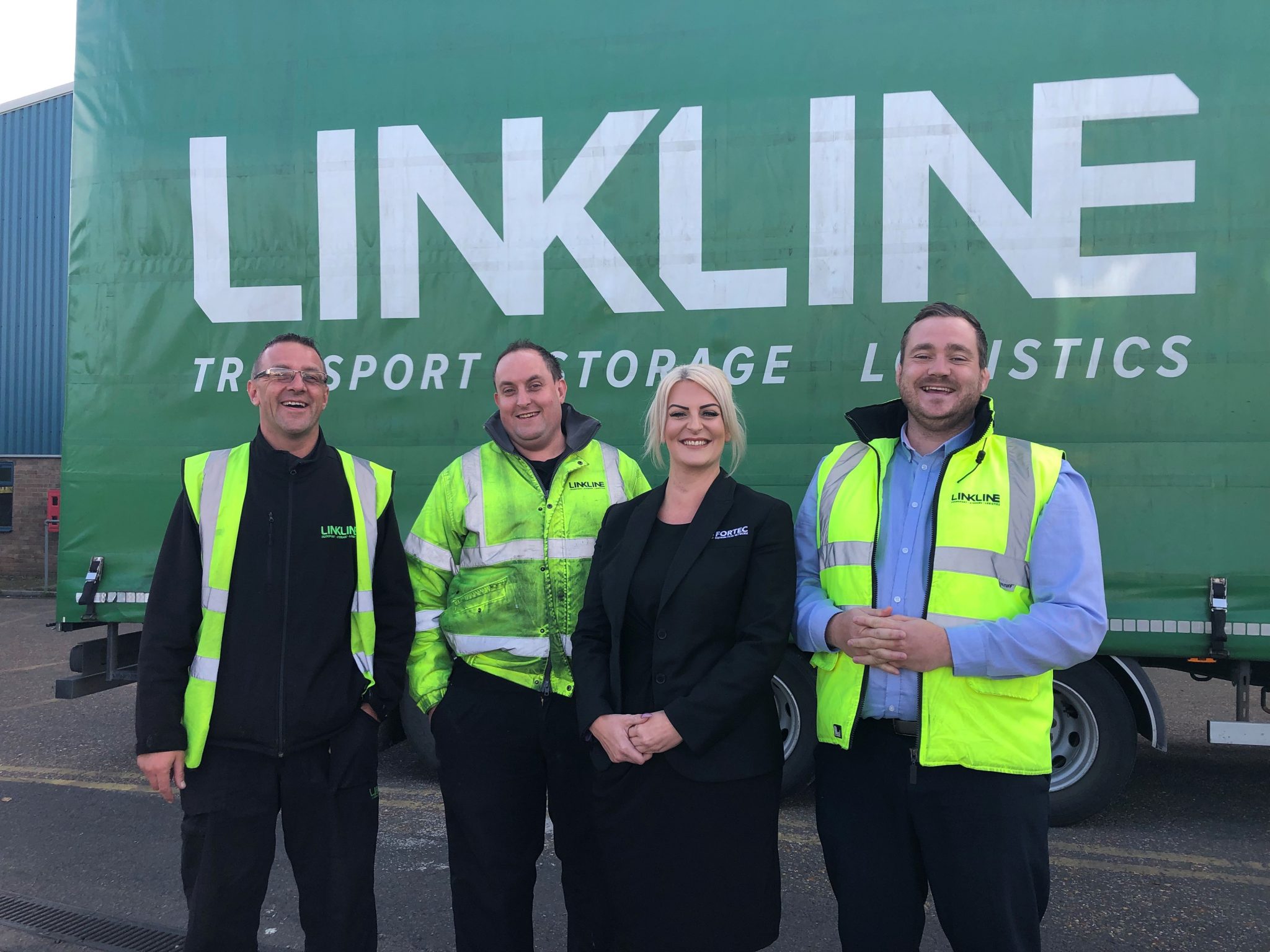
Shown L-R are: Paul Woodcock (Fortec Operations Manager for Linkline), Mark Holmes (Fortec PM Shift Operator for Linkline), Rebecca Wayte (Regional Commercial Manager at Fortec Distribution Network) and Tom Ball (General Manager at Linkline Transport)


3D Printing Supply Chain Platform Selects Logistyx

3D printing specialist DiManEx has selected Logistyx’s TME solution to manage multi-carrier parcel deliveries for customers using the company’s platform to secure parts on demand. DiManEx makes 3D printing easy for supply chain teams, providing an end-to-end platform for part identification, design, production and delivery.

“DiManEx is revolutionizing supply chains for manufacturers and maintenance and repair teams across a wide range of industries, much like e-commerce has transformed retail,” said DiManEx CEO Tibor van Melsem Kocsis. “Our end-to-end platform helps them avoid overstocking parts and costly downtime, producing and shipping smaller quantities as they need them and closer to where they need them through localized production. Logistyx brings the same type of efficiency to the actual delivery, making sure those parts get shipped in the most timely and cost-effective manner.”

DiManEx’s end-to-end platform ensures organizations with complex industrial parts supply chains better manage unpredictable demand and eliminate unnecessary logistics and waste, while making critical parts available across the globe. Some of the industries served by DiManEx include (domestic) appliances, automotive, agriculture, oil and gas, defense, and maintenance and repair organizations. Besides offering a workflow solution, DiManEx’s embedded analytics tool, Supply Chain Inspector, leverages machine learning to help companies identify the right parts for 3D printing, based on supply chain and technical data.

“We see smaller, more frequent deliveries happening everywhere, and shipping parcels demands a high level of customer service and transparency at the lowest possible cost,” said Logistyx President Ken Fleming. “DiManEx helps businesses in many of the world’s most-established industries embrace a more efficient on-demand supply chain, and Logistyx ensures each on-demand part arrives where it’s needed on-time and cost effectively.”

Predictive Maintenance Monitoring Now Offered by NORD

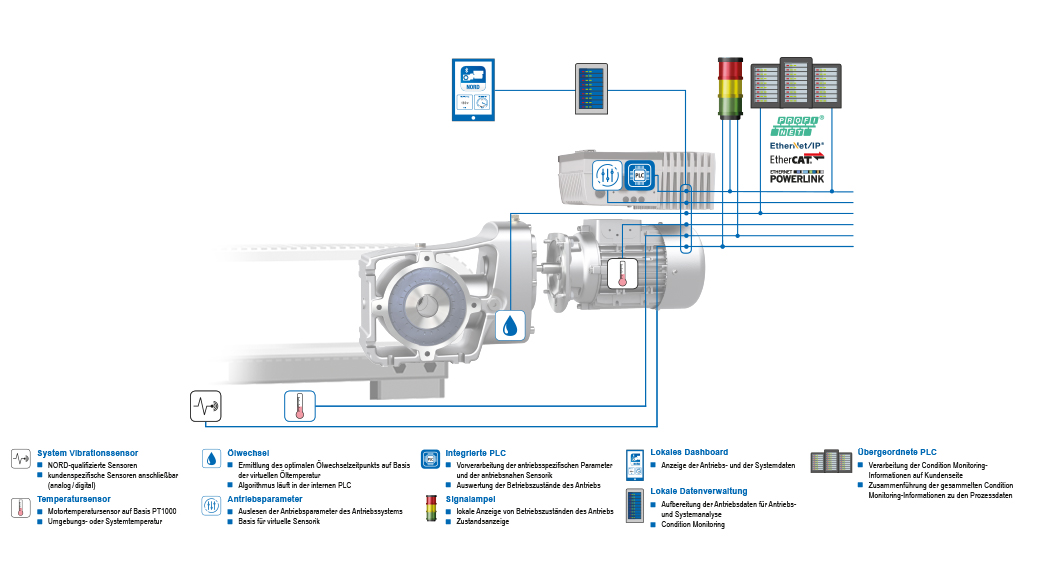
NORD DRIVESYSTEMS has released a product to monitor predictive maintenance concepts.

The system regularly or permanently records drive and status data in order to optimise the operational safety and efficiency of machines and plants. Based on this information, concepts for predictive maintenance can also be developed. Fast, efficient and comprehensive evaluation of analogue and digital data (measurements, signals and operating parameters) by the intelligent PLC in the drive electronics is at the heart of it.

The objective of predictive maintenance is to maintain machines and plants proactively and to detect changes at an early stage, to reduce downtimes and to increase the efficiency of the entire plant. A status-oriented maintenance replaces the traditional time-based maintenance. The detection and avoidance of impermissible operating states at an early stage avoid unplanned downtimes and machine failures. Predictive maintenance enables plannable machinery and plant downtimes based on real drive and process data. For plant and machinery operators using drive technology from NORD DRIVESYSTEMS, this results in a reduction of service and material costs as well as increased plant availability. Further advantages are a longer service life of components and machinery as well as a plannable and cost-optimised maintenance.


Generix Fires Up Collaborative Replenishment SAAS Offering

Generix Group, a global provider of SaaS Software designed to accelerate today’s collaborative supply chains, has launched Generix Collaborative Replenishment, a new-generation SaaS solution to optimise Supply Chain management thanks to ‘collaboration’.

The Supply Chain has created a real opportunity for companies to gain a competitive edge and better fulfil their commitments to their customers. Collaborative Supply Chain management directly contributes to enhancing Supply Chain performance by improving customer service rate while reducing inventory levels, says the company. Jean Charles Deconnink, CEO of Generix Group said: “To meet the requirements of customers who are increasingly demanding and volatile, the Supply Chain supports a company’s strategy of value creation. Generix Collaborative Replenishment reduces stockouts by over 30%. The stakes require an even greater strategic approach when we consider that stockouts are the reason for significant turnover losses for manufacturers: more than 1.2 billion euros for superstores in 2018, according to ERC-IRI surveys for the Institut du Commerce.”


Industry View: Six Steps to Cutting Transport Emissions

Supply chain visibility platform Sixfold offers six steps to cutting emissions in the transport sector.

Climate change and the environmental impact of human activity present clear challenges for humanity. New technologies will play a key role in realizing sustainable growth and economic models. Nowadays, many companies are viewing sustainability and greener solutions as giving them a competitive advantage. Sixfold, one of Europe’s leading providers of real-time and predictive logistics visibility, today sets out six solutions on how to reduce CO2 in the transportation sector.

New structure needed for bringing goods into cities
In Europe, much legislation is being written to protect inner cities from big polluting trucks. Companies need to rethink their transportation logistics or soon they will be not allowed to drive into cities. They will have to cross-dock their goods somewhere in the suburbs. There is a need for a new structure on how to bring goods into the city and most likely this will happen with small sprinter electric vans. The new structure needs also a state-of-the-art distribution solution and with the help of a real-time visibility platform, warehouse managers can achieve up to 30% productivity gains according to Sixfold and serious reductions in carbon emissions of trucks waiting to be unloaded through the applied use of smart logistics and better programming of resources for timely offloading.

Reducing empty kilometres lowers CO2 emissions
According to a report from the international organization Paris Process on Mobility and Climate (PPMC), “truck transports account for about 25% of global transport energy use and in Europe a quarter of containers on the road are empty.” The UK transport industry alone could save over 40 million miles of empty journeys by making better use of spare vehicle capacity. The same applies to Germany’s logistics industry where every fifth run is empty mileage. Thanks to logistics visibility platforms, shippers can identify round-trip opportunities and eliminate empty miles.

Co-loading is more and more interesting for big shippers
There is substantial pressure coming from customers who want to order goods in a very short period. Handling over 30,000 stock (mid-range common number for SKUs handled) keeping units that customers can order until 9 pm and delivering them the next morning is challenging for production companies and wholesalers to organize.

To handle the transportation challenge, they need to do more co-loading which means consolidation of shipments across multiple companies on the same transportation vehicles. For brands, it’s getting more important that transportation of ordered goods is “green” and co-loading could be the solution.

Visibility has become a core part of logistics technology. It plays a complementary function that supports transportation, warehouse, yard and fleet management. Co-loading needs those integrations and visibility.

“Ungreen” logistics is a big problem for shippers
There are many brands that highly appreciate sustainability. One example is Sixfold customer Rockwool in winning the coveted Business Climate Prize at the ZERO Conference last November in Norway by developing new electric melting technology for its Moss factory. This will reduce direct CO2 emissions by 80 percent and production-related waste going to landfill by 95 percent, compared to the conventional melting technology it will replace. Combined with the Sixfold visibility platform, Rockwool has developed a powerful way to fight against climate change.

In the beauty industry, women take very seriously that when they buy cosmetics, they are as green as possible. If they would have any scandal about how “ungreen” their purchase is, manufacturers would have a serious problem in selling their products. Today, shippers lack visibility over their shipments and lack vital data for smarter transport management. They have no knowledge of green transportation planning.

Bolstering EU monitoring and reporting rules
The EU Council has adopted a regulation on the monitoring and reporting of CO2 emissions as well as fuel consumption of new heavy-duty vehicles. This regulation forms part of the EU’s overall efforts to reduce CO2 emissions and is a step towards a competitive low carbon economy.
The new rules enable transport companies, of which many are small and medium-sized enterprises, to obtain access to standardized information on fuel consumption and to compare different models of lorries, trucks and buses. Coupled with a real-time visibility platform, the register will allow shippers to make well-informed purchasing decisions for the delivery of loads, the routes they take, and when the shipments will arrive. They will be able to reduce their fuel bills which account for more than a quarter of their operating costs. The increased transparency of shipments will encourage truck manufacturers to develop more energy efficient heavy-duty vehicles. Higher fuel efficiency also means lower overall CO2 emissions, thus benefiting the environment.

Visibility reduces waste and emissions

Digital technologies can help the logistics industry to better manage and track resources, improve efficiency, and collaborate on ambitious environmental goals. Importantly, we can also quantify and measure progress. Overall, digital technologies have the potential to enable a 20% reduction of global CO2 emissions by 2030 according to the Global e-Sustainability Initiative.

An emerging solution for transport managers and drivers is real-time predictive visibility of inbound logistics … knowing precisely when a shipment will arrive and if there are delays. Armed with that knowledge, warehouse managers can better plan the use of resources and offloading. And that means trucks with livestock or refrigerated goods are less likely to be stuck in a queue with their carbon-emitting engines ticking over waiting to be unloaded.

Visibility across the end-to-end supply chain has now become the most important supply chain initiative in 2019 according to Gartner because implementing a visibility platform leads to reduced costs, waste and emissions.

Subscribe

Get notified about New Episodes of our Podcast, New Magazine Issues and stay updated with our Weekly Newsletter.