SATO Expands Auto-ID Solutions into Mexico

Labeller and Auto-ID specialist SATO has launched a new group company in Guanajuato, Mexico. Guanajuato is in the Bajio region, a dynamic economic zone where world-class automotive companies and their suppliers are clustered.

SATO Mexico has a strategic focus on the automotive industry. SATO provides auto-ID solutions for manufacturers in the automotive sector and more such as barcode and RFID systems, voice and image recognition, and real-time location systems to ensure efficient and accurate incoming and outgoing shipments and operational process improvements. These can range from Kanban product management to mistake-proofing (poka yoke) assembly checks, tagging information for traceability, nameplate labels for various factory applications, and enabling of fast and accurate inspections.

SATO Mexico Director General Koichi Aoki said, “By utilizing our customer-centric know-how of real world usage applications in various industry verticals, we will match hardware, consumables and software and provide aftersales support to provide auto-ID solutions to deliver efficiencies to customers. I aim to replicate our successful value creation model established in other markets to deliver gains for our customers in terms of accurate traceability, productivity and more.”

Industry View: Where’s Secondary Packaging Going?

The war on packaging waste is fought on many fronts in the beverage industry – from the manufacturers of packaging materials to the bottler. KHS explains why it is helping to develop new standards in this field, from which beverage producers and consumers alike are set to profit.

The way to produce ever more sustainable primary and secondary packaging involves two major lines of approach: recycle and reduce. The first requires that packaging materials are kept in constant circulation by them being reclaimed, processed and continuously reused. The second entails finding many different ways of using less and less packaging material in order to save on resources and avoid waste. “The greatest challenge for us is the processability of the packaging materials,” says Karl-Heinz Klumpe, packaging product manager for KHS in Kleve. He explains what he means in the following example. “Shrink film made of recycled plastic demonstrates very different shrinking properties versus film made of new material. As an engineering company we can’t provide all the answers ourselves but instead have to coordinate closely with the film manufacturers.”

To this end KHS is staging a number of workshops this year. These aim to find out how the percentage of recyclate in film – as stipulated by the new German Packaging Law, for example – can be increased. “You make a few changes to the chemicals or recipe of your film and we adjust the air fl ow or temperature accordingly,” is how Klumpe loosely summarizes the topics up for discussion. “Providing that there’s a standard of quality which is accepted by the big bottlers’ marketing departments, of course. With film made of 100% recyclate the shrink results aren’t yet satisfactory. Together we still have to work out how to close the gap here between recycling requirements on the one hand and the demand for packs of ever increasing quality on the other.”

Another avenue film manufacturers are exploring is to reduce the thickness of their film. “The material’s getting thinner and thinner,” states Klumpe. “To provide the same stability the materials have to be more and more complex. This has its limitations when used for beverage packaging: below a thickness of 35 microns it’s possible that the price per kilogram for film then again rises. When it comes down to it, neither bottlers nor their customers want to pay for this.”

Spotlight on economy
Klumpe well realizes that the striving for greater sustainability is often rooted in aspects of economy rather than ecology. “Everything we do to reduce the amount of material used primarily has a financial motive and aims to cut costs for bottlers. Or – if we’re talking about recycling – film manufacturers of course have to continue to develop and adapt so that their business model can be further maintained even in the face of stricter legal requirements.”

What applies to plastics also applies to cardboard – chiefl y when it comes to reducing the amount of material used. Paper factories are experimenting with thinner cover layers and lower ridges in the manufacture of corrugated cardboard. “The stability and durability are OK,” assures Klumpe. “However, we have to answer the question of how suitable these materials are for use with machinery. What happens when the cardboard absorbs moisture? If the cardboard is thicker on the outside than the inside, it bends rather like a bimetal and can only be processed on machines with certain restrictions or not at all. What can we do to counteract this?”

In terms of recycling less attention is paid to cardboard than to plastic. Yet here, too, the reuse of this material is an issue, for example in how far print can affect the recyclability of the paper.

KHS is itself also experimenting with new packaging materials. For instance, a manufacturer from Sweden recently approached the company with a newly developed, award-winning cardboard looking for partners for a market launch. “Our top requirement is that we can be sure that we can process the cardboard without any problems,” Klumpe stresses.

Constant process
The packaging experts in Kleve are also in constant dialog with the manufacturers of adhesives and adhesive application systems. “Here, we explore how we can avoid having to heat the glue so intensely or how we can reduce our consumption of adhesive,” says Klumpe. “We’re now applying smaller and smaller dots of adhesive as opposed to the diamond shapes we used to use.” All told, sustainable product innovation is a constant process which KHS is undergoing with both proven and new partners. The focus is always on the question of which approach can be adopted to save on materials, time and energy on the machines.

One example of how energy can be saved is the shrink tunnel with porous gas burners. To heat the air KHS has decided not to use electricity as the energy transfer medium but to work directly with gas to prevent energy being lost during transport from the producer to the consumer. This saves up to 50% in energy costs and CO2 emissions are cut by as much as 60%.

In the last few years KHS has also set standards in many other areas with its resource-saving packaging machines. Both Fully-Enclosed FilmPacks and nested and shifted packs have done away with the need for stabilizing cardboard pads or trays. “We don’t need any more cardboard at all here,” smiles Klumpe. “The taut film gives us a good shrink pattern and a sturdy pack.” In a countermove the DisplayPacker has also been developed where large packs are placed directly onto cardboard trays without the need for an extra wrapping of stabilizing film.

However, one of the most outstanding examples of how material can be reduced is the Nature MultiPack™. In 2018 it was launched to market as a six pack of cans by the Carlsberg Group under the name of Snap Pack. A few dots of adhesive developed specifically for this pack which hold the cans together and a stabilizing carrying handle make any further packaging material redundant. Once the new pack format has been fully rolled out, by completely eliminating the use of shrink film for cans Carlsberg is set to make a plastics saving of up to 76% – that’s more than 1,200 metric tons a year. Danone Waters first made successful use of the Nature MultiPack™ to launch its prestige PET bottle for Evian in 2016.

“In the development of sustainable packaging we see ourselves acting as an interface between all those involved and the beverage industry,” Klumpe sums up. “We’re helping to develop new standards which marry ecological demands and legal provisions with bottlers’ economic interests.” A challenge which is sometimes tantamount to the squaring of a circle.

Brexit not Done, Warns UK Warehouse Trade Body

UK warehouse trade body the UKWA has warned that Brexit comfort remains a long way off, despite the strong majority won by prime minister Boris Johnson in the national elections held last week. In a statement CEO Peter Ward said:

“The Conservative Party’s overwhelming victory in last week’s General Election will finally break the Parliamentary gridlock that has frustrated the business community for over three years and the return of a high degree of political certainty is bound to be good for investment.  Indeed, there are already clear signs that the economic climate has been boosted by the result, and we expect a greater degree of confidence within our membership to emerge in the new year as the uncertainty about the UK’s withdrawal from Europe falls away.

“Within a few days we are likely to see the timetable for the passing of the Withdrawal Agreement, and our exit from the EU will be confirmed by the end of January. However, as UKWA has said consistently, while securing a Withdrawal Agreement that is acceptable both to the EU and the UK Parliament is an important milestone in the Brexit process, there is plenty of hard work still to be done before we ‘get Brexit done’.

“The nature of Britain’s future relationship with the EU has yet to be defined and the Prime Minister’s pre-election pledge that the Brexit Transition Period will not be extended beyond December 2020 means that the risk of leaving the EU on WTO terms – with the interruptions to supply chains that such a scenario will bring – is still with us.”

BluJay Release Enhances Visibility and Data Insights

Supply chain software specialist BluJay Solutions has released version 20.0 of its transportation and distribution applications. It says the latest updates provide greater user efficiency, enhanced visibility, optimised routing, and easy order integration across its transportation and distribution solutions, to enable shippers and logistics service providers (LSPs) to remove friction throughout the supply chain.

“Shippers and LSPs are the glue that bind our global supply chain and they need the ability to flex to meet the needs of customers while still driving operational effectiveness across the entire transportation network,” said David Landau, Chief Product Officer at BluJay Solutions. “With the latest updates to BluJay’s transportation and distribution applications, we’re leveraging more data and actionable insights across the platform to increase efficiency and visibility, making it easier for users to make immediate, informed decisions about their supply chain management.”

Highlights of BluJay’s version 20.0 for transportation and distribution applications include:

Data-driven Insights – A new feature called “SpotLight” within the Transportation Management platform harnesses the power of BluJay’s BluDex industry benchmark index tool to help users make more informed cost-based routing decisions. This feature identifies which loads have the highest potential for savings by going to the spot market and enables the user to quickly and easily send these loads out to bid.

Improved Ocean Workflow – BluJay has also streamlined its Ocean workflow in Transportation Management to allow for ease of use and user-defined automation. By eliminating unnecessary clicks and ticks, users can seamlessly create, schedule, and execute Ocean bookings with the right vessel line, with the right rate, and at the right time.

Increased Parcel Visibility – For Parcel, BluJay has built an API for tracking and a new UI on top of it, creating a new Parcel Track and Trace module that allows customers and their partners to track, report on, and see the history of their parcels.

Improved Visibility and Mobility for LSPs – For LSPs, the latest platform updates offer improved visibility and execution at cross-dock centres with enhanced mobile capabilities, along with various shipping unit and document printing advancements.

Simplicity and Efficiency for Carriers – MobileSTAR’s Dispatch Portal provides advanced allocation, optimisation and visibility to carriers. This set of tools allows dispatchers to automatically allocate jobs and deliveries on the best route, with the best driver based on location and working hours, plus optimise run orders, calculate ETAs, and track progress. In addition, exception alert notifications enable dispatchers to perform corrective action to meet customer expectations

Collaborative, Easy Order Integration – Supplier Portal, an extension of Transportation Management, enables shippers and suppliers to more easily collaborate while providing shippers with better control and visibility of inbound freight. Users now have the ability to create orders directly in the Supplier Portal without having to integrate to an external source. The portal greatly improves user efficiency and streamlines the order creation process.

Find out more here.

Alternative Fuel Resistance On the Wane Says UK Truck Dealer Group

Resistance to the take-up of alternative fuelled vehicles may be showing signs of decreasing, according to IVECO’s largest truck dealer group in the UK.

Robert Spittle, managing director of Guest Truck and Van, says that their sales and technical teams are helping customers, particularly fleet managers to slowly overcome objections that they or their drivers might have.

He said “The efficiency statistics show that there are definitely both economic and environmental advantages to using Compressed Natural Gas (CNG) power, and driver feedback tells us that there is no compromise on power.

“However, the current lack of refuelling infrastructure right across the UK means that it takes some research and planning to make sure that a CNG vehicle is the right addition to a fleet.”

Guest’s most recent range test has been with Ocado Group.

In the latest of a series of practical CNG tests with Ocado, Guest’s Key Account Director Bal Singh joined Ocado Fleet Manager Graham Thomas in the cab for an almost non-stop return trip from Hatfield to Manchester to prove the range capability of an IVECO NP400 Stralis.

Graham said: “Around 30% of the Ocado truck fleet is already powered by CNG and although people are sometimes resistant to change, many of our drivers have commented favourably on the change over to the CNG powered IVECO Stralis, although range remains a concern for most

“Before we took any CNG vehicles onto the fleet we had to have a very close look at the logistics of routes and fuelling because the only practical restriction to CNG is not having the option to refuel away from our base.

“This has resulted in range anxiety in some of our drivers who are working the longer routes, particularly between our Hatfield base and some of the further away spokes such as Leeds and Manchester. According to our calculations, it is feasible to complete a return journey on either of these trips with fuel to spare, providing you set off with a full tank.

“During the trip, the IVECO NP400 Stralis 4 x 2 with its lightly loaded trailer, simulating a typical load for this route, achieved 12.4mpg on the 590kms journey and returned to base with fuel still left in the tank.

Ocado’s hub and spoke distribution operation means it has regular, fixed trunking routes so are well placed to be at the forefront of new technology.

Guest’s Rob Spittle said: “It’s easy to see the issue that some fleet managers might have when they’re introducing new technology or practices, and telling someone is never as convincing as showing them.

“Bal and Graham’s trip will hopefully demonstrate to the Ocado team, not only the capability of the truck but also the confidence that we have as the dealer and Graham has as the fleet manager that CNG is the right choice for this route.”

Pictured are Bal Singh (left), Key Account Director at Guests, with Graham Thomas, Ocado Fleet Manager 

No-Deal Fears Rise as UK Freight Body Seeks Government Clarity

UK trade body the British International Freight Association has demanded that the country’s newly elected government does not inflict a No-Deal Brexit next year. “The mantra of the new government has been ‘Get Brexit Done’ but that will only have any real meaning for BIFA members if the actual details of our future relationship with the EU are clear,” said BIFA Director General Robert Keen (above). “That means providing them with assurances that they won’t face another no deal cliff-edge next year, nor a messy and disorderly exit from the EU.

“For the last three years, freight forwarding and logistics companies have done all they can to prepare for Brexit in the face of huge uncertainties. As the people who facilitate a significant proportion of the UK’s visible trade with the EU (and the rest of the world) they are looking for the government to avoid a no-deal exit from the EU and deliver a smooth transition giving companies time to prepare.”

“As for a future trade agreement with the EU, I would urge the new government to seek and commit to a workable adjustment period once the details are revealed about the changes our members might face in regards to the movement of freight across borders. Now is not the time for arbitrary negotiating deadlines.”

Inther Large-Reach Gantry Robot Processes 1200 Items per Hour

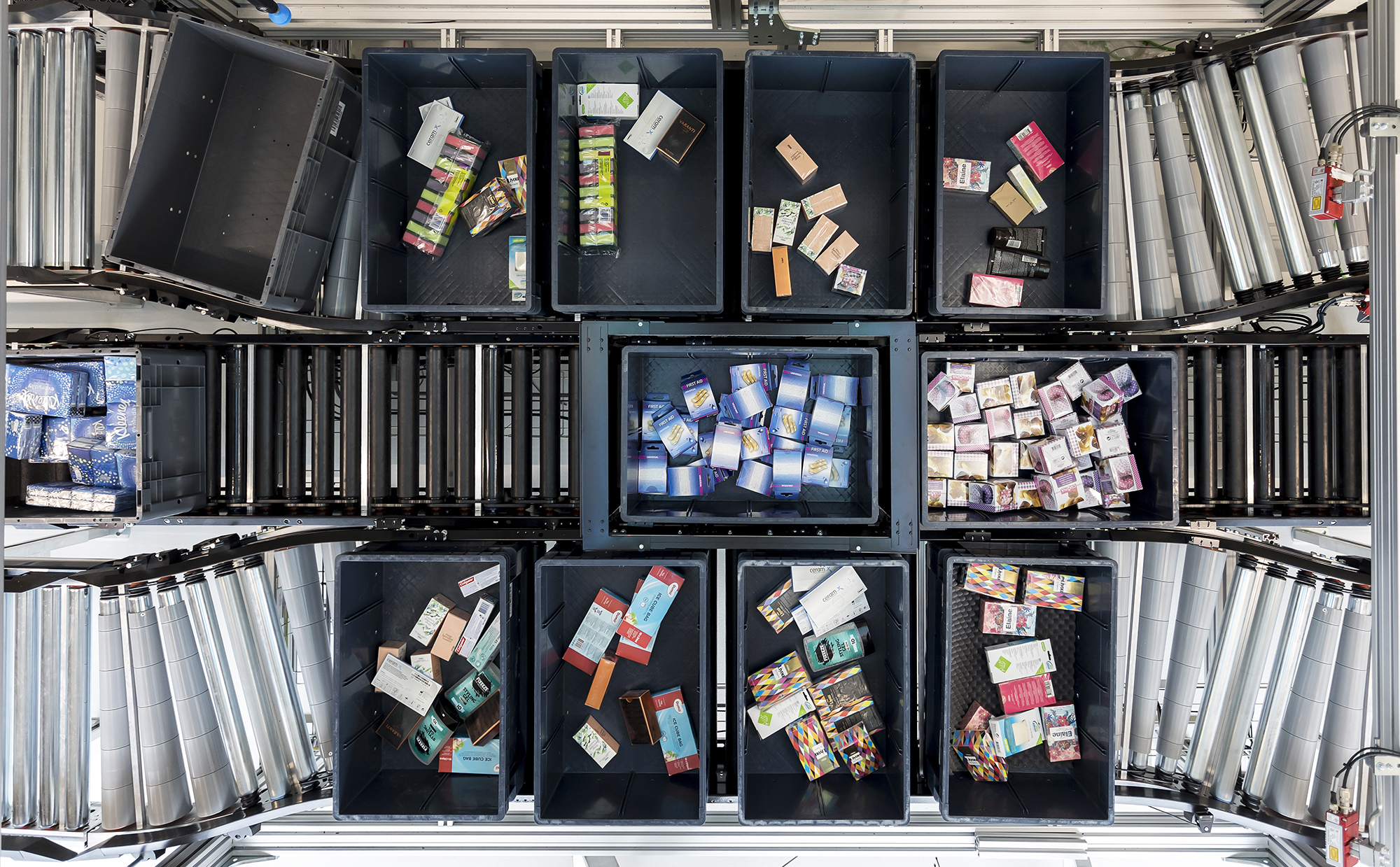
With the announcement of the GRIPP (Gantry Robotic Intelligent Piece Picker), Inther Group claims it has proven once again that it is willing to adapt and innovate in order to meet the requirements of customers.  “The GRIPP has a large reach, is compact,  safe, and processes up to 1,200 items per hour. This is truly a novelty in the logistics world,” it says.

This type of fully automatic picking technology is unique, says Inther, not only because of the large number of  products that can be processed, but also because of the flexible and smart use of the robot.  Regardless of the shape of the product, the gripper can pick up the item. An ‘angle of attack’ has  been built into the software to ensure that the robot approaches the product from the right  direction. As a result, the robot gets a better grip and the error probabilities are significantly  reduced.

Pre‐sorting or buffering is no longer necessary since the GRIPP is able to process products from  one storage bin into twelve order bin locations. The GRIPP also provides a space advantage in the  warehouse due to its compact size. In addition, the robot performs measurements: the weight of  the product, the negative weight when grabbing the product, the length and width and even the  height of the item. This height measurement, conducted with a light sensor, is also unique in the  logistics industry. Through these measurements, the robot determines how quickly it can move a  product (weight‐dependent) and places the various items in the correct bin where they are arranged automatically and as efficiently as possible.


Transport Market Monitor: Big Increase in Available Capacity

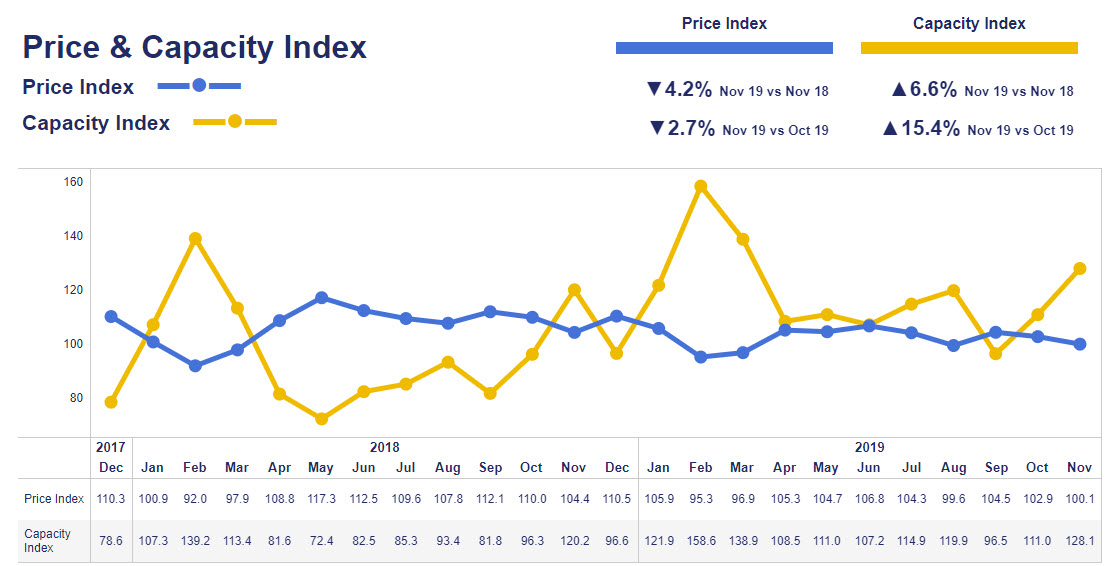
As indicated by the development of the available transport capacity for road transport, the European industry has further cut back production in November in the face of weak export demand and a sluggish economy. In November, the capacity index compared to the previous month rose again by more than 15 percent (source: www.transportmarketmonitor.com).

Since October, the short-term supply of available capacity has increased by more than a third overall. On the other hand, transport prices are still only slightly down (-2.7%). This emerges from current evaluations of the Transport Market Monitor (TMM). The online service is supplied by Tim Consult and generated on the basis of real transport data from the spot market of the Transporeon platforms. Overview of the key developments in November:

• Compared to October, the capacity index has increased 15.4 percent from 111 to 128 index points. The available transport capacity was thus 6.6 percent higher in November this year than in November 2018.
• The transport price index fell from 102.9 to 100.1 index points. This corresponds to a price drop of 2.7 percent. Transport prices were thus 4.2 percent lower than in November 2018.
• The diesel price index was unchanged at 105 index points in November. On the other hand, looking back to November 2018, an increase of 4.8 percent can be observed.

The TMM brings together data from up to 150,000 road-bound freight orders across all industries, which are processed monthly over the spot market by Transporeon, Europe’s number one for cloud-based transportation logistics services.

Embroidery Firm Sews Up Improved Fulfilment with WMS

A leading US embroidery business has enjoyed considerable improvements in order fulfilment processes, with shipping accuracy now greater than 98%, since switching to a best-of-breed warehouse management system
(WMS) in January 2019.

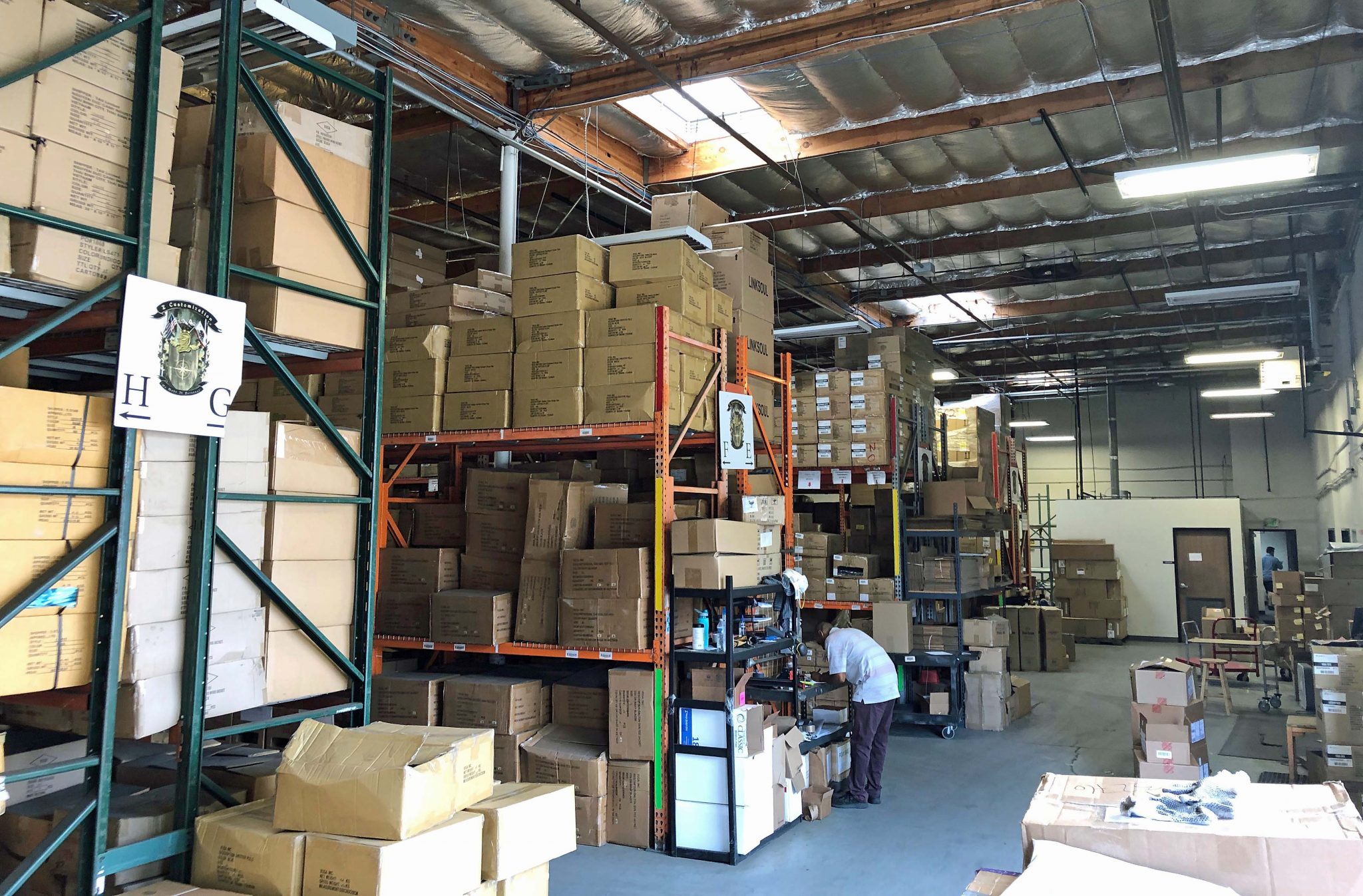
Z Customization houses more than 3,000 items in its 24,000 sq ft HQ in Carlsbad, California for some of the biggest names in sporting goods.

With business booming, Z Customization required a more robust and accurate fulfilment process for its customers and concluded a Tier 1 WMS was the only way to keep up.

The WMS needed to work for a mid-size business and have the flexibility to scale cost effectively as the company grew. In addition, Z Customization also sought a solution that would help maintain cash flow throughout fulfilment, as well as deliver superior customer service.

With a large number of orders going through embroidery or heat transfer before fulfilment, devising a solution that would improve the flow of goods was a priority. This is where the SnapFulfil WMS was able to customise a routing method that optimised picking and helped move items through production much more efficiently.

The previous paper-based processes were also transitioned to the cloud-based SnapFulfil within just 12 weeks and the proprietary and ERP systems seamlessly integrated. This has facilitated far easier transmission of orders and receipts between the WMS and customers.

What’s more, SnapFulfil has allowed Z Customization to thrive as a third-party logistics (3PL) provider, via much more effective management of its customers’ SKUs. Indeed, year-on-year 3PL revenues growth has almost been quadrupled.

Jon Leposky, Director of Operations & Logistics at Z Customization, says: “One of the best things about SnapFulfil is the ability to automate tasks. Rather than organising things only at a shipment and receipt level, it allows us to break down tasks directly to the operators and this has helped streamline operations tremendously.

“SnapFulfil also has one of the best implementation processes and support systems I’ve ever worked with – from weekly status calls during completion to troubleshooting any issues or answering questions as they arise. We know we can rely on the SnapFulfil team at any given time and that is truly invaluable when it comes to managing fulfilment processes. They’re doing an incredible job at providing customer support.”

Further initiatives in development with the SnapFulfil team include more flexible receiving and providing deeper visibility into fulfilment processes for both operators and customers. Z Customization also plans to add another supervisor audit to ensure that numbers into the WMS are systematically checked and order flow is the best it can be.

“Logistics Leaders Expect More Outsourcing Budget in 2020” says Gartner

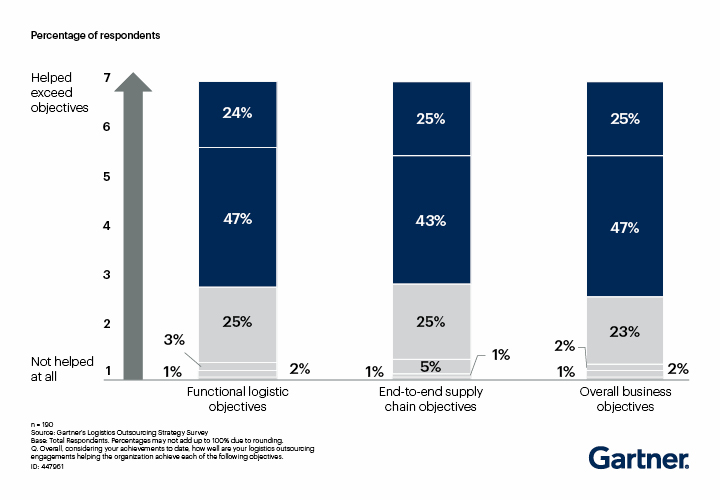
Eighty-five percent of logistics leaders expect that their outsourcing budget will increase by more than 5% in 2020, according to Gartner, Inc. Already for 2019, 85% reported a similar budget increase.

“Outsourcing one or more logistics service types has become largely mainstream,” said Courtney Rogerson, senior principal analyst with the Gartner Supply Chain Practice. The question no longer is whether to outsource, but what and how much to outsource. Evaluating different outsourcing strategies has become a priority for logistics leaders.”

Based on the Gartner 2019 Logistics Outsourcing Strategy Survey, one reason for the expected budget increase is that logistics outsourcing supports the business. Approximately 70% of respondents stated that functional, end-to-end (E2E) supply chain and overall business objectives have been met or exceeded with the help of logistics outsourcing counterparts, such as third-party-logistics providers (3PLs).

Technology, Speed and Visibility are Top Priorities
To be effective, the logistics outsourcing strategy needs to be aligned with the overall logistics priorities. Almost half of surveyed logistics leaders stated that updating their technology systems, increasing speed to customer and improving visibility are their most important goals for next year.

“Those priorities show that we are in the thick of the digital era. New routes to market and technology enabled products and services are rapidly disrupting industries and business models,” Ms. Rogerson explained. “To respond to these accelerated and evocative changes, logistics leaders need not only understand the foundational elements of good overall strategy, but also rethink how their logistics outsourcing strategy is assessed and developed.”

“For example, leaders can increase the iterative frequency of strategic planning across multiple time horizons. Rather than treating the outsourcing strategy solely as an annual process, they should include mechanisms, techniques and open communication channels for continuously capturing issues, ideas and insights that will increase the contribution of logistics outsourcing towards meeting the overall business goals.”

While logistics outsourcing is seen as helpful by a majority of logistics leaders, there are also risks and challenges. The complexity of working with multiple partners is the most mentioned challenge, followed by cybersecurity concerns and the incompatibility of information systems between different 3PLs and the organization.

“Low maturity organizations often outsource logistics with unrealistic expectations regarding ROI and service levels,” Ms. Rogerson said. “Outsourcing can help make your organization more efficient, but it requires a high degree of coordination. Make sure you have the appropriate resources and skills at your disposal.”

Subscribe

Get notified about New Episodes of our Podcast, New Magazine Issues and stay updated with our Weekly Newsletter.