Paperless Waste Management App Aims to Boost Efficiency

Mandata has introduced a new paperless waste handling solution which it claims will cut submission times for quarterly returns for waste carriers who have a registered, onsite, waste transfer station.

Called Waste Go and integrated with Mandata’s TMS GO management system, it comes in the form of a mobile app for drivers which allows them to capture customer signatures when collecting waste as well as update weights and quantities of what is being carried and capture the signature of the person receiving the waste. In the office, Waste Go will generate the quarterly Environment Agency waste return report instantly, rather than the hours it may take now.

“This is a massive time-saver for hauliers and waste carriers” says Mandata’s Internal Sales Manager, Ian Thompson. “We have worked with industry to perfect a waste management system – working with our integrated Waste Carrier app – which not least, provides fast and accurate production of electronic waste transfer notes and fully streamlined Environment Agency waste returns.”

Ideal for fleets of up to 30 vehicles, Waste Go allows drivers to receive work instructions on their mobile device and to see the sequence of jobs they must complete. The app is then updated in real-time with work-related changes and additional jobs throughout the day.

This gives the waste carrier full on-line visibility of each job, with real-time electronic Waste Transfer Notes, proof of collection and delivery and all data saved automatically against each job in the system. At the same time, Waste Go eliminates paper, reduces potential errors and speeds-up document access and review times.

Each quarter, waste transfer stations must submit a spreadsheet to the Environment Agency detailing the waste that was received to and removed from their site and for most handlers this requires significant attention to detail and lengthy administration time.

Waste materials are generally categorised into five types – liquid waste, solid rubbish, organic waste, recyclable rubbish and hazardous waste – and it is a legal requirement for all waste that is produced by a business and sent for recycling or disposal, to be classified using an EWC (European Waste Catalogue) code.

The code, also referred to as LoW (List of Waste) or Waste Classification Code, has been transposed into the UK List of Wastes Regulations and comprises approximately 650 different codes, divided into 20 chapters – each of which contains several sub-categories.

To simplify all of this, Waste Go contains a comprehensive list of EWC codes and waste descriptions, which include the option to load records with the full set of codes from the Environment agency, thereby giving the flexibility which comes with a wide range of classification options.

Furthermore, Waste Go enables this report to be generated in PDF or Excel format as jobs are created, making it possible to send the data directly into the Environment Agency.

Also, users can select container types on the ‘goods’ or ‘extra charges’ screen, while EWC codes are displayed on all goods lines. SIC (Standard Industrial Classification) codes are also featured on the signature screen for quick and easy reference. It is also possible to set up the legally required ‘proof declaration text’ next to the electronic customer signature box.

“The ability to ‘go paperless’ is a huge boon for the industry” adds Ian. “This app makes it simple for drivers to progress jobs through to completion, during which time they can enter or amend details about goods, view pricing information, enter any unscheduled changes in delivery location and generally gain closer control of shipments and ongoing work.”

Mandata is conducting a full, on-line demonstration of the system on February 25th at 10.00am. To take part, visit www.mandata.co.uk/events or contact Mandata on 0191 250 2220 or email he***@********co.uk.

German Textile Retailer Ernsting to Expand Online Retail with inconso

Logistics software specialist inconso is working on a project to expand online retail for large German textile retailer Ernsting. The project kicked off with the construction and move to the dedicated location for e-commerce logistics in the town of Coesfeld-Lette. The textile retailer processes up to 3.3 million orders via its online shop that went online in 2003; all related logistics processes will continue to be uniformly planned and controlled via SAP in the course of expansion.

The new warehouse has five levels with, among other things, a bag sorter including a dynamic buffer for efficient pre-picking and a goods issue sorter in shipping. To expand its logistics capacities, Ernsting’s family is relying on SAP EWM (Extended Warehouse Management) to implement efficient planning and control for all goods movements using a central system basis. In addition, inconso supports the development of native Android apps in order to optimize process handling when using mobile terminals via an intuitive user interface.

This project has remarkable key performance indicators: In the future, up to 100 pickers will be working at the same time in the new warehouse’s manual picking area. In order to be able to handle the increasing order volume, the current multi-order picking strategy will be replaced by a batch-based picking strategy that is more efficient. The picked parts are then bagged, sorted by a bag sorter on an order-by-order basis and transported to the packaging workstations.

The expansion of e-commerce logistics is integrated into the development of a holistically synchronized logistics IT system that creates a uniform SAP system landscape for smooth omnichannel logistics. Since moving into the new logistics building is already finished, connecting the sorter in the goods issue area is in progress, which will be followed by changing the picking strategies, thereby adapting the site to the significantly increased requirements for e-commerce logistics.

“We are excited to start another project with the inconso experts and continue our long-standing collaboration. Due to our close and trusting collaboration with inconso, we always manage to realize large projects on time and within budget and support them ourselves shortly thereafter. This means that our SAP EWM system will also be perfectly prepared for future logistics processes at Ernsting’s family,” as Frank ter Duis, IT Logistics Coordinator at Ernsting’s family, emphasizes.


Hyundai Material Handling ‘Paint it Black’ for Oil & Gas Specialist

Aberdeen-based Bear Handling Ltd specialises in handling equipment across Scotland. The company also supplies the oil & gas industry and is the Hyundai forklift distributor for the region.

Bear Handling has recently secured a deal with a leading oil & gas operations company, WellGear UK, which has recently taken delivery of an 18-tonne load capacity Hyundai 180D-9 diesel forktruck – the first to be delivered into the region. The compact but powerful machine is powered by a Mercedes Benz 6R1000 209.7 kW engine and has a maximum lifting height of 4020 mm.

WellGear has experienced rapid expansion and has grown from employing just four staff in 2015 to over 150 in just four years within its Holland and Aberdeen divisions.

Murdo MacLeod, WellGear UK Managing Director spoke about their investment in the Hyundai brand and his dealings with Bear Handling, he said, “We were in the market for a new forklift due to business expansion. I got word of Bear Handling via a friend of mine who had worked with the company. I went to see John Maclaren at Bear and was impressed at his pragmatic approach and knowledge of the equipment.

Murdo continued, “In the yard, John had a 16-tonne Hyundai forktruck (160D-9) which I test drove and was really impressed. John said that Hyundai manufactured a larger 18-tonne model, which I decided would be the right machine for the job, based on the impressive performance on the 16-tonne machine.”

Murdo added, “I liked the compact size of the forklift. We don’t have particularly high doors on our workshop and the size of the machine was very compact for its weight capacity – we were able to lift 18 tonnes and still get comfortably through our doors.

Some of the competitors’ machines were quite tall in comparison to the Hyundai. I also liked the spacious cabin and its excellent visibility for the operators – it has practically a 360-degree view. The rear reversing camera is also very good. We didn’t require any ‘extra safety features on the machine, as with the Hyundai, they come as standard.”

Murdo joked, “The machine also has air conditioning – but we don’t need that much in Scotland!”

“I was also impressed that we could specify the machine in our company colours directly from the Hyundai factory in South Korea. From order to delivery was just 12-weeks, which is fantastic considering we ordered a ‘bespoke’ machine.”

He said, “We accept loads in the yard almost every day, so the machine is constantly loading and shifting containers and working on the racks keeping the working areas tidy. It’s on general workshop management for around 12-hours per day.

“We have quite a number of heavy lifts to do each day – some up to as much as 16.5 tonne. Our new forklift is able to lift this capacity with ease and we will use it instead of getting a crane in, which of course, saves us money. The operators who use the machine every day are really pleased with its performance.”


Big Ben Bong for Dachser with Very Special Delivery

The Elizabeth Tower, or Big Ben as it is more commonly known, is one of London’s most famous landmarks. Its four striking clock faces, each seven metres in diameter, also gave it its name ‘the Clock Tower’. The iconic symbol is currently undergoing renovation work; it is set to chime again in all its glory by 2021.

Renovation work is also being carried out on the glass dials using glass plates from Waldsassen in Germany’s Upper Palatinate region, where Glashütte Lamberts faithfully reproduced Big Ben’s dial and produced 1,300 glass plates for the famous tower by hand. “It is one of the most famous landmarks in the world. And it’s especially moving to think that we’re the ones making the glass for it. It’s something we are proud of,” says Robert Christ, Head of Marketing at Glashütte Lamberts.

Buckingham Palace
The company’s logistics partner Dachser handles transportation from the Upper Palatinate to Dartford near London. Transporting this fragile glass freight requires no small amount of precision and expertise. They have the necessary experience: Dachser Logistics Center Hof delivered glass made by the long-established company to the UK for Buckingham Palace. “We’ve been working with Glashütte Lamberts since 2009 and serve them in other European countries,” says Angela Puchtler, Sales Executive at Dachser Logistikzentrum Hof.

342 glass plates become a dial
Safely packed into wooden crates and palleted for transportation, the glass plates make their way via direct transport to their famous installation site in London, where a British company cuts them to the exact size to fit the tower’s clock face. As of next year, about 1,300 glass plates from Bavaria will adorn what is probably the most famous tower in England. “We work together with our customers to develop transport solutions for very specific requirements such as these,” Puchtler says. “And it goes without saying that we’re rather proud that we, as logistics specialists, have played a part in restoring the Elizabeth Tower to splendour.”

Keswick Enterprises Buys North-East England Co-Packer APS

UK-based logistics and supply chain fulfilment services specialist Keswick has bought Northumberland-based Assembly and Packing Services Limited (APS).

After several years of international logistics and co-packing experience, Keswick Enterprises moved into UK contract packing and fulfilment in 2008 with the acquisition of food and confectionery co-packer SGL Co-packing Limited, based in Nelson, Lancashire. Kewick says that under its secure stewardship this business has “almost doubled in size, and further growth is anticipated after recent significant investment in facilities and equipment”.

APS – which has been in Blyth since it was formed 35 years ago by managing director, Judith Leighton and her sister-in-law Margaret Watson – is one of the UK’s leading non-food contract packing companies. It has extensive expertise in assembling, collating and packing merchandise and giftware for manufacturers, importers and retailers.

Ms Leighton said: “The acquisition is the result of six months’ work to identify and secure the best new owner. Keswick Enterprises already have a strong track record in contract packing, and I am delighted to announce that they will be taking the business forwards. They also own a number of complementary businesses – which will add to APS’s capabilities. Above all, however, they have the right ethos and share our values.”

APS has been at the forefront of its sector for more than three decades, and historically has been the co-packer of choice for multinationals like Procter & Gamble, Diversey, L’Oreal, Nike and The Body Shop, along with local manufacturers and printers.

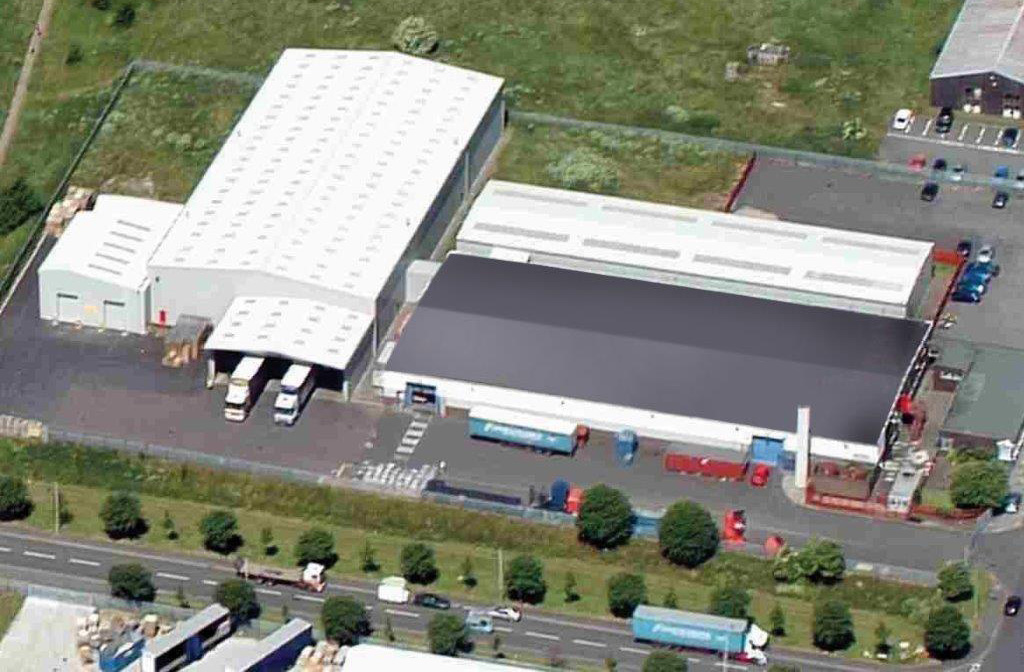
The business currently employs over 80 permanent staff, but is able to expand to 250 with temporary recruitment to meet seasonal demand. It is based at a 65,000 sq ft factory/fulfilment centre and offices on a substantial site on the Blyth Riverside Industrial Estate (above), with space for further growth. There is also a satellite facility in Derby.

With MHRA authorisation, APS offers a full package of design, procurement, manipulation, storage and distribution services, and also specialises in gift assembly, pick-and-pack, sub-assembly, labelling, collation, flow-wrapping, blister packing and filling. It has extensive capabilities, and delivers deadline-driven, quality packaging solutions to complex and often logistically challenging projects.

Keswick Enterprises’ main board Director Gavin Withers will join APS as Chairman, while fellow main board Director Barry Croft will also take a place on the divisional board. The APS management team will remain in situ, and Ms Leighton has agreed to stay as a strategic advisor to the business.

Gavin Withers commented: “Everyone at Keswick Enterprises is very conscious of the goodwill, staff loyalty and heritage of APS. Co-packing and fulfilment are at the centre of our strategic focus, and we bring longstanding international experience to the business. APS will add substantially to our capabilities, and we hope in due course to offer enhanced opportunities for the good people of Blyth.”

Judith Leighton added: “As part of The Keswick Enterprises Group, APS will benefit from significant investment for future development and growth, as well as enhanced capabilities in sourcing, logistics and systems. It’s a really exciting time for everyone involved.”

The terms of the acquisition are not being disclosed.

Case Study: Real Time Mobile Interaction with Vessel Loading and Discharge

“No terminal in the UK or Europe uses a mobile device with software as advanced that enables an operator to interact with the loading and discharging of a vessel in real time.” Ports operator DP World is using Panasonic TOUGHBOOK rugged notebooks and tablets, purchased through Colva Ltd, to transform productivity and customer service at its busy Southampton terminal operation. 

Initially DP World Southampton was looking for a mobile computing solution for its Leading Hands, who take responsibility to ensure the safe and correct loading and discharging of containers on each vessel visiting the terminal.

“Up until this point Leading Hands had used paper-based crane work lists and bay plans, which were out of date as soon as they were printed,” explained Mark Hooper, Head of Operations, DP World Southampton. “Changes the Leading Hand made would be written down and communicated back and forth over the radio. Working in all weathers, day and night, the paperwork could be damaged, illegible, confusing, weather worn, returned late or lost.”

After reviewing a range of rugged devices, DP World’s IT experts, in consultation with end users, chose the Panasonic TOUGHBOOK G1 rugged tablet for the job and built their own software programme to provide the Leading Hands with live data and autonomy to make onsite decisions which, in turn, improved productivity and drove down costs. After a successful trial on one berth, the package was introduced across the whole terminal (15 quay cranes).

“The Leading Hand can now pick which bay on the vessel to work and interact to confirm container positions. No other terminal uses a mobile device with software as advanced that enables an operator to interact with the loading and discharging of a vessel in real time, improving crane rates, shortening vessel stays, as well as providing more up to date information for shippers,” explained Mr Hooper.

Since introduction the quay crane move rate has increased, meaning ships have shorter stays and can travel to their next port sooner. Live updates coming back from the Leading Hand also provides improved information, which is passed through to the customer via the DP World Southampton “Where’s my container?” website.

The application continually receives updates from the Panasonic TOUGHBOOK tablet, which juggles between 4G and Wi-Fi connections to ensure connectivity is maintained. With tall metal super-structures like quay cranes and walls of stacked containers hindering service strength and signal, the terminal worked with Panasonic partner NetMotion to ensure workers could stay connected through their devices.

Extreme conditions can also impact on the worker’s ability to view and operate the screen on the mobile device. With the Panasonic TOUGHBOOK tablets, the user can toggle from a normal touch-screen operation to a stylus only mode; enabling work to continue in the most difficult conditions.

In addition to the Leading Hand solution, DP World has also equipped its straddle carriers, vehicles which move and stack the shipping containers, with Panasonic TOUGHBOOK 33 rugged notebooks. The Panasonic ProServices team also designed and delivered a bespoke docking unit for the devices to ensure the solution could be used easily and safely in the specialist vehicles.

Lastly, the DP World maintenance teams use Panasonic TOUGHBOOK 20 and 33 rugged notebooks as essential tools for running diagnostics and managing maintenance tasks on vehicles at the terminal.

Following the success of the deployment, other DP World terminals have either rolled out or are considering Panasonic TOUGHBOOK solutions, along with other sites around Europe and the rest of the world. And customers are recognising the benefits of the new solution.

Darren Munday, Transport & Manufacturing Business Manager for Panasonic TOUGHBOOK, said: “Container shipping operations, such as the one at DP World Southampton, are some of the most complex and extreme conditions for operating mobile computing devices. By working closely with our professional services team and application partners, Panasonic has been able to deliver a range of mobile computing solutions for DP World that has helped improved productivity, as well as the customer service and user experience.”

Printronix Auto ID to Bring T6000 Successor to LogiMAT

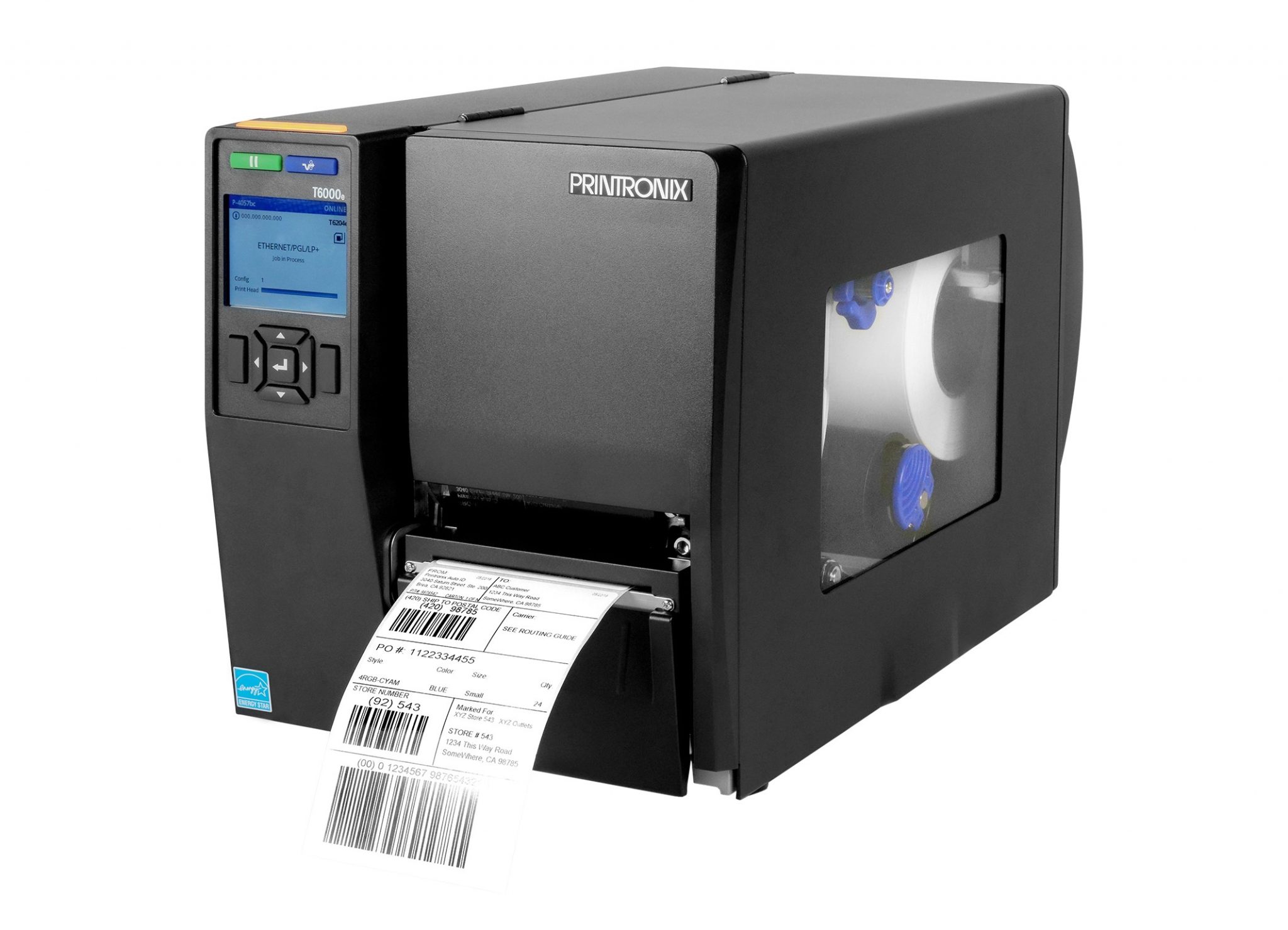
Printronix Auto ID has chosen the LogiMAT fair in Stuttgart (March 10-12) to unveil to Europe the successor to its popular T6000 series. The new T6000e device is “affordable yet impeccably engineered for multiple industrial applications where high volume, precision print quality and advanced features like RFID are essential,” says the company.

“This superior, enterprise-class upgrade to our mid-range platform is available in both 4” and 6” versions. The 4” device boasts an exceptional 600dpi print quality, while both versions offer RFID capability to print/encode on both standard labels and on-metal tags,” explains Neil Baker, Printronix Auto ID’s Sales Manager UK, Ireland, Benelux & South Africa.

The T6000e’s exceptional 14” per second print speed enables a staggering 10,000 labels to be printed a day, perfect for high volume environments like manufacturing, retail and logistics.

An interchangeable printhead on the 4” model allows not only 600 dpi print resolution but also 203dpi and 300dpi. This greatly expands applications for users, from straightforward shipping tags to intricate labels with detailed Asian characters required on items like PCB assemblies.

“On-metal tags typically include a foam insulator and metal foil backing that makes them incompatible with most standard RFID printer/encoders, says Neil. “But not so with the T6000e, it was engineered specifically to handle such media with ease.” He says that being able to encode and print on-metal and standard RFID labels and tags makes the T6000e ideal for cost-effective asset tagging of tools and equipment in manufacturing, supply chain, IT, healthcare, and service yard industries.

Neither does the new T6000e skimp on accuracy in every application. “It has built-in capability to back-up and completely overstrike any RFID labels that fail to encode properly,” explains Dave Huckle, Sales Manager UK, Ireland and the Nordics.

Like other Printronix Auto ID industrial printers, the T6000e was built on the Printronix System Architecture (PSA) platform. This simplifies and accelerates printer installation, minimising any impact on productivity.

The printer comes with nine printer emulations for easy plug-and-play in any competitor environment and has a large LCD colour screen for easy operation. The T6000e is backwards compatible with existing T6000 applications and can be specified with PrintNet Enterprise, a remote printer management tool.

“The focus of the LogiMAT fair is very much on optimising internal processes and the new T6000e ticks all the boxes in terms of boosting productivity and versatility,” says Dave.

Visitors to LogiMAT can see the new T6000e in action on stand D11 in Hall 6. It can be ordered now as Printronix Auto ID is discontinuing its predecessor, the T6000.

New Gripper Launched by OnRobot for Smaller Payloads

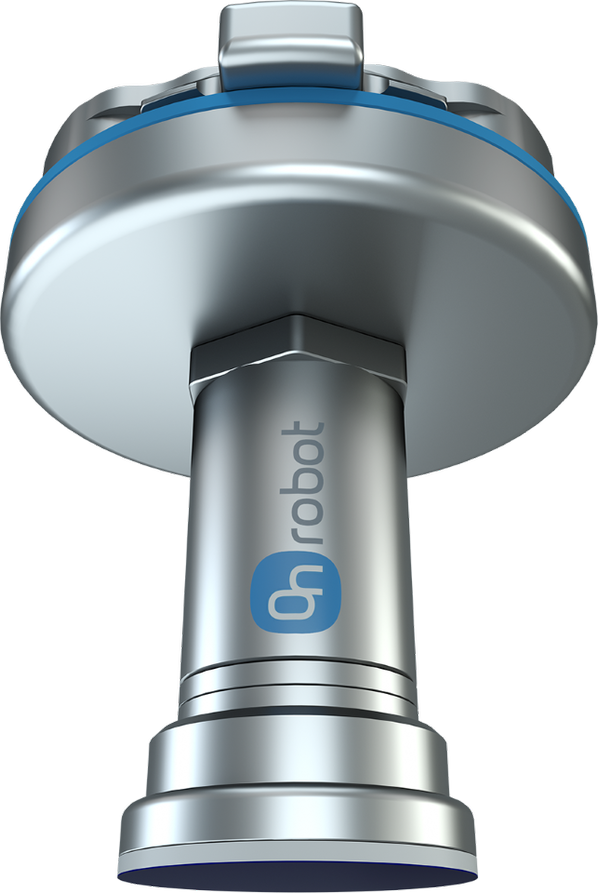
Robotic end-of-arm tooling specialist OnRobot has launched a compact, single-pad version of its Gecko no-mark adhesive gripper. The new Gecko Single Pad (SP) gripper brings the previous model’s adaptability to more varied applications with smaller payloads. It is available in three sizes, SP1, SP3 and SP5, indicating the different grippers’ lifting capacities in kilos.

The new Gecko SP can handle high-shine surfaces without leaving any marks, eliminating the cleaning step in the manufacturing process, thereby saving precious time and significantly improving output. The new model retains its larger sibling’s ability to grip a diverse range of workpieces, including perforated ones such as printed circuit boards, aluminum mesh or head gaskets.

The award-winning Gecko gripper technology uses millions of micro-scaled fibrillar stalks that adhere to a surface using powerful van der Waals forces — the same way that geckos climb. The technology helps critically reduce costs and maintenance as it requires no compressed air or external power, and its implementation is quick and easy, thanks to OnRobot’s One-System Solution platform, providing greater production flexibility with little to no programming.

“Our unique Gecko technology automates processes that no other gripper can accomplish, and now it’s available in a compact, flexible format that offers our customers even more options,” said Enrico Krog Iversen, CEO of OnRobot. “This plug-and-play gripper helps us fulfil our promise of offering a full range of easy, cost-effective, flexible robotic tooling that empowers customers to focus on the application rather than the robot.”

Post-Brexit UK Immigration Rules Slammed by Logistics Trade Body

The UK Warehousing Association (UKWA) has warned that the logistics industry is likely to face a shortage of vital workers following the Government’s announcement of its new points-based immigration system that will limit the number of low-skilled workers entering the UK.

Peter Ward, the Association’s CEO, commented: “‘Companies operating in the logistics and warehousing industry need access to low-skilled, low-cost labour and with low youth unemployment figures in the UK, the sector has traditionally looked to the EU to supplement its workforce.”
He continued: “While it is hoped that the majority of EU citizens currently working in UK warehouses and distribution centres will choose to stay in Britain by applying for EU settlement scheme status, it is clear that the inability to recruit shop-floor operations staff from other countries will add to the recruitment pressure that the logistics industry is already under.”

Peter Ward questioned the Government’s suggestion that businesses will be able to reduce their reliance on foreign workers by increasing levels of pay and investing in automation.

He said: “The logistics industry operates on the narrowest of margins and it is hard to see how any significant across-the-board pay increases for low-skilled staff could be introduced without passing on the additional costs, unless the days when online shoppers expect low priced goods with cost-free and immediate delivery become a thing of the past.

“And, while it is true that the use of automation is growing across the logistics industry, there are many roles within a typical warehouse operation that remain difficult to automate. Although recent developments have made automation more scalable and flexible, for many warehouse operators the outlay on the type of fixed assets found in automated systems – is impossible to justify. Furthermore, automation does not replace a workforce, but creates new jobs with different skills, which needs investment in training and cannot be achieved overnight.”

Denso Wave Europe Innovative Handheld Solutions at LogiMAT

Denso Wave Europe, part of the Toyota group, is one of the market’s leading providers for mobile data collection and offers various advantages for logistics and warehouse management. Industry 4.0 and the Internet of Things (IoT) are becoming increasingly important not only for the inventors of the QR Code, but also for the logistics sector. At this year’s LogiMAT, the experts for mobile data collection and data management will showcase their Device Management System (DMS) for DENSO handheld terminals, as well as their data management platform ORiN. They will be at booth F64 at the LogiMAT in Stuttgart.

Particular focus will be on the DMS, the Device Management System, from Denso Wave Europe, part of the Toyota group. The experts for mobile data collection and data management developed this modern device management system for the efficient use of DENSO handhelds. With the DMS, which can be tested at the LogiMAT, all the handhelds used within a company or group can be managed from just one computer. That is a great advantage in the logistics sector, as the administrator can see the status of every individual handheld at a glance.

Updates for one or more handhelds can easily be planned with the Device Management System from Denso Wave Europe. Hence, downtimes in logistics and warehouse management, can be kept to a minimum.

The DMS from DENSO can also be used to solve errors: The administrator can send a message to the faulty device, while another employee, for instance in logistics and warehousing, tests the solution on the handheld terminal simultaneously.

Thanks to the integrated theft protection, the administrator can even use the Device Management System to block a stolen handheld or set it back to its factory settings.

In addition, the handheld terminals BHT-1700 and BHT-1800 are compatible with the DMS. Full-service and support is an important virtue, since many of DENSO’s clients, for example from the logistics sector and warehouse management, emphasize that it is one of the reasons why they have been using DENSO’s devices for mobile data collection for more than 20 years.

The Data Management Platform ORiN will also be shown at the LogiMAT. It was developed to modernize supply chains, for example in logistics. As a result, new products, such as handhelds and scanners, but also processes can be integrated quickly and easily.

ORiN records the exact sequence of the production processes, including all delays and errors. Processes in logistics can thus be optimized and errors corrected.

What is special about ORiN, says Denso, is the fact that it enables the forwarding of data between all devices and applications, leading to a high degree of flexibility and offering advantages in logistics.


Subscribe

Get notified about New Episodes of our Podcast, New Magazine Issues and stay updated with our Weekly Newsletter.