TSC Receipt Printers “Easing Life for Postal, Parcel and Transport Firms”

Postal and parcel services as well as carriers currently have to face various challenges: the online market is still booming, especially in the B2C business – and in the healthcare sector the trade in goods is also boosting further. But cross-border deliveries are complicated due to strict controls and the profitable supplies in the B2B business are reduced significantly because of the shutdown. But especially elaborate protective measures make the delivery of parcels and mailings very time consuming or obstruct them. In short, routes are becoming troublesome and therefore uneconomic. And the recipients have to collect their goods at pick-up stations or shops themselves more often.
To meet all those challenges, TSC is the smartest partner of choice. Offering a strong range of flexibly deployable mobile, desktop and industrial printers and a comprehensive know-how, the Taiwanese printing manufacturer has es-tablished a leading position in the market in almost every European country and supports renowned providers such as Post Austria, Hermes, DHL, GLS, Panalpina or Mondial Relay with their daily work.

In case a large number of labels needs to be printed, TSC offers a wide range of high-performance industrial printers including the relating accessories. So, ViaPost/La Poste Group is using high-performance models such as MT, MB and ME series, ADS/Hopps Group TSCs new MT series and, addi-tionally, the compact desktop printers of TX series.
If providers are in need of large-size parcel labels, they preferably use 6” printers, such as the reliable TTP-2610MT series. The printers that are used for marking tasks, for example at STEFF or MUTUAL LOGISTIC, are equipped with the newest high speed electronic and are developed specifi-cally for the printing of high-quality thermal transfer and thermal direct labels in landscape format. Thanks to TSC’s innovative “Thermal Smart Control” the printers offer the best printing quality of their class.

TSCs compact desktop printers, such as TDP-244 or TDP-247 series, can be used at providers and pick-up stations, even in confined spaces. While DACHSER and GEODIS prefer DA200 series, ADS favours TX200 series for short and medium-run printing. The needed data can be identified and re-placed comfortably through the recipient’s smartphone, just as with mobile printers.

The deliverers are able to quickly print the necessary receipts at the handover using the sturdy mobile printers such as the proven Alpha series or the new TDM series. TSC’s models are one of the most lightweight devices of their class and are distinguished especially by their high battery capacity and simple operability.


Industry View: DCs Rise to Meet Unprecedented Challenges

Craig Summers, UK Managing Director of Manhattan Associates, discusses learnings from the crisis:

The COVID-19 pandemic has put a spotlight on supply chains. Not long ago, much of the world never considered how items got from manufacturers to store shelves. However, the consumer panic around the coronavirus outbreak has caused widespread store shortages and the global supply chain is now front-page news.

Companies and individuals on supply chain front lines are doing heroic work to help ensure the right items are going to the right places at the right time. As the supply chain technology partner for many of the world’s top brands, we at Manhattan Associates are fortunate to see these heroic efforts firsthand. Here are some observations on the challenges our customers have faced and how they’re overcoming them.

A Coronavirus peak

There is no doubt that distribution centres are going above and beyond to fulfill massive amounts of orders. Essential life-sustaining items like food, water, pharmaceuticals, medical devices, pet supplies and more are now in short supply. Pressing needs and panic buying have created the equivalent to peak season demand in many industries.

Of course, businesses normally know when their peak season will occur and they plan for it. The current situation was unexpected, requiring operations to safely ramp up staffing while also maintaining maximum throughput.

The foremost consideration in warehouses today is worker health and safety. A distribution center has a finite amount of space, so true social distancing is not always possible. However, a warehouse management system (WMS) can help with safety measures that are being put in place.

Our customers are employing the following strategies: split shifts; using the system to limit the number of employees in a given zone/aisle; re-routing pick paths based upon safety rather than productivity; and diligent sanitising of warehouse equipment. All in an effort to protect employees’ wellness.

Many customers we’ve spoken to also tell us that they’ve had to add to their workforce, which requires onboarding and training. With a normal peak, large groups of employees are coordinated and trained all at one time.

Today, new employees are being brought in on the fly, with many coming from service industries or distribution centres that have seen a downturn in demand. Efficiently getting them up to speed is critical. Distribution centres using intuitive interfaces have had an easier time turning new staff into productive workers.

Agility within the warehouse

There is great urgency within the supply chain for items like gloves, masks, ventilators, medicine and food staples. Panic buying has reduced stock below normal levels. As we have all witnessed, many items barely make it to the shelves before they’re snapped up. Therefore, DCs have needed to be as nimble as possible to keep things moving.

Crossdocking and flow-through capabilities have always been essential to getting product received, unloaded and turned around rapidly. Customers are reporting that now even greater amounts of inventory are going from inbound trailers to outbound trailers with minimal rehandling.

As ecommerce orders scale exponentially, many customers have also suddenly been required to adjust DC operations. Capacity once used for store shipments (even fully dedicated retail DCs) is being temporarily converted to deal with the surge in ecommerce volumes. Both operationally and systematically, it takes incredible flexibility to be able to handle the differences between retail and ecommerce fulfillment.

These days, operational agility can also include a flexible utilisation of production assets beyond the human workforce, like robots and automation. Robotics and automation are not compromised during a pandemic, don’t have to adhere to social distancing and can supplement DC workers across multiple tasks. A WMS that can seamlessly integrate a range of robotics options is definitely a plus and is also a reliable way to prepare for any future crises.

A supply chain full of heroes

The determination and ingenuity of the companies and individuals working long hours during an unsettling time to keep life and commerce moving forward leave us both inspired and grateful. We (at Manhattan) will continue to support them in any way we can with technology and expertise, so that, as new challenges emerge, we get through them together.

SaaS Specialist Generix Names New Group CTO

SaaS provider Generix Group has named Thomas Gentils Group Chief Technical Officer (CTO). Among his missions, it says, are defining the technological strategy, steering the company’s engineering, strategy and R&D operations – in close collaboration with the product managers – and deploying new SaaS products and services.

Gentils has a dual degree from HEC Paris in change management for engineering competence centres and also from Polytech Orléans and has had a 20-year career in software.

In September 2019, he joined Generix Group to run the Engineering Department. At the head of around 200 engineers spread across France and North America, he manages all product developments and new developments, the Group’s Research (notably with Big Data), and coordinates the teams in the different countries on these subjects. He will also manage the Group’s IT security, in collaboration with the Information Systems Department.

EPG Guarantees Functionality with Ergonomic Voxter Scan+

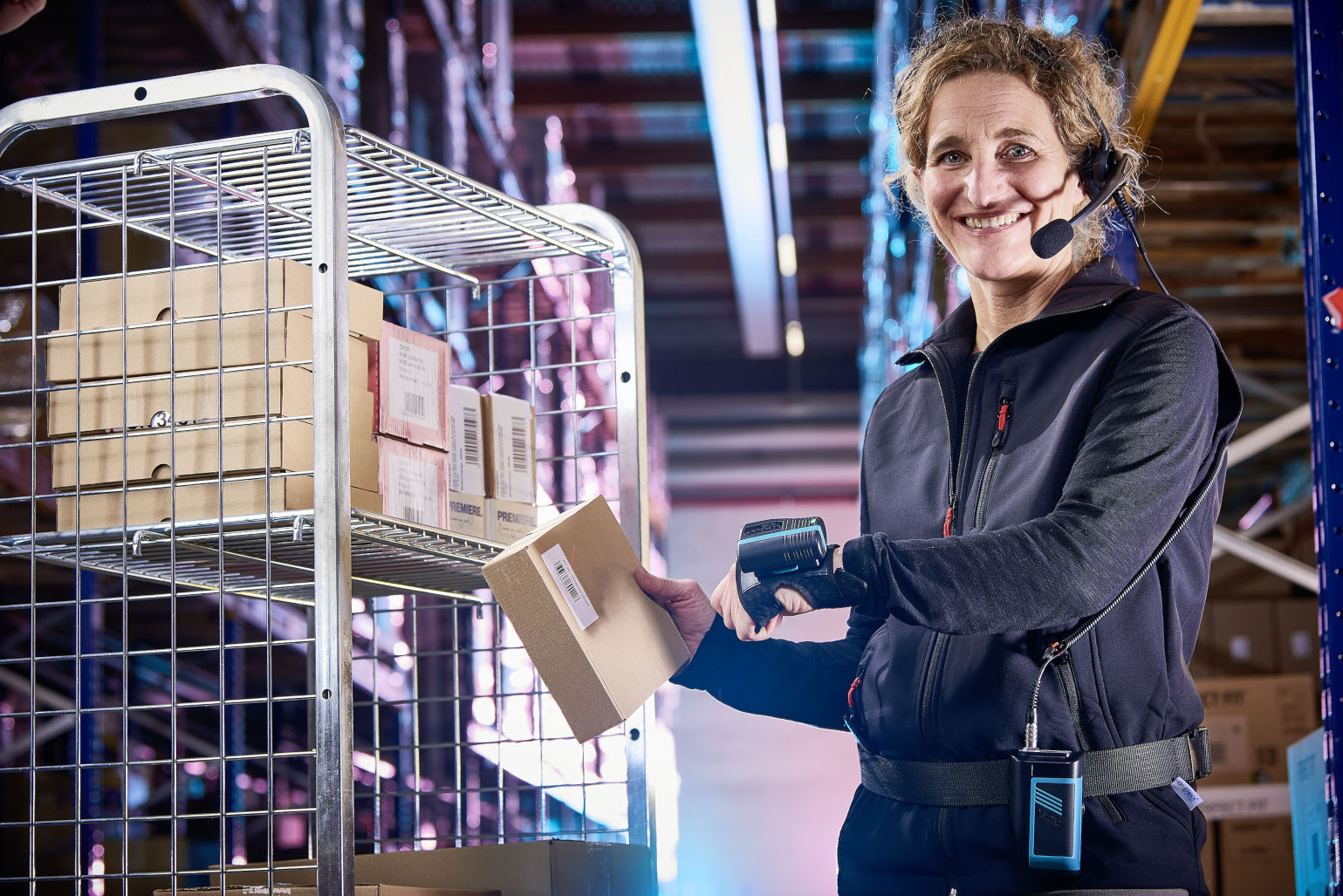
Voxter® Scan+ is the latest generation of EPG’s (Ehrhardt Partner Group) Bluetooth backhand scanner. The warehouse logistics specialist says the new hardware optimally fulfils requirements for ergonomic handling in the picking process, while also demonstrating its real strengths in tough warehouse environments, for example in refrigerated areas. Furthermore, the Voxter® Scan+ can identify DotCodes, fulfilling the now mandatory requirements for complete tracking and tracing in certain sectors. The scanner is also particularly low-maintenance, with no need for costly repairs. It has been designed almost completely without mechanical components, meaning that for the first time the scanner can also be activated via application-specific gesture recognition.

The Voxter® Scan+ really shows its strengths whenever, in addition to item retrieval, precise data entry is required for order fulfilment. If batch numbers or expiry dates need to be entered, for example, the ergonomic hands-free scanner is the best solution. It sits comfortably on the back of the picker’s hand and can therefore be optimally integrated into working procedures. The scanner is activated automatically via an optical proximity sensor or, alternatively, it can now for the first time be activated via application-specific gesture recognition. An integrated position sensor automatically deactivates the trigger upon detecting motion, ensuring that no unwanted scans are performed. This significantly increases process security. The Voxter® Scan+ also adopts a low-maintenance design concept: moving mechanical components do not form part of its design, helping to reduce wear and tear and significantly increasing its lifespan. The battery is attached without a mechanical lock, for instance, meaning it too can be changed in just one action.

Scanning at top speed
The Voxter® Scan+ is able to scan all conventional 1D and 2D barcodes and is for the first time also able to read DotCodes and dotted data matrix codes. The Bluetooth scanner thus fulfils the requirements placed on tracking and tracing processes, which are becoming mandatory in an increasing number of sectors. In the tobacco industry, for example, each individual packet of cigarettes must be clearly identifiable and traceable. Thanks to its new HD scan engine, the Voxter® Scan+ offers much greater scanning precision than its predecessor model and is up to the three times faster at up to 30 scans per second. Furthermore, the multi-scan function helps to save an enormous amount of time: up to 20 barcodes on a label can be scanned in just one single scan. The Voxter® Scan+ also features a high-performance battery capable of up to 100,000 scans within a single charge.

Optimum integration of hardware and software
The Voxter® Scan + supports all conventional Bluetooth profiles and can be used alongside Lydia® Voice or in combination with other mobile or stationary devices for pure scanning applications. When used in conjunction with Lydia® Voice, users benefit from a strong overall package of both software and hardware as well as additional features to ensure even more efficient data entry. This includes, for example, dynamic trigger activation. The scan is only performed if it is planned for a respective process step. If there are several codes on an item, this function ensures that only the desired code is read.

Agility Teams Up to Deliver MRI Machines to Malé, Maldives

Emerging markets logistics specialist Agility has teamed with Chapman Freeborn Airchartering to deliver CT scan and MRI machines to Malé, capital of the Maldives.

The Ministry of Health in Maldives ordered approximately 41 tons of cargo consisting of MRI, CT scan machines and other health equipment for distribution to four different hospitals across the chain of islands and atolls that make up the nation.

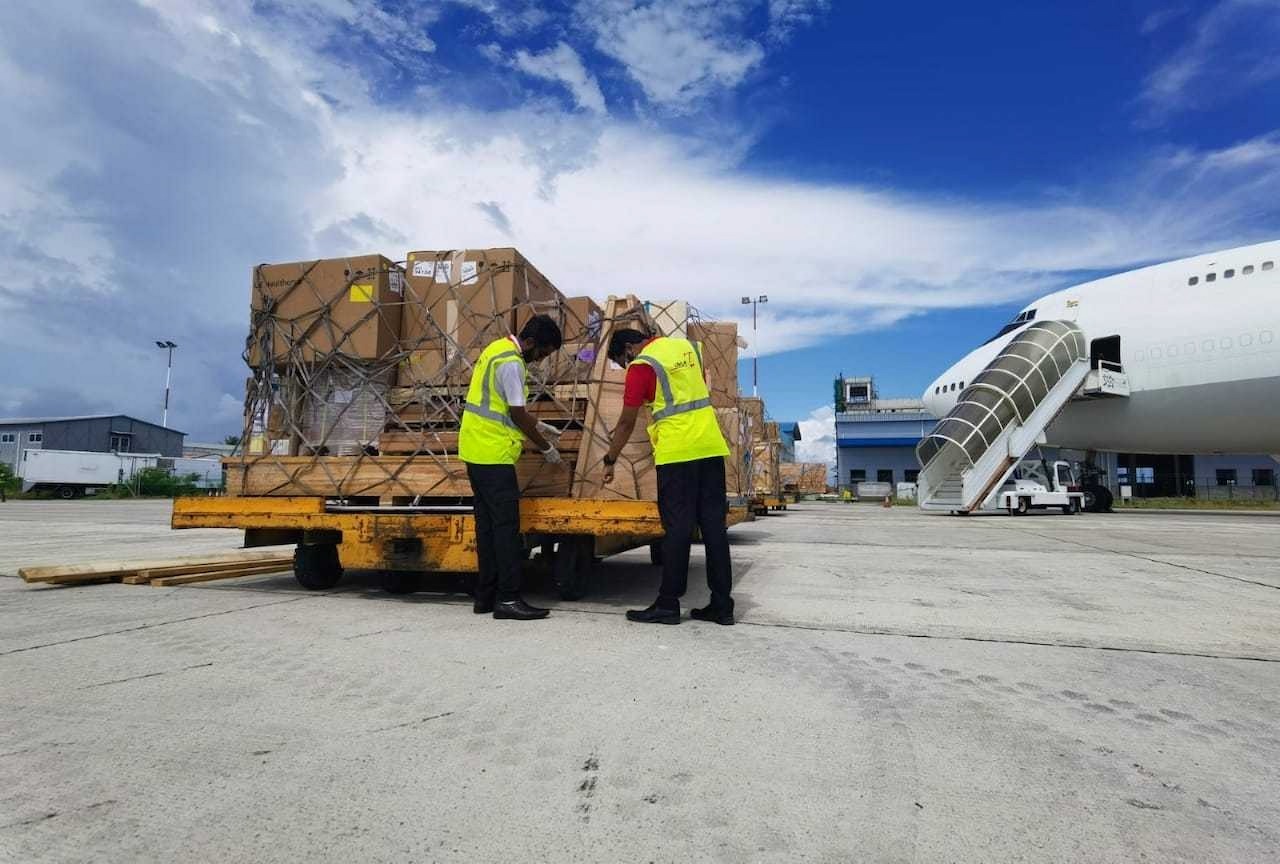
Agility airlifted the cargo into Dubai from various locations in the USA, China, France, Japan and India. The seamless movement of more than 287 pieces from five countries into Dubai was a challenge, especially when availability of flights and space became limited due to the COVID-19 outbreak.

Agility worked with Chapman Freeborn and chartered a B747 freighter from Al Maktoum International Airport in Dubai. Using B747 aircraft provided significant cost savings when compared with alternatives such as the Antonov An124 or the smaller Ilyushin Il-76 aircraft, which would have required three separate flights.

Satish Lakkaraju, Chief Commercial Officer of Agility India, said: “From the countries of origin, to the consolidation point in Dubai and to the final destination in Male, we were pleased to have such talented people working on this global project. We knew how vitally important this equipment is to the health of the people in the Maldives. We thank our Agility Dubai team and our trusted global partner, Chapman Freeborn, for expertly handling all challenges that arose. The timely execution of this shipment is another example of Agility’s commitment towards patient safety.”


DP World Launches Online Tools for Multimodal Freight Forwarders

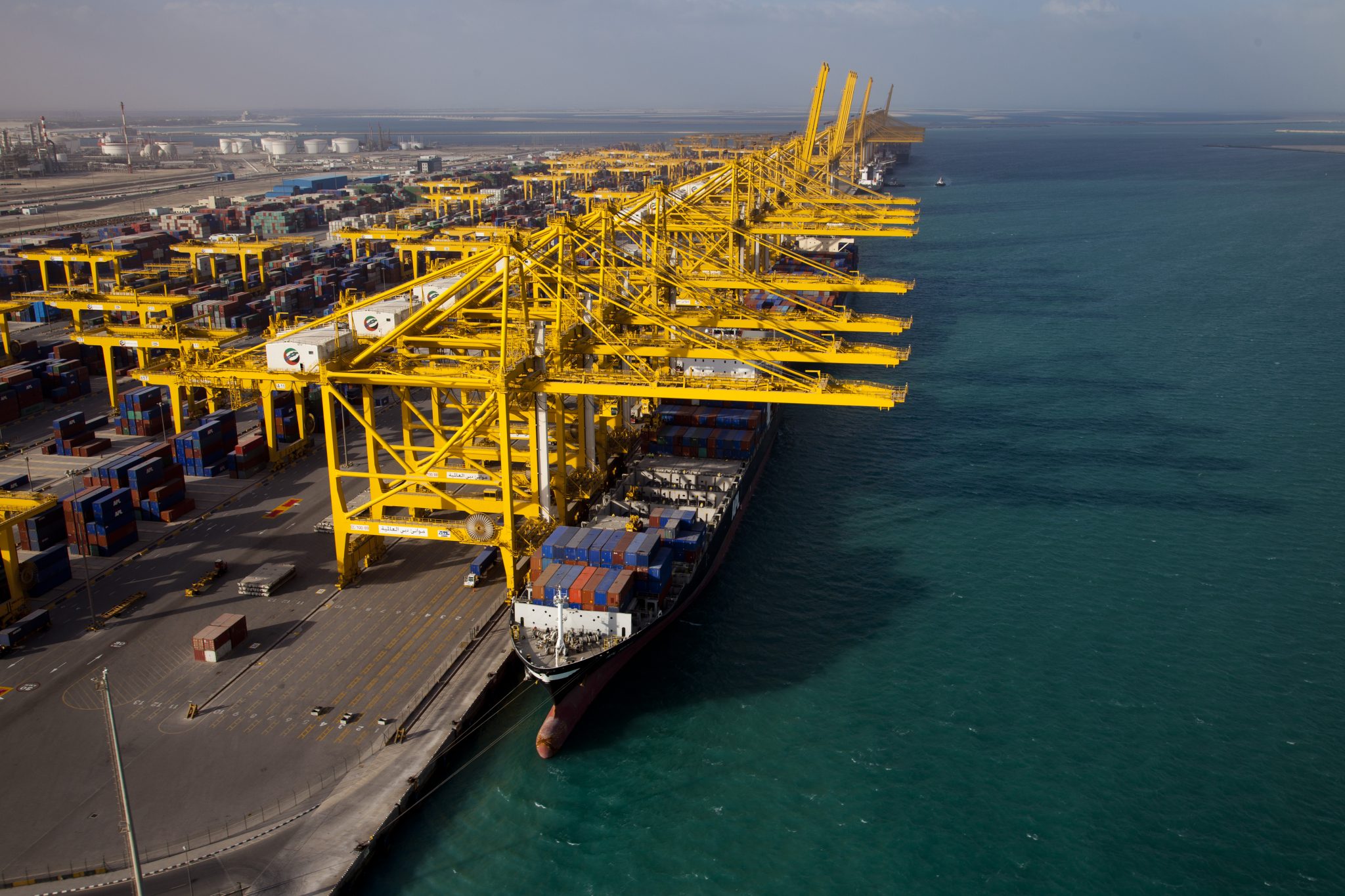
DP World has launched cutting-edge online logistics tools and services, covering sea, land and air shipping around the world. The connected ecosystem of platforms will enable freight forwarders and any business, to book shipments of cargo from and to anywhere in the world, by any combination of sea, land and air.

The initiative represents a major step forward in digitizing the management of logistics to increase the efficiency, visibility and the resilience of global supply chains. DP World has accelerated the already planned roll-out of the platforms to help companies meet the challenge of the Covid-19 crisis and keep trade flowing including vital food and medical supplies.

The initiative follows DP World’s acquisition of SeaRates.com, a digital platform that enables customers to transport cargo worldwide at the click of a mouse, along with LandRates.com and AirRates.com. DP World has also created the Digital Freight Alliance which is an online association that brings freight forwarders globally onto one platform, giving them access to new tools, routes and services, and enabling them to do more business anytime anywhere.

DP World Chief Operating Officer for Logistics and Technology, Mike Bhaskaran, said: “The Covid-19 pandemic has demonstrated that we must do all we can to make supply chains stronger to keep trade flowing, even in times of unprecedented challenges for the world. DP World’s vision is to digitalize supply chains leveraging our worldwide infrastructure of ports, terminals, economics zones and other assets.

Our new platforms are moving the management of moving cargo online. It will enable our customers to be more efficient and increase the visibility and predictability of supply chains. This will help them to grow their businesses, and ultimately keep countries supplied with the vital goods they need in the crisis.”

DP World’s growing global network of ports, terminals and economic zones are the bedrock of the business with more than 150 operations in over 50 countries. The digital trade and logistics platforms will leverage this vast network of real-world infrastructure to offer end-to-end supply chain services.

Sultan Ahmed bin Sulayem, Group Chairman and CEO, DP World said: “We believe that our new platforms, including the Digital Freight Alliance, will contribute to opening new commercial opportunities for our customers, even during the sudden economic downturn.

“This technology is a direct business enabler. Digitising trade will help companies do more business, more efficiently. It will also support the global imperative to keep trade moving during the current crisis to help meet the demand of world markets.”

Toyota Material Handling Europe Wins EcoVadis Platinum

Every year, Toyota Material Handling Europe undergoes an assessment by EcoVadis, which focuses on the topics Environment, Labour & Human Rights, Sustainable Procurement and Ethics. The past few years, Toyota has received Gold, but this year the Platinum award has been granted. This is the highest possible score, ranking Toyota Material Handling alongside the top 1% of companies in the ‘general-purpose machinery’ sector.

“EcoVadis Platinum enables us to build trust with our customers, suppliers and other stakeholders, and encourages all of us in Toyota Material Handling Europe to continue integrating sustainability in the way we work,” says Tom Schalenbourg, Director Sustainable Development at Toyota Material Handling Europe.

EcoVadis offering transparency to customers

Toyota Material Handling Europe uses EcoVadis’ third-party evaluations to streamline transparency to its customers, and to drive performance within its network. Because of the growing global trend for increasing supply chain transparency and accountability, more and more businesses are increasingly including CSR assessments in their procurement processes. EcoVadis, the leading sustainability rating company, provides sustainability ratings of more than 61,000 suppliers worldwide on their environmental, social and ethical performance. Its online platform allows 175 multinationals to access ratings of their selected suppliers across 155 countries.

Team effort

All Toyota Material Handling’s European factories and local entities undergo this yearly survey, which leads to an individual scoring of each entity. So far, 16 out of 26 local entities have achieved EcoVadis Gold level. Toyota Material Handling Europe’s score takes into account all European data and also includes some performances by Toyota Industries Corporation (TICO).

In 2018, Toyota Material Handling Europe also received the first ever Supplier Excellence Award from EcoVadis for ‘Best Group Engagement’. The award represented Toyota’s commitment to transparency on the performance of all local entities, Gold rating for 30% of subsidiaries, and a top 3% ranking in the industry.

EcoVadis evaluates four themes, of which each theme varies, and Labour and Human Rights weighs the heaviest. Toyota Material Handling Europe has received the following rating for each theme:

Labour and Human Rights 80/100
Environment 80/100
Ethics 70/100
Sustainable Procurement 70/100

Toyota Material Handling Europe appointed Spaniard Ernesto Domínguez as CEO earlier this year.


DSV Partners with European Universities

DSV has strengthened its partnerships with a number of leading universities to help its customers transition to the smart, connected and sustainable supply chains of the future.

Supply chains are more complex, more interconnected and more important than ever before, with millions of individuals and thousands of companies working together to manufacture and deliver products to billions of consumers all over the globe. In recent weeks, the impact of the coronavirus has highlighted the critical role that a robust supply chain plays in delivering the products we all rely on in our daily lives.

But global supply chains are under scrutiny as the market and consumers realise that traditional supply chains have fundamental flaws that impacts continuity of supply. The coronavirus is accelerating the changes behind the supply chain transformations of the post-coronavirus. According to Erik Van Wunnik who runs the DSV exploration lab, “It has never been a more important and exciting time to work in supply chains. Important, because the coronavirus has shown how key our supply chain workers are in ensuring that medical equipment, food and other essential products reach consumers across the world. And exciting, as new technologies such as additive manufacturing (3D printing), drones, 5G, autonomous vehicles and cobotics are allowing us to completely rethink how to design and operate global supply chains”.

The changes occurring in global supply chains go beyond just new technologies, as explained by Lindsay Zingg, Senior Director of Sustainability at DSV, “Every company is increasingly faced with the challenge of making their supply chains not just more customer centric, faster, more resilient and more efficient, but also making fundamental changes to make their supply chains environmentally sustainable and socially responsible.”

The university partnerships allow DSV and its customers to tap into the latest research and knowledge about the future of global supply chains. As Professor Mike Wilson, EVP of Latin America and Logistics Manufacturing Services (LMS) at DSV explains, “DSV are experts in the operational demands of running supply chains, but when you are working in the fast and demanding operational side of the business, it can be difficult to find the time to fully research and deeply investigate the fundamental and long-term changes that are occurring in supply chains, that’s why partnering with universities, who have the focus, expertise and time to explore the bigger questions in global supply chains, are so important for our business and our customers’ businesses”.

Cobotics in logistics – with Eindhoven Technical University
DSV has already established a strong partnership with Eindhoven Technical University (TU/e), where together DSV and TU/e have secured a research grant to investigate how cobotics can be used within logistics operations (you can read more here). The project is just one part of the wider programme of work being explored at the DSV exploration lab, with other projects investigating the implications of 3D Printing, Robotics and VR/AR on future global supply chains.

Additive manufacturing in logistics – with Cardiff Business School
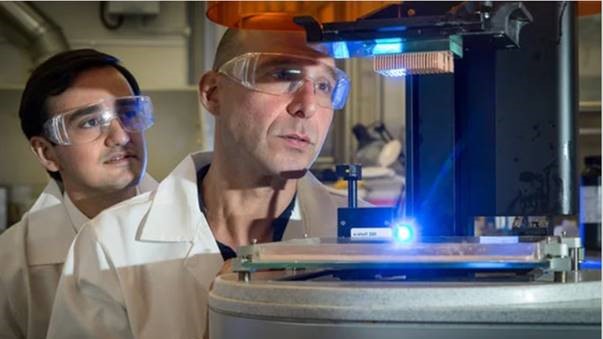
DSV also has a long-standing partnership with Cardiff University, the PARC Institute of Manufacturing, Logistics and Inventory was founded in 2014 by DSV’s Mike Wilson and Professor Aris Syntetos of Cardiff Business School. Together, DSV and the PARC Institute recently secured a significant grant to create a new additive manufacturing Re-Makerspace Centre (more info here). Hrishikesh Pawar who leads the Re-Makerspace project explains, “Additive Manufacturing (3DP) opens up new possibilities for companies to move towards the circular sustainable supply chains of the future, and the technology is proving key to rapidly design and locally manufacture the new products needed in the fight against the coronavirus.

Looking beyond the coronavirus, our new Remakerspace centre will allow our customers to access the latest 3DP design and manufacturing equipment to allow us to work together with our customers to design products for supply chains with repair, remanufacturing and re-use in mind. Circularity is the future of supply chains, and our new DSV Remakerspace centre will help us and our customers lead the transition from the old elongated, linear supply chains of the past, to the new circular sustainable supply chains of the future.”

Executive in Residence – with Copenhagen Business School
And for DSV, the commitment to university and industry collaboration to address the big questions about the future of supply chains starts at the top, with DSV CEO Jens Bjørn Andersen being part of the Executive in Residence programme at Copenhagen Business School (more here). The aim of the programme is to develop leading edge research and education in close collaboration with industrial partners.


Interroll Launches New Range of Digital Expertise Channels

Conveying specialist Interroll is expanding and deepening interactive contact with its customers with new online services. From now on, training events for customers can be easily booked and conducted via the Internet, meetings with experts can be organised, and short videos on important industry topics can be accessed, it says.

An important cornerstone of the new offering is the Interroll Academy, which for many years has been the driving force behind the transfer of knowledge between employees, customers and partners. The integrated learning programs offered by the Group-wide training and collaboration centre ensure a seamless combination of different learning methods, techniques and materials. In this way, what has been learned can be optimally deepened and applied. The Interroll Academy cooperates with leading organisations such as the Fraunhofer Institute for Material Flow and Logistics in Dortmund, Germany, and Krauthammer.

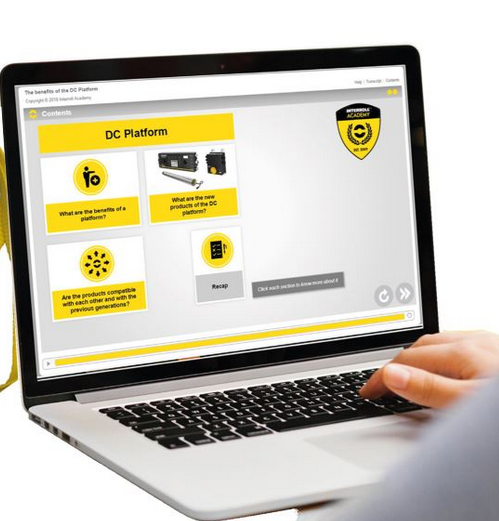
With the new e-learning offering by the Interroll Academy, users can access online training content from anywhere at any time. One example of the range of programs on offer is the user training course on the Interroll Layout designer, the popular planning software for the user-friendly design of complete material flow solutions.

Another possibility for a fast, targeted and worldwide exchange of know-how is the online booking of personal expert discussions, for example on technical or industry-specific issues. In addition, informative short videos—educational clips—provide interested parties with a quick introduction to topics that affect important industries such as the food or fashion industry.

“Our customers and partners rely on quality, speed and easiness from Interroll. We consistently deliver on this promise in the digital world as well. By further expanding our channels for virtual interaction, they can now access our expertise even more easily and enter into a professional exchange with us,” explains Jens Karolyi, Senior Vice President Corporate Marketing & Culture of the Interroll Group.

Masca ID Laser Marking Systems Installed at TVH

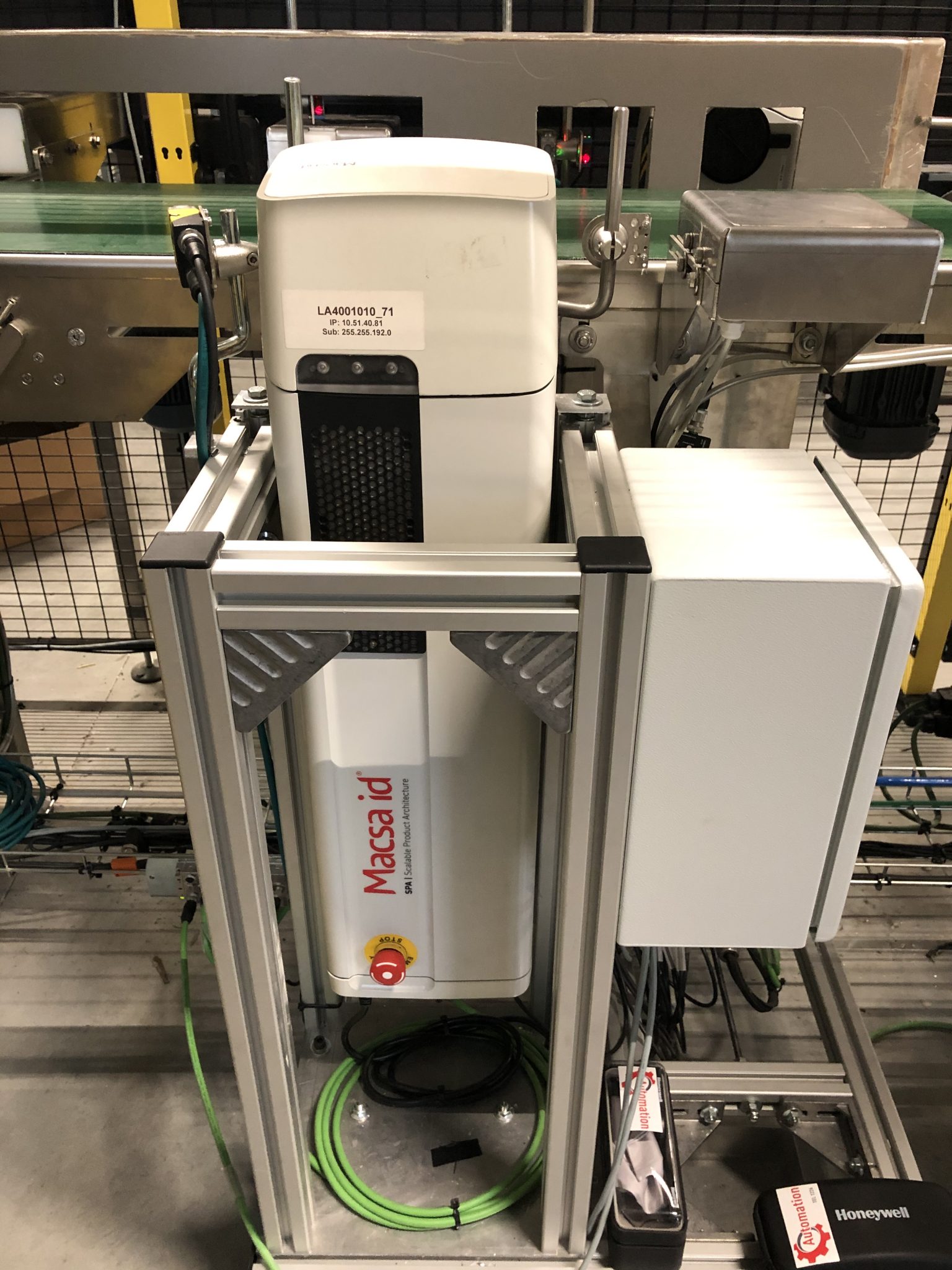
After a three-month trial period against inkjet printing technology, Macsa ID (www.macsa.co.uk) – a manufacturer of advanced coding and marking equipment – has installed 17 SPA C10 laser marking systems with beam expanders at Belgium-based global parts and accessories supplier TVH’s new logistics centre. They are applying two-dimensional (2D) codes to some 192,000 cardboard boxes per day. Proven to significantly reduce production line stoppages and downtime, the laser solution was chosen for its state-of-the-art, modular design, reliability and lower lifetime cost of ownership.

TVH is a global supplier of parts and accessories for material handling, industrial and agricultural equipment with customers in more than 170 countries, and has been split up into two business units: TVH Parts and TVH Equipment. The company continually invests in automation and optimisation of its logistical processes to improve its service.

With its head office in Waregem, Belgium, TVH contacted Macsa’s exclusive distributor Codipack when it required an up-to-date coding solution for its new logistics centre. With previous experience of print and apply technology, TVH originally planned to use a similar system to apply a unique 2D code on two sides of each cardboard box.

The codes contain ten numeric numbers, measure approximately 12mm x 12mm in size with the purpose of identifying the box at each stage of the logistics process, right up until shipment.

Once a box is identified by a reader / scanner, it continues to the picking department where the same unique code is scanned again and it is filled with the designated products. The shipping list is added once the code is scanned at the next step.

After that, the scanned code identifies which cover needs to be added. In the final stage, the unchanged code indicates which shipping label needs to be applied to the box. Given its importance at every part of the process, the quality and readability of the 2D codes is vital.

Rather than opting for another print and apply system, TVH chose to install an inkjet printer and Macsa laser unit on a test line over a three-month period. At the end of the trial, the Macsa SPA C10 laser solution was proven to be more reliable and offered a better total cost of ownership.

The Macsa SPA C10 laser model offered a number of advantages over inkjet. It does not require consumables which represented a potential saving of 140,000,000 labels per year. Plus, there are no stoppages on the production line due to label roll replacements or more unplanned production stoppages or losses.

Macsa also won this project due to the technical back up and the laser’s state of the art, modular design which allows the tube or head to be changed with minimal fuss.

A total of 16 Macsa SPA C10 lasers were installed across eight production lines with a spare included as part of the solution in case of any emergencies. The installation runs 24/7 and marks some 192,000 cartons per day or 1,344,000 cartons per week.

The fast and powerful Macsa SPA C10 laser utilises CO2 technology and is designed to meet the most demanding coding requirements. It is ideal for industrial and packaging manufacturers as it can be used on paper, cardboard, glass and a variety of plastics. With a range of optional features and speeds, it can be optimised for individual needs.

A spokesperson for TVH comments: “We made a total cost of ownership calculation and it became clear that the laser was the best solution.

“The choice of Macsa’s laser was made because when using labels we had a lot of stoppages on the line to change labels and the position was not always accurate.

“The inkjet printer gave problems with print quality due to ink drying out of the nozzles. With the Macsa lasers, we have no more production losses or stops.”

Subscribe

Get notified about New Episodes of our Podcast, New Magazine Issues and stay updated with our Weekly Newsletter.