New Seatrade Perishable Cargo Service at Port of Dover

Seatrade has launched a second regular service at the Port of Dover for the discharge of perishable cargo, which the port says highlights its exceptional position as a world leader in the handling of fresh produce.

Port of Dover Cargo is now officially the UK Port of call for Seatrade’s fast, direct, and dedicated Zodiac and Rayo Reefer services, meaning the leading reefer operator will now visit the Port twice a week. Dover becomes Seatrade’s UK hub to ensure the quickest possible transit of fruit from the Caribbean and Central and South America into Europe.

The recent arrival of the Swedish Stream vessel into Dover from Puerto Barrios marked the first of regular visits to the UK Port by the Zodiac service, connecting the Caribbean with Europe and on its way back, France with Columbia, Costa Rica, Guatemala and Honduras.

It joins the Rayo Reefer Service which launched in Dover over 10 years ago, connecting the ports of Puerto Bolivar, Guayaquil and Paita directly with the UK and France.

Nik Scott-Gray, General Manager at Port of Dover Cargo Limited said:

“We are delighted to be welcoming Seatrade back to Dover for many regular calls now and into the future. Port of Dover has an excellent trade in perishable cargo, so we are pleased to be the UK Port of choice for two major Seatrade services.

Port of Dover Cargo Ltd is unrivalled with its efficiency and strategic location next to the world’s busiest shipping lane, so we are perfectly placed to help deliver Seatrade’s fast, direct and dedicated transits.”

Geodis Names New MD in Ireland

Geodis’s appointment of Gary O’Connor at MD for Ireland was effective in June and is aimed at helping drive the France-based global 3PL’s growth in this important market. The strategy will be focused on developing business in the healthcare sector while growing the company’s influence over well-established verticals, including e-Commerce, high tech and FMCG.

He will oversee the operations encompassing Contract Logistics, Overland Transport, Freight Forwarding, Supply Chain Optimization, Express & Parcel Deliveries and effectively manages customers’ supply chains in their totality. “Gary is well qualified for the challenging role,” says Laurent Parat, President and CEO of the WEMEA Region. “As MD in Ireland of another leading logistics company for the last number of years, Gary worked closely within the healthcare sector, serving global clients with large manufacturing or distribution operations in the country. He brings valuable knowledge of a sector that demands high levels of quality and compliance from its 3PL partners.”

O’Connor joins a Geodis team that recently established itself in a new state of the art logistics facility at Dublin Airport Logistics Park. The property extends to almost 20,000 sq m. With a fully secured yard and 15 dock levellers, the new operation benefits from its proximity to the airport as well as swift access to the city centre and road links to the rest of the country.

“I’m hoping to add my 15-year experience of working with healthcare supply chains to that of the Geodis Ireland team, which already has considerable presence in the sector,” says O’Connor. “The growth potential in the Irish healthcare market is encouraging, as is Geodis’ ability to implement true end-to-end control of customers’ supply chains across our other target verticals. I am excited by the possibilities of designing solutions that potentially comprise forwarding, transport, contract logistics, distribution and last-mile delivery and allow our customers to grow their businesses.”

New UK Midlands Depot for Pallet Pooler LPR

Europe’s leading pallet pooling business, LPR (a division of Euro Pool Group), is continuing its expansion plans despite the impact of Covid-19 with the opening of a new depot.

During July 2020, LPR UK & Ireland opened its first Midlands depot at Coventry. The site, capable of processing 4 million pallets per annum, is operated by James Jones & Sons (Pallets & Packaging) Limited on behalf of LPR and will enable the specialist pallet pooler to achieve its double digit, year on year, growth.

This brand new site is the culmination of more than 18 months of hard work by the team, led by Simon Wood, Operations Director, to ensure that the site and operating capacity will provide both future proofing and reinforce its extensive coverage.

Gil Covey, Non- Executive Chairman at James Jones & Sons (Pallets and Packaging) Limited comments; “We have been working with LPR for many years, and during this time we have used our experience and expertise to support their exceptional growth. The decision by LPR to award James Jones & Sons the contract to operate the Coventry depot, clearly demonstrates LPR’s culture of building long term relationships and partnership working. We look forward to further supporting LPR in the future.”

Simon Wood, Operations Director at LPR UK & Ireland said “The new Midlands depot is the jewel in the LPR UK & Ireland crown and I can’t wait to welcome our partners and customers to this flagship depot – once Government guidelines allow us to do so!”

Adrian Fleming, LPR Managing Director Region North, said “I couldn’t be happier to be able to announce this great news during these uncertain times. The team at LPR UK & Ireland have worked tirelessly to secure this new site to not only support our growth plans, but also to ensure that we are in a position to service our customers when and where they need us.”

Hiring Spree for Emerging UK Fuelcard Supplier

Emerging UK-based specialist adviser to fleet operators FLEETMAXX is looking to expand its number of operators – and is hiring new staff in the process.

“During this coronavirus pandemic, our group has been helping more than 50,000 customers, including, HGV operators, hauliers, couriers, delivery drivers, plumbers, builders, electricians, large organisations, transport managers, sole traders, owner drivers and start-up companies, to continue doing business,” says marketing manager Steve Clarke. “We are a wholly-owned division of Oilfast Ltd, who are a national bulk fuel, lubricant and licensed Adblue® distributor. With that support in place, we have been secure in our staff retention during this Covid-19 situation. Now we are looking to expand.”

The company is basing its pitch both to new staff recruits and customers on the loyalty and enthusiasm shown by its staff. “Although preventing the spread of this invisible virus is challenging in the way we use our space in our Motherwell and Kent offices, it has not knocked our team spirit, and we are looking forward to expanding our group of operators,” he said.

Examples of those staff include:

Rob Webb (above) is the General Manager at the Kent Office, and he explains: “I’m lucky to have started well by recruiting some dedicated and committed professionals to help me make us the trusted partner for commercial vehicle operators. I always follow the advice of the late, great motivational speaker Zig Ziglar: ‘What you send out comes back, what you sow you reap, what you give you get and what you see in others, exists in you.”

Sue Florence is the General Manager at the Motherwell Office, she explains: “Working for a family-run company, means everyone is involved in making the business a success, great team, great atmosphere and we are always going that extra mile.”

In the Kent office, Demi Yuill agrees and continues: “The most satisfying part of my job is helping people genuinely. What we offer is honesty, there are no hidden extras, and there are true business benefits to be made.”

Joe Molineaux adds: “FLEETMAXX for me has changed my attitude and focus when it comes to my work life. It offers much more independence than anywhere I have worked before. The most rewarding thing for me is that I can offer a product I believe in, and I believe it can be a benefit to our customers.”

Anthony Stafford describes why he loves working at FLEETMAX SOLUTIONS: “I love talking to customers and showing them how much their current supplier is overcharging and what we can do for them.”

The fuel card range at FLEETMAXX SOLUTIONS is valid at BP, Esso, Shell, and Texaco sites as well as supermarkets (Fuelgenie), independent retailers and specialist Diesel networks, such as Keyfuels and UK Fuels.

Sustainability and Visibility Climbing Supply Chain Agenda, Says Survey

Epicor Software Corporation has today released its 2020 Global Growth Index, a report that explores the growth trajectory of companies around the world and provides insight on how business leaders are using technology to support and drive growth initiatives. The index looks at the constantly changing state of growth in the manufacturing, distribution, and retail industries along with what trends impact the bottom line.

In the UK, a third of businesses (33%) felt that political pressures over the last twelve months were affecting their supply chain and ability to grow. In particular, almost half (49%) felt that Brexit and Covid-19 respectively, were going to negatively impact business growth over the coming year.

The wider political volatility combined with the New Now has highlighted how one of the main problems faced by many UK businesses is the lack of visibility into suppliers and customers when needing to change, scale up, or scale down operations. Without visibility and knowledge of external influences, businesses felt unable to react quickly and appropriately to market changes.

With allegations surfacing in the UK of factories paying half the minimum wage or ignoring physical distancing precautions during lockdown, the research found that organisations in the UK did see the correlation between improving visibility and creating sustainable supply chains with business growth.

Almost half (49%) of companies surveyed said that they are directly investing in sustainability efforts in order to drive business growth and promote ethical sourcing. Meanwhile, just under a third (32%) are turning to ‘green’ power sources for their operations, and 35% are focusing on making sure they have a positive social impact across the supply chain. In addition, over a third (36%) of the UK businesses surveyed recognised that better visibility would help them overcome their business growth challenges in the next 12 months.

With sustainability being front of mind for the UK’s conscious consumer, UK organisations recognise the need to meet this requirement in their supply chains to be successful, as the research highlighted that over a third (39%) believe that customer trust is key to increasing its competitiveness.

“What we expect to see is demand for more agile and flexible supply chains in the UK,” commented Andy Coussins, SVP and Head of International at Epicor.

“We anticipate artificial intelligence and machine learning to start to make an impact in the same way we have seen analytics and big data making a difference. Data-driven operations allow companies to understand their supply chain, their relationships with customers, partners and suppliers, in a way which they have never before. With these new in-depth insights, they can plan to optimise all along the chain to reach sustainability goals and react much quicker to external factors.”

When asked about key technology trends that businesses could see emerging over the next 12-18 months, 5G (36%) and AI/ML (27%) were said to have the largest direct impact on future growth in their industry. On what played the greatest role in creating a positive influence for business growth over the past 12 months, technology and IT infrastructure (33.9%) was the highlight for those surveyed.

“It’s no secret that recent global events have disrupted the normal order of operations,” continued Coussins. “The trends outlined in this report prove to the wider business community that technology investment is paying off, and this technology investment will continue to be vital if they wish to successfully maintain business resiliency, adapt to political volatility, and stay flexible around market changes.”

This online survey was conducted in March 2020 by global research firm Dimensional Research. Responses were received from 2,002 professionals across 23 countries. All respondents oversee or perform essential duties that informs the business decisions for their organisation, across the manufacturing, distribution and shipping, retail and e-commerce verticals. The survey did not knowingly poll customers of Epicor. Survey participants represented organisations with 100 employees to 5,000+ employees worldwide.

“NO Plastic Pallet Supply Issues Post-Brexit” says UK Specialist

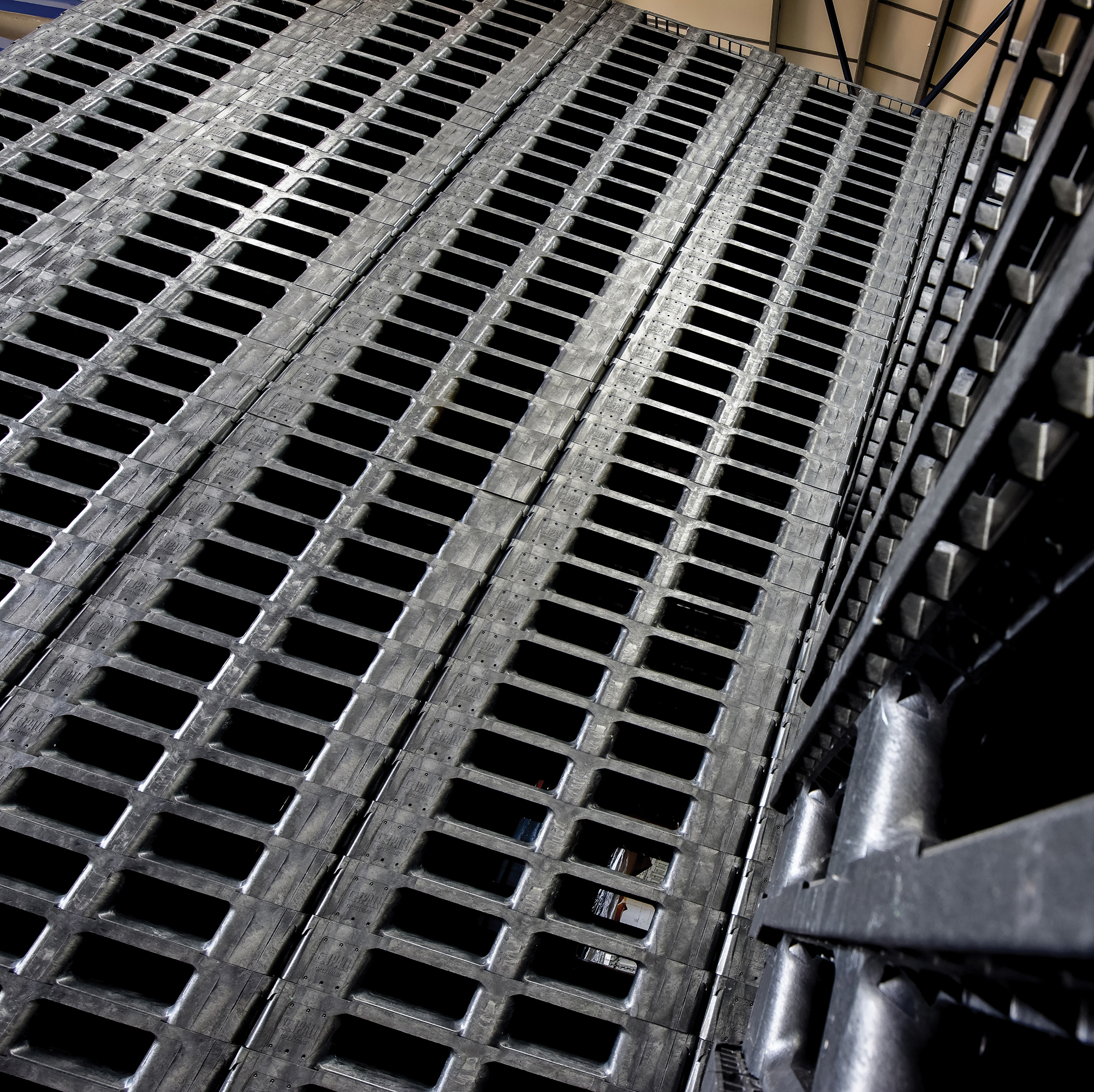
Plastic pallet specialist Jim Hardisty of goplasticpallets.com has reassured customers and exporters that there are NO issues with plastic pallets post-Brexit next January.

This stark warning follows the revelation by the UK Timber Packaging and Pallet Confederation (TIMCON) that Britain will not have enough wooden pallets that comply with ISPM15 heat treatment regulations, which come into effect on 1st January 2021 for all goods moving between the UK and the EU.

Hardisty said: “If your business exports to the EU, switching now from wooden pallets to a reliable alternative, like plastic pallets – that are completely exempt from ISPM15 regulations – could prevent untold disruption to your supply chain.

“Meeting demand is not an issue for us. As the UK’s leading plastic pallet supplier with sole distributor agreements with Europe’s major manufacturers, we hold the largest stock – more than 135 types of plastic pallets and pallet boxes, all available for next day delivery within the UK. Plus 96% of our plastic pallets are made from recycled plastic.

“Other alternatives to wooden pallets exist, but none as durable, hygienic and reliable as the plastic pallet.

“With the impact of Covid-19, it’s not surprising that TIMCON’s heat treatment efforts have been hampered but now is the time for UK exporters to act to avoid falling victim to supply issues.”

Industry View: Make Your Software Match Your Changing Order Profiles

By Tony Dobson, SnapFulfil MD for UK & Europe

Bricks-and-mortar retail outlets have been decimated during lockdown and the ensuing chaos has travelled swiftly up the supply chain – especially with the many challenges of bulk-shipped goods entering a distribution network for further dispersal to individual locations.

Little wonder then that, rather than persisting with the costly and fragmented distribution of vast pallet quantities to various physical sites, there’s been a rapid and accelerated transition to e-commerce purchasing and delivery to homes.

However, large distribution centres, organised and equipped for bulk ‘pallet in, pallet out’ operations are seeing a new problem emerge: how to support smaller, incremental orders in the thousands with the same technology that supports large bulk orders in the dozens or scores daily.

With many warehouses traditionally B2B and optimised for the wholesale market this transition just isn’t viable, because carriers change (a greater reliance on parcel versus LTL/FTL), order profiles change, order volume increases and, consequently, so does the actual process of working efficiently to satisfy demand.

Simply trying to pick small orders in the same way as previously picked multiple-pallet orders will quickly prove inefficient, because without changes to process that take account of the lower order size, the cost of picking will be disproportionate to the order value.

It’s at this stage that the features and capabilities of traditional, on premise WMS systems are revealed to be lacking and not even configurable, because they don’t lend themselves to a quick, responsive set of changes easily delivered to multiple distribution centres. They come with the most recent version or release at the time of installation, but frequently require significant time and investment to modify that version in the face of new challenges.

Advanced, cloud based WMS like SnapFulfil, which is B2C engineered, are swiftly and efficiently implemented – even remotely –with application design based on flexibility and functionality (not customisation) one of the strongest options. Just as important when change is needed immediately, a centrally and cloud hosted application allows for quick tweaks and updates to configuration.

It can also offer feature parity with both LTL/FTL orders and having been specifically designed to satisfy e-commerce order fulfilment as a core competency, can quickly allow businesses to pivot and take advantage of changes in customer purchasing methods.

More nimble, configuration-based applications don’t restrict creative solutions either and support change management by allowing the flow of data and order of operations within the application to be modified accordingly – empowering management to easily store, organise, deliver and track the accomplishment of work throughout a facility.

What’s more, the increasingly transactional nature of modern warehouse management requires on-demand scalability and reliable performance – and a more resource-based pricing structure enables SnapFulfil to expand in line with customer needs, without having to over invest in cloud capacity that could remain unused.

So, the financial and brand benefits of the B2C and D2C models can be substantial (especially post lockdown) yet it will likely require a dramatic retooling of operational expertise and efficiencies – from customer service and experience to optimised returns management, direct merchandising and  delivery, plus of course, warehousing and logistics.

Control via a fully integrated and advanced WMS is crucial, because the cost of such systems can be high and fit-for-purpose software needs to bring it all together. The return on investment is fantastic in terms of staff and space saving, but getting it wrong can be an expensive mistake. It must be able to react accordingly to customer and business change – and that has never been more important.

White Paper Explores Ways to Optimise Last-Mile Logistics

Courier, Express and Parcel (CEP) service providers face major challenges. Firstly, they have to cope with the high volume of orders, which – driven by e-commerce – is constantly increasing. Then they also have to deal with less and less tolerance from customers towards delivery drivers. Double-parking, air pollution in the city centre caused by delivery vehicles and higher delivery costs are just some of the criticisms that CEP service providers have to face. And that is not all. Delivering an item to a recipient is the most expensive and time-consuming stage of the entire logistics chain. The last mile is a challenge. In its new white paper, EPG gets to the bottom of the matter with Prof. Dr. Boris Zimmermann from the Fulda University of Applied Sciences and presents possible ways to optimise the delivery process. The logistics experts also provide insight into various scenarios for the future that may soon become reality.

 The last mile of logistics – the distance an item travels from the depot of a parcel service provider to the recipient – is the most expensive leg of the logistics chain, accounting for 50 percent of total costs. The costs pose major challenges for the CEP market: “The current situation for last-mile logistics companies can be described briefly as short distance, maximum effort,” says Marcel Wilhelms, Managing Director of the EPG | CONSULTING division of EPG. “To help ease the situation, we looked for ways to optimise the system and took a closer look at a number of scenarios for the future in our white paper, such as delivery by transport drone or robot. Of course, always with an eye on a reasonable cost-benefit ratio.” In addition to the high delivery costs, customers also want more and more services, such as same-day delivery or even same-hour delivery, but very few are willing to pay for them. “While the financial burden on the last mile is continuously increasing, the costs cannot be passed on to end customers because of a lack of acceptance,” says Dr. Boris Zimmermann, professor and logistics specialist at the Fulda University of Applied Sciences. “This is putting pressure on CEP service providers. To prevent the CEP system from collapsing, new strategies need to be developed urgently in addition to existing, established solutions to provide relief.”

In their white paper, the experts from EPG | CONSULTING examine possible alternatives for the last mile of logistics, as well as the topic of data transparency. Data transparency means that all participants in the supply chain must have access to relevant information in order to coordinate and deliver the order as quickly as possible. An undisrupted data flow is also important, so that information can be accessed in real time – both by the responsible CEP service provider and the customer. “Using smart IT platforms, this scenario is already possible with reasonable effort,” adds Marcel Wilhelms.

The complete white paper is available to download for free at https://www.epg.com/gb/logistics-expertise/whitepaper/.

Interroll’s Second Plant in Atlanta Starts Operation

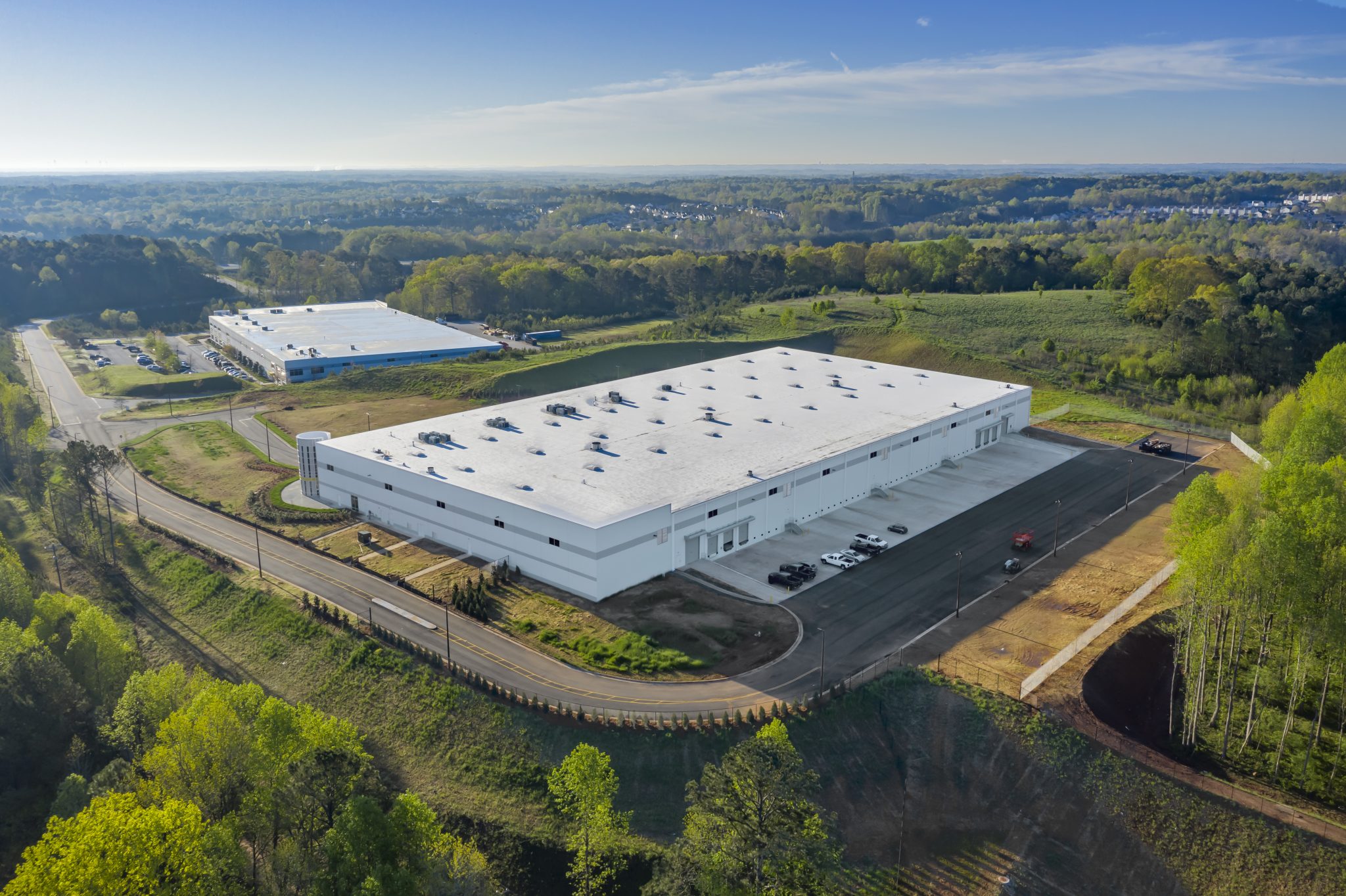
Interroll has completed construction on its second plant on their campus in Hiram (Atlanta) Georgia. The 11 million dollar investment gives Interroll a substantial increase in capacity for the region.

At Interroll, the Americas region continues to see a high level of project activities. At the same time, the company is quickly introducing innovative solutions to the markets. Key business drivers such as increased automation for warehouses as well as the rise of e-commerce and high demand in the courier, express and parcel business continue to support this positive mid-term outlook in the Americas region and worldwide.

“We have raised capacities in order to ensure low lead times for our customers and end users in the North American market in the years to come”, says Richard Keely, Executive Vice President of the Americas region and member of the Group Management. “We continue to see high demand for Interroll solutions in the areas of conveyors and sorters. Therefore we have increased our fabrication footprint while creating several new lean agile assembly cells.”

The new building provides 100,000 sq ft (9,300 m2) of manufacturing and warehousing area are as well as 25,000 sq ft (approx. 2,300 m2) of offices. It also includes training facilities as well as a Kaizen room and employee facilities such as a gym.

The new building provides assembly lines for the Modular Conveyor Platform (MCP), as well as for all sorters, including the new high-performance crossbelt sorter (HPCS) as well as sorter chutes. In the near future, it will also house a production line for Modular Pallet Conveyor Platforms (MPP).

“Over the last few months, capacity is more and more critical as supply chains are challenged with lockdowns and other restrictions. Through this challenging period, we have continued to see new opportunities because of our commitment to short delivery times” says Keely. “Our team is fully committed to keeping this climate of excellence and looks forward to convincing more customers with our delivery performance in the future.”

Convenient Parcel Collections and Returns

ASDA toyou has been added to the Consignor platform, giving retailers even more ways for customers to collect and return their parcels. With over 600 drop off and collection locations in ASDA stores in the UK, customers don’t have to wait in at home for a delivery. Instead, they can pick up and return parcels at a time that’s convenient for them.

The PUDO (Pick Up and Drop Off) points include self-service options making the process even more convenient for customers. Operating seven days a week, Asda’s toYou can process orders from third parties in time for next-day or 48-hour delivery to store. Fashion retailers including Consignor customer SuperDry, are just one of the 120 companies already using the service, which is supported by Manhattan Associates’ technology.

Gary Carlile, CSO at Consignor said, “at the heart of any business is a great customer service experience and our partnership with ASDA toyou helps retailers to provide this. By displaying a mix of home delivery and collection options in the checkout, retailers can offer their customers the flexibility they demand.”

Karen Gibson, Senior Client Relationships Manager at ASDA toyou, said, “many people don’t have the time to collect or return their parcels. But by coming into store, customers can now fit this around their day-to-day lives. With integrated label printing capability for parcel drop-off, Consignor will play an important role in delivering this service.”

Subscribe

Get notified about New Episodes of our Podcast, New Magazine Issues and stay updated with our Weekly Newsletter.