TCM Launches Engine Counterbalance Forklifts

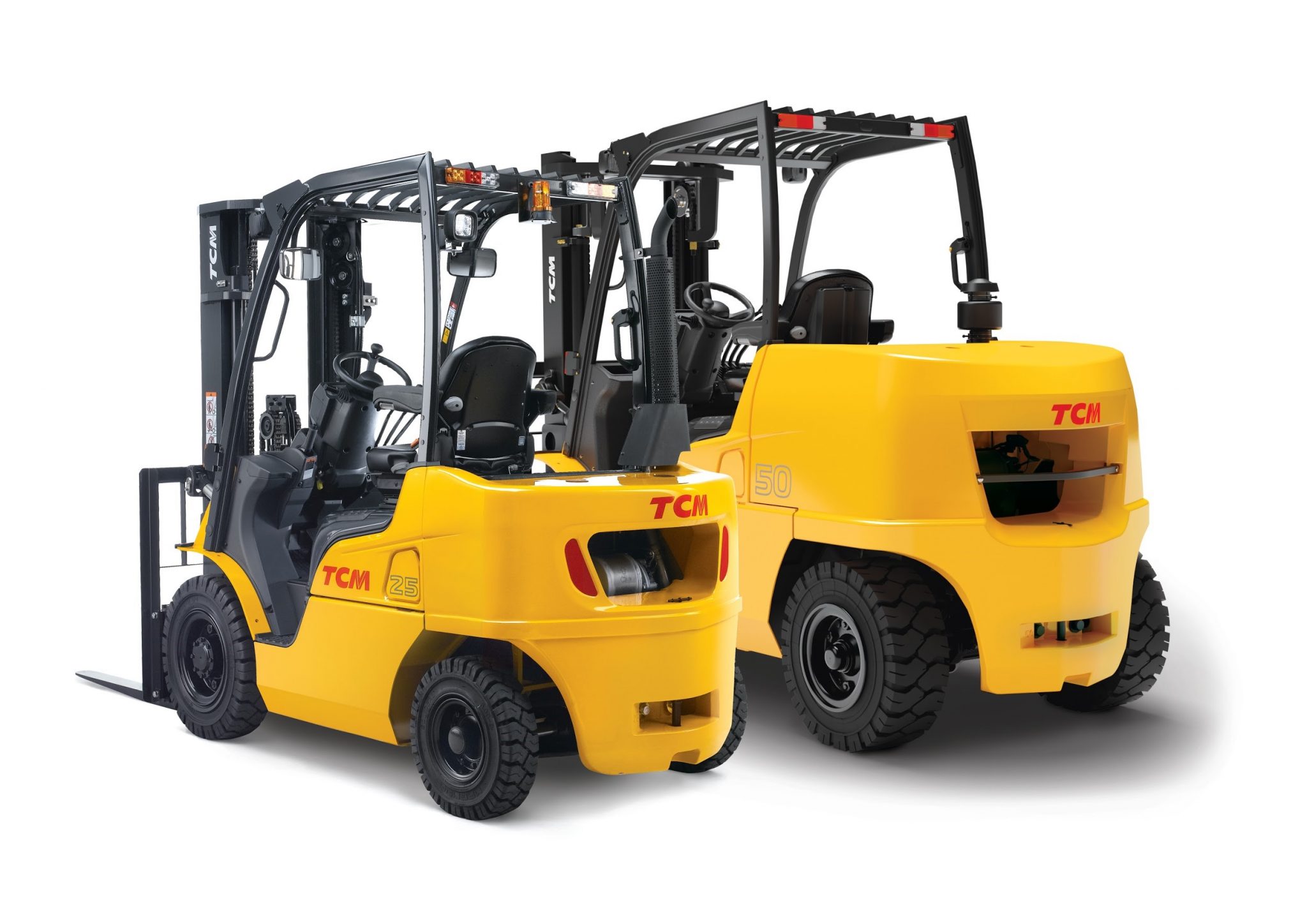
TCM has launched its new FD 20-35 and FD/FGE 40-55 Engine Counterbalance Forklifts. Both truck models are compliant with EU Stage V emissions regulations, without compromising on performance.

The engine counterbalance forklifts are designed to reduce CO2 emissions and enhance operator productivity — all while meeting the EU Stage V directives. They have been designed with flexibility in mind to create the optimum working environment for every operator. This results in reduced fatigue during longer shifts, improving overall productivity and performance.

The operator compartment features three-point access and a reduced step height for easy access, while the spacious truck floor and ‘through the floor’ pedals provide additional comfort.

The new models feature fully adjustable seating, allowing the operator to achieve the optimum position. The Grammer seat is a standard feature designed with adjustable forward and backward movement, added side support in the back cushion, and an anti-cinch seat belt to suit operators of varying heights. For operators who frequently work longer shifts, an optional full-suspension seat is available for additional comfort and support.

Enjoy effortless control with the optional fingertip control armrest, which provides operators with low-effort levers and length/height adjustment to increase precision and control. What’s more, the innovative memory tilt steering column offers infinite adjustment in a 12-degree range and retains operator-preferred settings for swift changeovers to maximise uptime.

Finally, operators can enjoy all-round visibility with two forward LED work lights and a specifically designed mast, enabling improved visibility in all directions. Visibility is further enhanced by the absence of crossbars in the overhead guard.
Enjoy optimum efficiency while reducing CO2 emissions

The FD 20-35 and FD/FGE 40-55 feature the latest engine technology, enabling maximum performance through a low emissions diesel engine. Developed with cutting-edge emissions technologies, TCM’s diesel and LPG engines comply with European Stage V emissions regulations, helping you to achieve a cleaner, more economical operation.

The high-pressure common rail fuel injection system ensures the diesel burns cleanly with optimum power output. The exhaust gas recirculation system sends exhaust gas back through the system after cooling to limit harmful emissions, while a diesel oxidation catalyst oxidises harmful particulate matter.

Both truck models feature a cool and quiet engine thanks to the fan and radiator system with a horizontal cross-flow cooling system. This helps to keep the engine cool and functioning at peak performance. The corrugated design enables optimal heat exchange, while the aluminium core helps to prevent corrosion. The direct drive fan works to reduce noise and required maintenance.

TCM’s advanced engine protection system helps to keep the trucks running optimally and prevent forklift damage — saving you money in future repair costs. Should vital fluids become critically low, RPM levels will be lowered automatically and the operator will receive an immediate notification on the dash display.

Both the FD 20-35 and FD/FGE 40-55 feature a fuel-saver mode to further optimise efficiency. Simply press the ECO-driving button to reduce fuel consumption by up to 18% to reduce noise levels and improve the operator experience.
 

Nulogy Software Helps Packaging Supplier Through Pandemic Volatility

Advanced and flexible software from Nulogy has enabled Marsden Packaging to remain responsive to the changing needs of brand owners throughout the volatility of the COVID-19 pandemic.

Marsden Packaging, based in Blackburn, specialises in primary and secondary packaging services for the food and pharmaceutical sectors and has been using Nulogy’s software to power its operations in the UK for over five years.

The software replaced a combination of computerised and manual systems and allows Marsden to manage its production flow more efficiently and perform all necessary quality checks. This provides the visibility and technological access that customers demand from the supply chain.

Nulogy’s software provides the ability to meet the specific challenges arising from the pandemic, for example enabling a business to track employees in real time to be prepared in the event of a potential COVID-19 infection within a production site. Users can generate reports by shift, specific time period, and production line to quickly identify and isolate areas of risk without the need to shut down an entire facility. In addition, contacts can be traced while preserving employee privacy.

Michael Briggs, managing director at Marsden Packaging, said, “Nulogy’s software has proved invaluable in allowing our operation to remain flexible and able to manage any COVID-19-specific issues.

“From helping reduce downtime as customer production schedules constantly changed to enabling us to track close-contact histories between employees, we have had the flexibility to react that would have been near impossible with our previous processes.”

Nulogy, which opened its first European office in Bristol earlier this year, delivers software solutions for FMCG-focused contract manufacturing and packing providers. The pandemic has meant many of its customers have had to constantly adjust and evolve their operations, and so Nulogy moved quickly to maximise the functionality for users within its software suite.

Josephine Coombe, managing director for Nulogy in the EU, said, “The contract packing industry has faced unprecedented challenges and uncertainties with the advent of COVID-19. Our software is helping businesses to deal with this new period of variability and manage potential operational constraints.

“Seeing the likes of Marsden Packaging maximising the use of our software within their business is fantastic and we are exceptionally pleased to help them deliver the agile performance required to meet their customers’ operational and quality standards.”

Michael concluded, “I would never hesitate to recommend Nulogy. Since its first day, the software has revolutionised the way we operate, providing total visibility to the flow of goods within our business. This has allowed us to react much more quickly to the recent changes in demand due to the pandemic, as well as continuing to deliver efficiencies across our production and QC processes.”

HelloFresh Strengthens UK Supply Chain with New Nuneaton Production Facility 

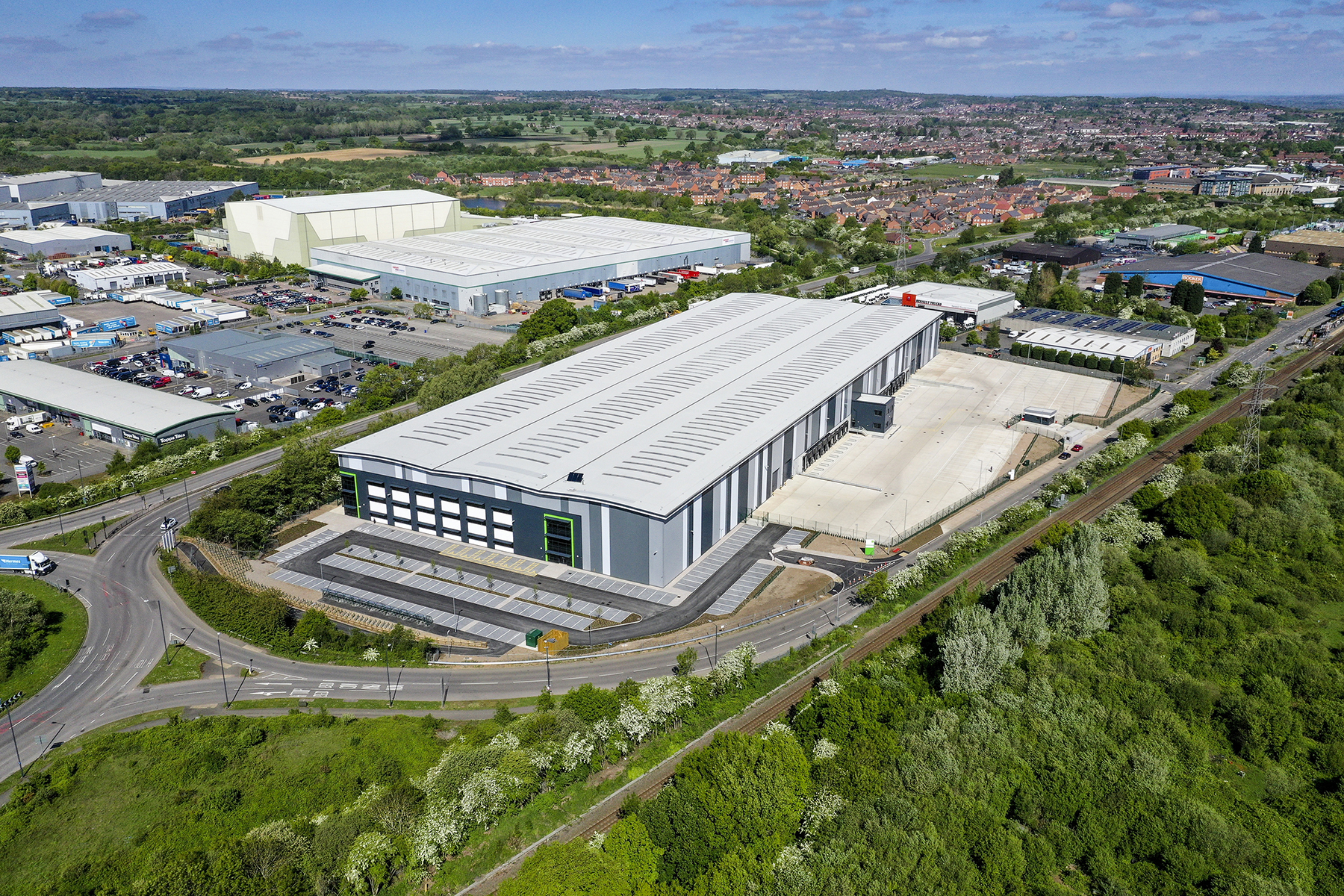
Leading global provider of fresh food at home, HelloFresh, has leased 230,384 sq ft of high-quality logistics space at Goodman’s Nuneaton 230 development.

Headquartered in Berlin, the company produces and delivers meal kits that allow consumers to cook home-made, healthy meals with no preparation or shopping.

Its new Nuneaton site will become HelloFresh’s second UK production facility, supporting its continued success in the UK. With strong results in the market pre-COVID-19, the exponential growth of food deliveries during lockdown and a growing demand for fresh meals to enjoy at home has accelerated expansion.

The location will receive produce and packaging from local and national suppliers, assembling the fresh ingredients in the meal kits and distributing these to consumers across the country. The site’s excellent connectivity, which places 55.9 million consumers within a four-hour drivetime, makes the location ideally suited to national fulfilment and fresh food delivery.

HelloFresh  says it delivered more than 280 million meals in 2019, reaching over four million customers in the last quarter. It operates in thirteen countries across three continents.

Machine Learning Module at Hamburg Port

Inform and HPC Hamburg Port Consulting have collaborated to implement Inform’s ‘Syncrotess’ Machine Learning (ML) Module at HHLA Container Terminal Burchardkai (CTB) to deliver an innovative solution for improving CTB’s container handling operations.

Dr. Alexis Pangalos, Partner at HPC said, “It was a productive implementation of Inform’s AI solution for the choice of container storage positions at CTB. The ML Module was trained with data from CTB’s container handling operations and is therefore tailor-made for their operations.” The companies have integrated the Syncrotess ML Module into the slot allocation algorithms already running within CTB’s terminal control system, ITS. To mitigate this operational inefficiency the joint project, bringing together the terminal operator, the software specialist and logistics consultant, utilizes machine learning technology to predict the individual container dwell time aiming a reduction of container rehandling for import containers at terminals.

Inform’s AI solution predicts the dwell time (i.e., the time period the container is expected to be stored in the yard) and the outbound mode of transport (e.g., rail, truck, vessel) – both of which are crucial criteria for selecting an optimized container storage location within the yard that avoids unnecessary rehandles. “Utilizing machine learning and artificial intelligence and integrating these technologies in existing IT infrastructure are the success factors for reaching the next level of optimizations,” says Jens Hansen, as Executive Board Member responsible for IT at HHLA. “A detailed analysis, and a smooth interconnectivity between all different systems enable the value of the improved safety while reducing costs and greenhouse gas emissions.”

“Data availability and data processing is an important key when it comes to utilising AI technology,” says Alexis Pangalos, Head of Software Engineering at HPC. “It requires a detailed domain knowledge of terminal operations to unlock greater productivity of the terminal equipment and connected processes.” The implementation is based on a machine learning assessment Inform undertook in 2018 whereby they set out to determine if they could improve optimization and operational outcomes using Inform’s broader ML algorithms developed for use in other industries such as finance and aviation.

In 2019, Inform reported the findings of that assessment in Port Technologies Edition 83, Machine Learning in Terminal Operations: A Practical Review of Impacts on Yard Optimization where they estimated that the Syncrotess ML Module could result in a relative improvement in prediction accuracy of 26% for dwell time predictions and 33% for outbound mode of transport predictions. Dr. Eva Savelsberg, SVP of Inform’s Logistic Division and co-author of the original assessment paper said, “AI and machine learning allows us to leverage data from our past performance to inform us about how best to approach our future operations – our ML Module gives our Operations Research based algorithms the best footing for making complex decisions about what to do in the future. Our Machine Learning Module allows CTB to leverage insights generated from algorithms that continuously learn from historical data.”

Upgrading Inventory Management Processes is Important

Supply chain management teams have had a tough time of late; firstly, there was the threat of a hard Brexit, and more recently the overwhelming impact of the coronavirus has been felt by all. Unfortunately, the future looks set to remain uncertain. Businesses therefore need to find ways to deal with these challenges and face them head-on to survive and seek-out growth opportunities.

In many companies supply chain management has become a boardroom priority, as senior management teams are tasked with digitalising their operations, so they’re better placed to respond to abrupt changes in market demand and ongoing supply disruption. According to EazyStock, one area where big gains can be made is around inventory management. Many inventory planners are still reliant on basic stock management tools to carry out their challenging roles. Whilst ERP and WMS systems are used for tracking inventory and updating stock levels, fundamental tasks, such as forecasting demand, optimising inventory levels and calculating reorder points and quantities, are often still done manually in spreadsheets. Manual inventory management is labour intensive and can often lead to stock imbalances. Order too much and this ties up significant amounts of working capital in excess stock, too little and this leads to stock-outs, delays to production and empty store shelves. Achieving a balance between stock availability (service levels) and inventory investment is tough.

Managing inventory was a big ask when customer demand and supplier lead times were fairly predictable, but with marketplaces and supply chains more dynamic than ever, the job just got much harder. With customer demand and inventory supply continually fluctuating up and down, ‘old-school’ inventory management practices are simply too basic. Forecasting and replenishment formulas that use historic consumption or average stock days are only effective when demand and lead times remain static and the only way for the user to consider any variance is to continually update their calculations.

Inventory optimisation is a concept that is growing in recognition as a way to deal with supply and demand fluctuations. Its objective is to achieve high service levels (stock availability) with the lowest possible inventory investment. Inventory optimisation swaps basic linear inventory calculations for probabilistic formulas, to help account for uncertainty when predicting future events. And with so much uncertainty in the marketplace right now, this could offer a real lifeline to support SCM teams. Whilst probabilistic formulas are not easy to utilise manually, there are a number of inventory optimisation tools available that simply plug into ERP systems. These take a feed of inventory data, do the forecasting and replenishment calculations, and provide the intel that can be used to make smarter purchasing decisions.

There are three key areas where inventory optimisation can support SCM teams during these uncertain times. The first is demand forecasting. Traditional forecasting calculations that use 30-day rolling averages are only effective when demand is stable and, right now, this is simply not the case. In contrast, an inventory optimisation tool employs statistical forecasting formulas that help account for demand variance. This method recognises that every inventory item has a different demand pattern because it is affected, to some degree, by its position in its product lifecycle, or by seasonality, trends or promotions. All of these are taken into account when forecasts are automatically generated and updated to inform purchasing parameters and stocking rules.

Unfortunately, with social distancing policies impacting customer behaviour, producing forecasts that are 100% accurate is very challenging right now. SCM teams therefore need a safety net for when forecasts aren’t as accurate as they should be. Processes that can help include tracking actual demand throughout a forecast period and acting when it differs significantly from the forecast, or highlighting demand irregularities at the end of a forecasting period, so they can be investigated before including in the upcoming forecast. With an inventory optimisation tool, such alerts can be set-up to happen automatically.

The second area of inventory optimisation is focused around carrying the right inventory items to meet demand, without investing too much capital in stock. As we move into the next phase of the coronavirus pandemic, SCM teams will need to closely track the stock levels of items that are business-critical and react accordingly to alleviate supply risks. They will also want to invest in stock that will generate revenue and not sit in the warehouse.

Inventory optimisation helps by classifying items and focusing on the availability of those most important to the business. A simple form of inventory classification can be done manually using ABC analysis, but with inventory optimisation software the categorisation can be much more sophisticated. For example, items can be classified based on a wider range of factors, including their cost to sell or profitability, pick frequency and demand volatility. The aim of inventory optimisation is to achieve the highest service levels for products that have the most regular demand and are relatively less expensive to stock – or are critical to the business. Then service levels reduce as demand becomes more volatile and stock more costly to sell.

The big advantage of inventory optimisation software is that stocking rules and reordering parameters are automatically adjusted to ensure service levels are met. This means that reorder points, reorder quantities and safety stock levels are all dynamically calculated, based on market dynamics. Items are automatically moved from one group to another, so if an item’s demand changes from being regular to very lumpy, the service level and stocking rules will be adjusted accordingly and reordering parameters updated to prevent stock building-up in the warehouse.

Finally, replacing traditional inventory management calculations with probabilistic inventory optimisation formulas helps mitigate the risks of supplier lead time variance. Securing supply has been extremely difficult for many SCM teams in 2020 and supply issues could re-emerge at any time. Formulas used to calculate replenishment e.g. reorder points or safety stock levels etc, need the ability to be adjusted when supplier lead times change, to avoid stock-out situations. This can be done manually on a regular basis or using inventory optimisation software that will track lead times and update purchasing requirements automatically.

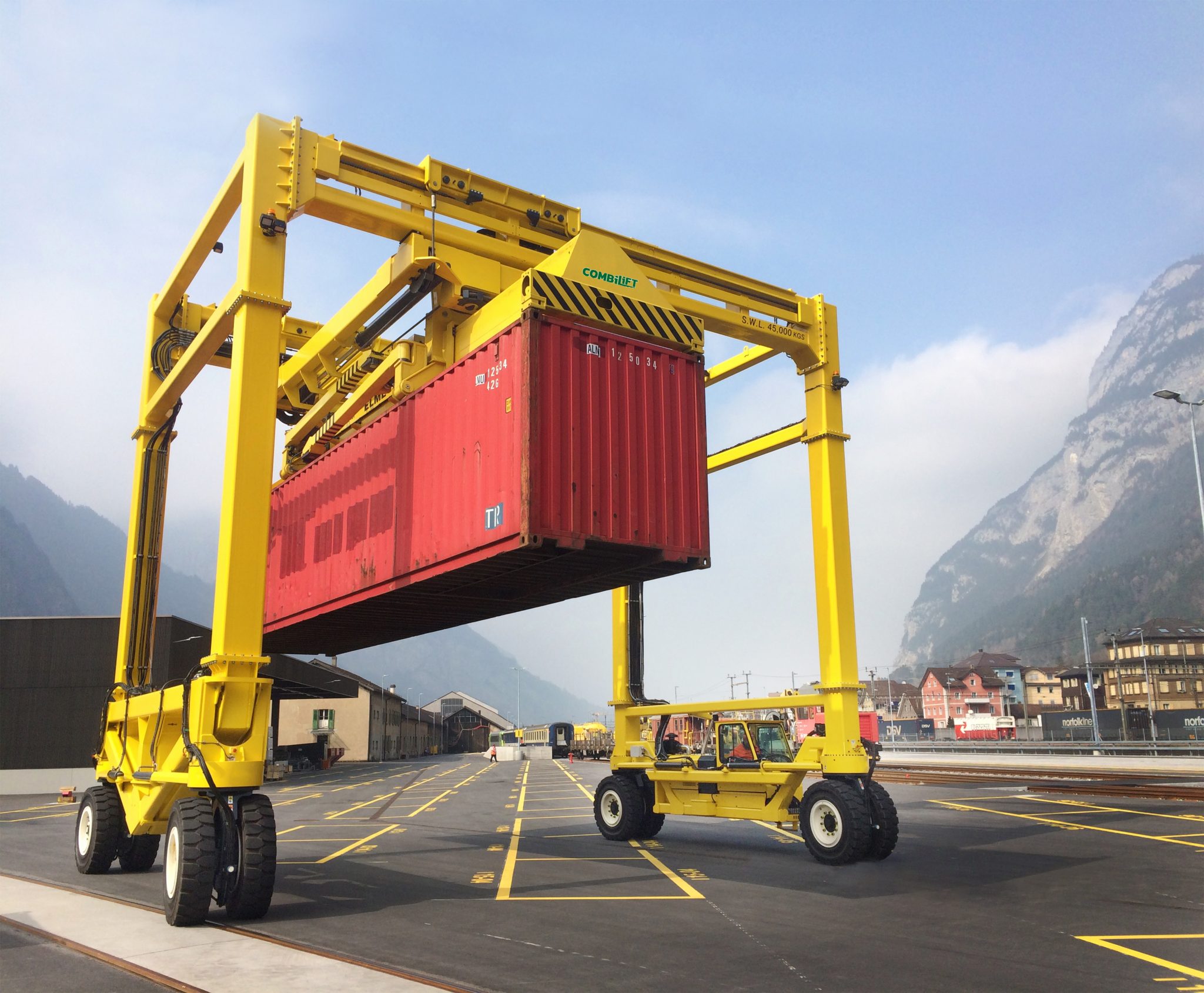
Combi-IMSC Straddle Carrier Targets Midsized Intermodal Sites

Irish material handling manufacturer Combilift has launched the latest variant in its Straddle Carrier range.

The Monaghan-based firm first focussed its attention on the container sector in 2010 when it launched its Combi-SC Straddle Carrier range. It has since developed a number of variants of this economical and flexible alternative to other heavy handling equipment, the latest of which is the Combilift Combi-IMSC Intermodal Straddle Carrier. This is aimed primarily for use at inland container terminals which typically handle lower volumes of containers compared to the main sea ports, but still need a machine capable of doing the same task.

Conventional port straddle carriers are typically higher and wider and are designed to work at speed to quickly turn around very large volumes of containers. But these are often far too expensive for midsized intermodal terminals, where only a few trains per day may need to be unloaded, and where margins can be tight. Due to the demands on conventional pieces of equipment, their specifications also often exceed what the smaller terminals actually need, so the Combi-IMSC offers a cost-effective customisable solution and fills a niche in the market.

The Combi-IMSC is ideal for handling containers between a terminal’s rail siding and its storage/transport lane, and it’s a more simple piece of hydraulic lifting equipment which reduces the total cost of ownership. Operating, maintenance overheads and fuel costs are therefore lower than the higher-capacity products.

In contrast to Combilift’s regular Straddle Carriers, the IMSC is fitted with 8 wheels as standard, with two super-elastic puncture-proof tyres on each axle. It features a fully-enclosed high specification driver compartment with air conditioning, joystick control and rotating seat which is positioned high off the ground for excellent visibility via the half glass floor. But in common with the other Combi-SC models, it benefits from a lighter footprint compared to other heavy handling equipment as it does not need to be counterbalanced. This avoids the need for costly investment in special infrastructure on site such as expensive civil works which can put yet more financial strain on midsized operations.

The load on each corner of the Combi-IMSC would be half that of a typical reach stacker performing the same operation. As the machine typically operates in a straight line alongside the train there is less need for sharp turns or reversing, this reduces impact on the ground surface to a minimum and significantly increases the life of the tyres. Also as the machine is equipped with multidirectional steering it can easily leave the rail track and carry out other loading, unloading, and stacking tasks in a different area of the terminal.

Customers also benefit from Combilift’s ability to customise the machine so that it also able to lift other oversized loads for added versatility. Coil clamps, grapple arms and rotating forks are some of the additional attachments that Combilift has manufactured or supplied for Combi-IMSC customers.

www.combilift.com

TIACA and Pharma.Aero Join Up on COVID Vaccine Transport Guidance

The International Air Cargo Association (TIACA) and Pharma.Aero have joined forces to develop global guidance for the air cargo industry to enable optimal transportation of the COVID-19 vaccine. The guidance will be developed gradually in four work packages through a joint working group to ensure feedback from all stakeholders in the supply chain of air cargo and pharmaceuticals.

In the past few months, air freight has demonstrated once again its vital role in the global economy and distribution of essential medical supplies. In the months to come, air freight will again make an important contribution to the global public good and in fighting this pandemic by playing a vital role in the COVID-19 vaccine global supply chain.

As pharmaceutical companies race to develop the COVID-19 vaccine, it is still unclear what impact this vaccine will have on the global supply chain, specifically, logistics requirements and the air cargo industry. To address these concerns, the joint working group will bring to the table all the key industry stakeholders, including pharmaceutical manufacturers and logistics businesses.

The aim of this program is to provide the air cargo industry with more clarity of the demands, expectations and quality supply chain requirements, including but not restricted to critical trade lanes, air cargo capacity, handling and storage, track and trace requirements, for the transportation of the vaccines. At the same time, shippers will gain more understanding about the capabilities of the various logistics players. This will ensure that once the vaccine is available in the market, the air cargo industry will be ready to respond to the needs of the shippers and transport vaccines in optimal conditions to all corners of the globe.

“COVID-19 vaccine delivery will be one of the biggest logistical challenges in modern history. No one company can own the end-to-end vaccine supply chain,” said Neel Jones Shah, TIACA board member and Global Head of Airfreight at Flexport. “I’m proud to be a member of the TIACA and Pharma.Aero working group, which is doing the critical work of connecting all vaccine supply chain stakeholders to foster effective communication and collaboration. We need to start working together now to ensure the industry is prepared when the time comes.”

“Setting up reliable end-to-end air transportation for pharma shippers is part of the vision and mission of Pharma.Aero. Amongst our members i.e. life sciences and pharmaceutical shippers, certified airport communities and air cargo operators, we have a track record of project-based collaboration,” says Nathan De Valck, chairman of Pharma.Aero. “As a result, Pharma.Aero is well-positioned to make a valuable contribution in preparing the air cargo industry for this immense challenge.”

The working group will consist of members of both organisations and will also reach out to various international organizations. The results will be shared with the industry through white papers and webinars in later stages of the program which aims to complete by end of 2020.

Next Generation Warehouse Heating and Cooling Unveiled

Indoor climate solutions specialist Zehnder Group UK has launched what it calls a new generation of radiant ceiling panels to ensure businesses and other organisations can heat and cool their buildings comfortably and efficiently, whilst achieving substantial energy savings.

Zehnder ZFP delivers a number of benefits and advantages including an optimum indoor climate all year round, whilst the panels can achieve a proportion of radiation of over 80%, meaning that the supplied energy can be transferred effectively.

In addition, the high stability of the modules means that only a few suspension points are required – significantly reducing the required installation time. Weighing only around 14 kg/m², the Zehnder ZFP can also be used for low roof loads.

The individual elements of the Zehnder ZFP are designed as an innovative modular system that can be combined with each other according to the project requirements to create tailored project solutions. Each solution is produced to a customer’s exact requirements and supplied in line with the on-site workflow.

The individual product components can be combined to suit the needs of each project. For example, a design for a sports hall may include ball guards, raised headers, perforation and acoustic insulation, whilst a solution for a logistics hall could incorporate LED light fixtures. The food industry could choose a system that allows easy adjustment and maintenance of the desired constant temperature, plus a dust protector panel.

David Simoes, Marketing and Product Manager, RHC at Zehnder Group UK, said: “The technology within the Zehnder ZFP is orientated for the future. It can be operated with a broad range of system temperatures. That is why it can be combined with modern heat pumps with their lower flow temperatures without any problems.

“The vast experience and expertise of our team ensures we can continue to develop and design industry-leading heating and cooling solutions that are truly flexible and allow our clients to make substantial energy savings.”

Industry View: Top Tips for Perfecting your Omnichannel Offering

Global eCommerce platform Kooomo provides advice for retailers on how to create an omnichannel business 

Executing an omnichannel strategy has been a priority for many retailers for some years now, but the rapid increase in online shopping and changing spending habits caused by the COVID-19 pandemic have sped up this adoption further. However, according to Global eCommerce platform, Kooomo, many retailers still fail to fully understand the meaning of an ‘omnichannel presence’ and how it differs from multichannel and are therefore missing out on optimising their operations.

Ciaran Bollard, CEO of Kooomo says, “In multichannel marketing, the brand is at the centre of the strategy, with one static message that’s communicated to each channel. By contrast, in omnichannel marketing, the customer is at the centre of the strategy with each channel adapting around the customer’s behaviour. Omnichannel allows for the synchronisation of all inventory and sales channels, creating a customer experience (CX) that flows from online to in-store and vice versa. It also means having a fully integrated supply chain to maximise stock value.”

Ciaran outlines that retailers considering a move to an omnichannel solution should focus on three primary aspects: synchronised data/stock, diversified sales channels and the user experience.

  1. Synchronising data and stock

When looking for an omnichannel solution, consider an outlet that can easily synchronise inventory across all online and bricks and mortar stores to dramatically reduce the risk of ever running out of stock. This means you can order inventory in a more accurate fashion (reducing wasted costs) and better communicate to your customers if items are low or out of stock.

Collecting and synchronising data will also play a major role in successful omnipresence, as this will improve the flow of the customer journey and improve the CX. Customers should be able to fill a basket at their convenience, continue shopping across different sessions (and different devices), and have the option for delivery, collect in-store or to order from in-store for delivery.

  1. Diversifying sales channels

Omnichannel shoppers have a 30%[1] higher lifetime value than single-channel shoppers so you should give customers the option to buy across all channels. Offer multi-channel options including click and collect, purchase from mobile/mobile apps, purchase from marketplaces, purchase from social media – as many channels as possible. Consumers love nothing more than having choices, so if you have a bricks and mortar presence as well as an online store for your brand you have already tapped into this desire for options than implementing omnichannel into your online strategy.

Omnichannel shoppers spend 15% more per purchase[2] than those who shop on one channel and are much more likely to return, so why not spoil your consumer for choice?

  1. The User Experience (UX)

Unification and flow are crucial for a positive UX, but there is also personalisation, customer assistance and transparent information to consider. Successful personalisation is constructed using the data you have collected to create a unique experience for the customer which they now expect as standard. After all, consumers are more likely to engage with an offer if it has been personalised to reflect previous interactions they’ve had with that brand. This means you need to build suggested pages and personalised correspondence around your consumers’ unique profiles.

Good customer assistance can help ensure that the customer journey reaches its endpoint with minimal disruption or frustration. Consumers expect a business to be available 24/7 so it goes without saying that retailers have moved beyond the realms of 9-5. Therefore, it’s imperative to bridge any current gaps between you and your on-demand consumers.

Transparent information, now more than ever, is essential for good UX. It’s important that the messaging on your website accurately reflects your service, especially in times of crisis or delays. Customers are willing to have a longer delivery window now that physical shopping is off the table, so make sure all communications are transparent and as accurate as possible to reinforce a positive CX.

It is very important to keep communications with customers timely and update them as the situation changes. This includes clearly confirming your delivery and express delivery timings on your online store which is crucial to avoid disappointment and bad reviews. This will also help to alleviate fears and build trust during times of uncertainty or supply chain disruption.

Ciaran concludes,Of course, creating a great omnipresence does not pertain only to these three elements as there is much to consider before creating an effective digital presence. However, taking the initial steps to ensure synchronisation of data/stock, diversified sales channels and a satisfying user experience are the stepping stones that will set you on the right course for success.”

Victa Railfreight Trials Timber Movement in Scotland

Victa Railfreight has  been awarded a Freight Fund Grant by Transport Scotland which is enabling it  to undertake a comprehensive trial of the movement by rail of timber, primarily from forests in Caithness to the Norbord Plant at Dalcross near Inverness during August and September.

The objective of the trial is to re-establish rail as a potential means of transporting timber from forests to the main users of timber, to reduce the pressure on fragile rural roads and to help reduce carbon emissions.

Victa is leading a cross industry effort, with active support from Network Rail and Highlands and Islands Transport Partnership (HITRANS), building on their previous pioneering Branchliner work in this sector.  Wagons are being supplied by DB Cargo and train operation, including locomotives and drivers, is being provided by West Coast Railways (WCR).  This team effort is the culmination of activity following on the Timber by Rail Summit convened by the Scottish Government Cabinet Secretary for Rural Economy and Tourism – Fergus Ewing in the spring of 2019.

The main flow will be from the freight terminal at Georgemas Junction in Caithness to Inverness freight yard for onward delivery by road to Norbord, with timber coming from Munro Harvesting.  But other potential loading points may be used, once the Georgemas trial has become established.

Neil Sime, Managing Director of Victa Railfreight, said, “Victa Railfreight is delighted to be able to lead this cross-industry effort to re-establish the movement of timber by rail from forests in Scotland to the main production plants.  We greatly appreciate the funding from Transport Scotland without which this trial would not be happening. The collaboration with parties in both the rail and timber industries has been excellent and very timely given the publication last week of the Scottish Decarbonisation Policy, for which modal shift to rail is a key target.”

Bill Reeve (Director of Rail at Transport Scotland) said “The Scottish Government has a strong record of supporting rail freight.  It recognises the environmental benefits that modal shift of freight from road to rail can make in terms of reduced emissions and improved air quality, and the important contributory role rail freight makes towards the Scottish Government’s Net Zero target for all greenhouse gases by 2045.”

“I am personally encouraged by the proactive collaboration between the rail and timber industries throughout this trial so far and I look forward to seeing further projects such as this which can only be good news for both our economy and our environment.”

Frank Roach, Rail officer for HITRANS, said “HITRANS are grateful that Victa has come forward to co-ordinate the rail effort and we are delighted to have been able to provide active support and additional funding.”


Subscribe

Get notified about New Episodes of our Podcast, New Magazine Issues and stay updated with our Weekly Newsletter.