3PLs: Don’t get Behind in e-fulfillment Race

If 3PLs want to win online fulfillment business they must be able to demonstrate that they have the IT infrastructure in place to respond to the demands of e-commerce retailers – and their customers, says Utordo director, Richard Davies.

The spectacular growth of internet shopping coupled with a sharp dip in demand for deliveries of replenishment stock to high street stores during the Covid crisis, has prompted many traditional logistics and transport companies to adapt their business models to allow them to compete in the increasingly crowded online fulfillment space.

However, if third party logistics (3PL) service operators whose focus has always been on the storage and delivery of palletised loads from the warehouse to the high street store, want to be in the running to win fulfillment business they must be able to demonstrate that they are set up to respond to the demands of e-commerce retailers – and their customers.

This might, for instance, require some remodeling of existing storage systems to accommodate more SKUs and pick faces or investment in staff training to ensure workers have the skills they will need to undertake the kind of specialist picking, packing, kitting and re-working tasks that e-fulfillment entails.

But, perhaps most importantly, for an e-fulfillment operation to perform efficiently a logistics company’s warehouse management system (WMS) will have to be adapted to make it capable of integrating with an online retailer client’s webstore as well as any other internet marketplaces through which the retailer trades, such as ebay and Amazon.

Synchronising the 3PL’s WMS with a client’s e-commerce platform makes things easier for the seller and the logistics services supplier by allowing a host of data, such as order status and inventory levels, to be automatically exchanged in real time.

But by no means every e-commerce fulfillment service can offer this level of software sophistication.

Anecdotal evidence suggests that the costs involved in upgrading WMS software and concerns over the disruption to operations that ‘re-setting the system’ may bring are the most quoted reasons why 3PLs fail to make their software ‘fulfilment-ready’.

In other words, logistics companies are reluctant to make a high Capital Expenditure commitment to change a working WMS – particularly one that they have already made a significant financial contribution to and have confidence in.

This is probably understandable: after all, a 3PL that has invested a sizable chunk of time and money on the development of a warehouse management system that it believes is the perfect tool for controlling client stock, replenishment orders, staff tasks and materials handling equipment will want to avoid the cost and potential disturbance to the smooth running of day-to-day operations that reconfiguring a WMS can involve.

But now a cloud-based middleware solution has been developed and launched that allows logistics companies to link their WMS to a client’s web-store and any other online marketplaces where they are visible, simply and cost effectively.

The new system is called Utordo. Sitting between the retailer’s website and any other marketplaces and a 3PL’s WMS, Utordo converts and standardises order information and exports data relating to each order to the WMS using secure flat file, XMS or API formats.

This process allows a 3PL’s retailer client’s orders to appear on the host warehouse management system the instant an order is received and, in doing so, effectively upgrades an existing WMS to deliver the functionality needed to provide reliable and efficient order fulfillment capability.

Compatible with all well-known WMS brands, Utordo also handles order communications with the online seller’s customers and updates the retailer’s web-store and other marketplaces with tracking and order details in real time.

Utordo technology is offered as a SaaS (Software as a Service) package with a minimum 12-month contract agreement. This means that the full Utordo package is, in effect, ‘hired’ for a pre-agreed monthly fee.

With Utordo 3PLs can dramatically improve the levels of service that they offer to their existing internet retail clients, while logistics operators that are new to online order fulfillment can tender for internet retail accounts knowing that they have a system in place that delivers all the data they need to be able to offer a reliable, first-class e-fulfillment service.

In June of this year the British Retail Consortium announced that internet sales accounted for 50 per cent of the UK retail market and the online retail market will only continue to grow. Those logistics companies that are not equipped with the skills and technology required to provide the services needed by today’s retailers risk being left behind.
Expanded Automation Solution Implemented

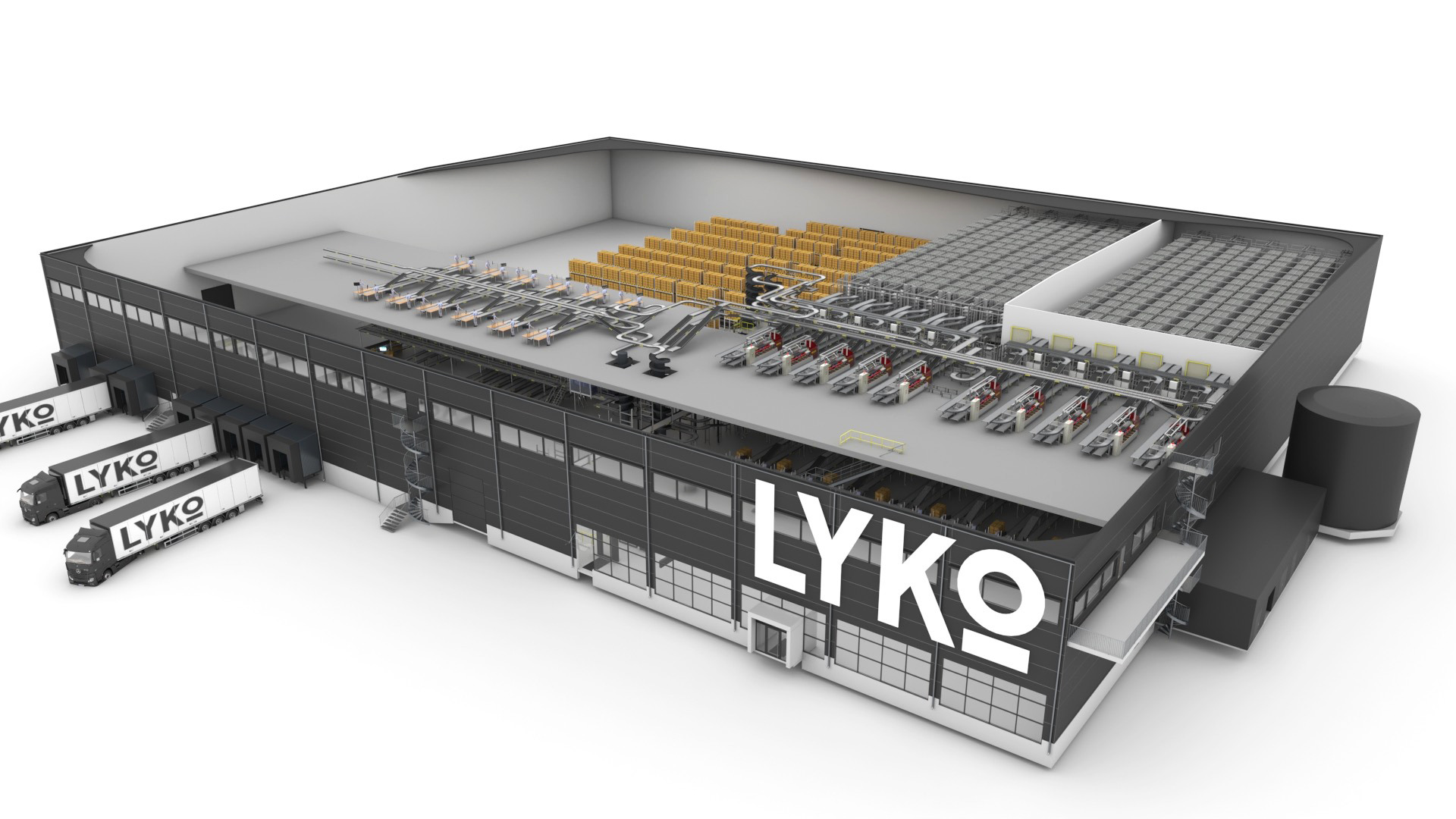
Lyko Group AB, the Nordic region’s leading player in beauty and hair care based in Sweden, is once again relying on the expertise of SSI Schaefer. The company is investing in an expansion of the previously developed automated warehouse solution.

The original solution was commissioned in February, 2020 to increase operational efficiency, optimize storage space and ensure seamless warehouse and material flow management processes. As a result, Lyko’s new automated logistics center was equipped with the shuttle system SSI Cuby, ergonomic work stations, a carton and bin conveying system and the logistics software WAMAS®. According to Rickard Lyko, CEO of Lyko, it was implemented perfectly in time to support rapidly increasing demand: “We are very happy with the solution of SSI Schaefer, which we launched in record time in February. Phase 1 of automation has achieved the planned streamlining and gave us the opportunity to handle the extreme sales growth of 99 percent that we achieved online in the second quarter.”

Lyko plans to begin sales to three additional European markets at the end of 2020, with distribution from the same logistics center in Vansbro, Sweden. The need to maximize storage space and extend the high-performance conveying system is obvious. SSI Schaefer was selected as a general contractor to ensure distribution’s ability to keep up with the ambitious expansion plans.

SSI Schaefer will deliver one of the fastest automation solutions with state-of-the-art technologies to enable the extension of all functional areas – picking, packing, storage and shipping. The existing SSI Cuby shuttle system will be doubled with 45,000 locations and 150 shuttles. In addition to the automated solution, SSI Schaefer will install a mezzanine and three SSI LOGIMAT® Vertical Lift Modules for storing small and medium-sized goods.

“We are pleased to work as a supplier for Lyko in Vansbro. The high-performance we offer will prepare Lyko for its future requirements”, comments Jenny Heinze, Sales Manager SSI Schaefer.

The extended solution will support Lyko’s focus on high-level customer service and delivery terms providing the complete installation without interruption to the current processes running on full capacity at the warehouse. The system is scheduled to be fully upgraded and to go live before Black Friday 2021.

Automation Project Goes Live at Ports of Auckland

The first phase of the Ports of Auckland’s (POAL) straddle carrier (SC) automation project went live in June 2020. By September, 26 container ships had been successfully serviced by the blended fleet of 24 enhanced manual SCs and 27 new automated Konecranes Noell Straddle Carriers (A-STRADs).

POAL’s primary aim for converting to automation in this phase is to increase the terminal’s capacity and move the annual terminal throughput from circa 900,000 TEU/year to 1.4 M TEU/year. The Ports of Auckland is New Zealand’s busiest import port. The cooperation between the terminal and Konecranes ensured container handling efficiency while reliability was not compromised throughout the ramp-up.

The fleet of manned SCs were equipped with additional safety control systems that work seamlessly with TBA’s TEAMS Equipment Control System. The new software ensures the entire fleet (whether manual or automated) can be supervised using one management system. Konecranes equipment and TBA’s terminal and equipment software work hand-in-glove so that simulations, testing and ramp-up are as seamless as possible. In this way optimal system performance is swiftly achieved.

Blending an entirely manual fleet of SCs (many already 10 years old) with the 27 new A-STRADs required several key changes to the port’s operations and infrastructure. The first stages of implementation included building the new truck gates operated by the A-STRADs and setting up an interchange area for the “handshake” between the SCs and A-STRADs. As a world-first this development was a key focus area for the team.

Ralf Konnerth, Director Konecranes Automated Horizontal Transport, commented, “In close cooperation with the POAL team, we designed the port’s sectors first-ever dynamic, fenceless and fail-safe interchange area. The innovative system allows stack shuffling between manual SCs and A-STRADs and saves the customer substantial costs in civil works.”

The project has demanded a flexible, end-to-end automation solution executed through agile cooperation between Konecranes, as premier automation system provider, port terminal software pioneer TBA Group and POAL’s team of operations, infrastructure, IT and systems specialists.

“Together Konecranes and TBA are a great team. They worked hard to address our specific needs and took POAL’s high standards comfortably in their stride. I can honestly say that their approach to automation, reaching it in manageable and tailored steps, was the optimal solution for us and we are confident the partnership will yield further great results for the rest of our automation roll-out,” concluded Ross Clarke, Programme Manager – Automation, Ports of Auckland.

This project is part of Konecranes’ Path to Port Automation, where container terminals improve productivity and safety in manageable steps. From smart features up to full automation, the path can include supervised operation and remote operation to smoothly introduce the power of automation. The path to port automation applies to all container handling equipment brands. Full automation can be the final goal, but it doesn’t have to be. Flexibility is the key.

In January 2020, Logistics Business reported on Konecranes having signed contracts with Yilport for the delivery of Automated RTG systems to three of Yilport’s European container terminals, two in Portugal and one in Sweden.

To stay up to date with the latest news, sign up to our newsletter here


MoU to Develop joint Smart Sports Logistics Lab

Geek+, a leading AI and robotics solutions provider for logistics, and Decathlon China, one of the world’s largest retailers of sporting goods, are pleased to announce that on November 6th, the two industry leaders signed a Memorandum of Understanding (MoU) for the development of a joint Smart Sports Logistics Lab. The MoU was signed by Yong Zheng, founder and CEO of Geek+ and Bruno Thellier, Transformation Leader at Decathlon during an official ceremony at the China International Import Expo, China’s premier event and largest trade fair.

Under the MoU, Geek+ and Decathlon will jointly explore applying new robotics and software technologies to the supply chain, setting a benchmark for the environmental-friendly and sustainable smart future of the sports retail industry. Geek+ will contribute its newest AMR, AI algorithm, and software, while Decathlon China will focus on strategic supply chain innovation design and land innovative initiatives on its global operational scenarios. Both parties will also invite ecosystem partners, including but not limited to players in software, IoT, 5G sectors, to join the group of innovation and work together to build a global dynamic engine to drive the fast and sustainable industry evolution.

Geek+ founder and CEO, Yong Zheng commented “Decathlon and Geek+ are like-minded partners. We are impressed by their determination to innovate, their vision, and decisive actions, which have made Decathlon an industry leader in supply chain innovation. We’re excited that Geek+ will continue to empower Decathlon in their high-growth future.”

Transformation Leader at Decathlon: Bruno Thellier commented “Technology changes the world, Geek+ and Decathlon are collaborating together in all of our logistics parks in China and we have already achieved game-changing in the sport retails logistics.

Today with Geek+ we are creating the first construction block of an open ecosystem and we believe that LAB will empower our enterprises, will stimulate more market vitality, and will allow more added values in the sports retail industry thanks to the technology. ”

Decathlon, a pioneer in applying RFID technology in retail, has taken an early lead among global retailers in adopting intelligent automation solutions. Geek+ and Decathlon have collaborated in numerous sites in the past three years, including implementing new remote deployments at the height of the Covid19 pandemic, accelerating Decathlon’s automation program. To date, Decathlon has completed the picking automation of all its China warehouses and kicked off the replications of proven-successful solutions to its global warehouses. The robotics warehouses powered by Geek+ have enabled Decathlon to triple the average productivity of labor with an ROI of under three years.

Recycling Firm invests in Hiab Multilifts

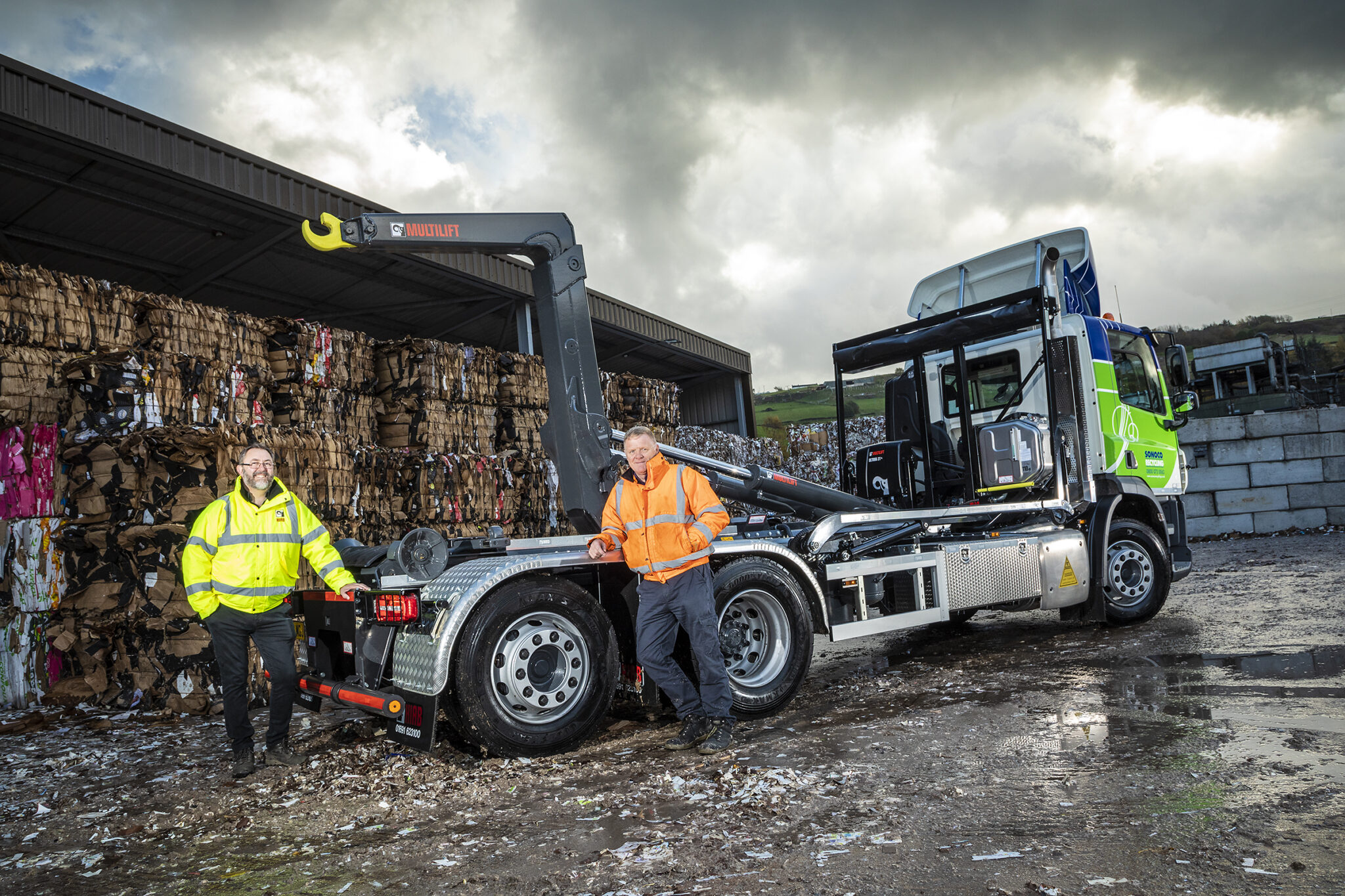
Three new Hiab MULTILIFTS have been bought by Yorkshire-based waste management firm Sonoco Recycling as part of its ongoing modernization programme.

The hookloaders join a 15-strong fleet which operate across Halifax collecting and redistributing commercial paper and cardboard waste for recycling.

Brian Rhodes, logistics and procurement manager for Sonoco Recycling said: “We have a fleet of vehicles dedicated to the collection of waste paper and cardboard – nine of these are hookloaders.

“We have seen an increase in the number of requests for smaller collections from SMEs as businesses implement new recycling strategies to improve their carbon footprint and save money,” he said.

“To manage this increase in demand we have invested in three Hiab MULTILIFTS because we know they’re one of the most reliable brands in the market. One driver can travel up to 50,000km a year, so it’s really important that we have equipment that keeps moving.

“Thanks to the build quality of the MULTILIFTS hookloaders, we have fewer issues with the equipment. This means less downtime which keeps my customers and my team of drivers happy, because they also want to finish on time.”

Dek Butler, MULTILIFT specialist for Hiab UK said: “Recycling and waste management is a sector which demands high-performance equipment. Our multilift hookloaders are built to perform so waste management is a key sector for us.

“I’m confident Sonoco’s three new hookloaders will help it manage its growing customer base in the region. We’re proud to be a valued supplier for a globally-recognised company.”

Earlier this year Hiab announced the launch if the MULTILIFT Optima 15S and MULTILIFT Optima 25S hooklifts for two and four axle trucks to complete its MULTILIFT Optima product range.

Road Transport Capacity and Prices are Rising Again

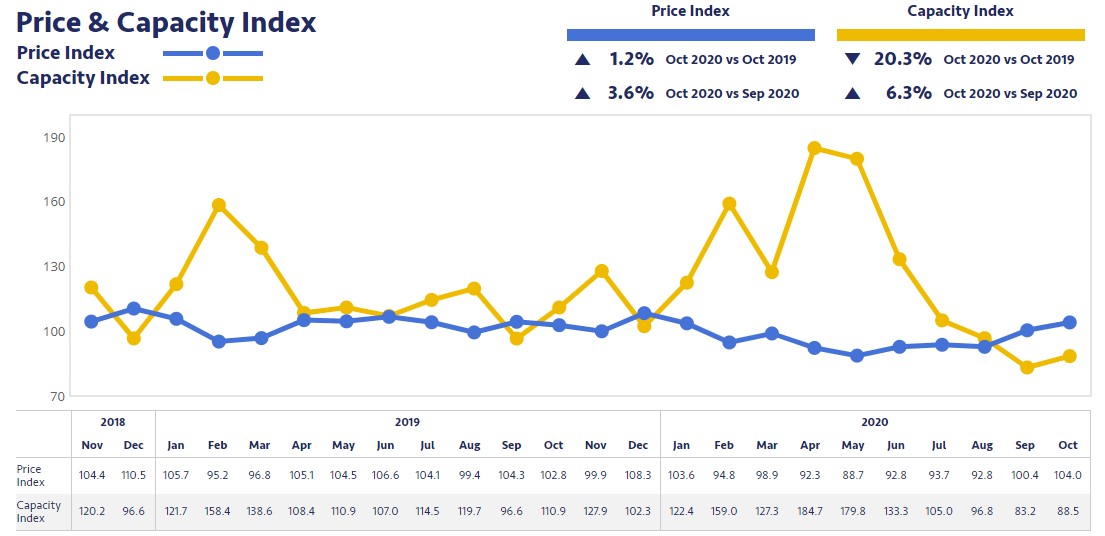
A new European survey has revealed that road transport demand is picking up, according to TMS supplier Transporeon.

• Compared to September 2020, 6.3% more road transport capacity was available in October on the European spot market.
• Compared to October 2019, less capacity was available (-20.3%).
• The rising price trend that started in June and July with a short interruption in August, continued in October. Compared to September 2020, prices rose by 3.6%.
• Prices have now reached the highest level this year and are above pre-crisis level.
• Year on year, prices have also risen by 1.2% compared to October 2019.
• The rise in the price level can be explained by the fact that the level of available capacity has been low for several months and prices are adjusting with a slight delay.
• The automotive industry continues its recovery, as shown by the rising prices on the spot market (+4.7% compared to September 2020). The decrease in available capacity (-3.6% compared to the previous month) is part of an ongoing development already observed since June 2020.

This is the result of the current evaluation of the transport market monitor (TMM). The online service is provided by Tim Consult on the basis of transport data of more than 1.8 million freight loads per year. The processed transport data, stemming from the spot market, is provided by Transporeon, Europe’s leading network provider for transport logistics services. The report is based on data available up to 09 November 2020.

“We are currently seeing the first increase in available transport capacities recorded since April this year. At the same time, we observe an ongoing trend for increasing prices. This is a normal development in times of generally low levels of available capacities on the spot market. This month’s data can be read as a sign that the positive price trend observed after the summer break was not just a seasonal phenomenon, but a sign for an economic recovery. The interesting question now is how the second wave of lockdowns in Europe will affect this development.”, said Oliver Kahrs, Managing Director of Tim Consult, a Transporeon subsidiary.

New Wheeled Dollies Tailored to the Supply Chain

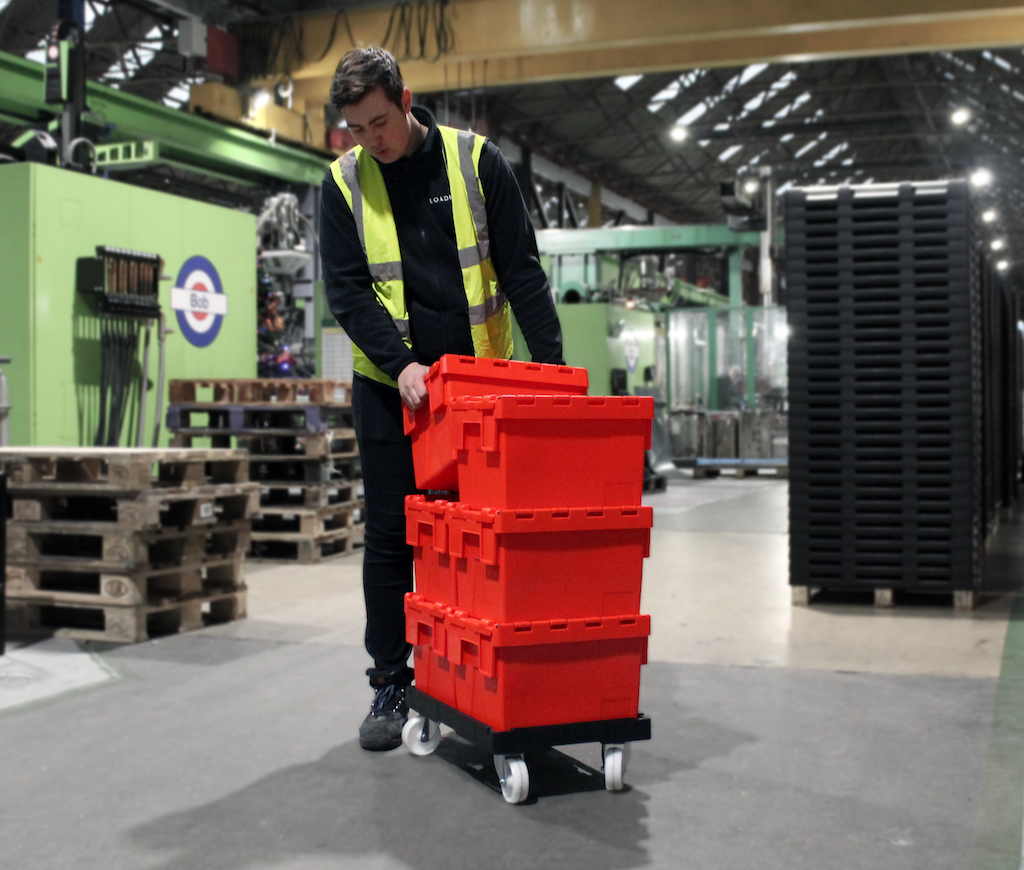
Reusable packaging innovator, Loadhog has recently launched wheeled Dollies which have been designed specifically to add benefits at every stage of the supply chain.

Achieving a lean operation relies heavily on handling efficiency, allowing users to move multiple and heavy payloads as capably and easily as possible.

With customer journeys changing, buying habits fluctuating and product popularities varying continually supply chains have never needed to be as versatile as possible right now.

As digital adoption increases, local stores have begun implementing home delivery distribution networks for groceries, causing a rise in the need for transportation aids and complete end-to-end packaging systems. As businesses also look to cut costs, and future proof their operations, their attention is focussed on improving efficiencies.

Whether for an application within the light and fast e-commerce world or a heavy-duty industrial operation a Loadhog Dolly can add significant value. It can be manufactured in recycled polypropylene making for a greener, more environmentally friendly transportation assistance.

The wheeled Dollies enable the safe, effortless movement of either 600 x 400 and 300 x 400 containers, crates or collapsible boxes. Most Loadhog Dollies will transport up to 250kg and the strongest deck will move a payload of up to 500kg.

The Loadhog Dolly-64-210 and 250 incorporate the uni-link feature which allows short side and long side linking to maximise the versatility of load movement.

Loadhog managing director, Shaun Khan commented: “At this time, the ability to manoeuvre a diverse range of goods from one end of the supply chain to the other is essential. More and more companies are utilising wheeled bulk containers and other more modular transportation systems.”

The wheeled Dolly can be combined with the Pallet Lid to create a mobile packaging system offering increased vehicle fill and return efficiencies in comparison with any roll cage.

Standard Loadhog Dollies can be customised with alternative wheel material, braked casters, customer colours, printed and embossed branding, labelling and RFID.

Loadhog has unveiled new branding last year to “emphasise its constant determination to drive innovation in returnable packaging”.


Joloda International Acquires Loading Automation Inc

The Board of Joloda International Ltd (JIL) has announced the acquisition of a majority share in Loading Automation Inc (LAI).

The acquisition represents a significant step in JIL’s ambitious growth plans, whilst fitting in with the succession plans of previous LAI shareholders.

Based in the US city of Wilmington, North Carolina, LAI have successfully distributed JIL’s products in North America for over 15 years – delivering to US customers, and helping them to increase efficiencies by streamlining their loading and unloading solutions.

LAI, has been an invaluable partner in providing expert solutions for all logistics operations through JIL’s Hydraroll products. Now, as part of JIL, they will be able to offer the full Joloda Hydraroll product range to the US market.

Continuing in his current role as President and shareholder of LAI, Brett Murill will ensure the change in ownership is a smooth transition to existing and future customers. Brett and the US team will now also benefit from additional support and investment from JIL to expand the reach of the business across the US.

JIL are a global leader in loading and unloading solutions. Their brand, Joloda Hydraroll, have been designing, manufacturing and engineering loading solutions for transport companies, system integrators and blue-chip organisations for over 50 years.

Joloda Hydraroll helps companies by lightening loads and finding efficiencies – streamlining loading systems, and moving products from production or manufacturing and onto transportation via a series of automatic and manual solutions.

For more recent acquisitions in the logistics market, click here


New Logistics Centre for 3100 US Stores

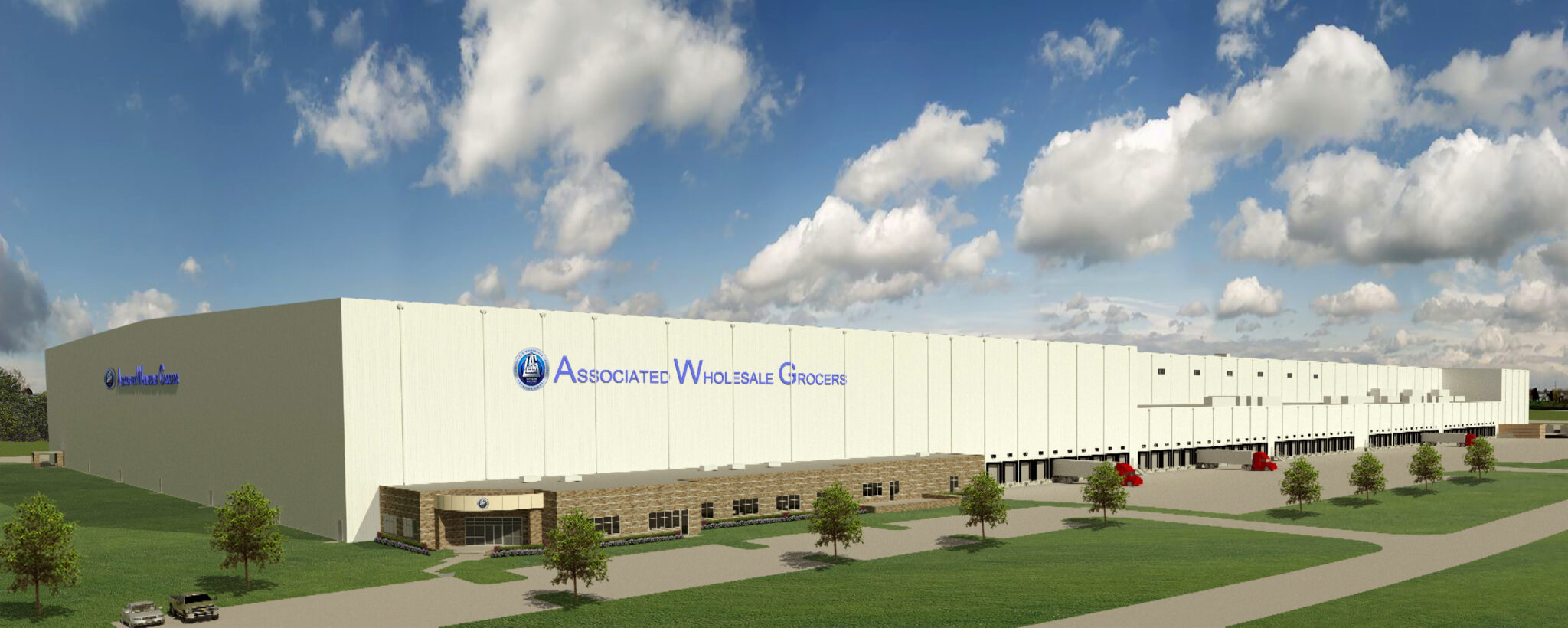
Associated Wholesale Grocers, Inc. (AWG), headquartered in Kansas City, USA is the largest cooperative food wholesaler in the United States. The company, with sales of more than 10 billion US Dollars, is planning and building a leading-edge, highly automated full-range logistics center in Hernando, Mississippi together with WITRON Logistik + Informatik GmbH from Germany. The facility will supply more than 3,100 grocery stores, owned and operated by independent retailers, after a ramp-up starting in August 2023. AWG is known in the US for its private brand offerings with its Best Choice, Always Save, Clearly by Best Choice & Best Choice Superior Selections brands.

“We are pleased to be working with WITRON on the most exciting project in AWG’s history,” said David Smith, CEO of AWG. “The new automated facility will be a critical component to significantly expand variety offerings and improve system-wide distribution and logistics performance. It will enable AWG and its over 1,100 cooperative member-retailers to continue to grow for many, many years to come.”

55,000 different items – 460,000 pick units / day

Almost 55,000 different items will be stored and picked with the OPM (Order Picking Machinery), AIO (All-in-One-Order Fulfillment), and CPS (Car Picking System) solutions. WITRON’s technology will be used in all temperature zones – dry assortment, fresh products, and frozen items. The facility with a size of 81,000 square meters / 871,900 square feet, a total of 738,000 pallet, tote, and tray locations, 92 stacker cranes, as well as 11 kilometers / 6 miles of conveyor system is designed for a pick performance of more than 460,000 units / day.

Automated WITRON technology in all temperature zones

The new facility will have 18 fully automated COM (Case Order Machine) machines installed in temperature areas of +20 to -26 degrees Celsius / +68 to -14.8 Fahrenheit to stack cases onto pallets in a store-friendly manner. Large-volume items are also picked in various temperature zones with route optimization using pick-by-voice support from the semi-automated logistics module CPS. An intelligent WITRON WMS platform controls the internal and external supply chain processes “end-to-end”. A WITRON OnSite team will be responsible for service, maintenance, and system operation, and will keep all mechanical elements, components, and material flows operating around the clock, 365 days a year.

AIO solution makes piece picking more flexible

Due to a wide range of small-volume items, AWG decided to use WITRON’s AIO system for the dry assortment – a further development of the tote picking system DPS (Dynamic Picking System), which has been successfully used for many years in food retailing logistics.

With AIO, both fast-movers and slow-movers can be stored and picked compactly in the same logistics module. Order consolidation is automated and system-controlled in AIO. The WITRON WMS permanently controls the classification of the items depending on the order structure. Classification changes (e.g. promotion or seasonal items) are recognized by the AIO and automatically adapted in real-time. The use of the same infrastructure (inventories, manpower, mechanics, IT, master data, etc.) is reflected in maximum flexibility and high cost-efficiency for AWG. “Our industry is ever-changing, and it is our mission to provide our member-retailers all of the products, services, and tools they need to compete favorably in all markets served, all at the best possible cost,” said David Smith. “We are excited to be able to significantly expand what we stock and ship to our member stores while becoming more efficient and cost effective in our operations”, says CEO David Smith. “And, not only will our employees benefit from ergonomic work processes, the environment will benefit from a reduced number of trailers on the road due to better use of volume and space on each trailer.”

WITRON as a reliable life-time partner

“WITRON is an established and strong partner who has the necessary know-how and worldwide references to successfully implement a project in this dimension. WITRON also lives a corporate culture that fits very well with the culture of AWG and its cooperative members”, explains David Smith. “WITRON impressed us with innovative ideas, technology, and the people and values behind the company and the project.”

Storage Solution for Seifert’s new Logistics Centre

With a precisely tailored racking system for production supply in the automotive sector, AR Racking has created the basis for optimal intralogistic processes in the new logistics center of the Seifert Logistics Group. In addition to the quality aspects, the high flexibility of AR Racking and the fast delivery and assembly time with short time window were important decision criteria for Seifert.

With a turnover of 210 million euros in 2019, the Seifert Logistics Group (SLG) from Ulm is one of the leading freights forwarding and contract logistics companies in Germany. The group is active in Germany, Poland, the Czech Republic and France, and provides warehousing, sequencing, distribution and plant logistics services for well-known customers from the automotive, chemical, pharmaceutical and consumer goods industries as well as the paper and construction materials sectors. The core business of the company is the automotive motive sector. There Seifert is deeply integrated into the value-added chains of the automotive industry. For example, the logistics service provider takes over the production supply for the local Mercedes plants in Rastatt and Leipzig. In Hambach, France, where the Stuttgart carmakers manufacture the Smart, Seifert has been managing plant logistics with around 100 employees on site since 2017. Seifert performs all tasks required for production supply to the automotive plant, from truck registration, trailer yard, goods receipt processing, storage, sequencing and assembly activities to just-in-time and just-in-sequence delivery to the production lines at the Mercedes plant.

Within the Seifert network, the Hambach site symbolizes the increasing internationalization and expansion of the company’s customer portfolio. “On the other hand, the Seifert Logistics Group is thus proving that it is a steadfast and trustworthy logistics partner of Mercedes-Benz AG, which also responds to the needs of the customer on an international level,” emphasizes Luc Wanner, Executive Director Seifert Automotive Logistics. In order to increase capacities at the site and optimize processes, SLG has now set up a new, company-owned logistics center there. AR Racking Deutschland, based in Rüdesheim, was awarded the contract for the design and installation of a racking system tailored precisely to the contract logistics provider’s requirements.

“In cooperation with the purchasing department of our headquarters in Ulm we have received a list of the top suppliers of industrial storage systems“, Executive Director Wanner describes the selection process and the criteria for the award of the contract. “Each supplier on this list was evaluated according to cost, delivery time and quality. In the end, we chose AR Racking. AR Racking offered a very fast delivery and installation time and also helped us in terms of cost when the contract was finalized.”

At the end of last year, the first construction phase of the new logistics center was completed with 20,000 m² and successively put into operation. The second construction phase is to be completed by the end of this year. AR Racking will then install a rack system with a further 4,000 pallet spaces. After completion, the logistics center will comprise a total of more than 41,000 m² of covered area and will be divided into two warehouses with eight units and an office building. “The new building in Hambach was important not only to expand our storage space, but also to be able to react to the rapidly developing requirements of the automotive industry,” explains Wan-ner, “We previously worked in halls provided by our customer, which could only offer sufficient space for his storage needs. The new building has changed everything for us. With the increased storage capacity and the newly acquired independence, we are now able to expand our customer portfolio and target new collaborations.”

The rack system designed by AR Racking offers more than 6,000 pallet spaces. With six support levels, the system in the new logistics hall rises ten meters high. All support levels are equipped with wire mesh floors. Special feature: With a flow rack for small parts storage, an intelligent storage and order-picking solution with 8,600 container spaces was integrated on 41 double bays of the lower rack levels. An additional specification from Seifert was aimed at achieving extensive flexibility in plant layout and logistical processes. “It is fundamentally very important to us to always remain flexible and to be able to react quickly to customer needs,” says the Seifert Executive Director. “Against this background, when awarding the contract for the entire storage system for the newly built hall, we also took care to ensure that the racking system would allow problem-free disassembly and reassembly.”

Within less than four weeks, the intralogistics experts installed the new racking system and completed the first project phase successfully and on schedule. “Thanks to the fully automated manufacturing processes at AR Racking’s production plant, we were once again able to demonstrate our excellent delivery capability with the shortest delivery times in this project with its tight time window,” emphasizes Roland Fischer, Key Account Manager AR Racking Germany. And that despite some previously unplannable constraints. “Right at the start of assembly, it became clear that the free dimensions given to us for route train picking in the racking system were not suitable,” says Fischer. “We had to reschedule the system a little at short notice and, among other things, manufacture, deliver and install other beam lengths. AR Racking was also able to prove that changes and the delivery of corresponding components can be implemented even at short notice.”

Thus, there were no assembly delays in the Seifert logistics center compared to the original schedule. The same applies to additional requirements that Seifert brought in during the project realization. “When we subsequently ordered push-through protections, AR Racking was able to deliver them very quickly and also install them immediately,” Seifert Executive Director Wanner describes an example. “AR Racking’s system guarantees maximum security for our employees and flexibility towards our customers. We are very satisfied with the solution”.

In the meantime, the new system has been completely integrated into the supply of the production lines at the Mercedes plant. “Due to the Corona pandemic, our site unfortunately had to remain closed for a period of 2.5 months,” says Wanner. “This has upset our original schedule. But the planned second phase of the project has now been tackled.” The incoming goods in the new logistics center will be collected after the quality inspection and moved to the storage locations specified by the warehouse management system. Parts and assembly kits are pre-picked and put together according to requirements for the call-off of the demand points in production. The loading of the route trains follows in a sequential order and is made available for transport in the outgoing goods department. “The course of the project from planning to handover of the plant was characterized by good cooperation,” summarizes the Executive Director. If deviations from the original plans occurred, the AR Racking project management always reacted quickly and developed creative solutions to problems. This continues in the After Sales Services. “With AR Racking we have a great partner at our side, who supports us in reacting quickly, flexibly and with quality”, Wanner judges and cites as a current example the announcement from the beginning of July that the main customer Mercedes will sell its plant in Hambach. “There is already a potential buyer,” says the Seifert Executive Director. “This means for us that we will then adapt our processes and the equipment of our logistics center to a new customer. Especially in such difficult times as today, it is a great advantage to have competent partners who are trustworthy and support us in major changes.”

Subscribe

Get notified about New Episodes of our Podcast, New Magazine Issues and stay updated with our Weekly Newsletter.