
Deep-freeze Transport and Storage for COVID-19-Vaccine

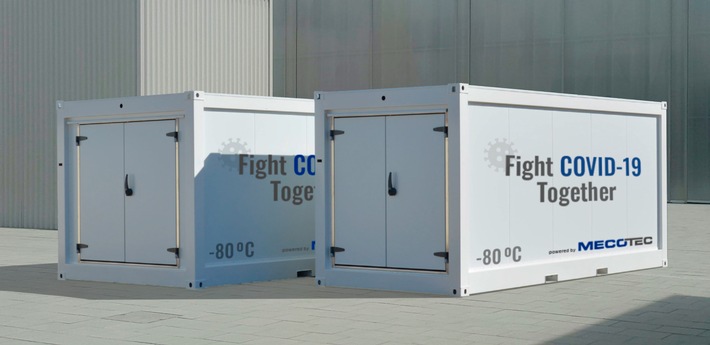
Germany’s MECOTEC Group has launched a complete–one-stop solution for the deep-freeze, transport, storage and distribution for COVID-19-Vaccines with its first Mobile Hybrid Container. The company claims it is the first hybrid container solution for ultra-cold transport and storage for vaccines.

  • – Transport and storage of up to 1,000,000 vaccination doses in one standard size container at temperatures down to -80°C / -112 °F possible
    – Active deep cooling technology ensures safe and controlled transport and storage without dry ice

Vaccine manufacturers, transport and storage providers are facing major challenges in the fight against the coronavirus, as many of these vaccines only retain their effectiveness at temperatures down to – 80°C / -112 °F according to the current state of science. In addition, very few medical facilities have space to store the vaccine in large quantities at constant minimum temperatures.

The MECOTEC from Germany has now launched a complete-one-stop-solution consisting of:
1. Deep-freeze cooling + 2. Transport + 3. Storage & distribution: Immediately after production, the vaccine is frozen on site in a kind of deep cold storage. The vaccines can then be loaded into a container and safely transported to the distribution station at constant minimum temperatures down to – 80°C/-112°F. On site at the distribution station, the transport container then functions as a storage and distribution center.

MECOTEC has already developed a mobile cold store solution as prototype, an industrial solution with which the vaccine can be frozen directly at the manufacturer’s facility. For this purpose, the cold store system is located near production, the machine container is set up outside the production building. Immediately after production, the vaccine is deeply frozen in the cold store. This cold store solution can be set up anywhere where the vaccine is available for deep cooling.

“The project knowledge that we have gained with the development of the prototype as well as our many years of experience in the field of cooling technology made it possible within a very short time to adapt this deep-freeze facility into a transport, storage and distribution container,“ explains Jan Hüneburg, Managing Director at COOLANT, the industrial division of MECOTEC.

“We are pleased that today we can present our Mobile Hybrid Container Solution for the transport and storage of Covid-19-Vaccines and thus make a contribution to a safe and fast supply of the vaccine for people worldwide,“ says the Managing Director of the MECOTEC Group, Enrico Klauer. “Since our system is based on an active deep freezing technology, it does not require dry ice for cooling which makes it also suitable for safe international air transport.”

The process for transport and storage of the COVID-19-Vaccines at constant minimum temperatures down to – 80°C/-112°F is as follows:
The Vaccine Veils are loaded into the mobile refrigerated container in transport packaging and insulation boxes and then transported to the distribution (vaccination) center while maintaining the deep-freezing temperatures down – 80°C / -112 °F. At the distribution center the veils can be taken out individually. The whole process, including the location and the temperature within the container can be monitored centrally.

The complete solution developed by the MECOTEC Group can be used worldwide. “It is our aim to get the vaccine to the people as soon as possible. Therefore we offer several options: Orders for container production can be placed at MECOTEC directly and at our worldwide sales offices. In addition we also offer licensed production,” says Klauer.
Semtech Supports New IoT Solutions

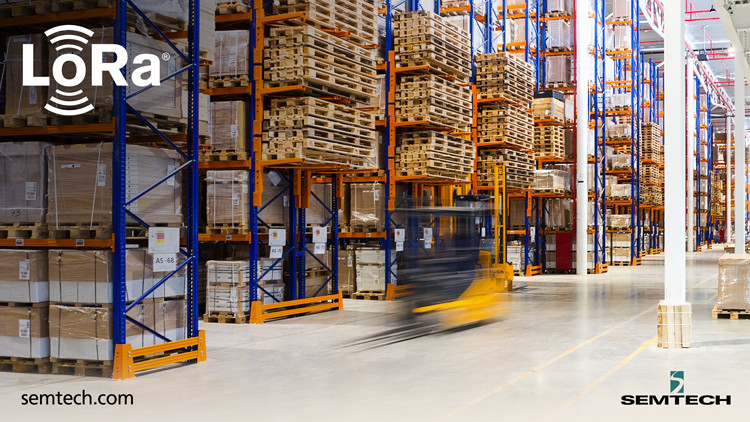
Semtech Corporation, a supplier of high performance analog and mixed-signal semiconductors and advanced algorithms, has announced that the LoRaWAN® protocol, developed and managed by the LoRa Alliance, is providing new applications of IoT connectivity for new smart industrial control operations. Utilizing the protocol for its IoT connectivity, Cisco developed new IoT sensor solutions to enhance visibility into physical spaces for IT and Operational Technology (OT) environments.

 Cisco Industrial Asset Vision is a simple and secure solution for remote asset management, equipped with a new, Cloud-based dashboard to better monitor and manage the condition of assets and facilities. The all-in-one solution deploys in minutes using a simple QR code to onboard sensors and devices; requiring little technical expertise, reducing the burden on IT or the need for expensive service contracts.

Designed to wirelessly connect battery-operated ‘things’ to the Internet, the LoRaWAN protocol is the widely adopted low power, wide area networking (LPWAN) protocol for IoT applications across the globe. Gateways leveraging the LoRaWAN protocol enable geolocation capabilities to track and monitor assets and their locations to improve logistics, prevent theft, and enhance operational efficiency. Common uses include indoor and outdoor asset tracking, monitoring temperature and humidity, freezer and cold room, ingress/egress and occupancy, water leak detection, lighting conditions, and equipment vibration and movement.

“Designed to wirelessly connect battery operated ‘things’ to the Internet, LoRaWAN is the low power, wide area networking (LPWAN) protocol of choice for IoT applications across the globe,” said Marc Pegulu, Vice President of IoT Product Marketing for Semtech’s Wireless and Sensing Products Group. “Cisco’s enterprise customers can now benefit from IoT connectivity to quickly connect with and easily monitor high-value assets and environmental conditions in their facilities and warehouses so they can become safer and more efficient.”

Semtech’s LoRa device-to-Cloud platform is a globally adopted long range, low power solution for IoT applications, enabling the rapid development and deployment of ultra-low power, cost efficient and long range IoT networks, gateways, sensors, module products, and IoT services worldwide. Semtech’s LoRa® devices provide the communication layer for the LoRaWAN® protocol, which is maintained by the LoRa Alliance®, an open IoT alliance for Low Power Wide Area Network (LPWAN) applications that has been used to deploy IoT networks in over 100 countries.


Refrigeration Unit on Double-Deck Trailers

Bute-based haulier, John Mackirdy Limited, has taken delivery of a new Carrier Transicold Vector® HE 19 MT (multi-temperature) refrigeration unit, mounted to the company’s first ever double-deck trailer. The new asset is designed to increase fleet efficiency and improve sustainability across the business. Carrier Transicold is a part of Carrier Global Corporation (NYSE: CARR), a leading global provider of healthy, safe and sustainable building and cold chain solutions.

The new 13.6-metre double deck – manufactured by Gray & Adams – joins John Mackirdy’s 10-strong mixed commercial vehicle fleet, which includes two standard refrigerated trailers mounted with Vector 1950 MT units and one 12-tonne rigid with a Carrier Transicold Supra® 450 unit.

“All of our refrigerated vehicles are Carrier-cooled; when it comes to new trailers, we always specify the latest Vector, and they’ve never let us down,” said John Mackirdy, managing director, John Mackirdy Limited. “As a business, we’re now looking at ways to reduce our carbon footprint and future proof our fleet; the new double deck will play a major role in this. We’ll be able to combine substantial fuel savings from the Vector with almost double the load space, meaning we make far fewer journeys.”

The new Vector HE 19 MT combines Carrier Transicold’s all-electric E-Drive™ technology with a new ultra-modern multi-speed engine design that can cut fuel consumption by up to 30%. The unit also offers a 10% saving in weight and a noise reduction of 3 dB(A) – which to the human ear equates to 50% less noise. The system also delivers up to 15% savings on maintenance costs.
The fully hermetic scroll compressor and economiser helps increase refrigeration capacity during pull-down by 40%, while cutting the chance of refrigerant escape by 50%. When plugged into the electrical grid on standby, the Vector HE 19 MT is also 19% more efficient, meaning it delivers reduced diesel, maintenance and electricity bills.

“The list of benefits we get from the new Vector HE 19 MT are fantastic. Not only do they help us deliver on the environmental front, but they also drive down operating and running costs – which in the current climate is extremely important,” said Mackirdy.

John Mackirdy has also opted for Carrier Transicold’s advanced telematics package for the first time. Using two-way communication, the system offers the ability to remotely alter set points or operation modes, as well as initiate defrosts, pre-trip checks, and clear alarms from any connected device. The new Vector HE 19 MT also features Carrier Transicold’s DataCOLD™ 600 temperature recorder, which provides easy access to a wealth of information on unit performance.

The new unit is also covered by everCOLD™, Carrier Transicold’s fixed cost, full-service maintenance package that includes annual temperature control testing and certification, full regulatory checks and access to Carrier Transicold’s oneCALL™ 24/7 incident management service. These innovative service and technology enhancements ensure the safe transport of perishables, which aligns with Carrier’s Healthy, Safe, Sustainable Cold Chain Programme. Expected to stay in operation for 10 years, the new trailer will transport goods for a variety of customers. However, it will primarily be used for the distribution of food products from a local producer into mainland Scotland.

Agility Reports KD15.3m Net Profit for Q3

Agility, a leading global logistics provider, today reported Q3 earnings of 8 fils per share on a net profit of KD 15.3 million, a decrease of 29.4% compared with the same period a year earlier. EBITDA declined 1.9% to KD 46.5 million, and revenue was flat at KD 403 million. Nine-month earnings stood at 16.47 fils per share on net profit of KD 31.5 million, a decrease of 50.4% over the same period in 2019. EBITDA declined 14.1% to KD 122.4 million, and revenue declined 0.7% to KD 1,168 million.

Tarek Sultan, Agility Vice Chairman and CEO, said: “While we – like many businesses – are still feeling the impact of COVID-19 we are also seeing recovery across most of our business lines, albeit with each business recovering at a different pace. Agility benefited from early and decisive measures taken to contain costs and preserve cash, and is well poised to navigate what is likely to continue to be a volatile market for some time. Agility remains committed to investing in technology that will transform our industry, expanding our digital logistics offerings, and bringing world-class warehousing infrastructure to fast-growing emerging markets.”

Global Integrated Logistics Q3 EBITDA was KD 18.5 million, a 35.2% increase from the same period in 2019. The improvement was primarily driven by significant cost reductions across the business. GIL’s Q3 net revenue was KD 71.4 million, 5.1% higher than the same period in 2019. Along with net revenue increases in Air Freight and Contract Logistics, there were net revenue declines in Ocean Freight, Fairs & Events and Project Logistics. GIL gross revenue was KD 305.7 million, a 7.3% increase from same period in 2019.  The Q3 Air Freight NR increase of 39.1% was driven by continued demand for exceptional shipments related to the Life Sciences vertical. Ocean Freight NR declined 14.5% when compared with Q3 2019, as a result of volume and yield compression. Air Freight and Ocean Freight volumes decreased in Q3 vs. same period in 2019, as a result of customers’ demand and production disruption arising from COVID-19 as well as capacity constraints.

Contract Logistics continues to experience strong growth (12.7% net revenue growth), mainly in the MEA Region (Kuwait, Saudi Arabia, UAE), where there was strong performance at new facilities, along with increased efficiencies. Fairs & Events (F&E) has been hurt significantly by Coronavirus-related event postponements and cancellations. Starting in Q1, GIL introduced a range of cost reduction measures intended to ensure continued strength of EBITDA performance in anticipation of falling global trade volumes. This positions GIL well for operating in the current environment. GIL continues to focus on operational productivity as well as customer solutions to respond to the changing market environment.

Agility’s Infrastructure Companies

Agility’s Infrastructure group EBITDA declined 16.5% to KD 31.6 million during the third quarter. UPAC, NAS and GCS were primarily responsible for the decrease, each reporting significant declines as a result of the pandemic. In contrast, Agility Logistics Parks (ALP) and Tristar proved resilient during this pandemic. Infrastructure group net revenue fell 24.4%, and gross revenue declined 15%. ALP experienced revenue growth of 5.6% in the third quarter. ALP continues to see increased demand for warehousing spaces from customers that are mainly suppliers of necessity goods. ALP is moving ahead with the developments in Kuwait, Saudi and Africa to meet customers demand.

Tristar, a fully integrated liquid logistics company, posted a 15.9% revenue decline mainly due to commercial fuel sales. Maritime segment has shown a healthy growth due to the deployment of new vessels on long term contract. Fuel Farm segment also reported an increase in revenue as compared to same period last year. At the profitability level, Tristar have achieved improvement in earnings mainly due to contribution from Maritime segment. Tristar contractual business model helped them to be resilient during this crisis and achieve a profitability growth compared to last year.
National Aviation Services (NAS) reported a Q3 revenue decrease of 46.1% but is beginning to see improvements in passenger traffic and flights. NAS Kuwait continues to suffer from the cap imposed by the government on the number of passengers/flights into/out of Kuwait International Airport. Other geographies NAS operate in performed well, and are experiencing a rebound. NAS VIP services and airport lounges have been mostly impacted, where, in most cases, lounges remain closed. Cargo remains a positive subsector for NAS.

The pandemic also has affected performance at United Projects for Aviation Services Company (UPAC), which saw revenues decline in the third quarter compared to last year; primarily due to the cessation of operations at the Kuwait International Airport during the lockdown period and subsequent resumption of traffic at a lower capacity. Business is starting to show signs of gradual recovery as UPAC continues taking measures to reduce the negative impact on its business.

At GCS, Agility’s customs modernization company, revenue fell 30.2% in this quarter compared to the third quarter of 2019 due to the decline in trade movement, though the negative impact of COVID-19 eased during Q3.

Recap of Agility 3rd quarter 2020 Financial Performance:
• Agility’s net profit decreased 29.4% to KD 15.3 million. EPS was 8 fils vs. 11.33 fils a year earlier.
• Agility’s EBITDA decreased 1.9% to KD 46.5 million.
• Agility’s revenue increased by 0.6%, to KD 403 million and net revenue decreased 9.7%.
• GIL revenue increased by 7.3% to KD 305.7 million.
• Infrastructure’s revenue declined 15% to KD 101.7 million.
• Agility enjoys a healthy balance sheet with KD 2.2 billion in assets. Net debt was KD 173.9 million (excluding lease liabilities) as of September 30, 2020. Reported operating cash flow was KD 115.2 million for the first nine months of 2020, an increase of 17.5%. more Agility news here

EU Funding Granted to Develop a New Assistance System

ELOKON GmbH, the supplier of safety and assistance systems for the intralogistics sector, is developing a new assistance system to enable multiple VNA forklifts to operate simultaneously in the same narrow aisle. This is based on the use of artificial intelligence (AI) and wireless mesh networks. ELOKON’s digital co-pilot AngELO will enable forklifts working in visibility-limited high bay racking to be networked with other vehicles and the surrounding infrastucture by means of data technology. The purpose of this assistance system is to improve vehicle productivity and safety whilst also ensuring a risk-free environment for the workforce. ELOKON has secured financial funding for this development project from the EU as well as federal and regional government bodies.

“The steady growth in online retailing has led to a spike in demand, which has in turn  increased the requirement for forklift trucks. More vehicles in operation however increases the likelihood of collisions or injury to personnel“, said Alexander Glasmacher, MD of ELOKON GmbH. This is particularly the case in warehouses with high bay racking, as the typically narrow aisle widths offer limited visibilty, which can lead to serious accidents. “We have therfore developed a digital co-pilot to counteract these hazards”, said Glasmacher.  “AngELO combines the car-to-car and car-to-x location principles to network the vehicles with each other as well as with the infrastructure.”

The system is based on the principles of swarm intelligence, AI and mesh network radio. The assistance system technology is fitted with an RFID reader and a radio modem to identify electromagnetic signals. This enables real-time communication between the vehicles via a MESH network. 

“When carrying out their tasks and processing orders, drivers work independently of each other, but AngELO’s ability to provide a constant exchange of information enables analysis of individual vehicles‘ routes, the implementation of appropriate swarm behaviour and the identification of potential hazards“, explains Glasmacher. If a collision risk is detected, acoustic and optical signals are triggered to warn personnel. The inclusion of autonomous speed reduction also prevents the occurrence of collisions. Customers worldwide will appreciate the ability to retrofit ANGelo to their fleet.

ELOKON has secured six-figure grants for this project from the EU as well as federal and regional government bodies. “This financial funding will enable us to expand our portfolio of solutions for VNA vehicles by applying the Car-to-Car and Car-to-X communication systems from the automotive sector to intralogistics procedures“, said Glasmacher.

Automation Hardware vs Software

Integrator Witron recently promoted IT specialist Johannes Meissner to CEO of its service division WIOSS. Logistics Business talks to the 30-year company veteran about the often complicated trade-offs between hardware and software within warehouse automation.

As an IT specialist, does your appointment to the management board as CEO herald new times at Witron, away from hardware toward software?

Johannes Meissner: I was responsible for IT, but I am also a graduate engineer, specialized in communications-engineering, so I like to think I know about hardware, too! But to answer your question, in the past, we were very close to hardware and in the early days developed the controls ourselves. If our own focus on software slightly drifts away from hardware we must not lose our contact and understanding of the core. IT is not an end-in-itself. We always have to ask ourselves why and for what purpose we develop the applications, and what our interaction with physics
looks like. In the public discussion, a lot of IT hype dominates the narrative. We have observed that many companies are liable to lose their customer focus in doing this.

So, everything will remain the same then?

Meissner: Even with the movement in our development priorities explained above, we are still in the middle of the realignment of our IT structures. This means that we are working on new user interfaces, investing in usability, using web applications, building platforms, and using cloud services. It is important that we do this together with our customers. As an example: My first project was in the US – more than 20 years ago we developed a warehouse management system, which is still in use today at more than 40 locations. It has always been maintained and modernised, and it will probably work in a private cloud in the future.

Back to the hardware. In recent months, Witron has relied on Beckhoff controllers, why is that?

Meissner: We see the future in PC-based controls. We receive an open development environment and we can use our software developments.

The worlds of IT and controls are moving closer together – are high level languages also the future in control technology?

Meissner: The borders between these worlds are fading. The controller sends data into a cloud. IT, office, and shopfloor are mutually dependent on each other, which is why high-level
languages will also gain importance; also docking web applications, increasing flexibility. In addition, universities will only rarely train students in IEC 61131 development. It will not disappear, but high-level languages are gaining importance in our control world.

Which languages do you use at Witron?

Meissner: C++, C#, .net as well as languages for web and mobile applications such as Xamarin/REACT. Data languages such as PL/SQL are just as important.

Do you use open source software?

Meissner: Our current strategy is to open up Witron applications further to the outside world through additional connectivity. We are just about to take the first steps, discuss new applications
– especially in our end-to-end platform, in order to provide users of the supply chain applications with appropriate access and control options. In the future, we want to make Micro Services
available to stores, for example, which will also make our work in the logistics centre easier.

A much-discussed topic in logistics IT is middleware, when there may be several providers in the warehouse. Why do Witron and the other providers have such difficulties in developing interfaces?

Meissner: The problem is that some customers like to tinker with the middleware themselves. If we have a middleware that only creates connections between systems, then it normally works well. However, these middleware applications often get additional functions and logics added to them. The result is that it becomes confusing and sometimes even chaotic. Many users then have to
maintain three systems – our system, the competitor system, and the middleware. We first have to set up the exact processes, create and use interfaces. But often these topics are not discussed properly with the end by the user, and the result is uncontrolled growth. My experience has taught me: if you run several systems together, even via a lean middleware, the user will still not get the most out of the system.

I don’t quite understand – you want your component suppliers such as Beckhoff, Lenze, or Sick to have open interfaces. However, you as an intralogistics expert are reluctant to be more open?

Meissner: Yes, that’s right. In the next few years, we will experience open systems, provide interfaces, also in part to allow access to applications from the supply chain. The magic word is platform. But you also have to consider that, often, Witron technically manages and operates the warehouse. Direct feedback from the technical and operational operation flows into our applications in order to further optimise the system and operation. That trend will continue to increase.

But the customer wants as much data as possible, though…

Meissner: Yes, this is a complex topic. We have to connect the supply chain levels, need more connectivity, and exchange data via MQTT/RESTful http for control and analysis. Read the whole interview here.

Sustainability has arrived in Supply Chain Management

Sustainability in supply chain management remains a hot topic despite the Covid-19 pandemic.The results of a recent study by consulting firm Miebach Consulting GmbH suggest that a successful turnaround towards sustainability can be achieved if consumers first rethink and transform this new way of thinking into action and demand.

Nevertheless, according to Thorsten Gensmer, Director, Miebach Consulting, companies should not sit back: “Those who think ahead now and lay the foundation for sustainable business activities can profit greatly from the newly developing market. Collective actions with a complete cradle-to-cradle approach are necessary for greater climate protection goals in the supply chain. The high level of planned initiatives shows that this can already be worthwhile now! ”

These are the results of the current sustainability study by Miebach Consulting. In mid-2020, the international supply chain consultancy examined which strategies and measures companies are taking to make supply chains sustainable – and to what extent sustainability and corporate goals can be combined.

277 companies took part in the global online study, including an unusually high proportion of managing directors (18%), which illustrates the importance and strategic significance of the topic.

The motivation for sustainability

With regard to the most recent and the next planned initiative, the majority of respondents cited an improvement in efficiency with an average of 14%, or a cost reduction with an average of 15% as motivation. This is followed by topics such as CO2 reduction (7%), green packaging or the reduction of plastics in general (7%). Sustainable measures based on ecological or social motivation, such as employee health and safety (1%) or environmental protection (1%), are rarely mentioned.

Sustainability in supply chain management is gaining in importance

The surveyed companies have implemented an average of 16 sustainability initiatives in their companies. For the future, however, the surveyed companies plan to almost double (+97%) the number of sustainable initiatives already implemented within the next few years. This suggests that sustainability in supply chain management will gain in importance.

High resource input and complexity discourage

In general, sustainable initiatives are considered less attractive if they require a high level of resource input, such as the development of reverse logistics, which is rated at just 4.2 out of 10 points. Even already complex topics, such as network planning, which is rated 4.6, are perceived as less important. Therefore, resource-saving and relatively simple measures are generally preferred.

Miebach is a gloabl supply chain consultancy firm, operating in over 20 offices and has developed its presence in the UK in the last few years.

Long-term Airfreight Capacity Between Europe and USA

GEODIS, a global logistics provider, has announced the continuation of its scheduled Own Controlled Network (OCN) service linking Europe and the USA. The current service, providing three full rotations each week, has been confirmed throughout 2021.

With transatlantic air freight capacity continuing to be tight and forecasted to remain so well into 2021, GEODIS is contracting freighters to operate within its OCN as part of its global AirDirect service offering. The 2021 schedule is confirmed between Amsterdam Schiphol (AMS) and Chicago O’Hare (ORD) with 3 departures and 3 return flights a week.

Eric Martin-Neuville, Executive Vice President, Freight Forwarding of GEODIS said, “Our customers on both sides of the Atlantic have been suffering from a severe shortage of regular, guaranteed air freight options. We foresee this situation remaining for some time and so have committed resources to provide stability and assure the continuity of our service through the full year of 2021. As a critical element of our OCN program, we can ensure seamless end-to-end delivery through consistent monitoring and control of all shipments, including pharmaceuticals and medical equipment as well as vaccine delivery as it becomes available.”

Through its AirDirect product, GEODIS will offer capacity wherever the market demand requires. Additionally, GEODIS AirDirect services operate a weekly fixed day schedule between Hong Kong (HKG) and Guadalajara, Mexico (GDL) as well as Shanghai-Amsterdam-Shanghai (AMS-PVG-AMS). More news here

Reliable Products, Attention to Specific Needs

Gruppo Grendi has developed a wide range of services by selecting reliable suppliers to support their daily activities. It is precisely from a need for reliability that Yale was selected to provide solutions to upgrade the efficiency of their warehouse, sited in Porto Canale, Cagliari. Opened in 2013, this innovative warehousing space in Sardinia is based in the rear port area, becoming one of the first companies with a warehouse operating close to the port basin.

With a history surpassing 190 years, the family owned Gruppo Grendi has seen six pioneering generations guide the group to their continued success today. Beginning as freight forwarders in 1828, the company has evolved to become a company of transporters, shipowners and terminal operators. It has transformed over two centuries to become a market leader in the transportation industry, by staying ahead with the latest transportation and technological trends

Tailored and reliable solutions

Trustworthiness and reliability have been the key factors which have guaranteed the partnership between Gruppo Grendi and Manitech, exclusive dealer for Sardinia. Manitech have supplied their customer with a fleet of 21 Yale® products from counterbalance trucks to order pickers through a long-term rental agreement. Long-term rental provides flexibility for their equipment choices and a tailored solution for Gruppo Grendi.

Coupled with the support and suggestions from Manitech, the Gruppo Grendi business has met their peak production for seasonal requirements while keeping their fleet size optimised for their daily needs. “Yale solutions have fulfilled our needs for a fleet working 24/7, with long battery duration for applications such as shelving storage and container loading,” explains Emanuele Demetrino, Gruppo Grendi Warehouse Manager.

“Gruppo Grendi is the undisputed leader in Sardinia for the logistics and transport sectors,” said Luca Pibiri, Sales and Marketing Manager of Manitech. “We proposed a wide range of Yale electric trucks, such as reach trucks, which offer all-round visibility and flexibility, horizontal and vertical order pickers, designed to allow quicker and more accurate order picking of materials, and platform pallet trucks, which optimise productivity in horizontal transportation and loading and unloading of vehicles. It has been an extraordinary success.”

Shelving, picking and loading: Yale solutions are the answer

For the all-electric truck fleet, Gruppo Grendi opted for ERP16 VT series electric counterbalanced forklift trucks, which are ideally suited for picking pallets and container loading. The three wheel electric forklift truck from the Yale VT series combines high performance and energy efficiency in a highly ergonomically advanced solution for medium to heavy duty applications, such as warehouse spaces. Thanks to a design which provides operators with manoeuvrability in confined spaces and a very comfortable working compartment, this product reduces back strain and minimises fatigue throughout shifts.

For second and third level picking up to around 5m, Gruppo Grendi chose Yale MO10E order pickers to enable the fulfilment of customer orders in a short timescale.

From the same series, Gruppo Grendi selected the Yale MO 25 low level order pickers for first and second level picking through the various warehouse aisles. Available with a fixed or lifting platform with independent forklift, the MO series also includes a scissor lift option for ground and occasional second level picking. This series of order picker lifts is ideal for cross docking and load shuttling as well as order picking in intensive and high throughput warehouse operations and horizontal transport over short and long distances.

Working effortlessly and efficiently even in confined spaces, the MP18-20 pedestrian powered pallet truck is designed around the needs of the operator and offers intelligent ergonomics and excellent manoeuvrability. Every component of the MP Series has been designed to provide exceptional reliability. Ideal for the light, medium and heavy duty indoor load handling Gruppo Grendi faces daily, the MP Series is up to 11% more productive when unloading and uses up to 7% less energy, tested against equivalent competitors trucks.

Gruppo Grendi selected the ride-on MP20X platform pallet trucks for their medium to heavy duty applications. The ride-on platform pallet truck is ideal for their cross docking and vehicle loading applications.

Completing the fleet of Yale products, the reach trucks from MR14 series were selected for shelving and order picking applications within the Sardinian warehouse. The robust heavy-duty mast design provides high residual capacities and stable load handling enabling faster put away and retrieval times.

• Gruppo Grendi offers a wide range of solutions for the logistics industry, with a 190 year heritage.
• Unicar-Yale dealer Manitech supplied 21 trucks for the Gruppo Grendi warehouse in Cagliari, from counterbalance trucks to order pickers.
• Trustworthiness and constant support have been the key factors that have guaranteed the partnership between Gruppo Grendi and Manitech.

The company has benefited from increased productivity and a greater return on their materials handling fleet investment. “We are totally satisfied with our decision to select Yale solutions,” says Emanuele. “Our Yale dealer, Manitech, understood our specific needs and provided the best solutions for our company. The reliability of the Yale brand, with equally reliable trucks, was enhanced by the constant service and attention to us as a customer. With our Yale trucks, we have been able to reduce our maintenance costs, which has resulted in time savings and an overall productivity increase,” concludes Emanuele.

More Yale news

eFuel Alliance Gains New Member

The mobility service provider DKV Mobility has joined the eFuel Alliance initiative. Its aim is to ensure that eFuels gain political acceptance and official recognition as a major contributor to sustainable climate protection.

In contrast to conventional fuel, eFuel is climate-neutral and does not release any additional CO2. The synthetic fuels are already compatible with current combustion engines, so that the existing transport, distribution and fuel infrastructure can continue to be used. The greatest potential for eFuel lies in the road transport sector, as it can be produced into either eDiesel or ePetrol (initially as an admixture to conventional fuels) and eventually as an environmental-friendly full substitute for them.

“We are very pleased to be involved in the eFuel Alliance for alternative fuels. The EU’s committed climate targets can only be achieved by combining electric mobility with other alternative drive systems – eFuels can play a major role in this, especially due to their compatibility with the existing infrastructure,” says Marc Erkens, Head of Sustainability and New Mobility at DKV Mobility. “In the medium term we want to become the leading provider of sustainable mobility services in our industry”.

DKV already offers the largest LNG supply network in Europe with 100 stations. The company also offers its customers access to over 100,000 charging points for electric and hybrid vehicles. Every year, DKV connects 5,000 new filling stations, with a strong focus on multi-energy filling stations that offer alternative fuels such as LNG, CNG and LPG in addition to conventional fuels.

For news and insights into other climate change initiatives, sign-up to our newsletters and magazine.

Subscribe

Get notified about New Episodes of our Podcast, New Magazine Issues and stay updated with our Weekly Newsletter.