3PL firm promotes first manager from fast-track programme

Specialist 3PL logistics provider Europa Warehouse is celebrating the success of its Management Trainee programme, designed to give graduates an opportunity to fast-track a career in logistics.

A division of leading logistics provider Europa Worldwide Group, Europa Warehouse launched the programme in 2019, demonstrating its efforts to open doors for the next generation of talent.

Welcoming graduates looking to build a career in warehouse operations, the programme offers on the job training, giving individuals the skill set to quickly progress within the division.

Now, despite what has been a challenging year, Europa Warehouse is celebrating the growth and development of its team as its first trainee is promoted to Project Manager at Europa Warehouse.

With predictions that the ongoing growth in e-commerce could drive demand for 92 million sq ft of warehouse space across the UK by 2024, Europa Warehouse 3PL and logistics services are in high demand and going forward, the Management Trainee’s roles will be vital in sustaining growth and driving the business forward.

Europa Warehouse Logistics Director, Maria Torrent March comments: “Encouraging graduates to kick start a career in logistics and nurturing talent is a key focus for Europa Warehouse. The pandemic has shone a light on 3PL and logistics and sparked an interest for many young adults, and we are keen to offer opportunities and support.”

One of the programme’s recent success stories is Ram Odedra, who has been promoted to Project Manager at Europa Warehouse, Corby, before completing the two-year scheme. Ram found the opportunity on the Aston University graduate job portal and is now responsible for dealing with the new processes and contracts across Europa’s warehouses in Corby, Birmingham and Dartford.

Discussing why the Europa Warehouse Management Trainee programme appealed to him, Ram said: “The main factors that made me want to apply were the practical nature of the scheme and the chance to be able to work on projects across different areas and sites of the business. For example, I did my initial training at Minworth warehouse, then Northampton and finally Dartford. This meant that I could gain exposure to all aspects of Europa’s operations and in return, find the area that appealed most to my skill set.”

As part of the programme, a mentor is assigned to each Trainee to help guide development and ensure adequate support is provided.

Ram continues: “I am excited to be taking the next step in my career in logistics and progress within my new role. I would highly recommend the programme to anyone wanting to get involved in an operation where you are given live projects with real responsibility. Over the years, I have received an incredible amount of support and guidance working alongside Europa’s experienced professionals, as well as the flexibility to choose which direction I would like to take.”

Maria added: “Despite the challenges of Covid-19 and the increase in demand for warehouse space and 3PL services, we have ensured that employees continue to receive sufficient training and I am thrilled to see the success of Ram within our team. I look forward to watching others within the Europa team shine.”

Just last year, the division announced a recruitment drive for 120 new recruits following the launch of its 60m, state-of-the-art warehouse facility in Corby. The new site doubled Europa Warehouse’s logistics portfolio and has been constructed to a high-quality specification, including above-market standard 18 metre heights to facilitate three floors of mezzanines.

Europa Warehouse provides a range of value-added capabilities including e-commerce fulfilment, production services, inventory management, packing, labelling, special deliveries, final assembly, quality control and critical parts management.

IFOY 2021 finalists complete successful test camp

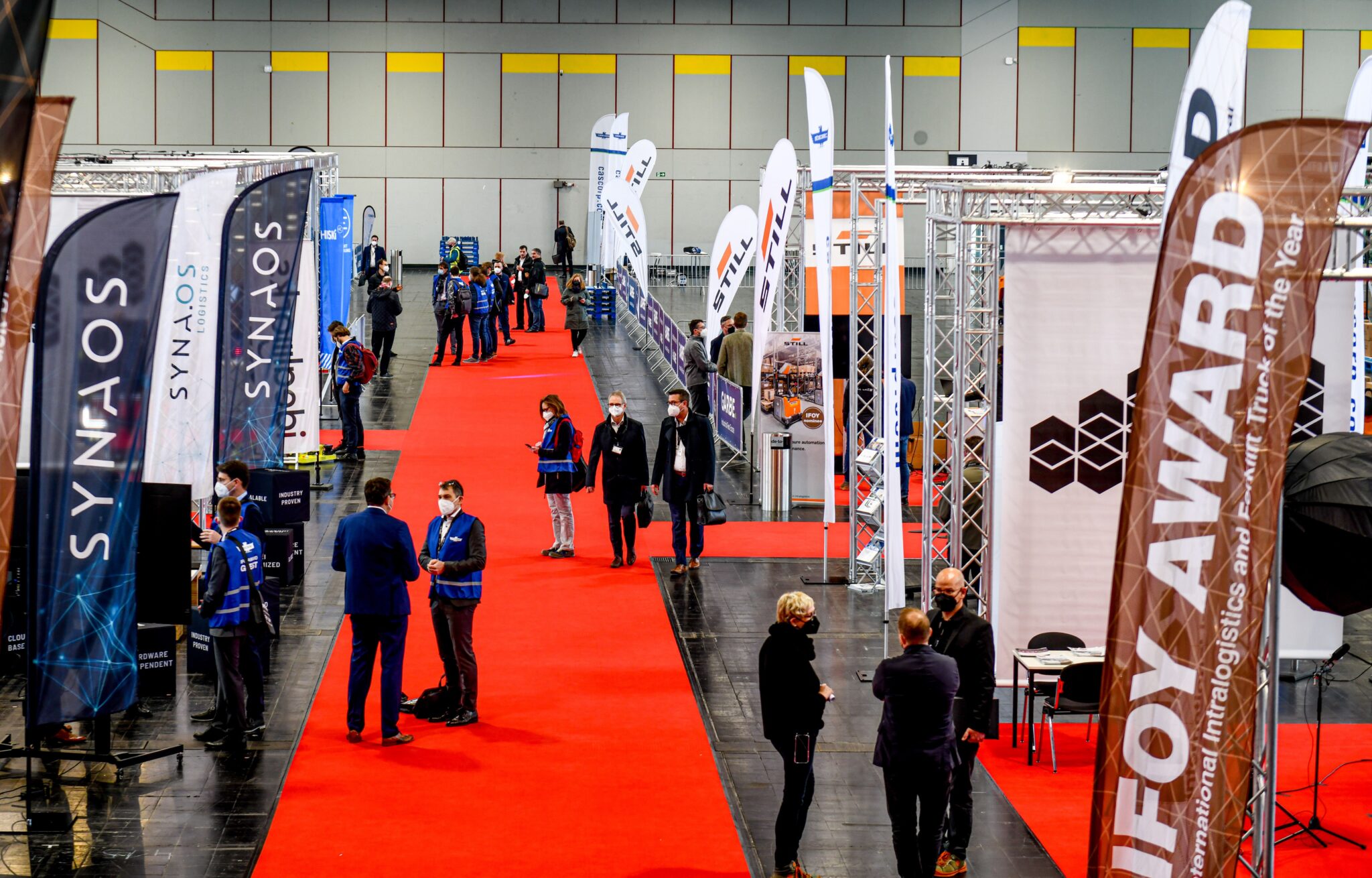
At the IFOY Test Days in Dortmund, 17 nominees for the International Intralogistics and Forklift Truck of the Year (IFOY Award) underwent five days of multi-stage testing. Never before have so many products and solutions been in the final for the “Oscars of intralogistics”, and that despite the corona pandemic. Almost 600 participants followed the IFOY Test Days over five days.

New developments from arculus, Cargotec Engineering, HAI ROBOTICS, Hänel, H+E Produktentwicklung, HHLA Sky, BMW subsidiary idealworks, Interroll Group, NIMMSTA, OPPIDUM TIC, Still, SYNAOS, Volume Lagersysteme and WAKU Robotics were all present in the test arena in Hall 4 of the IFOY partner Messe Dortmund.

From March 22 to 26, the nominees in the ninth round of the competition were critically tested by an official tester, a team of researchers and the international jury, some of whom were digitally connected. Representatives of the 14 manufacturers received the “Best in Intralogistics” certificates for their nominees from Gordon Riske, Chairman of the Board of the VDMA Materials Handling and Intralogistics Association.

In the Test Camp Intralogistics, almost 100 logistics experts from industry, trade and logistics services tested this year’s finalists as well as nominees from previous years in the 8,400 square metre hall. From forklifts and warehouse technology equipment to AGVs and software, specials and solutions from five start-ups, a total of more than 30 products and solutions were available in the test arena.

At the beginning of the three-stage IFOY audit for the nominees was once again the practice-oriented IFOY test by Dutch intralogistics expert Theo Egberts. He compared the finalists with the relevant solutions and equipment in the competition. The industrial trucks went through standardised driving and functional tests, including the IFOY test protocol comprising more than 80 criteria, which takes into account factors such as sustainability, economy, safety and ergonomics of the nominees.

In the second part of the audit, researchers conducted the IFOY Innovation Check. Scientists from Fraunhofer IML and the Technical Universities of Munich and Dresden assessed the nominees in terms of market relevance, customer benefits, type of execution and degree of innovation. The audit was concluded by the assessment of the 26 jurors and their approved advisors. The jury members, trade journalists from all continents, were presented with all the results of the IFOY Test as well as the IFOY Innovation Check for the voting.

A novelty this year was the live test of the VDA 5050 interface. The world premiere of the so-called AGV Mesh-Up of the VDMA Association for Materials Handling and Intralogistics took place as part of the Test Camps Intralogistics. On an action area, the participating experts were able to watch various AGVs from different manufacturers that drove under a uniform control system and communicated in a common data language. The project was set up by a group of AGV users and manufacturers under the coordination of the German Association of the Automotive Industry (VDA) and the VDMA Association for Materials Handling and Intralogistics. The manufacturers arculus, DS Automation, the KION Group with the Still brand, Safelog, Siemens and SSI Schäfer were represented in this test.

In order to protect all participants from infection with the coronavirus, a comprehensive safety and hygiene concept was developed for the IFOY Test Days 2021 and published on www.ifoy.org. All participants made rapid antigen tests. To give foreign intralogistics experts who could not travel due to the corona pandemic the chance to give an insight into the IFOY Test Days, the IFOY Award organisation developed a digital concept consisting of live streamings and short videos about the nominees. They were put on the IFOY Award social media channels.

Neither the participants of Test Camp Intralogistics nor the nominees will find out who has won an IFOY Award during the IFOY Test Days. They will have to wait until the IFOY Award Night, the date of which will be announced in due course.

Logistics company boosts efficiency with cloud-based IT solution

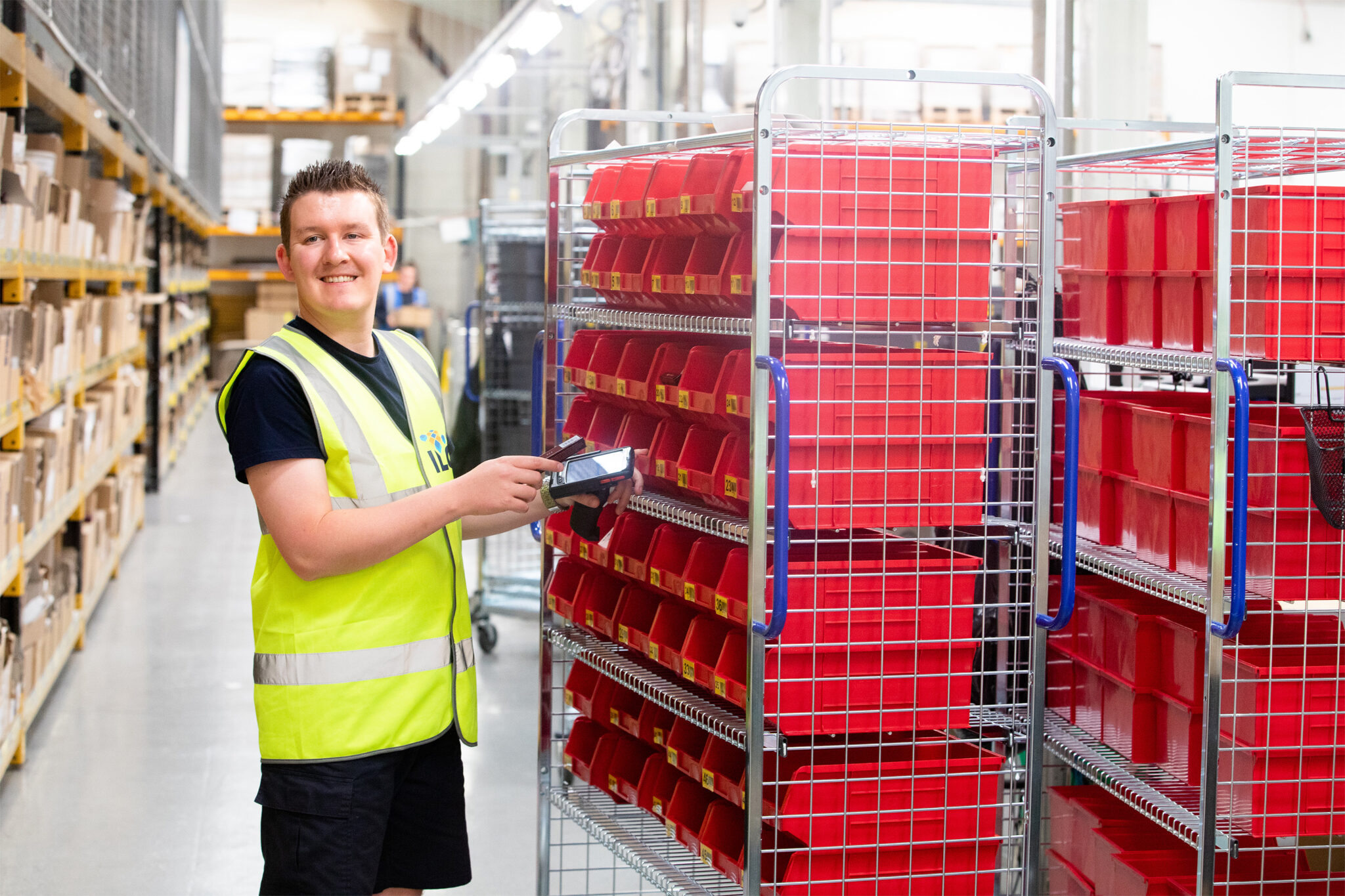
Outsourced fulfilment and global delivery firm ILG has improved efficiency and scalability by modernising its whole IT infrastructure with digital transformation specialists Extech Cloud.

To support further business growth and better position ILG for new challenges, Extech Cloud successfully implemented a high performing and secure cloud-based IT solution for ILG in 2020. Not only were all the core business services such as emails, databases, file storage, and more smoothly migrated to the public cloud, ILG’s applications and infrastructure were also fully transitioned to Microsoft Azure, the leading cloud computing service.

“2020 was an unusual year and presented challenges for many, but it also created an opportunity to find new, better ways to do things,” says Andrew Hookway, Director of the Sussex-based Extech Cloud.  “Logistics and transport businesses know how critical it is to meet demand and manage seasonal peaks effectively, and that their IT infrastructure plays a critical role in this. However, few are exploiting the benefits that the public cloud can bring to the business and its valuable people, which is where we can help.”

With this transition completed, ILG now has a cloud infrastructure which supports growth on demand and allows for the adoption of new products and services as they become available. This all comes at a lower cost compared to traditional private cloud and on-premise solutions, such as servers.

A full transition to the cloud also means that logistics businesses, such as ILG, can be more in control of their IT services than ever before.

“When we say we can help businesses to ensure their IT meets their demands, a full cloud transition is the only way to have fast flexibility” says Andrew. “Busier than ever? You can ramp up your service level. On the other hand, having a quiet period? Turn things down for a bit. The cloud helps you to meet your level of demands and importantly, you pay for only what you need, when you need it.”

“The implementation of Microsoft Azure has allowed us to scale resources in line with business demand, a key requirement for ILG as we see huge seasonal spikes in volumes,” says Tom Ashley, Client Services and IT Director at ILG. “Extech Cloud’s support has allowed us to focus all of our attention on providing great service to our clients.”

ILG is one of the UK’s leading global delivery and outsourced fulfilment partners, with international delivery and cargo options as well as state-of-the-art warehouse facilities and customer service that is second to none.

ILG first began working with Extech Cloud more than a decade ago to help the IT department focus on high-value-adding tasks and ensure ILG’s technology became a driver for growth and efficiency. Today, Extech Cloud provides ILG with operational management of the cloud infrastructure, support for users across multiple locations and endpoints, along with advice and guidance on emerging products to make ILG even more efficient.

“Extech Cloud are a passionate and professional partner. The support they have provided to us over the past decade has been invaluable,” says Tom Ashley.

Box-moving robot aims to enhance warehouse operations

Boston Dynamics, a leader in mobile robotics, has revealed Stretch, its new box-moving robot designed to support the growing demand for flexible automation solutions in the logistics industry. This debut marks the company’s official entrance into warehouse automation, a fast-growing market fuelled by increased demand in e-commerce.

Stretch is Boston Dynamics’ first commercial robot specifically designed for warehouse facilities and distribution centres, of which there are more than 150,000 globally, according to analysts. The multi-purpose mobile robot is designed to tackle a number of tasks where rapid box moving is required, first starting with vehicle unloading and later expanding into order building. Stretch’s technology builds upon Boston Dynamics’ decades of advancements in robotics to create a flexible, easily-integrated solution that can work in any warehouse to increase their flow of goods, improve employee safety in physically difficult tasks and lower expensive fixed automation costs.

The robot’s small, omni-directional mobile base allows Stretch to navigate loading docks, manoeuvre in tight spaces and adapt to changing facility layouts, eliminating the need for costly fixed automation infrastructure. It is equipped with a custom-designed lightweight arm and a smart-gripper with advanced sensing and controls that can handle a large variety of boxed and shrink-wrapped cases. Stretch also includes Boston Dynamics’ computer vision technology that enables it to identify boxes easily and without extensive training for each customer. Its vision system works in tandem with pick & place activity, enabling high pick rates.

Traditional warehouse automation approaches require either installation of fixed infrastructure or mobile robots that convey goods but struggle to meet productivity requirements to be an attractive investment for warehouse operators. Stretch offers logistics providers an easier path to automation by working within existing warehouse spaces and operations, without requiring costly reconfiguration or investments in new fixed infrastructure.

“Warehouses are struggling to meet rapidly increasing demand as the world relies more on just-in-time delivery of goods,” said Robert Playter, CEO of Boston Dynamics. “Mobile robots enable the flexible movement of materials and improve working conditions for employees. Stretch combines Boston Dynamics’ advancements in mobility, perception and manipulation to tackle the most challenging, injury-prone case-handling tasks, and we’re excited to see it put to work.”

Boston Dynamics is currently seeking customers to pilot test deployment of Stretch with truck unloading tasks ahead of its commercial deployment in 2022. Interested parties can apply to join the Stretch Early Adopter Program by visiting: https://www.bostondynamics.com/stretch.

BIFA hopes for “made-to-measure” Covid testing for incoming hauliers

Freight forwarders are hoping that the introduction of a ‘bespoke Covid testing regime’ for hauliers arriving in England from outside the UK from April 6th, doesn’t throw another spoke into the wheels of cross channel trade, says Robert Keen, director general of the British International Freight Association (BIFA).

“Our members, which manage a significant proportion of the visible trade between the UK and the EU, have seen major disruptions to their operations for many months as a result of Covid; the changes to how import and export trade is conducted following the UK’s departure from the EU; as well macroeconomic issues affecting all modes of international freight transport.”

Earlier in March, when the UK government extended the deadlines of the Border Operating Model, BIFA said it was not surprised and welcomed the news that government will engage extensively with businesses.

Keen adds: “Controlling the spread of new Covid variants is critical and we want the new bespoke Covid testing regime for hauliers to work, but not impede trade flows. We invite government and its relevant agencies to work closely with us and our members and learn from the mistakes of the past when some political decisions were made that appeared to pay little regard to how visible international trade and the frontier actually works in practice.

“BIFA members are pinning their hopes that the bespoke Covid testing regime lives up to its billing and is made-to-measure, not off-the-peg. Creating more uncertainty will be of no use to anyone involved in managing the UK’s visible international trade.”

Trailer Combines Large Cargo Volume with Max Payload

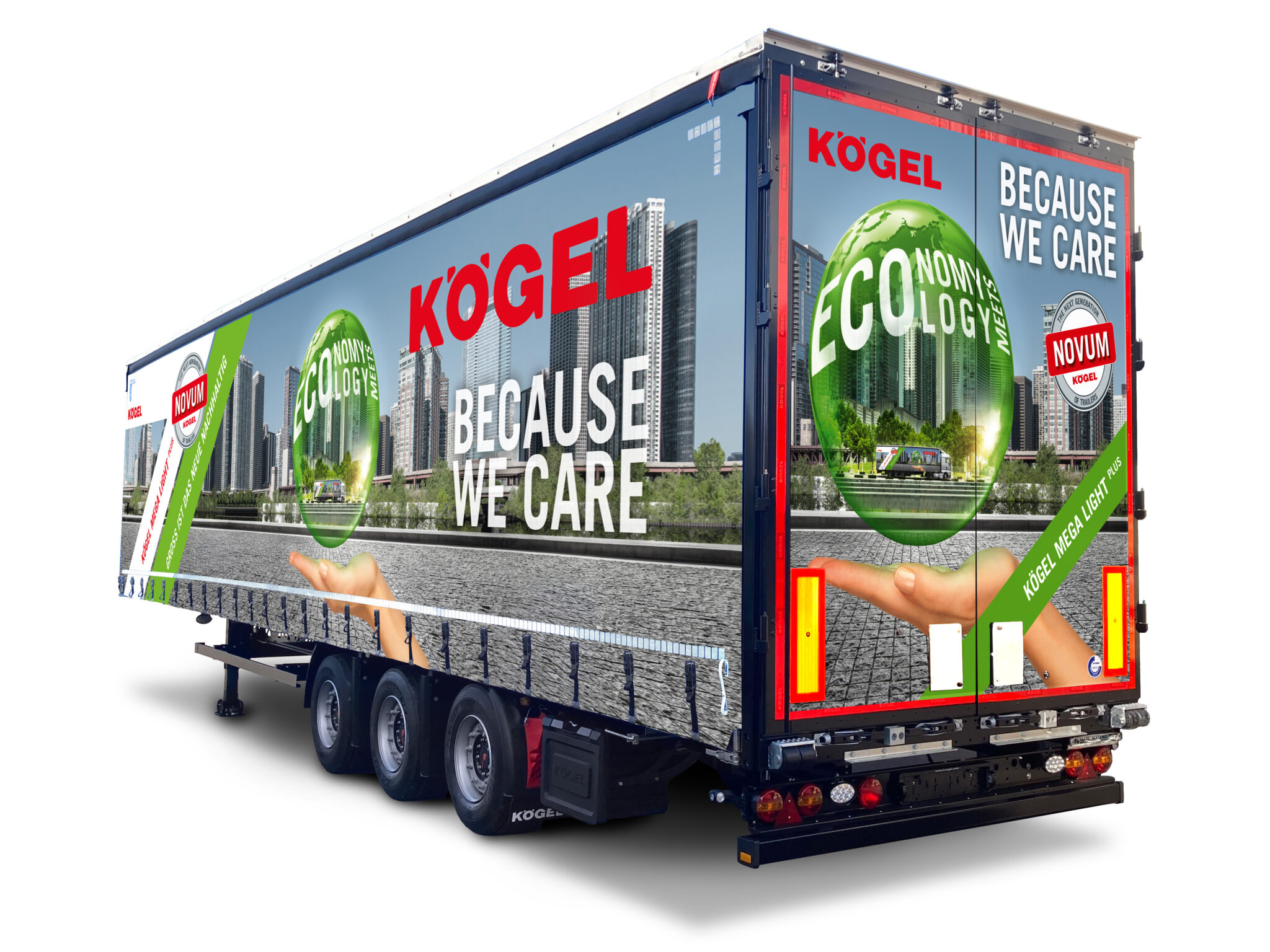
Kögel presents the next generation of innovative transport solutions: Kögel Mega Lightplus is the high-volume trailer specialist for all the requirements of the automotive industry. Thanks to a comprehensive range of equipment options and a low tare weight, Kögel Mega Lightplus can additionally be adapted to the requirements of many different loads.

Kögel Mega Lightplus covers a broad range of applications made possible by a combination of volume- and payload-optimising features, as well as a wide variety of individual equipment options. As a result, Kögel Mega Lightplus is perfectly streamlined for economic efficiency. Another advantage: The relatively low tare weight of this high-volume trailer saves fuel, resulting in reduced CO2 emissions. The combined benefits are fully in line with Kögel’s guiding principle: “Economy meets ecology – because we care”.

Strong, durable and extra light

The Kögel product portfolio meets the highest standards in quality. Every innovation of the Kögel engineers combines maximum cost-efficiency and sustainability. The key to this success is the specially developed lightweight engineering that is used in Kögel Mega Lightplus. In the basic version, the high-volume trailer weighs a slim 5,400 kg, making it approx. 700 kg lighter than the standard Mega trailer. Thanks to special equipment, such as aluminium rims, lightweight tyres and aluminium air tanks, the weight can be further reduced, enabling additional weight savings of more than 200 kg. The chassis in a lightweight steel construction, with a low frame neck height of 90 mm, ensures maximum usable internal height and a spacious capacity.

Despite its optimised materials, Kögel Mega Lightplus is strong and durable. High-quality fine grain steel and full-width cross beams evenly and optimally distribute the weight of the load across the loading platform. In addition, the lightweight trailer has the same optimised external frame profile and improved body that characterise all NOVUM generation trailers.

New body using special lightweight construction techniques

In the basic design, the front wall, including the front volume corner posts, the rear corner posts, and the rear wall door portal are made of aluminium. Additional roof support frames made of aluminium further reduce the weight. Thanks to the standard lifting roof, loading from the side is extremely easy. Up to three stacked pallet cages can be loaded without a problem. An additional optimisation is the L-shaped roof strap, which enables a loading height of a full three metres for pallet-width loads. The pockets for lattices on the front and rear corner posts are practically integrated in the corner posts to protect them from damage. To make life even easier for our customers, all the lattice pockets are completely height-adjustable.

Plenty of extras on board

At Kögel, the customer is our top priority, as reflected by our motto ‘Because we care’. Kögel Mega Lightplus offers many extra benefits for the customer. With the specially reinforced, optional Strong&Go body, Kögel has succeeded in significantly reducing the amount of equipment needed for various certifications. As a result, the body complies with the DIN EN 12642 Code XL body stability and Daimler guideline 9.5 without the use of lattices. A beverage certificate for single and double-level transport on standard pallets can be obtained with only a single row of lattices. Here, too, Kögel engineers have gone the extra mile: thanks to an optional load-securing system, which can be implemented using an additional welded strap on the side tarpaulin, customers can do without even a single row of lattices.


Ride-on Scrubber-drier for Extra-large Areas

Production facilities, logistics halls and warehouses are constantly increasing in size, bringing new application requirements with them. The demands on professional indoor cleaning in terms of area coverage and performance are growing with every additional square metre. When it comes to removing large amounts of dirt, production residues and dust, many cleaning machines soon reach the limits of their performance capabilities and economic efficiency. Moreover, each application area poses individual demands on the machine’s features and equipment. This is exactly where Hako’s new Scrubmaster B400 R Series comes into play. The new machine series offers customised solutions for individual requirements, for example the cleaning of very large areas of up to 14,000 m2/h, with a 400-litre solution and recovery tank capacity for long operating times, three machine variants for different cleaning applications, two different working widths (123 cm and 155 cm) as well as numerous optional extras for more efficiency, occupational safety and hygiene.

Ready for a new class of machine

Providing a convincing overall performance, the new Scrubmaster B400 R Series stands for excellent cleaning results in large industrial buildings and exhibition halls, or in airports and multi-storey parking garages. The machines’ high area performance, maximised battery capacity and large solution and recovery tanks ensure long hours of operation. Meeting all the criteria of an ergonomic, back-friendly workplace that guarantees hours of fatigue-free working, this new machine series has been awarded the AGR (Aktion Gesunder Rücken e.V.) quality label. The on-board dosing system ensures efficient use of cleaning chemicals, and Hako-AntiBac® , which equips the tanks with antibacterial properties, fulfils particularly high hygiene requirements.

Three variants – countless possibilities

Various degrees of soiling combined with dried or cakey coarse dirt are particularly challenging for professional Cleaning Technoloy equipment. For these kind of cleaning tasks, Hako offers two different vacuum sweeper and scrubber-drier combi machines, the variants Schrubmaster B400 RH and Scrubmaster B400 RM.

The Scrubmaster B400 RH is equipped with a 150-litre dirt hopper and automated high dump, whereas the Scrubmaster B400 RM collects coarse dirt in two 44-litre dirt hoppers for manual emptying. In combination with the machines’ effective dust suction system, Hako’s innovative side broom jacket DustStop ensures low-dust sweeping and reduces dust and fine particulate pollution in the working environment. The third variant of the new machine series, the scrubber-drier Scrubmaster B400 R, can be equipped with an optional quick-connect system for additional tools such as a light-debris collector, and a mop or broom unit.

Toyota Material Handling Retains EcoVadis Platinum Ranking

Since 2012, Toyota Material Handling Europe has been continuously assessed by EcoVadis, with focus on key topics including environment, labour & human rights, sustainable procurement and ethics. During recent years, Toyota has consistently received Gold level scores, but now – two years in a row – the Platinum award has been achieved by the company. This is the highest possible score, ranking Toyota Material Handling amongst the top 1% of companies in the ‘general-purpose machinery’ sector.

EcoVadis provides the sustainability ratings of more than 75.000 companies worldwide, based on their environmental, social and ethical performance. Its online platform provides desktop sustainability assessment, allowing 175 multinationals to access ratings of their selected suppliers across 155 countries.

“In my role, I am committed to lead the way and make sure we continue integrating sustainability throughout the way we run our business”, says Ernesto Domínguez, who became President and CEO of Toyota Material Handling Europe last year.

“The EcoVadis assessment system is very important for us, because this makes it easier for our customers to choose the right partners for the future. This audit helps us work in the area of Kaizen [continuous improvement]. I am very proud that we are the first in the material handling industry to achieve platinum recognition. This gives reassurance to our customers and also fulfils our responsibility to inspire others to strive for the highest standards” concludes Domínguez.

Group effort to increase transparency through the network

All Toyota Material Handling’s European factories and local entities undergo this yearly survey, which results in the individual scoring of each entity. This responds to customers’ requests at local level – which have continued to increase since 2020.

Over 50% of TMHE local entities are now achieving Gold or Platinum scores, meaning they are individually at the same level as the top 10% best rated companies. As of today, Toyota Material Handling UK, Toyota Material Handling Italia, and Toyota Material Handling Manufacturing France have achieved the Platinum label, while 11 other local operations have achieved the Gold standard.

In 2018, Toyota Material Handling Europe also received the first ever Supplier Excellence Award from EcoVadis for ‘Best Group Engagement’. The award represented Toyota’s commitment to transparency on the performance of all local entities, Gold rating for 30% of subsidiaries, and a top 3% ranking in the industry.

Food products to Medicines: Trends of Sortation Technology

Customers are shopping more and more online, and not just since COVID-19. However, the pandemic has even strengthened this behaviour. With the increasing e-commerce, courier, express and parcel services need to supply the consumers in a reliable and faster way, all while being able to handle different types of goods. The capacity of their sortation and distribution systems often decides on their competitiveness.

Thomas Wiesmann from BEUMER Group, pictured above, knows which sortation trends owners are following, how they can react to them and where the journey will take them.

The way people shop has been changing since before COVID-19, but hardly anything has had such a rapid and sustainable impact on shopping behaviour as the corona virus. As many shops had to close during the past months, even more consumers are buying online. “This structure change is developing in accelerated time during the pandemic,” says Thomas Wiesmann, Director Sales Logistic Systems at BEUMER Group. This considerably increases the competitive pressure on courier, express and parcel services (CEP).

In order to hold their own against competitors, the future success of mail order companies and logistics service providers will depend even more on the performance of their distribution centres. The companies intend to save costs with their systems, to pursue a more environmentally conscious approach and above all follow market trends. Market trends? “Technology with regard to the distribution of different goods is becoming more and more complex,” knows Wiesmann. Not only are the numbers of goods to be dispatched increasing, but also the sizes are more and more different. The range has become more varied,” is how the BEUMER expert sums up his impressions gained during his many years of experience with customers. Parcel sizes are tending to decrease, although large parcels are still being sent.

At the beginning of the pandemic, not only the online retailers selling hygiene products, breathing masks, pasta and canned food registered considerable turnover gains. Food, drugstore goods and medicines generally showed strong growth. Thomas Wiesmann is sure that these products will continue to establish themselves at a higher level in online retailing. Apart from flexibility, the throughput in sortation technology is playing an increasingly important role. Online trading also implies that more and more customers want to see the goods they ordered in the morning on their doorstep the same day. “The sortation and distribution systems are designed to support distributors in these demanding tasks and can be adapted flexibly and quickly to the new conditions”.

Owners of logistic and distribution centres are looking for high-performance systems, as their existing technology is often not sufficient anymore. In addition, the number of sortation and distribution systems required is constantly increasing: service providers are increasingly building small, decentralised distribution centres close to their customers in order to be able to supply them even faster. This is becoming more important to ensure that they remain loyal to them.

More performance required
In order to meet the performance challenges, the trend goes towards more automation, enabling a more ergonomic operation of the sorter. Employees are being relieved and the companies can work more efficiently and thus increase the throughput. They are prepared for future capacity forecasts. Furthermore, automation improves the visibility and the traceability of the dispatched goods.

“In order to optimally support our customers and to give them the possibility of increasing their competitiveness, we offer for example our newly developed BG Sorter Compact CB,” says BEUMER expert Wiesmann. The system is suitable for a wide range of items: small, light shipments as well as parcels weighing up to twelve kilograms. Even goods that are fragile or have packaging that is difficult for conventional equipment to handle, such as smooth plastic film, can be easily handled thanks to gentle sortation.

“CEP companies and distribution centres often have to react within a short period of time to new tasks – as it is currently the case,” describes Wiesmann. Instead of buying a new system, they want to extend their existing sorters as needed. This requires sortation technology systems that can be easily and quickly integrated.

A further experience made by Thomas Wiesmann: In many halls, the available space is not sufficient for a new system. “Thus, compact sortation solutions are required, which can be flexibly adapted to the local conditions – even if space is restricted. “Our BG Sorter Compact CB meets these requirements. It is also possible to integrate induction units and destinations in a small footprint,” says Wiesmann. A further important aspect for successful work is the sortation accuracy. With the BEUMER systems, this is almost 100 per-cent: the items are actively discharged, not by weight. With this high precision, owners can reliably supply their customers and thus secure their competitiveness.

Better processes with the support of data analysis
Digitalisation is indispensable in increasing the performance of the systems sustainably. With the support of data analysis, it is possible to collect large amounts of data on the machines, to evaluate them in a targeted manner and thus detecting where there is potential for improvement. “The collected information permits us to continuously improve operation, which has a positive effect on product life-cycle costs,” promises Wiesmann. The owners can also recognise how the system management can be optimised.

The data analysis helps to increase the availability and performance of the sorters, keyword “machine learning.” The decisive factor is continuous access to real-time data from every system area. With the help of a digital twin, it is possible to monitor material flows or even the routing of the system in every detail. This is supported by the visualisation of results. The operator could use colour codes, for example, to make bottlenecks visible or use time filters to include collected data for the analysis.

Maintenance: only if required
With the support of data analysis, it is possible to identify actual operating hours and loads. The owners use it to reliably monitor their systems and see in time when an error is going to occur. This enables them to maintain their system at the perfect time. “Maintenance cycles can be adjusted to the actual load,” says Wiesmann. The more intensively a company knows the operating conditions of the system, the better they can benefit from this opportunity. This is because the machine will learn to learn, and instead of just recognising that something is wrong, it will also find out the cause, supported by the information obtained. This will enable the sorters to independently generate a perfectly fitting maintenance plan in the future. Service personnel will only replace a component when it is really necessary and not according to a fixed cycle

Data-controlled analysis is thus becoming more and more popular with operators. After all, sensors are already part of every system and able to generate and process huge amounts of data. Based on this acquisition of information, further services may be added in the long term. Wiesmann is thinking of video coding for machine learning. He also envisages cloud-based optical character recognition to convert scanned images with text into machine-readable text.

Currently the data analysis is especially based on existing operational data. In the future, however, it is intended to use more sensors and other systems able to collect much more data. The sorter will then be able to continuously make processes smarter and increase the level of automation, a clear competitive edge for any operator. “Our solutions permit us to set trends and to support our customers in future growth,” says Wiesmann. “We make it possible for them to respond quickly and reliably to changes in the market – and not only in Corona times”.

Suez Canal Blocked by Grounded Container Ship

An Ultra Large Container Ship, MS Ever Given, grounded in the Suez Canal and brought traffic on the central shipping route between Europe and Asia more or less to a standstill. A second incident – a bulker and Russian military tanker collide in Suez Canal – was reported in the Egyptian waterway on Tuesday, following Ever Given boxship grounding.

As one of the leading shipping insurers, Allianz Global Corporate & Specialty constantly monitors and analyses risk scenarios in the shipping industry and annually publishes the Safety & Shipping Study. The company provides research support as well as facts and figures on the current grounding incident:

Shipping risk situation in the Suez Canal
• About 10% of global trade passes through the Suez Canal, which connects the Mediterranean to the Red Sea and provides the shortest sea link between Asia and Europe. Ships face costly and lengthy deviations if canal is not opened soon. Ships save 9,000km or 10 days by using the Suez Canal.
• Ship trackers and brokers said there were more than 100 ships waiting to transit the canal. The traffic jam comes at a particularly bad time for global supply lines. Car and computer makers are straining from a global chip shortage, exacerbated by a fire in a big chip making factory in Japan last week. Car makers have closed plants after a Texas cold snap earlier last months hits plastics production, and Califorinia ports have been hit by backlogs and delays.
• Nearly 19,000 ships passed through the canal in 2020, according to the Suez Canal Authority – an average of 51.5 ships per day. The Suez Canal has an excellent safety record overall with shipping incidents extremely rare – There have been 75 reported shipping incidents in total in the canal over the past decade according to the Allianz Global Corporate & Specialty Safety & Shipping Review 2020. More than a third involved container ships (28).
• Between 2013 and 2016 there was an average of 12 shipping incidents a year but the numbers have declined since then. The 10 year average is 8 incidents a year.
• However, groundings (such as the Ever Green incident) are the most common cause of shipping incidents in the canal – 25 in the past 10 years or 1 in 3 of all shipping incidents in the canal. Together, grounding, collision and contact incidents account for half of all shipping incidents in the Suez Canal over the past 10 years (38 in total).
• Machinery breakdown is the other major cause of shipping incidents in the Suez Canal accounting for 21 incidents over 10 years
• There has been only one total loss of a vessel reported in the Suez Canal over the past decade – back in 2010. The total loss in the Suez Canal was a cargo ship called Maryam which sank after loading some bitumen.
General shipping statistics on mega-ships and grounding:
• Container ship graphic attached above. Another important stat – container-carrying capacity of ships has increased by around 1,500% since over the past 50 years and has almost doubled over the past decade
• The other graphic attached looks at a potential loss scenario and the costs involved in event of a major casualty involving a container ship (although the Suez situation is not comparable)
• There have been over 200 reported grounding incidents involving container ships around the world over the past decade, accounting for around 1 in 10 of all incidents involving container ships.
• The insured values of these vessels (hull only) depends on many factors like age but ranks between 70 mn USD for an older vessel (say 2012) to 150 mn USD for a new one.
• Other main risks associated with megaships include major risks are fire-fighting capability, safe storage of cargo and cargo misdeclaration; salvage challenges given their size.

Subscribe

Get notified about New Episodes of our Podcast, New Magazine Issues and stay updated with our Weekly Newsletter.