Conveying the right solution

Japanese engineering specialist Itoh Denki believes it can help integrators and OEMs looking to find intralogistics conveying solutions for the new economy. Logistics Business magazine editor Paul Hamblin reports.

In a logistics world in which there needs to be room for businesses of all shapes and sizes, it follows that the conventional logistics model needs to be challenged. Yes, the big players will still need their large Build-to-Suit warehouses, and vast, multi-tenanted logistics parks are undoubtedly here to stay. But what about ecommerce providers looking for professional, fast logistics?

These companies might be small – but they might grow very fast, in which case they need agility, flexibility. Most of all, they want ease of payment alongside ease of use. Not for them the vast capital expenditures on logistics of those giants who can make such facilities so cost-effective. Ideally, they want state-of-the-art logistics capability without necessarily needing the building asset that goes with it.

Japanese-founded engineering specialist Itoh Denki, which has worked with integrators and OEMs in logistics for many decades in the supply of rollers and conveying components, has recognised this pattern. It has identified a trend, notably in Japan where land use is at a premium, but increasingly in Europe, for multi-storey, multi-tenanted logistics spaces deployed with a pay-per-use sharing model.

“Think of it as Hotel Logistics,” quips Tatsuya (Ted) Akashi, Itoh Denki MD Europe. “You come and go as agreed, you can stay for longer if you wish and you only pay for those times.”

Recognising that reliable, flexible sortation is key to this business model, Itoh Denki has brought its Diverter-Centric Sorting to the market. Best known for Motorised Driver Roller (MDR) technology, Itoh Denki’s footprint in Europe has now expanded to include a fully capable Amsterdam Tech Centre to complement its base in St Pierre, France where the MDRs are given final assembly.

Alexander Gigerl, Technical Sales Manager, explains the Diverter-Centric sorting business case by pointing out that the high throughput of the traditional crossbelt sorter comes with a correspondingly high cost. He says that Itoh Denki’s F-RAT (Flat Right Angle Transfer) will bring down those costs dramatically, but without necessarily the very high throughputs some customers require. The company’s MABS (Multi Angle Ball Sorter) also brings with it considerable cost savings versus the cross belt but with three times the throughput of the FRAT. The combination means that Itoh Denki can offer a powerful hybrid solution to suit a variety of budgets and requirements.

An enormous variety of package sizes can be smoothly transported, even the most fragile loads. The list of benefits includes the flexibility and scalability that comes from a fully modular system. Maintenance and service is another plus, because faults can be sourced and fixed quickly via this modularity, without unnecessary and profit-killing downtime. Safety and comfort of workers is promised by the optimised footprint of the layout and the super-quiet, no pneumatics, 24v DC power source.

It is fully CE compliant, which means costs will not be incurred in installing extra safety facilities or barriers in the vicinity. Energy efficiency is assured by on-demand operation, the motor driven only when a load enters the zone.

The central 90° technology of the F-RAT offers the benefit of transfer without changing levels. Meanwhile, the MABS solution offers 30, 45 and 90° transfer.

Itoh Denki emphasises that it will not be selling direct to end users and will continue to work with its established OEM partners to ensure end user customer delight.
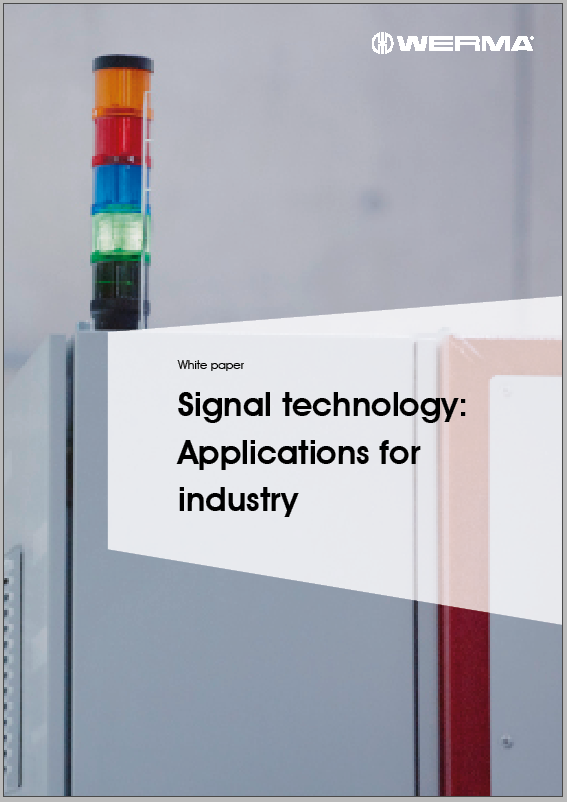
Werma publishes white paper on signal technology

Werma has published a free white paper, available for free download, to help understand how important the choice of the right signal is for the safety of everyone in industrial environments. It explains which signalling is suitable for which application and how modern Andon systems can optimise manual production and logistics.

Optical and audible signals have always played an important role and have been continually developed over the centuries. Even in ancient times, wood-fired beacons kept seafarers on course. Today, state-of-the-art LED technology serves as a light source for a variety of signalling applications.

There are also a number of examples in our everyday life that illustrate the great advantage of easy-to-understand signals: A red traffic light, the horn of a car or the siren of a fire engine. These signals send a message to the recipient quickly and non-verbally, regardless of the language they speak.

This is precisely why optical and audible signals are also used in industrial environments, production, automation, logistics and building technology to warn, guide and protect everyone in the immediate vicinity.

Signal technology taken to the next level

In modern industry, signal technology is taken a step further: In addition to classic optical and acoustic signalling, intelligently networked, retrofittable systems and clever Industry 4.0 solutions are being used to make networking easy for companies of all sizes. Make processes faster, leaner, better and more efficient, simply at the touch of a button.

Werma’s free white paper explains the importance of choosing the right signal for everyone’s safety. It also describes which signalling is suitable for which application and how modern Andon systems can optimise manual production and logistics as well as how quickly, easily and uncomplicatedly machines, workstations or flow racks can be networked using modern, radio-based signal technology.

Cutting-edge technologies for data exchange

As modern signal devices not only warn, guide and protect on site, both optically and acoustically, but also communicate intelligently with each other, this white paper presents state-of-the-art networking technologies: Werma’s signal devices have the latest interfaces – whether IO-Link, AS-i, USB or as a wireless network – enabling fast, flexible and uncomplicated data exchange.

CLICK HERE to download the free white paper.


SnapFulfil hires new personnel to meet demand

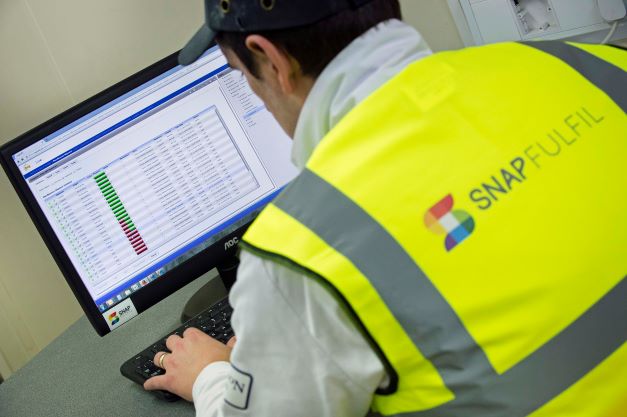
Demand for SnapFulfil’s functionally rich cloud-based WMS has seen the technology innovator invest £2m in building its team to support growth.

In recent months, 20 team members have joined the company – in roles such as project manager, implementation analyst, network engineer, technical developer, QA manager – as the best-of-breed WMS provider continues to experience growth across the board.

In addition to increased demand from existing customers, SnapFufil has continued to win more varied and bigger business contracts in both its UK/Europe and US territories.

Areas witnessing a particular surge in activity include the 3PL and direct-to-consumer (D2C) sectors, with the global pandemic accelerating the bricks and mortar retail move towards D2C and many enterprise-level businesses experiencing unprecedented annual e-commerce growth of up to 35%.

New clients in the UK include rapidly growing online florist Bloom & Wild. SnapFulfil has been implemented to optimise distribution efficiencies, shorten delivery times and help provide a faster and more expedient digital shopping experience.

In the US, Watch Gang is a Los Angeles-based luxury and collectable online watch retailer and SnapFulfil’s ability to consistently and accurately track the movements of every piece of stock in its new DC has delivered a number of benefits for the D2C firm including a zero rate of shrinkage rate for the first time.

SnapFulfil CEO, Tony Dobson, explains: “We’ve invested heavily to attract new talent and I’m delighted to welcome so many new faces to the team. Our business continues to grow at an exponential rate and we still have a number of vacancies to fill.

“With customer purchasing habits irreversibly shifted and the D2C boom set to escalate, there are lots more opportunities to come. SnapFulfil can be cost effectively rolled out across multiple sites and easily configured to meet the ever-changing needs of the modern e-commerce market.”


Globalia’s annual meeting goes virtual

Globalia concluded its second Virtual Meeting successfully, which was organised to expedite networking among the members and reunite them virtually. After the great reception of its first Online Conference, Globalia’s team worked hard to surpass the previous meeting experience. The Virtual Meeting that was held on 14th and 15th October 2021 presented a perfect opportunity for the members to assemble on one platform and consolidate relationships with their network partners without having to leave their homes.

Members participated in more than 1,150 one-to-one videoconferences during the two days of the event. The professional and user-friendly meeting platform created by Globalia made for a seamless conferencing experience. It ensured that all the videoconferences were automatically organised according to the agenda and time zone of the delegates.

“It has been wonderful experience, thanks to the whole Globalia team, who made it possible,” said a  Globalia Member in Karachi, Pakistan.

The primary goal of the conference was to encourage a perfect working partnership between the network members that majorly contributed to expanding the scope and opportunities of the member companies. Moreover, Globalia’s team was always at hand to help members with every step of the meeting process and resolve any technical issues.

Globalia Logistics’ Virtual Meeting is a great platform where to improve your work and increase your business activities,” declares a Globalia member in Jeddah, Saudi Arabia.

This year, the delegates also had the chance to touch base with their network partners during the coffee breaks just like they used to do during in-person meetings. They had the choice to access a room with up to five random participants and engage in informal discussions. This was done to promote a sense of trust and bonding within the network, which obviously had a positive impact on the number of concerted projects.

The event started with a welcome speech from Antonio Torres, the President and Founder of Globalia Logistics Network. This was followed by the one-to-one meetings between the network members. Additionally, members also took part in the FreightViewer workshops where Andrea Martin, Globalia’s FreightViewer Coordinator, explained the new features added to the software.

In the words of Antonio Torres: “In the face of the ongoing pandemic, we once again organised a cloud conference keeping in mind the safety concerns of our members and our virtual meeting yielded a remarkable outcome for the second time. All in all, it had been a wonderful and highly productive experience that gave the members a chance to expand their operations in a time when the shipping industry is going through an unprecedented crisis.

“The meeting allowed the delegates to set the stage for many new collaborative projects that forms the basis of our network. I am confident we will be able to conduct an in-person meeting next year when we leave the pandemic behind us.”


New updates to EU Mobility Package

The logistics sector is expecting further road transportation regulatory changes to be instated in February 2022. Last year, the European Commission adopted a Mobility Package governing road deliveries in EU countries. The changes to the Mobility Package will safeguard the working rights of truck drivers in Europe by imposing work, rest, and cabotage regimes.

EU Regulation 2020/1054 concerning drivers’ work and rest schedules came into force on 20th August 2020. The legislation requires drivers to return to their employers’ country of legal registration and take at least one week off every four weeks. Drivers may not spend their off week in a vehicle cabin. If a driver cannot spend his week off at his own home, his employer is obliged to pay for alternative temporary accommodation.

As of February 2022, EU Regulation 2020/1055 and EU Directive 2020/1057 will introduce the following regulatory changes to the Mobility Package:

  1. A trucker performing a one-way international delivery must register as a worker on a business trip. If the market wages in the destination country are higher than those in the driver’s home country, the driver’s wages must be adjusted accordingly.
  2. Drivers making cabotage deliveries in one country for an employer registered in another country must also register as workers on business trips. A maximum of three such transport operations in one country may be performed within a seven-day period. After this period, the truck may not enter this country for four days.
  3. A vehicle owned by an EU company used for international transport must be returned to the country of its registered owner within at most eight weeks of its departure from that country.

The purpose of the new rules is to regulate truck drivers’ work and rest regimes as well as to provide equal access to the profession and local markets. Thanks to the new regulations, an international truck driver will be entitled to better business trip compensation, especially when market wages in the country of delivery are higher than the driver’s home country. Cabotage will also be regulated so that drivers from higher-wage EU countries will not be at a competitive disadvantage vs. drivers from lower-wage countries.

For logistics and transport companies, the new rules will entail structural changes. Small- and medium-sized carriers from Eastern Europe are highly likely to refocus on domestic markets, as the financial costs of transporting goods to other EU countries will be unprofitable. Capacity shortages are therefore expected in Western Europe, and excess capacity is expected in Eastern Europe.

“The road transport market is going through difficult times. Diesel fuel prices are rising in EU countries,” says Vitali Eremenco (pictured), AsstrA Deputy Chief Operating Officer for Road Transportation. “Demand for oil is projected to continuing increasing until the end of 2022. Moreover, the shortage of drivers is becoming more acute. The new regulations will make the industry more attractive for drivers. At the same time, however, the new rules will also lead to higher road transport costs for logistics companies. In certain areas with significant carrier shortages, costs are expected to increase by 15% or more. If logistics providers have not yet begun to work closely with their partners to seek solutions, now is the time to do it. Otherwise, their businesses are at risk.”

MAT Foundry Group moves to lithium-ion

MAT Foundry Group UK, a leading manufacturer of cast and machined products, has announced its move to lithium-ion in partnership with Jungheinrich.

Consisting of eight companies and stretching across three continents, the MAT Foundry Group’s seven foundries produce over 350,000 tonnes of iron per year, maintaining ten machining facilities across Europe, Asia, Central and North America combining to form one of the world’s biggest manufacturers of car parts.

The MAT Foundry group subsidiary Eurac Poole started using a combination of diesel and electric Jungheinrich trucks three years ago. Jungheinrich’s lithium-ion EFG trucks will be used to combat ergonomic and efficiency challenges that the drivers faced with the previous outdated warehouse fleet, such as easily rotating 180° within the tight working aisles.

Additionally, the investment in electric forklift trucks is just the latest in a growing number of green initiatives designed to improve the Group’s wider environmental efforts. In a bid to reduce MAT Foundry’s carbon footprint and work towards its sustainability goals, the move to lithium-ion trucks will create a cleaner atmosphere for workers, removing 279 tonnes of Co2 and reducing diesel consumption by as much as 60,000 litres.

Shaun Lindfield, Commercial Director at MAT Foundry Group UK, comments: “We are thrilled to integrate a fully electric fleet into our warehouse in January 2022. The desire for an efficient and more flexible fleet is paramount in our 24/7 operations. We currently use hydrostatic diesel but many retailers have stopped producing this, accelerating our move to lithium-ion and further allowing us to increase our commitment to sustainability initiatives.”

Phil Pearson, Director Region Two at Jungheinrich UK, comments: “MAT Foundry Group is a leader in engineering and manufacturing that requires a flexible, efficient and reliable fleet. Jungheinrich is thrilled to partner with such a forward thinking organisation to support its sustainability efforts in the move to a lithium-ion fleet.

The installation of the new fleet consisting of five EFG 425k, two EFG 535k and two EFG S50 will be deployed in January 2022.


Prologis publishes Q3 activity report

Prologis Europe has published a report on its Q3 2021 activity, showing operating performance highlights and insights into select milestones and achievements.

Ben Bannatyne, President, Prologis Europe, said: “It has been a record quarter of demand, low vacancy and new supply in Europe as we continue to deliver on our customers’ expectations. We continue to return healthy outcomes for our customers and investors in areas including urban fulfilment, sustainability and value-add services – such as our Prologis Essentials Marketplace. Our robust Europe portfolio is supported by positive rent change, strong leasing appetite and heightened demand, which acts as a tailwind to covered land plays and build-to-suit development.”

Prologis Europe Operating Performance – Q3 2021:

  • Total portfolio: 19.6 million sq m
  • Total leasing activity: 752,813 sq m:
  • –          306,997 sq m of new leases
  • –          445,816 sq m of lease renewals
  • Rent change: + 8.4%
  • Leasing Highlights:
  • –          36,609 sq m at Prologis Park Venlo DC4 (NL)
  • –          30,607 sq m at Prologis Park Norrkoping DC1 (S)
  • –          17,072 sq m at Prologis Park Coventry DC8 (UK)
  • –          15,990 sq m at Prologis Park Isle d’Abeau (F)

Capital Deployment – Third Quarter 2021

Q3 Development Starts:

There have been nine new development starts comprising a total net rentable area of 174,730 sq m across the Czech Republic, Italy, Germany and the United Kingdom. Two starts were significant build-to-suits (Prologis Park Dortmund, Germany; Prologis Park Interporto Bologna, Italy) and seven were speculative developments in direct response to growing customer demand.

Q3 Acquisitions:

Prologis Europe acquired one building with a total net rentable area of 47,807 sq m in the gateway market of Belgium, as well as nine land parcels with a combined total area of 285,898 sq m in Germany, Italy, Sweden and the United Kingdom.

Bannatyne notes: “While supply constraints remain a reality, our third quarter activity reveals that our data-based, forward-thinking insights and strong industry and community relationships continue to yield attractive opportunities for our customers and investors.

“With our commitment to innovation, technology and continuous improvement, we’re able to provide our customers with industry-leading development solutions in dynamic European markets such as Berlin, Paris and London. Our ability to unlock core land for logistics is critical, as is having an urban fulfilment strategy that actively plans for the logistics need of today’s discerning customers.

“In today’s market, innovation is key. At Prologis, we actively encourage our people to think creatively and outside the industry norms. Our commitment to environmental stewardship, social responsibility and governance (ESG) is a great example. We fundamentally believe that being a good neighbour in our communities is crucial to building long-term trusted partnerships while creating the sustainable development opportunities our customers desire.”


Halo Bar offers mounting options on Flexi trucks

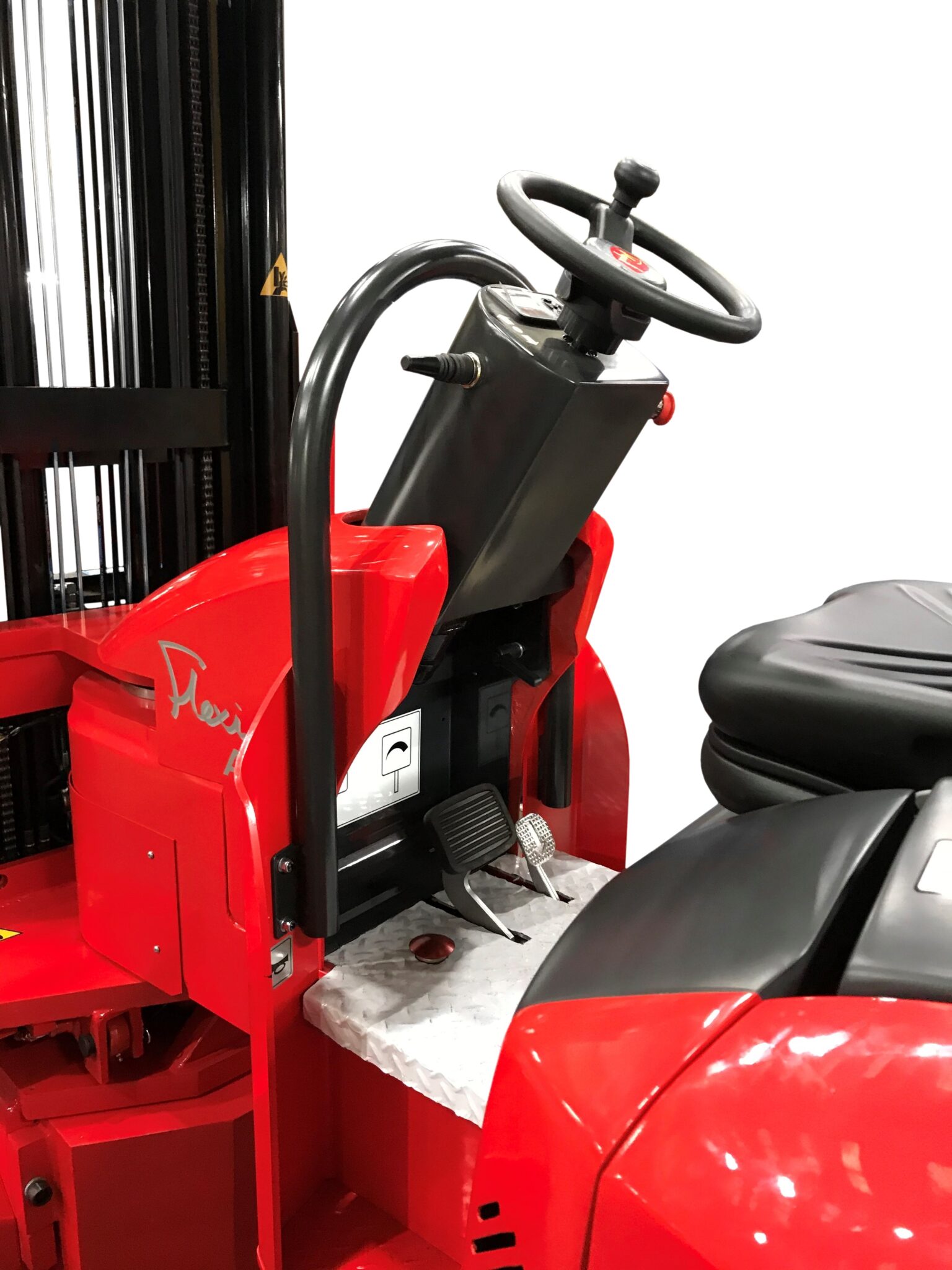
The Halo Bar is an innovative new accessory option developed by Narrow Aisle Ltd for use with all models in the extensive Flexi Truck range of articulated lift truck-based intralogistics very narrow aisle (VNA) storage solutions .

Developed as a mounting for radio data terminals (RDTs), hands-free order-picking screens, label printers etc, the Halo Bar is quickly and easily fitted to a Flexi Truck’s chassis.

Its sturdy U-shaped design sits to the fore of the Flexi’s steering column and at its highest point the top of the Halo Bar’s arc curves below the steering wheel to ensure unobstructed operator forward vision – even when several RDT screens or printers are fitted.

In addition to its role as a computer mounting accessory, the Halo Bar allows stepping into and down from the Flexi’s cab even easier for operators. Operators simply grip the bar’s strong 40mm diameter steel tube with one hand when entering and exiting the Flexi during stock picking operations. This ‘single handed’ entry and exit functionality is both comfortable and safe and, in pre-launch trials, proved extremely popular with operators.

The Halo Bar’s dual functionality makes Flexi models highly suited to modern storage facilities that use screen-based pick lists and fulfilment centres where a high degree of picking and order assembly work takes place alongside full pallet movements.

John Maguire, Narrow Aisle’s managing director, comments: “The Halo Bar is a simple design but we believe that it represents a valuable and ergonomically advanced alternative to, for example, attaching in-cab computer terminals to a truck’s overhead guard which can obstruct the operator’s forward visibility when stacking loads.

“It is becoming quite common to see trucks in operation at some bigger sites with several truck-mounted, hands-free data terminals. The Halo Bar is designed to allow numerous devices to be positioned securely in the optimum viewing position without obstructing the operator’s forward or upward visibility.

“Also, the Halo Bar’s role as a convenient grip helps reduce the physical effort involved in getting on and off of the truck. With the range of operations undertaken within a modern warehouse continuing to grow significantly due to the rise of e-commerce, materials handling equipment is expected to carry out multiple tasks. So, at sites where a Flexi Truck operator is required to take on order picking and order assembly in addition to picking and putting away full pallet loads, the Halo Bar is particularly beneficial.”

Zero-carbon asset management solution launched

Semtech and Ryoden have announced a new zero carbon asset management solution with a RE Family Microcontroller from Renesas. The solution features a Renesas RE Family microcontroller (MCU) to connect directly to the LoRa Cloud utilising Semtech’s LoRa Edge platform (LR1110), and provides enhanced security features. The addition of the LoRa Edge platform allows for geolocation capabilities driven by the world-class battery-free green energy solution and is best applied for tracking of personal valuables, transportation and logistics, animals, and health care.

“The demand for green energy solutions are increasing as the world becomes more conscious of the environmental impacts we make,” said Dr. Shiro Kamohara, senior principal specialist from Renesas’ Low Power Product Department. “The energy-harvesting RE Family represents the evolution of MCU products that have the advantages of being maintenance-free while keeping top-class efficiency. Through our collaboration with Semtech, we are able to offer a cost-efficient green energy solution for our customers.”

Deemed the ‘world’s most energy efficient MCU’ by Renesas, the new RE Family MCU is based on the Arm Cortex M0+, and consists of a built-in controller which can make a battery-less, maintenance-free product, ideal for energy-harvesting applications. The new solution also features security capabilities that are critical to the Internet of Things (IoT) and can help protect IoT embedded devices from viral infections and eavesdropping.

In addition, when integrated with Semtech’s LoRa Edge (LR1110) platform, the power consumption of the product is extremely reduced, providing cost-effective savings to end users.

“The collaboration between Ryoden, Renesas and Semtech is in line with our overall strategy of extending low power geolocation to newer IoT platforms and applications,” said Sree Durbha, director of product management in Semtech’s Wireless and Sensing Products Group. “With the low power nature and end-to-end security of the LoRa Edge platform, the embedded LoRa Basics Modem-E native modem software operating on the LoRaWAN standard, and the LoRa Cloud geolocation and device and application services, the Renesas RE Family is one of the most power-efficient MCUs available on the market.”

Target applications for the LoRa Edge platform with Renesas RE Family include asset management, tracking of goods through the supply chain and several other use cases requiring continuous indoor or outdoor tracking.

Tive and Transporeon join forces to improve visibility

Leading in-transit visibility provider Tive and Transporeon, a leading digital freight platform that powers the largest global freight network of 1,200 shippers, 100 retailers and more than 120,000 logistic service providers and carriers with its real-time visibility solution Sixfold, are entering into a partnership. By integrating data and insights beyond shipment location and condition, the new partnership will provide mutual customers with insights that deliver a better end-customer experience through a single source where appropriate.

Logistics professionals are demanding next-generation actionable insights to manage their customers’ growing expectations actively. This partnership enables shared efficiencies for all logistics partners in all supply chains. Transporeon’s extensive data set and AI-driven platform allows all network users to optimize processes through each transportation cycle continually. With Sixfold, Transporeon already offers a powerful telematics-based real-time visibility solution which has been recognised by Gartner as a challenger in RTTVP solutions. Sixfold is prepared for collaboration via its Open Visibility API.

“Increasing collaboration among supply chain solutions providers is pivotal for the future efficiency and sustainability of in-transit visibility,” said Stephan Sieber, CEO, Transporeon. “We are excited about our partnership with Tive and are looking forward to joining other leading supply chain insights providers to propel innovation and vastly improve end-customer experiences.”

“Working in collaboration – rather than competition – in supply chain visibility is what we strive for every day here at Tive,” said Tive CEO and Founder Krenar Komoni. “Combining all aspects of real-time shipment data, customers everywhere get true real-time information on what is happening with their shipments. We are excited for Transporeon to join this powerful partnership to help make global supply chains more efficient.”


Subscribe

Get notified about New Episodes of our Podcast, New Magazine Issues and stay updated with our Weekly Newsletter.