Smart item supply, engagement & authentication with dual-frequency RFID labels

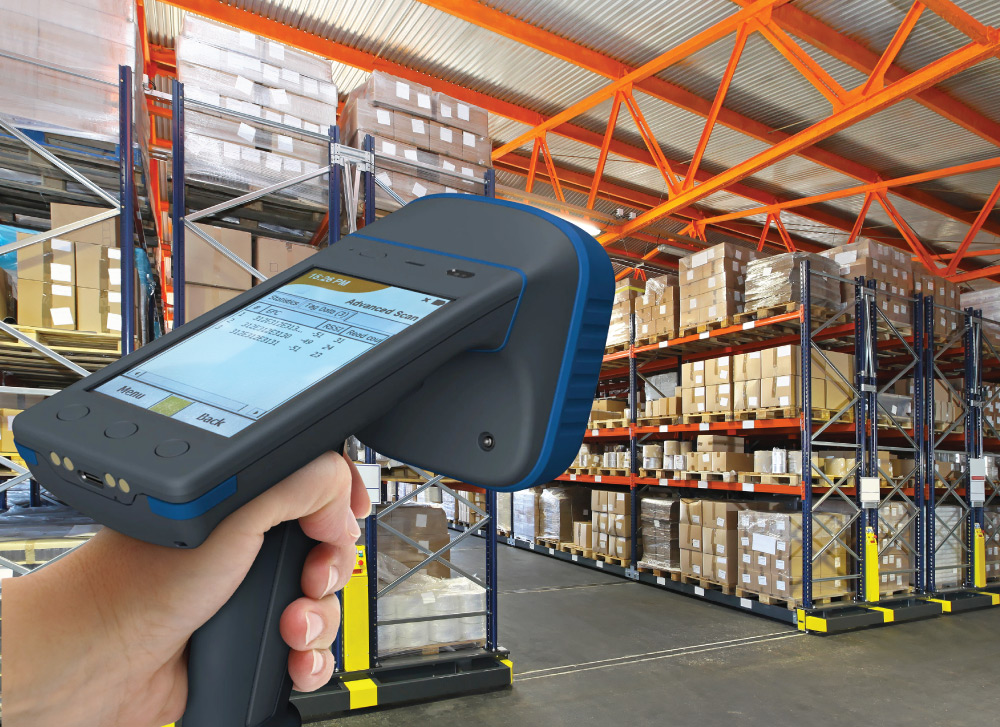
Brady Corporation presents a new, highly reliable dual-frequency RFID label that combines the advantages of UHF and NFC RFID technology. With a single label, companies can improve product and item supply chain management, authentication and end-user engagement.

Track, trace, and engage with almost any item or product via a single, reliable and industrial-grade label with dual frequency UHF and NFC RFID technology. Locate multiple items at once from a distance and access additional information up close. Easily add more data anywhere, including birth and maintenance records, shipment dates, product manuals, authentication data and warranty information.

Provide an extended product reality

Simply tap the label with an NFC enabled smartphone to read and write data. All products or items with a dual frequency RFID label can enable entire supply chains to participate in track & trace programmes, from part manufacturing, assembly, logistics and distribution to installers, maintenance and end-users.

Data added may include codes, links to online information or to documents stored in databases.

Multiple labelled products and items can be counted and identified at once from a distance up to 11m with portable or fixed UHF RFID readers. Signals ignore line of sight to considerably increase inventory management speed and flexibility.

Relevant traceability data can also be accessed quickly per scanned item, and scanners can guide professionals to the right items.

CLICK HERE to watch the video and view the infographic to visualise your advantage.


Save the planet by looking into space

The recent COP26 summit has, despite some disappointments, highlighted the need for radical change in every area of the modern economy, supply chains not least, writes Matt Whittaker, Commercial Director at Bis Henderson Space. This need is widely accepted and being acted on in transport – electric or perhaps hydrogen powered vehicles, modal shift to rail, even low carbon deep sea shipping – but the carbon impact, and potential for improvement, of essentially static and inert warehousing and storage is less considered.

That poses a problem, especially in the UK.  It’s well recognised that the country is ‘under-warehoused’, especially given the rapid and permanent rise in eCommerce with its demands for increasingly sophisticated distribution facilities. But continuing to build ever more ‘big sheds’ is in no way sustainable, let alone carbon-neutral, on several levels.

Firstly, the UK’s construction and building industries rate really poorly in international terms for their use of concrete, steel and other energy-intensive materials – and ‘net zero carbon’ steel or cement are still largely aspirations, rather than achievable realities. New build is intrinsically bad for any carbon footprint.

There are less obvious climate change considerations. Firstly, while the local effects of climate change on agriculture are as yet unknown, they are unlikely to be positive – should we really be concreting over more farmland, in a country that hasn’t been able to feed itself for two hundred years or more? And secondly, is it wise to build ever more distribution centres, vital nodes in the economy of the nation, on increasingly vulnerable, if attractively flat, flood plains?

The need for more warehousing and storage capacity is undeniable – ironically, increased capacity may be essential to achieving other carbon and wider environmental goals, for example by enabling more energy-efficient transport and distribution networks. But need this all be new build?

We know that there is a considerable estate of unused, or under-utilised, warehousing that is potentially available, at least on a short-term or temporary basis. We also know that there are many businesses desperate to take advantage of those opportunities. How can we bring these parties together, to improve the carbon performance of supply chains without adding to the burden of new build?

Many companies are sitting on vacant or under-utilised storage space, for many reasons. They may have off-shored some of their manufacturing meaning they have a lower requirement for goods-inward storage. They may have outsourced some of their distribution to a 3PL’s network. They may have ‘legacy’ facilities from mergers or acquisitions, or they may have moved to a strategy of national or regional DCs, leaving local stock-holding points behind. Their requirements may have shrunk – leaner supply chains, or sometimes the actual product is now radically smaller. Their business model, perhaps a shift to B2C eCommerce rather than bulk sales to wholesalers or retailers, may have made space redundant.

This ‘sort of vacant’ space is in no way carbon neutral. It isn’t too easy to heat, or refrigerate, or otherwise service as just part of a warehouse.

On the other hand, there are many firms that desperately need more warehousing storage or operational space. There are temporary, one-off, requirements – perhaps a relocation while the existing warehouse is refitted. There may be unplanned events such as, a fire in the warehouse or perhaps a major product recall.

Then there are planned peak requirements. Many businesses have to build stock in anticipation of seasonal or predictable events, for example: New season fashion, Christmas, Easter, sporting tournaments, big rock tours and so on. These events may be one-off or annual and some companies scale their warehousing to accommodate those peaks. However, this inevitably means they are paying top dollar for space that, a lot of the time, isn’t really being used but for which they are still paying. This approach is wasteful, both from a financial as well as an environmental perspective.

And then there are needs that arise directly from the climate agenda. In many (not all) business model, the overall carbon footprint can be mitigated by holding more stock close to market – that implies many more storage/warehouse areas, but on a scale that doesn’t equate to a whole shed.

Many businesses may be trialling new ranges or new markets and need the facilities to support a ‘toe in the water’. And many companies are experimenting with different strategies, and balances between strategies, where they are not necessarily in a good position to commit to a long-term lease on a new build shed, even if that were desirable.

Fortunately, Bis Henderson Space exists largely to marry up these potential partners – the companies that are sitting on unrealised space assets, and the businesses that need, temporary, short-term, seasonal or experimental storage or fulfilment facilities.

Often, our ‘suppliers’ of excess space can offer a fully-serviced site where clients can tap into the existing trained staff, IT systems and so on, and we always try to spot the synergies. For our space providers, the deals we broker, which might range from a single six-month contract to a regular seasonal arrangement, can provide an unexpected source of income and volume-related operational efficiencies. For our space-hungry clients, we can source operational space that can help grow the business without climate change guilt.

It’s not realistic to suppose that our economy can be sustained without some degree of new build warehousing, but it surely makes sound environmental thinking to make the best possible use of the assets we have before we commit to ever more carbon-intensive projects.

At Bis Henderson Space we offer unique, low risk, high flexibility solutions that can continually adapt to changing business needs, including a transition to a more eco and sustainable solution.

Matt Whittaker is an experienced 3PL commercial director and logistics real estate specialist, and currently straddles two roles for Bis Henderson Group; heading up it’s the Property Services function for Bis Henderson Consulting whilst also fulfilling the role of Commercial Director for Bis Henderson Space – harnessing his intimate knowledge of the Industrial and Logistics Real Estate market to service the practical, operational and commercial strategic requirements of its customers. 

Adept at translating customer needs and business trends into innovative property solutions to deliver real value, he has the creativity, market intel and experience to lower cost, maximise value and enable growth and change plans. 

 

2022 “shaping up to be an exciting year”

2021 was another year of massive growth for the warehousing industry. Online retailers became accustomed to handling yet larger volumes and clicking ‘buy it now’ the established norm for the consumer.

Despatch Cloud, the cloud-based warehousing and delivery solution specialist for e-commerce, saw its services in huge demand following the surge in online orders. Matthew Dunne (pictured), founder and CTO, believes that 2022 is shaping up to be an exciting year for fulfilment and warehousing, but he is quick to highlight the issues that are holding the sector back from colossal growth.

Fulfilment and warehousing

“Sadly, capacity issues restricted some businesses across the sector in 2021, but these should hopefully be resolved in the coming year, and with the continued likely growth of e-commerce,” comments Dunne.

When it comes to physical warehouses, he cites: “Two kinds of warehouses are emerging to cater for the growing requirement for space and different needs of the industry and the consumer. The demand for mega warehouses is still high with significant numbers of construction projects planned in 2022. Meanwhile there is an explosive growth in mini warehouses in central locations within cities, which enable the same day delivery of common items.”

He believes that due to continued e-commerce growth, 2022 will see the ongoing trend of warehouse automation, from cobots to a fully automated warehouse. He adds: “The cost savings of automated warehouses will impact the industry greatly. Whether 2022 will be the tipping point remains to be seen, but the trend is clear.”

E-commerce

“Due to the pandemic, we have witnessed 5-7 years of growth compressed into the last two years. Whilst we expect, and hope, that the world will head towards stability and normality in 2022, the move to online shopping is not one we or our clients expect to reverse,” adds Dunne.

“We are expecting to see increased sales through social media platforms in the 12 months ahead. Rumours continue to swirl around Meta (Facebook, Instagram and WhatsApp) and the potential ability to monetise the huge traffic volumes on social media apps into more value-added services.

“C-commerce (chat commerce) where you can ask to be shown items which are then sent to your phone for you to browse, select and purchase, is predicted to break into Europe and the UK soon.

“Consumers are increasingly seeking to buy from smaller firms, with local and/or ethical connections. Now is the time where traditional bricks and mortar shops must go online, leveraging another fulfilment trend.

“With the rapid emergence of same-day delivery companies, same-day, or even more rapid, delivery is becoming more of an expectation within bigger cities, bringing us full-circle to today’s warehousing and fulfilment needs.

“Retailers must seize the moment or risk being left behind.”

Flexport makes significant European appointment

Flexport, the digital freight forwarder and customs broker, has appointed Douglas Brown – currently VP Flexport Asia – as the company’s new leader for Europe. Douglas replaces Jan van Casteren, who is stepping down to spend time with his family after starting Flexport Europe in 2015.

As Flexport’s first hire in Europe, Jan led the company’s rapid growth from one to a team of almost 350.

“We’re incredibly thankful to Jan for his contributions. Flexport Europe wouldn’t be here without him,” commented Will Urban, Chief Revenue Officer at Flexport. “We’re fortunate to have someone of Doug’s calibre and experience follow in his footsteps. After almost two decades in the industry and three years leading Flexport in Asia, Doug has a proven track record not just in freight forwarding, but in operating at the intersection of technology and logistics.”

Fluent in Mandarin, Douglas joined Flexport in 2019 as General Manager of Greater China. He brings to his new role strong industry expertise, having worked in senior management roles within freight forwarders including Panalpina, Maersk and CEVA Logistics.

After relocating to Flexport’s Europe HQ in Amsterdam in March, Douglas will focus on diversifying Flexport’s mode and trade lane mix and expanding into new European markets. “I’m delighted to move back to Europe to join a great team and support our clients there,” Douglas added. “We’re growing quickly, targeting 250 new hires this year to show Europe how technology can accelerate innovation in our industry.”

“I am very confident about the future of Flexport Europe,” comments Jan van Casteren. “The team here is stronger than ever. We have shown that our organization has the resilience and creativity to thrive in turbulent times during the pandemic. Doug’s exceptional operational skills and industry knowledge makes him the perfect person to advance what we’ve built so far, and I’m looking forward to seeing where he takes the business in the future.”

Infor provides supply chain IT for sports brand owner

Infor, the industry cloud company, has announced that Pentland Brands Limited, owner of the Speedo, Berghaus, Canterbury of New Zealand, Endura, ellesse, SeaVees and Mitre brands, has adopted the Infor Nexus supply chain platform. The technology will help Pentland Brands improve visibility of inventory, enhancing collaboration with suppliers, automating the vital procure-to-pay process, and accelerating the onboarding of new suppliers and partners.

The Pentland Brands UK businesses are already live on the platform, with the US-based businesses going live at the end of 2021.Now its entire supplier network across China, East Asia and Europe is connected to Infor Nexus, with standardised best-practice processes for all interactions.

Following a thorough review of the market, Infor Nexus was chosen based on its capability to combine both the physical and financial supply chain processes.  This helps provide:

  • Real-time supply forecast and order collaboration.
  • Digital shipping processes to help streamline both carton scanning and transport booking.
  • Automation of the procure-to-pay process, including invoice generation, auto-approval, and settlement. This will help reduce costs and provide real-time cashflow visibility to both suppliers and Pentland Brands.
  • Enhanced visibility, enabling Pentland Brands to respond quickly to production issues and changes in available quantities, as well as tracking the process of all goods in transit.

As the system of engagement, Infor Nexus was also chosen because of its complete integration with Pentland Brands enterprise resource planning (ERP) system. This helps synchronise orders generated in the ERP, order change requests, supplier pack lists, advance shipping notices (ASNs), estimated time of arrival (ETA), and payment authorisation back to the ERP. This helps extend the visibility across Pentland Brands’ supply chain and reduces supply and capital costs.

Looking to the future, Pentland Brands is also assessing the predictive estimated time of arrival (PETA) capabilities of Infor Nexus.

“For brands, especially those linked to the sports, outdoor and lifestyle markets, efficient operations and speed to market are critical,” said Abhy Thomas Joseph, Pentland Brands, global director IT, Digital & Innovation. “The enhanced collaboration, connection and visibility provided by Infor Nexus gives us a competitive advantage with our suppliers and also allows us to on-board new partners faster.”

“Modern brand management is just as much about ensuring a world-class supply chain as it is ensuring you have the best creative talent,” said Sam Keers, Pentland Brands global sourcing and planning director. “We have hundreds of suppliers across the globe, and we’re now able to deliver a standardised set of best practices that will mean we’re more agile across all of our markets.”

“Combining supply chain, operational and financial aspects into cohesive processes enables faster, more controlled growth,” said Mark Illidge, Infor vice-president and general manager for supply chain in EMEA. “As brands look to re-engage with a drastically changed retail market, the ability to be agile, fast and responsive throughout the supply chain will be key to success, and technology such as the Infor Nexus platform will be a vital part of that.”

EPG Rocket Club established to help start-ups

As one of the world’s leading logistics experts, Ehrhardt Partner Group (EPG) is always looking to the future. And this outlook sees the Boppard-based family business treading new paths. With its newly established EPG Rocket Club, the international software provider has created a new innovation platform for start-ups to present their solutions. Seven companies from Hamburg, Munich, Vienna and elsewhere have now presented their innovative and creative IT solutions to EPG.

Digitalisation is opening up exciting new perspectives for the logistics sector – from driverless transport systems and intelligent robots that collect goods in warehouses to fully automated warehouses controlled by artificial intelligence. Boppard-based Ehrhardt Partner Group (EPG) is right at the centre of this phase of transformation, with the company having enjoyed success on the market for more than 30 years through its warehouse management system LFS.

With the launch of the EPG Rocket Club, the software provider is looking to provide young companies with the opportunity to strike up a dialogue with the experts at EPG and to become part of the group’s international network, which currently spans 19 locations worldwide.

“The EPG Rocket Club serves as a platform for visionaries and pioneers within the sector. We aim to honour and promote the most innovative companies and to work with them to help shape the logistics sector of tomorrow,” explains Dennis Kunz, Director Marketing at EPG. A nine-strong panel of judges – made up of experienced logistics experts from companies such as Fressnapf, Flaconi, Metro and Lekkerland – was responsible for choosing a winner among the companies.

The start-ups impressed the judges with their fresh ideas and innovative spirit. The range of solutions presented was extremely diverse and provided further proof that the logistics sector is highly innovative and has a promising future. The solutions showcased included a cloud-based application for purchasing replacement parts, software for the digitalisation of container transport and a digital pallet note.

Award goes to Vienna company

The companies presenting their solutions were competing for the stylish, shiny green EPG Rocket Club Award. The panel of judges ultimately opted to hand the rocket-shaped award to SpotVessels GmbH in recognition of the solution it has developed for the inland navigation sector.

The Vienna-based company offers an online platform that fundamentally improves the booking of freight transport as well as the fleet management of inland vessels and barges. The solution helps to utilize loading capacity more effectively, reduce the number of empty runs and thus increase freighter efficiency.

“The presentations given by the start-ups were very impressive,” says a delighted Dennis Kunz. “We had the chance to listen to fascinating visionaries from the logistics sector who presented their ideas with great passion and verve. In the era of the digital transformation, it’s important that we learn from each other and create new synergies. As a community, the EPG Rocket Club will continue to play an important role in future.”

CLICK HERE to view a video of the EPG Rocket Club event.

FourKites summit covers positive environmental impact

FourKites has announced its 2022 Global Supply Chain Sustainability Summit. At this virtual conference supply chain leaders will focus on driving positive environmental impact through supply chain transformation. The half-day event will be broadcast live from Amsterdam on 9th March 2022 and be streamed to participants worldwide.

Sustainability continues to be a growing focus for companies, even as the pandemic causes ongoing supply chain disruptions. According to a survey by Reuters and FourKites, 84% of European supply chain leaders are either increasing or staying focused on their sustainability commitments.  Sixty-five companies in the S&P 500 had net-zero targets in place prior to the COP26 Summit. Many of these businesses are asking their suppliers to disclose data on greenhouse-gas emissions. Many companies also expanded their efforts to include social issues such as worker welfare and supplier diversity.

FourKites’ Global Supply Chain Sustainability Summit will show how companies can build greener supply chains and logistics operations through transparency, technology and collaboration. As a result companies will be able to make meaningful progress to achieve their sustainability goals.

Donal Daly, technology entrepreneur, author and Future Planet Founder is one of the thought leaders who will offer his unique perspective on how companies can grow sustainably. Other speakers include supply chain leaders from companies including Bayer, RHI Magnesita, Henkel, Hoyer Group and Tetra Pak.  They will discuss topics ranging from alternative energy strategies to electric vehicle readiness, reverse logistics, recycled materials and more.

“The unprecedented disruptions of the last few years have served as a wake-up call to world business leaders,” said Dan Tram, Investment Director at Volvo Group Venture Capital. “We must move faster – with our customers, supply chain partners, governments, societies and other stakeholders – to develop and offer cleaner, safer and more circular transport solutions to reach our collective and individual sustainability targets. The FourKites Summit is an important event, and we look forward to participating with peers from around the globe.”

“We are delighted to organise an event that includes some of the world’s preeminent companies and supply chain leaders sharing their insights on how to achieve positive, quantifiable impacts on the community and the environment through innovative new supply chain initiatives,” said FourKites founder and CEO Mathew Elenjickal. “We look forward to collaborating with and learning from these thought leaders about new technologies, processes and programs that are making a difference.”

CLICK HERE to register for FourKites’ 2022 Global Supply Chain Sustainability Summit.

FarEye joins Microsoft Cloud for Retail

FarEye, a global SaaS platform transforming last mile, has been selected by Microsoft as an Amplification Partner in Microsoft Cloud for Retail. The collaboration empowers and transforms how retailers orchestrate, track, and optimise the movement of goods, enabling enterprises to lower logistics costs while meeting the needs of end consumers.

If retailers wish to remain competitive in an ever-evolving landscape, a strong logistics framework with keen attention to last-mile delivery solutions will be the key differentiating factor to help boost customer satisfaction.

“Microsoft is bringing together leaders across all sectors of the retail space to help retailers enhance their delivery solutions to ultimately result in a positive customer experience,” said Amit Bagga, Chief Revenue Officer at FarEye. “The collaboration signals strong industry recognition, and we’re looking forward to the power FarEye’s intelligent delivery management platform can provide to Microsoft’s retail ecosystem.”

With the combined capabilities of Microsoft Cloud for Retail and FarEye, retailers can attain:

  • Real-time dynamic routing
  • Improved operational control
  • Branded and consistent customer experience

“We believe FarEye’s delivery visibility tools and scalable, low-code, no-code platform will be a critical component in helping streamline the fulfilment process and digitise retailers’ customer service offerings,” said Shelley Bransten, Corporate Vice President, WW Retail & Consumer Goods Industries, Microsoft. “Adding FarEye to our line-up of integral retail partners enhances our capability to transform modern-day deliveries and customer experience.”

FarEye’s intelligent delivery management platform handles 100 million transactions per month among 45,000 drivers and 30,000 carriers traveling over 1 million miles per day. The company works with its enterprise customers across industries such as retail, manufacturing and more to provide a higher level of control over their logistics and offer a superior delivery experience to their end customers.

Webinar: How To Navigate The New Logistics Landscape

Buying habits have changed, and it’s time delivery caught up. These days, the third party you engage to drop off your products represents your company. Increasingly, we’re seeing consumers say goodbye to brands they love due to poor customer service at the last mile.

So, partnering with Honeywell, FarEye is holding a webinar entitled How to Navigate the New Logistics Landscape on 26th January at 3.00pm GMT with an expert panel who will bring you up to speed on transport and logistics in 2022. It’s free to attend, and can help you align your online and last-mile experiences.

Topics being covered include:

  • The current logistical landscape
  • Emerging transport technologies
  • How data can be leveraged to improve delivery
  • What tools you can use to enhance the last-mile experience

In 2021, eCommerce transactions increased by 30%. It’s not hard to see why – for the past two years, we’ve embraced buying everything online. Today, we expect companies to spend the same amount of investment on the back end as they do on the front. But to achieve this, their delivery must be as seamless as their website.

Up to 66% of millennials think all purchases should have a one-hour delivery option. And 55% of all consumers say that three late deliveries would prevent them from using a service provider again. The fact is, if your final stage of the customer experience is letting the side down, you’ll lose customers.

That’s why in this webinar, we’re asking industry heavyweights to comment on the challenges of transport and logistics right now. They’ll provide answers like leveraging big data, data science and data analytics to refine the delivery process.

The panel includes speakers from Honeywell and FarEye, all helping us to solve problems such as customer expectations, driver retention and poor asset utilisation.

You can watch them, and host John Bradshaw, Vertical Marketing Manager at Honeywell, set the new world to rights by following THIS LINK to sign up for free.

Attendees can ask questions and use the information provided to kick-start their ambitions for 2022. What’s more, you’ll be able to counter the change in customer expectations, and gain the tools to exceed them. Sign up today and tap into the insights of industry leaders.

FarEye is a low-code, Intelligent Delivery Management Platform, enabling enterprises to orchestrate, track, and optimise their logistics operations. FarEye’s native SaaS products provide real time visibility across transportation networks and logistics orchestration for the execution of deliveries across the first, mid and last mile.

CLICK HERE  to register for the free webinar – How To Navigate The New Logistics Landscape

AR Racking appoints new MD

The current Sales Director for conventional solutions in the EMEA markets, José Manuel Lucio, has been appointed as the new Managing Director of AR Racking, replacing Iñaki Arriola, who will sever his association with the company at the end of 2022.

Lucio joined AR Racking approximately seven years ago and has held several management positions. These include, during 2021, Sales Director for the EMEA region for conventional solutions unit. Until the beginning of this year, he successfully held the position of Sales Director for Spain, Portugal and Italy.

After a steady upward rise, Lucio became Managing Director of AR Racking on 1st January 2022 replacing at the head of the company Iñaki Arriola, who will support company management until ending all ties with the company at the end of 2022.

In the last few years, AR Racking has experienced sustained growth and positioned itself as one of the leading players both nationally and internationally in the industrial storage solutions sector.

Subscribe

Get notified about New Episodes of our Podcast, New Magazine Issues and stay updated with our Weekly Newsletter.