Operational resilience through supply chain and business process mapping

Over the last two years, ongoing disruptions from the COVID-19 pandemic to supply chain disruptions caused by the Suez Canal blockage to ransomware attacks on critical infrastructure (as seen in the Colonial Pipeline attack) have disrupted the daily operations of businesses across the globe. It became apparent that it was no longer a case of “if” the next disruption would occur but rather “when.” As a result, the need for robust operational resilience has never been more critical, writes Bogdana Sardak, Senior Director of Risk & Resiliency, Fusion Risk Management.

Most recently, the geopolitical crisis in Ukraine demonstrates the need for agile, resilient businesses that can make data-driven decisions. The situation in Ukraine displays the multilateral effects of disruption: we have already seen the crisis affect personnel safety, the economy, supply chains, and vendors. As an ongoing crisis, the impact is still evolving, and businesses need to assess the current and potential future effects on their organisation.

Operational resilience is a crucial component of ensuring your business is prepared to respond to disruptions in an instance. True operational resilience gives organisations the tools to understand operational data points and locations, empowering critical decisions at a moment’s notice. This enables businesses to pivot and adapt as needed to minimise or eliminate the effects of disruption on business as usual.

Mapping Business Processes

Fully understanding how your business operates is the first step to ensuring resilience. Mapping business processes allows complete visibility into the inputs, outputs, and dependencies within your organisation. Business processes do not exist in silos; they often rely on people, technology, facilities, third parties, and other supporting resources. Fully understanding, mapping, and compiling data on these intertwined dependencies can help your organisation better comprehend the potential impact of events. Further, it can help make the required decisions to minimise impact and continue business as usual in times of disruption or change. But where should you begin?

Identifying your end goal from the start is vital. You must understand what you want to achieve by mapping business processes – you do not want to simply go through the motions and check a box. Some may wish to map business processes to maximise efficiency, to ensure adequate resource distribution, or as a proactive step for resilience. During the operational resilience journey, mapping allows you to identify gaps and vulnerabilities in your organisation, applications, or vendors which support critical products or services of your organisation. Once you have identified the weak links within your organisation, you can mitigate identified risks to strengthen your business, services, and products.

Once you identify why you want to map business processes, begin gathering data and information to construct your approach roadmap. Mid-size and larger enterprise organisations likely have in-house business continuity or resilience teams tasked with performing a business impact analysis (BIA); a process excellence team; or an IT business partner group which might have solid data to leverage for process identification. Smaller organisations may have part-time personnel who are tasked with performing process mapping. Another good resource to use to start the resilience journey is to ask for an org chart from HR and start looking at team structure as well as performing interviews with functional leaders.

It is also critical to look at the big picture. Before speaking to different business functions and departments, it is helpful to identify your organisational services and products that are being delivered to the customer. In a smaller organisation, this can be a single product. In larger organisations like a bank, there are numerous services and products, including the process of cash withdrawals, wealth management, lending, payments, and more. The size of your business does not matter. Identifying the products and services that you deliver to customers allows you to be able to map the end products first and then work your way down through the organisation to know how each independent process plays a role in delivering the end products or services to customers.

You can start from the top or bottom of your organisation to begin the mapping process. The top-bottom approach would start at C-level executives whereas the bottom-up approach may begin at individual departments/teams. Throughout each level of your business, you will map business processes to the service or product it contributes to. Once you start to map processes, you will also want to map dependencies such as applications. When engaging with teams, ask them what applications or programs are needed to perform their tasks, what teams they interact with, and if there are any cross-organisational dependencies required to fulfil their inputs and outputs. This will enable the mapping of dependencies across vendors, sites, and people that support a specific process and, therefore, support the product or service to customers. Visualising in this manner allows you to see what would occur if a business process broke or an application went down. You can see the escalating effect on the process and how it plays into service delivery to customers.

Mapping business processes in this organised manner can enable swift action when long- or short-term disruptions hit an organisation. A thorough understanding of how your business processes work gives you the tools to put the pieces back together in the event of a disruption. While business process mapping starts within your organisation, it extends to external dependencies, including vendors, supply chain, applications, and physical sites that support your daily business functions.

Supply Chain Mapping

Once you have mapped out your business processes, you can determine exactly which processes are vital to your ability to deliver on your customer promise. You can also identify what vendor dependencies exist for these critical processes to function. These vendor dependencies are the first stage of mapping your supply chain.

In today’s highly globalised society, no organisation exists in a vacuum – we rely on vendors and providers to preform business processes. It does not need to take a disruption directly affecting your organisation for your business to feel the impact. Disruptions that affect your vendors can cause a ripple effect down the supply chain and indirectly impact your business, hindering the applications that your internal teams require to fulfil their needed business function.

When mapping business processes, it is essential to determine the criticality level of each vendor to its associated business process. From there, look to your internal organisation and assess the current maturity level of your supply chain and vendor management program. If you have already determined your critical third-party vendors, see if your organisation has mapped out its fourth- and fifth-party suppliers. While your business may not engage with these suppliers regularly, any disruption that affects the vendors can have an indirect negative effect on your ability to deliver products and services to customers. Mapping fourth- or fifth-party suppliers may be slightly more complicated than mapping your third-party vendors, so be sure to engage with your third-party vendors and ask questions. This will enable your organisation to visualise gaps and vulnerabilities throughout your third-party vendors’ supply chains.

During the mapping process, there are several key points to look out for. Ask yourself: “Do many of our third parties rely heavily on one fourth-party vendor?” and “Do all of our third parties exist in the same geographic location?” These questions can allow you to select third parties that enable risk diversification. If many of your third parties rely on the same fourth-party vendor, a disruption that affects that singular vendor can halt services to your third-party vendor, thus inhibiting your business’s ability to perform critical processes. Diversifying your vendor risk, even if that means using numerous providers, can mitigate the effects of a single pain point that causes the dominos to topple and affect your business.

While it is good to diversify your vendors to reduce risk, you must also know how to diversify effectively. Location can play a significant role in diversification. Some localities may be more susceptible to natural disasters or political volatility, whereas (in less extreme circumstances) a wide blackout or internet outage can halt services in a specific locality for some time. It is in your best interest to diversify vendors across wide geographic regions and establish the same expectations for your fourth- and fifth-party vendors. This can ensure that a predictable or unpredictable disruption will not cause an outage to many of your critical vendors, thus inhibiting your ability to deliver services.

No matter how diversified or prepared your third-party supply chain is to handle disruptions, unpredictable situations can happen at a moment’s notice, which is why it is critical to have recovery strategies and business continuity plans for when business as usual halts. This can come as having an additional provider on retainer or a list of providers who can quickly adapt to meet your business needs if your primary supplier experiences an outage.

Achieving Resilience

True resilience includes having the data on hand to respond in any situation. No matter what industry or market you operate within, having your business processes and supply chain data points mapped out prepares your business to respond seamlessly. Gathering the data points and maps proactively before disruption hits your organisation allows for planning and preapproval of the necessary precautions if the worst-case scenario occurs.

Understanding business processes and supply chain maps is the first step to achieving resilience. Once you have identified critical processes and critical vendors, you must proactively plan for when business as usual comes to a halt. Critical processes require people, applications, sites, and suppliers that enable an organisation to fulfil its brand promise to customers under normal conditions. Unfortunately, normal conditions are not guaranteed, but achieving resilience can eliminate a single point of failure for your business.

Beyond the data, you must also aim to instil a culture of resilience within your organisation. Building a culture of resilience means that everyone understands their role within the organisation and can prioritise resilient decisions in their daily business operations. When working with your coworkers throughout the process of mapping business processes and supply chains, it is an excellent time to begin engaging people across departments and teams on the journey toward resilience.

As you engage with people throughout the process, ask questions and help them understand the more significant role they play in the brand’s ability to deliver products and services. Within your business, people may not be aware of precisely what risks they have control over; therefore, it is critical to explain risk at all levels of the organisation (from the C-suite down to the associates) using the maps you created. This can allow people to see how disruptions caused within their business processes can cascade down and cause an effect in other areas of the business, ultimately creating a business-wide impact. Therefore, data collection is integral to being both a resilience leader, advisor, and educator within your business to ensure resilient operations.

Looking Ahead: Prepare to Pivot and Adapt

Over the last two years, we have experienced wide-ranging crises that have affected almost every organisation in some way. We should recognise that disruptions are here to stay, and it’s no longer a question of “if” another crisis will occur but rather a matter of “when.” Never has it been more critical for a business to be able to pivot and adapt to any disruption.

Mapping business processes and your supply chain as well as educating employees offers your organisation the ability to achieve resilience. When a disruption does occur, there is no need to panic because you took the time to proactively gather data points and plan for future disruption. Creating a culture of resilience can minimise the impact of disruption on your business and give your employees the knowledge they need to make informed decisions in the face of crisis.

As we continue to realise, crises evolve by the minute. The landscape an organisation exists in today may change by tomorrow. Times of crisis elevate the need for operational resilience as businesses must flex and adapt to new developments. Over the last two years, ongoing disruptions have shown that if you have not yet begun your journey toward operational resilience, the best time to start is now. With the adequate and accurate data and plans in hand from business process mapping, supply chain mapping, and proactive programs, businesses can focus on the health and safety of their employees.
St. Modwen acquires Midlands cold storage facility

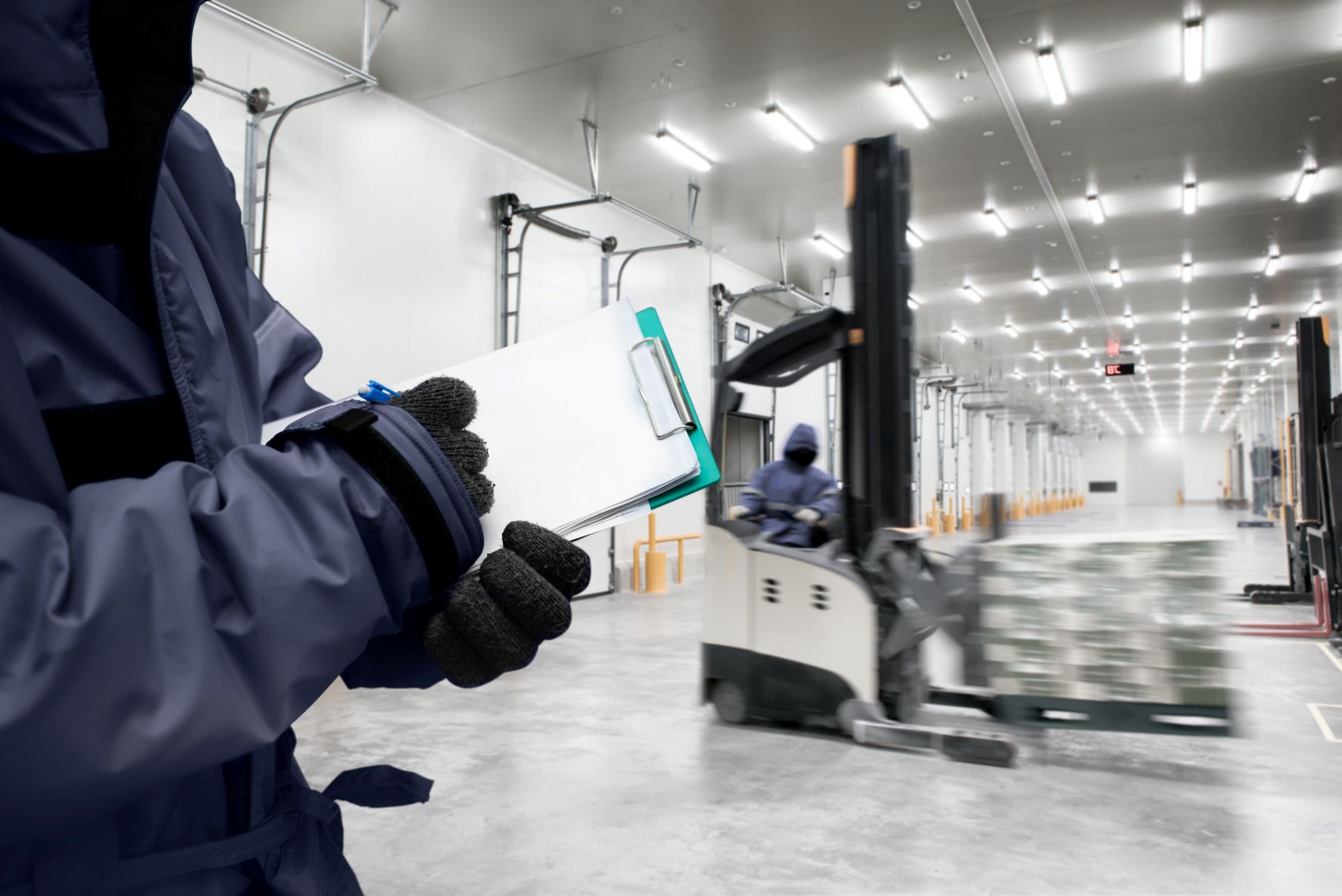
St. Modwen, one of the UK’s leading logistics developers and managers, has continued its expansion in the UK’s Midlands with the acquisition of a 56,760 sq ft cold storage distribution facility in Alfreton, Derbyshire.

The modern, two-chamber cold storage distribution facility is located on the Clover Nook Industrial Estate in Alfreton, adjacent to the A38 and Junction 28 of the M1 motorway and on the major North-South distribution corridor.

The site spans 5.31 acres with low site coverage of 25% and currently provides 161 car parking spaces and a further 30 dedicated HGV bays with the capacity to accommodate the installation of EV charging points.

Alfreton, by virtue of its central location equidistant from Nottingham and Derby, has become one of the UK’s major submarkets for distribution and logistics companies. There is strong local demand for high-quality mid box distribution centres with strong transport connectivity, seeing high levels of take-up among occupiers seeking urban depots to serve surrounding towns and cities. Supply of suitable mid box schemes within the Midlands is limited, with low levels of available stock and significant competition between occupiers for best-in-class units.

Polly Troughton, Managing Director, St Modwen Logistics, commented: “The acquisition of this high-quality, modern facility allows us to further expand our footprint in one of the UK’s most competitive logistics locations.

“Our continued acquisition and development of high-quality logistics space within undersupplied regional submarkets across the UK fuels the growth of regional economies. Our schemes create high-quality jobs for local people of all ages and all education levels, directly supporting the government’s levelling up agenda.”

Scandit launches 10x faster scanning solution

Scandit, a leader in smart data capture, has launched MatrixScan Count, an out-of-the-box scan and count solution for received goods and inventory. Part of the Scandit Smart Data Capture platform, MatrixScan Count enables the accurate scanning and counting of multiple items at once via smart devices, speeding counting workflows by up to 10 times. The solution is designed to boost worker productivity, reduce human error and maintain accurate stock levels.

Enterprises in retail and logistics are facing multiple business challenges. They must deliver first-class customer service in the face of economic pressures, ensure accurate supply chain visibility, and maintain an efficient and empowered workforce. Improving productivity can ease some of these challenges. By shifting tedious, repetitive tasks from frontline workers to technology, errors in stock management or goods delivery can be eliminated while people are freed up to engage in value-add activities.

Tasks like receiving, stock taking, and cycle counting can be incredibly time-intensive, inefficient, and error-prone. Offered as an out-of-box solution, the built-in UI in MatrixScan Count means that enterprises can start using the solution immediately with minimal development time. Equipping workers with MatrixScan Count maximises efficiency, as workers can speed up counting workflows by up to 10 times. Inaccuracies throughout the supply chain are reduced as workers using MatrixScan Count receive real-time on-screen alerts via augmented reality guiding them to complete counting workflows precisely, avoiding incorrect products, double-counting, or accidentally skipping items.

“Counting accurately is a critical part of many business workflows for multiple industries, but tedious, multi-step or manual processes still prevail,” said Christian Floerkemeier, CTO and co-founder of Scandit. “Enterprises are struggling to recruit and retain staff, so by introducing tools such as MatrixScan Count which reimagine processes to super-speed through tedious tasks, workers can engage in high-value assignments leading to an enhanced experience.”

Free workers to focus on value-add activities

MatrixScan Count is built for speed, accuracy, and reduced human intervention. MatrixScan Count offers enterprises across the retail, logistics, parcel and post industries the ability to optimise labour resources and maximise process efficiency by addressing the entire counting workflow, for example:

  • Achieving accurate stock taking and inventory counting with built-in stock information updates and confirmation
  • Reducing time-to-receive in warehouses and back-of-store operations with visual counting and confirmation against a list that includes expected items to receive
  • Maximising drivers’ efficiency in verifying and counting parcels for delivery during van loading and unloading

Customised Experiences with out-of-the-box UI

MatrixScan Count gives workers the freedom to work how they want, equipping them to count at speed with maximum comfort, leading to increased productivity and an improved working experience. Pre-set user interfaces mean that customisations including left-handed mode, strap mode, and landscape scanning mode are provided depending on user preference.

MatrixScan Count is designed with real-world conditions in mind with stable long-range performance for capturing as many items in one shot at once, particularly important where large items are included.

Available now on iOS and select Android devices, MatrixScan Count leverages MatrixScan technology to locate, track and decode multiple barcodes simultaneously.

Antwerp-Bruges €335m terminal renewal underway

Port of Antwerp-Bruges and PSA Antwerp has given the green light for the renewal of the quayside and terminal at Europa Terminal. The works, which will take about nine years and be carried out in three phases, will ensure that the latest generation of container ships can continue to call at Antwerp. These renovations will also result in an efficient and sustainable terminal that contributes to the transition towards a climate-neutral port.

In order to remain a top-class world port, it must be able to offer its customers a well-functioning infrastructure and additional container capacity. Port of Antwerp-Bruges and PSA Antwerp are therefore investing in the renewal of the Europa Terminal. It was officially inaugurated in 1990 as the first tidal container terminal in Antwerp. With the renewal, which will cost €335m, Port of Antwerp-Bruges aims to strengthen its competitive position while taking steps towards becoming a sustainable port.

The depth of vessels that can moor at the 1,200m quayside will be increased from 13.5m to 16m. Because ships must be able to continue to moor during the extensive works and in order to minimise operational impact, the port authorities are tackling the quayside in three major phases. In addition, they will create additional temporary moorings for inland navigation, so it can guarantee that its customers will receive a smooth service. The works will be spread over about nine years and have been carefully plotted based on expected traffic.

The renovation of the terminal will also contribute to the transition towards a climate-neutral port. Electrification and other optimisations will reduce CO2 emissions per container by 50% and wind turbines will increase the share of renewable energy.

The new quayside will be given a new orientation to ensure sufficient distance between passing ships and the terminal, and to protect the nearby Galgenschoor nature reserve. The works include in the final phase the construction of an underwater dam to provide additional protection for the nature reserve and ensure it does not subside.

During the entire process, all parties involved will take the necessary measures to minimise disruption, in close consultation with the surrounding area.

Following a tender process, the contract for the works was concluded today with a temporary company of four contractors, Artes-Roegiers, Artes-Depret, Herbosch-Kiere and Boskalis, all with extensive experience in large-scale hydraulic engineering projects.

Jacques Vandermeiren, CEO Port of Antwerp-Bruges: “With the modernisation of the Europa Terminal we are underlining our ambitions as a container port. As a world-class port, it is essential that we continue to play at the highest level and are able to accommodate the biggest ships. We are, however, aware of the impact of our activities on the surrounding area and local residents. That is why we are committed to reducing mooring emissions, among other things. With a new efficient and sustainable terminal, we are building the port infrastructure of the future.”

Annick De Ridder, Port Alderwoman of the City of Antwerp and Chairwoman of the Board of Directors of Port of Antwerp-Bruges: “Our port is the economic engine of Flanders. Interventions are needed to make it function optimally. With the deepening of the Europa Terminal from 13.5 to 16m, together with PSA Antwerp, we are ensuring that we can continue to receive the largest container ships. I look forward to the further progress of the works and an even brighter future for container handling in our port.”

Cameron Thorpe, CEO PSA Belgium: “At PSA Belgium, we are delighted that construction works on the quayside are underway. This will allow us to start the transformation process of Europa Terminal with a highly sustainable investment while increasing capacity by more than 700,000 TEU annually. This reflects our confidence in the future of Port of Antwerp-Bruges and underlines the PSA Group’s commitment in Belgium.”

Jurgen De Wachter, General Manager at PSA Antwerp Container Business: “The development of the Europa Terminal will future-proof our operations and service levels, by reducing our carbon footprint by more than half, improving the safety of our people and meeting our customers’ increasing demand for mega-ship capacity.”

Artes-Roegiers, Artes-Depret, Herbosch-Kiere and Boskalis: “We are very happy to undertake this project. It is a strategic project for the future of the port. It is technically complex and will be carried out in phases without too much disruption to container traffic. It will be a technical and operational feat, but one that we can handle thanks to our extensive expertise. Sound agreements have also been made about this with Port of Antwerp-Bruges and PSA.”

DispatchTrack unveils industry-first CO2 tracking tool

DispatchTrack, a global leader in last mile delivery solutions, has announced the availability of AI-powered carbon emissions tracking to help companies meet their supply chain sustainability goals. Available as a feature in the DispatchTrack routing console, CO2 tracking enables companies in any market worldwide to better understand their existing carbon output on a per-route, per-stop, and per-vehicle basis, optimise routes to reduce CO2 output, and gather data to illustrate the impact of their sustainability initiatives.

Fuel consumption in last-mile delivery is one of the largest contributors to emissions in the modern supply chain, as well as one of the greatest costs for delivery companies. Using DispatchTrack’s AI-powered route optimisation engine, companies can discover green delivery options that leverage the most efficient routes with fewer miles driven and less fuel used. By taking into consideration all of a day’s stops and shortening the total distance that drivers have to travel in order to fulfil their orders, DispatchTrack can help last-mile delivery companies reduce fuel consumption across their fleet by at least 10%.

DispatchTrack’s new CO2 tracking feature can be easily added to a customer’s existing DispatchTrack portal. Emissions data is included within routing and reporting screens, allowing users to visualise carbon emissions for each stop, and will dynamically update as routes are changed, all based on configurable emissions expectations based on different vehicle and load types.

Alex Buckley, General Manager of EMEA and APAC Operations at DispatchTrack, commented, “Consumers are making more and more of an effort to make sustainable choices. What better way for brands to help them do that – and show off their own success at boosting sustainability – than by being able to seamlessly track and report the reduction of CO2 emissions in their deliveries?”

“When it comes to the last mile, businesses around the world are taking sustainability seriously. There’s mounting pressure to do better and to invest in initiatives that actually reduce CO2,” said Satish Natarajan, DispatchTrack co-founder and CEO. “With the industry’s first AI-based CO2 tracking capabilities, we’re helping our customers double down on their net-zero commitments and achieve their sustainability goals. By providing CO2 emissions numbers in real-time and route optimisation powered by AI, DispatchTrack is helping our customers reduce their emissions with confidence and become even more competitive.”


NAiSE and Pilz establish partnership

Pilz is expanding its range for the safe use of driverless transport systems (DTS): In cooperation with the material flow automation expert NAiSE GmbH, the automation company Pilz is offering the world’s first traffic and order manager for all participants in intralogistics – for people as well as for transport systems. With NAiSE Traffic AGV applications can be implemented safely and efficiently thanks to precise real-time localisation. The goal: higher productivity in intralogistics.

Using sensor infrastructure and intelligent, integrated and cross-manufacturer communication, the traffic and order manager NAiSE Traffic analyses the flow of traffic and goods in intralogistics applications in real time. The software coordinates and controls the traffic of all participants – people and industrial trucks such as AGVs or forklifts. This provides operators with a holistic, manufacturer-independent material flow automation solution. Traffic jams, bottlenecks and accidents are avoided. This increases safety and optimises traffic control – for more transparency, efficiency and productivity.

With the traffic and order manager from the Stuttgart start-up NAiSE, Pilz is further expanding its comprehensive range of solutions in the field of intralogistics.  For safe automation of driverless transport vehicles (AGV) or systems (AGV), Pilz offers an extensive portfolio of safety components with sensors and control technology as well as a security solution.

In addition, Pilz provides support with the right services for vehicles and applications – in accordance with ISO 3691-4 standards and up to CE marking. Manufacturers and operators receive a complete package from Pilz for safe and productive intralogistics applications.

Unilode goes green with electric trucks from Briggs

Unilode Aviation Solutions, a leading service provider to the aviation sector, is the latest business to invest in electrification with Briggs Equipment following the introduction of electric Hyster trucks to its Heathrow site.

The new forklifts replace a fleet of gas machines and will allow Unilode to deliver on its sustainability targets and reduce environmental impact. Additionally, Unilode will benefit from lower operational and maintenance costs, underlining the long-term benefits of choosing electric.

The new trucks are already making a positive impact on-site, with positive feedback received from operators on their comfort, ease-of-use and extensive safety features.

Babak Yazdani, Chief Operating Officer, Unilode, commented: “The new electric trucks supplied by Briggs Equipment are a fantastic addition to our industrial equipment fleet. The new equipment is cleaner, greener and more efficient, helping our operators complete their work with greater precision. These are more productive forklifts with zero emissions that will help us to continue reducing our carbon footprint. Over the coming year more stations in our MRO network will be making this change to further enhance the sustainability of Unilode’s ULD solutions.”

Ben Creighton, Senior Sales Executive, Briggs Equipment, commented: “We are delighted to have completed this delivery to a new Briggs customer in Unilode. Right throughout the tender process, they have shown a clear commitment towards reducing environmental impact and delivering on their carbon footprint objectives.

“At Briggs, we are committed to helping our customers build an effective and future proofed carbon strategy that is capable of evolving with our customers. We are now looking forward to working closely with the team at Unilode to ensure they get the most out of their new trucks and keep delivering an outstanding service for their customers.”

Tech firm ranked as one of UK’s best employers

A fast-growing logistics technology business is celebrating after being named as one of the UK’s Best Tech Employers by the leading workplace accreditation body. Wise, which has created a revolutionary workforce management platform used by over 250 UK delivery companies, has been named on the prestigious list of the UK’s Best Tech Employers by Great Place To Work.

Wise was placed alongside some of the UK’s most well-known and innovative technology firms following a lengthy process. Following an anonymous staff satisfaction survey and rigorous external testing, the technology firm scored an overall 91% for staff satisfaction, with its highest scoring areas covering atmosphere, diversity and inclusion and teamwork.

Based in Solihull, Wise’s free platform is used by last-mile delivery firms to save time, stress and money when managing a self-employed workforce and its app has already been used by over 50,000 delivery drivers.

Hannah Jarrad, Head of People and Culture at Wise, said: “Throughout the last couple of years we’ve been on an incredible journey, bringing together some of the Midlands’ best technology talent and growing our culture along the way. We’re over the moon to have been listed as one of the UK’s Best Tech Workplaces and this certification is testament to the hard work and attitude of each and every one of the Wise team.”

Lödige chosen for JFK airport modernisation

Aeroterm, North America’s largest third-party on-airport developer, has selected Lödige Industries, a world-leading provider of cargo terminal solutions, to install a state-of-the-art automated cargo system at John F. Kennedy International Airport‘s new 350,000 sq ft cargo facility. Lödige’s system will be exclusively used by Worldwide Flight Services (WFS), the main cargo handler at JFK.

The new cargo facility, which is being built on a 26-acre site, will include greater ramp capacity to handle three of today’s large modern air cargo freighters (Group VI aircraft) simultaneously. It will also have more than 50 dock doors for the efficient transfer and tracking of goods through the facility.

Lödige’s system will feature two elevating transfer vehicles with a ULD storage rack for 218 ULD positions and three-level ULD racks to ensure high storage density in WFS’s new terminal and free up space for other handling activities, amongst other things. This advanced level of automation guarantees efficient throughput and high safety standards, as well as optimal operational processes, areas that are very important for WFS. The equipment also includes three truck docks, a castor deck area and 14 elevating workstations.

When completed in early 2024, JFK’s new cargo facility is expected to handle an annual throughput of approximately 350,000 tonnes.

“Our new cargo facility, equipped with Lödige’s state-of-the-art systems, is designed for maximum efficiency. Thanks to this market-leading cargo handling technology, we are ideally equipped for future growth and can offer our customers the best possible service at all times,” says Jeffrey Bounds SVP Program Management & Center of Excellence|The Americas from WFS.

“As the first new cargo facility built at JFK in two decades, this project is an essential step in revitalising JFK as a cargo hub,” said Bryan Rosenberger, Vice President Design & Construction at Aeroterm.  “On each development project, Realterm partners with both local and global groups for best-in-class expertise in design, construction and specific air cargo equipment. We are excited to partner with Lödige on this development.”

“The US cargo industry is showing a great sense of optimism this year and we are proud to contribute to JFK’s ambitious modernisation programme. We are confident that our high-efficiency cargo handling solutions and years of local experience will support WFS in achieving its quality, speed, and safety goals and continue to grow through increased efficiency in the new facility,” said Jonathan Hardy, Managing Director USA at Lödige Industries.

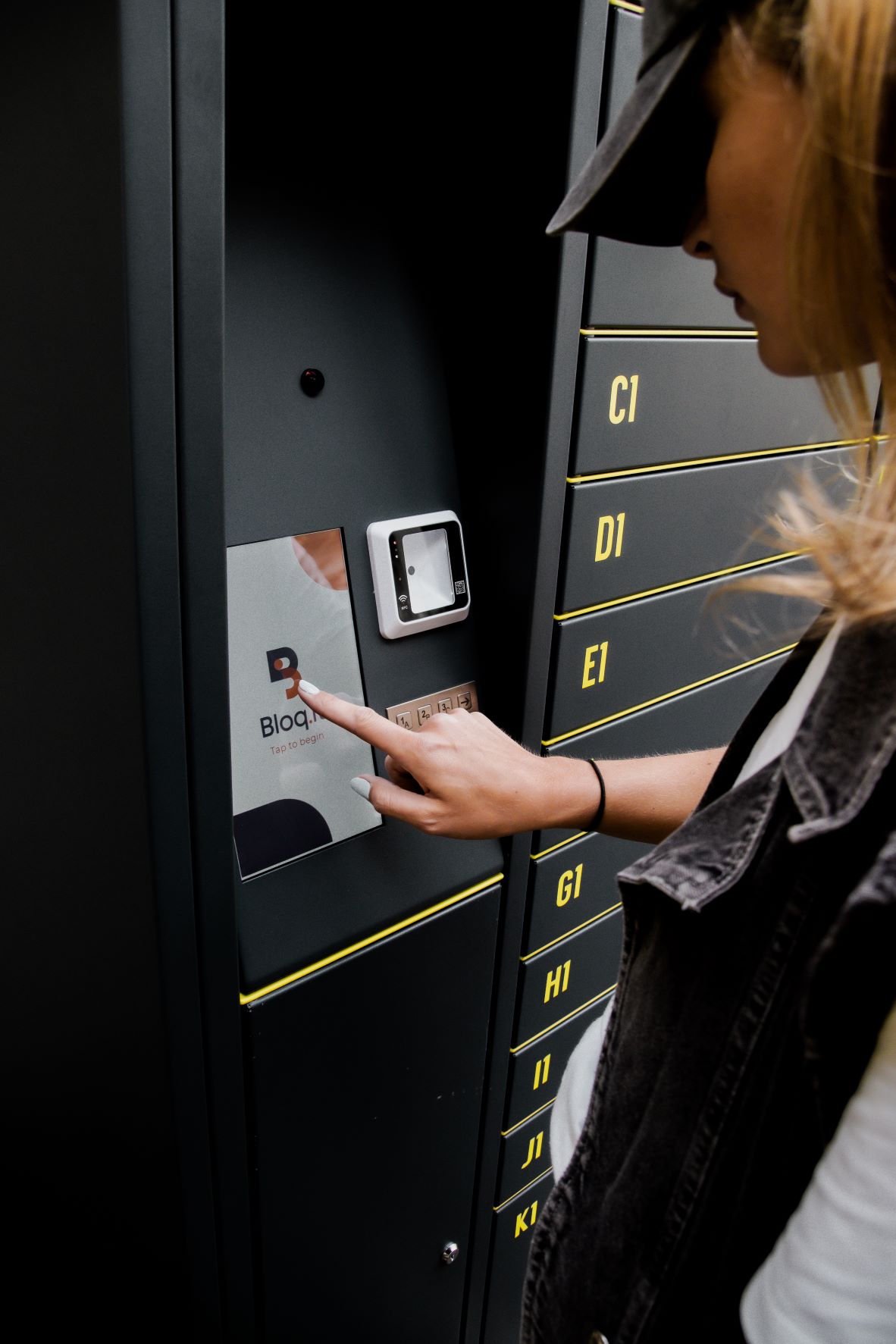
Smart Locker startup at Parcel + Post Expo

Bloq.it is a Smart Locker startup relatively new to the tech market. Nevertheless, it has shown non-stop and exponential growth over these past three years.

Founded in 2019 and based in Lisbon with over 20 employees, it works to develop scalable and tailor-made solutions for businesses in retail, logistics, and other industries.

Its solutions are deployed in more than 15 countries, and it says it prides itself on having grown its business by 2,000% in 2021.

From the beginning, it committed to solving the most costly and tedious leg of all delivery processes: the last mile. This is how its software engineers and founders came up with an integral, adaptable and scalable invention that fits all business sizes and models.

With constant improvements, it says it works towards revolutionising the smart lockers industry, and becoming the biggest smart lockers manufacturer in the world and the most reliable partner of businesses to optimise their delivery operations.

At this year’s Parcel+Post Expo in Frankfurt, it will showcase a demo of its most recently developed product: The V-locker, a smart parcel locker tailored-made for the giant marketplace Vinted.

From the 18th to the 20th of October 2022, all Parcel+Post Expo Frankfurt visitors will have the opportunity to interact with the company’s demo unit.

This demo unit will simulate real smart lockers functionalities so visitors – whether technology or logistics enthusiasts or potential clients – can have a more realistic idea of how Bloq.it’s technology works and how it can solve most of the delivery pain points, such as delays, returns and porch piracy.

Bloq.it’s business developers and founders will be on Stand 2049 where visitors are invited to try out its state-of-the-art technology to understand the reasons why the young startup is the winner of different prizes, such as:

  • The ‘Most Innovative’ award at the Web Summit 2019
  • “Portugal’s top 10 tech startups coming out of Lisbon”, an award by EU-Startups it has won over the past three years
  • “Scale-Up of the Year”, Bloq.it‘s newest award given by the Startup Grind 2022 Global Conference in San Francisco.


Subscribe

Get notified about New Episodes of our Podcast, New Magazine Issues and stay updated with our Weekly Newsletter.