Precise 3D Machine Vision for Smart Applications

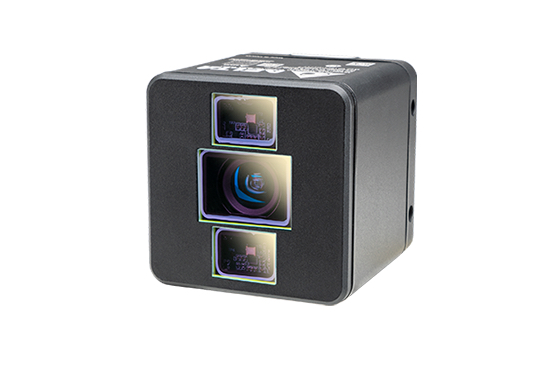
Delta, provider of power management and industrial automation solutions, has launched a high-speed DMV-T time of flight (ToF) 3D machine vision smart camera at this year’s Hannover Messe. Not only does the 3D camera offer a high capture speed of up to 60 frames per second, large scanning distance up to 6 meters, also it is the first software-defined 3D ToF camera in the market. With a powerful built-in processor and as well as sophisticated DIAVision software platform, allows the system integrator to develop their algorithm in the DMV-T, to create their own smart applications. It’s ideal for logistics warehouse automation industries.

“Due to industrial automation rapidly developing, we see more and more customers adopt machine vision for robotic guidance, object detection and inspection and even edge safety applications,” said Chia-Wei Yang, General Manager of Smart Sensor & Meter LOB, Industrial Automation Business Group, Delta Electronics. Transitioning to 3D, observing that most applications needed to be done with an extra industrial PC to process. “To minimize investment but maximize the flexibility of application, the DMV-T integrates a dedicated processor and introduces the DIAVision platform to bring the hardware into another intelligent level as a software-defined 3D ToF smart camera for easier integration into a wide range of processes.”

Hardware-software integration to fulfil SMART applications

The DMV-T employs an ARM Dual Cortex-A53 CPU as well as FPGA enabling the camera to accomplish the 3D vision process from image capture to output. It inspects large items with its built-in image-stitching algorithm without the need for an industrial PC. Besides, with the intelligence inside, another highlight of the DMV-T is the combination of its vision platform software, DIAVision. Offering an intuitive and convenient interface, users have an easy-to-use application-specific solution with a vision application repository open to third-party partners. Moreover, integrators and operators can create applications that run on the camera itself, reducing the components that need to be installed inside other equipment and saving space. Furthermore, the DMV-T with DIAVision can connect to the Delta Service DIACloud and support web browsers for anywhere, anytime data access.

FAST detection and deployment to optimize measurement

The Delta DMV-T ToF camera incorporates a Sony IMX image sensor that operates in conjunction with a powerful built-in processor to offer 640×480 pixel resolution and 60 frames per second capture speed with owned ISP compensation allowing for high accuracy. The camera uses in advanced robotics applications that require object position & status feedback such as pick-and-place, shelf position calibration as well as object dimension measurement. And its detection time is shorter than the leading products in the same conditions. The camera rapidly measures depth by calculating phase differences between the carrier frequency of the active light it emits and the reflected light coming back from the object. This makes the interoperability between multiple mobile robotics in the field. In addition, with the APP on both DIAVision and DIACloud that help user to deploy the APP to multiple DMV-T simultaneously.

The DMV-T with IP67 ingress protection that ensures the operability in harsh environment, moreover, with specific industrial certificated that avoid the environmental and radiation effect between multiple mobile robotics (e.g. AMR/AGV).

Ideal solution for the warehouse and logistics industries

With high specifications of sensor, processor, and processing capability, machine makers as well as system integrators for logistics and warehouse management can rely on the DMV-T for a variety of applications. For instance, the DMV-T can also be part of the li-ion battery warehousing system. By mounting at the front of the forklift, the DMV-T can help detect shelf positions and adjust fork angles in accordance with shelves that are crooked due to battery weights. It increases operational efficiency and the hardware availability of equipment for smooth pick-and-place movements. In addition, compared with LiDAR, the DMV-T captures a wider image range, which enhances the ability of the AGV to sense and avoid obstacles in the logistics fields.

Big Benefits into new Small Paper Systems

Sealed Air has launched its first paper wrapping systems to meet growing demand from low and medium volume E-Commerce retailers and fulfilment companies.

The new SEALED AIR® brand QuikWrap Nano and SEALED AIR® brand QuikWrap M systems both provide businesses with a small, ready-to-roll paper wrapping solution that’s easy to operate. The systems don’t require any electricity or maintenance and involve very little or no assembly.

Each system produces a double layer of FSC certified honeycomb paper and interleaf tissue paper to enhance product protection. The paper is 100% recyclable using kerbside services and is dispensed using unique ‘tear and hold’ technology for quicker and safer operation, without the need for scissors

Andrea Questa EMEA Fulfilment paper solution Manager at Sealed Air, explains: “The SEALED AIR® brand QuikWrap Nano and SEALED AIR® brand QuikWrap M are ideal for small and medium sized businesses that want an easy to use, space saving and efficient paper wrapping solution. The two new systems have a compact footprint, making them ideal for smaller operating spaces. These ready-to-roll dispensers enable packaging operations to be up and running in no time”

The SEALED AIR® brand QuikWrap Nano is the smallest dual paper wrapping system in the market and is suited to low volume operations. The system features a corrugated board dispensing box containing 61 metres of expanding die cut honeycomb paper and interleaf tissue paper. The box and interleaf can be custom printed to create branding opportunities. Once the system is empty, the entire dispenser can be recycled using kerbside services, where available.

The SEALED AIR® brand QuikWrap M has been designed as an easily refillable system for medium volume operations. A lightweight, robust metal frame is used to hold larger, 1,700 metre rolls of the expanding die cut honeycomb paper and interleaf tissue paper.

Andrea added: “Both systems quickly produce two layers of protective packaging. The expanding honeycomb paper provides cushioning, with the interleaf tissue protecting against surface abrasions. Together, this helps to improve the overall customer experience during unboxing, as products are better protected.”

Sealed Air has also launched a new Modular Pack Station, which enables companies to save space by more ergonomically organising both paper and inflatable packaging equipment.

Operators can modify the Modular Pack Station to suit their exact requirements by utilising a range of table, shelving, and attachment options to reduce touchpoints and improve overall packaging efficiencies. The Modular Pack Station is available in a single, double, or bespoke configuration, and can be expanded as businesses grow. A wide range of SEALED AIR® brand packaging systems for void fill, wrapping and performance cushioning are easily integrated into the Modular Pack Station: these include both paper-based and inflatable packaging, for example, the SEALED AIR® brand FasFil® paper and BUBBLEWRAP® brand systems.

Andrea concluded: “Fast-growing E-Commerce retailers can often find rapidly rising sales outpace their packaging functions, meaning the packing area quickly becomes inefficient and spills into other work spaces. The new Modular Pack Station provides a solution to this and one that can easily evolve as sales and volumes increase.”


Warehousing Logistics Brexit Skills Crisis

A British law firm has reported a huge rise in immigration enquiries from warehousing and logistics firms looking to employ foreign workers, as the UK’s post-Brexit skills crisis and shortage continues.

Employment lawyers at legal firm Aaron & Partners have seen a significant increase in immigration work from businesses in the sector for staff such as logistic managers, HGV mechanics, warehouse managers and HGV drivers. They added that it’s showing no signs of easing.

Adam Haines, an Immigration and Employment Law Partner, noted that while the rise in businesses applying for sponsor licences began in the wake of the UK leaving the European Union, it has become particularly prevalent over the past 12 months.

He said: “There’s a growing skills shortage in the UK and with historically low levels of unemployment, many companies are turning to other countries to address these issues. We have been working with companies, operating in the UK and entering the UK market, to assist and advise them on the processes and educate staff on the compliance obligations. We’ve seen a huge increase in demand from companies that need help to fill vacancies. The shortages are particularly acute in the warehousing and logistics sector, where we’re working hard to help companies bring in skilled drivers, operators and more.”

The rise in enquires comes as labour shortages continue to impact the sector, combining with the cost of living crisis engulfing the UK. Haines, said that he hoped that the pending trade agreements (particularly the imminent Australian trade agreement) due to come into force later this year should incorporate a mobility deal to simplify the process of hiring expertise and personnel from Australia.
He added that as well as warehousing, shortages are most prevalent in manufacturing and healthcare.

Freedom of movement between the UK and EU was ended in 2020, following Brexit. Now, regardless of their country of origin, foreign nationals looking for employment in the UK must gain a valid visa route, for which there are various requirements. For business to hire foreign nationals they must have a sponsor licence.

Businesses are now contacting Aaron & Partners for help processing these applications as quickly as possible and to ensure that they are aware of their compliance obligations. Haines added: “We know this is a massive concern for many businesses right now. Brexit may have been voted for over six years ago, but much of its impact is really being felt now due to the restraints it placed on immigration, which has contributed to the current skills shortage here. This is an ongoing issue that isn’t going away – and we think it will run throughout 2023 and beyond. Currently there is a major lack of understanding and awareness as to (i) what recruiting foreign nationals entails, (ii) businesses compliance obligations are and also (iii) whether workers based in other countries can work temporarily in the UK as a visitor.”

British Storage Supplier Launches Racking Rental Service

Rapid Racking Rental, a new service from Gloucestershire-based storage supplier Rapid Racking, is now providing flexible and low-cost storage solutions to businesses in need of temporary racking and shelving.

As part of an initiative to offer a dynamic service to the storage market, the UK-based supplier has launched Rapid Racking Rental in a bid to provide a sustainable alternative to one-off racking purchases intended for short-term use. With an average lifespan of 30 years, Rapid Racking’s steel units are a viable option for long-term investments, however the rental service aims to broaden the storage supplier’s market into the circular supply chain as a cheaper and adaptable alternative as part of a fixed-term contract.

The new rental service includes an on-site survey with a design specialist, a free project quote and plan, the assembly of large racking orders, routine rack inspections and optional material handling additions such as storage containers, pallet trucks, and step ladders.

Rapid Racking Rental has been led to fruition by the company’s Head of Product and Services, Tom Ellis. He comments: “The rental service is intended to support businesses that only require storage for a limited time, or those which need a low-cost entry point into the world of storage. As our racking’s frames and beams are made from steel, they are long-lasting by nature. However, we have identified that this is not necessarily a suitable purchase for every business, particularly SMEs. Our new rental service is a low-cost alternative to long-term investments, so this could benefit new businesses who haven’t established a stable cash flow and prove a viable option for pop-up retailers, seasonal outlets and businesses in between premises. We want to offer our durable racking products to a wider market, with the same intent to provide high quality storage solutions. Plus, the racking can be rented for as long as the customer requires with the option to extend the project timeline or purchase the racking at the end of the rental contract.”

Mr Ellis says that as well as broadening the storage supplier’s market options, he hopes that the new service will encourage businesses to opt for more sustainable storage options when seeking short-term racking and shelving by enabling customers to rent racking for a minimum of three months. He adds: “Let us take away the hassle of managing your storage solutions by offering it as a service instead – with no large upfront costs, or hidden fees. This new rental service includes the design, supply, delivery, installation, inspection and removal of your racking all for a monthly, single fixed cost.”

Rapid Racking is one of the UK’s leading suppliers and stockholders of commercial racking and shelving, providing a range storage solutions and accessories from our site in Kemble, Gloucestershire. It is a subsidiary of the Manutan Group, a leader in the international supply of industrial, commercial and office equipment to businesses. Working closely with Manutan’s 25 subsidiaries across 17 countries, Rapid Racking offers the best possible product selection for a range of commercial and domestic storage needs at competitive prices.

Anniversary for USA Logistics Operator

A logistics operator with expertise in worldwide transport, cargo-partner USA is delighted to be growing closer to its American-based customers, in a year where the wider business celebrates 40 years in the industry.

Founded in 1983 as an air freight specialist in Vienna, cargo-partner is now a leading global transport and logistics provider with 4,000 employees in 40 countries, and is celebrating its 40th anniversary this year. Today, the company offers air, sea, rail, road transport and warehousing services from over 160 offices globally, including their four branches in the USA.

Headed up by Ralf Schneider, the cargo-partner USA team consists of 100 logistics experts, based across four key cargo-partner offices in Chicago, Los Angeles, New York and Clarksville, offering a comprehensive portfolio of worldwide transport and info-logistics services for a wide range of industries.

The cargo-partner offices are positioned in and close by to key transport hubs, with strategic connections to airports, ports, rail and road networks, supporting both local and international businesses with all transport needs.

Ralf Schneider, President cargo-partner USA & Regional Director Americas, said: “We continue to expand cargo-partner’s capabilities, profile and facilities across the USA and are excited to be growing closer to our USA customers. 2023 is an exciting time for the cargo-partner business globally, as we celebrate the company’s 40th anniversary, but our journey here in the US has also been incredible. We’ve now been operational in this country for over 20 years, having founded the first cargo-partner office in New York in 2001. With an impressive portfolio of services, a global network and years of industry experience, our talented cargo-partner USA team can provide customers with tailored and personal solutions to and from any location in the world.”

As well as providing core product services across air, sea, rail and road transport, the USA operations also boasts customs clearance expertise and comprehensive storage and distribution facilities. The two cargo-partner warehouses in Chicago and Clarksville provide dedicated areas for pallet racking, general order picking/packing and short- to long-term storage, across a combined 30,000 sqft of space.

cargo-partner is a privately owned full-range info-logistics provider offering a comprehensive portfolio of air, sea, land transport and warehousing solutions. With 40 years of expertise in information technology and supply chain optimization, the company designs tailor-made services for a wide range of industries to create competitive benefits for its customers all around the world. Founded in 1983, cargo-partner generated a turnover of over 2.06 billion euro in 2022 and currently employs more than 4,000 people worldwide.

Robots Revolutionize Cold Chain Logistics

The global cold chain logistics and storage market continues to grow, now valued at $138.97 billion, and is projected to grow at a compound annual growth rate (CAGR) of 17.2% from 2023 to 2030. Therefore, the cold chain turns to automation to meet internal productivity needs and customer expectations and that’s where mobile robots play an essential role.

“Autonomous Mobile Robots will contribute significantly to efficient and productive use of increasingly vital cold storage. This kind of automated solution is not a question of luxury but one of need ” explains Vincent Jacquemart , CEO of iFollow.

‘Efficiency’ here has several connotations. There is the efficient use of the available space. Many cold stores are quite small – often ‘cold rooms’ within larger buildings. But demand for cold space, from private companies’ own facilities to ‘public’ stores operated by a 3PL for multiple customers, is increasing. In the food chain in particular, companies from processors to distributors and retailers are looking for larger facilities – the Cold Chain Federation (CCF) has identified 678 units of over 50,000 square feet, and there are many that are much larger still. But cold stores are expensive to build and equip, and although the CCF recently estimated that some 16.7 million square feet of new space is under construction or being fitted out, that may not meet increased demand, especially as so much of the existing stock (34%) is over 25 years old and some of this is converted, not always very effectively, from other uses.

Cold stores must also be efficient in operation, which is key at a time of gas and electricity bills rising remorselessly. Although a well-built, equipped and run cold store uses a lot less energy than is commonly supposed, there is still an imperative to improve storage density and operations to minimize the heat coming in through open doors. And contrary to popular opinion, cold chain warehousing is not usually about minimally manned, long-term, bulk storage. Many cold chains move goods in and out of stores rapidly and involve all the break-bulk, order-picking, stock rotation and other operations familiar to ambient warehousing. That has to be performed just as efficiently and productively but in much more arduous conditions.

This means that labour, too, has to be deployed efficiently. In November, the Cold Chain Federation noted “10 percent to 20 percent shortage rates” among its members. The pool of workers prepared to perform arduous, even hazardous, tasks in cold conditions is decreasing. In addition, there is an increasing realization of the need to limit the length of time that workers spend in the cold before taking a break in warmer areas, and of the long-term impacts of heavy manual tasks in cold conditions.

Given all this, the cold store would seem an obvious arena for the introduction of automation. But this is not without its problems. There are technical issues – operation at low, and especially sub-zero, temperatures, can embrittle and otherwise degrade materials including metals, plastics and rubber tires. Electric and electronic components can be affected by ice and condensation. Batteries, in particular, have degraded performance and shorter lives at low temperatures. Fixed mechanization, such as conveyors, takes up refrigerated space that isn’t being used to store the goods. There are safety and operational issues too – it isn’t easy to perform complex control operations or to ensure that people are adequately protected from machinery when workers are wearing heavy and cumbersome protective clothing and both their physical and mental agility may be compromised by the low temperatures alongside the hazards of condensation and ice.

Not all AMRs can work in cold storage. iFollow, however, has a range of robots for cold chain logistics that transport from 300 kg to 1500 kg payload down to -25°C and is specific to the cold store environment. This is due to its approach to safeguarding electronics and batteries. The temperature of key electronic components is regulated by an iFollow-developed servo system which eliminates condensation (and therefore, icing,) at temperatures as low as -25° – a particular issue when moving regularly between cold and temperate spaces. This also means that battery life is not degraded. Depending on the size of AMR, between 12 and 18 hours of autonomous operation are available from a 2-hour charge time. Fewer battery charges or changes obviously improve productivity, but also reduce the space needed for recharging.

Using AMRs rather than ride-on vehicles eliminates the known hazards of the latter – present in any warehouse operation but exacerbated in cold and slippery conditions. Specialized cold-store standard trucks are also not cheap.

Operator control is also suited to cold store conditions. It is not reasonable to expect workers to input complex instructions while wearing heavy gloves or to require them to take their gloves off for extended periods. The Mycelium WCS software from iFollow, which is compatible with all available WMS/ERP systems, can be used through any computer or tablet with most instructions available through just one or two clicks.

AMRs do not require the segregated space of conveyor-based systems and they can turn in their own footprint, unlike most AGVs which require a defined bend to corner. This maximizes storage space, or to put it another way, minimizes the volume of fresh air being refrigerated. Also unlike AGVs, AMRs do not require semi-permanent predefined pathways, thus allowing more flexible use of warehouse space. They also do not require especially smooth and even floors – an issue with some older or converted cold stores – indeed, the implementation doesn’t usually require any expensive infrastructure at all.

An ability for an AMR to carry two roll cages at once, to a maximum load of 1,500kg offers an advantage, particularly in the cold store environment because it reduces the number of times doors have to be opened and closed. That not only reduces energy loss and minimizes the potential for condensation, but reduces the hazard from the, typically, fast-acting cold store doors.

The AMRs are designed with safe, collaborative use in mind. Lidar navigation prevents the vehicle from colliding with permanent fixtures, with goods left blocking aisles, or of course with the attendant workforce (who, clad in thermal headgear, may not always be aware of the traffic around them). The typical maximum speed is 1.7m/s – a brisk walking pace – with linear and angular speeds and accelerations closely controlled.

In typical order-picking use, one operator might work with two AMRs within a defined pick zone, selecting items to roll cages or destinations. The operator can receive pick-list instructions by voice terminal, RF terminal or tablet, and of course, the AMRs are simultaneously receiving their complementary movement instructions. Picking this way can yield 50% better productivity than the conventional manual approach while optimizing the picker’s movements. AMRs can equally be used for the variety of shuttle movements required in the store, moving goods between locations. Through an intuitive fleet management interface, the scenario can be simply generated, and the robotic system works out the movements required.

AMRs, then, can improve the efficient use of cold store space both by increasing productivity and minimizing ‘wasted’ space. The latter, along with reduced door openings, helps with energy efficiency, as does the non-degrading battery performance. The efficiency of scarce and increasingly expensive labor is maximized, and perhaps most importantly, the safety and welfare of both goods and staff are addressed. There is a clear logic in letting AMRs carry the load in cold stores.

King’s Award for Cardboard Innovation

PALLITE® Group has been honoured with the first ever King’s Award for Enterprise for Innovation 2023. The company was one of only 148 organisations in the UK to be recognised with a prestigious King’s Award for Enterprise, on Friday 21st April.

Employing 70 people, Wellingborough, Northants-based PALLITE® was set up in 2008 and manufactures sustainable products for warehouse storage, logistics, protective packaging and void fill from honeycomb paper cardboard.

Previously known as The Queen’s Awards for Enterprise, the new name reflects Charles’ desire to continue to recognise outstanding UK businesses. The Award programme, now in its 57th year, is one of the most prestigious business awards in the country, with successful businesses able to use the emblem to promote their products and services as the best in their business sector for a five year period.

Easy to install

“To receive this award is an incredible honour and a real reflection of the hard work the entire team has invested. PALLITE® was setup on the premise of a simple paper pallet, a sustainable alternative to the more traditional pallets on the market. Innovation has always been a key driver for the business, developing new product solutions for existing applications using our honeycomb paper cardboard. Our current product range includes protective packaging, shipping crates, pallets and most recently, our award-winning PIX® warehouse storage solutions,” said David Rose, European Sales Director.

“We provide easy to install storage units for large ecommerce fulfilment centres allowing them the flexibility to adjust the size and quantity of storage compartments relative to fluctuations in stock. All our PIX® units are constructed using the same honeycomb paper cardboard. One unit can be built in a matter of minutes with anything from 3 up to 400 picking compartments. We’ve seen such incredible interest and uptake in PIX® both nationally and internationally, requiring us to open our doors in 2022 on an additional manufacturing facility in Milwaukee, to meet the USA and Canadian demand. We have orders from across Europe all the way to Australia,” he added.

High Performer in High-rack Warehouses

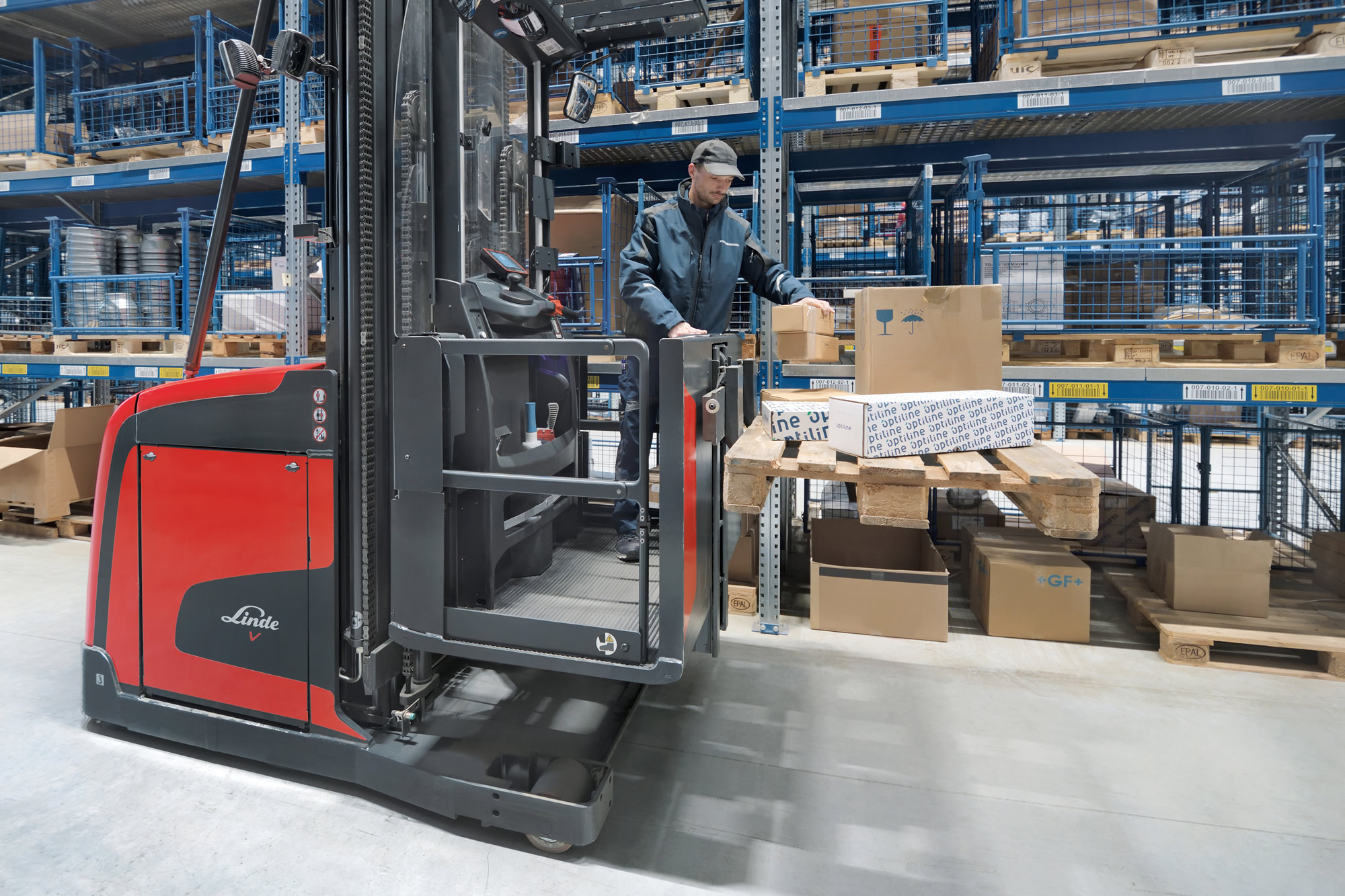
Soon to be launched on the market, the Linde V modular is a new, powerful player for high-rack warehouses. The truck offers a load capacity of 1.2 tons and is an ideal option for warehouse operators who aim for even more effective goods picking on various different racking levels. Some of its key features includes the ability to reach picking heights of up to 14.5 meters, a visibility-optimized triplex mast with or without free lift, a comfortable driver’s cab, and a high level of safety thanks to improved stability, a new type of Linde personal protection system, and special lighting solutions. Another advantage is its design as a modular system and the large number of variants and equipment options available. The chassis, mast and cab can be perfectly customized to application-specific requirements. The new trucks will be launched for sale at the LogiMAT trade show in Stuttgart at the end of April.

With increasing frequency, both large and small high-rack warehouses are reaching their capacity limits: “Online retailing demands high goods availability and fast deliveries,” says Anna Keilbach, Senior Product Manager for VNA Trucks and Vertical Order Pickers, explaining one of the reasons for the larger inventory. Another aspect is the desire for greater individualization and the associated growing number of product designs. However, as more storage space becomes needed, many operators prefer to increase the height of their racking systems instead of building new warehouses due to the high cost of floor space – especially in metropolitan areas. “As a consequence, this requires vertical order pickers with conducive working heights and performance capability,” the product manager states.

Performance makes the difference

The new Linde V modular is designed to meet precisely these requirements. For the first time, drivers will be able to reach picking heights of up to 14.5 meters from the platform – 2.5 meters more than before. In addition, the new truck offers a 22 percent increase in lifting speed and a 20 percent faster lowering speed – resulting in time savings when raising or lowering the cab, which has a positive impact on productivity. To meet the varying conditions in the warehouse, the triplex mast is available in two versions: The mast featuring a free lift is suitable for warehouses with diverse ceiling heights. Two lateral lifting cylinders instead of one centrally positioned lifting cylinder ensure optimized visibility. In the variant without a free lift, the mast extends faster because there are no deceleration phases during mast transitions. Added to this is the very good mast visibility provided by the design.

New features for enhanced safety

Along with the Linde V modular, Linde MH is going to launch its own personal protection system (PPS), which will be used in all VNA equipment from Linde MH in the future. The new Linde PPS meets all the requirements of DIN standard 15185-2, which prohibits the simultaneous presence of people and vehicles in narrow aisles and prescribes special protective measures in the event that this should happen accidentally nevertheless. Equipped with a laser scanner at the front between the load wheels and at the rear on the drive side, the Linde PPS detects people in a protective zone of up to nine meters. As soon as a person enters the area monitored by the scanner, an alarm sounds and the vehicle comes to a safe stop. Additional warning fields ensure that the order picker’s speed is reduced even before the protective zone is reached, so as to enable the smoothest possible braking process. In the transfer aisle, the Linde V modular can be operated alongside other vehicles due to its safety equipment. Here, the warning fields of the laser scanners provide assistance as well by throttling the travel speed when obstacles appear.

LED stripes provide even better visibility for the vehicles. Located at the front and rear of the lift mast, they ensure optimum distribution of light at close range. In the direction of travel, the stripes emit white light; at the rear, they shine red. Pedestrians and other forklift drivers can thus see from a distance in which direction the truck is moving.

User-friendliness is a top priority

It’s no secret that picking goods is one of the most physically demanding jobs in the warehouse environment. The Linde V modular effectively supports the picker in this regard by means of various features. First and foremost: the spacious driver’s cab, which allows plenty of freedom of movement. Added to this is the soft floor mat, which cushions vibrations and prevents fatigue. The ergonomic control panel can be mounted on the load side, the mast side or on both sides. Recently, this choice has also been extended to the positioning of the color display, which shows the driver all relevant information. This includes speed, lift height, residual capacity and steering angle, as well as other information from optional features such as Linde’s warehouse navigation system. Optionally available tilting barriers give the driver 50cms of additional reach when retrieving goods from the rack. The auxiliary lift function is another helpful feature: At the push of a button, the forks move down a defined distance so that the driver can deposit the packs of goods retrieved from the rack as easily as possible.

Ecommerce DC Deploys Array of Automation

John Lewis’ new e-commerce distribution centre in Fenny Lock, Milton Keynes, UK, features an array of automation technology. Robotics and Automation supplier Logistex was chosen earlier this year to implement its warehouse execution system to optimise the systems.

The multi-phase project will initially see Logistex deploy its Warehouse Execution System, Reflex, which will orchestrate the picking of orders across multiple zones of the Fenny Lock DC and provide full integration with conveyors, robots and automated bagging machines.

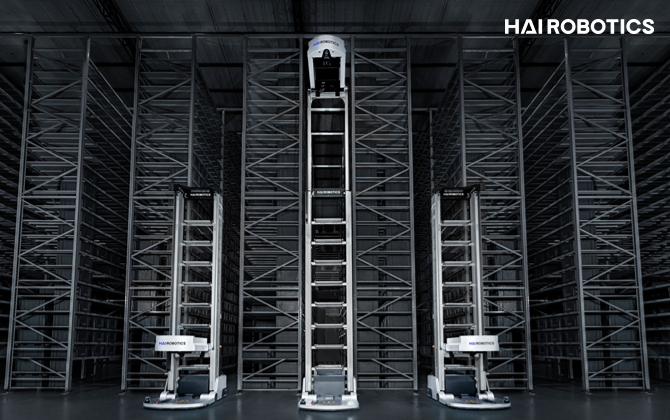
Future phases will include the deployment of an autonomous mobile robot (AMR) tote-to-person (TTP) picking solution based on Hai Robotics’ ACR robots and HaiPort workstations.

Tony Gruber, MD Logistex, said: “We are delighted to be working with John Lewis on this strategically important initiative. It combines all of our key capabilities in one project, solution design, the deployment of our Reflex WES platform in a multi-agent robotic-based automation environment & complete project life cycle support. We look forward to a successful project and an enduring relationship with John Lewis”.

John Munnelly, Head of Distribution, John Lewis Partnership (JLP), added: “This is an exciting partnership which will transform our Fenny Lock site, as we look for new and innovative ways on how to best serve our customers.”

Damien Skinner, Country Manager of UK & Ireland, Hai Robotics, said:

“We are thrilled JLP and Logistex have found the right solution with Hai Robotics’ HaiPick, which can reach up to 10m for picking and storing. We look forward to working with them on this project and expanding our partnership. One of the reasons why HaiPick was the right fit for the Logistex solution is because it is highly flexible and suitable to be deployed in existing sites. Next to that, the solution is rapidly scalable and is designed with plans for expansion in mind. HaiPick is fully CE and UKCA compliant and can be deployed relatively quickly. We will be working closely together with Logistex to achieve successful deployment for John Lewis through a joint testing methodology.”

Hai Robotics HaiPick systems can increase storage density by 80 to 400 percent while improving worker efficiency by 3 to 4 times. In addition, ACR robots can reach up to 10m high (32.8 ft). Compared with existing, especially traditional warehouse automation solutions, Hai Robotics‘ UKCA certified solutions can deliver extraordinary benefits for warehouses and logistical centres in the UK. The HaiPick systems provide more flexibility in terms of future expansion, exponentially increase operational efficiency, require less implementation time and are more cost-effective.


Samsara Launches Sustainable Fleet Management Solution

Samsara Inc. (NYSE: IOT), the pioneer of the Connected Operations™ Cloud, today introduced its Sustainable Fleet Management solution. This evolution of Samsara’s existing fuel efficiency and electric vehicle (EV) offerings is designed to empower customers with additional data-driven insights so they can reduce emissions, jumpstart electrification, and meet their sustainability goals.

Policymakers around the world are launching zero-emission vehicle programs and setting emissions reduction targets that directly impact commercial fleets across a number of industries. Additionally, fuel costs and growing social and investor demands for more sustainable operations are influencing leaders to better track and report on their progress toward these milestones and in some cases, accelerate fleet electrification. This complex transition will require long-term planning, foresight, and data-driven decisions. Not to mention, every organization will have its own unique challenges depending on its size and business objectives.

“Electric vehicles have the potential to significantly reduce environmental impact knowing that transportation is a leading cause of greenhouse gas emissions across the globe. With the right technology infrastructure, it is possible in various operations to do this without compromising your supply chain,” explained Tim Campbell, Managing Director and Commercial Vehicle Decarbonization Consultant at Campbells Consultancy. “Commercial fleet electrification has yet to reach an inflection point but with increased regulatory incentives and reporting requirements, preparedness for this operational shift remains critical.”

Samsara’s Sustainable Fleet Management solution is designed to support customers along every step of their journey toward more sustainable operations. New and enhanced features announced today include:
• Fuel & Energy Hub, acting as the one-stop shop for mixed fuel fleets – including Internal Combustion Engine (ICE), EV, and hybrid vehicles – to ensure their drivers and assets perform optimally to support sustainability goals. With this new dashboard, operations leaders can visualize an entire fleet’s performance while gathering actionable insights into fuel economy, cost, and consumption to direct change with confidence and precision. Fuel & Energy Hub is now available in open beta.
• Sustainability Report, allowing customers to visualize their fleet emissions and monitor output across sites and vehicles to pinpoint improvement areas. This report also provides insight into current and predicted fleet emissions over time, so customers can set more accurate targets and track progress against their sustainability goals. Sustainability Report is now available in open beta.
• Charge Control, combatting driver range anxiety by managing real-time EV charging at scale and easily identifying charging issues. Now, customers can create custom charging profiles by groups or by individual vehicles and receive notifications for irregularities. Charge Control will be available in open beta this summer.
• EV Suitability Report, providing customers with a tailored list of ICE vehicles within their fleet that are most suitable for EV transition. As an evolution of Samsara’s existing Fleet Electrification Report, this new report now includes assessment for all vehicle types and allows customers to configure electrification criteria for advanced recommendations. EV Suitability Report is now generally available.

Samsara customers can now leverage these features alongside the platform’s existing Fuel & Energy Report, Driver Efficiency Report, Idling Events Report, Fleet Benchmarks Report, and more.

“At M Group Services, we’re committed to achieving a 50% reduction in direct carbon emissions by 2030 and reaching net zero before 2050,” said Shaun Stephenson, Interim Managing Director at M Group Services Plant & Fleet Solutions. “Samsara helps us achieve those goals, giving us the data and tools we need to shift to more eco-friendly energy sources and empowering our drivers to be more aware of their impact on the environment.”

Today, Samsara also released its annual Environmental, Social, and Governance (ESG) report titled “Building a safer and more sustainable world.” This report details its progress to date and the principles that guide the company’s ESG commitments, including transparency and accountability, data-driven solutions, and empowering its people and communities.

“To provide an accurate assessment of their ESG momentum, organizations need a simple way to analyse data points across their entire operations. We’re hearing this more often from our customers as they look for technology partners to track and report progress toward these goals,” said Jeff Hausman, Chief Product Officer at Samsara. “With this new solution, we’re able to provide our customers with fuel economy, vehicle utilization, and emissions insights that will help them better understand their opportunity for improvement, and take action.”

Subscribe

Get notified about New Episodes of our Podcast, New Magazine Issues and stay updated with our Weekly Newsletter.