Sustainability: ‘Move away from repair logic’

Helmut Prieschenk, CEO of Witron Logistik + Informatik GmbH, explains how sustainability is changing in logistics, why this topic is facing a paradigm shift, and why ecology, economy, and social factors are not contradictory.

“This topic is also very present in North America, although in a different way,” says Prieschenk. “There are still big cars, but Americans are noticing the price increase for fuel and are seeing the impact of human behaviour. Consumers are demanding real action from retailers – not just green washing – and government programs are enticing with big money when it comes to energy-efficiency and sustainability. Even there, space for logistics property is becoming scarce. Brownfield projects are becoming increasingly important. The suppliers are well-established, the site is integrated into the logistics network, the transportation infrastructure and energy supply already exist, and the logistics employees are on site and no longer need to be recruited. True to the credo ‘use your assets’, we can offer very good support with our solutions here as well and have already proven in many projects throughout Europe that we can successfully integrate new technology into an existing building during ongoing operations. Regeneration is the buzzword in Canada and the United States right now.”

What does this mean for WITRON? Move away from repair logic, according to the German company. The problems should not be solved in the distribution centre, but where they arise. The idea: In addition to IE4 motors, energy recovery on the stacker cranes, or photovoltaic systems, it is about avoiding unnecessary movements in the logistics centre. “We have to re-define efficiency in the design phase with the customer. First, of course, it is about the distribution centre and the number of pallets and customer orders that are handled every day. Equally important are issues such as service levels for store and end customers as well as cost-efficiency. This is mandatory. In the future, however, we will have to think much further ahead. The highlight will then be to combine the performance data with the consumptions.” Therefore, WITRON employees analyze the performance and energy data during the design, realization, and operation phases. Prieschenk is convinced: “We have to question things like whether it would make sense to handle less inventory in the supply chain. Productivity is the buzzword.”

This aspect is obviously very important to retailers and store operators. ‘Stock-out’ is a crucial topic in this business sector. But in the future, we dare to run a logistics centre with less buffer and with more knowledge from data, to build even more efficient warehouses, to avoid food waste, to save energy – and we have to question business models that do not work economically, socially, and ecologically. Instead of ESG, it has to be “ESB” – Environmental, Social, and Business – only then will we succeed together with our customers.” The CEO is certain: “In the future, in addition to the performance data of machines and distribution centres, our press releases will of course contain information on CO2 emissions per colli or on the energy management of the system.”

Do we need the slip sheets?

This requires efforts by WITRON, the customer, and in the supply chain. “Our OnSite teams in the logistics centres know the system and the processes. If they notice, for example, that suppliers use unnecessary overpack, then we immediately seek discussions with them. In some cases, suppliers use slip sheets within the pallets, which aren’t really needed.” According to WITRON it is important to actively search for efficiency gains down to the last detail. It’s often time-consuming, but also very successful. “There is usually optimization potential just as much in the order behavior of the stores or the end consumers, in route scheduling, or in truck utilization.”

Energy demand

The logistics centre is like an electric car, the engineers at WITRON are convinced. The customer could permanently run the warehouse at maximum performance and challenge the machines, but does that really make sense in terms of the overall concept? “The electric motor in the car is extremely efficient – as are our systems. And we can quickly speed up processes when it becomes necessary. But just as you have to learn to drive an electric car, you have to learn how to run a logistics centre cost-efficiently and consumer-friendly, but still dimension and operate it ecologically. To do that, we need the customer, the data, and the supplier, as well as the stores and the consumers. “And,” adds Prieschenk, “we have to plan exactly, which route we are taking. For logistics, that means: where do the demands arise, how do we respond to them, what can we predict?”

At the same time, the requirements in the supply chains are rising. WITRON only produces in Germany – the new plant was built into the depth to save space, and the photovoltaic system on the roof supplies 2.5 megawatt. “We have to keep quality high and make sure our machines and systems are easy to clean. “That doesn’t sound like a unique selling point, but it is extremely important because our customers want to operate the system for 30 to 40 years. That’s when it really becomes sustainable.” Wouldn’t it be possible to produce more than 2.5 megawatt? Sure, we could, but we need to question ourselves if this is really needed? After all, the PV modules have to be produced. We need to finally look at the demand aspect of energy, not always just the offer.”

Gartner WMS Accolades by the Dozen

Technology innovator Synergy Logistics has been showcased in the elite Gartner® Magic Quadrant™ (MQ) for Warehouse Management Systems (WMS) – for the 12th successive year.

The WMS domain expert reinforces its leading status in the ‘niche’ quadrant (focused on producing tangible functionality improvements) but with strong movement towards ‘visionary’ thanks to its innovative SnapFulfil configurability, robotics orchestration platform SnapControl, and speed-to-value solutions.

Synergy is one of only a handful of independent software vendors worldwide to be selected for the prestigious 2023 WMS MQ. SnapFulfil is one of the pioneering cloud and SaaS-dedicated warehouse management systems, heralded for its industry-leading and cost-effective deployment speed. Apart from having a highly credible and proven WMS solution that quickly flexes to supply chain uncertainty, the business was also measured on foresight and capacity to execute.

Synergy’s Group CEO Rich Pirrotta said: “We view this recognition as testament to our continued ability and determination to deliver superior technology, agile solutions, and value to match our clients’ unique and challenging needs. This gives them rapid ROI and low total cost of ownership (TCO). Our strength and differentiation are in the highly competitive SMB market, but as Gartner acknowledges, SnapFulfil has the ability to scale down to high Level 1 warehousing and up to more complex Level 4 operations by improving data visibility and accuracy to extend decision support capabilities for enterprise organizations.”

Another Gartner highlight is Synergy’s new device and technology agnostic multiagent orchestration platform SnapControl, which connects all automation devices and robotic systems within the warehouse from one centralized platform. It’s already been successfully delivered in 2022 in an expanding customer DC, featuring AMRs and automated packaging systems in just weeks, without major software upheavals.

SnapControl uniquely promotes bi-directional MQTT (MQ Telemetry Transport) messaging and conversational decision-making between the WMS and remote warehouse devices. “In other words, SnapControl speaks to the devices and the devices talk back, enabling the most efficient warehouse decisions to be made automatically,” explained Pirrotta.

SnapFulfil differentiators that are listed include remote and self-implementation capabilities, via a solution called SnapBuddy, which offers interactive configuration instruction and real-time training to end users. Such tools also reduce both short-term costs and entry to market risks. SnapFulfil’s robust rules engine equally facilitates elevated levels of non-code adaptability to support customer-specific and vertical-industry-specific requirements.

Additionally specified by the Gartner WMS MQ is SnapFulfil’s pricing strategy, which allows companies to easily flex their number of users based on seasonal demand variations. A no-capital-expenditure, turnkey-managed service option combines software, cloud infrastructure, ongoing support, and implementation services as part of a single and competitive subscription fee.

Gartner is also focused on how companies make the most of partner agreements. This is an area that Synergy has been developing with the implementation of an official partner management program to extend their partner ecosystem which already includes robotic specialists 6 River Systems and HAI Robotics, with more ready to launch in the near term. With an already strong presence in the UK and North America, Synergy recently expanded into the UAE, and has its sights set on further global expansion.

Pirrotta concluded: “We continue to punch well above our weight, enhance WMS data analytics, and improve technical support for integrations, plus we have greatly expanded our partner ecosystem and global reach. With our focus on strong value, Gartner also recognizes our aim of being the provider of choice for the ever-expanding e-commerce sector, as well as the third-party logistics (3PL) companies that retail and D2C increasingly rely on.”

New, High-performance Platform Stacker

Mitsubishi Forklift Trucks has added to its award-winning warehouse series with an extremely robust, compact, and richly featured new platform stacker series. Available in 1.2- and 1.6-tonne capacities, AXiA EM has been developed to offer high performance operation in a wide series of high bay stacking, order picking, and transport supply/feed applications.

Indeed, everything about AXiA EM has been designed to maximise flexibility and optimise productivity through state-of-the-art ergonomics, precise handling, and exceptionally low cost of operation.
It comes in three configurations: foldable platform with optional foldable side protection bars, fixed side entry, or rear entry protected platforms. Each offers excellent, progressive damping to eliminate vibration and fixed platform models have an option for electrical adjustment to suit the weight or preferences of individual operators.

An extensive series of mast models are available to suit every application. Duplex masts offer lift heights from 2690mm to 4200mm, while Triplex masts deliver lift heights from 4350mm to 5400mm.
An optional Initial Lift allows AXiA EM to serve as a double pallet handler for greater efficiency, with exceptional ground clearance for ease of use on uneven floors.

AXiA EM can be supplied with lead acid or built-in Li-ion battery for fast opportunity charging, making it the ideal stacker to support intense 24/7 operations that demand maximum uptime, with lead acid available as an option.

Smooth, precise operation

AXiA EM features a sturdy 4-point chassis with a drive system designed to keep the truck consistently stable for smooth, stress-free handling that generates operator confidence and reduces the risk of incidents and damage.

The ErgoSteer tiller head is as robust as it is intuitive to operate. Protected against damp and dust it is ideal for all applications. Described as ‘the most ergonomic tiller head on the market’ it has been designed to eliminate strain and repetitive strain injuries reducing fatigue and helping avoid unnecessary – and costly – absences. To maximise flexibility, AXiA EM is available in a choice of modes. ‘Easy’ with its slower acceleration and softer braking is perfect for fragile goods or inexperienced operators. ‘ECO’ optimises power use to extend shift lengths while still retaining high performance. ‘PRO’ is for high performance in intensive operations.

Heavy-duty construction guarantees long-term productivity

The Controlled Cornering System helps prevent dangerously fast manoeuvres by sensing the angle of a turn and the velocity of the steering motion at the very start of a turn, and dynamically reduces speed at the very start and progressively through the turn for smoother, safer, and more consistent cornering. Designed with productivity in mind, AXiA EM delivers smooth, swift, and precise lifting and handling that gives the operator confidence to work confidently and productively. At the same time, the heavy-duty construction will maintain the company’s near-legendary reputation for non-stop reliability in the most demanding applications.

Modular, Scalable Shuttle Warehouse: Upstream

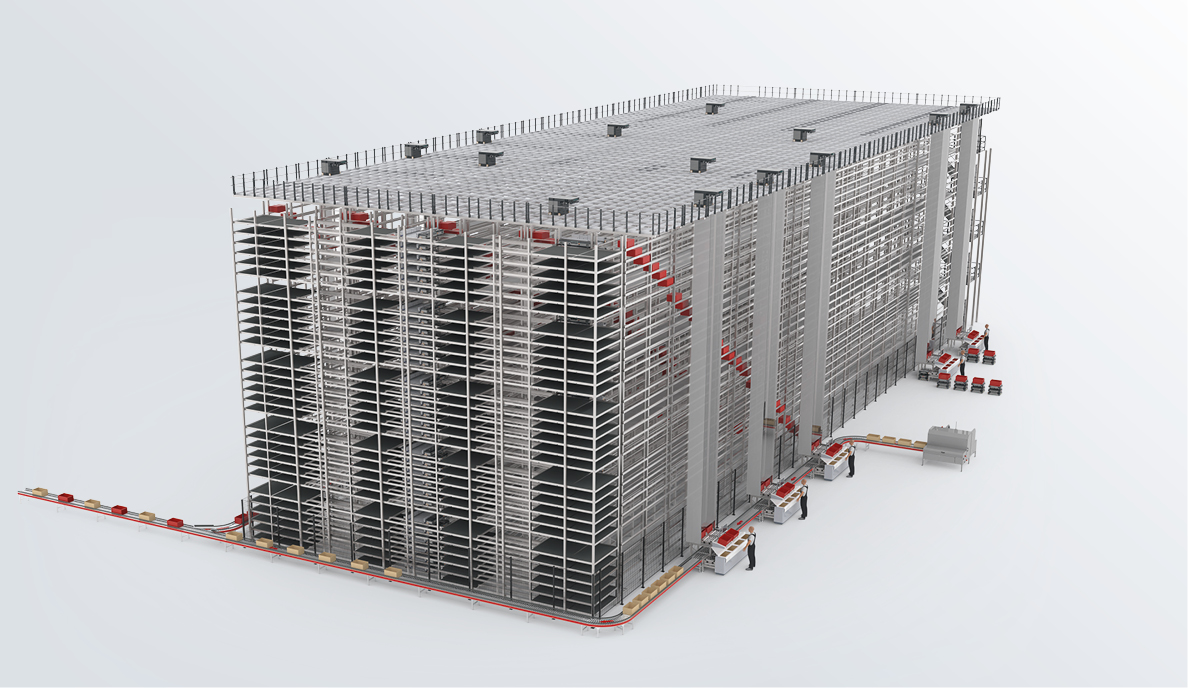
The GEBHARDT Intralogistics Group presents its latest product in storage systems: the ‘Upstream’ shuttle warehouse. The system convinces by virtue of its modularity, flexible scalability and high maintainability. The product novelty was to be seen for the first time at the LogiMAT in Stuttgart and inspired many interested people at the GEBHARDT booth.

Supply chains and sales markets have experienced strong dynamics in recent years and require flexible and scalable solutions. GEBHARDT has responded to these needs and introduced the new GEBHARDT Upstream warehouse concept. With its novel concept, GEBHARDT Upstream revolutionises shuttle warehouses and focuses on modularity at all levels. The system can take up dimensions of up to 100 m in length, 18 m in height, and any number of aisles, and can carry container weights of up to 50 kg. Thanks to its modular design, GEBHARDT Upstream can be expanded at any time. The commissioning time is only six months, depending on the project size and geometry.

The storage system consists of three actively moving components: the shuttle GEBHARDT StoreBiter® OLS X, the bot GEBHARDT StoreDiver and the workstation GEBHARDT SimplePick Flexible. Established GEBHARDT storage technology is used, but lifters and conventional conveyor technology are not.

The basis of the system is the GEBHARDT OLS X shuttle warehouse with horizontal roaming and a grid stored above it. The GEBHARDT StoreBiter® OLS X takes over the storage and retrieval within the warehouse and transfers the containers via transfer stations between the rack rows to the GEBHARDT StoreDiver robots. Through direct access to the containers, the transfer system enables sequence-accurate delivery to the workstations and thus creates highly efficient access zones without container waiting times. Thanks to the GEBHARDT SimplePick Flexible workstation, several orders can be processed simultaneously, and short container change times make dynamic order processing possible.

The greatest possible ease of maintenance for maintenance personnel and the elimination of complex pre-zone conveyor technology make GEBHARDT Upstream particularly user-friendly.

GEBHARDT Upstream uses proven fire protection concepts for automatic small parts storage, eliminating the need for cost-intensive CO2 systems. In addition, ultracaps with 48 V power supply ensure the highest possible system safety. GEBHARDT Upstream also builds on forward-looking technologies in terms of sustainability: By eliminating classic conveyor technology and vertical conveyors, only required containers are moved. The OLS X shuttles and robots are equipped with durable ultracap technology that enables 24/7 operation. This removes the need for lithium or lead batteries. With these measures, GEBHARDT Upstream consciously and future-oriented focuses on sustainable and efficient warehousing in intralogistics.

Already in its third generation, the name GEBHARDT is closely associated with innovative intralogistics solutions. The portfolio offers flexible, modular products, end-to-end concepts, and complete solutions for warehouse automation and software applications. GEBHARDT develops, manufactures, and installs customised solutions for in-plant logistics in the retail & e-commerce, food & beverage, automotive, healthcare, contract logistics, fashion & consumer goods and industrial sectors.

Dock Shelter Manufacturing for European Customers

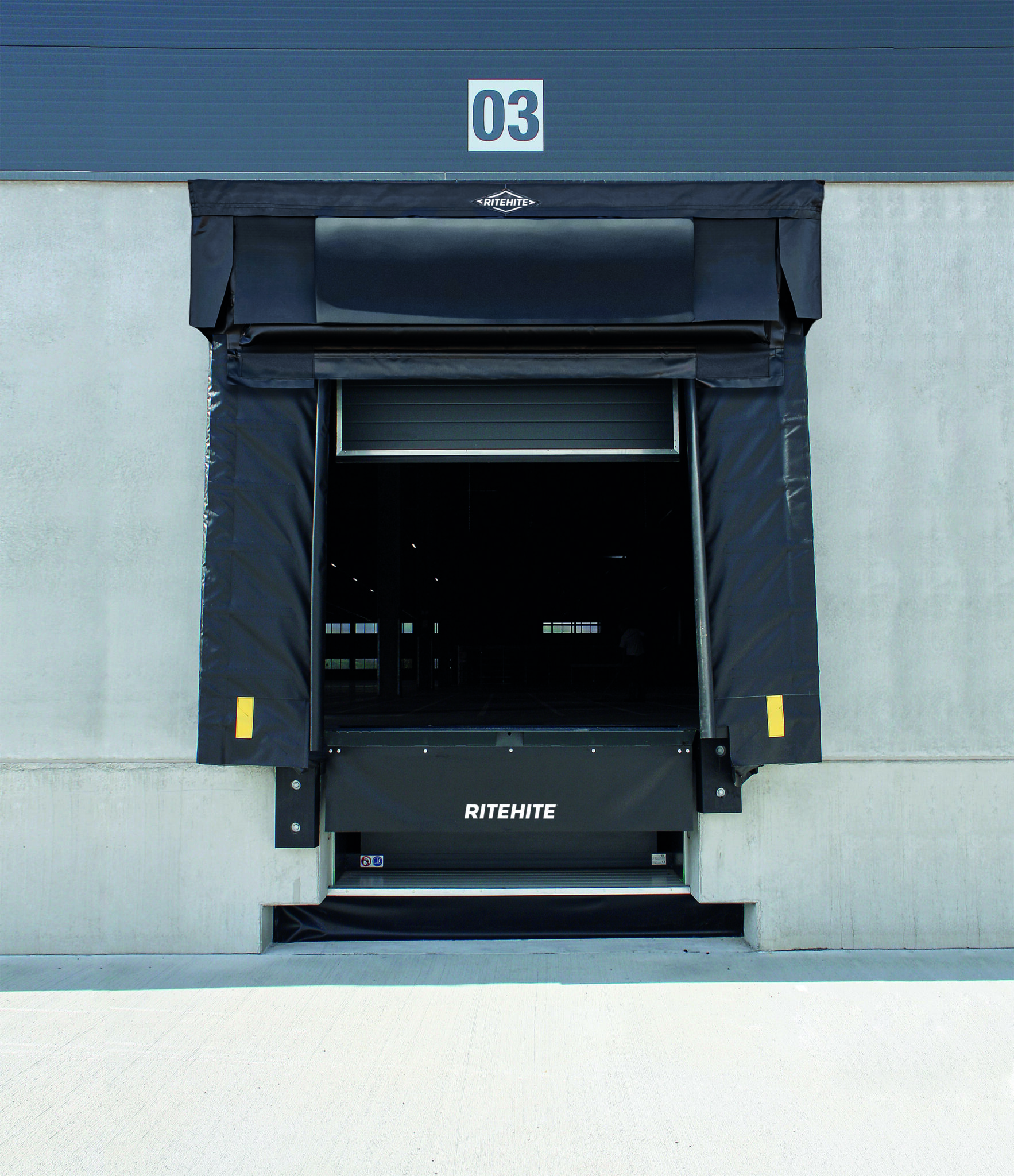
Rite-Hite, one of the leading manufacturers of loading bay and health and safety equipment, is to start manufacturing the Eclipse Dock Shelter at its German facility in Volkmarsen, increasing availability, reducing delivery times and supply chain challenges, and providing a more sustainable option for its European customers.

Providing a tight, consistent seal all the way up trailer sides, across the top, and at the corners, the Eclipse Dock Shelter blocks both light and seals gaps for a dark, environmentally-secure dock. More than this, the seal also prevents unwanted airflow from entering the warehouse environment, while keeping the conditioned air inside, thus saving significantly on the cost of wasted energy.

In addition to the energy saving benefits, the dock shelter also helps to protect people, materials and goods by preventing wind (and therefore dust and grit), rain, snow and pests from entering the interior of the building through the dock.

The top of the Eclipse is equipped with an exclusive weighted head curtain that applies 100 pounds of pressure across the full width of the trailer top, which keeps the curtain in constant contact with the trailer. The corners work in tandem with the weighted header to seal the gaps that ordinary shelters don’t address.

Thorsten Mauritz, the Marketing Manager for Rite-Hite Europe, says the move brings manufacturing closer to its European customers: “It signals both our ongoing investment in our manufacturing capability, and our focus on supporting our customers in chieving their sustainability targets,” he says.

“By near-shoring in this way, we can not only reduce any current and future supply chain challenges, but also accelerate production and delivery times for our European customers. It is one of a series of announcements regarding investment in our European manufacturing capability that we expect to make in the coming months.”

Based in the centre of Germany in Volkmarsen, the facility manufacturing the Eclipse is equipped with the latest technology including robotic welding systems that vastly accelerate the rate of production, aimed at meeting the growing demands within the European and international markets. The latest equipment from the facility is supported by a Lean manufacturing process which aims to provide optimum efficiency and productivity, whilst minimising energy wastage.

Air Shipment Visibility Enhanced by Solution

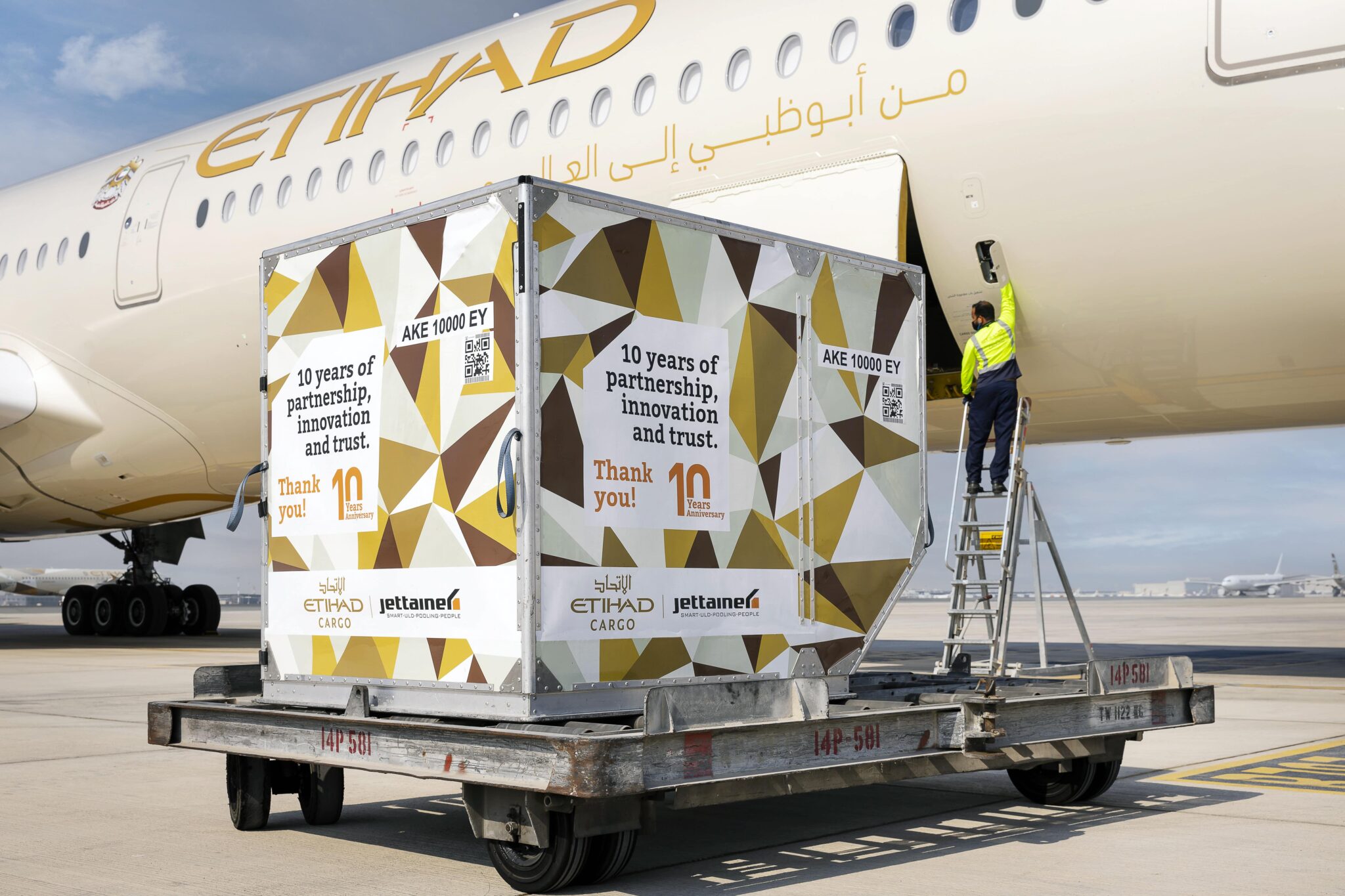
Descartes Systems Group has announced that Etihad Cargo, the cargo and logistics division of Etihad Airways, has further automated air shipment cargo processes using Descartes’ next generation Internet of Things (IoT) Bluetooth® Low Energy solution, integrated with Jettainer’s unit load device (ULD) management services. The combined solutions expand Etihad Cargo’s ability to improve ground processes at cargo and ULD handling and to gain data-driven insights into the transport and ambient conditions of air cargo in transit.

“At Etihad Cargo, we’re continuing to invest in technology and innovation to make air cargo handling more efficient, smarter and faster, and this includes the usage and management of our ULD fleet” said Thomas Schürmann, Head of Cargo Operations & Delivery at Etihad Cargo. “The addition of Descartes’ next generation IoT devices to our ULD fleet provides true operational value for us. Etihad Cargo expects to reduce the number of lost ULDs – those that lose their trail somewhere at the airport, at the ground handling agent or the forwarder – by being able to tell exactly where they were last seen. We furthermore expect to simplify ground processes, for example, by reducing the time and effort spent on stock take.”

“As part of our premium product, ULD Select, the combination of our sophisticated ULD management solution with Descartes’ next generation IoT devices can be a powerful boost to our service. The technology can provide our valued customers like Etihad Cargo insights into the conditions of their freight, give access to detailed location information, facilitate ULD processing on the ground, and thus further improve asset utilization,” said Ram Krishnaswamy, General Manager Middle East, Africa, & Indian Subcontinent at Jettainer. “Jettainer embraces innovation and digitalization, and this is exactly what we experience with Descartes as the leading technical provider in the field of Bluetooth® Low Energy tracking solutions. Potential benefits are not limited to ULD processing, we also see value in streamlining export, transit and import cargo processes and will explore this further with our customers and partners.

Descartes’ next generation IoT Bluetooth® Low Energy ULD tracking uses Bluetooth® tags affixed to containers or pallets, mobile applications and mesh networks to automate end-to-end tracking of assets. Bluetooth® tags affixed to ULDs prior to loading enable easy access to real-time location information, shipment-level condition data, such as temperature, light, humidity and movement, and chain of custody detail that indicates whose custody assets are in at any given time. Tags can also be added to any ground service equipment, like dollies, for full control over a carrier’s equipment.

“We’re pleased to help Etihad Cargo optimize the use of its ULD fleet with richer visibility at both the asset and shipment level,” said Scott Sangster, General Manager, Logistics Service Providers at Descartes. “ULDs are the backbone of the air cargo supply chain and, with coverage in over 1,300 reader locations and 200 airports worldwide, Descartes’ innovations in IoT-based tracking and advanced network capabilities are helping airlines access the status of their ULDs anytime, anywhere—through any internet-enabled device.”

Extra Power for Intensive Applications

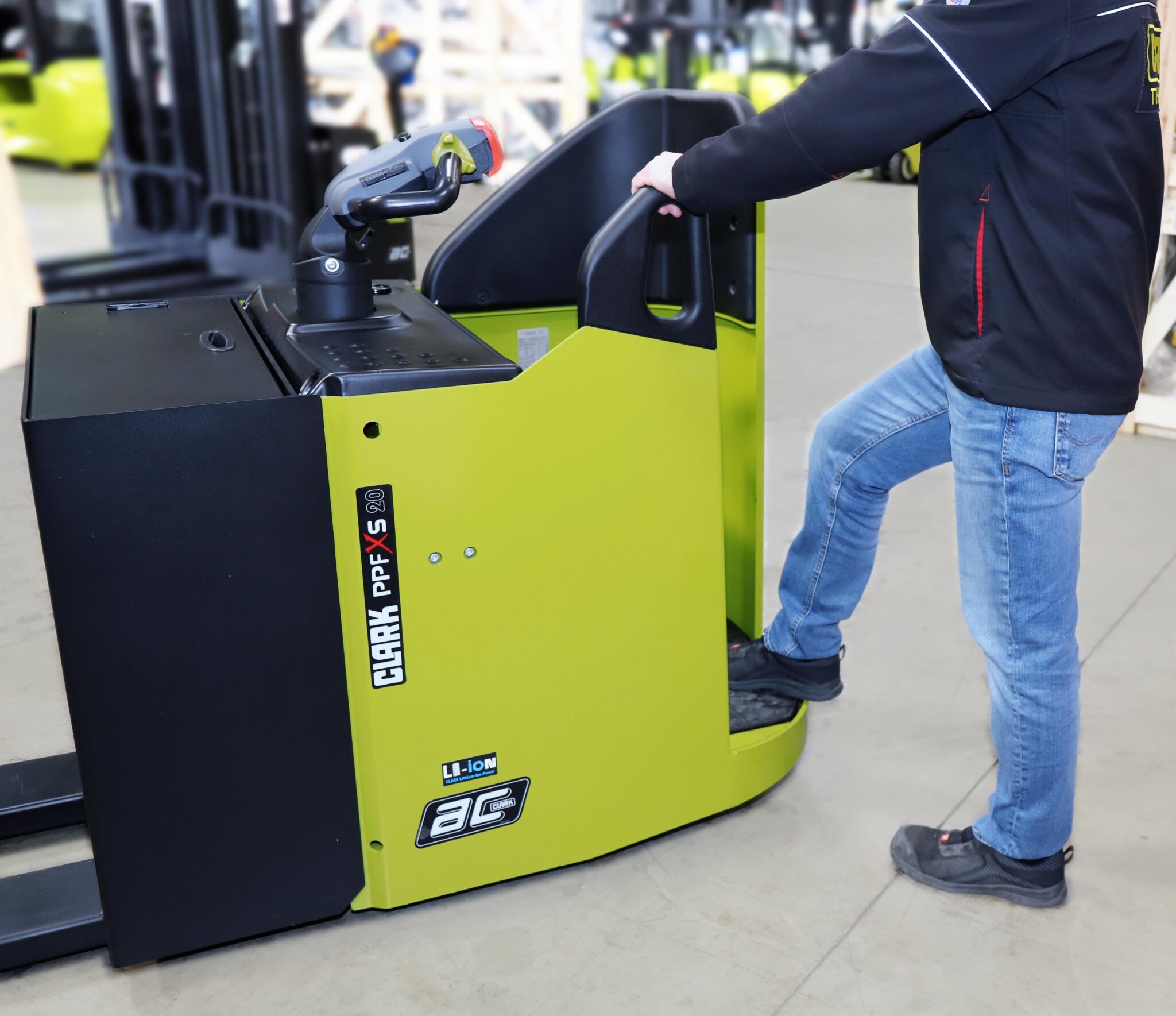
Clark has given the PPFXS20 electric low-lift truck with integrated operator platform a face-lift for intensive applications. In the process, the materials handling vehicles specialist has not only improved the ergonomics and user-friendliness of the truck, but also the performance: for particularly intensive operations, the low-lift trucks are now also available with lithium-ion technology.

The PPFXS20 with a load capacity of two tons has an integrated operator platform with padded side walls. This provides the operator with maximum comfort, especially on longer journeys. The low-lift truck is thus ideal for use in the transport of goods by road, the loading and unloading of trucks via ramps as well as for the order picking of a wide variety of goods in industry, trade, and distribution.

Powerful and safe

The PPFXS20 is equipped with a maintenance-free and enclosed 1.6 kW three-phase traction motor. This provides powerful acceleration and high speeds of up to 10 km/h. The powerful 2.2 kW lift motor guarantees maximum efficiency when lifting and lowering loads. Thanks to the high battery capacity of 375 Ah for the lead-acid battery, the pallet truck achieves optimum battery life. The pallet truck is available with side battery change as standard. The quick and easy battery replacement via a roller bed guarantees high availability of the truck. For particularly demanding applications or for multi-shift operation, the PPFXS20 is also optionally available with a 205 Ah lithium-ion battery. The Li-Ion battery can be recharged at any time and within a very short time – for example during breaks – without damaging the battery or shortening its service life. Recharging the battery is possible at any 230-volt socket. In just 10 minutes, 7 % of the battery capacity can be recharged. This reduces the downtime that would be necessary to change the battery. After only three hours, the battery is fully charged again. Li-Ion technology not only increases productivity, but also saves costs for maintenance, infrastructure, and replacement batteries. This makes a Li-Ion vehicle worthwhile for anyone who wants to operate a maintenance-free, long-lasting, and fast-charging battery with a high safety standard.

Improved ergonomics ensure intuitive operation

For handling work and horizontal transport over long distances, the generous side access with an opening range of 445 mm enables the operator to climb up and down from the vehicle quickly and safely. While driving, the operator can comfortably lean against the padded backrest of the generously designed operator’s platform. The operator’s platform is fully suspended and guarantees vibration-free operation so that the operator can concentrate fully on his work. The ergonomic tiller is height adjustable.

All controls can be operated intuitively and without fatigue by both left- and right-handed operators. The rounded fork tips allow safe and speedy threading into the pallet and thus contribute to a high turnover of goods. The all-electric power steering is smooth. This allows the vehicle to be manoeuvred precisely and safely even in the tightest of spaces, for example in narrow racking aisles. For greater safety when cornering, the automatic reduction of the driving speed is proportional to the steering angle. This reduces the centrifugal forces acting on the operator.

Hydrogen-Powered Electric Trucks Road-tested

Emitting only water vapour, hydrogen-powered fuel cell trucks will be an important part of Volvo Trucks’ zero exhaust emission product portfolio and the vehicles have recently passed a significant milestone – being test-driven on public roads.

Last year, Volvo Trucks showcased its fuel cell electric trucks for the first time. These zero exhaust emission trucks use hydrogen to produce their own electricity onboard – making them suitable for longer transport assignments.

Now, the trucks have been tested on public roads for the first time. But not just any public road. To make it extra-challenging, the tests have been conducted above the Arctic Circle in the north of Sweden – in an extremely cold climate.

“Trucks are operating seven days a week and in all types of weather. The harsh conditions on public roads in northern Sweden, with ice, wind and lots of snow, make an ideal testing environment,” says Helena Alsiö, VP Powertrain Product Management at Volvo Trucks. “I am pleased to say that the tests are going well, confirming those we carried out before, both digitally and on our confined test track close to Gothenburg.”

Fuel cell electric trucks powered by hydrogen will be especially suitable for longer distances and when using only batteries isn’t an option: for example, in rural areas with no charging infrastructure.

Commercially available in the second half of this decade

Volvo currently offers the industry’s broadest product line-up of battery electric trucks, with six models in series production, catering to a wide variety of transport routes in and between cities. The fuel cell electric trucks will be available in the second half of this decade. Tests with hauliers will start a few years before the commercial launch. To speed up the development, Volvo Group has joined forces with Daimler to develop and produce fuel cell systems that are tailor-made for heavy-duty vehicles. For hauliers who want to offer zero exhaust emission transport already, Volvo Trucks currently offers six different battery electric models as well as trucks that run on renewable fuels, such as biogas.

“We need to act now in order to stop global warming. Regardless of the transport assignments or where in the world our customers are operating, waiting is not an option. In a few years, our customers will be able to completely eliminate CO2 exhaust emissions from their trucks,” says Roger Alm, President of Volvo Trucks.

Fact-file: Volvo’s hydrogen-powered fuel cell trucks will use two fuel cells with a capacity to generate 300 kW of electric power. Green hydrogen is an endless resource that is produced by using renewable energy sources, such as wind, water and sun.

Podcast: Energy Usage and Carbon Neutral Supply Chains

The third episode of our Podcast series, ‘Logistics Business Conversations’, is now available free on Spotify, Apple Podcasts, Acast, Google Podcasts, Amazon Music, Simplecast, YouTube, and all other podcast distribution platforms – just search for Logistics Business Conversations.

Supply chains are responsible for a quarter of the world’s carbon emissions. Learn how to accelerate the move to a decarbonised future as Logistics Business Editor Peter MacLeod talks to Serene Esuruoso and Felix Prettejohn of the Carbon Trust, experts in hydrogen technology and transport. What new technologies can be used and what are the easy wins? Listen to find out. and understand the hurdles: cost, infrastructure and uncertainty.

Listen anytime on your preferred platform or by clicking here. Watch our recent Webinars or listen to any of our Podcasts here.

This episode, on Carbon Neutral Supply Chains, is sponsored by Jungheinrich UK. The company’s UK Head Office is located in Milton Keynes. This lies at the hub of additional strategically sited Customer Service Centres in Scotland (Motherwell), the North West (Warrington) and the South West (Bristol). Jungheinrich UK now offers the most comprehensive range of materials handling solutions and services available from a single source.

Jungheinrich celebrated its 50 year anniversary in the UK in 2013. This landmark helps highlight a wealth of experience at the forefront of materials handling solutions and, more than ever, instils the confidence that the company can find the perfect solution for any application.

The Jungheinrich Group of Hamburg celebrated its 60th Anniversary in 2013 (having formed in 1953). In contrast to the USA, the new efficiencies offered by materials handling techniques were only adopted by European industry after the Second World War. A prime mover behind this development was Dr-Ing. Friedrich Jungheinrich who established a small workshop in northern Germany in 1953 to explore the potential benefits offered by modern handling innovations.

From those humble beginnings employing just 30 staff and achieving a first year turnover of DM 2.5m (£1m), the Group, with its headquarters remaining in Hamburg, has developed to become the number 1 supplier of warehousing technology in Europe.

Jungheinrich group now has sales and service companies in 30 countries, dealer distribution networks all over the world including Australia, South Africa and China and has an international workforce of over 12,000 employees.

Rail Logistics Moves Ahead

Rail-Flow, the leading platform provider for rail freight and intermodal transport, has attracted new investors to expand its business activities. In the latest funding round, the company was able to raise a total of 3.6 million euros from existing and new investors.

Dominik Fürste, CEO and co-founder of Rail-Flow, commented on the funding round: “Rail-Flow has developed rapidly since its foundation in 2020. Successful customer deployment has proven that our solutions can make a significant contribution to advancing digitalization in the transport business and simplifying cooperation across road and rail transport modes. Thus, we contribute to shifting more goods from road to rail.”

The future viability of Rail-Flow is highly rated by the financiers. Investors include industry experts such as:
• Venture Capital Funds Rethink Ventures and Futury Capital
• Dr. Katrin Suder, investor, senior advisor and board member
• Dr. Alexander Hedderich, former CEO of DB Schenker Rail and chairman of the Rail-Flow advisory board
• Prof. Dr. Jürgen Ringbeck, serial investor and honorary professor at WHU (Otto Beisheim School of Management)

With the new funding round, the neutral and independent platform provider has reached another milestone and taken another step towards achieving its vision. Rail-Flow founders Dominik Fürste and Osman Akdemir want to shift freight transports from road to rail and digitalise rail freight transport. This is made possible by means of various modules within the Rail-Flow platform, which digitalises different processes from offer management to real-time tracking and tracing to invoicing. The platform thus simplifies the handling of rail freight and multimodal transports. The Purchase & Tender Management platform was the first solution on the market in 2020 and is a marketplace for conventional rail freight transport.

Rail-Flow sees a clear need in this area for the rail freight industry to catch up, which it meets through its Rail Offer and Rail Transport Management modules. The interaction between the marketplace solutions and the operational SaaS solutions is an innovative strength of the platform. By replacing telephone, fax, Excel and email, Rail-Flow reliably simplifies, accelerates, and documents processes.

Simpler processes and climate-friendly transport routes

Thanks to the ‘Intermodal Capacity Broker’, capacities on freight trains can be easily offered and booked. The solution is therefore also interesting for smaller transport companies and forwarders, and eases their entry into combined transport. Transporting goods by rail instead of road causes 9 times fewer emissions, and 6 times less energy is consumed. The aim of Rail-Flow is to push climate-friendly freight transport by connecting freight carriers, rail freight companies and shippers.

“Since its founding, Rail-Flow has convinced numerous market players such as logistics service providers and shippers as well as rail freight transport providers of the benefits of our platform and facilitated their business processes in rail freight transport,” Dominik Fürste notes. “Thanks to the trust of our investors, we can now further expand our services and pursue our European growth strategy.”

Rail-Flow will also be present at the transport logistic fair in Munich from May 9th to 12th, 2023, where the team presents its latest developments in hall B5 at booth 416.

Subscribe

Get notified about New Episodes of our Podcast, New Magazine Issues and stay updated with our Weekly Newsletter.