Real-time, First-Mile Visibility for Shipments

Leading supply chain visibility provider FourKites has announced an exclusive partnership with Gravity, maker of an award-winning supply chain management platform for many of the world’s leading shippers and freight forwarders. The partnership will extend the real-time visibility offered by the FourKites® platform to encompass the first mile — from the time an order is placed with a supplier — all the way through to product delivery via a seamless integration with Gravity’s SaaS solution.

The first mile is often the critical link in the supply chain, when raw materials and purchased finished products are shipped from global suppliers to manufacturing and distribution locations. “Last-mile delivery generates a lot of attention and a lot of headlines, and often overshadows the importance of the first mile,” FourKites founder and CEO Mathew Elenjickal says. “If you don’t have sufficient control over your upstream supply chain, everything that comes after the first mile will be less effective.”

Inefficiencies and disruptions in the first mile have significant ramifications on working capital, costs and revenue. Traditionally, companies have attempted to manage the first mile through manual processes, including spreadsheets and phone calls. This cumbersome, disjointed approach results in unpredictability and higher costs. Consequently, shippers lack the visibility to know if they will have sufficient inventory on hand to meet production and/or distribution schedules, and they are unable to collaborate efficiently with their suppliers to ensure material availability and delivery dates.

Gravity’s modern, easy-to-use SaaS solution addresses these issues, offering visibility into and control over the purchase order process — from order creation through changes and fulfillment. This solution will integrate with FourKites’ real-time shipment visibility and order intelligence solutions to ensure that customers have an exception-based, single source of truth for the entire order life cycle. The highly configurable solution, which can be up and running quickly, will provide seamless integration, simpler collaboration and streamlined operations with real-time updates — all in one centralised platform.

“Of any visibility provider on the market, we chose to partner with FourKites because of its deep, trusted relationships with many large Fortune 1000 customers,” said Graham Parker, CEO and founder of Gravity Supply Chain Solutions. “Our partnership will give these brands a seamless, end-to-end picture of their supply chain, so they can react quickly and confidently to any situation. We have been impressed by FourKites’ innovative solutions, its collaborative culture and its impressive track record of delivering value to customers, and we’re thrilled to work together to fortify our efforts and provide a unique offering to the market.”

Founded in 2015, Gravity is headquartered in Singapore, with offices in the United States, the United Kingdom and Hong Kong. The company has rapidly gained traction in the 3PL and freight forwarder space, and counts among its customers the French conglomerate Bolloré SE, Rӧhlig Logistics, Scan Global Logistics and Gebrüder Weiss.

“As FourKites continues to expand into order and inventory management with solutions such as our Order Intelligence Suite, this partnership with Gravity will extend our capabilities even further upstream,” Elenjickal says. “As a result, our customers can be confident that their suppliers will provide the necessary components and parts they expect by the promised date, eliminating the delays, confusion and costs that many people now incorrectly attribute to issues with the last mile.”

Sustainable Electric Solutions in the Spotlight

New automation, efficiency and sustainability needs have emerged in recent years, prompting industry players to embrace innovation in order to boost their speed, precision and productivity while reducing costs and inefficiencies. In this context, latest-generation technological solutions are the new protagonists of warehouse operations, aiming, on the one hand, to reduce the environmental impact of logistics processes and operating costs and, on the other, to speed up the handling of goods, optimising movements in order to manage large volumes in shorter times.
Logimat was the perfect opportunity for Bonfiglioli to share the expertise and know-how capitalised in over 60 years of business with customers and to present its solutions for forklifts, warehousing trucks and automated storage.

More specifically, the 600F Series featuring high-efficiency planetary gears and drives with integrated electric motors for premium performance was on display in the forklift area. The 610 x3E model in particular, designed for machines capable of moving up to 16 tons on the fork, positions the company as a specialist on the market for large electric machines.

As regards warehousing trucks, the EL09 steerable powertrain for pallet trucks, stackers and reach trucks displayed ensures minimal noise and high manoeuvrability in tight spaces, thanks to a multifunction unit for the complete control of acceleration, steering and braking. In terms of production, the company has invested in a highly automated assembly line that guarantees high quality and process repeatability, with a takt time of 4 minutes. These solutions can be fully customised to meet manufacturer requirements. In the same area, BlueRoll completes the range that makes Bonfiglioli a full line supplier for intralogistics vehicles. This new platform of performing wheel-mounted gearmotors for AGVs and AMRs has an ultra-compact and energy-efficient design for a long operating cycle. The modular drive system comes in three configurations – Basic, Advanced and Compact – with a customisable single gearbox load ranging from 360 to 120 kg and a maximum speed of 2m/s.

Finally, Bonfiglioli showcased two solutions complete with gearbox, motor and inverter. The first solution, perfect for post & parcel use and airport baggage handling systems, consists of: a compact right-angle gear unit (A) available in a wide torque range, an IE4 certified synchronous reluctance motor (BSR), which guarantees an ecological and high-performance solution thanks to the absence of magnets, and the DGM MPM decentralised inverter with sensorless vector control operation for optimal dynamics control.

The second solution, designed for roller conveyors, includes the EVOX CP, a helical in-line gearbox with a smooth surface that can be fitted to any machine thanks to its compatibility with market standards, the MXN asynchronous low voltage e-motor (IE3) developed to be modular, reliable, energy-efficient and internationally certified, and a DGM MPM sensorless inverter.

Bonfiglioli designs, manufactures and distributes a wide range of gearmotors, electric motors, planetary gearboxes and inverters, capable of satisfying the most complex needs in the industrial automation, mobile machinery and renewable energy sectors. The Group offers complete solutions that serve more industries and applications than any other gearbox manufacturer and is the market leader in many areas; the three Business Units, Discrete Manufacturing & Process Industries, Motion & Robotics and Mobility & Wind Industries, express all the experience and skills acquired over the years in their respective fields of expertise. Founded in 1956, Bonfiglioli operates in 80 countries with 26 commercial sites, 20 production sites, an extensive distribution network that includes over 550 partners, and can count on over 4,700 professionals worldwide. Excellence, innovation and sustainability are the drivers that guide Bonfiglioli’s growth as a company and as a team and represent the guarantee of the quality of the products and services offered to its customers.

Precision 3D Navigation and Collision Avoidance

SICK has unveiled a milestone advance in its three-dimensional LiDAR technology with the launch of the multiScan multi-layered LiDAR sensor. The SICK multiScan combines floor-to-ceiling 360° environment perception with high-resolution navigation for reliable real-time localisation, mapping and collision avoidance in automated mobile robots (AMRs) and industrial vehicles, such as forklifts.

Developed on the foundations of SICK’s industry-leading multi-echo LiDAR technology, the SICK multiScan is a compact, lightweight and rugged 3D sensor designed to maximise vehicle availability in both indoor and harsh outdoor environments. With their broad 360° x 65° field of view and 16 scan layers, the LiDAR sensors in the multiScan100 family use on-device pre-processing to output a dense 3D point cloud with 690,000 measuring points, complemented by a high-resolution 0° 2D scan plane for precision navigation.

Each multiScan arrives factory-calibrated and ready for use, whether it is specified as a standard pre-configured product or using the specially-developed Online Configurator. Machine builders and integrators can select the features they need for their application using the time-saving online platform with access to software apps and add-ons for easy customisation.

“Designed with the needs of integrators in mind, the multiScan’s ability to pre-process precision measurement data in real time with no external controller sets it apart,” explains Nathaniel Hofmann, SICK’s Market Product Manager for Measurement Systems.

“The multiScan provides a detailed 3D point cloud of its environment, so the AMR knows exactly where it is, and where any objects are, and it can update its 3D map as it travels around. At any moment in time, it is providing real-world measurements of the production floor or warehouse to make the AMR as efficient and available as possible.”

To enhance the 16-layer 360° horizontal coverage, the multiScan’s vertical aperture angle is configured to optimise the layers between -22.5° to +42.5°. This ensures reliable collision avoidance for objects at ground level, as well detecting cliff edges and ramp inclinations. Objects protruding into the field of view at height, e.g. on warehouse shelving, can also be reliably avoided. The multiScan136, the first sensor to be launched in the product family, has a 360° x 65° field of view and a 60m working range with further variants available from later in 2023.

On-the-Spot Troubleshooting

The multiScan can also be used with SICK’s Augmented Reality Assistant, SARA for troubleshooting and configuration of LiDAR sensors on Automated Mobile Robots. Diagnosis and correction of machine downtime, such as a field infringement, can be done ‘on the spot’ with a mobile phone, without the need to connect a PC.

The multiScan100 family achieves high performance and availability in harsh industrial environments, with a choice of rugged housings available up to IP69K. Using SICK’s unique multi-echo LiDAR technology, the multiScan generates three echoes per beam at 20Hz to achieve higher availability by filtering out the false signals caused by unwanted laser reflections from raindrops, snow, fog or dust particles.

Online Configurator

With SICK’s Online Configurator, engineers are prompted to make selections to customise the multiScan for its working environment, with the opportunity to select hardware options and software add-ons.

In addition to the standard sensor software for data streaming, customers can also select feature add-ons, e.g. for reflector recognition, data reduction and pre-processing, or a filter package where additional robustness is needed e.g. outdoor weather or harsh industrial conditions. Specialised pre-developed SICK sensor apps, such as Safe Break Assist and the SICK LiDAR-LOC are also available to use with the multiScan.

Equipped with 100Mbps Ethernet, eight multifunctional I/Os and matching system plugs, the SICK multiScan is easy to integrate and saves engineers valuable time during commissioning. When ordering, customers can select predefined parameters or choose previously stored configurations. SICK imports them onto the device before delivery.

Eurotunnel’s New Identity: LeShuttle Freight

Eurotunnel Le Shuttle Freight has announced a major rebranding initiative. Effective immediately, the service will now be known as LeShuttle Freight. This forms part of a full brand evolution across both the freight and car passenger services, reflecting parent-company Getlink’s ambition to deliver, the safest, fastest and most reliable and carbon environmental-friendly service to cross the Channel. The distinctive new identity embodies the simplicity, ease, and efficiency with which Le Shuttle operates, taking the driver and goods from A to B and paving the way for a period of exciting modernisation for LeShuttle Freight.

The new LeShuttle Freight logo visually represents what sets LeShuttle Freight apart; its speed, efficiency and driver care, as well as referencing the feat of infrastructure of the tunnel itself. Elongated letterforms connect to show the movement of goods through the two tunnels, and the connections in the logo communicate the ease and efficiency with which LeShuttle Freight usually operates.

LeShuttle originally used the colour palette of the French and British flags; however the new colours focus on what unites the two countries, rather than sets them apart. The primary palette is one of premium monochromes, providing a sophisticated background for secondary and tertiary palettes to shine. LeShuttle Freight transitions to an aqua palette, with the core colour Vivid Aqua, representing the stability, peace and tranquillity of the journey. Four accent colours, named The Beauty of Europe, have been inspired by scenery of European travels.

“LeShuttle Freight has been serving customers for almost 30 years, and during that time has built an indisputable reputation for its fast and reliable service. We are incredibly proud of our journey so far and this next step in our evolution perfectly reflects our heritage as much as the direction we are taking in our growth strategy, innovation in customer experience, and reducing our environmental footprint.” Comments Deborah Merrens, CCO of LeShuttle. “Our goal is to continue to provide a smooth, efficient travel experience that is tailored to the needs and preferences of today’s customers, and we believe our rebranding initiative will resonate with all new generations of transport professionals”.

Since it began operations in 1994, more than 700million tonnes of goods have been transported via the tunnel aboard one of the 15 Truck Shuttles which are 800m long, carry up to 32 trucks and travel at a speed of 140km/h for a 35-minute journey. Last year, LeShuttle Freight announced a milestone as its 33 millionth truck crossed the Channel aboard its Shuttle. As a vital link in many supply chains, LeShuttle Freight carries 25% of the goods entering the UK thanks to the speed, ease and flexibility of the service with up to 6 departures per hour.

To date it is the only cross-channel operator to publish an annual carbon footprint report and offers by far the most environmentally friendly cross-Channel service. With a truck traveling on a Shuttle emitting 12 times less greenhouse gases than travelling by ferry, LeShuttle Freight is eager to continue to help customers further reduce environmental impact per load.

Hyster Provides Electric Empty Container Handler

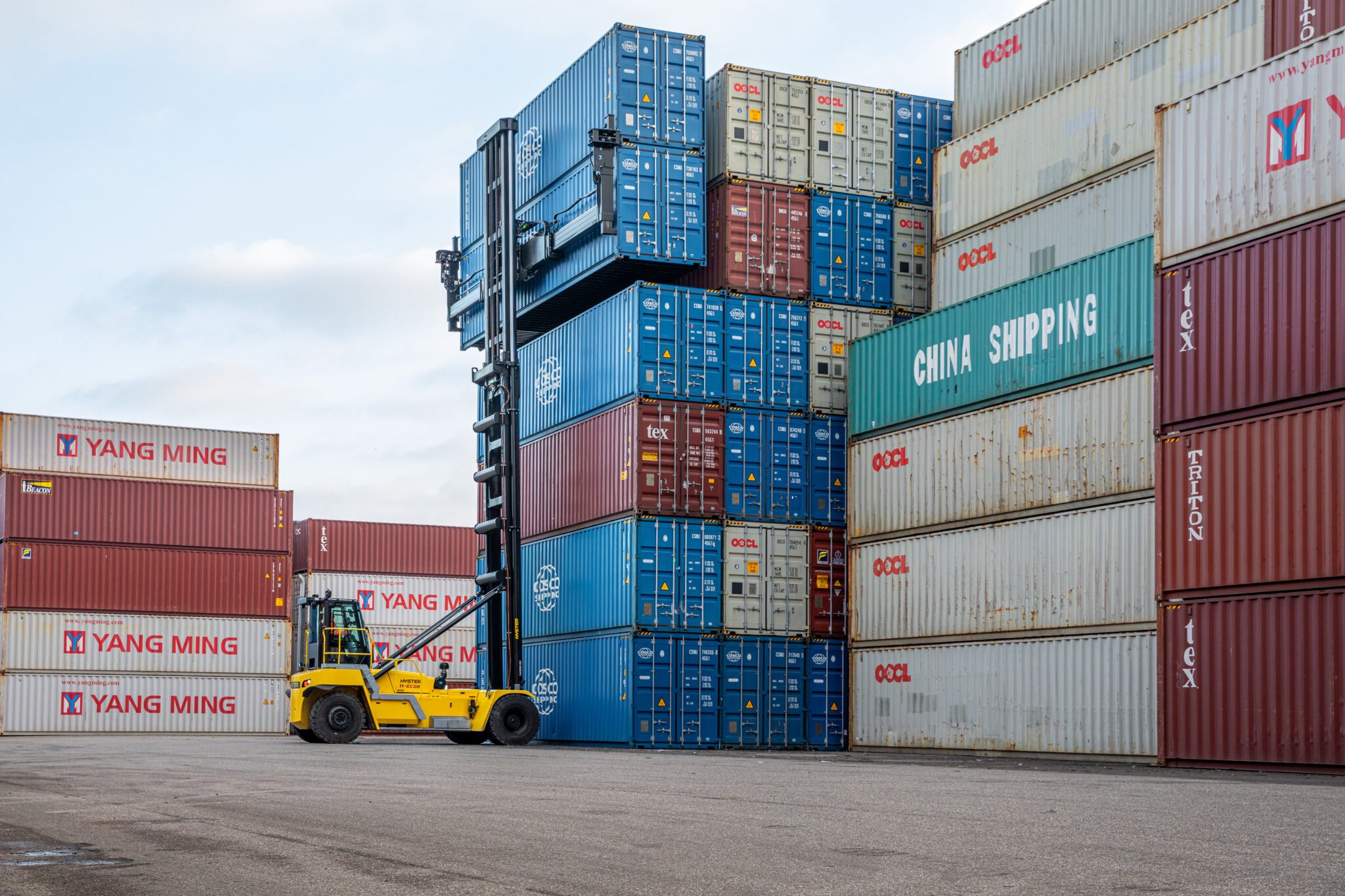
Hyster announces it will provide CARU Containers B.V. with a 100% battery-powered empty container handler for the depot in Rotterdam. The electric empty container handler will be powered by 650-volt lithium-ion batteries, with electricity sourced from solar panels on site at the CARU depot.

With more than 95% of CARU Container’s Scope 1 CO2 emissions coming from its diesel forklifts and empty container handler in 2021, the introduction of the electric Hyster Empty container handler can help the company to significantly reduce its greenhouse gas emissions, while also helping to reduce its operational expenditure in terms of diesel costs.

“CARU Containers has invested heavily in its sustainability program,” says Thirza Belder, Sustainability Officer, CARU Containers “As a global market leader in container trade, we are keen to integrate sustainability into our entire value chain as we are striving to be net zero before 2030. Therefore, we started discussions with Hyster in 2021 to provide electric lift trucks and equipment for our depot, which later led to the electric empty container handler.”

CARU already possesses a 240 kilowatt-hour capacity battery that can store enough energy to charge the empty container handler for most of the year, supplemented with grid power when solar energy is less efficient during shorter winter days. This solution is expected to supply sufficient charge to allow the truck to complete five to six required hours of work during a shift before being recharged overnight. Throughout the site, CARU has installed measuring devices to calculate what percentage of the energy used comes from solar.

“This is a great application for a fully electric vehicle on a site that produces its own electricity,” says Jan Willem van den Brand, Director, Global Business Development Big Trucks, Hyster. “The fully electric empty container handler we are supplying to CARU Containers follows years of research and development into sustainable technologies for the port and container handling industry.”

This battery electric empty container handler is the latest in a series of developments where Hyster is at the forefront of electrifying higher-capacity port equipment that has traditionally relied on internal combustion engine (ICE) power. Hyster is providing an empty container handler powered by hydrogen fuel cells, another advanced electric power technology, at a terminal in Hamburg, Germany. The company is also currently testing the first-ever, real-world pilot of a hydrogen fuel cell-powered container handler at the Port of Los Angeles, and has previously announced a pilot of a fuel-cell powered ReachStacker at the Port of Valencia and a partnership with Capacity Trucks to develop electric and hydrogen powered terminal tractors. Hyster draws on extensive experience in electric truck design with the company’s line of smaller, lighter-capacity powered industrial trucks, for which Hyster offers extensive battery electric and hydrogen fuel cell power options.

“Our mission is to provide the innovative technologies our customers need to help meet their goals for emissions reduction and performance,” says van den Brand. “For some operations, lithium-ion power might be the answer, but for others, hydrogen is the right choice. The answer depends on so many factors like duty cycle, utility grid capacity and fuel availability. Our customers deserve choices that allow them to build the right solution based on their needs – not shoehorning a single technology into their operation.”

This electric empty container handler at the CARU depot is expected to operate for approximately 2,000 hours per year. Heffiq, a dealer local to CARU Containers, will act as the service partner, providing 24/7 service for maximum uptime of the truck, while Hyster will be actively involved in the integration of the truck. The empty container handler will be an electric equivalent to the Hyster H10XD-ECD8 double-container handler, which can create stacks of up to eight containers high, while handling two at a time. This design approach offers a level of familiarity for operators who have experience with other Hyster big trucks, as well as helping to control the cost of design, manufacturing, service and maintenance.

“There is a lot of interest in electric big trucks,” says Martijn Veerkamp, Commercial Director at Heffiq B.V. “But customers must consider questions of application, power infrastructure, return on investment and more. We had very constructive meetings with CARU and were able to come together to find a solution that works for them and their focus on sustainability. Heffiq is extremely proud to supply the first electric empty container handler in Rotterdam.”

Linde Producing Hydrogen for in-house Material Flow

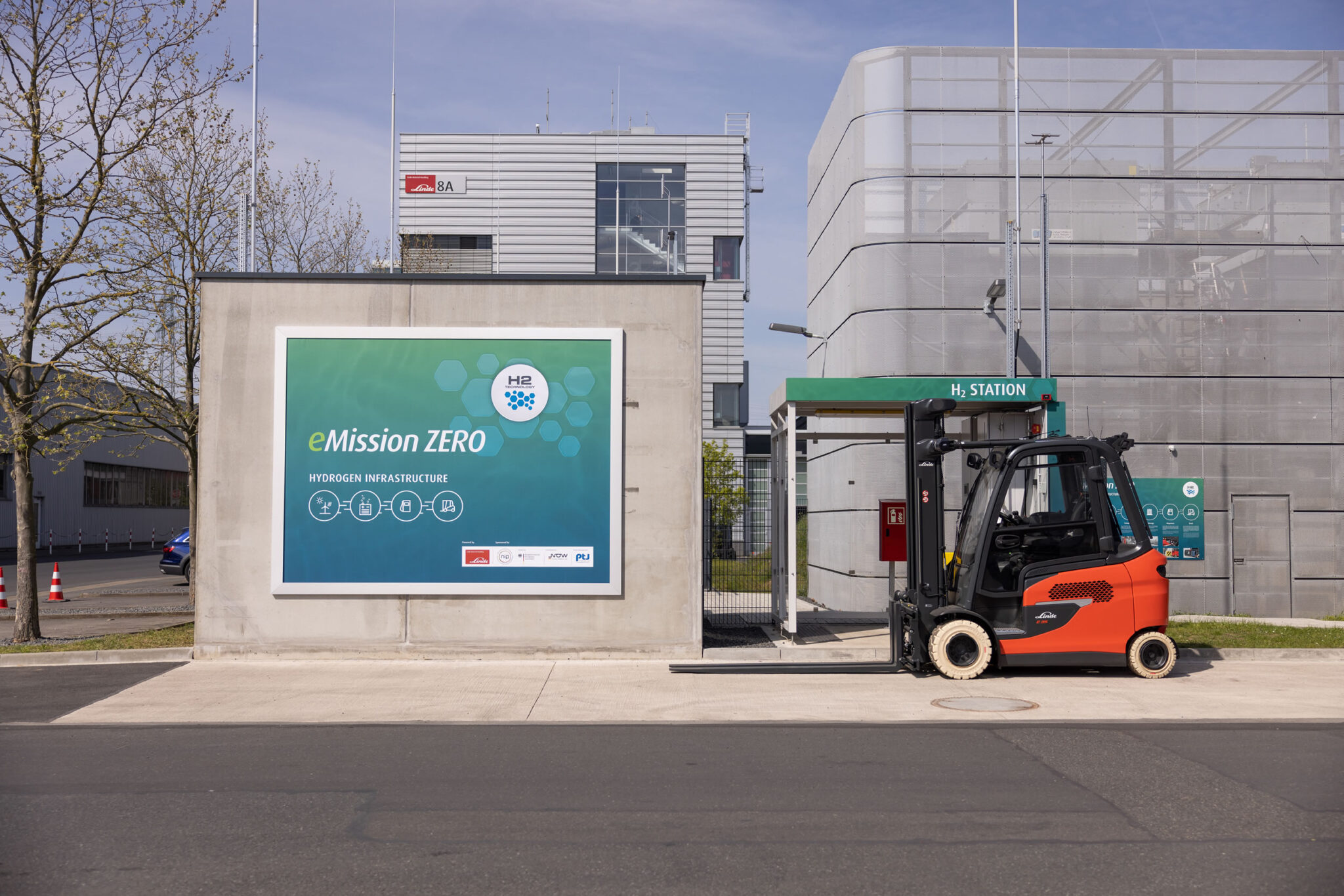
It is a pilot project that is unparalleled in this industry in Germany and even throughout Europe: Using its own infrastructure, Linde Material Handling (MH) is now producing green hydrogen to power 21 fuel cell forklifts of its in-house fleet. On Thursday, May 11, the new hydrogen production facility and vehicles were officially put into operation at the Aschaffenburg site. The investment is being funded by the German Federal Ministry of Digital Affairs and Transport (BMDV), coordinated by NOW GmbH and implemented by Project Management Jülich (PtJ). The goal is to gain experience and build up expertise in order to be able to provide customers with comprehensive advice and support on the use of hydrogen in material flow processes.

“The topic of energy is emerging as one of the major challenges of this decade and beyond,” Stefan Prokosch, Senior Vice President Brand Management Linde Material Handling, said at the inauguration ceremony. “In our search for potential solutions, we identified hydrogen as an option in the energy mix of the future.” He pointed out that this applied especially to applications in intralogistics, because, in addition to potential climate neutrality, the rapid refueling of industrial trucks with hydrogen during intensive multi-shift operations posed a major advantage. “A three-minute refueling time corresponds to a comparable charging power of about 480 kW,” he explained. In addition, the energy carrier could act as an energy store with the increased use of renewable energy sources in the future, for example to temporarily store electricity generated by means of photovoltaics or wind power. “We want to have the entire range of energy supply options in our portfolio so as to be able to offer our customers the best possible solution for their specific needs. With this strategy, we will also be able to remain flexible and open to different developments. After all, no one knows exactly where this journey will actually end up,” explained the top brand manager.

Demonstrating courage, breaking new ground

Around 2.8 million euros have been invested in the planning and construction of the hydrogen infrastructure. The hydrogen production facility was built within a period of eleven months on a 280-square-meter area conveniently positioned within the manufacturing and assembly plant. Around 50 subcontractors were involved in building the hydrogen infrastructure under the direction of general contractor Covalion, a Framatome brand, and Linde Material Handling’s construction department.

“With the commissioning of the facility and forklifts, we ourselves are becoming hydrogen producers and users and will thus be able to further expand our technological expertise. This will eventually also benefit our customers because the experience we gain in planning, building and operating the plant and using the fuel cell forklifts will be passed on to them as part of future material flow projects,” stated Prokosch. At the same time, the decentralized on-site hydrogen infrastructure will serve as a showcase for other interested groups. “We will be demonstrating how the use of renewable energy sources can work in practice,” the brand manager added.

Kurt-Christoph von Knobelsdorff, CEO and spokesman of NOW GmbH: “Lighthouse projects like this one undertaken by Linde Material Handling are of great importance for the further ramp-up of hydrogen and fuel cell technology. They demonstrate what is already possible in the area of intralogistics and they make it clear that the transformation towards climate neutrality has gained momentum in the non-road sector as well. Companies that are leading the way in this regard and sharing their experience in networks such as the Clean Intralogistics Net are already benefiting today, ensuring their success far beyond tomorrow.”

Michael Kraus, project manager at Framatome (Covalion): “The project was a challenge, as well as an opportunity to demonstrate our skills and expertise. Planning the project and building the facility took a total of about three years – and we were able to accompany Linde Material Handling from our very first meeting to the approval process and the first fuelling of the industrial trucks. We worked closely with the project management team to meet the specific individual requirements of the project and find the best possible solution.”

State-of-the-art technology in inconspicuous containers

The components of the hydrogen infrastructure comprise several modules. The centrepiece is a PEM (polymer electrolyte membrane) electrolyzer, which is set to produce 50 kg of hydrogen per day. Here, purified and deionized drinking water is separated into oxygen and hydrogen with the help of green electricity. In another container, the hydrogen is gradually compressed to 450 bar and then fed into high-pressure storage tanks via piping and valves. A software-controlled valve system regulates the supply line to the dispenser, the gas pump. Here, employees can connect their vehicles in just a few simple steps. The refuelling process is completed within just a short time. The high-pressure storage tank is designed to store up to 120 kg of hydrogen at 450 bar so that even peak demand caused by increased refuelling processes at shift changes can be covered.

A total of 21 electric counterbalanced trucks with fuel cell hybrid systems, which comprise twelve Linde E50s with a load capacity of five tons and nine Linde E35s with 3.5 tons load capacity, replaced the previously used IC models. As part of the plant fleet, they are used for loading and unloading trucks and supplying the assembly lines with large and heavy components such as counterweights, pre-assembled frames or driver cabs, among other things. “The vehicles do not produce any emissions during operation,” Prokosch emphasizes. Hydrogen and oxygen in the ambient air react in the industrial trucks’ fuel cell system. The electrical energy generated charges a lithium-ion battery that powers the forklift; water and heat result as the only ‘by-products’.

The generation and use of hydrogen takes place directly where intralogistics operations are carried out. In addition to Linde forklifts, other technical solutions offered by the company are used as well. For example, the explosion-proof access control system of the Linde:connect fleet management solution ensures that only authorized and trained persons can use the hydrogen facility. Furthermore, the explosion-proof “Safety Guard” assistance solution at the dispenser and in the vehicles automatically reduces the driving speed in the vicinity of the filling station. Last, but not least, the ‘Linde Energy Manager’ solution enables the intelligent planning and control of energy demands throughout the site, thus avoiding power load peaks and allowing for cost optimization.

Hydrogen technology made by Linde MH

Linde MH is considered one of the pioneers in the use of hydrogen in intralogistics, having developed the first fully operational prototype forklift with fuel cell drive as early as 2000. Since 2010, fuel cell forklifts have been integrated into the company’s series production, and as of today, 80 percent of the series, including counterbalanced forklifts, tow tractors and pallet stackers, can be ordered with this energy option as a ‘customized solution’ with hydrogen drive. In numerous studies and projects, Linde MH and its partners from industry and science have demonstrated the conditions under which fuel cell forklifts are marketable and economical today. This is the case especially if a hydrogen infrastructure is already available on site or if highly pure hydrogen is produced as a waste product in the operational process. Fuel cell forklifts are also suitable for multi-shift operation entailing intensive use and a high number of annual operating hours indoors, or where there is limited space for charging or battery changing facilities, which are ultimately intended to be eliminated.

Along with the construction of Linde MH’s hydrogen infrastructure in Aschaffenburg, parent company KION GROUP AG is pressing ahead with the development and production of its own fuel cell systems. At the LogiMAT trade fair, Linde MH presented its first own 24-volt system for warehouse equipment, which was developed at the Aschaffenburg site. An approved funding decision has already been received for the development of a 48-volt fuel cell system, and the team is working on rapid implementation. “By bringing the development of fuel cell systems and lithium-ion batteries in-house, we will also have the opportunity in the future to design our own fully integrated fuel cell hybrid systems that are precisely tailored to the requirements of material handling equipment,” outlined Prokosch.

Improve Data Quality in Air and Sea Supply Chains

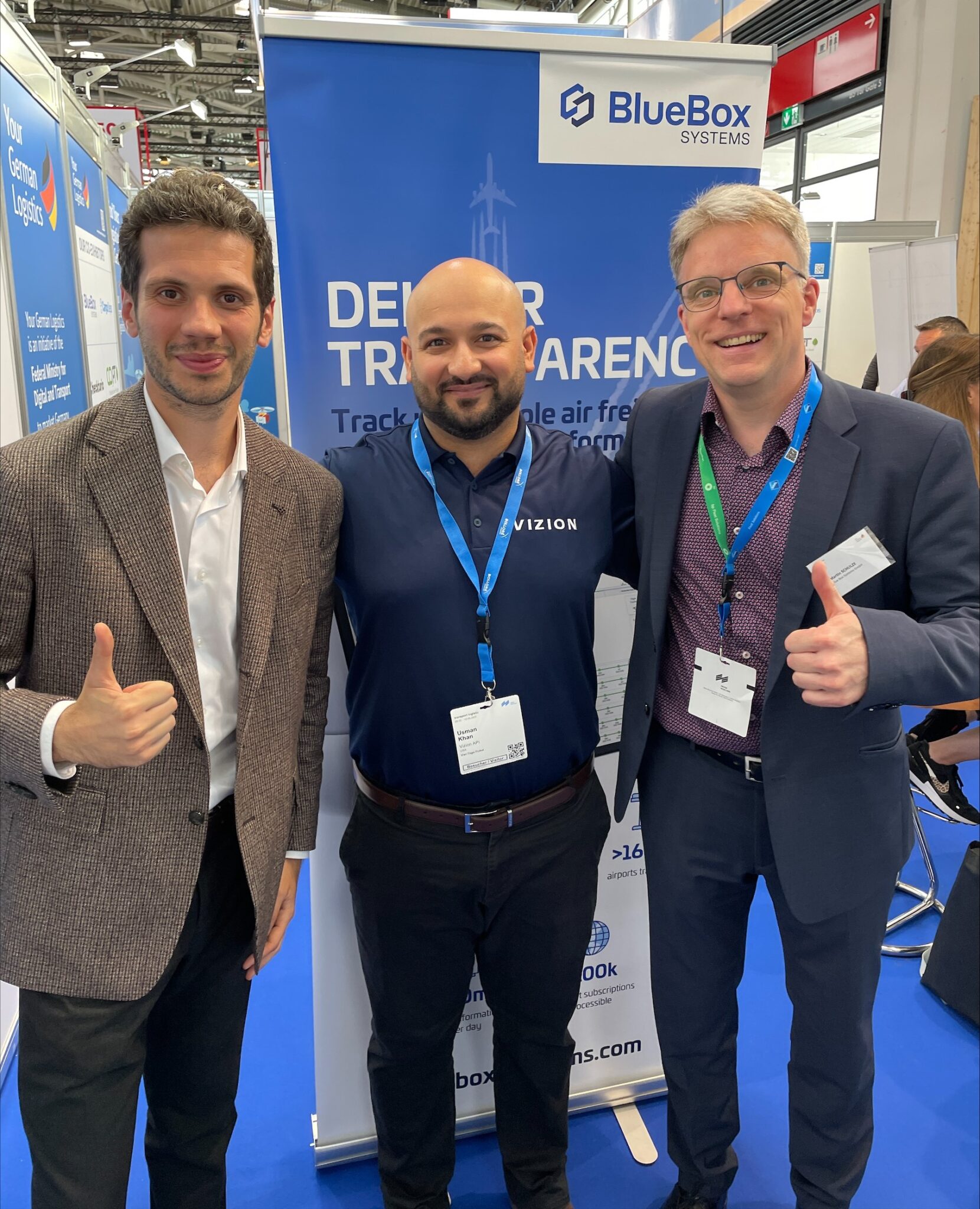
Over the past three years, global supply chains have been challenged by structural issues intensified by the COVID pandemic. Transport companies have increasingly had to push for the digitalization of their supply chains. Nevertheless, there is still a lack of transparency in logistics, as data volumes are often insufficiently filtered and processed. Following on from the air freight tracking solution BlueBoxAir, BlueBox Systems, together with its partner Vizion, now also offers a real-time overview of all the necessary logistics data for sea freight in highest quality.

The structural problems are related to the multiple large and small players that need to cooperate in a complex structure to unleash the supply chain´s full potential. To make such cooperation work, however, these actors need to know where the transported goods and commodities are at any given time. The logistics industry and in particular those responsible for air and ocean freight have traditionally struggled with the issue of transparency. The market does have a large number of providers who promise transparency. But inadequately organized or low-quality data can exacerbate existing problems, for example, by providing misleading information about the real-time location of containers and products, and making predictions faulty.

This is where BlueBbox Systems and Vizion provide relief. BlueBox Systems is the first tracking platform in the air freight sector to deliver real-time visibility of the location of air cargo shipments with highest quality data. The API-based solution from Vizion offers a similar level of transparency to users, primarily from the ocean freight sector, including logistics service providers, shippers and freight owners, as well as technology providers in the logistics sector. The Application Programming Interface (API) enables communication and data exchange between different applications. The two companies have joined forces to provide freight operators, logistics service providers and other companies along the supply chain, whether air or ocean freight, with more transparency about their shipments. Together, they are committed to delivering the highest quality data.

“Good, usable data has the following four characteristics: Timeliness, accuracy, organization and standardization,” explains Martin Schulze, CEO of BlueBox Systems. “Quality data, for instance, is always up to date, because knowing where containers and products were 24 hours ago does not help a company gain insights and make decisions. BlueBox Systems‘ data includes 10-minute aircraft positions, and Vizion’s API webhooks reduce latency to 6-8 hours or less.”

“Traditionally, freight forwarding companies have used electronic data interchange (EDI) to get information from supply chain systems. Vizion uses an API-first approach, which means real-time validation, greater flexibility, and much faster updates,” adds Kyle Henderson, CEO of Vizion.

But also the organization of data plays an important role. Data must be organized in such a way that analyses and quick decision-making are possible. Huge amounts of raw data will only mean more work for a company. Vizion, for example, records more than 7,000 individual events and classifies them into 60 milestones and ETAs that can be used for real-time decisions. Similarly, BlueBox Systems collects data from 130 different airlines as well as over 1,600 airports and prepares it in an intuitive interface that allows users to understand and use it. Status updates include ETA changes, flight connection risks, delays, airport performance, trans-shipment times, among others, which in turn can be compared. BlueBox Systems’ cargo platform also helps users calculate CO2 emissions per product based on aircraft type and real-time flight data.

Moreover, BlueBox Systems and Vizion specialize in standardizing data so that transport companies can collaborate at a high level internally and with third-party providers.

Omnichannel Returns Resolution

Fashion fulfilment centres continue to face a substantial increase in the rate of returns as omnichannel shopping becomes increasingly prevalent. But though it is a pain point for many fashion logistics companies, within the challenge of returns lies opportunity, writes Harald Hanaweg, Head of Sales Engineering at BEUMER Group.

The continuing growth of online retail brings with it great rewards for online retailers. But for fashion fulfilment centres in particular it also brings a problem in the shape of a rising number of returns. Indeed, it has been estimated that returns rates may exceed 60 percent for e-commerce fashion retailers. In an environment where a good returns policy is essential to maintaining a competitive edge and retaining customers, how can fashion logistics companies respond to the challenges of reverse logistics? And might it even be possible to reduce handling costs and create a value chain from returns?

There are two elements to a solution to this problem that fashion logistics businesses can explore. First, they can reduce the steps involved in their reverse logistics management, and second, they can create a healthy, viable value chain from their returns. In a typical conventional returns process, a total of 13 touches are required to process a returned item. What if the logistics centre could eliminate many of these touches and thereby reduce not only the labour required but also the time it takes to make the goods available for resale?

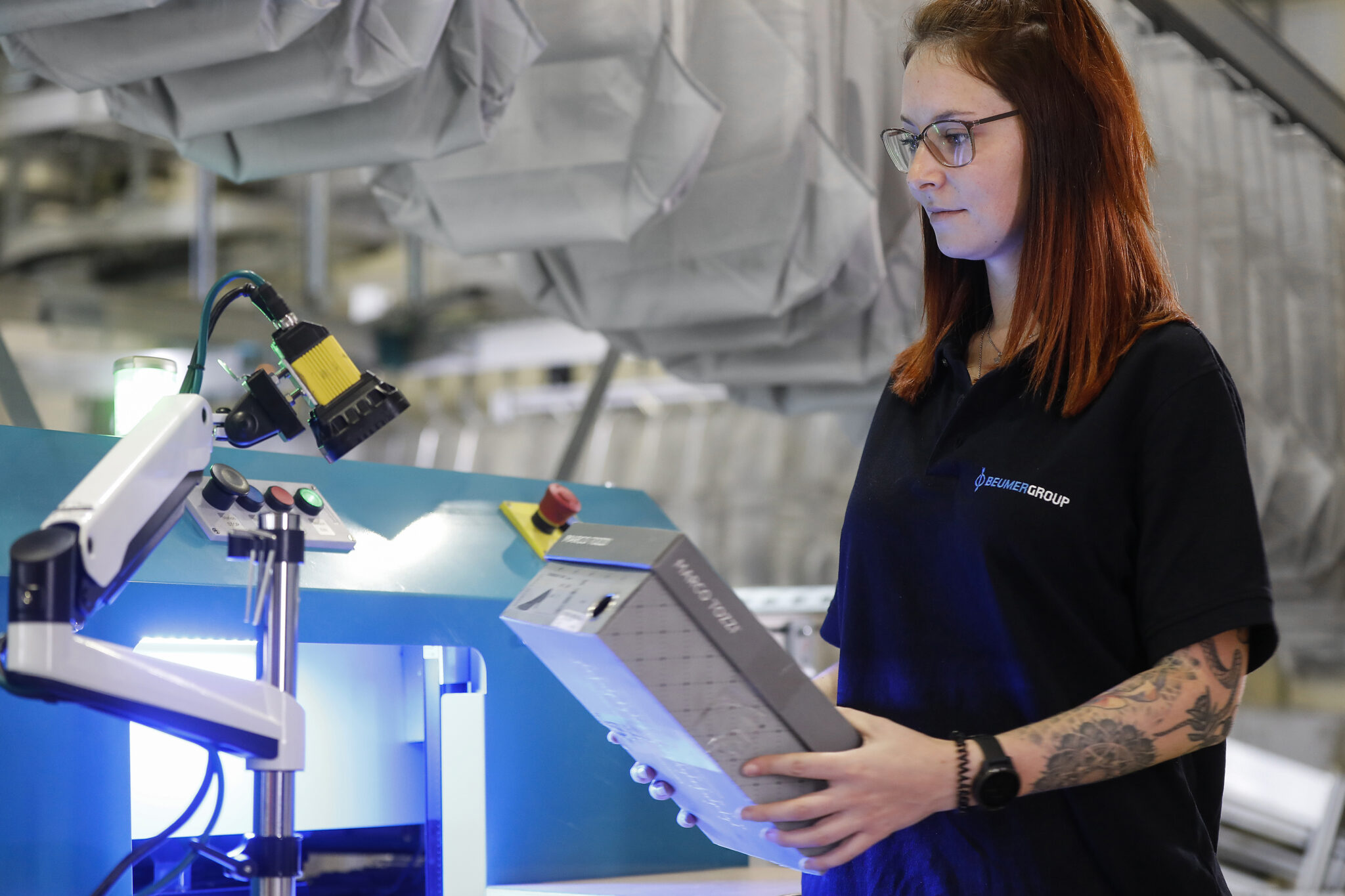
With a pouch sorter system all these wishes can come true. This specialised e-commerce fulfilment technology is able to transport, sort, sequence and store both outbound and returned items, and by doing so can simplify and streamline a number of steps in e-commerce fulfilment in general.

Pouch technology eases the handling of returns by placing each item directly into a pouch rather than sending it back to the shelf or regular storage, where it has to be picked again when it is ordered. The pouch system serves as an intermediate buffer for returned items, which are typically resold within three days. Returns needed to fulfil an order are automatically retrieved from the dynamic buffer and sent to sortation. Only items that are not sold after a given number of days are returned to shelf storage – or shipped for recycling – as part of an automatic, easy housekeeping process that is run during periods of low throughput. And even these non-sold items can be sorted according to any criteria as needed. For example, all pieces of a non-sold SKU can be brought together to a packing station where they can be put into a tote or carton and sent back to storage as a single lot.

The pouch system thus dramatically reduces the cost of handling returns, because the fewer times an item is touched, the shorter and cleaner the process and the more value the item retains. In fact with a pouch system the number of touches necessary to process a returned item is reduced from 13 to only seven.

Value creation

This is by no means the only advantage of a pouch system and it is even possible to create a value chain from returns. The great benefit of automated sortation is that it can be very accurate and can achieve a fine degree of sortation that would otherwise typically take considerable labour and time. For example, once the distribution facility has handled the initial receipt of the returns, the automated system can perform sortations into individual SKU master packs or gaylords destined for the next market segment. It is a simple matter to sort large, heavy items to the bottom, followed by the medium and then the lighter items on top.

Through this type of sortation the facility knows exactly what’s in every package. And if it opts to on-sell its returns on the secondary market it can receive a higher value because of the way they have been sorted, segmented and treated. Instead of returns being a loss, this higher level sortation can create a value chain within the supply chain. Fashion distributors can realise the hidden opportunities in reverse logistics and leverage the value in returns.

Logistics companies in today’s fashion e-commerce environment may not be able to decrease the high number of returns they have to handle, but they can most definitely adjust and ameliorate their returns management. Pouch sorter technology can reduce the touches and the manual intervention typically needed in the returns process, refining that process and greatly reducing costs. What’s more, fashion distribution facilities can even design their sortation processes to recapture value and uncover the hidden potential of returned assets.

5000 Locus AMRs Deployed by DHL

DHL Supply Chain has announced the expansion of its partnership with Locus Robotics, a leading provider of autonomous mobile robots (AMRs), increasing its use of Locus AMR robotics within its supply chain operations. As part of this new partnership, DHL Supply Chain will deploy 5,000 Locus Origin AMRs across its global network of warehouses and distribution centres, representing the industry’s largest AMR deal to date.

The expanded fleet of Locus AMRs will provide DHL Supply Chain with advanced automation technology to optimise its supply chain operations, and improve worker productivity, order accuracy, speed, and efficiency. The robots will be deployed across DHL Supply Chain’s global network, further enhancing its capabilities in e-commerce fulfilment, retail replenishment, and pharmaceutical and healthcare logistics.

“An idea is only a good idea if it can scale,” said Oscar de Bok, Chief Executive Officer DHL Supply Chain. “The flexibility and scalability of the Locus solution has been instrumental in helping us meet the evolving demands of the e-commerce landscape and leveraging cutting-edge technology to optimise our operations and deliver an even better experience for our customers.”

“The addition of Locus Robotics AMRs to our network is a major milestone in our digitalisation journey, and we are excited to partner with Locus Robotics to bring this technology to our operations,” said Markus Voss, Global CIO & COO DHL Supply Chain. “By using advanced robotics and data intelligence, we can further improve our operational efficiency, reduce processing time, and continue to improve our customer experience.”

“We are thrilled to be working in an expanded capacity with DHL Supply Chain to bring our industry-leading robotics technology to their global network,” said Rick Faulk (pictured), CEO of Locus Robotics. “As the robotics industry continues to consolidate, Locus Robotics has emerged as the clear leader in the market, and we are poised for further significant growth. Our innovative technology and commitment to customer success have set us apart. With our expanding product offerings and growing customer base, Locus Robotics is well positioned to capitalise on the tremendous opportunities ahead.

Industry’s largest AMR deal

DHL has now surpassed more than 250 million units picked using the LocusOne solution across its global sites. The deployment of the new LocusBots is expected to be fully integrated into DHL Supply Chain’s operations by the end of the year.

“Locus is helping DHL rapidly transform operations through a workforce empowered with the right technology at the right time, to deliver goods where they need to at the speed our modern markets demand,” said Sally Miller, Global Digital Transformation Officer, DHL Supply Chain. “Locus is a critical partner for us as we digitalise our warehouses, distribution and fulfilment centres to efficiently meet increasing order volumes, labour shortages, and rising consumer expectations.”

Locus Robotics is a leading provider of autonomous mobile robots for e-commerce, retail, and Locus Robotics is the world leader in revolutionary, enterprise-level, warehouse automation solution, incorporating powerful and intelligent autonomous mobile robots that operate collaboratively with human workers to dramatically improve product movement and productivity 2–3X. Named to the Inc. 500 two years in a row, and winning over 17 industry and technology awards, the Locus solution dramatically increases order fulfilment productivity, lowers operational costs, and improves workplace quality, safety, and ergonomics for workers. Supporting more than 100+ of the world’s top brands and deployed at 250+ sites around the world, Locus Robotics enables retailers, 3PLs and specialty warehouses to efficiently meet and exceed the increasingly complex and demanding requirements of today’s fulfilment environments.

Geodis Opens New UK eLogistics Site

GEODIS announces the opening of a new eLogistics platform in the UK. GEODIS eLogistics, which was launched in 2020, supports e-retailers in outsourcing their logistics operations. It offers a complete logistics solution for order preparation and personalisation, inventory optimisation, transport organisation and returns management.

In April 2023, a new GEODIS eLogistics platform opened up in Coventry, United Kingdom. This 7,000 m2 site is located in a strategic area allowing rapid distribution of products thanks to good transport links. It has the capacity to store more than 500,000 SKUs and to process up to 5,000 orders per day.

GEODIS’ eLogistics solution allows e-commerce companies of all sizes to efficiently outsource their logistics without the need for a large financial investment, thanks to shared multi-client warehouses and a more flexible contractual commitment. It integrates seamlessly with the leading CMSs, ERPs and marketplaces. As soon as a buyer places an order online, the eLogistics teams take over the preparation and shipping of the order and any returns. E-merchants can track the progress of their business and their orders in real time thanks to the Visibility Portal, a digital platform at their disposal.

GEODIS now operates a total of six eLogistics platforms, located in the United States, France and the United Kingdom, with space also available in Germany, the Netherlands and Italy. A total of 40,000 m2 of warehousing is dedicated to this offering.

Jean-Pierre Juteau, head of GEODIS eLogistics Europe, said: “The eLogistics offering is the latest innovation from GEODIS. The opening of this new eLogistics facility in the UK will allow new webshops, marketplaces and other kinds of e-commerce platforms to develop their businesses in a new geographical zone close to local markets.”

Watch this video to get a behind the scenes view of the eLogistics solution.

GEODIS is a leading global logistics provider acknowledged for its expertise across all aspects of the supply chain. As a growth partner to its clients, GEODIS specialises in five lines of business: Supply Chain Optimisation, Freight Forwarding, Contract Logistics, Distribution & Express and Road Transport. With a global network spanning nearly 170 countries and more than 49,000 employees, GEODIS is ranked world no. 7 in its sector. In 2022, GEODIS generated €13.7 billion in revenue.

Subscribe

Get notified about New Episodes of our Podcast, New Magazine Issues and stay updated with our Weekly Newsletter.