4th Stage at SPAR Warehouse in Austria

After an implementation period of more than two years, SPAR Österreichische Warenhandels AG and its project partner WITRON Logistik + Informatik GmbH from Parkstein (Bavaria, Germany), successfully put the fourth expansion stage of the Wels central warehouse (ZLW) into operation. By integrating state-of-the-art logistics technology, SPAR will be able to pick an additional 140,000 cases in a two-shift-operation in the future. The installation was carried out as a greenfield / brownfield combination in a 20,000 square meter new building, which was connected to the existing logistics areas during ongoing operations. SPAR and WITRON have enjoyed more than 25 years of successful cooperation, during which the ZLW project phases 1, 2, and 3 were put into operation in 1998, 2002, and 2015. In all extension and modernization phases, WITRON was responsible for the design, implementation, service, and system operation as a lifetime partner. The ZLW has a total footprint of 50,000 square meters and supplies 1,500 stores throughout Austria as well as the SPAR foreign subsidiaries with more than 18,000 different dry goods. The distribution centre is designed for a daily picking capacity of 340,000 pick units in two-shift operation and for picking up to 500,000 pick units on peak days in three-shift operation.

“For SPAR it is important to focus on service level, cost-efficiency, people, sustainability, and flexibility when using innovative logistics technology”, explains WITRON Project Manager Ulrich Schlosser. “When it comes to the service level, SPAR stores benefit from premium customer service enabled by holistic, cost-efficient processes within the internal and external supply chain. SPAR employees in the stores benefit from efficient product handling due to store-friendly picked roll containers and the staff in the distribution centre benefits from ergonomic workstations. Sustainability is reflected by significant CO2 savings due to densely packed load carriers, optimal truck utilization, and fewer truck tours. Furthermore, through space savings in construction and the use of state-of-the-art warehouse technology. In addition, flexibility and expandability also ensure future viability so that changing market requirements can be met quickly and flexibly”.

OPM as a central element

Central element of the “construction stage 4” expansion – just like in construction stage 3 – is the fully automated storage and picking system OPM (Order Picking Machinery). With the implementation of 16 additional COM machines (in total 24 COMs), it is now possible to pick up to 140,000 additional cases (in total 340,000 cases in two shifts) daily store-friendly onto roll containers in two shifts.

New additions also included an automated tray warehouse with 32 stacker cranes (in total 48) and 293,000 tray storage locations (in total 450,000) as well as a pallet high bay warehouse with 8 stacker cranes (in total 24) and 31,200 pallet storage locations (in total 73,000), 7 de-palletizers (in total 10), and 3 stretch-wrappers (in total 5). An automatic empties buffer with 4 stacker cranes for up to 8,600 roll containers has also been added. This ensures that the logistics loop of the ZLW is always provided with the optimal number of roll containers.

Holistic modification concept is a decisive factor

“However, not only the technical concept was important for the project success”, according to WITRON Project Manager Ulrich Schlosser. “Equally important for a combined greenfield / brownfield project is also a holistic change concept – meaning how the integration takes place in terms of timing and organization. In the process, the most important question has to be clearly addressed: How will the project be implemented throughout the entire project phase – and how will the ongoing operation or delivery to stores and consumers take place at the same time, without any interruptions”, explains Ulrich Schlosser. “Due to the modular design of our end-to-end solutions and their physical compactness, we can develop highly flexible implementation and future concepts for our customers already in the design phase. These can be integrated both directly into an already existing system considering increasing volumes, growing product ranges, additional pick stations, or changing business and material flow processes, or, as in the case of SPAR, they can be integrated into the material flow of an existing system via a new building.”

500,000 pick units for 1,500 stores

The ZLW has a total footprint of 50,000 square meters and supplies 1,500 stores throughout Austria as well as the SPAR foreign subsidiaries with more than 18,000 different dry goods. The distribution centre is designed for a daily picking capacity of 500,000 pick units. The WITRON solutions OPM and DPS are used for storage and picking. A WITRON OnSite team is responsible for service, maintenance, and system operation in shift operation and thus enables a permanently high availability of all logistics areas, material flows, mechanical, control, and IT components.

“Mutual trust is the foundation of more than 25 years of partnership between SPAR and WITRON. SPAR has often been a pilot customer and has repeatedly supported us with the integration of new technologies and services in a sustainable way. SPAR and WITRON – that fits: the corporate culture, the technology, and particularly the people”, says WITRON Project Manager Ulrich Schlosser.

Accident-Free Trucking by Autonomous Driving

Inceptio Technology, a Chinese developer of autonomous driving technologies for heavy-duty trucks, announced that the Inceptio Autonomous Driving System has powered more than 40 million kilometers of accident-free trucking on China’s highways. This latest milestone underlines the safety and reliability of Inceptio’s full-stack autonomous driving solution, as well as its accelerating commercial uptake.

Inceptio’s L3 autonomous trucks have been in commercial operation since late 2021. Working closely with two of China’s top OEMs, Dongfeng Commercial Vehicle and Sinotruk, Inceptio has shipped hundreds of mass-produced heavy-duty trucks designed from the ground up for full integration with the Inceptio Autonomous Driving System. Major customers including Budweiser, Nestlé, JD Logistics, and Deppon Express have deployed Inceptio trucks across a nationwide line-haul logistics network in China.

Inceptio’s solution brings significant benefits to every segment of the freight hauling ecosystem. The Company’s focus on mass production ensures that L3 autonomous trucks are sufficiently reliable for OEMs to produce and highly affordable for fleet operators to procure and operate, while its advanced technical features significantly increase driver safety and enable end-customers to receive goods at lower shipping costs.

“We are incredibly proud of the stellar performance record that Inceptio trucks have amassed over the past two years.” said Julian Ma, founder and CEO of Inceptio Technology. “Across 40 million kilometers of commercial operations, our Inceptio Autonomous Driving System has achieved a highly satisfactory on-time arrival rate for our customers with a perfect safety record. The Inceptio R&D team and the autonomous driving system itself are learning a tremendous amount from our fast-growing trove of operational data, and these insights will be invaluable as we speed up commercialization of our L3 solution and continue to hone our driverless solution. We look forward to sharing these achievements with industry partners as we explore opportunities to deploy our cutting-edge technology globally.”

Autonomous Driving System

Inceptio has successfully mass-produced a fully integrated solution to power the next generation of autonomous heavy-duty trucks. The Company’s focus on pre-loading its systems during the production process ensures significantly greater safety, reliability, durability, and regulatory compliance compared to an aftermarket approach.

With ‘safety first’ as its top design principle, Inceptio has collaborated with more than 50 industry partners to solve the most difficult challenges unique to the automation of heavy-duty trucks, including much greater size, weight, reaction distances, response times, and variations in vehicle parameters. Inceptio’s innovation achievements include:

World-leading algorithms
 Perception – Ultra long-range 3D sensing technology holds the industry record with an error rate of less than 5% at a distance of 1,000 meters
 Planning & Control – The core algorithm sets a performance benchmark for the industry with an average lateral control error within 5.5 cm
 Fuel efficiency – Algorithms optimize fuel economy at every level, resulting in 3-7% fuel savings over the most fuel-efficient human drivers

Full-stack software and hardware development
 Fully self-developed autonomous driving software
 Fully self-developed Autonomous Driving Control Unit with 262 KDMIPS + 256 TOPS of computing power
 The industry’s first fully redundant drive-by-wire chassis, including redundant steering, braking, and power supply systems
 Automotive-grade autonomous driving hardware kit offering triple-redundant sensor configuration and fully redundant computing unit
 An advanced human-machine interaction system with auditory, visual, and tactile feedback for human operators

Inceptio Technology is China’s leading developer of autonomous driving technologies for heavy-duty trucks. Its flagship technology is the Inceptio Autonomous Driving System, a proprietary full-stack solution. Inceptio partnered with leading OEMs to roll out the industry’s first mass-produced L3 autonomous trucks in late 2021. These trucks are operated by customers including Budweiser, Nestlé, JD Logistics, and Deppon Express across a nationwide line-haul logistics network in China. Inceptio is at the cutting edge of developing fully driverless trucks, and in 2022 became the first company to receive a public road-testing permit for driverless autonomous heavy-duty trucks in China.

Concerns over Human Rights in Supply Chains

More than two-thirds of chief executives at British companies are concerned about human rights issues in their supply chains, research has suggested. A survey, commissioned by procurement consultancy Proxima, surveyed 1,000 UK CEOs about their approach to supply chain issues.

It found that 67% are concerned with potential issues around human rights and labour rights. Concern is highest in the construction sector (77%), leisure and hospitality (77%), retail (72%), and the food and beverage manufacturing sector (70%), the survey found.

It comes as companies come under increasing scrutiny for emissions and human rights issues across their operations. According to the survey, almost half of UK bosses – 49% – said they expect to spend more time focussing on supply chain issues in the next 12 months.
It found that 42% are considering “onshoring” – moving their entire supply chain to their home country – as a way to prevent disruption and improve transparency.

Meanwhile, 36% said they are looking at “nearshoring” – moving supply chains to countries closer to the UK.

Simon Geale, executive vice president and chief procurement officer at Proxima, said: “Addressing human rights issues across the supply chain is a huge challenge for businesses and it is clearly high up on the agenda for CEOs. We’ve seen a number of businesses fall victim to human rights issues and, as we see increased scrutiny from customers and regulators, supply chain transparency is going to become increasingly critical. This is the emerging priority for CEOs at a time when business leaders are spending more time than ever tackling supply chain issues.”

The UK private sector has seen movement to tackle supply chain issues in recent years through initiatives like the Pharmaceutical Supply Chain Initiative, the Waste and Resources Action Programme, Scope 3 Peer Group, AIM-Progress and the Sustainable Procurement Pledge.
Unilever has been using satellite tracking to monitor deforestation and behavioural patterns around key factories while IMB has developed a supply chain solution blockchain technology, used by companies like Vodafone.

James Butcher, CEO of Supply Pilot, a tech platform that allows companies to better engage with their suppliers, said: “The supply chain disruption continues and this is why so many CEOs are focused on their supply chains. But this unfortunately is at the expense of progress on sustainability as reflected in the poor strategies on supply chain decarbonisation. I believe this is because of the internal narrative reflecting it as an either/or decision on where to focus, whereas a good supplier engagement programme focused on more sustainable and responsible procurement can address both the E and the S of ESG but also delivers more resilient supply chains.”

Neil Robson (pictured), partner at Katten UK, added:

“The fact that 67% of polled UK CEOs are concerned about human rights issues in their supply chains is testament to the fact that ESG is now well-and-truly coming of age. The “S” – the social element of the Environmental, Social and Governance framework used by firms and investors to assess an organization’s business practices – has long taken second or third place to environmental sustainability issues and good governance. However, given ESG’s evolution from ethical investing and ‘corporate social responsibility’, the social element has to remain in focus.

“Concerns with potential issues around human rights/ labour rights in the supply chain seem to have been growing in recent years, following requirements for UK businesses to adhere to the UK Modern Slavery Act, which has been in force since October 2015. As a world-leading piece of legislation, it sets out a range of measures on how modern slavery and human trafficking must be dealt with in the UK and focuses (at section 54) on ‘Transparency in Supply Chains‘. As the survey notes, addressing human rights issues across the supply chain is a huge challenge, but nonetheless supply chain transparency is a potential area of risk that is becoming increasingly critical – especially where those supply chains are overseas, opaque and unclear. Businesses that hold themselves out as ESG-compliant must address their sustainability and good governance, but they must also understand their impact on their entire supply chain and do their best to ensure they are doing the right thing for all concerned.”

New Shareholder of Duisburg Gateway Terminal

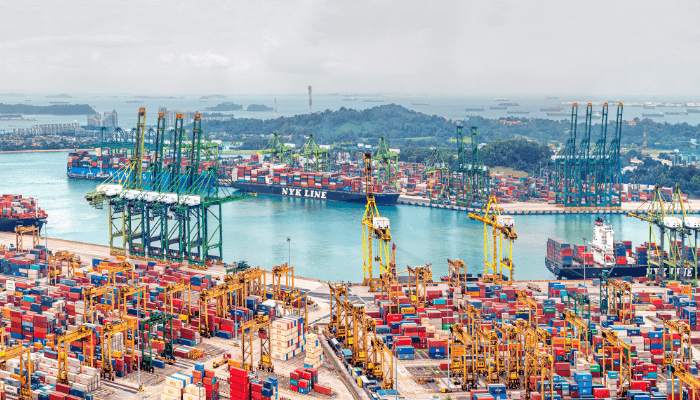
PSA International Pte Ltd (PSA), headquartered in Singapore, has signed agreements to acquire a 22 percent minority stake in Duisburg Gateway Terminal GmbH (DGT). The transaction is subject to the approval of Germany’s competition and supervisory authorities. Upon completion of transaction, PSA will join Hupac, HTS and Duisport as shareholders of DGT.

Located in the Port of Duisburg, DGT will be the first 100% climate-neutral inland container terminal located in the European hinterlands.

“We are pleased to have gained an important strategic partner for the DGT company in PSA, which will contribute significantly to the success of the Duisburg Gateway Terminal with its various business segments in Europe, Asia and worldwide. This network expansion strengthens both the competitive diversity and the further diversification of the Port of Duisburg. The topic of supply chain diversification has an increasingly important meaning,” says Duisport CEO Markus Bangen.

Tan Chong Meng, Group CEO of PSA, says, “We are excited to become a partner in Duisburg Gateway Terminal, alongside its existing shareholders Duisport, HUPAC and HTS. As part of Europe’s largest and most sustainable inland port, DGT will be a key gateway in providing green logistics services to Germany’s dense industrial hinterland. Leveraging PSA’s global ports and supply chain network as well as its strong presence in continental Europe, PSA aims to strengthen the DGT partnership and support Germany’s green energy transition in line with our strategic focus towards enabling smoother, more resilient and sustainable trade.”

The construction of the trimodal DGT is on schedule and is considered a model project for the future of logistics. With an area of 235,000 square meters, DGT will be the largest container terminal in the European hinterland when completed. The first construction phase is scheduled for completion in the first quarter of 2024.

PSA International (PSA) is a leading global port operator and trusted supply chain partner to cargo stakeholders. PSA’s ports and cargo solutions portfolio comprises over 60 deep-sea, rail and inland terminals, across 160 locations in 42 countries – including two flagship port operations in Singapore and Belgium, as well as affiliated businesses in supply chain management, logistics, marine and digital services. Drawing on the deep expertise and experience from a diverse global team, PSA collaborates with its customers and partners to develop world-class port ecosystems, deliver innovative cargo solutions and co-create an Internet of Logistics to accelerate the shift towards sustainable trade.

Duisburger Hafen AG is the ownership and management company of the Port of Duisburg, the largest inland port in the world. The Duisport Group offers full-service packages for the port and logistics location in the areas of infra- and supra-structure including settlement management. In addition, the subsidiaries provide logistics services such as the establishment and optimization of transport and logistics

Open Door to Future of Industrial Automation

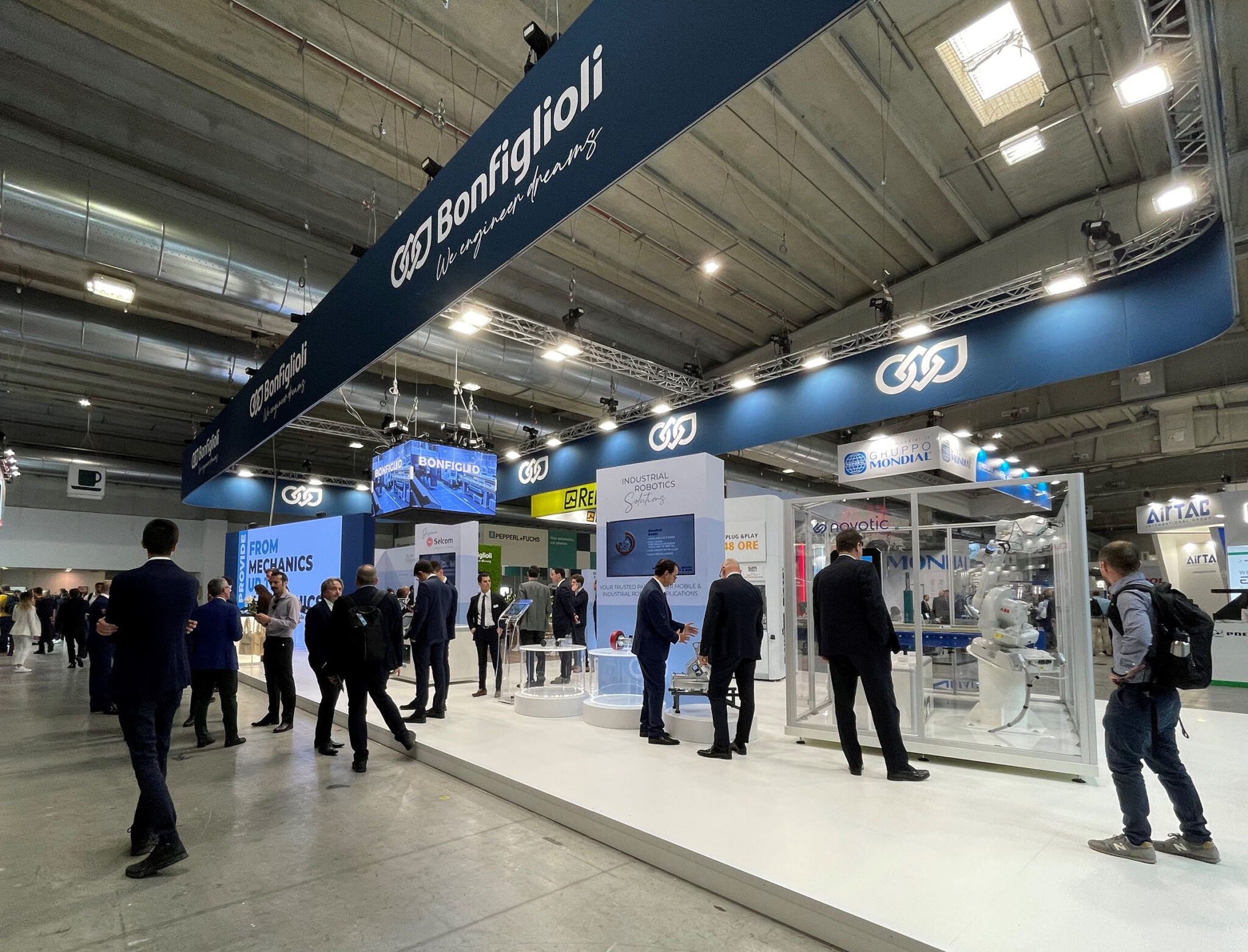
At the SPS manufacturing event in Parma, Italy, Bonfiglioli presented technologies including its mechatronic solutions for industrial automation, packaging and intralogistics, robotics and IoT.

The flow pack packaging process requires automatic machines that can keep up with high production rates, for which Bonfiglioli offers a wide range of compact, modular, dynamic and high-precision drive and control solutions for both horizontal and vertical forming, filling and sealing machines. These include the package on display during the three-day event, featuring a TQ in-line high precision planetary gearbox combined with a BMD permanent magnet synchronous servomotor and AxiaVert smart inverter, the latter characterised by high application versatility. In addition, the company is able to ensure maximum handling speed for finished products during the palletization process thanks to a solution that incorporates our BMD synchronous servomotor, Series A right-angle gear unit and ANG Series servo inverter.

Two intralogistics solutions were also presented at the fair. The first solution for post & parcel use and airport baggage handling systems consisted of a compact right-angle Series A gear unit available in a wide torque range, the IE4-certified BSR synchronous reluctance motor – an ecological and high-performance product thanks to the absence of magnets, and a DGM MPM decentralized inverter with sensorless vector operation for optimal dynamics control. The second solution designed for roller conveyors combined the EVOX CP helical in-line gearbox with smooth surface that can be fitted to any machine thanks to its compatibility with market standards, the MXN asynchronous low-voltage e-motor (IE3) developed to be modular, reliable, energy efficient and internationally certified, and a DGM MPM sensorless inverter.

Visitors got an up-close look at the two successful applications designed in partnership with Modula S.p.a. and I.DE S.r.l., for which Bonfiglioli has developed complete and tailor-made technical solutions.

The latest frontier in mobile collaborative robotics applications

Bonfiglioli also showcased its technologies for Cartesian, delta and articulated robots, the latter solution consisting of a custom precision planetary gearbox and servomotor developed for ABB.
Still in the field of mobile robotics applications, there was a strong interest in BlueRoll: the platform of high-performing wheel-mounted gearmotors for AGVs and AMRs with an ultra-compact and energy-efficient design for a long operating cycle. The modular drive system comes in three configurations, Basic, Advanced and Compact, with a customisable single gearbox load ranging from 360 to 1020 kg and a maximum speed of 2m/s.

Bonfiglioli’s IoT enables condition monitoring and predictive maintenance

Downtime, sudden breakdowns, high maintenance costs, short life spans and collateral damage to assets are some of the greatest issues faced by industrial machinery manufacturers and operators. As a technological partner, the Bologna-based group offers condition monitoring and predictive maintenance services, as well as post-sales assistance. Bonfiglioli responds to customer needs to monitor the general status of gearboxes and motors with its IoT platform, thanks to the presence of sensors capable of measuring performance, consumption and cycle times by monitoring significant parameters such as vibrations or temperature. The predictive maintenance service, on the other hand, helps prevent damage and downtime by making key data accessible to predict technical assistance interventions in advance.

“We have designed specific sensors for Bonfiglioli motors and gearboxes,” commented Marco Bertoldi – Global Sales & Business Development Director at Bonfiglioli. “The recent acquisition of Selcom Group S.p.A. has allowed us to expand our knowledge of engineering and design for the integration of electronics into our mechanical solutions, enhancing our offer of turnkey mechatronic solutions”, he concluded, highlighting the advantages of this collaboration, with the customised DC-DC converter and display for Toyota and the customised PLC for Robopack also on display.

The Bonfiglioli Group undertakes to reduce the environmental impact of all stages along its supply chain, limiting the energy consumption of factories and plants, while developing and promoting solutions for green economy sectors such as wind power, recycling and photovoltaics. Our environmental commitment translates into innovative energy efficiency solutions and products with a low environmental impact, as we ensure a responsible supply chain: our research and development teams constantly strive to explore new ways to reduce environmental impact and create products with a reduced carbon footprint. In the 4.0 area at SPS dedicated to sustainability, the EVOX ecosystem, featuring the CP range of high-performance coaxial gear units, BXN IE3 asynchronous motors and Agile series inverters, is ideal for applications that require precision and flexibility.

New Pallet Range Launched by Kite

Leading online packaging supplier, Kite Packaging, has updated its new pallet range to include eco-friendly nestable and rackable plastic pallets as well as timber and presswood pallets.

Kite’s durable, lightweight and cheap nestable pallets provide a long-lasting solution for palletising goods. Their impressive dynamic capacity offers the best of both worlds with no compromise on functionality or cost-effectivity. The rackable pallets are suitable for warehouse racking and provide a cost-effective solution for efficiently storing palletised goods. Thanks to being heavy duty, they are ideal for long distance shipping, including export.

Both contain 100% recycled content and are recyclable upon disposal, feeding a circular economy.

New Pallet

The company’s timber-heated pallets are ISPM15 compliant and suitable for global exports. Made from strong timber sourced from sustainably managed resources, these pallets have the integral strength for reuse. Their four way forklift and pump truck entry makes for easy loading and unloading.

Kite’s presswood pallets are made from saw dust and recycled wood chips with no traces of plastic. These are nestable and conserve space when stored, in transit and not in use.
This new pallet range is available at market-beating prices with further discounts available when buying wholesale quantities.

Kite loves solving packing problems using expertise to ensure customers are using the right range of products for their business. No matter how simple or complicated packaging is, their skill is ensuring the right solution. With over 2,500 standard products and tens of thousands bespoke lines in stock, Kite provide a Just-in-Time solution available immediately.

New 20,000 m² Warehouse in Istanbul

In the year of cargo-partner’s fifth anniversary in Türkiye, the international transport and logistics provider has opened a new iLogistics Center with 20,000 m² of warehouse space in Istanbul. Close to the new Istanbul airport and the region’s main seaports, and ideally connected to Europe via North Marmara Highway, the Center offers a wide range of logistics services to cargo-partner’s customers in Türkiye.

With a total storage area of 20,000 m², including 5,850 m² of bonded warehouse space, cargo-partner’s iLogistics Center Istanbul represents a new milestone for the company’s organization in Türkiye. The new iLogistics Center will create more than 85 new jobs, increasing the total number of cargo-partner employees in Türkiye to almost 250 by the end of the year. cargo-partner established its Türkiye branch in 2018 and now offers its services at eleven locations in the country. The company’s particular strengths in Türkiye include temperature-controlled foodstuffs shipments as well as EMERGENCY services by air and road. In addition, to combat the recent driver shortages in Europe, the logistics provider is offering a growing number of short sea services as an alternative to trucking.

Over 20,000 pallet slots and flexible multi-modal services

The warehouse provides a capacity of more than 20,000 pallet slots and has 17 loading docks for all vehicle types, enabling fast trans-shipment, customs bonded warehousing and distribution throughout the region. The facility’s modern design allows for efficient handling and storage of oversized goods, flexible multi-modal services and comprehensive high-tech logistics solutions. Part of the new warehouse is dedicated to fulfilment services, including a parcel pickup and return point. The warehouse is an important addition to cargo-partner’s network in the region and was added due to strong demand from cargo-partner’s customers for warehousing services.

New head office for cargo-partner in Türkiye

In addition to the warehouse facility, the building also contains modern office spaces, providing the new base of operations for cargo-partner’s head office in Türkiye. “Istanbul is not just the heart of trade in Türkiye, but also a major hub for the entire surrounding region. This year we are celebrating the 100th anniversary of the Republic of Türkiye along with the 40th anniversary of cargo-partner and the fifth anniversary of cargo-partner in Türkiye – a perfect occasion to diversify our services and strengthen our position in the country. This new, intelligent logistics facility will enable us to provide a range of fulfillment services for online retailers and meet the requirements of current and future logistics challenges,” said Kürşad Tanrıverdi, Managing Director of cargo-partner Türkiye.

Group-wide support of earthquake relief efforts

Since Türkiye was struck by devastating earthquakes in February 2023, cargo-partner’s country and corporate management have been working side by side with non-profit organizations to support local relief activities. The logistics provider has sent numerous trucks with much-needed supplies to the worst-affected areas: from water, food, blankets and hygiene products up to container houses, emergency tents, generators and tools. In addition, the company collected a total of 200,000 euros, donated by employees and the management, which were used to help those affected by the earthquakes. Most recently, during Türkiye’s Sacrifice Feast in June, cargo-partner organized a truck shipment of foodstuffs, hygiene products and bottled water to support families in the province of Hatay in Southern Türkiye.

InTruck Connect Digital Payment Solution

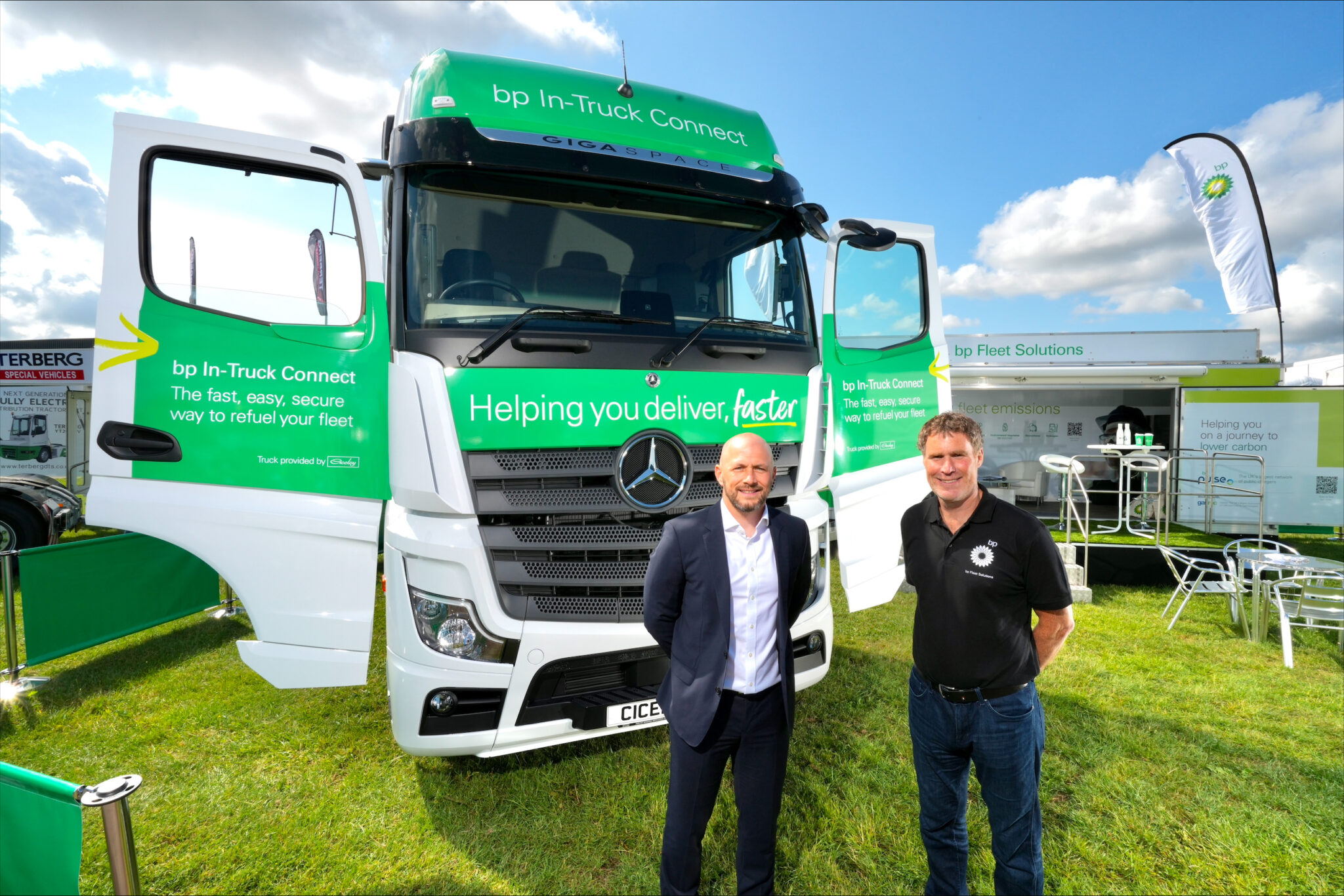
bp is launching its new digital payments solution for fleets – bp InTruck Connect – in collaboration with Mercedes-Benz Trucks UK.

The bp InTruck Connect app is designed to make fleet managers’ lives easier. The app automatically provides accurate information on fuel purchases, mileage and other data to fleet managers, reducing the risk of discrepancies and removing the need for drivers to enter mileage themselves. It also connects bp fuel cards with truck data, which enhances fuelling security by identifying any fuel volume discrepancies by analysing fuel dispensed via pump vs fuel that went into the truck tank.

Thanks to bp’s pilots with leading OEMs like Mercedes-Benz Trucks UK, the app is easy to install in trucks’ existing infotainment systems, and does not require any additional, expensive hardware. It’s also very flexible, with fleet managers able to decide at any time how many vehicles they want to register for the app, and they can reduce or increase that number whenever they need to.

bp InTruck Connect also makes life easier for drivers. When they need to refuel their truck, they simply confirm the fuelling site through the app, unlock the pump and refuel. They don’t need to leave their vehicle unattended at any point, and the app logs the transaction and pays for the fuel itself. bp InTruck Connect brings greater security and transparency to the refuelling process for fleet managers and drivers.

Alexandru Eftimiu, VP Fleet Europe at bp, commented: “We are providing innovative, digital-first ‎solutions to make our customers’ lives easier. bp InTruck Connect simplifies the refuelling process and makes it efficient and easy for both drivers and managers, saving time and giving them greater clarity over their fuel purchases. ”

Mercedes-Benz Trucks Sales Director Stuart Jeggo added: “The bp InTruck Connect App will make a genuine contribution to reducing time and hassle for busy drivers and fleet managers – but it’s just one of many ways operators can make use of the systems already installed in their Mercedes-Benz trucks, to streamline many of the day-to-day processes involved in keeping their businesses working efficiently.”

Greek Post Using LiBiao Parcel Sortation

Some two years after introducing LiBiao robotic parcel sortation technology at its sorting centre in Athens, Hellenic Post (ELTA), the state-owned provider of postal services in Greece, has introduced additional robots, chutes and induction stations at the site.

The investment means throughput capacity at the Athens facility has been significantly increased and allows ELTA to provide next-day delivery services to several additional destinations throughout Greece. In all a total of 120 LiBiao autonomous mobile robots (AMR) are now deployed at the sorting centre in Athens. They scan each parcel’s barcode, weigh the package and, directed by sensors, empty it into the appropriate mail sack sited around the platform on which the robots travel.

Initially introduced as part of ELTA’s digital restructuring programme which was established to tackle the growing number of parcels generated by the growth of online shopping, the AMR-based sortation solution has enabled ELTA to improve the efficiency of its workforce by assigning personnel to more productive tasks.

Before the LiBiao sorting system went live, ELTA had undertaken parcel sorting manually – which was obviously extremely time consuming and labour intensive. It was also prone to errors which caused parcels to be delayed. Late deliveries were not only frustrating for ELTA’s customers and courier partners but also extremely costly for the company.

Since the parcel sorting function has been handed over to the LiBiao robots the process is three times faster, ensuring next-day delivery, while errors have been virtually eliminated.

With the additional robots, ELTA can now handle close to 125,000 parcels weighing up to 10 kg every day and, because each robot only needs to be recharged for five minutes every four hours, on-site power consumption and energy costs are minimised.

Based on the performance of the first phase of the installation ELTA expect this latest investment to pay for itself within two years.

Evi Arguriadou, ELTA’s head of sorting operations, comments: “Since the introduction of robotic technology our Athens facility has come to be regarded as a centre of excellence within our industry. We regularly host visits from executives from other parcel delivery services companies across Europe who are interested in the technology we have deployed. We are happy and proud to do so.”

LiBiao Robotics’ founder and CEO, Xia Hulling,commented: “The initial installation at ELTA and the recent extension highlights perfectly why LiBiao autonomous mobile robot (AMR)-based sortation technology is proving an attractive alternative to the high CapEx fixed tilt-tray and cross-belt conveyor-based systems that have historically been used within many busy parcel and e-commerce operations.”

Xia Hulling continued: “With no fixed infrastructure requirements, modular AMR-based systems are scalable and offer complete flexibility with additional robots easily introduced as and when they are needed. And, I am pleased to say that several of the companies that have visited ELTA’s Athens site to see the system in operation for themselves have become LiBiao customers too!” she added.

Established in 2016, LiBiao Robotics is a modern high-tech enterprise specialising in the development of robotic systems for the post, parcel and logistics sectors. The company’s autonomous mobile robot technology is in operation across China, Australia, New Zealand, South-East Asia and the USA, LiBiao Robotics is based in Hangzhou, the capital of China’s Zhejiang province.

Combilift is Positive Move for Greencore Homes

Greencore manufactures homes that set a new standard for low carbon construction, coupled with energy efficiency and low carbon living. The company has big ambitions for the future, aiming to deliver over 10,000 Climate Positive homes across the south of England by 2035.

Greencore recently moved to a new 30,000 ft² facility in Bicester, where it produces its innovative Biond closed timber frame panels, insulated with natural materials, the output of which is currently enough for more than 200 homes per year. The off-site manufacturing process enables the timber frame superstructure to be erected quickly and safely, and a home is air tight and water tight just two weeks after the first panel arrives on site.

One of Factory Manager Rob Bresnahan’s early tasks for the new premises was to find a forklift that was suitable for handling the diverse mix of incoming raw materials, as well as ideally being able to lift and move the sizeable and bulky finished panels around the factory and yard areas. Using just one truck for multiple tasks, in the storage, production and outside areas was obviously going to be a more efficient and cost effective investment. And given the nature of the company’s homes – which are targeted to be better than net zero in terms of whole life embodied carbon – electric power was a further prerequisite.

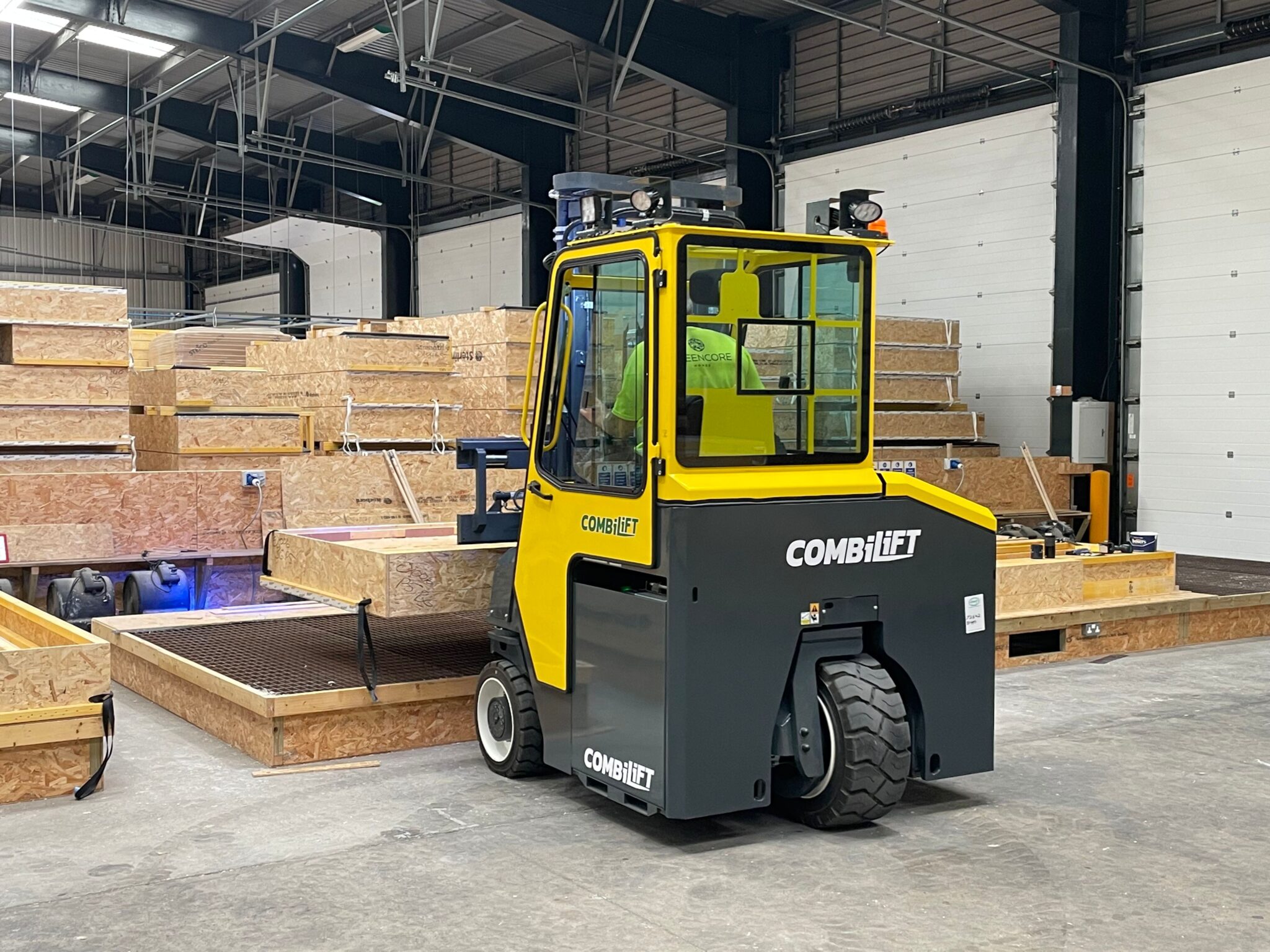
An evaluation of a number of truck brands on the market eventually led to the Irish forklift manufacturer Combilift, which has focussed on expanding its electric range over the past five years or so. With a wide choice of models, Rob went for the Combi-CB4E – a 4t capacity compact counterbalance design truck. Its versatility enables it to handle pallets of the insulation materials, packs of timber which can be 5m long and weigh up to 3000kg, and the sizeable finished wall, floor and roof panels. Its multidirectional capability, which was one of the selling points for Rob, also allows for safe, low level sideways transportation of the largest loads, enabling widths between stacked products to be kept at a minimum. As production volumes increase, this space saving handling will become even more of an advantage.

“A number of factors influenced our decision to replace an old LPG counterbalance truck with the Combilift,” said Rob. “I’d had previous dealings with the manufacturer and was impressed with the quality of products, their reputation in the industry and the level of customer service. The CB’s size, lift capacity, manoeuvrability and emission -free operation is perfect for our handling requirements.”

Subscribe

Get notified about New Episodes of our Podcast, New Magazine Issues and stay updated with our Weekly Newsletter.