Configuring Drive Systems to Customer Requirements

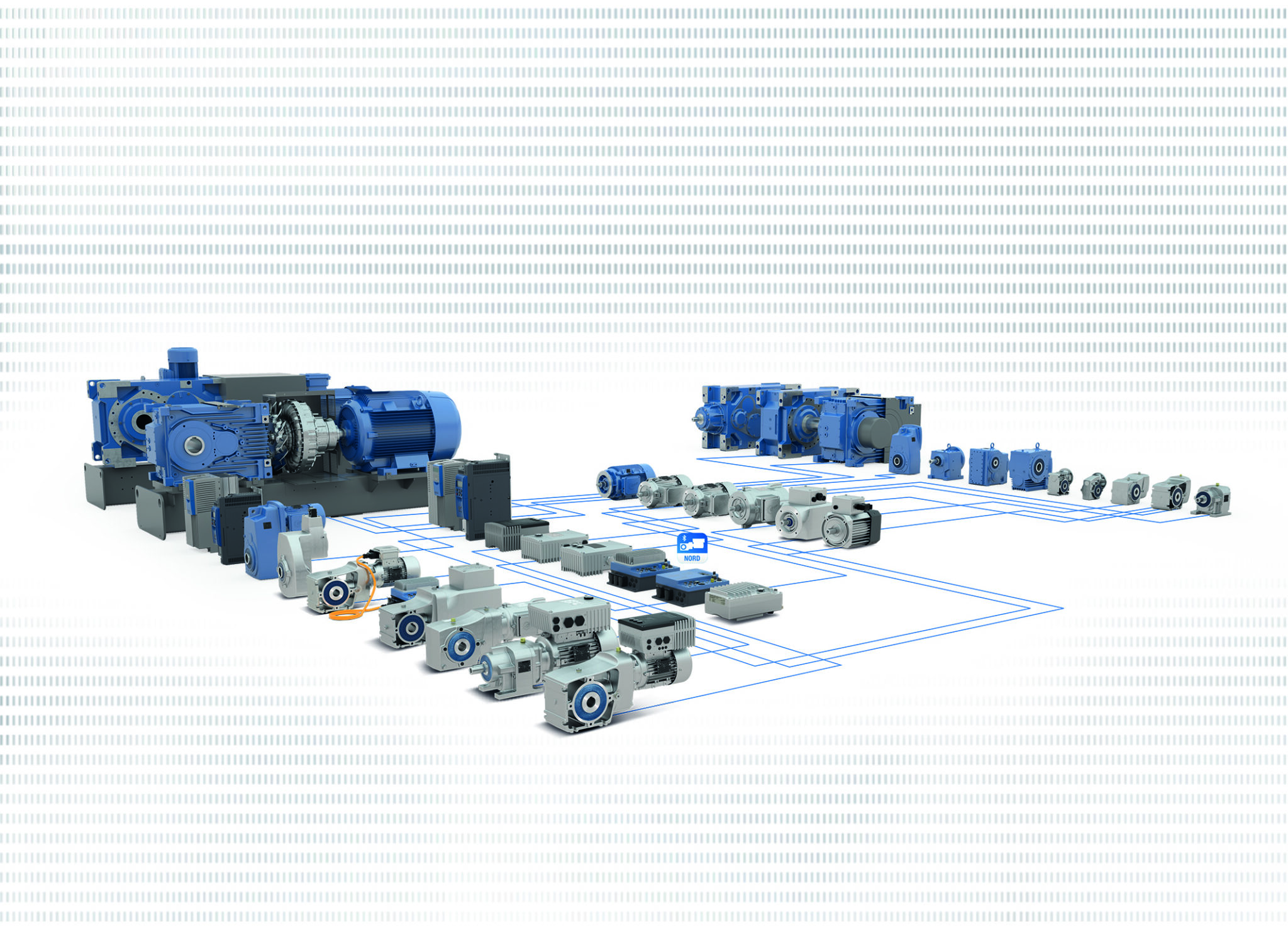
With the modular system, NORD DRIVESYSTEMS, as a full-service supplier in drive technology, offers a wide portfolio of drive components that can be individually combined. The company places particular emphasis on energy efficiency, version reduction and the Total Cost of Ownership (TCO).

NORD DRIVESYSTEMS supplies its customers from more than 100 industries with optimally matched drive systems that are precisely adapted to their individual requirements. The company is one of the leading international full-service suppliers of drive systems and develops and manufactures gear units, motors and drive electronics. The portfolio includes gear units for torques from 10 Nm up to more than 282 kNm, electric motors for power ranges from 0.12 to 1,000 kW and frequency inverters up to 160 kW.

Configurable for any application

With the modular system, drive systems can be combined individually for almost any application – this guarantees solutions which are perfectly tailored to the customer’s requirements. The competent Nord consultants develop tailored concepts that can be optimised with regard to energy efficiency, version reduction and the Total Cost of Ownership (TCO). Users can also configure their drive components online, using the product configurator.

Nord’s production is characterised by a high degree of vertical integration: All quality-determining components are produced at and manufactured in Nord’s own factories. The international production capacities and a network of local subsidiaries in 36 countries ensure a reliable and short-term worldwide supply with service support and spare parts.

Familiar with customer industries

NORD supplies efficient drive solutions for more than 100 industries and is very familiar with their specific requirements. For intralogistics and warehousing, for example, the drive specialist has just defined industry-specific optimised solutions. These solution variants are called LogiDrive and – depending on the required application – are offered in a basic and an advanced version.

The patented DuoDrive geared motor is recommend for applications in the food or beverage industry as well as in the pharmaceutical sector. An efficient IE5+ synchronous motor, which tops the highest defined efficiency class IE5, is integrated into a single-stage helical gear unit – which not only allows for a compact installation space but also ensures high system efficiency.

How to Unlock Value of Data-driven Logistics

The ability to tap into data is critical to business success – from predicting sales trends to improving operations and customer service, writes Stephan Sieber (pictured), CEO at Transporeon. This gives companies the insights they need to outperform the competition, and today’s business leaders clearly recognise the value of data.

However, these game-changing insights are elusive for many companies, with 58% of organisations basing at least half of their regular business decisions on gut feel rather than on data and information. ‘Laggard’ companies base 70% of their decisions on gut feel, while ‘best-in-class’ companies base 60% of their decisions on relevant information.

In the logistics industry specifically, the ripple effects of the last few years – and the ongoing recovery – across supply chain processes have clearly revealed the urgent need for organisations to embrace a data-driven culture. It’s not enough to just have access to data. Data must become a central component of logistics operations, built into the fabric of the business.

The journey to being data driven

Aside from the cultural shift required, one of the biggest industry challenges associated with data-based decision making has been aggregating data from many disparate systems. Logistics practitioners highlight this as the biggest factor inhibiting their ability to convert data into actionable insights, followed by a lack of trained analysts and poor data quality.

The good news is that supply chain businesses recognise the need to leverage real-time data across their operations. And as a result, having accurate ETAs on transports is essential to managing supply chains and operations more efficiently. However, there’s a significant difference between just seeing what’s happening and being able to instantaneously use that information in an impactful way.

This is where a modern transportation management platform comes into play. Integrating different elements of the supply chain into an intelligent platform will serve as the backbone for data-driven decision making in large transportation networks. This approach can also connect shippers, carriers, logistics service providers and other stakeholders, enabling them to communicate, share data, and make smarter decisions based on a larger pool of data.

The more stakeholders that participate in the network, the more data that can be generated and analysed to deliver business value – from optimising loading and unloading through smart slot management, to scaling operations and cutting emissions. So, in 2023 and beyond, how do businesses get the most out of their transportation management data and transform their operations like never before?

Unlocking data value

The power of bringing key services and tools together in one comprehensive platform is that it delivers insights along the 360-degree lifecycle of a freight transaction. Having access to this data can provide several benefits, such as the ability to analyse market performance. With multiple stakeholders connected to a single platform, processing millions of real-time transactions annually, a network-based transportation management platform can help businesses benchmark their performance against the market.

Businesses must contextualise the data being collected by aligning it with clearly defined Key Performance Indicators (KPIs) linked to desired outcomes and business objectives. In the transportation realm, common KPIs include on-time delivery, on-time arrival, transportation spend by mode, lead times, and tender acceptance rate. These KPIs can then be compared to external network-wide benchmarks to help organisations see how they are performing relative to the market.

But the true value of being data-driven comes when businesses layer artificial intelligence, machine learning and visualisation tools on top of the data. This unlocks new insights about the businesses’ operations and generates recommendations on how to strive forward smarter. This could include: monitoring industry-wide freight spend and tender rates to optimise their freight procurement process; using AI-powered smart tendering to enable autonomous tendering; or analysing network-wide capacity information to reduce empty miles.

By choosing a modern, intelligent transportation management platform as the foundation of a connected network that prioritises real-time data, companies can unlock the insights that help them reduce costs and carbon emissions while improving service, mitigating risks, and much more. They can finally make smarter decisions based on actual data, not gut feeling.

Five New Products to Euro Pallet Range 

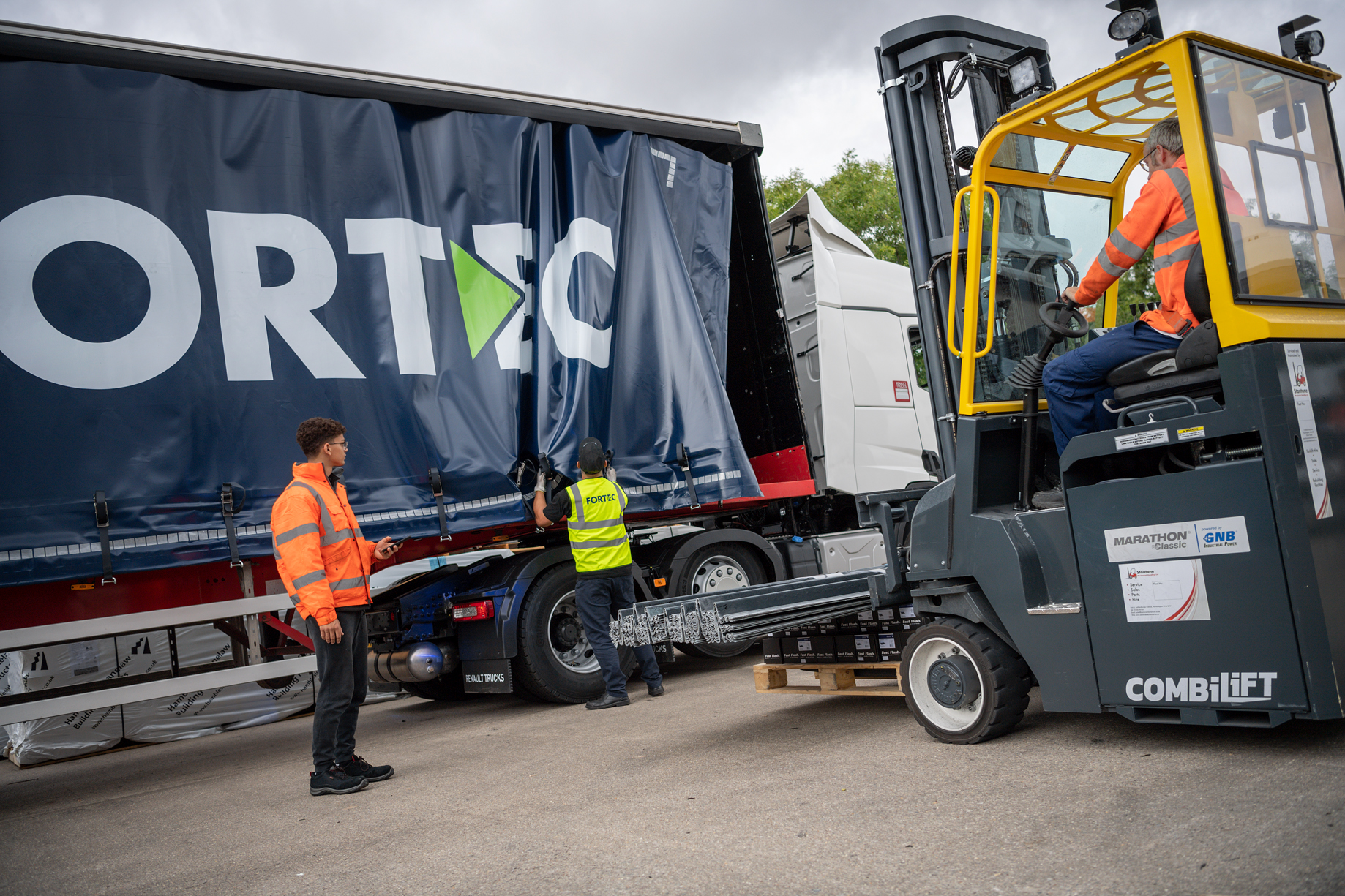
Fortec Distribution Network, a wholly owned subsidiary of Pall-Ex Group, is offering its members a market leading product portfolio by introducing the ‘Euro Pallet’ range.

Recently, Pall-Ex Group embarked on its biggest product range review in over 10 years to ensure Fortec and Pall-Ex members enjoy the most competitive range of pallet options in the industry, improving both flexibility and efficiency.

The review resulted in the introduction of the Euro Pallet Base range and the unique Parcel Pallet into the Fortec network, which will support consignments up to 1200kg. This will see the introduction of 5 new products, including:
• Parcel Pallet: 0.8 x 0.6 x 1.0 (up to 150kg)
• Euro Quarter: 1.2 x 0.8 x 0.6 (up to 300kg)
• Euro Half: 1.2 x 0.8 x 1.0 (up to 500kg)
• Euro Light: 1.2 x 0.8 x 2.2 (up to 600kg)
• Euro Full: 1.2 x 0.8 x 2.2 (up to 1200kg)

The new range will complement the existing standard tariff, including Fortec’s unique oversized pallet offering. Collectively, the Standard and Euro tariffs offer Fortec members the most comprehensive range of pallet dimensions available in the express palletised freight industry.

Further innovation and market research has resulted in the launch of the Parcel Pallet which is unique within the sector. The Parcel Pallet targets the grey area of the express delivery market, which sits between large parcel and small pallet consignments. It provides customers with a cost-effective, efficient, and secure way to send large parcel and multiple parcel consignments.

These additions to the product range give Fortec members the ability to offer complete flexibility to their customers, catering to a wider range of palletised freight requirements by allowing customers to choose the most appropriate pallet size for their freight.

Barry Byers, Managing Director – UK Group, at Pall-Ex, says “We’re very pleased to offer Fortec members this comprehensive range of products, the most competitive in the sector. We are always striving to provide service excellence and value to everyone who utilises the network and this improved product range ensures we can do just that.”

Balancing Customer Expectations & Costs in eCommerce Delivery

In a world where rising bills seem to be the norm for families and businesses alike, the delicate dance of balancing service quality with cost-efficiency has become a challenge for retailers and ecommerce delivery, writes Gemma Vasey, Business Development Manager, Asendia UK.

As consumers search for ways to stretch their budgets in the face of economic strains, businesses are also grappling with increased shipping, labour and operational expenses. Yet, the decision to pass on these costs to loyal customers is not a simple one, as transitioning from free to paid-for delivery and returns can stir frustration among value-conscious shoppers. So how can they find equilibrium between service excellence and cost-effectiveness, especially in times of economic uncertainty?

The influence of delivery costs on consumer behaviour

Recent surveys spotlight the pivotal role that delivery costs play in shaping shoppers’ purchasing decisions. A report by Asendia underscores this, revealing that 43% of the 8,000 global online shoppers surveyed rank delivery costs as a key consideration. Alongside criteria such as overall value for money (54%) and product quality (50%), the price of delivery exerts a significant influence on consumer behaviour. Moreover, authenticity emerges as a crucial factor in the post-Covid era, with 70% of UK shoppers expressing a willingness to support retail brands they perceive to be authentic, even during economic downturns.

Defining authenticity in the eyes of shoppers

For UK shoppers, authenticity translates to straightforwardly delivering promises (57%), transparent supply chains (41%), commitment to sustainability (39%), clear brand values (39%), and active adherence to those values (32%). Astonishingly, 43% of respondents noted that a brand’s authenticity would make them less sensitive to price increases caused by inflation, a sentiment particularly strong among Generation Z (48%) and Millennials (51%).

These insights underscore the need for brands to optimise their delivery services to provide transparent, fairly-priced, and reassuring shopping experiences. Communicating openly about the necessity of delivery charges can help prevent basket abandonment when policies change. To cater to diverse customer needs, retailers should consider offering an array of delivery options, especially for cross-border shipping.

Asendia, for instance, integrates various delivery choices into their clients’ websites, allowing customers to opt for lower-cost international postal services for non-urgent, lower-value items. Simultaneously, expedited services with enhanced tracking, notifications, and insurance cater to those seeking premium delivery options, and willing to pay for them.

Green delivery is a growing priority

The concept of sustainability is gaining traction among consumers, who are beginning to realise that fast and free deliveries often come at a cost to the environment. Brands that offer more sustainable delivery options not only align with eco-conscious consumers but also contribute to more environmentally friendly practices. Although options like carbon offsetting are not long-term solutions, they can assist retailers in reaching their Environmental, Social, and Governance (ESG) goals. Consideration should also be given to low-emission delivery methods, even though they entail additional supply chain costs.

Emphasising sustainability initiatives opens doors to new customer segments and fuels sales growth as environmentally-conscious consumers prioritise eco-friendly options. By adopting sustainable practices and leveraging intelligent technologies, retailers can transform formidable fulfilment expenses into opportunities to connect with eco-conscious buyers.

Uncovering hidden value

The potential within re-commerce platforms is another avenue for brands to unlock hidden value. Retailers can seize the chance to sell clearance stock and returns to business buyers, contributing to the flourishing circular economy. This strategic move reduces carrying costs and streamlines operations, proving advantageous for retailers aiming to enhance their bottom line.
Collaborating for success

A dialogue with logistics partners can be instrumental in kickstarting these endeavours. Many third-party logistics providers offer valuable advice and support for setting up returns consolidation through their networks, for example, as well as managing stock reuse, resale, donations, or disposal. Amidst these considerations, the tightrope walk between convenience and cost remains an ongoing challenge. As inflation fluctuates and the peak spending season approaches, retailers are better served to explore resource optimisation through inventory recovery solutions rather than resorting to strict shipping and returns policies that could alienate potential buyers.

Utilising delivery strategies

In this landscape, delivery deals can serve as potent marketing tools. While the annual delivery subscription model may work well for industry giants like Amazon and Next , smaller brands may encounter difficulties in efficiently managing costs and operations. In its place, brands can leverage special delivery options as a loyalty reward to strengthen customer relationships. Smart brands harness these opportunities to cultivate customer loyalty and trust, showcasing the intricate interplay between service and cost.

As the cost-of-living crisis persists and retailers grapple with rising overheads, brands are rightly seeking smart ways to offer more, for less. By delivering transparent and reasonably-priced delivery options aligned with consumer values, retailers can cultivate lasting customer relationships, ensuring both shopper satisfaction and their own financial stability in these uncertain times.

Subscribe

Get notified about New Episodes of our Podcast, New Magazine Issues and stay updated with our Weekly Newsletter.