Vertical Storage goes North

Modula, a leading provider of Vertical Storage Modules (VLMs) for any industry and application, has opened a new branch in Denmark marking the beginning of its expansion into the north. This strategic addition confirms Modula’s commitment to serving its customers more effectively and efficiently while further establishing its presence in the Nordic region.

With an impressive history in the field of automated storage since its first VLM was born in 1987, Modula has consistently delivered cutting-edge solutions to optimize warehouse and logistics operations, becoming a business partner for more than 20,000 customers around the world. The newest branch in Denmark, the ninth one in the world, marks a significant milestone in the company’s growth journey, enabling Modula to offer its state-of-the-art products and services to an even wider range of businesses in the region.

The Denmark branch, first of the planned northern additions, will allow Modula to work closely with existing and potential customers in the region, providing tailored solutions to meet their specific storage and retrieval needs. Therefore, Modula has hired a team of experienced professionals who are well-versed in the local market, ensuring that customers receive the highest level of service and support. To further enhancing customer satisfaction, this service will result in quicker response times for maintenance, technical support, and consultation.

In addition, customers in Denmark and the neighbouring countries will have access to Modula’s latest products, including vertical lift modules, horizontal carousels, customized software and picking solutions. All these products have been designed to improve warehouse efficiency and reduce operational costs in the supply chain. In accordance to Denmark and Sweden’s strong environmental values Modula remains committed to sustainability throughout the whole value chain. With Modula technologies, companies can minimize waste in all processes and create a better working environment for their employees.

Storage solutions for a wide range of local industries

“We are excited about the opening of our new branch in Northern Europe,” said Massimiliano Gigli, CEO and International Sales Director at Modula. “This expansion is a testament to our dedication to providing top-quality automated storage and retrieval solutions to our valued customers.” The company is looking forward to collaborating with businesses in Denmark to help them streamline their operations and achieve new levels of efficiency. This is also a mission close the heart of Jørgen Ladefoged, new CEO of Modula Nordics ApS: “After working for several years in logistics and industrial automation, I was seeking a new and exciting challenge that would combine innovation, growth, and a vision for the future. Modula’s rapidly expanding presence turned out to be the answer to what I was looking for. It’s a company that is continuously growing and is committed to investing more in the local market where it sees significant potential.”

Prior to its expansion plans Modula has taken a close look at the northern market to ensure that the newest locations are very well aligned with local trends and needs. Observations have shown that Sweden has seen notable developments in industries such as automotive manufacturing, information technology, electronic equipment production taking into consideration the geographical area and the ongoing growth trends. Denmark, on the other hand, is characterized by strengths in pharmaceutical production, technology, agriculture, food industry, renewable energies and sustainability. Meanwhile, Norway has a significant emphasis on oil and gas production and Finland on technology and manufacturing.

“I believe that Modula is the perfect product to introduce to the market due to its ability to adapt to any size, industry, and application. The work carried out in recent years with local dealers has allowed us to build brand awareness for our company, and we will continue to move in this direction to further establish our brand and make it known to all businesses, leveraging our international portfolio”, said Nicklas Lovqvist, Area Sales Manager Sweden. Modula’s expansion into Denmark and other Scandinavian countries aligns with the company’s mission to empower businesses worldwide with innovative, space-saving, and sustainable storage solutions. This new branch will complement Modula’s existing global network made by 4 headquarters (Italy, 2x USA, China), 9 branches (France, Germany, Spain, UK, Mexico, Singapore, Colombia, India, Nord Europa) and more than 100 Dealers around the world, consolidating the company’s position as a leader in the automated storage and retrieval industry. A new branch in Sweden will be added as early as the end of this year.

WOF & BUD Cargo Forum: Delivering Knowledge

The World of Freight (WOF) and cargo forum two-day conference highlighted key themes such as E-commerce, Sustainability, and Digitalization, presenting 46 renowned experts including representatives from Lenovo, Nokia, Maersk, and Huawei. Key takeaways emphasized innovation, adaptation, and collaboration. Steven Polmans of TIACA summarized the industry’s direction, stating, “Never normal is the new normal.”

Drawing almost 400 attendees from 34 countries, the forum was a melting pot of airlines, freight-forwarders, seaports, tech developers, and more. Key participants included Cainiao, Huawei, Bosch, Samsung, and Lenovo.

Networking was redefined with an unprecedented number of scheduled meetings and an exhibition zone featuring key market players like Vienna Airport, Turkish Cargo, UTC Overseas, TIMOCOM, and Scan Global Logistics, just to name a few. The event culminated in an Awards & Charity Gala on the Danube River, celebrating industry excellence Here are the proud recipients of the 2022 WOF & BUD Awards:

• Green Logistics Champion 2022: Port of Antwerp-Bruges • Greatest Technological Innovator 2022: Scan Global Logistics • Top Business Developer 2022: Quick Cargo Service • Best Logistics Infrastructure Development 2022: East-West Gate for Fényeslitke Railcargo Terminal Project • Best Developing Belly Cargo Operator 2022: LOT Polish Airlines • Best Developing Ecommerce Company 2022: Cainiao / Alibaba Group • BUD Cargo Community Award 2022: László Trifán from Celebi Ground Handling Hungary

The evening wasn‘t just about accolades in the logistics sector; it served as a testament to the fact that, at its core, the business community thrives on unity, empathy, and the shared purpose of bettering the world we live in. The generous contribution of Budapest Airport and Yusen Logistics of 11,500 EUR to the Hungarian League Against Cancer reminds us all of the importance of collective action and the difference it can make in society.

Podcast: The Future of High-Density, High-Performance Solutions

Episode 5 of our Podcast series, ‘Logistics Business Conversations’, is now available to listen to on Spotify, Apple Podcasts, Acast, Amazon Audible, YouTube, and other podcast distribution platforms – just search for ‘Logistics Business Conversations’.

“Don’t waste space in the warehouse, use the building’s volume,” is the advice from Editor Peter MacLeod’s guest in this episode – Damien Skinner, Country Manager of UK & Ireland for Hai Robotics EMEA.

Learn how automated picking and autonomous robots can collaborate to achieve fast storage and retrieval. How can storage density be maximised? Start small and add more robots after the proof of concept. Store up to 5 totes’ deep for ecommerce, apparel, general merchandise and irregular items. Productivity tips and ROI calculation.

Listen to any of our Podcast episodes here.


Give Warehouse IT Hardware a Second Life

Green warehouse IT involves much more than a paperless office. Green IT also means, among other things, responsible handling of procurement and disposal, or ideally the recycling of used corporate hardware. The Leipheim-based company Wanzl, which recently joined the world’s largest voluntary sustainability initiative, the UN Global Compact, is now working with the IT refurbisher AfB social & green IT. AfB is a multi-award-winning inclusion company where people with and without disabilities work together in the regular labour market. This promotes the social participation of people with disabilities. It specialises in the environmentally friendly and resource-conserving remanufacturing of IT hardware.

”We are very pleased to be working with AfB social & green IT,” said Andreas Starzmann, Chief Technology Officer at Wanzl. “This collaboration not only gives us a sustainable and environmentally friendly way to recycle the equipment we have decommissioned, but also an opportunity to support AfB’s work and support people with disabilities.” Nicolai Gräff, Partner Manager of AfB social & green IT, is also delighted with the new partnership: “On behalf of AfB social & green IT, we welcome Wanzl as a new partner and thank them for placing their trust in our services. By collaborating with our more than 1,600 IT partners, we are working together to advance our mission of inclusion in the labour market and environmentally friendly IT recycling.”

In modern corporate IT, large quantities of old equipment regularly accumulate – from laptops to smartphones to power supply units. It is a challenge to repurpose them professionally in accordance with the requirements of data protection and information security, and therefore involves a considerable amount of work. “Scrapping has always been something I’ve been personally opposed to and no longer fits in with today’s times. Our warehouse of old devices is constantly growing in the hope that it will be possible to put them to use again,” said Dierk Meissner, Senior Vice President Global IT at Wanzl, and adding: “Many of the devices are well suited to a second life after professional use, as they were often only replaced due to expired manufacturer warranties or to standardise infrastructure. Collaboration with AfB is the solution to this.”

Recently, the first trolleys from Wanzl, which are compliant with dangerous goods regulations, were brought to the nearest AfB branch with discarded notebooks, monitors, PCs and smartphones. The used hardware, which is usually still fully functional, is refurbished there, all data is deleted and the devices are equipped with the latest operating system and sold. This extends the useful life of a smartphone, for example, from around two to four years. Avoiding new production reduces emissions and conserves valuable resources. Devices that cannot be remarketed are properly disassembled and recycled.

Beyond this ecological contribution, used hardware at AfB is not only “green”, but also “social”. This is because it is a non-profit inclusion company. Of the approximately 650 employees, around 49 percent are severely disabled. Hence the name “AfB”: Arbeit für Menschen mit Behinderung (translation: work for people with disabilities). For this exceptional business model that successfully combines environmental and social sustainability, AfB was awarded the IT Business Distri Award Gold for Refurbishing & Remarketing 2023, the German SDG Award 2022 and the German Sustainability Award 2021.

Through the partnership with AfB, Wanzl is taking an important step towards contributing to the achievement of the 17 Sustainable Development Goals (SDGs) and assuming its responsibility for the environment and society. AfB contributes to seven SDGs through its socio-ecological IT services. The partnership between Wanzl and AfB strengthens the impact of these SDGs and contributes, among other things, to increasing awareness of environmentally friendly recycling of IT hardware.

Automation Solutions for Swedish Sorting Centre

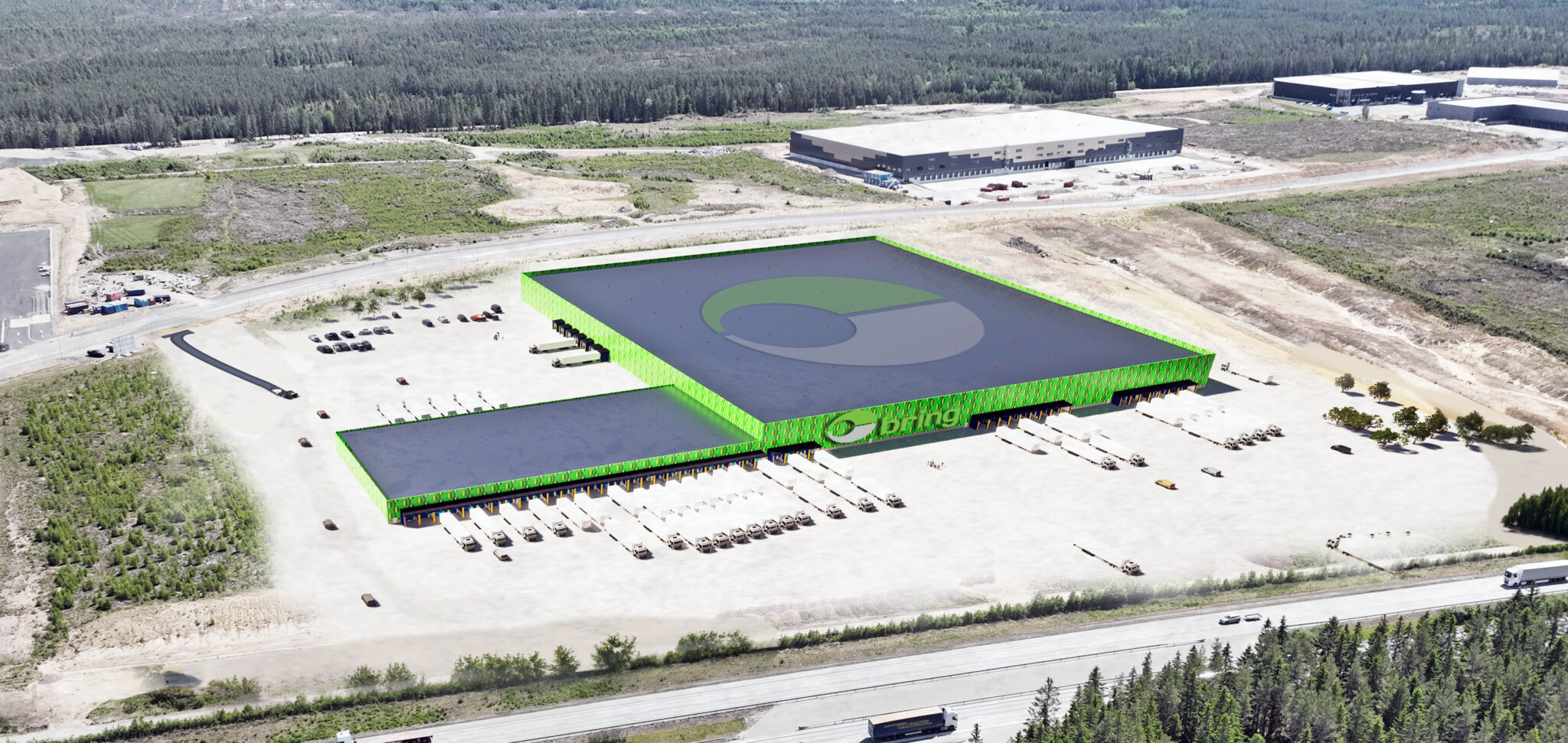
Fives, a partner for transforming supply chain facilities, was recently selected by Posten Bring to supply a new sorting system. This major logistics player in the Nordics chose Fives’ solution to automate their new sorting centre in Jönköping, Bring’s largest hub in Sweden and twice the size of the existing terminal.

Hanna Jonasson, Director of Operations for Bring, explains the background to this investment: “Over the past three years, our Swedish parcel volumes have grown by 169 percent, and strong indications suggest that our growth has only just begun. Jönköping is the backbone of our logistics chain, and it is of utmost importance that the parcel flow functions well. Therefore, we have made the decision to invest in automation from Fives – a solution that will be tailored to our specific needs”.

This project is part of Bring’s recent significant investments in their terminals and vehicle fleet to expand their market share and limit their carbon footprint.

The new sorting solution will increase capacity by 300 percent compared to the current system. It is based on two of Fives’ main proprietary technologies: the singulator and the cross-belt sorter, which guarantee a high level of automation and efficiency.

Fives’ singulator optimizes the item flow by transforming the 3D bulk flow of packages and flyers into a 1D stream of objects with regular spacing. The technology automatically feeds one induction line connected to the sorter.

Fives’ GENI-Belt sorter is equipped with 8 GENI-Feed induction lines, cameras, volume detection and more than 220 chutes used for local, domestic and international destinations.

The unparalleled accuracy and availability of the technology, combined with a compact layout, ensure high-performance with minimum operational costs. The solution designed by Fives’ process experts relies upon configuration redundancy to optimize the delivery capacity of the hub. Posten Bring plan to use the new sorting system by mid-2025.

“Our new system will ensure our ability to sustain growth. In order to continue scaling our volumes, we must not only operate at a faster pace but also employ smarter solutions”, Jonasson adds.

The new partnership with Posten Bring reinforces and cements Fives’ position in the Nordics.

With 1,800 employees in Europe, Asia and North America, Fives’ Smart Automation Solutions Division provides high-end automation solutions with a broad portfolio of proprietary technologies and software for the retail and FMCG (Fast Moving Consumer Goods), postal and courier, e-commerce, manufacturing industries and airport markets.

How can the Logistics Industry Unlock its True Potential?

Transportation and the logistics industry serves as the lifeblood of today’s modern economy, binding together businesses, streamlining supply chains, and championing eco-friendly initiatives on the path to achieving net-zero emissions. However, it also harbours the potential to disrupt these pivotal strategies if they are not managed appropriately, writes Transporeon CEO Stephan Sieber.

Nowadays, many industries have seamlessly embraced (and thrived from incorporating) digitisation into their businesses. However, transportation has seemingly lagged behind and it has been that way for some time. In fact, the lack of any meaningful evolution predates events such as the war in Ukraine, the energy crisis, and even the pandemic. Yet, these events have only highlighted the importance of seamless transportation to continue delivering goods globally. So why is it being neglected?

In the current landscape, numerous inefficiencies mar the transportation market. Idle assets, empty runs, static capacity, unwarranted waiting times, and isolated operations cast a substantial shadow on economic prosperity. In addition, the lack of investment in digitisation perpetuates administrative burdens such as manual labour overload, emotionally driven decision-making and a scarcity of actionable insights. And, compounding these issues is the looming ecological threat of untracked and unrestrained CO2 emissions. At both micro and macro levels, there’s no denying that transportation appears sluggish in adapting to the demands of our reality.

However, it’s not all bad news and there are an array of solutions available to help reverse this trend. For instance, synchronising transportation with the world by leveraging digital solutions to usher in efficiencies that positively impact the economy, businesses, and the environment can continue to thrive. This transformation of transportation hinges on three fundamental components…

Enterprises must unite and work stronger together to unlock operational benefits. For example, there’s no reason for trucks to travel hundreds of empty miles when a similar truck, equipped for the task, is more than likely unloading nearby. It’s time for shippers and carriers to forge connections with one another, establish common business standards, foster collaboration and embrace a platform that facilitates network-wide interoperability.

Connecting shippers, load recipients, service providers, brokers, forwarders and asset-based carriers is integral to creating a collaborative transportation community. By adhering to common standards and promoting interoperability, all stakeholders can uncover new business opportunities while achieving economies in their operations. This spirit of collaboration will grant the transportation market the resilience and agility – both critical components, as highlighted in the 33rd Annual State of Logistics (SoL) report.

The era of Excel spreadsheets, manual searches, and endless route and rate browsing have become now relics of the past. This inefficient administrative burden is burning through valuable resources and failing to deliver optimum outcomes. Now is the time for enterprises to pivot from mere data collection and embark on the process of generating transactions with the data at their disposal. Automated, data-driven decision-making within a collaborative and interconnected network, leveraging historical patterns, real-time data, and future predictions, will enhance transportation operations.

Finally, in the logistics business, having real time insights are vital to success. This allows the business to control multiple ongoing operations, whether that entails monitoring CO2 emissions, accessing spot rates, evaluating capacity, or receiving transport ETAs. Equipped with these real-time insights and the ability to act upon them, logistics companies can anticipate future developments, swiftly address issues, and assert control over operational efficiency.

The past two years witnessed a rush for outcomes at nearly any price, a trend likely driven by necessity rather than desire. Nevertheless, this approach threatens the industry’s sustainability unless addressed.

In conclusion, synchronising transportation with the world requires a shift in approach and mindset – a challenge which spans the entire industry. It’s clear that only through the implementation of digital tools, adoption of a culture of collaboration, automation of the decision-making processes, and the harnessing of real-time insights, can the necessary steps be taken in establishing the connectivity and interoperability required to bring logistics businesses together. The time for change and digitisation is upon us and companies should look to modernise their infrastructure or risk getting left behind.

Strategic KYX Partnership for Logistics

KYX – Know Your Client with Know Your Cargo – by Deloitte, powered by Nexxiot, has been launched. Deloitte, known for its range of services including audit, consulting, financial advisory, risk management, tax, and legal services, is joining forces with Nexxiot, known for its expertise in digitalizing supply chain assets, such as shipping containers and railcars. Nexxiot’s network of sensors and artificial intelligence capabilities offer valuable insights into supply chain inefficiencies, reducing uncertainty and operational costs. Deloitte will play a crucial role as the integration partner responsible for delivering these digital transformations.

This strategic partnership will provide a robust, scalable infrastructure rooted in a strong commitment to regulatory excellence and trust. It leverages Deloitte’s established KYC (Know Your Client) services and implementation capabilities with Nexxiot’s cutting-edge asset intelligence technology and trusted CINFONI (Client Information Network Intelligence) platform. CINFONI has regulatory approval for generating, implementing, recycling, and exchanging ‘Golden Records’ within the Banking, Financial Services, and Insurance (BFSI) sectors.

Nexxiot CEO, Stefan Kalmund, said, “The strategic partnership with Deloitte and Nexxiot represents a significant step forward for supply chain participants. It will accelerate the adoption of fleet-wide technologies, fostering visibility, transparency, and operational excellence.”

Deloitte’s James Yearsley, Lead Partner for the Transportation, Hospitality and Services Sector for NSE (North & South Europe), added, “Through this partnership, we aim to set a new global standard for KYX services, benefitting all stakeholders in the logistics sector, including trade finance, banking, and insurance. Deloitte and Nexxiot offer new services based on real-time data, covering all aspects of KYX from door-to-door, internationally.”

Deloitte and Nexxiot are committed to enhancing global trade compliance and operational efficiency through this partnership. It offers the logistics industry a means to embrace a future marked by improved efficiency, resilience, and integrity, all made possible by this strategic collaboration.

Survey Results: AGVs & AMRs – Read Now

Logistics Business conducted a reader survey with BlueBotics on the usage of automated vehicles in the warehouse. The survey results have now been published and are available to read or download here.

The exclusive survey focused on AGVs, AMRs and automated forklifts, covering usage, navigation technology, tasks, challenges and purchasing.

Mobile robots and automation are transforming the way businesses operate by offering increased efficiency, cost savings and improved safety. But what are the potential opportunities and challenges associated with these technologies? And, what might happen next?

Survey Results

In this free report, we take an in-depth look at the current and future state of automated vehicles, covering topics such as:

A snapshot of the mobile robotics landscape today: why mobile robots are being adopted, and which vehicles are in use today; what goes into choosing the form factor of vehicles, and future fleet expansion; criteria when choosing an automated vehicle supplier, and defining what the vehicles will interact with on-site; key challenges when adopting automated vehicles – and how they’re paid for; defining the success of an automated vehicle programme.

We hope you find it useful and will be bringing you further surveys in future.

St. Modwen Logistics Bolsters Teams

St. Modwen Logistics (“St. Modwen”), one of the UK’s leading logistics developers and managers and a Blackstone portfolio company, has bolstered its Portfolio and Development teams after a series of new hires and senior promotions.

Following several acquisitions in the North West, St. Modwen has appointed Howard Hill as Director of Asset Management for the region. Howard joins from Harbert Management Corporation, a US-based alternative asset manager, having previously spent nine years in CBRE’s Asset Management team. As well as managing St. Modwen’s existing portfolio of assets, Howard will also work closely with the Transactions team to identify and execute opportunities to expand its portfolio in the North West.

Howard will be supported by James Berry who joins St. Modwen as an Asset Manager for the North West. James has spent the past five years specialising in Industrial and Logistics Agency, most recently as a Senior Surveyor at CBRE based in Manchester. In his new role, James will oversee the business plans for several of St. Modwen’s assets in the North West, optimising their operations and liaising closely with customers to improve asset performance.

Elsewhere, St. Modwen has promoted two members of its Development team as the company looks to realise a c.21m sq ft pipeline of modern, sustainable warehousing as part of its growth strategy.

Hollie Howe becomes Planning Director having played a key role in bringing forward a number of strategic sites. These include St. Modwen Park Gatwick, where planning consent is in place to deliver 115,000 sq ft of Grade A warehouse space close to the airport. Hollie is also leading on planning promotion of the 120-hectare site at Burnt Mills in Basildon as well as the planning application for the development of 1.2m sq ft at Brentwood Enterprise Park. Hollie joined St. Modwen in 2021 having spent the previous 10 years working for national housebuilders and Savills.

Meanwhile, Carys Allen is promoted to Senior Development Manager and will lead on projects in the South West. Carys, who joined St. Modwen in January 2022, plays a key role in sourcing and securing new sites for development and is leading the delivery of a 342,000 sq ft unit in Chippenham – the company’s largest speculative unit development to date – on a 72-acre site in the established South West logistics triangle.

Lee Nash, Head of Development at St. Modwen Logistics, said: “We have ambitious plans to expand our portfolio over the next three years, and we are continuing to invest in our development and asset management capability to support our growth strategy. Hollie and Carys both have a key role to play as we navigate the current challenges around planning and development, and the arrivals of Howard and James further bolster our asset management team in the North West where we are supporting businesses at all stages of the supply chain.”

Docket Grab Warehouse Hanging Sign

When the Samworth Brothers company was looking for a new hanging sign for its chilled distribution site in Leicester they chose to partner with inotec which specialises in supplying bespoke warehouse labelling and line marking solutions. The result is an innovative ‘docket grab’ hanging sign that uses ball bearings to grip dockets. These signs, which can be either single or double-sided, are now being used in the pick by line area of Samworth’s Oak Meadow facility.

The Samworth Brothers site in Oak Meadow Leicester has a storage capacity of over 10,000 pallets across chill, deep chill and frozen. Around 580 people work on the site with orders being picked by 160 warehouse operatives.

Glyn Maude is General Manager, Samworth Brothers Supply Chain, he explains why the new sign was needed, “As our business has grown rapidly over the last few years we needed to change how we picked orders in this warehouse. Originally the whole area was racked, but it was decided to take part of the racking down to create a pedestrian only picking area surrounded by barriers.

“This meant we could present the products to the pickers in that area instead of getting them to pick out of the racking. The lanes of pallets run towards the racking area and the stock comes into the picking area from underneath the racking, deposited by fork lift truck.

“I knew that I would need hanging signs for the new area but couldn’t see anything suitable on the market. I’d seen other companies using drainpipes cut into segments with a slit to hold a label and I’d thought that there has to be a better way of doing this so I approached Steve Towler at inotec. I already knew Steve as he’d helped me with line marking and signs for our marshalling lanes here in Leicester and done a great job. Once I’d given him the size of sign and what it needed to do, he went away and came up with the docket grab concept. A couple of mock-ups later, we had our ‘docket grab’ hanging sign.

“One of the qualities I like about inotec is that they help me plan out and design what I need. They also give me an honest and accurate quotation regarding the cost; I get a lot of good advice from them. The idea of using ball bearings to grip the pallet labels was all inotec’s.

“In the pedestrian only zone the picker collects the pallet of stock using a hand pallet truck and walks down the picking line of pallets. He then scans the pallet label that is held in the hanging sign above a pallet, this details a retailer’s order. The label tells them how many cases to put on that particular pallet for that order. This allows us to control what stock is going where.

“We know when a pallet is fully picked as we’ve set the height of the hanging sign and the length of the label to indicate the full height of an order. When the pallet is full the picker can clearly see there is no room for more stock on that pallet. This means we have uniformity for all the pallets we’re picking. Prior to this we were sending pallets out that were all different heights – not many were too high but some were too low, now they all come out at a standard height.

“Our new way of working has helped us reduce the amount of pallets we’re sending out to retailers. It also ensures we fill the trucks up as much as we can so that we don’t put additional vehicles on the road. This reduces our distribution costs benefitting both us and our customers.

“A further advantage of the hanging signs is that the pallet labels are now up in the air and out of the way – before they were stuck on the pallet and could fall off, get stuck to something else or just generally go missing! The new sign system prevents this happening.

“Our pick accuracy is already really high at 99.98 per cent but we still have a margin for error that we want to eliminate. Although we’ve only been operating this pick by line system for a short time I am expecting to see an improvement in picking accuracy.

“The signage work that inotec has done here for us is great. We work really well together as our two companies have a lot in common in terms of work ethic and the way we view things. It’s a fantastic business, I’d give them ten out of ten every time.”

Subscribe

Get notified about New Episodes of our Podcast, New Magazine Issues and stay updated with our Weekly Newsletter.