New Digital Capabilities for Korrvu® Packaging

To improve turnaround time from design to production, SEE® introduces new digital die cutting capabilities for its SEALED AIR® brand Korrvu® retention and suspension packaging.

This new offering replaces traditional die tooling with digital die cutting, which speeds up production lead times from months to weeks.

Digital-first production also allows customers to place smaller minimum order quantities, so they don’t have to store excess packaging at their business.

Korrvu® retention and suspension packaging uses a strong, low-slip film to surround products, protecting them from shock and vibration with very good visibility. The packaging is kerbside recyclable with the plastic film attached to simplify recycling by consumers and improve sustainability.

“Korrvu® packaging solutions were traditionally cut with physical dies that were made to order for each customer. That process could take months to perfect,” said Ingo Lublow, EMEA Director Protective & Equipment Marketing at SEE. “Our new digital Korrvu® capabilities eliminate the need for custom tooling, so our customers can get their designs prototyped, sampled, and into production much more quickly.”

With the new digital offering, customers can:

• Get more design flexibility: Editing designs can be quicker because new physical tooling isn’t required, so customers can more easily customize designs by product, season, location, and customer. Unique cutouts and laser engraving on the corrugate help differentiate products and packaging from others in the market.

• Switch to on-demand production and ordering: Digital technology allows high-volume and short-run Korrvu® orders to be produced on demand, helping customers keep just the right amount of packaging on hand while freeing up storage space in warehouses.

• Improve sustainability: Digital finishing simplifies the supply chain to reduce the carbon footprint. Plus, Korrvu® retention and suspension packaging is made with at least 50% recycled content, is reusable, and is kerbside recyclable.

Mounting Inventory Visibility Challenges add Pressure

Today, at its 2023 European Exchange customer conference, Manhattan Associates Inc. (NASDAQ: MANH) announced the findings of its latest international omnichannel research, highlighting how retailers are increasingly digitizing their offering in efforts to improve customer experiences and maintain market share, with inventory visibility being key.

THE CHANGING FACE OF THE STORE

Trending in the right direction, 54% of retailers reported that their customers could buy in-store and return online (50% in 2022), and if the product was out of stock in-store, 48% provided buy online and return in store options (46% in 2022). However, retailers also commented that on average they only had an accurate indication of inventory across their entire operations 70% of the time (down from 74% in 2022).

Shoppers expect all retail touchpoints to be connected, frictionless and increasingly personalised. “If you don’t know where a third of your inventory is, or what it is that you have, that’s a lot of stock that is either not being sold, marked down or at worst thrown away,” commented Henri Seroux, SVP EMEA at Manhattan Associates.

“It’s vital that retailers have solutions with the flexibility and agility to allow them to recognise and act on shifting consumer behaviour in near ‘real-time’. With access to accurate data, retailers can deliver actionable insight into the hands of their associates, enabling them to add value to every customer’s unique path to purchase,” Seroux continued.

FRICTIONLESS COMMERCE MEETS FRICTIONLESS ENGAGEMENT

It is clear consumers are keen to engage actively cross channels when looking to purchase products and 84% will start their buying journey online (82% in 2022). However, 16% (17% in 2022) of retailers still reported that their organisation’s in-store and online operations continue to run as separate functions, suggesting that while year-on-year, more retailers are offering seamless shopping experiences, there is still room for improvement.

In terms of how consumers prefer to engage with retailers before and after buying a product, overall, email (47%) remains the preferred engagement channel, followed by direct in-person contact with the store team (43%). Interestingly, social media is now the preferred channel of engagement for four in ten (40%) consumers, with this preference more likely amongst younger consumers, peaking with the age group 25-34 at 55%.

Natalie Berg, retail analyst, author, and founder of NBK Retail commented: “The research shows retailers are making progress when it comes to seamless omnichannel experiences. As the role of the physical store evolves past simply the transactional, the roles of associates must also develop beyond purely assisting the sale too. Armed with the right technologies and accurate inventory and customer data, store associates have the power to educate, inspire and ultimately create long-lasting brand loyalty, even during times of economic flux.”

PROTECTING POCKETS & THE PLANET

The perception, and at times reality, that green products come at a price premium means that shoppers are deprioritising these purchases in favour of low-cost alternatives with only 45% of consumers considering sustainability an important factor when choosing where to shop, down from 50% last year.

Younger generations are more likely to consider a retailer’s environmental/sustainability efforts compared to older consumers, with 55% of 18–24-year-olds reporting it as a top or important consideration for them. 17% of the 24-35 age bracket went further still and said they would actively avoid retailers if they were not environmentally conscious, compared to only 10% of over 55s saying they would boycott these same brands.

“The future of our planet is not something that we can or should be forced to compromise on as consumers or retailers, yet clearly, in the current economic climate, affordability is taking priority over sustainability. This year’s research highlights how important unification across omnichannel commerce and supply chain is, as an avenue to lessen the economic burden on consumers, but also, as a way to address the longer-term environmental impact unchecked consumerism is having on our planet,” finished Seroux.

‘Pop-up’ Fulfilment Service Launch Delivers

UK logistics specialist Kammac is taking the pain out of e-fulfilment with a new pop-up service, helping start-up businesses to outsource their operation within days. Backed by dedicated centres and experienced personnel, the solution gives companies the flexibility to scale up rapidly without committing to long-term overheads or compromising on customer experience.

The success of any new online venture depends on fulfilling customer orders in a way that is quick, responsive and reliable – but as business grows, so does the infrastructure challenges. For rapidly growing start-up ventures, the quality of service provided can be at risk when it comes to outsourcing logistics and fulfilment.

“We know that a brand’s reputation depends on its customer service, and this can be damaged if the right processes aren’t in place. By dedicating pop-up spaces to start-ups, online retailers and entrepreneurs can benefit from Kammac’s in-house experience and trained staff, to reduce risk, maintain quality and get a professional ecommerce operation up and running fast,” explained Alec Hunt, Kammac’s Head of Ecommerce and Value Added Operations.

Kammac has already established two e-fulfilment centres at its sites in Knowsley, near Liverpool, and Burton-upon-Trent. Each space is pre-set to suit the range of e-fulfilment requirements, meaning that the service can be up and running within days.

The company is aiming to expand to a further six sites, allowing Kammac to fulfil up to 100,000 orders per day for customers. These sites will be based around the UK, giving customers more flexibility in their fulfilment options and enabling strategic locations close to their centre of operations.

Crucially, Kammac has designed the centres using a modular approach offering scalability and rapid layout changes as required. With the capability in each centre to process more than 10,000 units per day, this means Kammac can scale operations in line with its customers’ growth.

With no minimum order quantity (MOQ) or contract term, start-ups have the flexibility they need, with the pop-up centres operating on a ‘pay as you go’ model, an attractive option for young businesses.

In addition to the scalability and flexibility of the space, Kammac’s experienced team will provide total support for the online brand owner – even helping with forecasts and stock planning – allowing them to focus on building their business.

“The agility and support of the pop-up ecommerce solution is key to our offering. A customer might need only a fraction of the space to start with and grow from there. Equally, there might come a time when order volumes decline and they need to scale down,” explained Hunt.

“Similarly, most smaller businesses do not have detailed logistics knowledge or dedicated personnel. We provide this for them, and our experienced team will help guide them through the process, to ensure everything is both commercially efficient and effective in terms of giving their customers the best ecommerce experience. Whatever the circumstances, we will be there to solve and fulfil their ecommerce needs, ensuring their brand is safe in our hands. As well as continuing to expand this service, we’re also recruiting more experts to join our growing ecommerce team,” Hunt concludes.

Optimize Compound, Workshop Vehicle Logistics

D’Ieteren Automotive, the official distributor of Volkswagen Group brands in Belgium, has selected INFORM, a global leader in optimization software, to provide a comprehensive solution for vehicle logistics and compound management. This collaboration aims to replace D’Ieteren’s former system with INFORM’s state-of-the-art software, enhancing efficiency and transparency across all vehicle logistics processes including Workshop and PDI.

With a market share of 22.5% and over 1.2 million vehicles on the road, D’Ieteren Automotive is a significant player in the Belgian automotive industry. The company manages a robust network of independent dealers across the country and offers a wide range of services, including maintenance, financing, leasing, and used vehicle sales.

The project’s goal is to implement INFORM’s software suite, designed specifically for the complexities of the vehicle logistics sector. The system, based on Artificial Intelligence and Operations Research, will cover yard and workshop operations at the compound in Kortenberg, near Bruxelles airport. It will provide comprehensive capabilities for optimized parking, real-time work order assignment as well as automatic workshop activity scheduling and efficient execution. All processes will be highly automized and improved by using the proven INFORM algorithms. With the new system and central data management in place, D’Ieteren Automotive will be able to control all its vehicle processes more efficiently at their compound.

“D’Ieteren Automotive is committed to providing fluid and sustainable mobility solutions to our customers,” said Christian Quaedpeerds, Automotive Logistics Manager for D’Ieteren Automotive. “By partnering with INFORM, we aim to leverage their expertise in digital decision-making and AI to enhance our vehicle logistics processes and additional services, ultimately delivering better service to our customers.”

The new system will offer a range of benefits, including higher punctuality, increased efficiency, shorter delivery and processing times, higher customer satisfaction, and future-proof company structures. The solution is expected to go live in 2024.

“We are excited to embark on this journey with D’Ieteren Automotive,” said Hartmut Haubrich, Director Vehicle Logistics at INFORM. “Our solution is designed to handle the complexities of the Vehicle Logistics industry, and we are confident that it will bring significant benefits to D’Ieteren Automotive. We look forward to driving the digitalization of their logistics processes and support D’Ieteren on their journey as the mobility provider for Belgium.”

This partnership marks another milestone in INFORM’s mission to supplement classic IT systems and increase the profitability and resilience of many companies. With over 1,000 software engineers, data analysts, and consultants supporting more than 1,000 customers worldwide, INFORM continues to lead the expansion of digital decision-making through AI applications in vehicle logistics and many other sectors.

Warehouse Tech Driving Growth at Family Firm

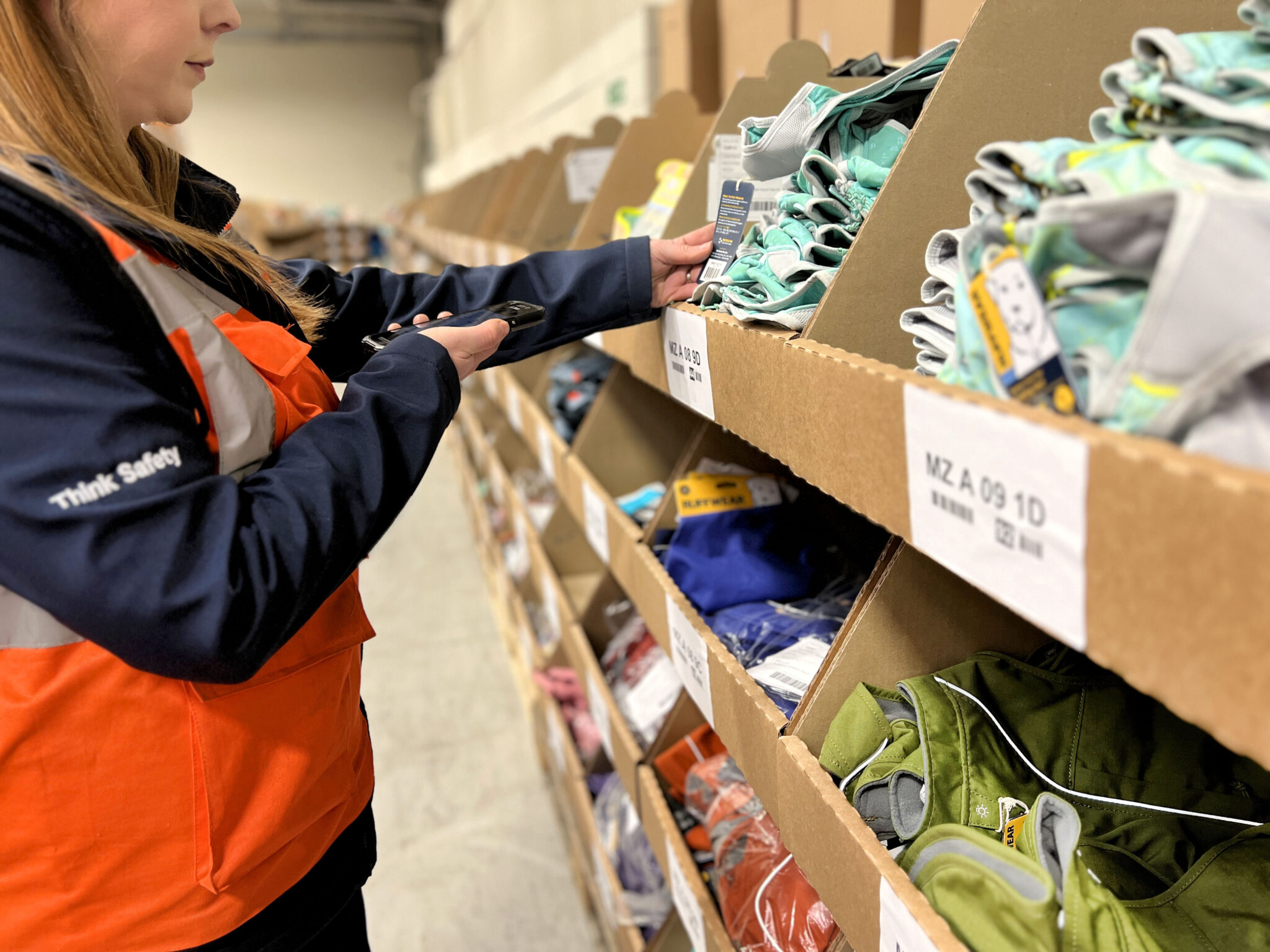
One of the UK’s top three automotive salvaging and recycling companies is powering forwards with its ambitious five-year growth plan thanks to timely investment in a digital warehouse management system (WMS).

In just 24 months, since first installing SnapFulfil WMS, Dorset-based Charles Trent Ltd has doubled its warehousing space, as well as its stock holding and orders going out – with over 3,000 ‘green’ parts being processed every week – without increasing head count. With operations much more streamlined, efficient, productive and profitable, the company is on track to achieve its predicted turnover of £250 million by 2026.

The family-owned business, which was founded in 1926, has continued to thrive thanks to its forward-thinking attitude to technology. Influenced by Amazon, the firm’s high-tech operation is the only one of its kind in the UK where you can source a particular part online and then have it delivered next day.

Architecturally robust and easily configurable, SnapFulfil was originally selected for Charles Trent’s Holten Heath distribution centre (DC) but has subsequently been onboarded at its new Poole DC, with a combined digitally-driven warehousing space of 75,000 sq.ft. This latest implementation demonstrates the flexibility and configurability of SnapFulfil and its reputation for delivering rapid ROI, industry-leading deployment speed and low total cost of ownership (TCO).

Charles Trent’s Distribution & Operations Manager, Matt Groves, said: “We used to have about 2-3 orders per day going astray within the old system, but full traceability via SnapFulfil is a huge advantage in a variable business such as ours. It’s also about tempo and efficiency, because in receiving goods staff can scan, process, and have them on the shelf in next-to-no-time – and handle 30 at a time without being label reliant. I also like how SnapFulfil, even from a long list of locations, identifies the part by the prefix of the vehicle class, as this means it can be used by staff in both our DCs simultaneously, and at any point in our operations.”

Plans are in place for both facilities to increase from 18 hours daily across two shifts to 24/5, which will massively increase the company’s order processing capacity, again demonstrating the efficiency gains of SnapFulfil.

Looking ahead, Charles Trent is on track to open another four new recycling/distribution centre sites by 2026, in major population centres across the UK. At the heart of its plans will be SnapFulfil which can support rapid scaling of fulfilment processes, as well as quick succession of multiple site facility rollouts.

AI’s Transformative Role in Warehousing

Everybody is talking about Artificial Intelligence but what are its potential applications for warehousing and supply chain? Edward Napier-Fenning, Sales & Marketing Director of leading supply chain software company Balloon, explores five key areas that can boost performance – including route planning, picking, labour management reporting and data entry.

Quite suddenly, Artificial Intelligence (AI) is everywhere. As with the early days of many other revolutionary technologies, there is a lot of overclaiming, and a lot of what is currently touted as ‘AI-enabled’ is really only a sequence of, admittedly very fast and very clever, algorithms, following logical pathways devised by the humans. The ability to process immense amounts of ‘big data’ at lightning speed is impressive and extremely valuable, but it doesn’t of itself constitute Artificial Intelligence. True AI has the ability to learn from historic data and from current activities, and, in a sense, rewrite its own algorithms.

The pace of development of AI is accelerating and we can already see some key areas in warehousing and logistics where it can be applied.

1. Enhanced route planning

Up to now a driver has set off with a fixed route, perhaps a regular round, or one planned a day or two earlier, and it is up to him/her to work out the best response to an accident, traffic jam or other event as and when these arise. Now, traffic management can be linked in real time to resources such as Google, working out not just the work-around a current problem, but using its learning to predict where the congestion is likely to occur, which strangely often isn’t at the site of the actual incident. This makes a more robust avoidance recommendation and helps keep deliveries to and from the warehouse on schedule.

This approach to route planning can work in tandem with dynamic load building. Currently, there isn’t a full order file at the beginning of the day, or at the point where drivers and routes have to be fixed for the next day’s operations. The route, therefore, may include destinations where there isn’t actually a drop to be made, or leave out drops that could usefully have been made. Intelligent systems can continually replan, modify and optimise the routes as the order profile builds up. That in turn can assist with the next topic, that of efficient order picking, which of course has its own pathing and routeing issues.

2. Efficient picking

A lot of the noise around AI in the supply chain is around issues like inventory and ordering. Improvement here is clearly important, but we have barely begun to touch on how to run the warehouse more efficiently, which is where some really big labour and administration costs lie – as well as potential savings.

Pick path optimisation is a hot topic in warehousing, although at the low end this amounts to little more than putting orders into a sequence and chopping them up into blocks of work. It is nice to be able to do this really quickly, but true AI is beginning to be able to look at the whole situation more intelligently: where goods are in the warehouse, what goods can or cannot be combined on a given trolley or container (and where those containers are), what the priority orders are (which has clear links to the routeing question above), and thus building the most efficient pick routines possible.

AI will be able to improve the choice and operation of picking strategies – and the optimum may differ according to the type of goods, or even the time of day. Strategies are many and varied: for example batch picking, which involves walking a route, picking one SKU at a time for a batch of orders. Or it could be zonal or ‘cluster’ picking where the operator picks all the SKUs in one ‘zone’ for a batch of orders, and the tote (with or without that operative) then moves on to the next zone.

Cluster picking is usually more efficient but does require the layout of goods in the warehouse to be optimised, so that goods most likely to occur in the same orders are grouped together, and the orders to be clustered around similar profiles. It also means that orders aren’t necessarily being picked in strictly chronological order, i.e., according to the departure times of the delivery route, and so are vulnerable to congestion delays, perhaps because of narrow aisles or the need to separate pedestrians from trucks and other machinery.

Working with client Pets Corner, Balloon has been developing a general purpose order clustering model, which can operate as a cloud-based web function. The new technique has accelerated the time taken to pick a wave of orders by 38%. This approach doesn’t strictly use any developed AI, but we can easily see that AI could enable further significant improvements in both the layout and operation of order picking and the selection of the most appropriate strategy for those orders, right now. We are, for example, working on ways by which this approach could be extended to multi-line orders, and to having ‘start points’ for picking routes at different places in the warehouse. That rapidly becomes rather complex, and AI will be very helpful in working things out.

One source of efficiencies is that operations need not be so bound by ‘standard’ processes, which sometimes may not be necessary. A minor example is some work we recently did for Birlea. This firm had a conventional procedure whereby picked goods are given a ‘WMS’ label showing the order to which they are assigned, and sent on for checking and repacking, after which they are given a different ‘carrier’ label. But their furniture items don’t need checking or repacking. It proved possible to eliminate the WMS label for these goods, and reprogramme the SQL so that the system thinks the carrier label is the WMS label it was expecting at this point. That in itself doesn’t require AI, but it is easy to conceive of AI systems that can learn to recognise that for a particular item certain processes are redundant and can be eliminated – without the risk of a human operator making the wrong call.

3. More effective labour management

In current conditions the greatest challenge for increasing efficiency is that of where to allocate scarce and expensive labour. A facility with good Warehouse Management Software (WMS) and other systems should have a great deal of data from end to end: what is happening in receiving, put away, picking, replenishment and so on. That should tell the operator where they need to put their people, but it is complex. A traditional WMS manages this, up to a point, but relies heavily on people creating, inputting and maintaining data, from standard times for elements of work, to who is allowed to perform certain tasks, and so on.

To some extent we are already able to marshal goods, activities and resources more effectively using historical records and current data capture to allow more complex labour management models. But AI could certainly make a further contribution in pulling data from the various different sources and making sense of it.

Effective deployment will become even more important as companies take up the use of robotics in the form of ‘cobots’ – machines working collaboratively with people. This is perhaps particularly pertinent for SMEs, who can increasingly afford this type of automation, and need it to be a lot more flexible than the big ‘goods-to-person’ automated systems operated by large operations. For example, workers could be ‘tagged’ with a Bluetooth device to locate them relative both to the current or intended position of a robot and the position and current status of priority orders, but taking full advantage of this requires intelligent systems.

We don’t see the use of AI to improve labour efficiency as primarily about reducing headcount. Rather it is about eliminating ‘dead time’, and non-productive activities such as walking from one end of the warehouse to the other. Obviously, that improves productivity, but also it is easier to retain good people if they aren’t spending half their time idle and the other half in a frantic rush, which can leave staff feeling both fatigued and under-valued.

4. More accurate reporting and analytics

Balloon is actively involved in applying AI in the supply chain space. Activity in the sector is growing fast. It has to be remembered that everyone’s environment is different, especially among SMEs, which is one of the reasons why AI’s ability to learn from the situation, rather than merely process an externally derived algorithm, is so attractive. Another consideration is that a lot of the data is text-based, so one of the things we are doing is to pull data from multiple sources into a Microsoft analytics package with a data model that tells the system how to relate data to different objects. We can create a dashboard and on top of that we can layer some ChatGPT type functionality – ‘show me a pie chart of my staff picking by day and by person’ – so managers don’t have to ask IT to build them a report.

AI based systems can lift a lot of the cost and burden of manual record keeping and analytics, not to mention eliminating (or at least detecting) the errors that inevitably arise in manual systems. Ultimately there may even be savings to be had in integrating all the different systems that warehouse and distribution operations use: AI may be able to ‘learn’ how to get data from one system to another, despite apparently incompatible formats, rather than having someone laboriously write code for every eventuality.

5. Enhanced image recognition and reduced rekeying

AI is already making a difference here, for example in data entry, including Optical Character Recognition and image scanning – making sense of it, relating it to other elements in the system, and particularly in looking for errors and discrepancies. That might be a quantity difference between a sales order and the relevant pick note; or it might be a delivery address that doesn’t exist or doesn’t make sense: in which case it may be possible to configure AI to make intelligent suggestions about what the address should be, before the delivery driver sets off on a wild goose chase.

So there is a lot going on with AI in the warehouse environment. At present the landscape is a patchwork of small developments helping people to fit bits of AI to their operations, often to start with just eliminating smaller pieces of work at the interfaces between systems, which is where, for instance, data discrepancies tend to manifest. But this patchwork will surely coalesce in fairly short order.

That chimes with Balloon’s own approach whereby our innovation team is targeting small pockets of advanced functionality, clustering being one of the first, and one where we have already seen big efficiency gains on customer sites.

Warehouse management is characterised by multiple data inputs and multiple possible decisions and output scenarios. These are beyond the capability of human managers to optimise robustly and in time, while traditional algorithmic approaches rely on assumptions and simplifications that are often not always or entirely valid. Meanwhile, scarce labour may be sitting around waiting to be told what to do. AI promises to provide the tools to resolve these problems.

Airrob – Future Warehousing System

A new, ultra energy-efficient, robot-based tote handling solution from LiBiao Robotics is launched today – Airrob. Delivering high storage density, rapid and accurate picking and future-proof scalability, this exceptionally cost-effective, ground-breaking automated picking solution brings a host of exciting benefits.

Watch the video of Airrob here.

The Airrob tote handling system delivers high-storage density and a high flow rate by introducing automation to racking structures. It achieves efficient and intensive picking, storing and delivery of items. The system consists of Airrob, ground robots, racks, totes and work stations. Free from limitations of rack types, the system can be deployed in under a month and expanded.

One Airrob can pair with multiple ground robots. Twin-directional picking in aisle width as narrow as 850mm is possible, with just 10mm space between totes. One single Airrob can pick and store 150 totes per hour.

LiBiao is a global pioneer of intelligent sorting robots, and one of the world’s leading suppliers of flexible intelligent sorting solutions, creating the world’s first portable, modular and automated unit sorting system. The company integrates logistics automation, research and development, production and sales of intelligent equipment.

Since its establishment, LiBiao has always specialized in the development and innovation of logistics automation technology, emphasizing original intelligent technology, independent system bottom layer and application development. All of its products are independently researched and developed, and the company has accumulated over 100 exclusive invention patents. With the sorting robot series as the core, and the automatic control system, automatic scanning and weighing system, intelligent charging system as supporting components, LiBiao has gradually built up a rich product ecosystem for intelligent logistics applications.

Now, LiBiao’s intelligent sorting system has been widely applied across various industries and scenarios, including express delivery, supermarkets, retail, shoes & garments, medicine, catering, cold storage, book publications, manufacturing, etc. In addition, over 35,000 sorting robots are running in many countries and regions such as the US, Japan, South Korea, Australia and Europe. Its services cover markets worldwide, including companies such as: Walmart, Orbis, Mitsui & Co., MonarchFx, Nordstrom, Target, K-mart, USPS, China Post, Deppon Express, JD.com, ZTO Express, STO Express, SLC, etc.

New Supply Chain App Features

Log-hub is thrilled to announce the release of Log-hub 3.4. The update showcases significant enhancements to its platform and introduces two key features – Save in platform and Scenario comparison. Alongside these features, Log-hub introduces a new addition to its portfolio of supply chain analytics apps, a brand-new ‘Freight Matrix’ app.

As a supply chain technology innovator, Log-hub is dedicated to bringing transparency and optimization to supply chain operations for businesses worldwide, and this latest release reflects the company’s ongoing commitment to delivering cutting-edge solutions that empower organizations to thrive in today’s complex logistics landscape.

“We at Log-hub are dedicated to redefining how businesses manage their supply chains and Log-hub 3.4 represents a significant step toward achieving this mission. Our commitment to customer-centric innovation is reflected by features like ‘Save in Platform’ and ‘Scenario Comparison’ that facilitate more efficient and collaborative work and empower users with deeper insights. This update is largely inspired by our deep commitment to meeting our customers’ needs and actively listening to their feedback. And all with the aim to enable a superior decision-making.” – said Jan Sigmund, the Co-CEO of Log-hub.

Log-hub’s Save in Platform feature allows users to save their work directly within the platform. This feature streamlines workflow efficiency, reduces data loss, and enhances collaboration among supply chain professionals. Users can now seamlessly pick up where they left off, making supply chain planning more efficient and effective.

The game-changing Scenario Comparison feature is designed to provide users with deeper insights into their supply chain planning. With this functionality, users can compare multiple scenarios side by side, enabling better decision-making and scenario analysis. Log-hub users can now evaluate the impact of different strategies and make more informed choices to optimize their supply chain operations.

“The innovations in Log-hub 3.4 and the introduction of Freight Matrix are a testament to Log-hub’s dedication to staying at the forefront of supply chain technology. These advancements not only enhance the user experience but also enable logistics professionals to achieve unprecedented levels of efficiency and cost savings.” – said Alexander Sigmund the CTO of Log-hub.

The advanced algorithms of the Freight matrix app empower supply chain professionals to make smarter, data-driven decisions and will help users gain better control over their shipping operations, reduce inefficiencies, and enhance their overall supply chain performance.

CMC’s new Chief Digital and Operations Officer

CMC Packaging Automation is pleased to announce the appointment of Domenico Gallozzi as the new Chief Digital and Operations Officer. With over two decades of executive management experience in the operations of various global industries, Domenico brings a wealth of expertise in efficiency creation, process optimization, and reengineering to his new role.

Domenico Gallozzi has held leadership positions in esteemed organizations including Coesia, Philips-Saeco, Stevanato Group, and Indesit Company. As a Mechanical Engineer with an impressive track record, he has excelled in managing both B2C and B2B markets at local and international levels, showcasing his strong understanding of factory management, operation strategy, project management, lean six sigma implementation, and new product startups.

In his new role at CMC Packaging Automation, Domenico has been entrusted with the vital task of spearheading the company’s digital transformation initiatives. He will also oversee Global Operations, Customer Service, Health and Safety, further bolstering the company’s commitment to operational excellence.”

“Domenico’s extensive experience and dynamic leadership style make him an ideal fit for the role of Chief Digital and Operations Officer at CMC Packaging Automation. His in-depth knowledge of various operational facets and strategic acumen will play a pivotal role in steering our company towards continued growth and success,” said Francesco Ponti, CE0 at CMC Packaging Automation.
Domenico Gallozzi expressed his enthusiasm for his new role, stating, “I am honored to join the CMC Packaging Automation team and further contribute to its journey of transformation and innovation. I look forward to leveraging my experience and passion for driving efficiency to enhance operations and position CMC Packaging Automation as an industry leader.”

With this appointment, CMC Packaging Automation reinforces its commitment to staying at the forefront of digital innovation and operational excellence in the packaging automation industry.

Based in Città di Castello (PG), CMC Spa is a company in the portfolio of KKR Global Impact Fund and supported by Amazon’s Climate Pledge Fund engaged in the design, production, and sale of innovative solutions and high-tech machinery for mailing, graphic art, e-commerce, and logistics. Founded in 1980, the company has dedicated itself to developing strategies that could transform it into the leading provider of technologies, services, components, and professional technical training. CMC has always been attentive to promptly respond to the changing market demands with creative projects and tailor-made solutions. With the exponential growth of e-commerce reshaping the shipping industry, CMC now assists retailers and logistics companies in optimizing the order fulfilment process and using sustainable, robust, highly personalized, and secure packaging through its popular and award-winning 3D packaging technology, which perfectly adapts to the content of the package.

Automatic Small-parts Warehouse with Pallet Channel

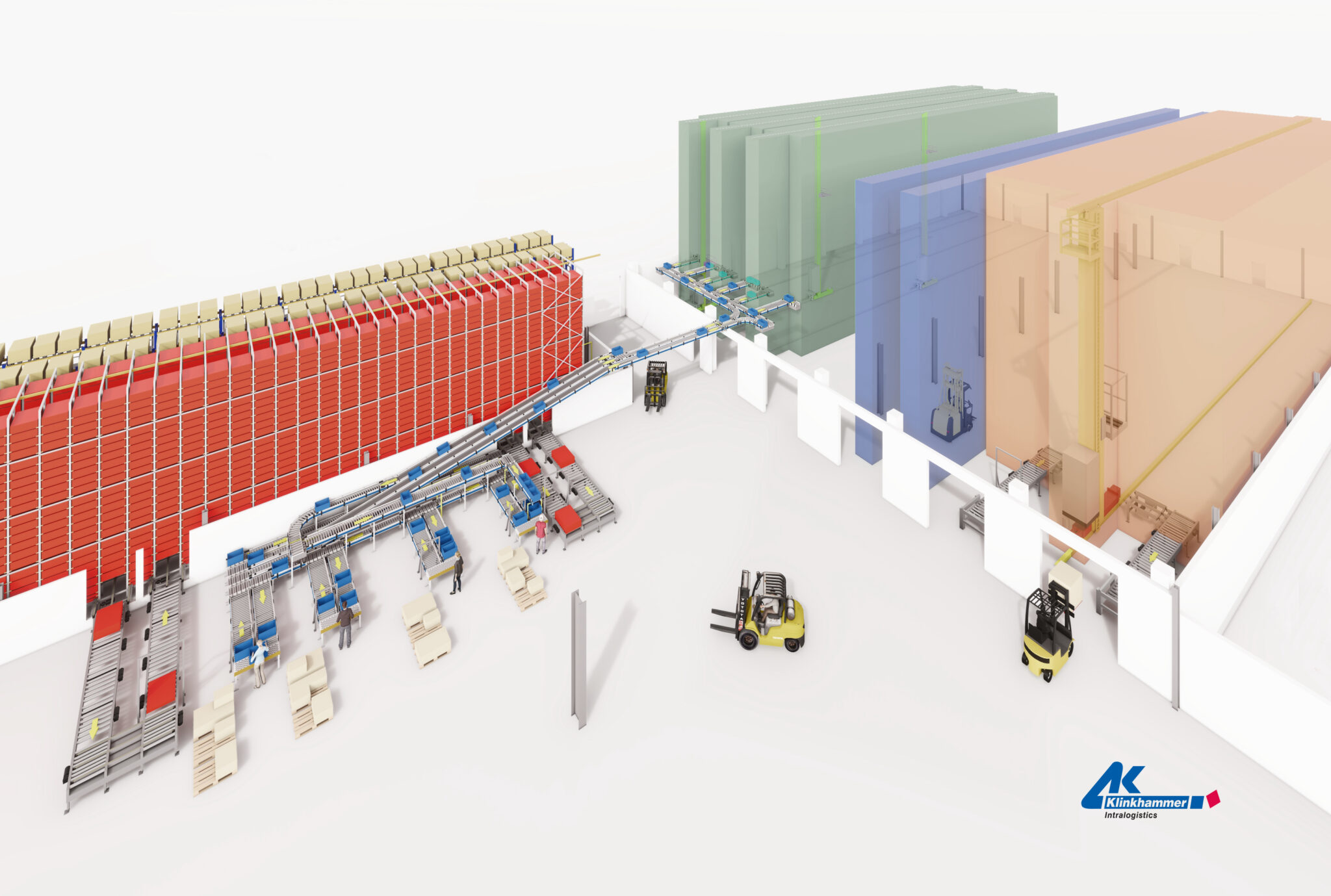
ITH GmbH & Co. KG, a leading system supplier in the field of bolting technology from M16 up-wards, is using a new automatic small-parts warehouse. The company develops, produces and sells hydraulic, pneumatic and electric tools. ITH placed an order with the system integrator Klinkhammer Intralogistics with logistics planning and subsequently with the construction of an automated small parts warehouse and pallet channel warehouse as well as the retro-fit of the existing tray warehouse at the Meschede site. With this automation, a six-fold increase in the current logistical throughput, in terms of the number of order items, is possible in the small parts area. Existing and new warehouse systems will be equipped with the material flow control and the warehouse management software KlinkWARE 11.

As a medium-sized, owner-managed mechanical engineering company, the worldwide sales network includes twelve ITH subsidiaries and more than 40 worldwide representatives. In addition to bolting technology, the company also offers fastening elements, engineering services and a comprehensive service as a system supplier. The vertical range of manufacture of over 90 %, which is unique in the market, enables ITH to react flexibly and quickly to enquiries and to guarantee a high availability of components.

As the logistics had reached its limits in terms of performance, ITH commissioned the development of a future-oriented logistics concept that, in addition to expansions, would also take into account process optimisations of the existing warehouse technology. After a comprehensive logistics planning, which included all logistical areas from delivery to the supply of production to the dispatch of finished products, the decision was made to build a new automatic three-aisle container warehouse in order to significantly increase the picking performance. For an optimal logistical process, conveyor-connected combined workstations are planned between the tote warehouse and the existing tray warehouse, each of which has 7 replenishment tote positions and thus ensures a continuous flow of totes. The warehouse is optimally prepared for a significant increase in the parts assortment in the future, also due to the software-supported partitioning oft the load carrier. The container warehouse offers two different height classes.

In addition, a single-aisle pallet channel warehouse is to be built. The channel storage system is characterised by a particularly high storage density. Due to the multiple-deep storage, up to five pallets can be stored compactly one behind the other. The camera system on the stacker crane with an opening angle of approx. 180° is used for fast and targeted troubleshooting directly from the control room. In the course of this, the narrow-aisle warehouse will also be expanded and the existing tray warehouse will be modernised. In future, all warehouse systems will be equipped with the material flow computer and the warehouse management software KlinkWARE 11 and thus operated with a uniform software solution. The logistics centre is scheduled for completion in the first quarter of 2025.

The managing directors Frank and Jörg Hohmann as well as the project manager Jan Hohmann confirm the good cooperation: “We have experienced Klinkhammer as a reliable, innovative provider of logistics solutions and are looking forward to the completion of the logistics facility.”

Subscribe

Get notified about New Episodes of our Podcast, New Magazine Issues and stay updated with our Weekly Newsletter.