European Portfolio gets Project in Croatia

Accolade Group, a leading investor in modern industrial and manufacturing properties across Europe, has announced its expansion into Croatia, marking the seventh European country in its portfolio. This move is part of the group’s strategic goal to grow in regions with high demand and potential for future development.

The group has successfully acquired a building permit for its inaugural project, an industrial building situated north of Zagreb. This project, sprawling over approximately 50,000 m², serves as a stepping stone for further expansion in Southern Europe.

Key Highlights of the Croatian Project:

• Location: The industrial site is located in the Donja Bistra region, near Zagreb, offering easy access to important trade routes and neighboring countries.
• Strategic Importance: Croatia’s recent entry into the Eurozone and Schengen Area, coupled with its skilled workforce and infrastructural advantages, makes it an ideal investment location.
• Future Plans: Accolade is exploring several other locations in Croatia for developing additional industrial zones.

Sustainable and Modern Infrastructure:

• The Zagreb project will feature modern, sustainable buildings aiming for the highest BREEAM sustainability certification.
• Innovations include thermal insulation, utility monitoring, photovoltaic power systems, LED lighting, and environmentally friendly outdoor spaces.

Expansion Beyond Zagreb:

• Accolade is also considering significant locations like the port of Rijeka, Varaždin, Split, and Osijek for future developments.
• A Croatian team has been established, with plans to open a new office in Zagreb shortly.

Milan Kratina, CEO of Accolade, commented, “We are eager to tap into Croatia’s untapped potential and contribute to its growing industrial infrastructure. Our goal is to uncover exciting locations and maximize their potential, just as we have done in other regions.”

This expansion not only signifies Accolade’s growth but also highlights Croatia’s rising importance in the European industrial landscape.

Seed Funding to Modernise Europe Warehousing

Stockoss, a Paris-based logistics technology start-up, has raised €4m in seed funding led by London-based VC Pi Labs. The investment signifies a major milestone in Stockoss’ mission to streamline and enhance supply chain management for companies while providing independent logistics service providers (3PLs) access to its cutting-edge technology that enables them to make better use of existing warehouse space. Additional backing was provided by Global Brain, 50Partners, Hartwood and Kima Ventures.

Founded by Laurent Bonnet and Franck Nussbaumer (pictured), Stockoss offers 100% digitalised warehousing and logistics services for customers such as Stellantis, Netflix and Jacquemus to meet their ever-growing storage and distribution needs across a fast-growing network of high-quality logistics and warehouse partners in multiple locations.

Much of Europe’s 35,000+ warehouse stock is under ownership of multiple, independent players, unable to meet the demands of today’s logistics customers due to the fragmented, disconnected and localised nature of the market. Stockoss creates a more sustainable path for the resilience of the warehouse and logistics sector, enabling owners to more effectively use existing space rather than building new stock to meet demand.

By unifying the entire logistics value chain and improving the visibility, efficiency and automation of operations, Stockoss gives independent, localised warehouse owners a platform to operate on a much bigger scale and compete with bigger rivals. For customers, Stockoss provides an Amazon-like user experience enabling them to ship and store their products and stock at the click of a button.

Laurent Bonnet, Founder and CEO at Stockoss, said: “Our aim has always been to use technology to simplify the relationship between a company and its logistics partners, whether it’s to improve day-to-day communication or increase visibility, traceability and transparency across the entire logistics value chain.

“We are proud that our platform enables hundreds of users to simplify and automate their logistics processes on a daily basis. We are also proud to help dozens of logistics partners to optimise their operations. Our technology provides a 10x better user experience and more flexibility for customers, as well as higher productivity and more revenues for our warehousing and logistics partners.

“The funding from Pi Labs and our other investors will enable us to take our solution and expand our logistics network to new geographies such as the UK, Germany and Spain, and bolster our team further to continue delivering a better product experience. Amazon has profoundly changed the way we think about B2C logistics. Stockoss will have the same impact on B2B logistics.”

The logistics industry is at a crossroads, marked by economic uncertainties and mounting environmental concerns. The re-industrialisation of Europe is leading to the reshoring of warehousing which has increased demand for more sustainable and digitised supply chains. With its next-generation software, Stockoss is ideally placed to meet these demands and accelerate the digital transformation of the logistics sector.

Faisal Butt, Founder and Managing Partner at Pi Labs, said: “Across Europe, 76% of all warehousing space is operated by SMEs, but much of this existing stock is unable to meet customer demands for more flexible, efficient, timely and cost-effective solutions for their storage and distribution needs. The way to sustainably meet growing demand is to use technology to upgrade the operations potential of Europe’s existing 35,000+ independent warehouses instead of building new stock.

Stockoss reflects our overall mission to invest in technology that will digitalise and decarbonise the built environment, particularly in logistics and distribution which is one of the fastest-growing segments in the sector. We are thrilled to be supporting Bonnet and Nussbaumer and Franck as they execute their vision to leverage technology to automate operations and drive sustainable growth in logistics.”

The company has 180 customers, 650,000 products in storage and manages 55,000 monthly shipments with a team of just 22. With a rapidly expanding network of warehouses, Stockoss is aiming to roll out its product to partners and customers across Europe.

NEXT DC gets Rail Guided Vehicles

The global clothing and home products retailer, NEXT, has modernized its supply chain operations by joining forces with Körber Supply Chain. After a successful partnership through ten years, a nearly 2-kilometer Rail Guided Vehicles (RGVs) track will now ensure seamless transportation of products between two warehouses in Doncaster, South Yorkshire, UK.

Starting their partnership in 2011, Körber and NEXT Doncaster have consistently worked on enhancing NEXT’s Home business operations. Their journey began with an innovative storage solution for sofas and space for 27,000 pallets. Over time, they have added advanced conveyor systems, set up a new Distribution Centre, while their latest addition is an RGV system paired with modern monitoring software. Each venture has been a strategic move to modernize NEXT’s supply chain operations.

“Our objective is to drive down overall costs, minimize the risk of product damage, and secure efficiency and competitiveness within a dynamic market landscape. Upholding stringent operational standards within our warehouses is paramount for sustaining a profitable business model in today’s market. The decision to modernize our warehouses through automation, a journey we began with Körber back in 2011, became imperative,” explains Ryan Loska, Engineering Manager at NEXT Doncaster.

Expertise bolsters operations

To facilitate future growth, NEXT has opted for a turnkey solution from Körber Supply Chain – featuring the integration of Rail Guided Vehicles (RGVs) within its warehouse infrastructure. This automated logistics system is designed to streamline supply and routing processes while meeting the capacity to manage sizeable home furniture and carry it substantial distances to designated storage and outbound locations. It is a critical facet in the operations of a global clothing and home products retailer.

“Our selection of Körber as a collaborative partner was rooted in their well-established industry expertise and capability to provide an integrated pallet handling solution adapted to our products. Since incorporating the RGVs, the system’s energy efficiency has reduced operational expenses and reinforced our overall business resilience. It enables efficient transportation of goods within the warehouse, while the storage system helps us keep track of what is always in stock. All of which is essential for our business,” added Loska.

The transportation system integrates two warehouses, which are linked by a track spanning approximately 1.5 kilometres. The system incorporates 81 RGVs for seamless transportation of products.

Modernizing supply chain operations

With the advancements within automated supply chains, finding the most suitable solutions to enhance supply chain efficiency is crucial. Körber Supply Chain’s core priority is to support businesses with cutting-edge logistics solutions that create vital value for growth and accommodate the issues the customer faces.

“Our mission revolves around equipping companies with resilient and future-proof logistics solutions. Therefore, we are proud to be part of NEXT’s aspirations towards establishing a more sustainable business model, working in collaboration with them to achieve greater robustness and efficiency in their system through automation. The outcome is a solution that caters to immediate operational needs while proactively anticipating future challenges, which is crucial in the modern market,” says Renata Pinedo, UK General Manager at Körber Supply Chain.

Supply chains are growing more complex by the day. Körber provides a broad range of proven, end-to-end supply chain solutions fitting any business size, strategy, or appetite for growth. Their customers conquer the complexity of the supply chain thanks to Körber’s portfolio, which includes software, automation, mail and parcel solutions, voice solutions, robotics, and materials handling – plus the expertise to tie it all together. Körber helps to manage the supply chain as a competitive advantage. The Business Area Supply Chain is part of the global technology group Körber.

Mini Air Paper Cushion Inflating System

Kite Packaging, known for its award-winning and eco-conscious packaging solutions, is launching a paper air cushion inflating and dispensing system.

Designed to produce air cushions on demand, this compact plug-and-play system integrates seamlessly into existing packaging set ups and requires very little storage space. By automating packaging production, Mini Air Paper packs 100-400 parcels per machine every day, enhancing productivity and increasing order fulfilment while maintaining a commitment to eco-conscious practices.

Cushions produced are crafted from 100% recyclable, biodegradable and compostable kraft paper, offering a green alternative to traditional plastic air pillows. Not only does this align with sustainable practices, but the kraft paper construction also provides exceptional puncture resistance, ensuring goods are well-protected in transit. Perforations between each cushion make for easy tearing and packing, while a starch based, plastic free sealant secures each cushion. Each roll produces 1000 cushions.

Businesses that adopt the Mini Air Paper system can expect not only to reduce their environmental footprint but also to streamline their packaging operations, increase product protection, and lower packaging material costs.

To learn more about the products and services available at Kite Packaging, please visit www.kitepackaging.co.uk

Kite loves solving packing problems using expertise to ensure customers are using the right range of products for their business. No matter how simple or complicated packaging is, their skill is ensuring the right solution. With over 2,500 standard products and tens of thousands bespoke lines in stock, Kite provide a Just-in-Time solution available immediately.

3PL Sees Bright Future After Acquisition

Kammac Ltd has been acquired by the Elanders group, a Swedish stock market listed business which offers global supply chain management solutions. Elanders operates in 20+ countries around the world and employs more than 7000 people.

Paul Kamel, the owner and founder of Kammac Ltd agreed to sell the business after a sales process that attracted interest from several parties. Kamel felt that Elanders group was the best fit to allow Kammac and its people to continue growing and maintain the success that had already been achieved by the company during his 35+ years at the helm.

Elanders’ acquisition of Kammac Ltd is in line with their strategy to constantly develop its offering and broaden its customer base. As a result of the acquisition, the UK will become Elanders’ fourth largest market.

Kammac has developed a unique 3PL concept which has grown, evolved and improved continuously over several years, and now that Kammac is part of the Elanders group, the services that Kammac offers will support expected further growth.

One of Kammac’s competitive edges, cited by Elanders, is that the start-up time for new customers is only one to two weeks. Kammac is also well positioned to support businesses across a number of sectors. Several of its warehouses offer services such as bonded warehouses and temperature-controlled environments. Kammac also has a license to handle medical products such as pharmaceuticals and their components.

Acquisition

On a day-to-day basis it is very much business as usual for Kammac Ltd, albeit under new ownership. There will likely be some structural changes within Senior Management positions over the next few weeks to ensure continuity and to align with authority level delegation from Elanders. The next stage of Kammac’s growth journey is expected to be an exciting one with new ideas, new opportunities and new initiatives to come which will allow the business to flourish as it transitions to being part of the Elanders group.

Ged Carabini, Chief Operations Officer of Kammac, comments on the deal: “It has been an absolute pleasure and such a learning curve over the last 6 years working with Paul and Sue Kamel, Craig and Laura Olson. I would like to extend my thanks to them and take this opportunity to wish them all the very best moving forward. I am very proud of the growth journey that we have made and the unique platform that we at Kammac have created in recent years. With the global footprint that Elanders has, we will be able to grow further in the UK by being able to offer Elanders’ current customers our solution. I also see great opportunities to develop the current Kammac offering by using Elanders’ proprietary platform for omnichannel solutions. I am also convinced that our unique business model will be able to create new business opportunities for Elanders in other markets.”

Connected Trucks: Digitalisation and Interconnection

Jungheinrich is connecting its fleet by equipping all its new trucks with telemetry units as standard. This enables customers easy access to the Jungheinrich Fleet Management System (FMS), starting with the entry level Starter Kit.

Jungheinrich is continuing to drive forward the digitalisation and networking of intralogistics by equipping all newly ordered trucks produced in its European plants with telemetry units as standard.
Jungheinrich trucks are fully networkable and ready for intelligent integration in the warehouse. With the help of the Jungheinrich FMS fleet management system, customers can use this data to optimally deploy their fleet.

“Data is one of the most valuable resources in the warehouse today. We are now making this data easily and efficiently usable by our customers,” says Phil Pearson, Sales Management Director at Jungheinrich. “Connectivity is an essential key to further optimising intralogistics. By processing information better and faster with our Jungheinrich FMS, we make our customers’ warehouses even more efficient.”

Thanks to the telemetry units and Jungheinrich FMS, Jungheinrich customers receive real-time data on the condition and use of their trucks, enabling them to optimally manage their fleet. Data transmission to the Jungheinrich Cloud takes place via a mobile connection or Wi-Fi.

“When our customers agree to share the usage and vehicle data of their trucks with us, we can access important insights into the actual use of the industrial trucks. This enables us to tailor our range of solutions even more personally and individually to our customers’ needs,” says Pearson. “This includes, for example, remote diagnostics for the targeted reduction or avoidance of downtimes through more efficient service, or intelligent energy solutions as the basis for cost- and consumption-optimised energy management.”

* Enhanced connectivity thanks to telemetry units in every new truck
* Truck customers now have easy access to the Jungheinrich Fleet Management
* The FMS and telemetry units deliver increased efficiency and performance thanks to better data management

Jungheinrich UK Ltd is one of the top three leading intralogistics providers in the UK, generating a turnover of over £200 million annually. With a team of more than 800 dedicated and highly experienced employees operating from four locations across the UK, Jungheinrich offers the industry’s widest range of intralogistics solutions, including high energy efficiency pallet trucks, stackers, counterbalance trucks, order pickers and more in 600+ truck variants, new or fully refurbished.

Game-Changing Partnership in Logistics Insurance

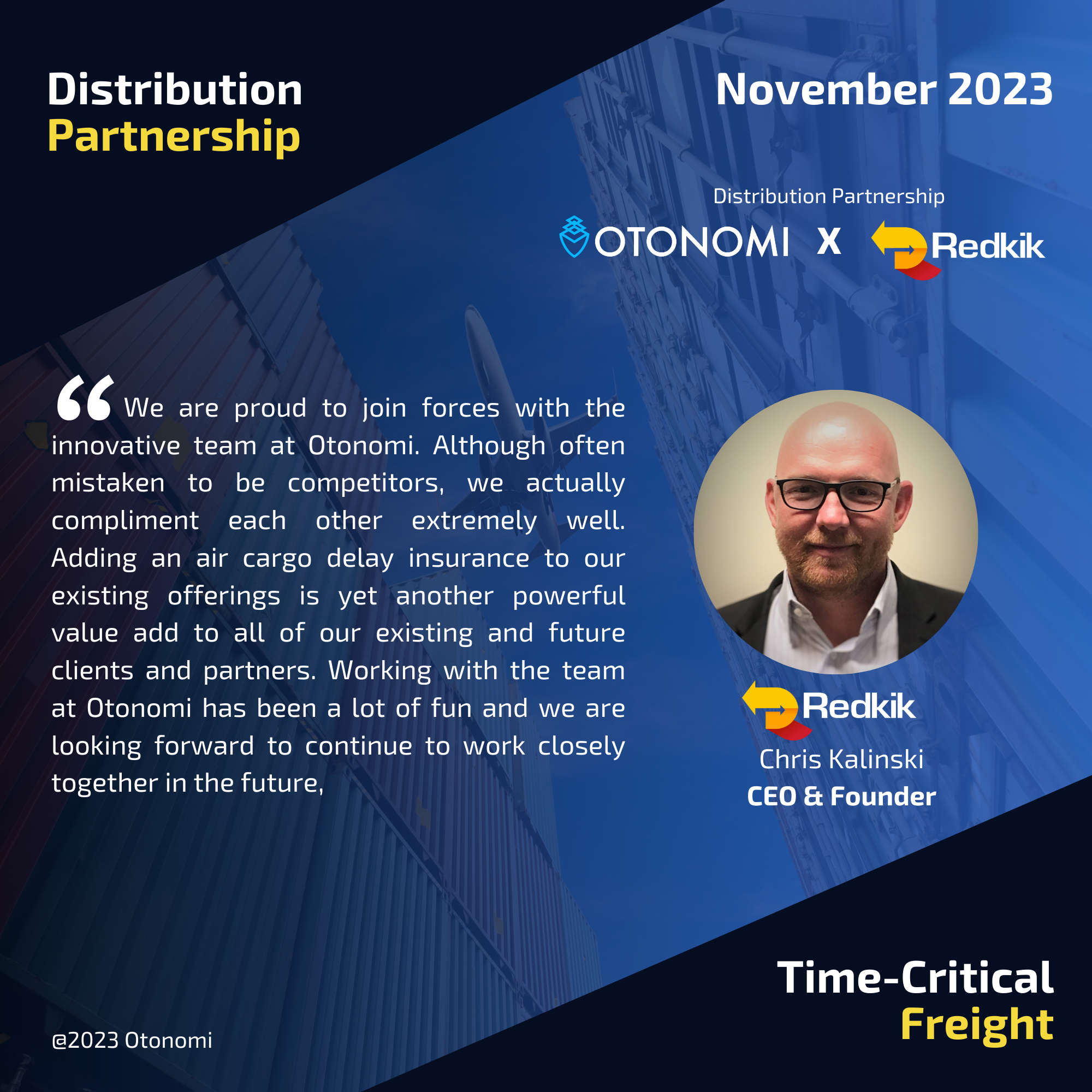
Otonomi, specialist in innovative supply chain risk technology and the freight insurance industry, has joined forces with Redkik, a leading innovator in the embedded cargo insurance space, to revolutionize the way logistics companies and shippers mitigate their financial risks. This ground-breaking partnership is aimed to bridge a $50 billion protection gap in the time-critical freight sector, where shippers of pharmaceuticals, perishables, aerospace engines, aircraft parts, and many other expedited assets shipments are in dramatic need of proper insurance coverage.

Powered by proprietary technologies in data-activated triggers, AI-assisted underwriting, and seamless integrated API, this synergetic partnership introduces unparalleled values to cargo owners to gain transparency and mitigate their risks. The unique set of benefits includes: 1) seamlessly embedded insurance solutions, 2) premium rates pricing in seconds, 3) policy binding in minutes, and 4) parametrically activated claims resolution which provides outstanding transparency and speed (22x faster than industry standard).

Logistics companies and shipping clients have long grappled with the cumbersome and time-consuming process of obtaining insurance coverage and filing claims. Redkik and Otonomi’s joint innovative solution aims to streamline and modernize this critical aspect of the industry, ultimately improving efficiency and profitability for all stakeholders involved.
Key Benefits of the Partnership

This collaboration brings unparalleled benefits to an industry always in motion:

● First-to-Market Air Cargo Delay Insurance: Otonomi introduces air freight delay protection policies that are unprecedented in the industry. Otonomi’s Cargo+ policy coverage offers logistics companies and cargo owners fast, cost-effective, and transparent operations, reducing financial risks associated with delays in cargo shipments.
● Instant Transactional Insurance Quotations: Through the integration of Redkik’s cutting-edge technology along with Otonomi’s algorithmic underwriting engine, clients can now receive instant insurance quotes, simplifying the decision-making process and allowing for quicker coverage acquisition.
● Remarkable Reduction in Claim Resolution Times: The platform, with its data-activated triggers and smart contracts, dramatically reduces claim resolution times, by orders of magnitude. This swift resolution process minimizes disruptions to logistics operations and ensures faster claims payouts.
● Significant Administrative Cost Savings: Redkik and Otonomi’s integrated digital wallet and automated processes substantially cut administrative costs, allowing companies to allocate resources more efficiently and improve their bottom line.
● Enhanced Coverage and Risk Management: The coverage is further enhanced by AI-assisted portfolio risk models and advanced stressed scenario capabilities. This not only opens up new markets but also creates greater opportunities for profitability.

Quote from Otonomi: ”Team Otonomi is thrilled to announce a ground-breaking partnership with Redkik that redefines the insurtech landscape. Together, we are embarking on a journey to revolutionize supply chain risk management by directly embedding insurance solutions into logistics companies and shippers’ ecosystems. Bringing cargo delay quotes in seconds, resolving claims 22 times faster than industry standard, all wrapped up seamlessly thanks to modern API integrations, Otonomi and Redkik empower clients to mitigate freight disruption risks efficiently.”

Quote from Redkik: ”We are proud to join forces with the innovative team at Otonomi. Although often mistaken to be competitors, we actually compliment each other extremely well. Adding an air cargo delay insurance to our existing offerings is yet another powerful value add to all of our existing and future clients and partners. Working with the team at Otonomi has been a lot of fun and we are looking forward to continue to work closely together in the future.”

CTU Code Boosts Supply Chain Safety

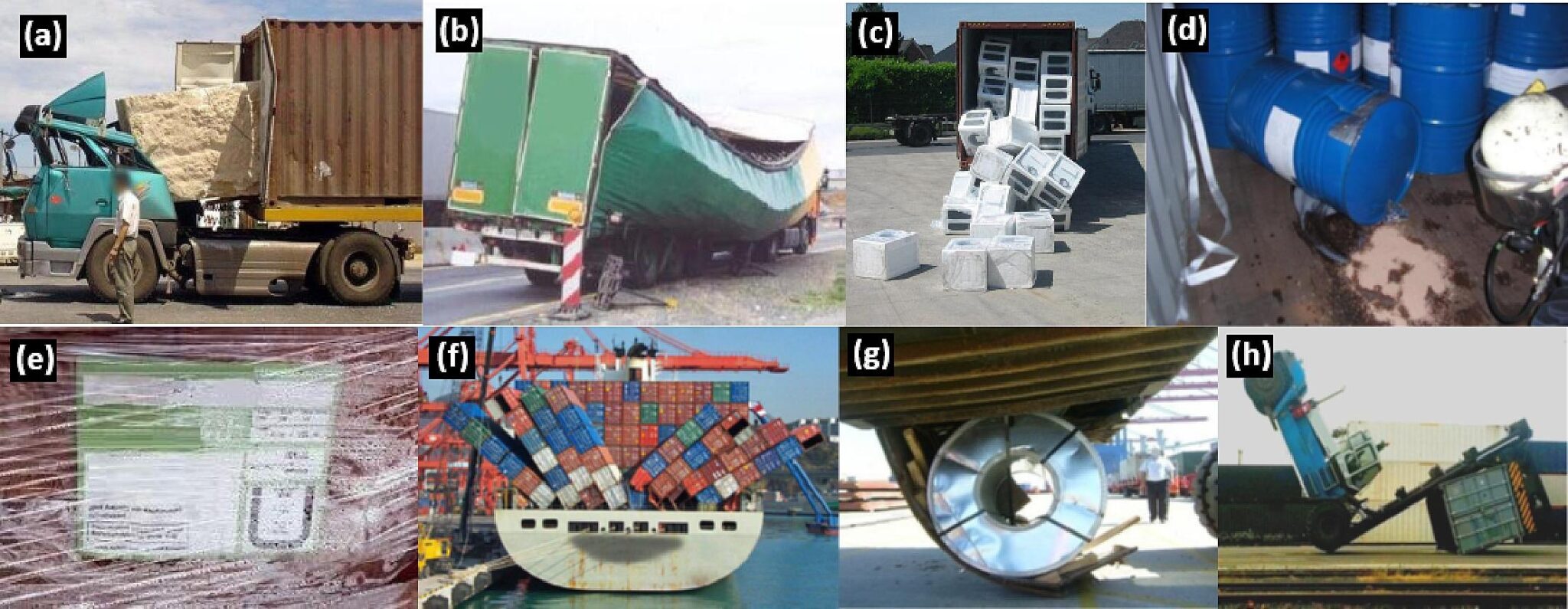
The seven industry bodies dedicated to container safety, collaborating as the Cargo Integrity Group, highlight an independent study carried out by researchers at Italian University Politecnico di Torino into shipper and forwarder application of the CTU Code. The 2023 survey yielded encouraging signs of adoption and highlighted several convincing arguments – including financial benefits for its use

The survey highlights multiple benefits to CTU Code users including:
• Improved safety, reputation and supply chain coordination
• Decreased cargo damage, environmental impact and operational inefficiencies
• Those using the CTU Code incurred no extra costs in employees, contractors, or vehicles
• Any increase in loading and waiting times were typically offset by CTU Code related efficiencies overall
• Annual costs and penalties reduced from €670,000 pre-implementation of the Code to €13,000 post-implementation
• Extra costs as a percentage of revenue reduced from 37% to 10%

In the words of the report’s authors (Bruno, et al.), “The application of the CTU Code to cargo loading and transportation processes can increase the safety level of transport activities, and also improve business processes and competitiveness. The results show that the use of the CTU Code provides an increase in safety with a drastic reduction of loading accidents and damage to goods, as well as important benefits in terms of costs, improved efficiency, corporate image and reduced environmental impact.”

The Cargo Integrity Group continues its efforts to underline the positive effects of the widespread use of guidance in the CTU Code, which is the Code of Practice for Packing of Cargo Transport Units jointly published by the International Maritime Organisation (IMO), the International Labour Organization (ILO) and the United Nations Economic Commission for Europe (UNECE)¹.

The Group is dedicated to improving the safety, security and environmental performance throughout the logistics supply chain. In particular, it is concerned to promote safe methods to those responsible for the packing of cargoes in containers, securing them and accurately declaring them.

Welcoming the Politecnico survey, the CEO of ICHCA, one of the Group’s founding associations, Richard Steele said, “As far as we are aware, this is the first example of publicly available empirical evidence about the use of the CTU Code made by forwarders, shippers and others responsible for safe packing. Notwithstanding the regional focus of this particular survey, we believe the results to be genuinely encouraging. They show that good operational management, efficiency and safety are partners, not opposites.”

To facilitate a greater degree of understanding and wider use of what is a lengthy and complex document, the Group has published a ‘Quick Guide’ to the CTU Code, together with an editable and saveable checklist of actions and responsibilities for the guidance of those undertaking the packing of cargoes in containers. These materials are now available in all six of the United Nations’ official languages, as well as Italian.

Lithium Forklift Batteries Offer Greener Solution

OneCharge is spearheading the adoption of lithium forklift batteries in Latin America (LATAM). Max Khabur, Director of Marketing at OneCharge and a Chairman of the Advanced Energy Council, representing a group of companies, comments.

While the region’s unique challenges demand a high level of flexibility in both business strategies and product offerings, the main pillars of lithium batteries’ success remain the same across various industries: sustainability, superior performance, and a reduced total cost of ownership.

In LATAM, transitioning to green energy faces a few unique hurdles. One significant challenge is the region’s tax rules, which in some countries require a substantial portion of battery production and components to be sourced locally.

This emphasis on localization is linked to another issue: the rate of electrification. Only about 45% of forklifts are electric in LATAM, compared to 70% in the USA. This lower rate of electrification can be partly attributed to the high upfront costs of electric equipment. That is why many LATAM companies are jumping straight from diesel and propane forklifts to electric-powered lift trucks with lithium batteries, bypassing the lead-acid battery-powered models of the past, which did not offer a clear path to a 20–40% reduction of the total cost of ownership of the equipment.

The high cost of capital dictates tight calculations and results in longer sales cycles. In some cases, the need to carefully budget and plan extends the sales process for up to 2–3 years.

Pablo Pino, the Product Manager at Tattersall Maquinarias S.L., confirmed the importance of localization and providing locally available support and service: “Aftersales service of the equipment is really important. The key is to be able to solve any technical issues quickly.” Pino also highlighted the importance of the logistics industry for the region. Port facilities are a big business both in Chile and throughout Latin America. Switching their industrial equipment to lithium batteries is going to bring a tangible environmental benefit.

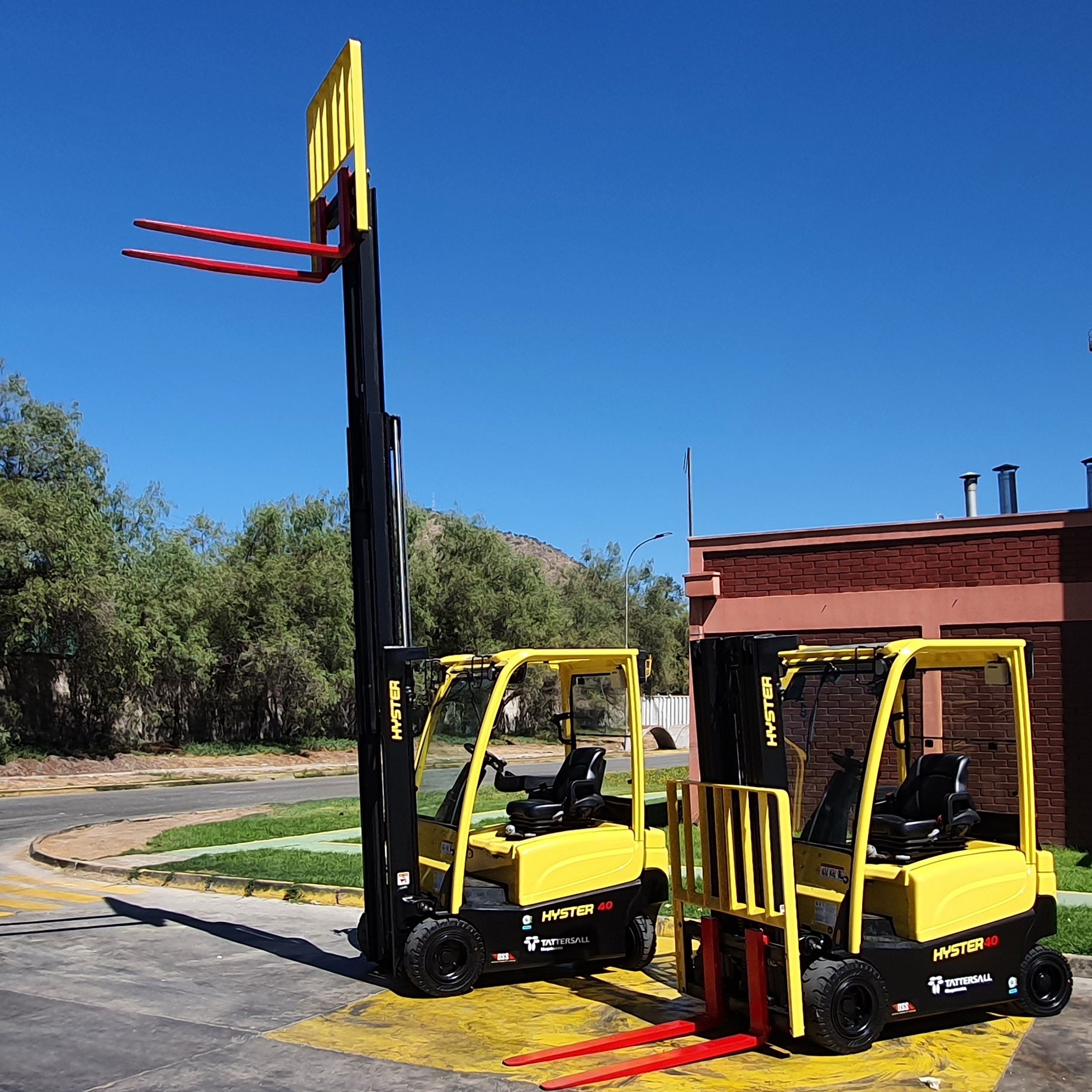
Starting its journey in Chile in July 2019, OneCharge partnered with Tattersall to equip five Hyster lift trucks with lithium batteries for one of the main Construction Materials companies in the country. As the customer pushed for sustainability, the switch to lithium batteries enabled the business to significantly slash its CO2 emissions.

Multinational giants like Cargill, The Clorox Company, and BAT are championing the shift to lithium batteries in LATAM, mirroring their best global practices (reducing emissions and maintenance costs, getting rid of charging areas). As these corporations operate mixed fleets of forklifts designed for both European and US markets, accommodating varied connectors, battery compartment sizes, and unique engineering designs is of paramount importance. OneCharge’s adaptability in meeting these diverse requirements has been a cornerstone of its success.

Recognizing the lengthy sales cycles in the region, OneCharge has invested in a strategic long-term vision for LATAM. In a significant move, the company set up a local assembly plant in Brazil. By shipping electronics from the US and assembling the batteries locally, OneCharge not only complies with tax norms but also boosts its brand’s recognition locally.

Furthermore, in response to the unique Brazilian market expectation that forklifts come with batteries already installed, OneCharge has collaborated with industry leaders Kion and Hyster-Yale Group, ensuring market demands are met seamlessly.

Results, Return on Investment, and Future Outlook

OneCharge’s focus on LATAM is evident in its expanding footprint. Today, its industrial batteries are available in Argentina, Brazil, Chile, Colombia, the Dominican Republic, Guatemala, and Mexico. The local assembly plant in Brazil stands as a testament to our commitment to the region. The company is perfectly positioned to support LATAM businesses in achieving their environmental goals, all while enhancing efficiency, cutting the total cost of ownership, and elevating performance.

Freight Firm’s Real Time Vehicle Tracking

Stuart Crowder (pictured), managing director of leading non-vessel operating common carrier (NVOCC) Mannson Freight, says a new feature on its customer portal, ‘MFS Pro’, allows UK customers to track their import deliveries in real time, providing them with full visibility of their shipments, from Felixstowe warehouse to final destination in the UK.

The new feature allows forwarders that contract with Mannson Freight to view live tracking information for each shipment on the day of delivery, as well as an estimated time for delivery, on the customer’s shipment details page, which is updated in real time.

Customers can view the location of the shipment and vehicle on a map via an individual tracking link; and following delivery, an electronic POD will also be made available in the documents section.

Real Time Vehicle Tracking

Crowder says that this helps to differentiate Mannson Freight’s services from those of its competitors, and explains that the latter’s tracking systems typically show a goods out for delivery date, but not live tracking of the vehicle making the domestic UK delivery.

“This is part of a programme of continual investment in our support systems, giving customers total visibility of their cargo while under our management,” he stated. “We are also adding to our portfolio of global import and export consolidation (LCL) services to/from many locations globally, as well as value-added services such as air freight, full container import and export (FCL), customs clearance, warehousing and European road transport. In the summer, we launched a fortnightly service for hazardous cargo shipments to the UK from Shanghai, for example.”

MFS Pro is Mannson Freight’s bespoke customer portal. The portal has many features allowing LCL customers to manage their shipments from quotation stage, to booking, all the way through to delivery. The portal offers customers 24/7 access to documentation and the opportunity to access quotes and make bookings at any time, from any place.

Subscribe

Get notified about New Episodes of our Podcast, New Magazine Issues and stay updated with our Weekly Newsletter.