Manufacturers Face Complexity of Spare Parts Boom

The kickback against the ‘throw-away’ consumer society is gathering pace, with manufacturers under increasing pressure to stock and supply spare parts. However, the consequences for manufacturers’ fulfilment and packing lines are significant. Jo Bradley, Business Development Manager at Sparck Technologies, explains why.

The ‘Right to Repair’ movement has already seen legislation passed in four US States – California, New York, Colorado, and Minnesota. While, the UK now requires manufacturers of consumer durables such as washing machines, fridges and televisions to supply consumers with spare parts for ‘simple and safe’ repairs, and make parts for trickier jobs available to professional repairers. Support will have to remain available for between seven and ten years.

This brings the UK in line with existing EU rules. But the UK is about to go further. In March 2023 The Commission adopted a proposal on common rules promoting the repair of goods, which are now being discussed. However, importantly, this is with a view to extending coverage beyond consumer durables to other goods, including smartphones and a much wider band of consumer electronics, that may otherwise end up in the WEEE (Waste Electrical and Electronic) waste stream.

Interestingly, some of the American States have started at the other end of the spectrum, on automotive and agricultural equipment, with consumer goods to come later. But it’s almost certain that consumer expectations around repairability across sectors will converge, probably leaving legislation to catch up.

Spare parts fulfilment challenge

For OEMs and their agents, this trend poses many challenges, from product design onwards. One of these is that many will have to establish a comprehensive and complex spare parts operation, in some cases for the first time. Instead of occasionally supplying small numbers of parts, from current products, to official dealers to meet warranty claims, OEMs will need to supply even obsolescent items, not just to dealers, but to third party repairers, the growing number of ‘community’ repair/reuse organisations and, where safety considerations allow, to individual consumers.

And whereas most consumer goods are shipped to the point of sale in their own boxes, perhaps with some foam protectors for the corners, spare parts will require a completely different approach to fulfilment and packaging. Unpredictable combinations of often small, possibly fragile, parts will have to be safely and securely boxed for shipment. Suddenly, OEMs need far more sophisticated packing lines.

Labour costs

Traditional, labour-intensive packing operations are expensive. Businesses that already supply an aftermarket often make reasonable margins on spares, where items can regularly be pulled from production and packaged in occasional periods of relative inactivity. A full-blown, high volume spares operation, likely picking and packing from its own store and inventory, is a different story entirely and may well be a significant commitment in both working capital and labour. Apart from labour costs, think of all the multitude different box sizes that will need to be kept in stock and the consequences of not having the right sized box available to packers.

Automation can be deployed to reduce labour costs in the packing operation. However, merely automating the piling of parts into any available box with some void-fill won’t do. Not only are small components liable to get lost amongst the crumpled paper or styrene beads, or damaged as they shake about, but the profile of consumer most likely to demand repairability and sustainability is the least likely to be impressed by spares arriving in oversized boxes, with all the waste of carboard and other materials this implies.

‘Right-sizing’ boxes

Luckily for businesses serving the parts market, advanced packaging technology is now available that can ‘right-size’ boxes for single or multiple item orders. These machines automatically scan an order and produce the optimum sized box at great speed – going a long way to controlling costs.

Sparck Technologies’ CVP Impack and CVP Everest machines do exactly that. These machines calculate the optimum shape and size of box required, which is then automatically cut, creased, erected, sealed, weighed and labelled. With the capacity to generate over 40 million unique box sizes, this equips companies with the agility and flexibility as they navigate future legislation and demand. The highest-volume machines can make up to 1,100 boxes per hour – an equivalent throughput on manual packing lines may take up to 20 staff. Usefully for this sector, ultra-low profile boxes of just 28mm can be created.

Right-sizing typically saves 30% or more in cardboard, besides eliminating void-fill, so meeting consumer expectations on sustainability. Right sizing also generates significant economies in transport and post/courier charges. The demand for repairability will only grow. Businesses can prepare for these changes and capitalise on the opportunities, not just to reduce costs but to secure competitive and reputational advantage.

The Name’s Bond, Dry Bond

Ambitious logistics fulfilment specialist Europa Warehouse has fully achieved Customs Warehouse Authorisation by HMRC, marking the next major step in its warehouse investment programme to better support the pain points of traditional and ecommerce retailers.

This latest authorisation means that Europa Warehouse is authorised to store general goods that are subject to customs and VAT. This, coupled with, Europa’s ‘wet bond’ accreditation provides a real advantage for customers managing tight cashflows, allowing them to suspend customs, excise and VAT payments until their goods are sold.

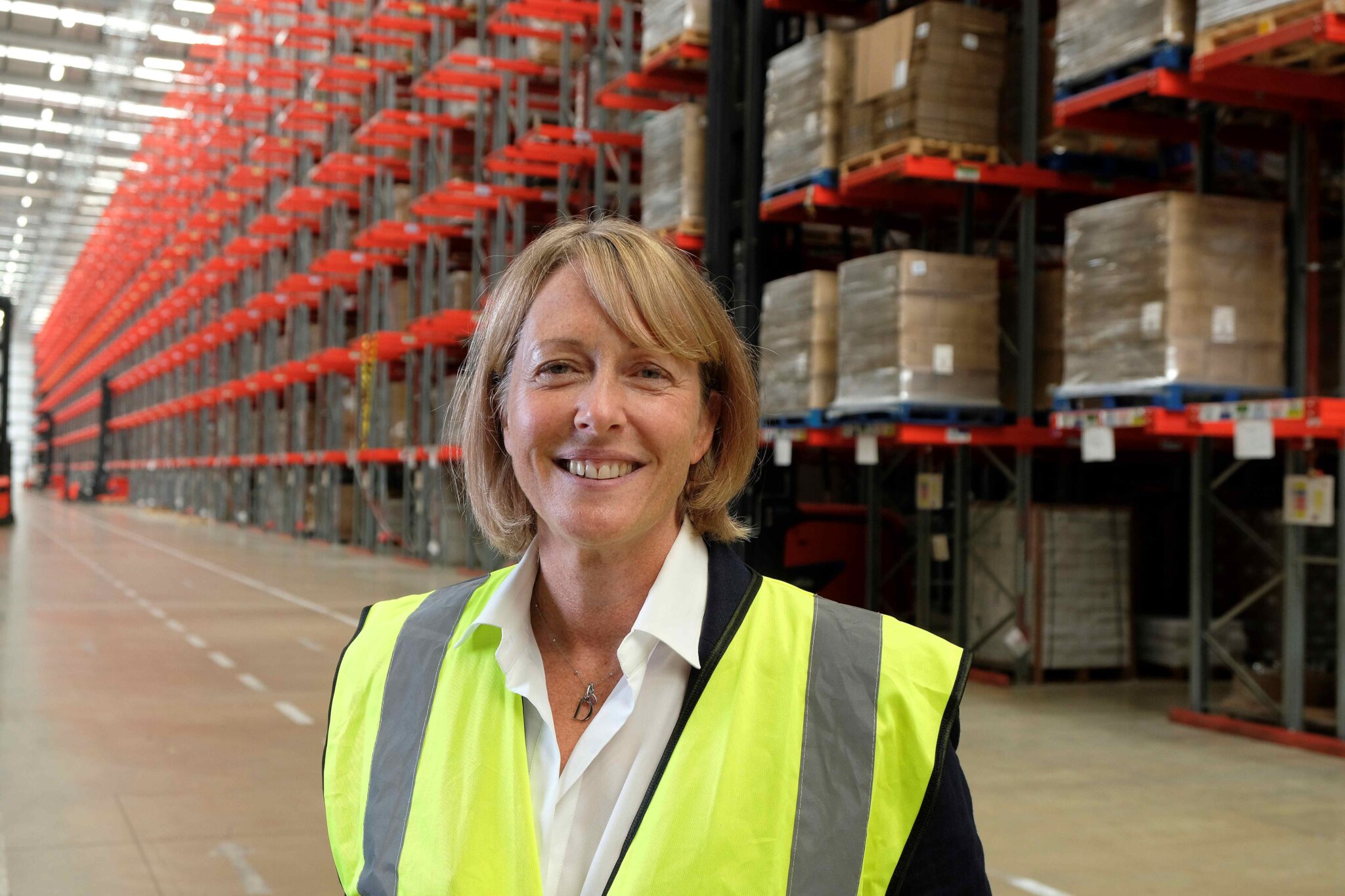
Dionne Redpath (pictured), Head of Warehouse Division and COO of Europa Worldwide Group, comments: “With the current economic headwind putting strain on ecommerce, retailers and wholesalers everywhere, many of our customers are managing tight cashflows. This is pain point we have a long-held ambition to solve.

“Customs Bonded Warehousing can assist, allowing traders to import goods into the UK, hold them in the Bonded Warehouse without having to outlay Duty and VAT until goods have been sold and dispatched. For example, if an importer purchases gym equipment which attracts four per cent duty, the duty and VAT will be suspended until the importer sells the cargo in the UK.

“This is a real cashflow benefit because it means goods can be stored ahead of seasonal peaks without our warehouse customers footing heavy duty costs immediately. Instead, businesses can accurately anticipate supply and demand, while only paying necessary duties on items that leave the warehouse, typically after they have been sold.”

Europa Warehouse has operated Wet Bonds at each of its sites for some time, giving importers or sellers of alcohol the ability to delay costly excise duties until items are picked for sale and dispatch. The UK’s leading gin subscription box, Craft Gin Club, has benefited from this since its Dragon’s Den success in 2016, and continues to utilise Europa’s bonded infrastructure for forecasting supply and demand.

The Customs Warehouse Authorisation has been awarded to Europa following an extensive auditing programme with HMRC, who evaluated the infrastructure and security in place for each site. This was co-ordinated with operational teams across the Group, including facilities, project management and customs compliance teams.

Redpath continued: “Obtaining any accreditation is tough but those awarded by HMRC are especially rigorous, for obvious reasons. The HMRC officers completing the audits gave us positive feedback and, as a result, we’re really pleased to be able to extend our service offering beyond excise goods in this regard”.

Customs Warehouse Authorisation Across 3PL Sites

Europa’s portfolio of warehouses in Dartford, Birmingham and Corby, offer over one million sq. ft combined of dedicated warehouse and logistics space and are now fully authorised customs warehouses. The most recent investments within the warehouse division have been the construction of the £60m Corby warehouse, which is capable of storing up to 100,000 pallets and processes up to 50,000 units of goods per day through its £11m automation system.

Europa Warehouse is part of Europa Worldwide Group, an ambitious independent logistics operator with two other divisions, Europa Road and Europa Air & Sea. The company has been featured in The Sunday Times Top Track 250 for three years. Europa has invested £5 million in its innovative market-leading product, Europa Flow, providing a frictionless flow of goods between the EU and the UK post Brexit. The group employs over 1,400 people with 29 international sites in the UK, the Republic of Ireland, Europe, Hong Kong, China and the UAE. The global operator recently reported a record turnover of £302m for the last 12 months, as of August 2022, and remains on track with its ambitious investment programme.

Warehouse and Logistics Predictions

Logistics predictions, by Phil Shepley, Vice President and Head of Commercial UK and Ireland at Iron Mountain.

The key challenges for the warehouse and logistics industry in 2024 fall into three categories – modernising operations, sustainability, and workforce disruptions.

Supply chain disruptions, from global events to geopolitical shifts and natural disasters to public health crises, can impact the flow of goods, leading to disruptions. The UK continues to have strong demand for high quality warehouse space. However, the resultant higher rents and longer leases are putting strain on balance sheets. Warehouse as a Service (WaaS) can support modernisation more flexibly.

We think 2024 will see heightened demand for WaaS, supporting end users to modernise their supply chain operations. Businesses will prioritise agile supply chains, leading to an increased adoption of WaaS to adapt to changing market conditions. WaaS offers a flexible and cost-efficient alternative to owning and managing warehouses.

Sustainability

The tightening energy performance standards on new and leased buildings will see occupiers modernising their estates, at the risk of being served huge fines. While retrofit activity will drive a significant number of efficiencies, the demand for new spaces built to modern standards will rise. The sustainable nature of the warehouse of the future will be another important consideration. Providers will need to support customers to achieve their net zero goals.

EPC changes will drive customers to demand higher standards from their suppliers to ensure requirements are met ahead of deadlines.

Workforce disruption

Automation and AI improve safety and increase efficiency in warehouse operations. It alleviates the workforce shortages the industry faces, however cost and flexibility are still a barrier for many companies. The warehouse and logistics sector will continue to face challenges around attracting and retaining talent in key roles. Combined with the continued impact of legislation and global events impacting labour availability, organisations may need to contend with shortages.

Opening of Warehouse in Bratislava

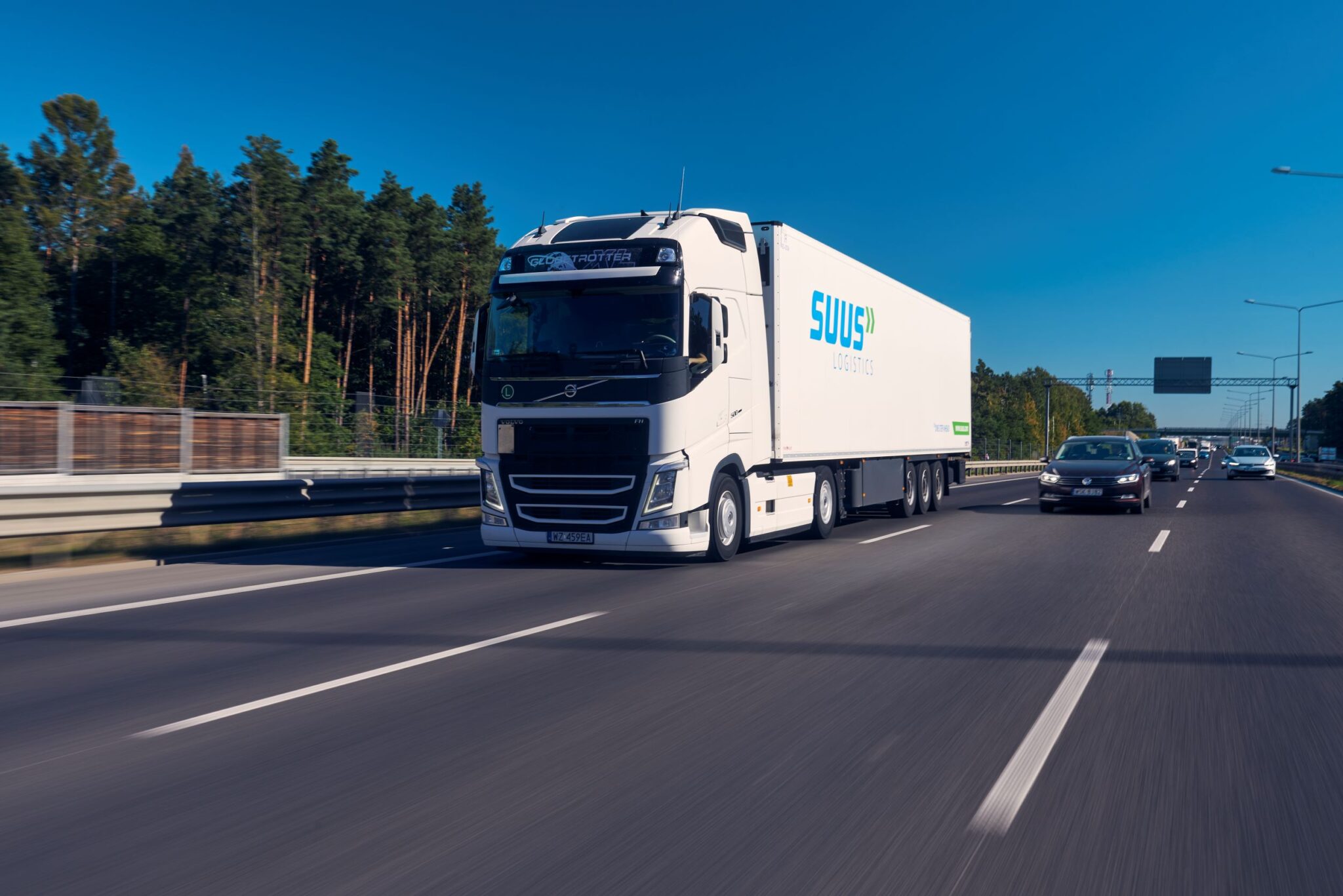
Rohlig SUUS Logistics, a logistics operator in Central and Eastern Europe, has opened its first warehouse in the Slovak Republic. The facility, located in Bratislava, serves as a multi-purpose logistics centre, encompassing both a logistics warehouse and a handling terminal. This dual functionality enhances the efficient handling of goods and their distribution on the local market and in other countries in the CEE region.

The new warehouse has a surface area of 2,300 square meters and can accommodate up to 1,500 euro pallets in modern racking. The branch of the Polish logistics operator also offers a range of Value-Added Services (e.g. order picking or co-packing), and there are plans to develop customs services. The location of the warehouse is also crucial for the transport services provided by Rohlig SUUS Logistics. The facility is located close to the D1 highway which connects the Slovak Republic, the Czech Republic, Poland, Hungary, and Austria. Beyond warehousing services, the company also places significant emphasis on the development of groupage road, air and sea freight in the region.

Artur Malarski, Board Member at Rohlig SUUS Logistics responsible for the development of CEE, says: “Why are we focusing on the development of our services in the Slovak Republic? Because many investors see the CEE region as one business unit. Accordingly, Rohlig SUUS Logistics is dynamically developing its services in this area – now in Slovakia, and we want to continue in our other branches as well. Building an extensive network of connections and warehouses is one of the elements that brings us closer to our strategic business goal – Rohlig SUUS Logistics as a key player in logistics services in the CEE region”.

Rohlig SUUS Logistics’ new investment marks another significant step in the company’s international expansion efforts. Last year, the Polish operator opened its first foreign warehouse in in the Czech Republic and another one later this year, helping to increase the company’s operational capacity. In June, Rohlig SUUS Logistics acquired Joppa Logistics, a Czech company specializing in warehousing services and groupage road transport. In addition to the Czech and Slovak Republic, Rohlig SUUS Logistics also has branches in Hungary, Romania, Slovenia and Kazakhstan.

Michal Sisolak, Branch Director at Rohlig SUUS Logistics Slovakia, explains, “Slovak economy is based on the export of goods from the automotive and electrical industries, among others, so companies need the support of comprehensive logistics services to grow. That’s why we have opened our warehouse to provide essential support to our customers in their business development efforts. ” He adds, “The combination of a logistics warehouse and a handling terminal significantly speeds up logistics processes, including the handling of sea, road or air shipments and their onward distribution in the Slovak Republic, or Central, Eastern and Southern European countries.”

Consolidate Inventory to Accumulate

Pooling inventory to serve both fashion retail stores and ecommerce channels can create an engine for growth, with increased sales and higher margins. Darcy de Thierry, Managing Director of Ferag UK explains how.

Fashion brands face an ongoing battle to protect margin. Constantly under pressure to provide value to the customer – regardless of rising labour costs, the channel, or consumer expectations on free returns – retail businesses are having to think hard about their cost-to-serve. That is, if they wish to grow and remain profitable. So, how can multi-channel retailers offer value, along with product and service consistency, across all their channels, while keeping costs to a minimum? Is there an intelligent way of, not only protecting margins, but growing them?

Automation offers obvious advantages in terms of streamlining fulfilment processes, providing capacity to facilitate growth and cope with peak demand. It also helps to reduce reliance on increasingly costly and difficult to find labour resources. But all too often the scale isn’t there to justify the investment. Perhaps, operations are too fragmented, carried out across a number of sites.

Scaling for automation

However, for a great many fashion retailers the answer could be relatively simple: create the necessary scale for automation by consolidating inventory into one omni-channel facility that serves both high street stores and ecommerce channels. Pooling stock in this way not only offers the scale and throughput needed for automation, but it also holds the potential to create huge flexibility, where fashion goods flow quickly and smoothly to satisfy demand, whether that be on the high street, click n’ collect, or ecommerce. With this agility, there are no longer complications around moving stock between locations or being out of stock in one channel only to find excess stock in another.

What’s more, a single automated omni-channel facility could, with the right technology, handle returns too. Processing items swiftly and making them immediately available for sale again – via whichever channel is best suited – has the potential to increase sales and may reduce the need for markdowns. Much depends upon acting quickly, before a product loses its fashion moment!

Overcoming technology barriers

A major barrier for many businesses considering an omni-channel approach is the thought of how to bring together disparate technologies and systems to cope with the diverse needs of assembling replenishment for high street stores and on the other hand, picking single or few items for a large number of ecommerce orders. What could be needed – sorters, multi-shuttle and mini-load systems, hanging garment solutions, specialist technologies for returns processing? How do you bring flat-pack / boxed items (such as shoes or accessories) together with soft clothing – will that require a separate sorter? Will all these systems integrate to create a cohesive and flexible solution capable of serving high street stores and ecommerce channels? And, how much space will all this take up?

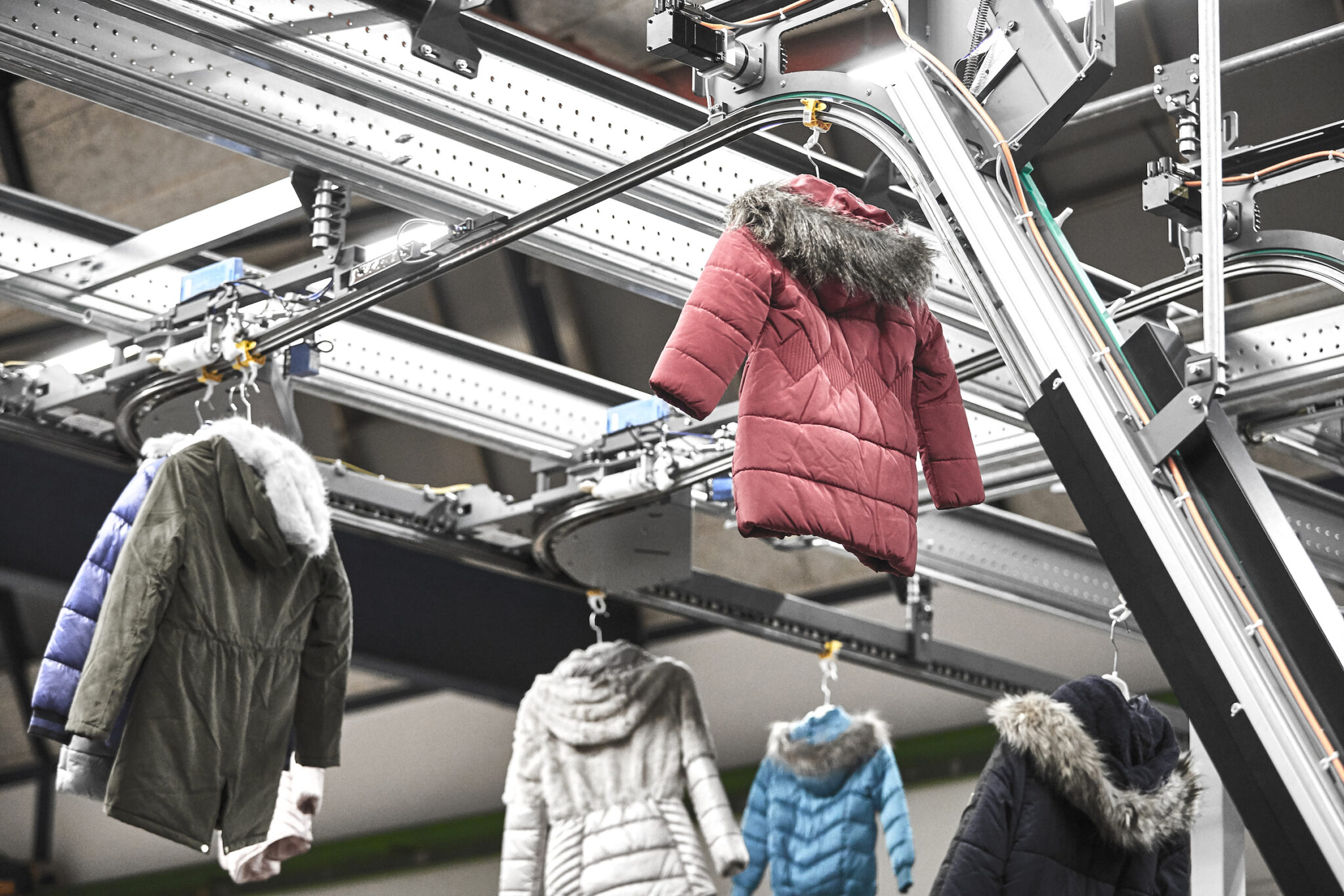
These concerns can be put aside. There is a form of warehouse automation technology that offers all the capabilities necessary to orchestrate and fulfil orders for high street stores and ecommerce, all in a single seamless operation – offering automated movement, sorting and buffering of hanging goods and boxed items in one system. Overhead pouch sortation systems, such as Ferag’s advanced Skyfall solution, are capable of sorting and processing many thousands of orders an hour, with each pouch able to carry both hanging garments and flat items, such as shoes and flat pack goods, enabling fast order fulfilment from a single pool of inventory.

Store friendly sequencing

Critically, the same high-speed pouch sorter system used for fulfilling ecommerce orders can also be deployed to create store friendly sequenced consignments for high-street shops – pulling from the same, pooled inventory. The benefit of sequencing product for a particular store’s layout is that the shop assistant assigned to replenishing shelves and rails is able to perform the task quickly and efficiently, freeing them to spend more time with customers – potentially, to secure more sales.

An obvious advantage of a high-speed pouch solution, like Ferag’s Skyfall, is that it uses available overhead space – the third dimension of the building – keeping floor areas free for pedestrians and other processes. What’s more, pouch systems are a highly cost-effective alternative to other forms of goods-to-person automation, like multi-shuttle and mini-load solutions, that can cost up to 30% more. Then there is the core benefit that the Skyfall overhead pouch system undertakes high-speed sorting, conveying and buffering processes too, which with Ferag’s modular conveyor technology allows for tremendous flexibility and scalability. And as the pouch has the ability to carry flat items, such as shoes, and flat pack goods along with hanging items, there is no need to have a separate cross-belt sorter for flat items, with all the issues associated with bringing flat and hanging items together.

Buffering between processes

The ability to buffer between processes with different throughput rates – for example, ecommerce, retail store, returns handling – is powerful. It means that, for example, the elements for a store-friendly sequenced consignment can be gathered together at the same time as individual ecommerce orders are being processed. It means that ecommerce orders for a particular despatch slot/vehicle can be consolidated in advance, with only final additions to be made as the cut-off time approaches – which in turn means that cut-off can be postponed, offering the consumer a faster service and increases the potential for sales.

Importantly, picking efficiency is enhanced using a single pouch system that serves both the high street and ecommerce channels. High pick ‘hit’ rates can be achieved when blending ecommerce with retail, as instead of picking just one or two items per pouch when inducting for an ecommerce order, several more items can be picked at the same time, into the same pouch, to satisfy high street demand as well. The result is fewer pouches in circulation, more efficient picking and faster throughput.

Fulfilling potential of AI

But, perhaps, one of the greatest benefits of creating such a highly responsive, agile fulfilment capability is only now, just about to be fully realised. Artificial Intelligence (AI) will soon be capable of understanding and predicting sales patterns, both in a geographical sense, which will allow more precise allocation of stock and ranges to particular stores, and factors that may influence ecommerce customers, such as social media trends. Having a fulfilment system that has the capability to respond appropriately and quickly to AI predictions, across channels, will allow product to be optimally deployed to maximise sales and margins. Seeing this future and the need for highly responsive, ‘intelligent’ intralogistics systems, Ferag recently acquired the Australian warehouse automation software developer, dereOida.

A number of leading fashion brands are taking advantage of pouch sorter technology to increase capacity and boost performance of their fulfilment operations. Ferag has recently installed a flexible high-speed Skyfall system at a new distribution centre for children’s fashion company, Mayoral Group, in Malaga, Spain. The extensive overhead pouch solution is one of the largest to date, with a mix of hanging pouches and garment hangers totalling more than 58,000 Skyfall hangers, and a throughput of up to 12,000 units per hour. The system sorts and sequences thousands of carriers and hangers with a random mix of pockets and garments, processing orders in batches and actively sorting them in a dynamic buffering solution that offers the flexibility to fulfil both store replenishment and online orders. The same system efficiently handles returns.

Consolidating inventory in a single, highly automated omni-channel facility can drive greater efficiencies, improve productivity, and boost responsiveness – creating an engine for growth that has more opportunities for sales with higher margins.

Live Animal Transport: EU Tables Improved Conditions

In an attempt to overhaul the current EU framework governing live animal transport, the European Commission unveiled today a proposal which partly considers the true chain of responsibility and care for animals during road transport.

Following a lengthy consultation process, the European Commission presented today a new legislative proposal to replace the current regulation overseeing the protection of animals during transport. This long-awaited revision aims to improve the welfare of animals from the first point of departure to their final destination, including to outside the EU. The proposal contains several provisions which could directly or indirectly impact the welfare of animals during transport.

These include restrictions on the length of the journey for slaughter animals, more space for animals in vehicles and other technical specifications such as temperature control, special provisions for journeys to third countries, clarifications on the role of various parties along the logistics chain, especially the role of the organisers of the ‘animal journey’, and digitalisation and enforcement.

IRU Director of EU Advocacy Raluca Marian said, “IRU welcomes the Commission’s much-needed efforts to fundamentally overhaul the rules governing animal welfare during transport. The Commission has addressed some concerns, but its approach is still lopsided towards the various parties which have to guarantee the welfare of the animals during their journey, especially on competence, knowledge and training. Unfortunately, this approach is not in sync with the actual reality of animal transport.”

Following an initial review of the proposal, IRU has identified two particular issues.

More clearly defined responsibilities

The liability across the logistics chain to decide whether an animal is fit for carriage is one of the key concerns which is inadequately addressed by the proposal. The proposal addresses this by introducing clear limits for the different stakeholders in the logistics process such as organisers, keepers and transport operators.

“We’re pleased to see that the Commission has understood that drivers and transport operators can only carry out a – highly challenging – visible check during the loading process. It is extremely hard for drivers to detect hidden conditions which can worsen during transport. Reflecting this in the delimitation of the responsibility of the various parties, including organisers and keepers should provide extra guarantees against unfit animals being presented and loaded for transport,” highlighted Marian.

Cumbersome training only for transporters

The issue of liability and knowledge is closely related to the training of professionals involved in the logistics process of live animal carriage. The proposal only foresees training and exams for road transport drivers and attendants.

Marian said, “This is still a very one-sided approach. The truck driver is only one link in the chain. In contrast, no obligation is foreseen for the journey organiser who actually has the overview of the complete journey of an animal, not just of one single transport leg. If animal welfare was taken seriously, all professionals involved in the process, including those who organise and plan journeys, keep, attend and carry live animals, and not only the drivers, would be properly trained and fully familiar with EU and national rules as well as with the animal species they are carrying. This way they can properly assume the responsibilities they have been given to guarantee the welfare of the animals throughout the logistics chain.”

Visa’s Fleet 2.0 Solution

Issuer processor Enfuce has announced it is expanding its partnership with Visa with the launch of Visa’s cutting-edge mobility card solution, the ‘Visa Fleet 2.0.’

Through the certification, Enfuce is now uniquely positioned to deliver the Visa Fleet 2.0 solution to their joint, prospective customers. The continued collaboration between Enfuce and Visa is set to revolutionise fleet management across Europe, offering enhanced efficiency through rich data and insights, cost reduction, and a crucial pivot toward sustainable transportation and mobility budgets.

Unlike traditional closed-loop cards used by most fleet operators worldwide, the Visa Fleet 2.0 solution is not restricted to specific fuel retailers or specific types of product like petrol or diesel, and can be used at any location accepting Visa cards. This not only enhances operational efficiency by enabling drivers to choose the most efficient routes and access optimal fuel prices but also provides unmatched convenience with an all-in-one, fully integrated card, accessible via both physical and digital wallets, thus eliminating the need to carry multiple fuel cards.

This fleet and mobility card can be used for all types of expenses chosen by the issuer, beyond fuel-related payments, thus accommodating for the evolving landscape of electric vehicles (EVs). Indeed, Visa reports that 70% of fleet managers plan to transition to electric, hybrid, or hydrogen cell vehicles within the next five years. Conventional fuel cards designed for fossil fuel fleets lack the flexibility to accommodate EV charging without substantial investment on the issuer’s part. Visa Fleet 2.0 addresses these evolving needs by incorporating a plethora of different use cases such as EV charging, tolls, mass transit, and micro-mobility.

Thanks to its advanced, modular and customisable tech stack, the fleet and mobility card solution will introduce a range of other benefits, which include:

● Detailed transaction data: Comprehensive financial reporting and operational efficiency by consolidating detailed transaction data, including purchased items, unit prices, and associated VAT on a single card. Real-time data, including driver identification, vehicle identification, and vehicle mileage, can also help with fraud prevention.
● Purchase restrictions & spend controls: Visa Fleet 2.0 enables cards to be restricted for specific types of purchases, providing companies with greater control over card usage, mitigating the risk of inappropriate spending.
● Enhanced security: Enfuce also ensures the security of every issued card through the deployment of secure EMV technology and robust authentication methods like 3DS.

Denise Johansson, Co-Founder & Co-CEO of Enfuce, comments: “We are proud to lead the European market by being the first to offer the Visa Fleet 2.0 solution to our prospective customers. The card will help card issuers right across Europe thrive in the current market, while also equipping them for the fossil-free future. Considering the majority of fleet operators are looking to transition to petrol-free vehicles, it’s crucial for fuel card issuers to adapt to these changing market dynamics. By offering enhanced flexibility, security, and convenience, our new card aims to meet these evolving needs of fleet operators.”

Monika Liikamaa, Co-Founder & Co-CEO of Enfuce, comments: “This certification means we can support our valued customers in revolutionising the outdated fuel card, streamlining fleet management, and bolstering security measures through comprehensive data tracking to combat fraudulent activities. This collaboration marks a significant milestone in the financial landscape, showcasing a joint effort to introduce forward-thinking solutions that cater to the changing demands of the modern mobility ecosystem.”

Richard Campion, Head of Fleet and Mobility, Visa, added: “Expanding access to financial tools and services is core to Visa’s purpose as we seek to uplift everyone everywhere. We’re excited to continue our work with Enfuce, helping them deliver our mobility card solution to their customers across Europe as they work to revolutionise the fleet management space.”

QR Pallet Launch Boosts Traceability

EPAL UK & Ireland has announced that it has launched a traceable pallet that will significantly improve the traceability and efficiency of users’ supply chains.

The EPAL Euro QR pallet features a scannable code linked to a unique serial number, helping to boost supply chain visibility, improve efficiency, and optimise stock management.

Located on the right-hand side of the pallet, the QR code can be linked to the goods being transported, and gives users other essential information such as the pallet manufacturer, age of the pallet, how many times it has been used in the EPAL network, the number of repairs it has had, storage times, and location.

Pallet users can share this information easily with its partner suppliers and customers in the supply chain. The improved visibility will reduce pallet loses because it enables businesses to know exactly where their pallets are located and enable swift action in the case of events such as product recalls.

The QR code is marked on the Euro pallets with long-lasting inkjet printing, successfully tested within the EPAL network, and readable with a standard barcode reader.

Felicity Smith, National Secretary for EPAL UK & Ireland, said: “The Euro QR pallet is a significant development for EPAL, adding traceability to the list of benefits users already enjoy from being part of the EPAL network. It is an innovation that means EPAL pallets now not only protect the goods they are carrying but can also provide operational data that is essential for an efficient modern supply chain.”

The Euro QR pallets are manufactured and repaired to the same independently audited quality standards as regular EPAL pallets. The pallets are freely exchangeable within the existing EPAL international pallet pool across 35 countries. Administering some 650 million EPAL Euro pallets and 2 million box pallets internationally, EPAL is the world’s largest open exchange pool.

New International Fleet Partnerships

Alphabet, a global provider of business mobility solutions, has entered the Australian, New Zealand and Mexican markets through new partnerships with TIP México and FleetPartners, to further expand the company’s global reach.

Alphabet’s collaboration with TIP México, the transportation leasing, car, and fleet management company in Mexico, marks Alphabet’s entrance into its 36th market, further building on the robust foundations already in place in the USA and Canada. Both TIP and Alphabet’s combined strengths will enable them to deliver a holistic service approach that covers the entire mobile customer journey.

In addition, Alphabet’s collaboration with FleetPartners, a leading fleet management and leasing company in Australia and New Zealand, supports the company’s ability to extend its services, while leveraging the individual expertise of both organisations to support their customers on the road to decarbonisation.

As both new partners are fleet experts in their respective markets, their business models are well-aligned, and the partnerships will assist with delivering strategic consulting and innovative funding solutions, as well as the provision of smart management products and services for company fleets.

Fleet Partnerships

Furthermore, the partnerships with TIP México and FleetPartners aligns with Alphabet’s vision of promoting eco-friendly and sustainable transportation solutions. Through this shared vision for the future, they are empowered to transform the industry on a global scale.

“Our collaborations with TIP México and FleetPartners continue to provide assurance that we have great partners by our side,” said Susanne Loser, Chief Sales Officer of Alphabet International. “We are confident that we will all benefit greatly from each other’s reach, expertise, and brand recognition to form lasting alliances across global regions. With TIP México, we have gained a reputable partner who perfectly aligns with local needs and customer preferences, spreading our tailored mobility service.”

Mauricio Medina, General Director of TIP México explains: “This collaboration with Alphabet reinforces our growth strategy in the large enterprise segment and expands our horizons beyond the borders of Mexico. I am sure that this cooperation will bring great benefits for both parties and mainly for Mexican customers.”

FleetPartners Chief Executive Officer, Damien Berrell, adds: “We are excited to extend our fleet services to Alphabet customers across Australia and New Zealand. These customers will benefit from our local expertise and extensive supplier network while having access to a range of Alphabet compatible products and services, via FleetPartners. Leveraging global expertise and the joint focus on supporting customers on the journey to carbon zero were key considerations when developing the alliance.”

Logistics Portfolio Finalises Development

Cain International, a privately held investment firm, has completed the development phase of its first logistics portfolio, less than two years on from its acquisition, following practical completion of Sherburn42, a 659,310 sq. ft. site in North Yorkshire, UK.

Sherburn42 contains four standalone Grade A industrial units ranging from 57,750 sq. ft. to 280,000 sq. ft. and excellent connectivity to 1.1 million potential customers within a 30-mile radius, as well as the U.K. logistics network via major motorways and ports.

The completion marks a significant milestone for the portfolio which Cain acquired in March 2022 for £550 million from Firethorn Trust. The portfolio, consisting of seven sites totalling 3.19M sq. ft. across 24 units, has already attracted leading brands such as Next and Taylor Wimpey.

Logistics Portfolio

Tim Brazier, Senior Vice President at Cain International, said: “Reaching practical completion across the portfolio, despite the wider market challenges, represents a significant achievement. All of the assets have been designed to meet the evolving needs of occupiers, delivering quality space, with a focus on ESG and flexibility, which will support businesses looking to establish or expand their presence in the U.K.”

The site is being delivered by Firethorn Trust on behalf of Cain. Colliers, Lambert Smith Hampton and Carter Towler are acting as lettings agents.

Subscribe

Get notified about New Episodes of our Podcast, New Magazine Issues and stay updated with our Weekly Newsletter.