Completion of cargo-partner Acquisition

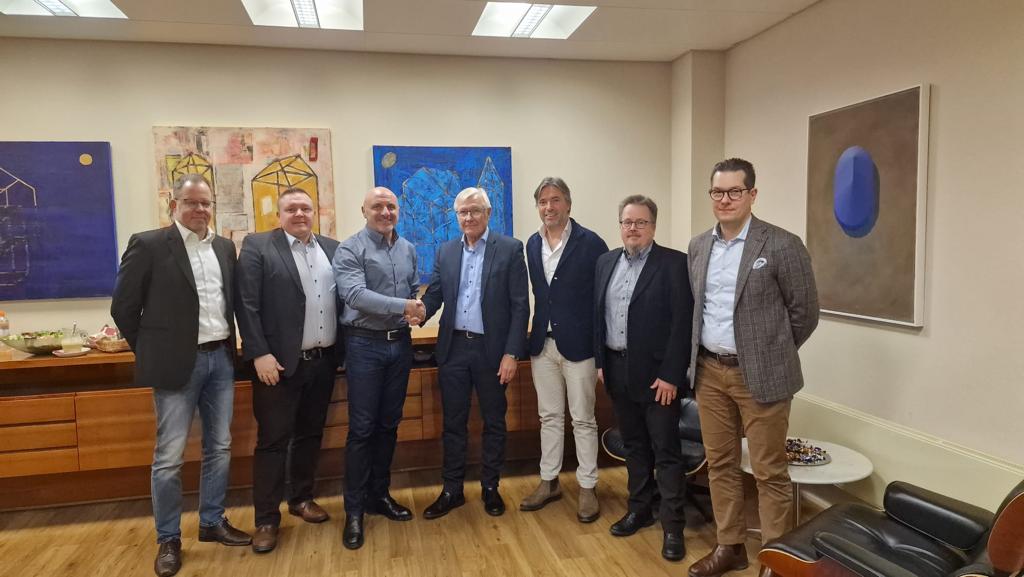
NIPPON EXPRESS HOLDINGS, INC., is pleased to announce that, in accordance with the share transfer agreement concluded on May 12, 2023 with cargo-partner Group Holding AG and its subsidiaries Multi Transport und Logistik Holding AG, Safer Overseas Transport Holding GmbH, cargo-partner GND GmbH, and CARGO-PARTNER US HOLDINGS INC. (hereinafter collectively referred to as “cargo-partner”), it acquired all shares of several cargo-partner subsidiaries based mainly in Central and Eastern Europe that provide logistics services worldwide on January 4, 2024 through a special purpose company that is a wholly-owned subsidiary of Nippon Express Europe GmbH (President: Shinichi Kakiyama), itself a European holding subsidiary of NIPPON EXPRESS HOLDINGS, and completed all procedures required to make these newly-acquired companies subsidiaries of NIPPON EXPRESS HOLDINGS.

Headquartered in Austria, cargo-partner has a robust logistics business base in Central and Eastern Europe, a region that is increasingly attracting attention as an industrial cluster in Europe. It is a highly reputable corporate group focused principally on air and ocean freight forwarding in Europe, Asia, and North America that also offers rail and truck transport and contract logistics services.

The subsidiarization of cargo-partner will complement the NX Group’s logistics infrastructure in Central and Eastern Europe, expected to see significant future growth as a production base within the European region, and will enable the NX Group to further expand its global network and enhance the services it provides in the European region.

The resultant expansion in the volume of air and ocean freight handled will also strengthen the Group’s competitiveness in the global market, enable it to respond to the diverse demands of its global customers, enhance its ability to meet logistics demand between Asia and Europe and elsewhere, and bolster its global account structure.

Since the NX Group and cargo-partner have differing customer bases and differing strengths in specific countries and regions, they will seek to create synergies in their logistics operations through mutual complementation, thereby accelerating the expansion and development of their global businesses.

Going forward, the NX Group and cargo-partner will maximize the synergies they generate as a unified entity to help create value for the NX Group’s customers and stakeholders.

UK Logistics Sector Returns to Pre-Pandemic Level

Occupier demand for UK logistics and industrial space returned to its pre-pandemic norms following a year of tough market conditions, according to newly-published data from global real estate services firm Cushman & Wakefield.

According to the firm, more than 10.2 million sq ft of space transacted in the occupational market during Q4 2023, taking the total annual figure to 32.5 million sq ft.

The Q4 volume of 10.2m sq ft was a 2% increase on Q4 2022’s 10m sq ft. While marginal it will serve as a cause for cautious optimism in a market which saw just 13.5m sq ft transact across the two previous quarters. Take-up for the full year 2023 represents a 41% decrease on the 2022 total but falls just 2% below the 10-year pre-pandemic average.

Demand has been driven by a much wider pool of business during 2023, with healthcare, MedTech, food related businesses and advanced engineering companies all active nationally, while film studios and creative industries have been taking more space in and around London.

This diversity of demand has been important during a period in which the market has experienced a notable absence of large third party logistics, ecommerce and retail demand. Interest rate hikes and the subsequent impact on retail volumes, as well as the easing of the supply chain pressures that had induced a wave of additional demand in recent years, has caused demand from these areas to drop back.

Inflationary pressures have also driven some occupiers to seek out and develop their own purpose-built facilities in response to rental levels. Upcoming sustainability and environmental regulations appear to be dissuading occupiers from taking poorer quality buildings, with Grade C take-up now at its lowest level since 2008.

Richard Evans, Head of UK Logistics & Industrial at Cushman & Wakefield, said: “As expected, 2023 was certainly a challenging year for the market with tough trading conditions and persistent inflation. But the Q4 take-up figures and the breadth of demand highlights just how robust and resilient the market can be in the face of such pressure, and we’re delighted to see such a variety of businesses acquiring modern, high-quality space. We expect to see continued improvement in market conditions throughout 2024 as consumers and businesses regain confidence and the wider economic recovery begins.”

Cushman & Wakefield also states that concerns around oversupply are beginning to fade as the development pipeline dwindles, and the surge of grey space returning to the market has cooled off. Following a sharp increase in the supply of available space from Q4 2021 onwards, Q4 2023 represented a second quarter of only marginal increases. Total availability of space within units of 50,000 sq ft and above rose by just 2% compared with the Q3 value, as a result of the constrained development pipeline and persistent pressures on build and financing costs. Despite a year of rising supply, and some speculation of oversupply in the market, a more forensic examination of available space shows that overall the market continues to be characterised by a lack of choice and pockets of undersupply, supressing occupier choice and potentially holding back demand.

Weleda Bolsters Hubs with WMS

Weleda AG is a leading manufacturer of anthroposophical medicine and holistic natural beauty products. The company has achieved a significant milestone with successful integration of the LFS warehouse management system supplied by EPG (Ehrhardt Partner Group) at its production location in Switzerland. Introducing the system signifies a crucial step in transitioning all manufacturing sites in the German-speaking region to LFS.

The Swiss pharmaceutical and natural beauty product group operates in a challenging sector defined by strict regulatory requirements and complex supply chains. It was faced with the increasingly necessary task of improving efficiency in its warehouse management processes at its production sites in Germany and Switzerland without losing the required flexibility in its warehouses.

Weleda was looking for a flexible warehouse management system which would provide administration for its entire logistics materials and information flow to meet its specific requirements as a medicine and natural beauty product manufacturer.

It settled on the LFS warehouse management system. Weleda now uses LFS at its Arlesheim production location to ensure that more than 8,000 downstream clients such as pharmacies, drug stores, hospitals, retail companies and mail order firms are reliably supplied with around 250 orders daily. LFS’s introduction in Switzerland is a pilot project which ultimately aims to allow all logistics processes to be mapped in LFS throughout the German-speaking region in the future.

Flexible, scalable, transparent

LFS collects and visualises all process data for intra-company logistics. Its well-organised logistics cockpit offers transparency in displaying future logistics processes such as goods receipts, order statuses and picking. This ensures early identification of process optimisations and warehouse potentials. Employees at control points receive proactive notifications of potential bottlenecks.

LFS seamlessly integrates into the existing Weleda infrastructure, enabling the use of standard processes and regular updates and allowing key users to configure and parametrise the system effortlessly. Client-specific adjustments have been made during installation to ensure optimal mapping of processes and perfect integration of hardware such as printers, scanners and workstations. The natural beauty experts are also obliged to take into account numerous GMP/GDP regulations. All WMS requirements needed to be documented, tested and validated in advance according to stringent criteria.

Partnership into the future

In addition to successfully completing the introduction of LFS, the partnership-based cooperation between all project participants merits special attention regarding further progress of the project. “The partnership between Weleda and EPG is defined by a dynamic in which all involved parties work closely together on a cooperative basis,” explain Eugen Risto and Salvatore Trovato, LVS Project Managers at Weleda. “It’s a partnership where every voice is heard and all members work consistently towards a common goal. Their professionalism and constructive approach mean we can look forward to the forthcoming launch at the German location confidently.”

Following successful incorporation at Arlesheim, the partners now aim to apply the experience they gained there to the logistics campus in the German city of Schwäbisch Gmünd with its high-bay warehouse for 17,200 pallets. Plans are in place to introduce EPG’s International Shipping System (ISS), a multi-carrier shipping software that already handles shipping logistics at Weleda’s headquarters effectively. The WCS material flow system is also to be integrated to control the automated storage units and conveyor systems efficiently.

Peru Operations Expand with Racking

OXXO, the convenience store chain has taken a significant step forward in its growth in the Peruvian market. In collaboration with AR Racking, industrial storage solutions supplier, OXXO has successfully completed an ambitious expansion and optimisation project of its logistics operations in Villa el Salvador, Peru. This initiative involved the installation of 1000 PAL positions and 98 picking spaces, significantly improving its storage capacity and operating efficiency.

The warehouses involved in this project cover a total of 5000 square metres, divided into a 4000 square metre extension of an existing facility and the construction of a new 1000 square metre warehouse. In the extension, 250 adjustable pallet racking positions have been added with 59 picking levels, while in the new warehouse, 750 adjustable pallet racking positions with 39 picking levels have been installed.

One of the most notable characteristics of this project has been the implementation of 1000 adjustable pallet racking positions with 100 picking levels. Despite the challenges that this project presented, including the need for an urgent installation without any interruptions in OXXO’s logistics operations, AR Racking managed to complete the project using its stock two days before the agreed deadline, resulting in the customer’s full satisfaction.

Peru Operations

José Luis Vásquez Samamé, Regional Manager of OXXO LATAM Logistics Operations, expressed his satisfaction with the project: “We are very pleased to have collaborated with AR Racking in this important expansion project. The installation of 1000 adjustable pallet racking positions and 98 picking spaces has significantly improved our storage capacity and product management efficiency. We thank the entire AR Racking team for its commitment and professionalism in the execution of this project.”

This successful project represents a significant step forward in OXXO’s expansion in the Peruvian market and strengthens AR Racking’s position as leader in industrial storage solutions in the region. The collaboration between these two companies has proven to be a model of success in logistics management and optimisation of storage spaces. “This project has been an exciting challenge for us. The urgent installation and early delivery show our commitment to customer satisfaction and excellence in the execution of logistics projects. We are proud to have contributed to the continuous success of OXXO in the region.” confirmed Omar Durand, Project Manager in AR Racking.

AR Racking is part of Grupo Arania, an industrial group of companies with extensive experience and scope, and with a multi-sectoral activity based on the transformation of steel that dates back more than 80 years. AR Racking provides the market with a wide range of solutions with high certified quality standards and a comprehensive project management service. AR Racking’s industrial storage systems stand out for their innovation, reliability and optimum efficiency.

Logistics Provider Merges with eCommerce Arm

DG International has announced that it will merge with its eCommerce specialist arm, Pro Carrier, from this month. DG International will cease to operate under its separate brand and will move forward under the Pro Carrier name.

The integration of the two brands will streamline operations, bringing DG International’s expertise in global transportation options across land, sea and air and Pro Carrier’s eCommerce offering under one umbrella.

The company’s innovative Horizon platform, an easy-to-navigate, user-friendly system that shows the status of a customer’s shipment every step of the way, was instrumental in the organisation’s decision to merge under the Pro Carrier brand. The rebrand will allow customers to view the exact status of their deliveries in real-time across both freight and parcel shipments, under one login.

Ryan Lucas, CEO of Pro Carrier, said: “The synergy between the two brands made it clear that merging should be the next step in our growth plan. We are excited about the opportunities ahead as we operate under the Pro Carrier name, expanding its services with our reliable and competitive international freight offering. The fantastic growth we have experienced across both brands in 2023 has led to a renewed vigour to offer a more streamlined service to our customers, so we can maintain our reputation for excellence.”

During the rebrand, existing contracts, services, and relationships with the company will continue unaffected, the only key difference for DG International customers and suppliers being the brand name being phased out to operate under Pro Carrier.

Pro Carrier’s easy-to-navigate website will be refreshed with an updated look and feel, to include DG International’s offering. The current website for DG International will become inactive, with all content and mechanisms transferred. Likewise, the current social media channels for DG International will no longer be updated, with all future news about the company’s freight offering coming from Pro Carrier’s LinkedIn channel.

Joloda Hydraroll Acquires Actiw Loading Solutions

Joloda Hydraroll Ltd, global loading and unloading solutions specialist, has today announced its acquisition of Actiw Oy. Based in Finland, Actiw is a leading provider of automated loading solutions for the unmodified trailer market.

The acquisition is an important milestone in Jolodas Hydraroll’s growth strategy to increase global market presence by expanding its suite of loading and unloading solutions. The Actiw product portfolio complements that of Joloda Hydraroll’s, enabling the company to address unique requirements and maximise return on investment for more businesses around the world.

Automated loading and unloading solutions add considerable benefits to logistics operations, from reducing accidents and product damage to optimising loading and unloading times, warehouse space, and costs, all while making processes more sustainable and safer.

However, within specific sectors and markets, such as the FMCG sector in Europe and America, trailers can travel exceptionally long distances between factory and warehouse facilities without unloading. Additionally, in this scenario, it might not be possible to ensure a dock at both ends of the journey that is compatible with a trailer modified for automated loading and unloading.

By combining expertise, Joloda Hydraroll can now support these businesses with a range of unmodified trailer loading solutions that remove the need for dedicated trailer fleets. These include:
• The LoadPlate® – a semi-automated loading solution for containers and regular, non-modified trucks to transport metal, timber, and complex cargo.

• The LoadMatic® – a fully-automated loading solution for regular, non-modified trucks and containers to transport either palletised or palletless industrial goods.

In addition, the pooled resources and talent of both companies present opportunities to bring more operations in-house, which will result in increased efficiency and cost-effectiveness for customers.
Michele Dematteis, CEO at Joloda Hydraroll, said: “We are delighted to welcome Actiw to Joloda Hydraroll. This strategic move aligns perfectly with our growth objectives and commitment to helping more customers worldwide solve their specific loading and unloading challenges.

“With a broader offering of loading solutions – from the Joloda Hydraroll Skate & Track System that started it all in 1962, to fully fledged automated solutions, and everything in between – this acquisition stands to benefit prospects, clients, and stakeholders of both businesses. Together, we strengthen our position as a one-stop-shop partner who can design, manufacture, install, and maintain specialist loading systems that integrate seamlessly with our customers’ operations and provide significant, long-term benefits.”

Tomi Korhonen, CEO at Actiw, added: “Much like Joloda Hydraroll, our mission is to help customers solve their loading challenges and emerge as the frontrunners in their respective industries. Together, our solutions will extend support to a broader range of businesses, while our collective expertise will drive our future innovations even further. We look forward to an interesting and exciting future ahead.”

Throughout the transition, Joloda Hydraroll is committed to ensuring a smooth unification of the two businesses and uninterrupted service for all customers, partners, and stakeholders.

Commercial Fleets Recognise Threat to Drivers

There has been a steep rise in incidents of aggression and harassment towards commercial fleet drivers from both opportunistic thieves and members of the public in the past 12 months, in the opinion of leading fleet, health and safety, and technology specialists at a recent event organised by SureCam and PeopleSafe to discuss driver safeguarding and lone worker protection.

“We are seeing significantly more risk associated with working alone and in isolated areas, with London a particular hotspot for our fleet drivers,” explained Lee Jackson, Group Head of Plant & Transport and Board Director at Association of Fleet Professionals. “Incidents are occurring on a frequent basis, especially during the darker months, as opportunist thieves target vehicles and advanced equipment used by our mobile team. We are constantly looking at ways to deter this threat, undertake risk assessments, and ultimately put in place processes to minimise the dangers to our people.”

However, it is not just the threat from thieves that is on the increase, with growing aggression towards fleet drivers who are simply going about their daily routine. According to Mark Ryder, Chief Commercial Officer of Peoplesafe: “We are experiencing a greater volume of raised alerts to our alarm receiving centre. Post pandemic we have seen a real change in people’s tolerance to other road users, which has resulted in a major increase in road rage. This lack of patience and understanding can lead to verbal and physical harassment for perceived disruption where vehicles are making a delivery or simply manoeuvring.”

Philip Read, Head of Safety, Health, Risk & Resilience at G4S added: “While serious incidents within our health and patient transport services, as well as elsewhere in the business, are often sporadic, they are on the rise and can represent a significant threat to our drivers and passengers. The safety of our staff and patients is paramount, and with many of our drivers single-crewed and working autonomously, so are challenge is how we address this issue and provide the level of lone worker protection needed?”

The expert panel considered what cultural and organisational shifts were occurring within the fleet sector to foster a safer work environment for lone workers. Measuring risk to identify areas of weakness and the threats that exist was pinpointed as critical when creating an effective mitigation plan. It was clear from the discussions that communication and engagement was a key part of this process to share information and experiences, with back to the floor and ride along sessions, hazard reporting, safety tours and training all mentioned as effective tools.

In response to the situation, commercial fleets are also looking at how technology can help safeguard drivers that are working alone, out of hours and in remote locations, said Sam Footer, Director of Partnerships at SureCam. “Employee safety and wellbeing has come to the fore in recent years – particularly in fleet sectors such as logistics, utilities, highways and construction – and many businesses acknowledge that they need more robust processes to support their mobile teams both in and outside the vehicle. Every organisation has different needs to address, but what is consistent is the demand for an affordable, easy to implement and simple to use technology solution, underpinned by a clear driver protection strategy.”

There was a consensus that cutting-edge technology, such as dash cameras integrated with personal safety apps, had a major role to play in ensuring fleet drivers received the protection needed. “We need to allow fleet drivers to do their job without risk or being threatened, and by giving them this added support, it will contribute to them feeling less vulnerable and more confident,” concludes Jackson.

Transaid Exceeds Uganda Driver Training Goals

International development organisation Transaid has concluded phase two of its Professional Driver Training project in Uganda, with 890 predominantly HGV drivers being trained over a two-year period – exceeding the project’s original training goal by more than 15 per cent.

Delivered in partnership with local non-governmental organisation (NGO) Safe Way Right Way, the project set out to improve the standards of driver training in a country which suffers one of Africa’s worst road traffic incident rates, claiming an estimated 12,000 lives* a year.

Key to the project was the aim of encouraging more women into the sector, which Transaid believes will benefit transport companies, contribute to improved safety and generate new career opportunities for women.

Caroline Barber, Chief Executive of Transaid, says: “Uganda is experiencing a huge rise in demand for professional drivers, and we expect this to continue increasing over the coming years. Phase two of this project set challenging training goals, and it’s a testament to the hard work of the training team that we have surpassed those expectations. The fact that around 10 per cent of the trainees were women also demonstrates an appetite for a more inclusive workforce.”

The majority of drivers trained were acquiring an HGV licence for the first time, whilst around 15 per cent benefitted from refresher modules, having not previously received formal training from Safe Way Right Way. Transaid supported the refresher training with the roll-out of six new, short refresher courses – whilst all training was accredited by the Chartered Institute of Logistics & Transport (CILT).

The skills of Master Trainers and Trainers were bolstered, with Quality Assurance assessments and retraining. Transaid also supported Safe Way Right Way with marketing and business strategies to encourage more drivers and fleets to enrol.

Barber added: “We were already proud of what was achieved in the first phase of this project between 2016 and 2020; this latest phase of work has helped to create a noticeable change that will last, well beyond our involvement in the project.”

Phase two was an initiative of the GIZ Employment and Skills for Development in Africa (E4D) programme, funded by the German and Norwegian governments.

Future recommendations for professional driver training in Uganda include an increased emphasis on fuel-efficient driving techniques, to improve sustainability, and the recruitment of female trainers to encourage continued involvement of female drivers.

Warehousing and Distribution for Lighting

Kinaxia Logistics has agreed a three-year contract to provide UK distribution, warehousing and other services for a global lighting company.
Ansell Lighting designs and manufactures interior and exterior lighting for the commercial, domestic, industrial, retail and architectural markets.
The company has its headquarters in Warrington and operates in more than 20 countries, with showrooms in Belfast, Dublin and Madrid as well as at its HQ.

It offers over 3,300 product lines and has won multiple awards for its energy-efficient luminaires and industry-leading lighting control system, Octo. Last year, Ansell won a King’s Awards for Enterprise for Innovation for its Panel Pod product. Its multi-million-pound stockholding is housed at distribution centres in Warrington and Belfast, from where it dispatches more than 400,000 items a month.

Ansell has appointed Kinaxia to distribute products to customers across the UK, and to provide warehousing, contract packing and overseas shipment. The distribution operation is being led from Kinaxia’s hub in Trafford Park, Greater Manchester.

Kinaxia is a top 15 UK logistics group which has its headquarters in Macclesfield, Cheshire. It employs more than 1,700 staff nationwide with a fleet of over 850 vehicles transporting goods for the retail, leisure, food and drink and manufacturing sectors.

The group also has 2.7 million sq ft of warehouse facilities nationwide, offering contract packing, e-fulfilment, returns management, storage services and a complete distribution service. Group turnover was more than £200m in 2022, the 10th anniversary of the business.

Kinaxia sales director Nicky Woodman (pictured) said: “Ansell Lighting is a tremendous addition to our growing client base. Our agreement brings a significant volume of new business to our distribution operation as well as to other parts of the group. Working with the Ansell team to integrate our IT systems has ensured a seamless transition and the highest possible standard of service.

“Our partnership has extended beyond the contract awarded for the distribution element to providing warehousing, contract packing and European shipments, and we look forward to further developing our relationship with the Ansell team into other areas of its business.”

Ansell’s distribution director Mark Stanley said: “Customer service levels are very important to us, and we wanted to work with a partner who shared our values and would be able to deliver the fast, efficient next-day service that our customers have come to expect, in order to continue to grow our business. We have been impressed with Kinaxia’s strong transport network and distribution capabilities, and we are looking forward to working with them as we move towards achieving even higher delivery standards than before.”

Pallet Shuttle System is Better, Bigger, Easier

A Movu Robotics atlas pallet shuttle system gives leading logistics service provider Kris De Leeneer (KDL) approximately 45,000 storage locations and the capacity to manage a potential throughput of up to 11,000 pallet movements a week. Importantly, this automated storage and retrieval system (AS/RS) fulfils KDL’s need for flexibility by allowing pallet throughput to be increased simply by adding more shuttles, while the modular rack can be extended to increase capacity to help futureproof the facility.

This project represents the first Movu atlas system for the third party logistics (3pl) market. The solution meets the issues of 3pl industry by providing flexible in product handling and throughput. In this sector it can be hard to foresee accurately future business levels, types of customers, the resulting throughput and number of pallets required, so flexible intralogistics is a must.

Better, bigger and easier

Founded in 2001, KDL is geared to helping its clients boost their supply chain management and move their businesses forward. The Movu atlas shuttle system plays a vital role in fulfilling these aims, sits at the heart of KDL’s new state-of-the-art 10,000 square metre Distribution Centre (DC). Opened at the end of 2022, the DC is located in Lokeren, Belgium. Being next to the highway, where land is more expensive, KDL wanted to go with height for storage to minimise the building’s footprint.

For its customers in the Chocolate Industry, stock may include ingredients and primary goods for chocolate making through to bars and boxes of chocolates, numbering as many as 1000 SKUs depending on the stock profile.

The new DC is designed to assist KDL in further improving its service for customers and to provide room for expansion of its own business. It not only centralises all logistical services on to a CO2-neutral site, but also reflects the company’s vision of the future: ‘better, bigger and easier’.

Realising the vision
Helping to realise this vision, the Movu atlas shuttle system was installed in summer 2022 to provide a high density, multi-pallet position AS/RS. Without the need for lift truck aisles, the atlas system maximises storage capacity on a given footprint, while also removing manual handling, helping to reduce both personnel risk and picking errors.

Movu designed a system comprising a 28 metre high atlas rack comprising ten levels, with a footprint of 60 x 100 metres to accommodate the 45,000 locations. Pallets are moved and organised within the rack on a fleet of 20 Movu atlas pallet shuttles. These self-powered robotic carriers transport pallets on the rails of the rack’s storage lanes, where the pallets are housed, and on the rails of the main lane that runs across the storage lanes. Movu WES software manages the shuttle traffic within the rack, issuing orders from KDL’s Warehouse Management System (WMS). Movu has also provided an app that allows authorised operators to control the system from their smart phones.

Next to the atlas installation is the DC’s dispatch area and three mezzanine levels, each having an area of approximately 2,000 metres square, which are served by elevators and used for processing the goods. Movu collaborated with Ceratec to provide integrated in/outbound zones, advanced conveyers and turntables. Together, these systems offer a seamless flow of goods from storage to the dispatch area, where there are ten loading docks.

The operation

Trucks bring in and pick up goods 24-hours a day via the facility’s covered loading docks. After inspection and identification, pallets are placed on the internal transport system. The Movu atlas shuttles deposit and remove pallets via three lifts. KDL’s extensive Warehouse Management System controls the orders for put-away, pallet picking and replenishment.

The atlas shuttles transport a range of different types of goods that KDL manages for its clients. Pallets – which can include a mix of standard industry, Euro and plastic pallets – are weighed before entering the atlas system so that KDL knows what it is storing. Pallets with a loading of up to 1000 kg are stored on first two levels, with units up to 850 kg housed on the levels above.

On the mezzanines, teams perform value added services such as packaging, labelling and assembling. All pallets, including those for piece picking, are brought in or picked up by the shuttles. The system has 150 pallets per hour going in and the same figure going out. When goods are ready to go they are temporarily put into storage or taken immediately to the shipping zone.

Abundant flexibility

The inherent flexibility of the Movu atlas system was a key advantage for KDL over a stacker crane-based AS/RS. With a stacker system, if one crane is out of action, the pallets in that aisle cannot be reached. It is also hard to reconfigure to meet changing requirements and is less environmentally efficient – a heavy crane takes more power than the lightweight shuttle to transport each pallet.

With Movu atlas, however, shuttles can easily be added or removed as demand requires. A swap facility allows the shuttles to change levels automatically so if, for example, there is a large number of pallets on one level, a shuttle can be brought in from a less busy level to improve its throughput.

The rack is currently 40% occupied, giving plenty of space for new customers but the Movu system also contributes the facility’s futureproofed design. A rear wall in the DC can be removed, if required, to allow an extension to the modular rack and the addition of more shuttles. The site has room to potentially double the capacity to 90,000 pallets in the future.

Stefan Pieters, CEO of Movu Robotics, says: “This project is a great demonstration of bringing easier automation to all warehouses. The atlas shuttle system offers a flexible, scaleable, modular approach to automation. It is quick to install, simple to integrate and easy to reconfigure or expand with minimal impact on ongoing operations.”

Kris De Leeneer, CEO of KDL said: “Having made the decision to introduce automation into our new DC, and after looking at other solutions, we were attracted to the flexibility offered by Movu’s atlas system. It allowed us to optimise floor space as well as to handle more pallets than we ever could manually. Furthermore, atlas is an efficient and scaleable automated warehousing solution that can adapt to our requirements due to its modularity and the ability to add shuttles as required.”

He added: “Movu Robotics is a neighbour in Lokeren, and we talk the same language. Having been a long-term customer of its parent company stow Group, we have a trust relationship – it really understands our requirements. That is why we decided that Movu was the company to design, install and maintain an automated storage and retrieval system that would meet our needs into the future.”

Subscribe

Get notified about New Episodes of our Podcast, New Magazine Issues and stay updated with our Weekly Newsletter.