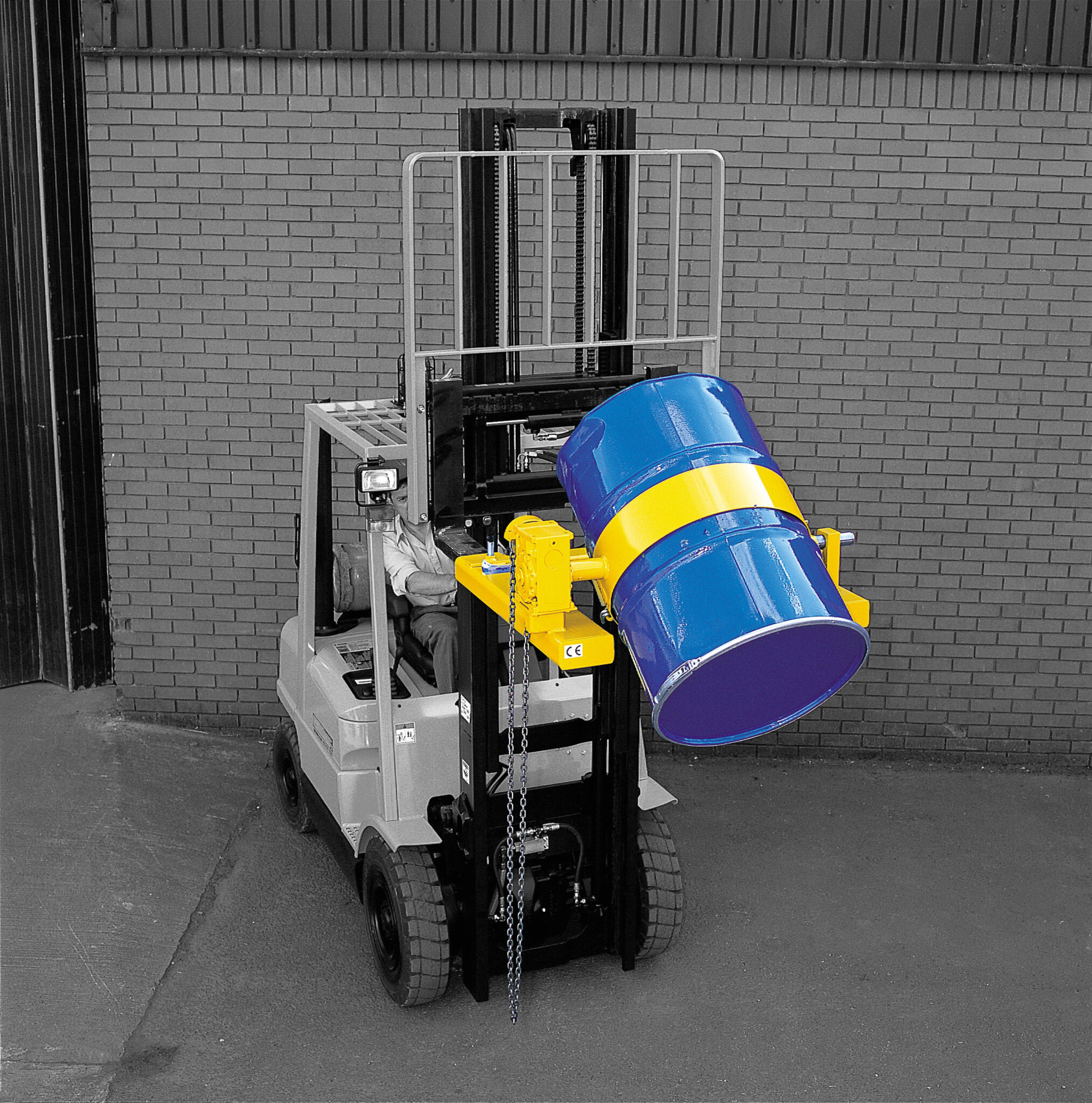
Investing in Forklift Attachments? Ask These Questions

One of the most cost-effective and efficient ways to handle materials in the workplace is to invest in equipment, such as forklift attachments, to complement your warehouse workforce. But whether you’re looking to add to your collection, or upgrade one that’s seen better days, it’s vital that you ensure the suitability of any new attachment for its intended purpose, and that it’s a perfect fit for your current company needs.

David Manuel, Senior Sales Executive at Contact Attachments – one of the main forklift attachment manufacturers in the UK – knows the importance of investing in the right equipment, especially in the current economic climate. To help you make the right choice and keep operations running smoothly and safely, he shares his expert insights into what you should ask of your attachment supplier:

Is the attachment fit-for-purpose?

“First and foremost, it’s essential that the attachment you’re seeking is suitable – for your business, for your team, and for its intended use. There’s little point investing in new equipment if it’s not the most effective solution in addressing the particular challenge or task you’re facing. Plus, an attachment can completely alter the way a forklift truck operates and behaves, and so you must ensure that it’s best suited to the task at hand. Using improper attachments – or in a way that it’s not specifically designed – can prove inefficient, damage goods, and become a significant safety hazard.”

How will this support business processes?

“In order for the attachment to make commercial sense, it should reduce the reliability of in-house resources and labour – enabling you to better utilise them elsewhere – and increase overall efficiency and productivity. Adopting new processes into your business can also uphold stringent health and safety measures, helping you to keep your entire team safe.

Is any additional training required?
“While adding innovative solutions to your company is exciting, it’s only useful if your team feels confident in using it and adopting it into their everyday processes. For this reason, it’s important to partner with an attachment supplier who offers comprehensive (and ongoing) training, advice and guidance to ensure you can maximise its full potential.

Will ‘off-the-shelf’ really be suitable?
“Often, an ‘off-the-shelf’ component doesn’t quite cut it. Let’s face it, every business faces individual challenges, and so it’s only right that these should need a bespoke solution. Many attachment manufacturers can tailor a personalised item, allowing you to invest in a product that will totally enhance your business operations and holistically support your workforce.

Are your attachments fully certified and compliant?
“Most importantly, you must confirm that your attachment has undergone rigorous testing to ensure safety and capacity. If you’re unsure, ask your supplier for advice on whether it’s compatible with your truck. And do check that it’s been manufactured in line with strict ISO9001 procedures (alongside any other relevant industry-related regulations) and is backed up by a full Health & Safety Certification.

“Also, clarify that they offer valid guarantees or warranty, and they’re available to support you with mandatory practices, such as Thorough Examinations – many forklift attachment providers are now even able to conduct these on-site, reducing the amount of downtime required.

What experience and expertise do you have?
“Finally, I’d also recommend clarifying their expertise – while there’s a whole host of great forklift attachment manufacturers out there, it is important to find one that totally aligns with your business needs. Ask about their history and heritage, establish if your dedicated contact can coordinate training and share expert advice and guidance, and understand if (and how) they’ve previously supported companies like yours to do business better.”

similar news

Forklift Attachments “Help Provide Safer Handling and Save Time”


The Barcode turns 50 and Doubles in Power

Fifty years after its debut in an Ohio supermarket, the barcode that identifies retail products is evolving into a new two-dimensional format, offering consumers with more information and enhancing efficiency for retailers.

On June 26, 1974, a supermarket cashier in Troy, Ohio, made history by scanning a barcode on a ten-pack of Wrigley’s Juicy Fruit chewing gum with a Magellan Model A scanner. Developed by Spectra Physics, now part of the Italian multinational Datalogic, this was the world’s first fixed retail scanner.

The ability to automatically identify products at checkout marked the beginning of a new era, revolutionizing the retail industry with unprecedented speed and accuracy. Fifty years later, this innovation remains indispensable.

As a pioneer in identification technologies, Datalogic has recognized the vast potential of barcode from the start. Building on its early success with scanners like the Magellan Model A, the company has become a leader in the retail automatic identification market. Datalogic has consistently remained at the cutting-edge of technological advancements to better serve its customers. Beginning with the development of the first 1D scan readers, the company later led the way in using imager technology in scanners, and has recently elevated performance by integrating the latest AI-based technologies.

A new information-rich two-dimensional code

We are at a critical turning point as the retail industry gears up for the rollout of the GS1 Digital Link, a
groundbreaking product identification code, which will gradually appear on all consumer product packaging by 2027, complementing the traditional linear barcode.

The GS1 Digital Link barcode is an upgraded version of the traditional barcode, embedding digital
information accessible via a URL. This creates a direct connection between a physical product and its
associated digital content.

The new GS1 standard QR code will enable consumers to instantly access up-to-date information about
products they are considering purchasing by scanning the packaging. This includes details of ingredient
origins, allergens, usage (such as cooking tips and recipe suggestions), recycling or disposal guidelines,
nutritional values, and much more.

The code will also include detailed information about the specific package, such as the expiration date,
production lot, or a unique serial number. This data can be integrated into retailers’ point-of-sale systems,
improving security, streamlining procurement processes, and minimizing the risk of fraud.

Fabrizio Pareschi, Datalogic’s Global Account Manager, stated, “Consumers will be empowered to make
more informed purchases by gaining insights into the environmental impact of the products they buy. They will have access to detailed information, such as the origin of a product and its ingredients, as well as guidance on how to recycle or reuse packaging. Retailers and supply chain companies can offer
personalized content, promotions, or offers tailored to consumer preferences or location. In addition, the new GS1 standard enhances traceability throughout the supply chain, aiding in the fight against counterfeiting and improving product recall management.

“It also optimizes inventory, warehouse management, and logistics processes by integrating with enterprise ERP and CRM systems. For these processes, Datalogic is the ideal technology partner, offering solutions for point-of-sale and data management through professional mobile computers like the new Memor 30/35. It is the perfect tool for tasks such as inventory management, price control, and stock replenishment. All Datalogic retail products are already fully compatible with GS1 code management.”

The role of software, systems, and artificial intelligence

So, how is the retail industry gearing up for the introduction of these new two-dimensional codes? Michele Benedetti, Chief Technology Officer at Datalogic, explains: “Our goal is to ensure that reading these two codes on packages is seamless and rapid, maintaining the same level of reliability we currently have with linear barcodes. Our scanners and mobile devices can read both types of code simultaneously, with the same speed and accuracy. But the real game-changer will come from integrating smart systems and software to create innovative applications that improve the shopping experience, support sustainability, and give retailers a competitive edge. For example, our next-generation Magellan scanners are truly intelligent machines capable of processing not just product codes, but also images captured by in-store and point-of-sale cameras. This paves the way for innovative applications, such as advanced anti-theft solutions, which will make retailers more efficient and ready to tackle the challenges of a rapidly evolving market.”

similar news

Datalogic Releases Latest Safety Laser Scanner


How Logistics Companies can ensure Smooth Cash Flow

Logistics firms can achieve smooth cash flow in peak periods, writes Pascal Chandler (pictured), business consultant at cloud-based accountancy software, bluQube

As the logistics industry gears up for the golden quarter, companies are focused on readying their operations to meet increased consumer demand. This period is vital for the sector, requiring meticulous planning in inventory management, workforce consolidation, and supplier coordination. However, while many companies are well-prepared on the operational front, an often-overlooked aspect is the robustness of their financial systems.

During peak retail periods, logistics companies encounter a surge in order volumes, fluctuating costs, and tight deadlines. Without an efficient and adaptable financial system, these pressures can quickly escalate into significant challenges, affecting both operational performance and financial health.

With that said, let’s assess how logistics companies can leverage financial technology to streamline their financial processes and ensure they are fully prepared for the demands of the golden quarter.

The financial strain of peak periods

The peak sales season presents unique financial challenges for logistics companies. The surge in consumer demand leads to higher transaction volumes, increasing the complexity of cash flow management. Companies must navigate rising operational costs, from fuel and wages to additional staffing and overtime pay. At the same time, they face the risk of delayed payments from customers, which can strain cash reserves and disrupt financial planning.

For companies relying on outdated or manual accounting systems, these challenges are even more prominent. Such systems often lack the agility needed to process large volumes of transactions quickly, leading to bottlenecks in invoicing, payment processing, and financial reporting. In contrast, adopting a cloud-based accountancy system can provide logistics companies with the tools they need to manage these challenges more effectively, ensuring smoother operations and better financial outcomes.

Automating invoicing to improve cash flow

One of the most significant advantages of cloud-based accountancy software is its ability to automate invoicing processes. During peak periods, the volume of invoices sent and received can overwhelm manual systems, leading to delays and errors. These issues not only hinder cash flow but can also damage relationships with suppliers and customers.

Automated invoicing streamlines this process by ensuring that invoices are generated and sent promptly, reducing the risk of errors and delays. For logistics companies this is particularly important, as they often deal with multiple vendors and transport partners, each with its own payment terms. Automated systems can also send out reminders to customers about upcoming payment deadlines, helping to minimise the risk of late payments and improve overall cash flow management.

Moreover, cloud-based systems enable businesses to receive purchase invoices from suppliers via email. Advanced features like optical character recognition (OCR) can read and automatically enter invoice data into the system, further reducing the administrative burden on finance teams. This automation not only speeds up the invoicing process but also frees up staff to focus on more strategic tasks, such as financial forecasting and cost management.

Real-time expense tracking and financial visibility

In addition to invoicing, cloud-based accountancy software offers powerful tools for tracking expenses in real-time. For logistics companies, which face a wide range of daily expenses – from fuel and vehicle maintenance to warehousing and labour costs – keeping a close eye on spending is crucial. By automating data entry and categorisation, these systems help finance teams quickly identify any areas of excessive spending that could impact cash flow.

The real-time nature of cloud-based software also means that financial data is accessible anytime, anywhere. This is particularly beneficial for logistics companies with operations spread across multiple locations, as it allows for seamless expense tracking and financial management across the entire organisation. The result is a more comprehensive view of overall spending, enabling better decision-making and more effective cash flow management.

Enhancing agility with real-time reporting

The ability to generate real-time financial reports is another key benefit of cloud-based accountancy software. In an industry where economic conditions can change rapidly, having up-to-date financial information is critical for making informed decisions. Real-time reporting allows logistics companies to monitor their cash flow closely, adjust their budgets as needed, and plan for different scenarios.

With detailed cash flow statements and reports, companies can categorise their transactions into operating, investing, and financing activities, giving them a clearer picture of their financial health. This level of visibility supports more accurate forecasting and long-term planning, ensuring that logistics companies remain agile and responsive to any challenges that arise during peak periods.

As logistics companies prepare for the demands of the peak sales season, it’s essential to ensure that their financial systems are up to the task. By adopting cloud-based accountancy software, companies can streamline their invoicing processes, improve cash flow management, and gain real-time visibility into their financial performance.

These benefits not only help companies navigate the challenges of peak periods but also position them for long-term success in an increasingly competitive market. With the right technology in place, logistics companies can enter the golden quarter with confidence knowing that their finances are in good hands.

similar news

Data-driven Decisions for Flexible Supply Chain


Magnetic Guide Sensor aids Mobile Robots Path Following

Naviq is introducing the MTS160, a state-of-the-art magnetic guide sensor for mobile robots, featuring patented angle measurement capabilities with 1-degree precision and position accuracy within 1mm. This unique dual functionality provides exceptional orientation and positioning precision, significantly improving the navigation capabilities of mobile robotic systems.

Unlike traditional magnetic line-following sensors that only detect position along a single dimension, the MTS160’s unique angle detection allows robots to assess the curvature of the track. This enables the robot to distinguish between minor trajectory adjustments needed on straight paths and more proactive steering for navigating curves. This improved path-tracking precision allows robots to follow designated paths with enhanced accuracy, even at higher speeds when navigating bends.

Another exclusive feature is the sensor’s ability to detect point-source disk magnets along both the X and Y axes with millimeter accuracy. By installing magnets at precise locations, the robot can evaluate its position and orientation with exceptional accuracy — ideal for precise positioning at charging or docking stations.

The MTS160 also offers advanced marker detection, supporting magnetic tape markers with reversed polarity strategically placed along the track. These markers can signal areas requiring speed adjustments, upcoming forks and merges, and proximity to stop areas like charging or docking stations. Additionally, a unique algorithm for managing merges and forks ensures smooth direction changes at junctions, enhancing the robot’s operational efficiency.

The MTS160 can function as the primary guidance sensor in cost-effective robots on fixed paths or serve as a supplementary component in robots with laser or vision navigation systems for precise, last-millimeter positioning.

The MTS160 features an M8 4-pin watertight connector for power and signal transmission and supports CAN bus and RS232 interfaces, ensuring compatibility with all PLC brands and microcomputers. Its compact design, measuring only 165 x 35 x 25mm, makes it easy to incorporate into any robot design.

The sensor is designed for user convenience, featuring RGB status LEDs for visual feedback on tape and marker detection. A web-based utility requires no installation—simply connect the sensor to a smartphone or PC via its USB port for easy configuration, testing, logging, and monitoring. The utility also supports automatic firmware updates. Additionally, an automatic self-test of internal circuitry ensures safe operation and reliable performance.

similar news

Tyre Giant Expands Sensor Range for Automated Driving


Combilift Wins Two Major Accolades

Combilift gains further global recognition as it secures awards in 2 categories at the recent UK Materials Handling Association Awards in Birmingham on Saturday the 14th of September. Up against some of the biggest names in Material handling, the company walked away with the coveted ‘Ergonomic Innovation of the Year’ and the ‘Manufacturer Product Innovation of the Year’.

The Combi-CB70E was celebrated for its groundbreaking ergonomic design. The 7-ton electric-powered, multidirectional counterbalance forklift is the shortest 7-ton capacity truck on the market, making it highly efficient with long loads in tight spaces. The truck’s surprisingly spacious cab, with floor-to-ceiling panoramic glass, provides operators with excellent visibility and enhanced safety.
One of its standout features is the Auto Swivel Seat, which automatically swivels 15 degrees to the left or right, depending on the direction of travel. This feature significantly reduces driver strain, particularly when reversing.

The CB70E also incorporates a gas strut suspension system, typically found in larger industrial machinery. This advanced suspension and large super-elastic tyres ensure a smooth ride, even across rough or uneven terrain or during extended shifts. Combilift’s independent electric traction system -previous Red Dot award winner- provides 100% traction control for all front and rear drive wheels. This system eliminates the need for a differential lock on slippery surfaces, reduces load swing, and enhances safety and precision when transporting long, heavy loads particularly when navigating sideways, regardless of ground conditions.

Combilift’s second award, the ‘Manufacturer Product Innovation of the Year’, went to the Combi LC Blade, a cutting-edge machine designed specifically to address the growing challenges of transporting offshore wind turbine blades from the manufacturing plant to storage or transportation facilities. These blades, which can reach up to 115 metres in length and weigh up to 70 tonnes, have long posed logistical challenges due to their size, fragility and complexity.

Combilift’s Heavy Equipment Design Team, known for developing pioneering solutions like the Combi-SC Straddle Carrier and Combi-MG Mobile Gantry worked hand in hand with Siemens Gamesa, a leading supplier of offshore wind turbines, the LC Blade ensures unparalleled stability and safety during transport. Now implemented in manufacturing sites across the world, Combilift has transformed the logistics of handling wind turbine blades and set a new industry standard.

Combilift CEO and Co-Founder Martin McVicar; “We are more than delighted to have won not just one, but two prestigious accolades at this years Archies 2024, making this our 12th Archies to date. Competing against such high-calibre competitors highlights what a fantastic team we have, which are willing to push the boundaries of the material handling industry.”

These awards solidify Combilift’s winning momentum after taking home ‘Design Team of the Year’ for the LC Blade and the ‘Industry Leader Award’ – recognising McVicar’s transformative leadership at the UK EMA Awards in London, bringing a total of 4 awards for the Irish manufacturer within two weeks!

similar news

Combilift Show Premieres Highlight Work Safety


Automation’s Role in Alleviating Labour Shortage Pressures

The pandemic has undoubtedly had a knock on effect across the global labour force, as many companies were forced to downsize operations or shut their doors, either temporarily or permanently. This jolt to business-as-usual, followed by a mass exodus of workers from the labour force during the Great Resignation and a hangover from Brexit created a ripple effect in the UK workforce that continues to impact employers today.

In fact, ONS data has revealed that nearly one third of UK businesses are experiencing labour shortages after an increase in economic inactivity post-pandemic. The number of workers has declined by 545,000 in what became known as ‘The Great Resignation’, a drop that contributed to worsening inflation and which also limited public service funding. Other factors, such as Brexit, have also resulted in a damaging effect, with research suggesting that the UK has lost over 330,000 workers due to Britain’s decision to leave the EU in 2016.

Andrew Tavener, Head of Marketing for Fleet Solutions at Descartes Systems, explains how automation can help alleviate the UK’s labour shortage pressures.

Recruitment SOS

As a result of this ongoing worker supply and demand imbalance, organisations are struggling to secure the labour, knowledge workers, and leaders they need to thrive—and logistics and supply chain-focused businesses have been hit particularly hard. According to a recent survey, 76% of supply chain and logistics leaders are experiencing notable workforce shortages in their operations, with 37% of respondents characterising the resource shortage as high to extreme.

Although competition for resources is an enterprise-wide issue, the acuteness of the labour challenge varies by organisational function. According to survey data, transportation operations (61%) and warehouse operations (56%) were hardest hit by resource shortages, from truck drivers to the fulfillment team on the warehouse floor, as companies struggle to meet customer demands with fewer workers.

While these areas are admittedly highly labour-intensive, 55% of supply chain and logistics leaders said knowledge workers are the hardest to hire—and they are becoming increasingly important as supply chain and logistics operations become more technology-enabled and data-driven.

Throw the extreme demands of peak season into the mix—only 9% of logistics and supply chain leaders said workforce shortages did not impact peak season performance at some level—and companies are feeling the pressure. And not only is the labour shortage affecting companies’ peak season, financial, and logistics partner performance, but it’s also taking a toll on customer service performance, with 58% of respondents specifying that workforce shortages have negatively impacted service levels.

How technology helps turn the tide amidst workforce constraints

Staring down the barrel of critical labour shortages, logistics-focused organisations are centering their operational strategies around automation and technology solutions to ease the resource burden. A recent study that examined which strategies and tactics companies are implementing to survive the current labour shortage revealed that 54% of the supply chain and logistics leaders surveyed are focused on automating repetitive tasks and non-value-added services —a logical step in reducing the resource footprint to perform at higher levels with fewer workers.

The survey also found that 50% of the logistics-focused organisations surveyed are leaning into centralising operations (e.g., centralised transportation planning). Typically executed through cloud-based solutions leveraged as shared services across the enterprise, this strategic approach helps increase operational efficiency without increasing headcount.

Tech in action

How does the goal of automating repetitive, low-value tasks and leveraging technology to drive efficiencies translate to the warehouse floor or to transportation operations? Driverless vehicles, robotics, drones, and soft and hard automation in the warehouse are all on the table for supply chain and logistics decision-makers but there are some clear productivity-boosting technology winners in the pursuit of mitigating current labour challenges in these areas.

To help drive productivity gains for labour workers, a late 2023 survey of 1,000 supply chain and logistics decision-makers across three sectors: 1) manufacturing, distribution and retail; 2) carriers; and 3) logistics services providers revealed that delivery route optimisation (54%) and driver mobile productivity (45%) solutions are the top technology choices. To mitigate the impact of the shortage of knowledge workers, automated real-time shipment tracking (53%) emerged as the top technology choice.

Indeed, for distribution-focused organisations, deploying automated technology solutions that optimise route planning and execution and mobile apps that help drivers perform more efficiently (and safely) on the road translates to productivity gains that reduce labour requirements.

For instance, strategic route planning solutions increase route density and asset utilisation, while reducing planning time and resources required to deliver maximum efficiency. In another example, intelligent dispatch and tracking software uses real-time GPS to ensure responsive, more consistent on-time delivery performance that helps to keep customer service standards high.

In the warehouse, some companies are turning to robotics and automated guided vehicles (AGVs) to eliminate the need for manual labour. On the back end, warehouse management systems (WMS) with barcode-based pick and pack workflows, multi-carrier parcel/LTL shipping automation and capabilities for real-time visibility into the order journey help companies minimise labour costs and fulfil more orders while enhancing the customer experience.

Perhaps even more importantly, automated logistics and supply chain technology solutions not only ramp up productivity but play a role in improving employee retention by simplifying and streamlining daily workflows for warehouse staff, planners, dispatchers, and drivers —a valuable advantage amidst ongoing labour constraints.

AI making waves

In the wake of the launch of ChatGPT, interest in Artificial Intelligence (AI) has surged and generative AIs have raised awareness and expectations related to AI technologies, as well as opportunities to bring new capabilities into the market. Supply chain and logistics leaders are also looking to AI to help improve operational efficiency and worker productivity. According to the survey, almost 30% of respondents are in the process of investigating AI technology while 53% are planning to deploy/partially deployed/fully deployed in their AI implementations.

As logistics becomes increasingly data-driven, the ability of AI to analyse vast volumes of data in the blink of an eye will continue to propel technology innovations. While AI-based capabilities like, for example, predictions and event detection in the context of route planning and transportation management, have been embedded in logistics technology for years now, the capacity of AI to continuously evaluate tens of thousands of data points and variables and make learned adjustments will help to further automate and accelerate logistics processes, eliminate redundancies and inefficiencies, and increase worker productivity.

Looking ahead

For supply chain and logistics leaders faced with the challenge of keeping operations profitable with fewer resources post Brexit, post pandemic and after the Great Resignation, technology is changing the face of the strategies, tactics, and best practices used. For labourers bogged down with repetitive and time-consuming low-value tasks and for knowledge workers spending an inordinate amount of time preparing data, compiling reports, or tracking shipments manually, automation is a gamechanger.

With technology-powered tools doing the bulk of the heavy lifting, workers can free up valuable productive time to focus on more meaningful tasks, while enjoying more simplified and streamlined workflows that enhance their daily work experience and, ultimately, help improve retention rates. From the C-suite perspective, the combined power of automating low-value, repetitive tasks and adopting technology-driven solutions spurs increased productivity, supply chain visibility, and top- and bottom-line performance while fostering more positive employee, partner, and customer experiences.

similar news

https://www.logisticsbusiness.com/materials-handling-warehousing/automation-handling-systems/industry-view-quick-automation-solutions-can-solve-labour-shortage/

 

Spare Parts Management Solution for new Logistics Centre

AgriEuro, a leading supplier of agricultural and garden equipment, recently selected Dematic to install an AutoStore system at its new logistics centre in Spoleto. The facility is scheduled to be built in the coming months and expands the site, which is currently the location of the company headquarters. It is set to focus exclusively on after-sales activities such as the management of spare parts and other small components.

“We were asked to design a scalable, automated solution that can meet current storage and performance needs and be easily expandable to support future growth, raises the level of comfort and safety AgiEuro’s warehouse operators and meets environmental and financial sustainability goals,” notes Rosario Filomena, a sales manager at Dematic.

According to Filomena, the decision to use the AutoStore system allows Dematic to ensure that every customer requirement could be met; along with the design of ‘swing-door’ component, which further optimises the warehouse space and helps to make the overall solution even more sustainable by significantly reducing the floor area in the new building. Additionally, the system’s low energy consumption directly responds to environmental measures the company wanted to see realized. “It completes a fantastic picture which makes it the best response to meet the green challenges of the future,” concludes Filomena.

Thanks to a unique design by Dematic, the AutoStore system enables AgriEuro to make optimal use of space by stacking boxes on top of one another and by storing numerous references within a single box. The system also automatically ‘learns’ over time which products have a higher rotation, positioning the relevant crates at the top of the grid to accelerate processing times. Filomena says it is a fully scalable solution which is perfectly suited to AgriEuro’s needs.

Spare Parts Management Solution

The AutoStore system to be implemented by Dematic calls for the use of 32,000 totes for a total storage capacity of more than 2,000 cubic meters of products. On the surface of the grid, 12 robots are positioned to achieve a handling capacity of 240 movements per hour with five material entry and exit doors operated by AgriEuro staff. The AutoStore solution is based on a “goods to person” process which eliminates the need for order picking and offers an ergonomically-improved work environment for warehouse staff.

AgriEuro’s decision to opt for a solution involving AutoStore to manage replacement processes actually goes beyond the simple need to optimise space utilization; it represents a strategic investment emphasizing after-sales service as a distinctive brand element in the market.

“It renews a centralized approach for our after-sales service management by boosting storage capacity to more than 1,000,000 spare parts for 40,000 machine models. We anticipate jumps when it comes to our customer service levels with respect to accuracy and timing in the shipment of spare parts, as well as the speed in their servicing,” says Roberto Arduini, a logistics manager of AgriEuro.

“The introduction of the AutoStore system is part of a broader investment framework within the construction of our new logistics area here at our headquarters,” explains Filippo Settimi, the CEO at AgriEuro, adding, “We are strongly committed to the growth of our employees and our organization in general and we are confident that the AutoStore solution offers us perspectives and opportunities for the development of new processes that can always help to further improve our service offer.”

similar news

Manufacturers Face Complexity of Spare Parts Boom


High-speed Ramdoor Installed at Forklift Facility

Union Industries, one of the UK’s leading manufacturers of bespoke industrial doors, has assisted Crown Lift Trucks in addressing multiple operational challenges with the installation of its cutting-edge high-speed Ramdoor.

Crown Lift Trucks, based in Warrington, faced several issues at its facility, including the need to segregate two adjoining units with different temperature requirements while allowing the movement of high-mast forklift trucks through a large opening.

To tackle these challenges, Union Industries produced a bespoke solution to accommodate the building configuration, ensuring the required opening height could be achieved without compromising functionality. Additionally, the limited space at high-level, between structural steel frames, posed a significant obstacle.

The installation of the Ramdoor not only addressed the temperature control and safety concerns but also enhanced operational efficiency. Union Industries designed the door to accommodate Crown Lift Trucks’ requirements while incorporating a pedestrian access door to segregate traffic flow, ensuring a safer working environment.

The Ramdoor features a dual height opening facility, allowing for optimal heat retention while accommodating different forklift sizes. Furthermore, the engineered seals and infills achieve a seamless finish, enhancing both functionality and aesthetics. It has also been designed to achieve a Class 5 wind resistance rating, making it able to withstand strong winds and to remain operational even during severe weather conditions.

Achieving this rating is supported by a number of the door’s features, including its thick Ramhide door curtain material, which is high frequency welded to give the strongest fabric joins available.

In addition, it features heavy-duty wind-brace and wind-bar systems for added strength, plus extra-deep side-guides, which all contribute to the Ramdoor’s ability to cope with high wind loads and pressures. Like other doors in the Union range, it also benefits from a ‘Crash Out’ facility, in case of vehicle or personnel impact to the bottom beam, thus ensuring minimal downtime and repair costs.

Alan Hirst, Sales Director at Union Industries, said: “We are delighted to have assisted Crown Lift Trucks in overcoming their operational challenges with our high-speed Ramdoor. This project highlights our ability to provide innovative solutions tailored to our customers’ specific needs.”

Mark Eccleston, Branch Manager, at Crown Lift Trucks, said: “Union Industries’ Ramdoor has revolutionised our operational efficiency and safety standards. Their dedication to understanding our unique requirements and delivering a bespoke solution underscores their commitment to customer satisfaction. The Ramdoor not only enhances temperature control and traffic segregation but also contributes to our sustainability goals. We are grateful for their expertise and partnership in achieving our objectives.”

similar news

Bespoke Industrial Door Installed


Drive Components get QR Codes

To provide its customers worldwide with quick and easy access to service and sales, NORD Drivesystems equips its products with QR codes. The paper-free alternative saves time and resources. Furthermore, this digital service allows for direct contact and competent advice by the suitable contact person.

“Almost all NORD production plants now pair our drive components with a QR code,” says Jörg Niermann, Marketing Manager. “Only Brazil is still on its way. With this, all important information is immediately and digitally available.” By using the QR codes, NORD customers worldwide reach their direct contact persons in their respective country organisations. The consultants speak their mother tongue and all data on the particular drive solution is directly displayed on their screen. In case of contact by telephone, the serial number of the drive component must still be provided.

Saving resources by digital documentation

“By scanning the QR code with their mobile phone, customers enter the ‘Digital Services’ selection menu and, apart from direct contact to our service department, get further options,” Niermann adds. For example, with the serial number of their drive components, they can navigate to the drive-specific documentation and gain access to more life cycle services and information on latest products or firmware. The paper-free and correct drive identification and documentation saves resources. Upon customer request or for your ATEX products, we will of course continue to send the documents.”

Direct access to individual spare parts lists

The digital service furthermore provides the customer with a list of potential spare parts for their individual drive solution. They cannot only contact their responsible technical support or sales department but also gain direct access to the myNORD customer portal. The drive component´s serial number will always be pre-set and all further actions are linked to it. The parameter data is stored via the NORDCON APP with NORDAC ACCESS BT. For the future, the company plans to further expand the digital service and to inform on updates, for example for its frequency inverters.

similar news

QR Code Celebrates 25 Years of Data Collection


Stack Management, Yard and Crane Optimizer Live at Terminal

INFORM has announced that it has successfully deployed its Syncrotess Optimization Plus solution at Norfolk Southern’s Austell terminal in Atlanta, Georgia enabling the terminal to have complete transparency of their stacked operations, as well as optimized yard storage and crane movement operations.

Will Deshazor, Norfolk Southern Group Vice President Intermodal Automotive Terminal Operations, commented, “INFORM’s Syncrotess Optimization Plus solution is helping revolutionize our operations at Norfolk Southern’s Austell and Rossville terminals, providing us with unparalleled visibility and efficiency in our stacked operations, yard storage, and crane movements. Our rollout in Austell marks another step forward in our commitment to delivering exceptional service to our customers while optimizing our terminal operations.”

Matthew Wittemeier, Director of Marketing and Sales at INFORM’s Terminal & Distribution Center Logistics Division said, “No doubt, it’s been a journey to get the Austell terminal up and running, but we’re excited to be in a position now to demonstrate our world class optimization solutions working in live operations!”

Dr. Eva Savelsberg, Senior Vice President at INFORM’s Terminal & Distribution Center Logistics Division commented, “I’m tremendously proud of INFORM’s team and their commitment to the Norfolk Southern project. It is great to have the second Norfolk Southern site go-live; it is a strong demonstration of our continued partnership with NS.”

INFORM’s add-on AI and optimization solution takes a modular approach to adding advanced intelligence to a terminal’s existing TOS. This path allows them to isolate the terminal’s specific challenges and provide a bespoke solution for their specific operational challenges. As an add-on optimization solution, Norfolk Southern has built the required optimization on top of their existing Terminal Operating System (TOS) OPTCS 2.0.

Stack Management

Austell is the second Norfolk Southern site running INFORM’s Syncrotess Optimization Plus solution. Norfolk Southern took the solution live at their Rossville terminal in 2023. Norfolk Southern is using INFORM’s Yard Optimizer (YO) to intelligently manage their stacked operations. The Yard Optimizer works in conjunction with the TOS to allocate storage locations for containers within the yard, to automatically determine the next operationally efficient move, and to better allocate handover locations for external trucks in order to minimize travel distance for the container in and out of the stack.

Matthew Wittemeier added, “The future of most North American intermodal terminals is stacked; being able to demonstrate to the industry that stacking can be done effectively without sacrificing customer delivery times and with that the customer experience was a primary goal of the project from its outset.”

Additionally, Norfolk Southern is utilizing INFORM’s Crane Optimizer (CO) to optimize the movements of overhead cranes to minimize empty travel and maximize productivity of the lift equipment. Austell is using Kuenz RTG Freerider cranes.

INFORM has a suite of six industry proven optimization modules designed to improve operational efficiency and reduce operational costs which ultimately allows for improved revenues. These modules include: Crane Optimizer (CO), Yard Optimizer (YO), Vehicle Optimizer (VO), Train Load Optimizer (TLO), Rail Scheduler (RS), and Machine Learning (ML) modules.

similar news

Stack Management and Crane Optimizer Goes Live


Subscribe

Get notified about New Episodes of our Podcast, New Magazine Issues and stay updated with our Weekly Newsletter.