Timber Pallets and Packaging Acquisition

James Jones & Sons has announced the expansion of its UK Pallets & Packaging Division through the acquisition of H.G. Timber Ltd, based in Buckingham. H.G. Timber started trading in 1945 and is currently under the third generation management of the Theodoulou family. The business is one of the most modern and well respected operators in the pallet and packaging and racking sectors, and has benefitted from a progressive investment philosophy over the last few years.

“We are absolutely delighted to welcome H.G. Timber and its employees into the James Jones & Sons Ltd Group, and this acquisition represents the conclusion of many years of dialogue and discussion between both families,” commented Tom Bruce-Jones, Chairman of James Jones & Sons Ltd. “Their reputation, expertise and geographical location add a further dimension to our national network, and we believe this will greatly enhance our ability to service both our local and national customer base.”

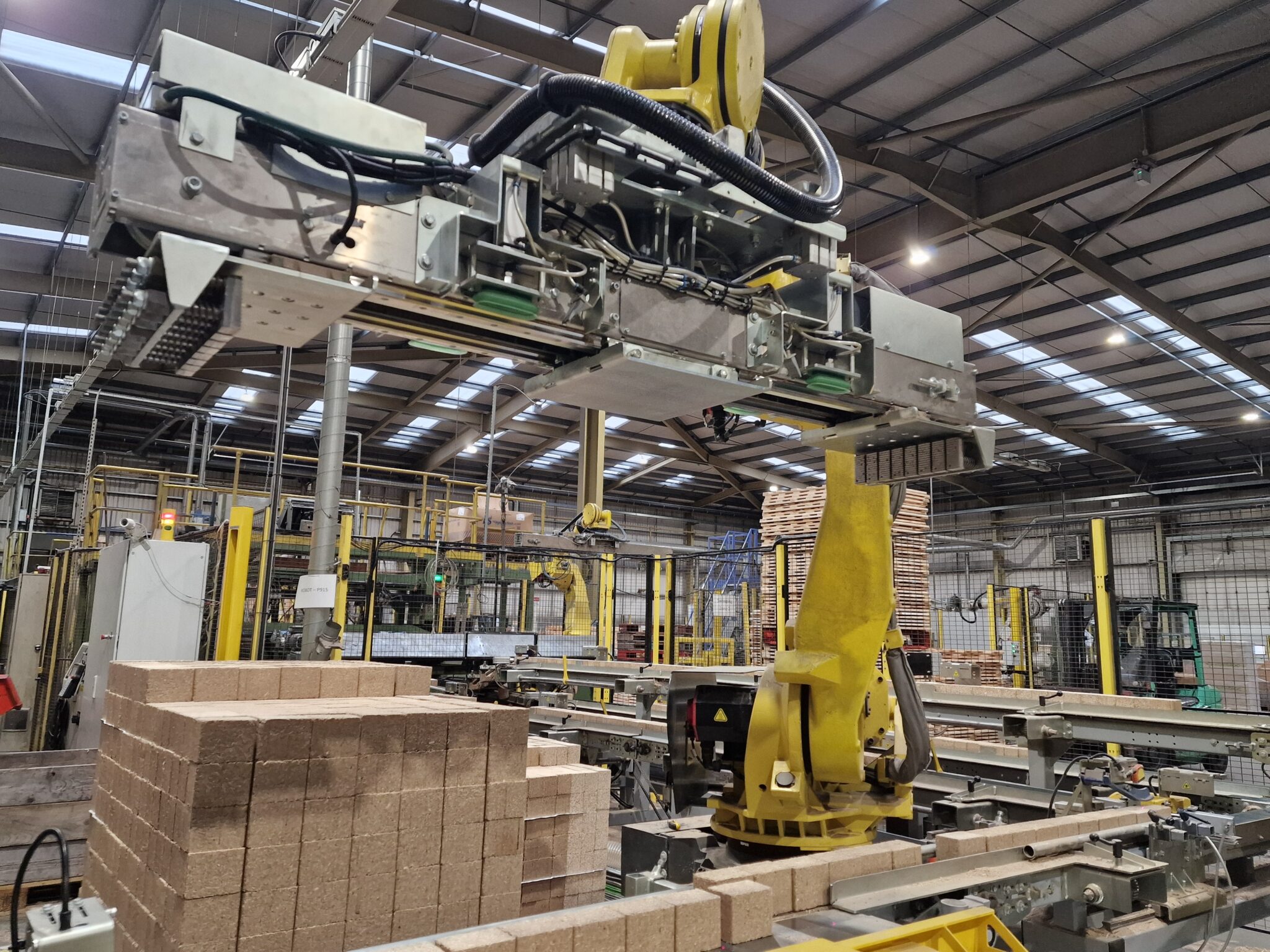
HG Timber operates eight high speed automated and robotic production lines producing 2-way and 4-way pallets, with the capacity to manufacture in excess of 1.8 million timber products every year on a single shift basis. Critically, the company has just commissioned its latest Viking Turbo line, which will further enhance production capabilities.

Peter McKenzie, Managing Director of James Jones & Sons Pallets & Packaging Division, added: “The vision and investment in cutting-edge automated production lines at H.G. Timber closely align with the philosophy we’ve adopted at James Jones & Sons Ltd. Together, we are poised to offer an unrivalled national service while maintaining the highest standards in pallet and packaging quality. This acquisition will also enable us to broaden our product offering in both pallets and racking systems. I have known Alistair and his team for many years, and their experience and drive will be invaluable as we move forward.”

“This has been a momentous decision for my family and Laurence Pyle, Sales Director of HG Timber Ltd, but we are confident that the next chapter of our family’s legacy will be in very safe hands within the James Jones family business,” said Alistair Theodoulou, Managing Director of HG Timber Ltd. “I look forward too to working alongside Peter and his management team and to identifying further growth opportunities. This move will help to safeguard our jobs and will guarantee security of raw material supply within a vertically integrated forestry and sawmill business in order to benefit our enlarged customer base.”

In parallel, James Jones & Sons’ Australian subsidiary, Hyne Group, announced the acquisition of Pinetec Pty Ltd last week, a pallet and packaging business based in Perth, Western Australia. This marks the Hyne Group’s first manufacturing presence in the West in its 142 year history and follows its expansion into pallet manufacturing through the acquisition of Rodpak Pallets & Packaging and Express Pallets & Crates earlier this year.

Hyne Group CEO, Jim Bindon said Pinetec will continue to operate as usual but with the benefit of being part of a global network, “With the broader support of Hyne and James Jones Group, Pinetec’s capability and credentials as a business partner to their many customers will be enhanced.”

With these acquisitions, James Jones & Sons Ltd continues its commitment to growth and innovation in the pallet and packaging sectors, solidifying its position as a leading provider of sustainable, high-quality timber products across the UK and Australia.

similar news

White Paper: Order Picking in the Timber Industry


eFREIGHT 2030 Powers Ahead with First Electric HGV

eFREIGHT2030 has announced the delivery of its first electric heavy goods vehicle (eHGV) as part of the UK Government’s Zero Emission HGV and Infrastructure Demonstrator (ZEHID) Programme, marking a significant milestone in the decarbonisation of road freight transport.

The 42-tonne Renault Trucks E-Tech T 4×2 has been delivered to Welch’s Transport, the Cambridgeshire-based freight, haulage and logistics business where it will operate out of their flagship site in Duxford, Cambridgeshire on regional distribution and long-haul deliveries. The arrival of the E-Tech also marks the first deployment of Renault Trucks’ heavy duty regional distribution model in customer operations in the UK.

Welch’s Transport and Renault Trucks are among the fourteen founding members of the eFREIGHT 2030 consortium, part of the ZEHID Programme funded by the Department for Transport and delivered in partnership with Innovate UK, which is introducing 100 eHGV tractor units and 32 new charging locations over a multi-year real world evaluation of electric HGVs that will shape the future of zero emission transport.

Family business, Welch’s Transport, brings 90 years of experience as a leading logistics provider in the East of England, with 160 staff and a fleet of 80 vehicles which comprises a mix of electric, diesel, and specialist HGVs. The introduction of the first Renault Trucks E-Tech T, which will be joined by a second early next year, marks a major step in the company’s commitment to innovation and sustainability. This follows Welch’s 2023 investment in a 19-tonne Renault Trucks E-Tech D Wide for Cambridge’s first Net Zero delivery service and the installation of the UK’s first publicly accessible 150kW supercharger at its Duxford site, where the new eHGVs will be charged.

With zero tailpipe emissions, the E-Tech T is powered by six 90 kWh batteries and three electric motors, delivering up to 490kW continuous power and maximum torque of 2400Nm, coupled to Renault Trucks’ Optidriver AT 2412 12 speed automated gearbox.

The E-Tech T will handle general haulage and pallet distribution, supporting Welch’s Transport’s commitment to zero-emission deliveries in and around Greater Cambridge and beyond. Michael Boxwell, Group CEO of Voltempo, which heads up the eFREIGHT 2030 consortium, said: “It’s fantastic to see the first electric HGVs on the road with Welch’s Transport as part of the eFREIGHT 2030 project, which combines the operational and technical expertise necessary to decarbonise road freight transport from the largest fleets to SMEs. We’re eager to start gaining insights into the real-world performance of eHGVs to demonstrate how they can replace conventional HGVs at scale.”

Chris Welch, Managing Director of The Welch Group said: “We’re incredibly proud to be at the forefront of this landmark shift towards decarbonising road freight. The introduction of our first fully electric 42-tonne HGV is not just a step forward for the Group, but a crucial milestone for the industry. This vehicle demonstrates how innovation, sustainability, and operational efficiency can go hand in hand as we work to make zero-emission freight a reality. We are committed to pushing the boundaries of what’s possible within the SME environment and leading the way in sustainable logistics for the UK.”

Carlos Rodrigues, Managing Director of Renault Trucks UK & Ireland said: “We’re delighted to see the first E-Tech T on the road with Welch’s Transport and look forward to many more joining eFREIGHT 2030 member fleets in the coming months. With over 100 Renault Trucks battery electric vehicles already operating in the UK, our dealer network—backed by four years of investment and development—is fully prepared to support operators as the industry accelerates this vital transition.”

Future of Roads Minister Lilian Greenwood said: “Our roads are undergoing a technological revolution, and I’m delighted that e-FREIGHT 2030, Renault Trucks and Welch’s Transport are coming along on the journey. A greener transport network is a key priority for this Government, which is why our demonstrator programme aims to scale up zero emission HGVs and install the right infrastructure to decarbonise road freight. This is an excellent example of industry and government collaborating to reach net zero.”

similar news

15 Electric Renault Trucks in Operation


4 Steps to a Sustainable Transport Packaging Solution

In order to make their supply chains more resilient, companies invested more in sustainability in 2023. According to a global survey of 600 supply chain management executives conducted by Blue Yonder, almost half of the participants (48 percent) invested capital in this area. “New pressure is also coming from legal regulations such as the European Packaging Regulation which requires sustainable and recyclable packaging,” says Jürgen Krahé (pictured), Senior Commercial Director EMEA at ORBIS Europe. “Companies have many options for making their logistics processes greener. Switching to sustainable transport packaging is one of them.”

Under the right conditions, reusable plastic containers can help to make supply chains more environmentally friendly. With a service life of over ten years and a high proportion of recycled material, they reduce resource consumption and the need for new transport solutions. These four steps should be followed when making a switch:

1. Analysis of the supply chain
The first step is to assess whether it makes sense to switch to reusable plastic packaging for your own application. Using software-based life cycle assessments, companies can determine the environmental impact of different types of packaging over their entire life cycle – from raw material extraction to production, transport and use to disposal. Based on information on transport routes and means, the Packaging Lifecycle Assessment Tool from ORBIS analyses whether CO2 emissions, energy and water consumption and waste can be reduced by switching to plastic packaging. “Only when the environmental impacts have been translated into concrete figures can companies make well-founded investment decisions,” says Krahé.

2. Concept development and success measurement
Once all the requirements are known, companies need a concept to integrate the new transport solution into the existing supply chain. To switch to plastic, they must first determine whether a customized solution is required or whether a standard product is sufficient. Then they have to decide: Is a test phase with prototypes required and, if so, for how long? Should the solution be rolled out completely or in stages?

What legal requirements must be observed with regard to transport and storage (for example in terms of fire protection concept)? Suitable key performance indicators help to make added value such as cost savings, reduced CO2 emissions or energy consumption measurable.

3. Implementation and optimization
During the roll-out phase, feedback from customers and suppliers is incorporated into the optimization process. If companies then implement the finished transport box throughout the supply chain, the solution must be continuously adapted to changing circumstances: For example, if there is a new production process, a new work procedure or the company is introducing another product with a new design or size, it must be checked how this affects the transport packaging and what adjustments may be necessary.

4. Disposal/buyback
At the end of their lifespan, plastic packaging can be recycled up to 100 percent and reused for new packaging. This reduces greenhouse gas emissions and conserves valuable natural resources. In addition, companies can offset the initial higher costs and save disposal costs. “So that companies don’t have to deal with this themselves, ORBIS Europe buys back obsolete or irreparably damaged plastic packaging at the material price,” says Krahé. “In this way, the organizations contribute to an almost closed raw material cycle and benefit from economic advantages.”

Reusable plastic packaging represents an ecological and economical alternative to materials such as wood, steel or cardboard. They can help to meet legal requirements and the increasing sustainability expectations of other stakeholders.

similar news

Packager’s Online Sustainability Hub Highlights Plastic Positives


Subscribe

Get notified about New Episodes of our Podcast, New Magazine Issues and stay updated with our Weekly Newsletter.